REVIEW · TOKYO
Tsukiji Fish Market: Street Food & Culture Walking Tour
Book on GetYourGuide →Operated by Local Guide Stars · Bookable on GetYourGuide
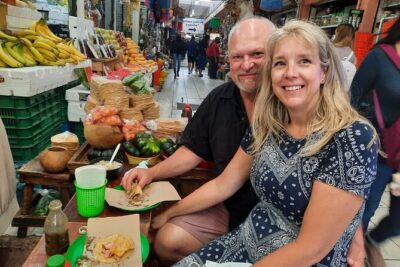
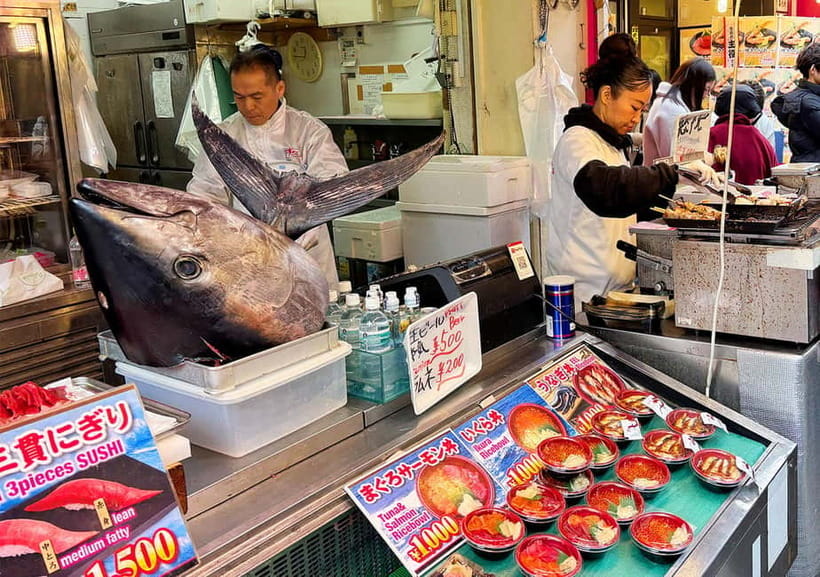
Tsukiji is a feast for the senses. This 2-hour street-food tour turns Japan’s most famous fish market into a guided, bite-by-bite introduction to how Japanese cooking really tastes. You start with Tsukiji Hongan-ji, then move into the outer market for tastings like fresh tuna and wagyu, often paired with that memorable wasabi set your guide helps set up.
I especially like two things. First, the calm start at Tsukiji Hongwan-ji Temple gives you context before you hit the noise of the food stalls. Second, the guiding focus on what to order and what to try makes the tastings feel smart, not random, with standouts like fresh wasabi, tuna sushi, eel, and grilled scallops (and yes, guides such as Kawa, George, and Mao are repeatedly praised for steering the group to great bites).
One thing to plan around: on Wednesdays, Sundays, and national holidays, about half of the Outer Market shops may be closed, so your exact lineup of vendors and tastings can feel a bit different that day.
In This Review
- Key things I’d prioritize on this Tsukiji tour
- Tsukiji in Two Hours: Why This Walk Works
- Start at Tsukiji Hongan-ji Temple: Where the Story Begins
- Outer Market Tastings: Tuna, Wagyu, Wasabi, and Umami
- A Guide Turns Chaos Into Choices (Kawa, George, Mao, and more)
- What the Temple-and-Market Route Teaches You About Japanese Food
- Days With Half the Shops Closed: How to Not Be Disappointed
- Price and Value: Why $22 Is More Than a Ticket
- What to Bring and How to Prepare for Market Reality
- Who This Tsukiji Tour Suits Best
- Should You Book This Tsukiji Fish Market Tour?
- FAQ
- FAQ
- How long is the Tsukiji Fish Market street food and culture walking tour?
- What is the price per person?
- Where does the tour start?
- What language is the guide in?
- Is the tour wheelchair accessible?
- Do I need cash?
- Are Outer Market shops open every day?
- Can I cancel for a full refund?
- Is payment flexible if I am not ready yet?
Key things I’d prioritize on this Tsukiji tour
- Temple start, then food: Tsukiji Hongan-ji sets the tone and makes the market feel less like chaos and more like culture.
- Wasabi isn’t an afterthought: several guides add a special wasabi set that makes the flavors pop.
- Real ingredient education: you get explanations tied to Japanese cooking, including preservation methods that build umami.
- Guides who do the busy work: many groups mention not having to line up for every bite, because the guide handles the flow.
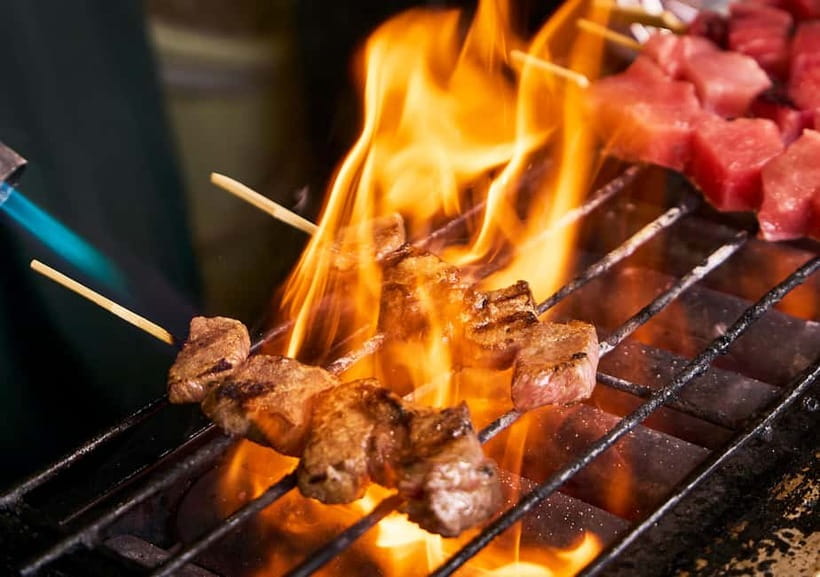
- Tuna, wagyu, and classic street snacks: you’ll likely taste a mix that goes beyond sushi alone.
- Small group energy: it stays manageable, and guides can respond to preferences.
Tsukiji in Two Hours: Why This Walk Works
Tsukiji can feel like sensory overload if you show up alone. You see fish, stalls, signage, and people moving fast in every direction. This tour solves the problem with structure: short, guided stops that build from history into food, without turning your legs into confetti.
At $22 per person for a 2-hour experience, the price is best viewed as paying for two things: (1) a guide who can translate the market to you, and (2) tastings and market access that save you time and guesswork. You’re not paying for a luxury meal. You’re paying for a concentrated, efficient way to understand where to go and what to actually eat.
You’ll also get the kind of help that matters in Tsukiji: how to choose stalls, how to order, and how to interpret ingredients. Several guides are praised for English clarity and for making the group feel comfortable trying foods they might skip on their own.
You can also read our reviews of more walking tours in Tokyo


Start at Tsukiji Hongan-ji Temple: Where the Story Begins
Your tour begins at Tsukiji Hongan-ji (Tsukiji Hongwan-ji). The schedule is built so you start with a guided temple visit before you hit the outer market. Expect a quick orientation—about 20 minutes—focused on the area and the purpose of the space.
Why I like this opening: it gives you a mental handle on what you’re about to see. The market isn’t just about seafood. It’s part of Japan’s food tradition, tied to ritual, community routines, and careful handling of ingredients. And it gives you a brief reset moment, which is useful when you’re dealing with crowds and strong smells you can’t control.
Also, the temple experience is one of the few parts of Tsukiji that doesn’t feel like a sprint. Reviews repeatedly mention that guides explain entry rituals and the setting clearly, so even if you’re not religious, you leave with a better sense of what the place is for.
Outer Market Tastings: Tuna, Wagyu, Wasabi, and Umami
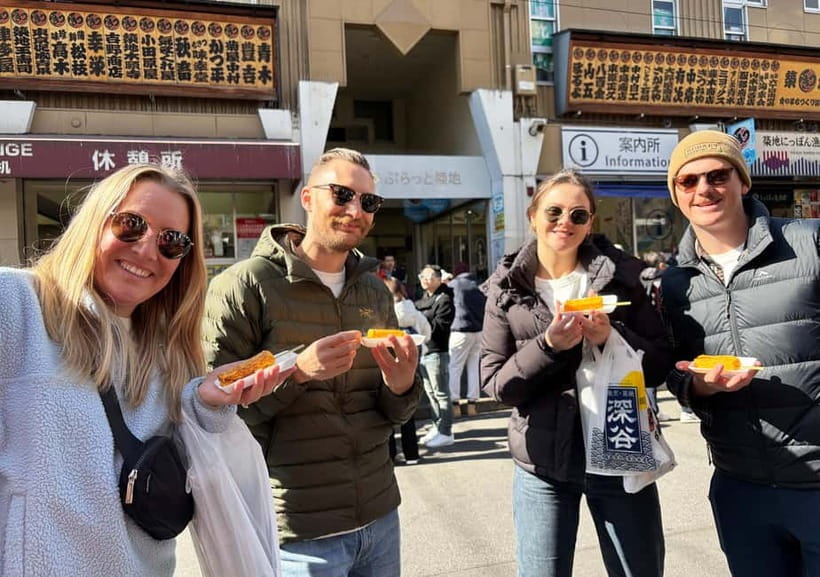
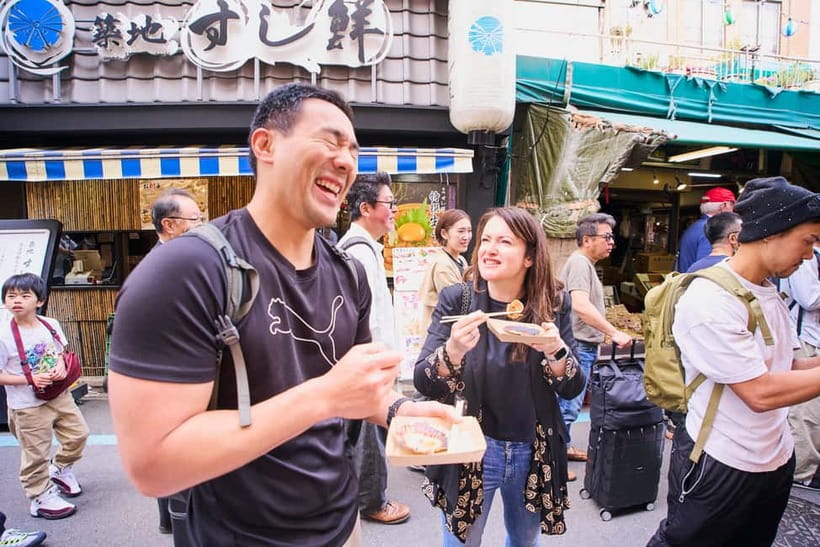
After the temple, you head into the Tsukiji Outer Market. This is the core of the tour: a guided walk plus a food-tasting run (about 80 minutes), followed by additional time for exploring (another 20 minutes).
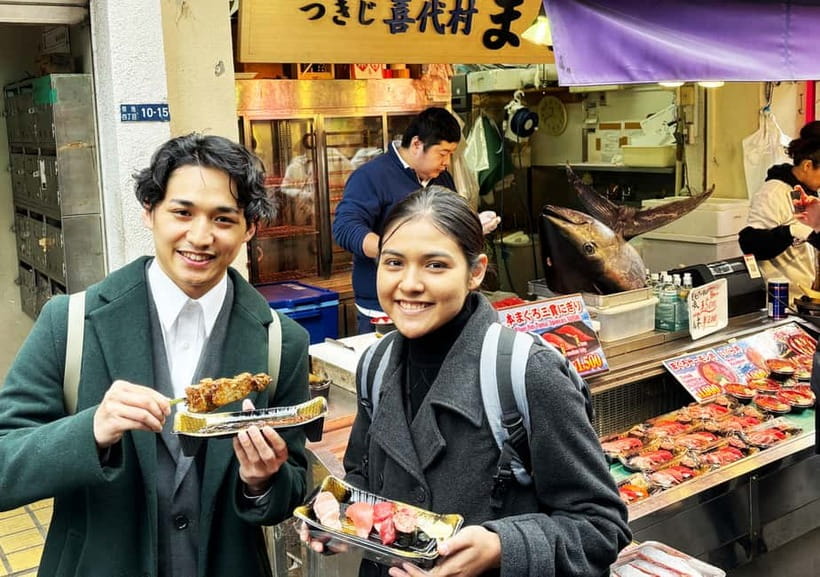
Here’s what you can reasonably expect to taste:
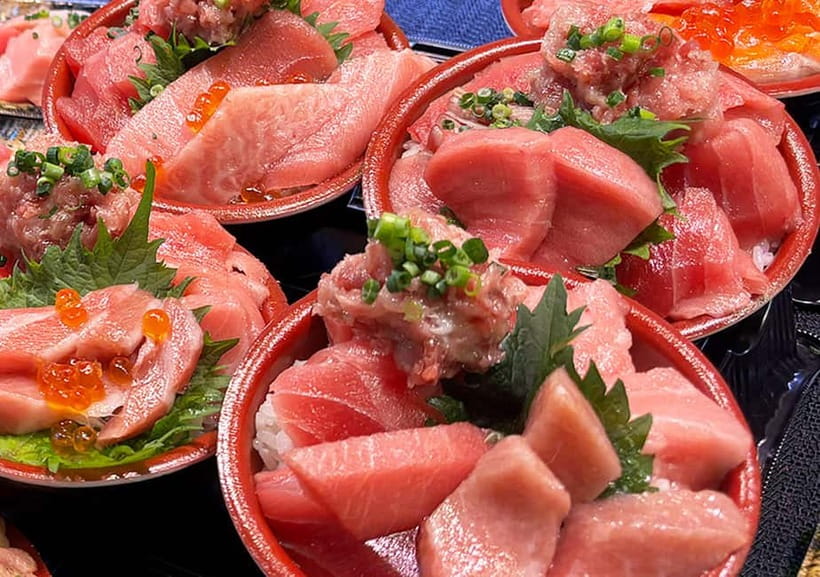
- Fresh tuna preparations, including tuna sushi
- Wagyu bites (often mentioned as a highlight)
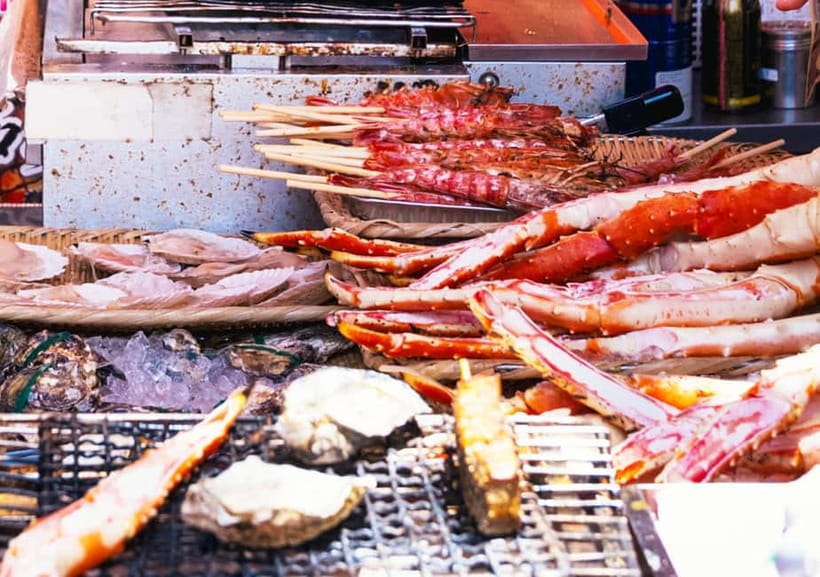
- Classic street-market items like grilled seafood and other small plates
- Wasabi, including a special fresh wasabi setup your guide may include as an extra touch
What makes the food stops more than just sampling is the explanation that comes with them. The tour’s highlights mention traditional preservation techniques used in Japanese cuisine to enhance umami. In practice, that means the guide talks about why certain preparations taste deeper than you expect—because ingredients are treated, seasoned, cured, or stored in ways that concentrate flavor.
You’ll also learn how Japanese cooking thinks. It’s not just salt and heat. It’s balance: texture, temperature, fat, acidity, and the way seasoning lands on fresh ingredients.
One more practical note: you’ll likely leave feeling full. Many reviews use words like stuffed or a lot of food, and that matches the design—this is a tasting tour, not a snack hunt where you ration bites.
A Guide Turns Chaos Into Choices (Kawa, George, Mao, and more)
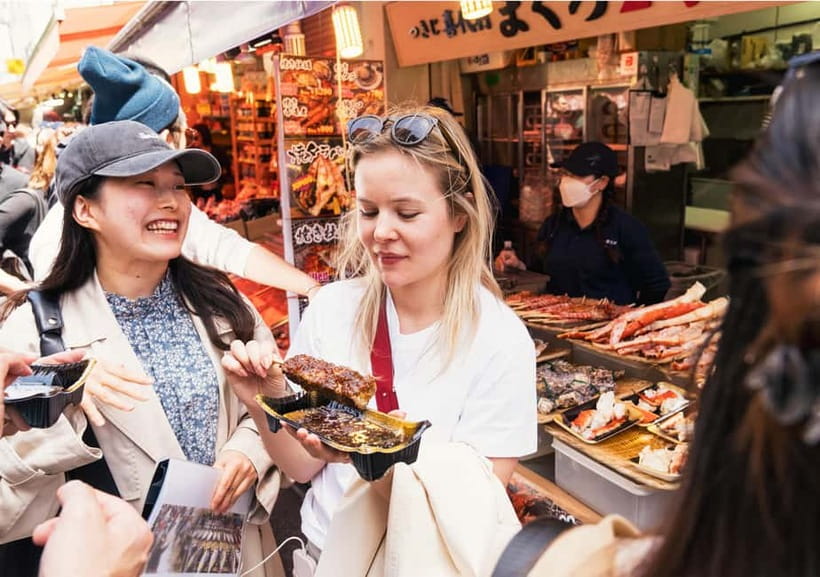
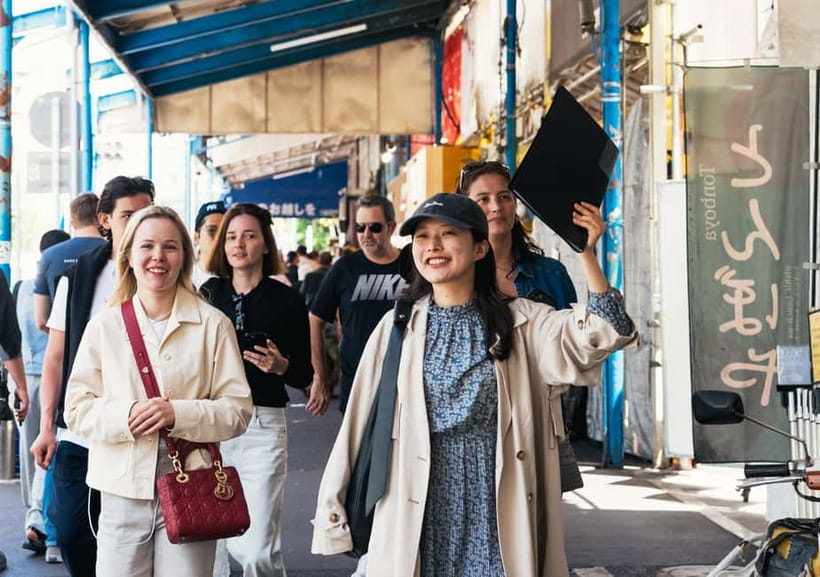
In Tsukiji, “best” is a moving target. The line changes every five minutes. One stall might be great at one hour and busy at another. This is where a strong guide matters.
The best feedback you see again and again is about guide performance. People mention:
- Guides standing in lines for the group so you don’t waste time
- Recommendations that avoid overpriced, touristy confusion
- Clear English and an easy, friendly tone
- Tailoring the route to preferences, like helping you choose what you want to try
Some guide names show up repeatedly in praise: Kawa, George, Mao, Kenny, Tomo, Chihiro, Daichi, and Mal. The specific names vary, but the theme is consistent: you’re not just getting a tour map. You’re getting real-time help.
Also, guides often encourage you to try foods you wouldn’t pick on your own. That’s not a trick. It’s a strategy: in a market, you want at least a couple of bites that are outside your comfort zone so you understand what locals actually reach for.
What the Temple-and-Market Route Teaches You About Japanese Food
This tour is built for understanding, not just eating. You walk from religious architecture into a food system that depends on speed, training, and respect for ingredients. You’ll hear about craftsmanship—how Japanese chefs and artisans treat fish and other components with precision.
Even if you don’t plan to become a fish sommelier, you’ll notice patterns:
- Freshness matters, but preparation matters just as much
- Flavor isn’t only in seasoning; it’s in process
- Small bites help you compare textures and styles quickly
This is also why the outer market focus is a smart choice. You get a sensory cross-section: grilling, slicing, and street-stall cooking you can’t fully reproduce at a restaurant later. And because you’re guided, you get explanations instead of guessing.
If your main goal is food education plus practical tasting, this format fits well.
You can also read our reviews of more food & drink experiences in Tokyo



Days With Half the Shops Closed: How to Not Be Disappointed
Tsukiji has a calendar problem. On Wednesdays, Sundays, and national holidays, about half of the shops in the Outer Market may be closed. Some shops stay open, and tours still run, but the experience can feel less full than on other days.
How to handle it:
- Treat tastings as a likely mix, not a fixed menu.
- Keep your expectations flexible about which stalls you’ll pass.
- Ask your guide to adjust on the spot to whatever is open and active that day.
If you’re a first-time visitor who wants maximum stall variety, choose a day when you expect more open shops. But if your schedule only allows one of those days, don’t write it off. A guided market walk still gives you the layout, the ingredient education, and the flavor context—even if the roster of vendors is smaller.
Price and Value: Why $22 Is More Than a Ticket
The headline price is $22 per person for 2 hours. That sounds simple, but the value depends on what you want from Tsukiji.
If you want:
- a route that helps you avoid dead ends,
- a guide who helps you pick what to eat,
- and a structured way to sample key items,
then the cost makes sense fast. You’re buying time, decision-making help, and organized tastings.
A few reviews also highlight that you can decide how much you want to spend as the tour goes, and that guides help you find good prices. That’s a big deal in markets where some stalls are clearly priced for urgency and others are priced for locals.
You should also expect you may want to buy extra items after tastings. One of the advantages of walking with a guide is knowing what to buy, what to taste first, and what’s worth bringing home.
What to Bring and How to Prepare for Market Reality
This tour asks for something simple: bring cash. That’s practical advice for markets where payment methods vary stall to stall.
Also consider:
- Comfortable shoes. You’re on your feet in tight areas.
- A willingness to try new flavors. Guides are praised for making that feel easy, even when the food is unfamiliar.
- Basic weather readiness. Tsukiji can be hot or crowded depending on the day, and guides sometimes adapt to comfort by finding shade or adjusting pacing.
Language is English with a live guide, and the tour notes that wheelchair access is available. It’s also described as a small group, which helps with pacing and making sure everyone gets the chance to try tastings.
Who This Tsukiji Tour Suits Best
This tour is ideal if you:
- have limited time in Tokyo and want an efficient Tsukiji introduction,
- like food education as much as the food itself,
- want help ordering and navigating without spending hours researching vendors,
- and enjoy small-group walking tours where the guide can answer questions as you go.
It may be less ideal if you:
- hate crowds and tight lanes, even with a guide handling logistics,
- want total freedom with no structure,
- or are only interested in one specific item and don’t care about the broader cooking context.
But for most first-timers, this is a strong way to get your bearings fast and leave with clear ideas about what you liked and why.
Should You Book This Tsukiji Fish Market Tour?
Yes—if you want a guided Tsukiji experience that mixes temple context, outer market tastings, and clear explanations about Japanese cooking. The repeated praise for guides like Kawa, George, Mao, and Kenny points to the biggest value: you get smarter choices and less wasted time.
Book it especially if you’re the kind of person who hates standing around trying to figure out what’s good. You’ll still do plenty of wandering, but you won’t be wandering blindly.
If your date falls on Wednesday, Sunday, or a national holiday, just go in with flexible expectations. You might see fewer stalls, but the guided format is still designed to deliver food variety and market understanding.
FAQ
FAQ
How long is the Tsukiji Fish Market street food and culture walking tour?
The tour lasts about 2 hours.
What is the price per person?
It costs $22 per person.
Where does the tour start?
Meeting point may vary depending on the option booked. The provided coordinate is 35.66661467955698, 139.77199430835137, and the tour starts and drops off at Tsukiji Hongan-ji (築地本願寺本堂).
What language is the guide in?
The live guide is in English.
Is the tour wheelchair accessible?
Yes, the tour is listed as wheelchair accessible.
Do I need cash?
Yes, the tour says you should bring cash.
Are Outer Market shops open every day?
No. On Wednesdays, Sundays, and national holidays, about half of the shops in the Tsukiji Outer Market may be closed, though some shops remain open and tours still run.
Can I cancel for a full refund?
Yes. You can cancel up to 24 hours in advance for a full refund.
Is payment flexible if I am not ready yet?
Yes. The listing offers reserve now and pay later, so you can book without paying today.