REVIEW · TOKYO
Tokyo Tsukiji Fish Market Food Tour: 15 Stops & Walk Local Street
Book on Viator →Operated by Fuji Tour · Bookable on Viator
Tsukiji can feel like sensory overload fast. This tour helps you make sense of the area with a Japanese guide, short stops, and just enough structure to keep you moving without missing the key sights. You also get photos from the tour, which is a nice add-on in a place where you’ll want proof you were really there.
I like the small-group size (capped at 15), because you can actually ask questions instead of shouting over crowds. And the plan is built around variety: a temple start, a busy shopping market stretch, a fish-market area pass-by, and a shrine stop for a breather.
One drawback to consider: the listing is a bit mixed on food. The tour is marketed as having food tastings, but it also states that food isn’t included, and one review called out a disappointment about getting food beyond the basics. Go in expecting guided tastings and advice, and plan on paying extra if you want a full meal.
In This Review
- Quick reasons it works
- Tsukiji starts at Tsukiji Hongan-ji: your calm first step
- Tsukiji Jogai Market: where the shopping street does the talking
- The fish-market area pass: seeing the real seafood energy
- Namiyoke Inari Shrine: a short reset from the crowds
- Food tastings, photos, and the $80 reality check
- Pace and group size: why 15 people matters
- Meeting point simplicity and how to stay connected
- Who this Tsukiji tour fits best
- Should you book this Tsukiji Fish Market food tour?
- FAQ
- How much does the Tokyo Tsukiji Fish Market Food Tour cost?
- How long is the tour?
- How many people are in the group?
- Is a guide provided?
- Are photos included?
- Is food included?
- What should I do to meet the group?
- Do I need a printed ticket?
- Is there a recommended way to contact the tour on the day?
- Is admission required for the stops?
Quick reasons it works
- Small group, capped at 15 so the guide can steer you and answer questions
- Temple + market + shrine route gives you variety in about 2–3 hours
- Food culture and etiquette lessons (especially sushi eating manners)
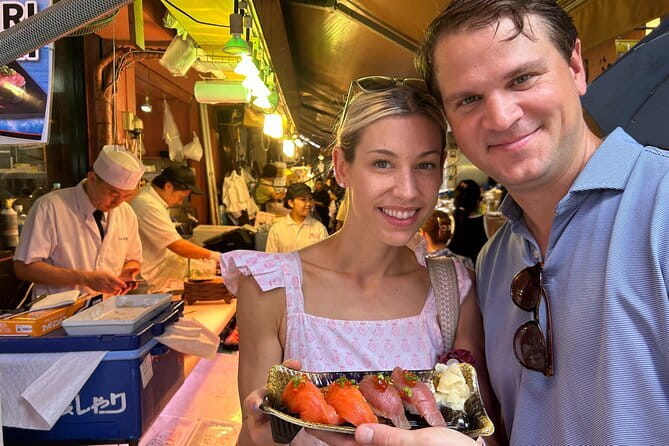
- Guided photo moments, with images sent after the tour
- Flexibility when market access changes (the guide can pivot if parts are closed)
Tsukiji starts at Tsukiji Hongan-ji: your calm first step
Your tour meets at Tsukiji Hongan-ji Temple, right by the entrance. The first stop is a quick one (about 15 minutes) and the admission ticket is free, so you can settle in without losing prime walking time.
What I like here is the tone-setting. Starting at a temple is a smooth way to transition from outside noise into a more respectful, local pace. You’ll also get a guide-led feel for the neighborhood, which matters because Tsukiji is not the kind of place where you naturally know what to look for.
This is also a practical win. Since the tour begins and ends back at the meeting point, your day stays simple. You’re not figuring out train transfers while already hungry and slightly lost.
You can also read our reviews of more walking tours in Tokyo
Tsukiji Jogai Market: where the shopping street does the talking
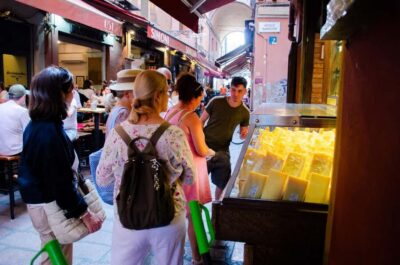
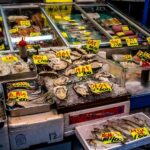
Next comes Tsukiji Jogai Market, with about 1.5 hours here. The admission is free again, and the route is framed around the area’s shopping intensity, including a stretch with over 400 shops.
This is the part of the tour where you get to slow down just enough to browse without drifting. A guide can save you time by steering you toward places where it makes sense to try something and where you won’t accidentally treat a shop like a museum exhibit.
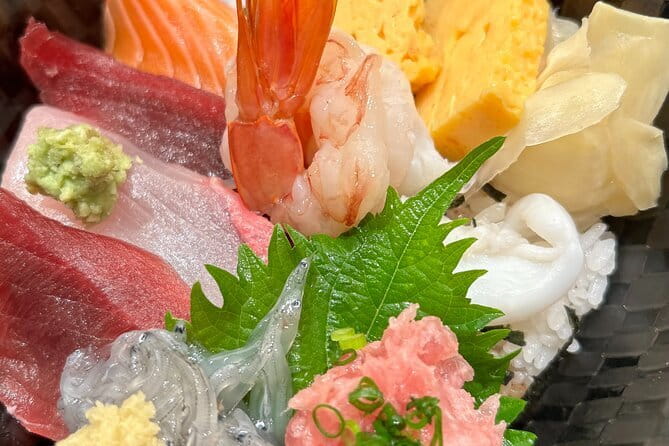
Food expectations matter at this stop. The experience description talks about eating along the way, and the marketing emphasizes tastings. But because the listed policy also says food isn’t included, you should treat this as a guided window to pick up snacks or small bites rather than a guaranteed full lunch package. If you’re the type who needs a proper meal to function, add a little buffer for buying your own food.
One more tip: wear shoes you trust. This is a walking-heavy environment, and spending 90 minutes moving through a market area is no time for stiff, uncomfortable footwear.
The fish-market area pass: seeing the real seafood energy
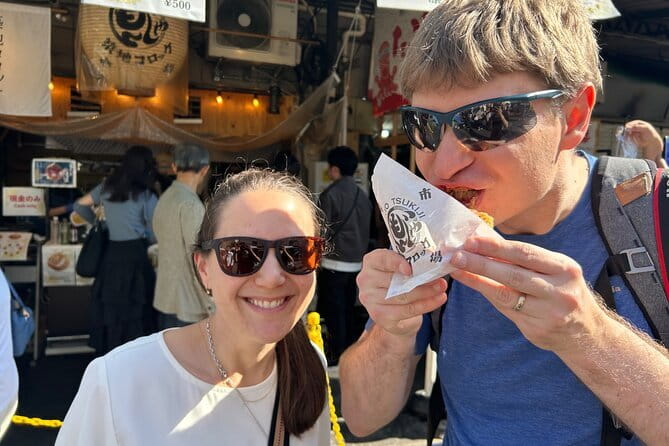
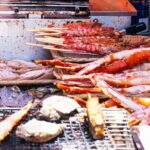
After the shopping market, you’ll head toward the Tsukiji Fish Market area. The stop time here is shorter (around 30 minutes), but it’s designed to give you a look at what’s going on behind the scenes, including a mini wholesale market area where you’ll see hundreds of fish varieties.
This is where the guide’s role really pays off. Without context, a fish market can become a blur of labels and ice. With context, you start recognizing patterns: what people are paying attention to, what looks freshest, and what kinds of items locals are likely choosing.
Also, go in with flexibility. One review mentioned a holiday-related closure and said the guide adapted quickly. That’s good to know, because Tsukiji can have access changes. If part of the market scene is quieter than expected, your guide should help you still get value from the time you’re there.
If you care about etiquette, this segment often becomes the reason people feel the tour is worth more than a generic walk. You’ll get explanations on food culture and customs, and that helps you interact confidently instead of hovering awkwardly.
Namiyoke Inari Shrine: a short reset from the crowds
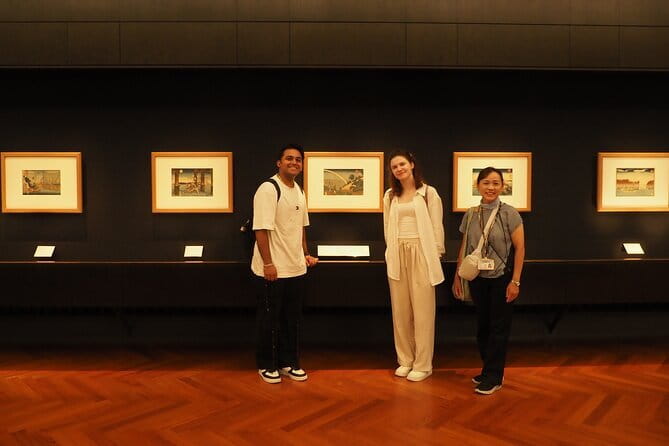
Then it’s on to Namiyoke Inari Shrine, a smaller stop at about 15 minutes, again with free admission. The shrine is associated with Namiyoke Inari, described as the deity that wards off disasters and weathers the waves.
This stop may seem like a detour if you came only for seafood. But it’s not filler. Shrines give you a mental reset. After the market noise and food focus, you get a moment to slow down, look around, and take photos without feeling like you’re blocking foot traffic.
It also adds cultural depth. Tsukiji isn’t just about consumption; it’s tied to place, ritual, and community habits. Ending with a shrine-related story gives the whole walk a “why” behind the sightseeing.
Food tastings, photos, and the $80 reality check
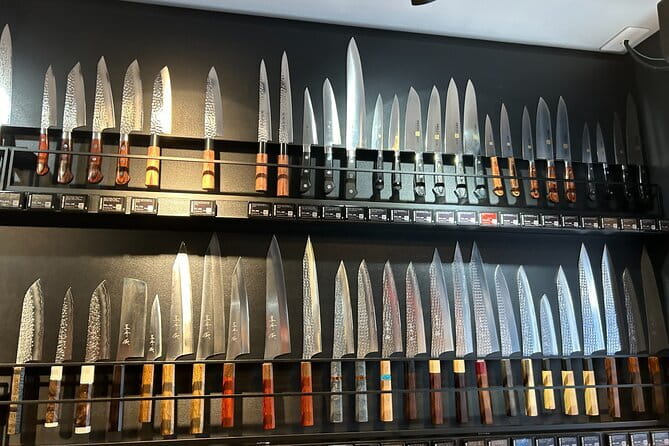
Let’s talk value, because $80 per person isn’t a bargain price for a 2–3 hour walk. The good news is the structure includes several things that add up:
- A Japanese guide with explanations around food, etiquette, culture, and history
- Photos taken during the tour (sent after)
- A mobile ticket
- A small-group format (maximum 15 people)
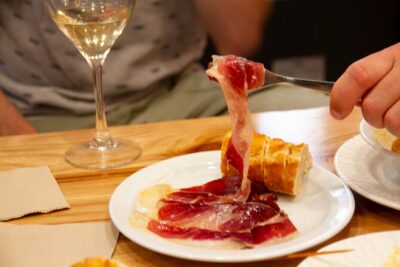
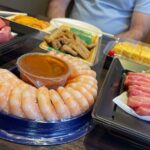
Here’s my balanced take on the “food included” question. The tour highlights food tastings as a perk, and the experience description mentions trying treats like sushi or Japanese oysters. But the details also state that food isn’t included, and one review specifically complained about not getting food as expected.
So, treat this tour as a guided tasting and education experience, not a meal plan. If you’re hoping for a full, sit-down lunch covered by the ticket, you might feel shorted. If you want guidance on what to try and how to behave while eating, this is exactly the kind of tour that can make those small bites feel more meaningful.
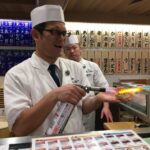
One review also praised the guide’s conversational style and advice, including sushi-eating etiquette. Another mention named Sakura San, and the key takeaway was that her guidance helped deepen understanding of sushi manners and Japanese dining culture. That kind of coaching is hard to put a dollar amount on, but it’s often the difference between eating and enjoying the whole experience.
You can also read our reviews of more food & drink experiences in Tokyo


Pace and group size: why 15 people matters
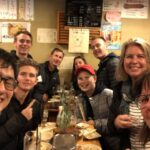
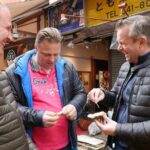
A capped group size of 15 changes the feel of the tour. In a place like Tsukiji, crowds make people impatient and guides rushed. Here, the limit makes it more realistic for you to ask quick questions, stop for photo moments, and get help navigating what you’re seeing.
The total duration is about 2 to 3 hours, which is ideal if you’re trying to fit Tsukiji into a busy Tokyo schedule. It’s long enough to cover multiple areas without feeling like you’re sprinting from one photo spot to the next.
One practical consideration: this is still a walking tour. Even with a guide handling transitions, you’ll be on your feet. If you’re sensitive to walking or standing in market conditions, do plan breaks by choosing comfortable clothing and bringing a plan for how you’ll cool down if it’s hot or cold.
Meeting point simplicity and how to stay connected
You start at Tsukiji Hongan-ji Temple (3-chōme-15-1 Tsukiji, Chuo City, Tokyo 104-8435). The tour ends back at the same meeting point, so you don’t have to mentally rebuild your route at the end.
It also says you’re near public transportation, which helps a lot in Tokyo. Even so, market areas can be confusing on first contact, so getting to the meeting point early beats rushing.
There’s one more communication detail you should take seriously: for day-of contact, the provider says to download WhatsApp. That usually means quick updates or meeting reminders. In a fast-moving area, that’s useful, and it avoids the stress of trying to track people down.
Who this Tsukiji tour fits best
This tour is a strong choice if you want more than a photo walk. You’ll get guided explanations of food culture and etiquette, and the structure moves you through temple, market, fish-market area viewing, and a shrine.
It’s also a good match if your group style is small and conversational. With a max of 15, the guide can keep things human and interactive instead of lecturing.
You might want to reconsider if your top priority is getting a guaranteed amount of food in your ticket price. Because the food inclusion is the source of at least one disappointment, it’s smarter to treat tastings as part of the experience rather than as a substitute for your meal.
And if you’re the type who hates uncertainty, remember one review mentioned market closures around a holiday and that the guide adapted. That’s not a reason to avoid the tour, but it is a reason to stay flexible.
Should you book this Tsukiji Fish Market food tour?
Book it if you want a guided, structured way to see Tsukiji in a short time, with etiquette and food culture explanations and the bonus of tour photos. The small-group cap is a real quality lever, and the route gives you variety instead of only standing around fish.
Maybe skip or adjust your expectations if your main goal is a full meal on the ticket. Based on the mixed messaging around whether food is included, budget for extra snacks or lunch just in case. If you want tastings and guidance more than a set meal, this is likely a good value at $80.
In short: this is for people who enjoy learning while they eat. If that’s you, you’ll probably appreciate how the guide helps you read Tsukiji instead of just seeing it.
FAQ
How much does the Tokyo Tsukiji Fish Market Food Tour cost?
It costs $80.00 per person.
How long is the tour?
The tour lasts about 2 to 3 hours.
How many people are in the group?
The experience is capped at a maximum of 15 travelers.
Is a guide provided?
Yes, the tour includes a Japanese guide.
Are photos included?
Yes, photos taken during the tour are included and sent after the tour.
Is food included?
The highlights mention food tastings, but the details also list food as not included. Plan on tastings or advice, and expect you may need to buy additional food for a full meal.
What should I do to meet the group?
The meeting point is in front of Tsukiji Hongan-ji Temple (3-chōme-15-1 Tsukiji, Chuo City, Tokyo 104-8435, Japan). The tour ends back at the same meeting point.
Do I need a printed ticket?
No, you get a mobile ticket.
Is there a recommended way to contact the tour on the day?
Yes. The tour asks you to download WhatsApp for day-of communication.
Is admission required for the stops?
Admission tickets are listed as free for the temple and shrine stops, and the market stop also shows free admission in the provided schedule.