REVIEW · TOKYO
Tokyo Night Foodie Tour in Shinjuku – Seasonal Sushi, Wagyu Beef
Book on Viator →Operated by MagicalTrip Inc. · Bookable on Viator
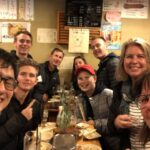
Shinjuku nights come with real flavor. This 3-hour foodie walk pairs omakase-style sushi and shichirin-grilled Wagyu with guided sights like Kabukicho and Godzilla Road. It’s set up for small groups (up to 7), so you’re not just being herded through alleys—you get answers.
What I like most is how the food choices map to the mood of the neighborhood: sushi first, then smoky grilling, then neon streets, then dessert. I also love that the guides are active conversationalists—names I’ve seen repeatedly praised include Yuki, Molly, Megumi, Hiro, Aoi, and Minnie—so you’re not stuck with silent “tour voice.”
One thing to consider: you can’t count on the experience being allergy-free, and smoking may be allowed around some stops. If you have strong dietary needs, plan extra carefully and request vegetarian options early (by the day before).
In This Review
- Key highlights you should know before you go
- Shinjuku at Night: Why This Food Route Feels Like Tokyo
- The 3-Hour Route: From Nishishinjuku to Kabukicho and Back
- Stop 1 in Nishishinjuku: Meeting Point and Sushi Start
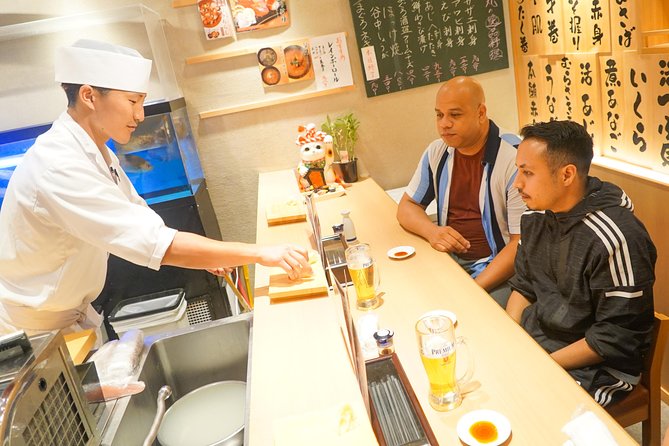
- Omoide Yokocho (and Omakase-Style Sushi): Chef Choices in Real Time
- Kabukicho After Dark: Neon Streets With a Human Translator
- Godzilla Road & the Head: A Quick Fan Stop With Meaning
- Nishishinjuku Finale: Dessert or a Drink to Close the Loop
- Sushi and Wagyu Together: What the Food Pairing Really Does
- Price and Value: Why $111.62 Can Make Sense in Tokyo
- Guides Make It: From Casual Conversation to Better Ordering
- Practical Tips: Weather, Smoking, and Dietary Reality
- Who Should Book This Tour (and Who Might Not)
- Should You Book Tokyo Night Foodie Tour in Shinjuku?
- FAQ
- How long is the Tokyo Night Foodie Tour in Shinjuku?
- Where does the tour start and end?
- What food experiences are included?
- Is this tour good for vegetarians?
- Can the tour accommodate allergies?
- How big is the group?
- Can I get a full refund if I cancel?
Key highlights you should know before you go
- Small group size (max 7): more time to ask questions and compare bites.
- Omakase-style sushi: chef picks for the season, not a bland menu choice.
- Wagyu grilled on shichirin stoves: you’re tasting directly from the heat.
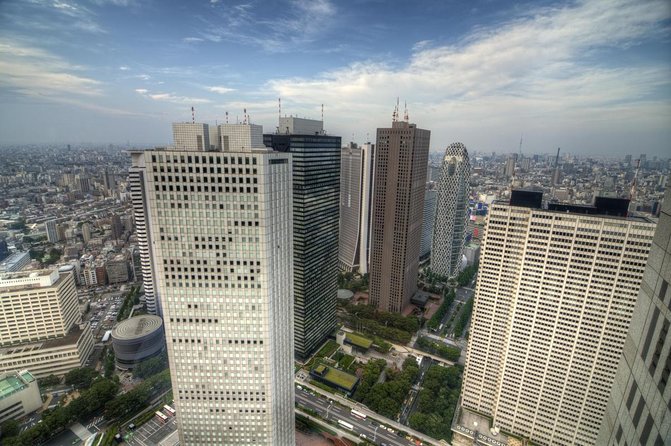
- Kabukicho night walk + Godzilla Road: food plus the visual chaos of Shinjuku.
- Dessert or drink finale: you end with something sweet or a nightcap vibe.
- Dietary limits have limits: vegetarian request by the day before; allergy-free can’t be guaranteed.
Shinjuku at Night: Why This Food Route Feels Like Tokyo
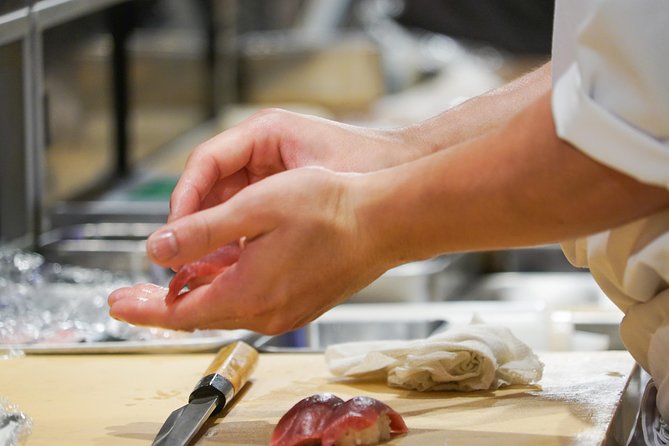
Shinjuku is where Tokyo goes from “busy” to “on.” The area around Kabukicho is packed with neon signs, theaters, and late-night energy that’s hard to recreate on your own the first time. This tour times things so you taste first, then walk through the lights with your guide pointing out what you’re seeing.
The biggest value here is the pairing: you don’t just eat great food, you get to understand the setting. Sushi at night hits differently than sushi at noon, and the Wagyu grilling on a small shichirin stove matches the intensity of the streets you’ll walk right after.
And yes, the pace is friendly. It’s described as a walking tour with tasting stops, not a marathon. Still, you’ll want comfortable shoes, because Shinjuku is all angles and you’ll be on your feet for the full loop.
A few more Tokyo tours and experiences worth a look

The 3-Hour Route: From Nishishinjuku to Kabukicho and Back
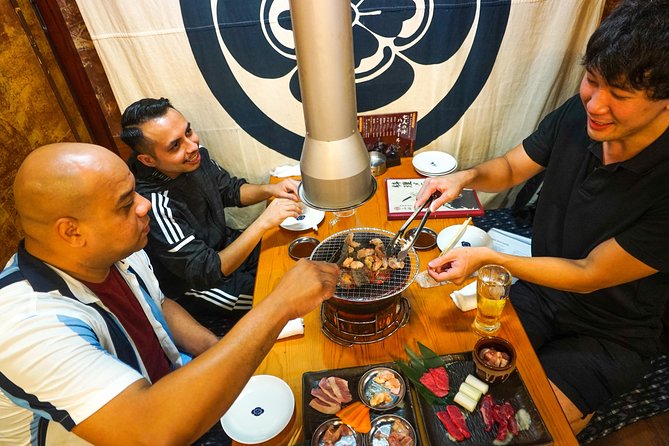
The tour runs about 3 hours total, and it’s built around five main stops plus walking between them. The schedule is roughly: a short meet/start, then about 40 minutes at the Omoide Yokocho area, 40 minutes for Kabukicho, a 5-minute Godzilla Road stop, and 30 minutes for the dessert/drink finale.
It ends back at the meeting point in Nishishinjuku, which is a relief if you don’t want to re-navigate the city after you’re full. Also, it’s designed with public transit in mind since the starting point is near stations.
If you’re thinking, Will I feel rushed?—the short answer is that most people describe it as easy enough to enjoy the sights while still eating well. The small-group size helps a lot with that.
Stop 1 in Nishishinjuku: Meeting Point and Sushi Start
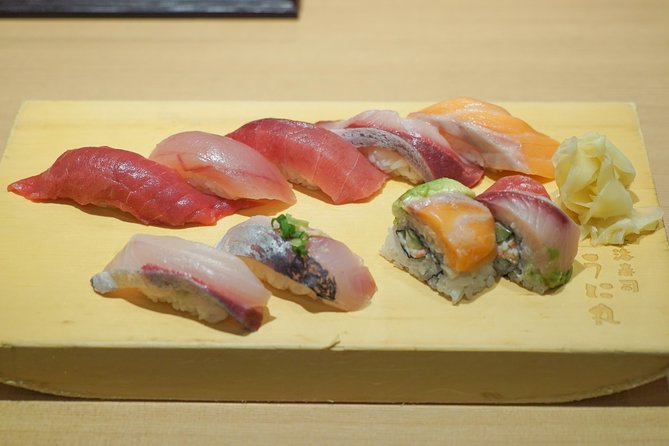
You start at 1-chōme-2-8 Nishishinjuku, Shinjuku City. From there, the tour begins with a quick orientation and then moves you to the first sushi stop, described as an authentic sushi place that’s known mostly to locals.
This matters more than it sounds. Your guide isn’t just getting you seated. They’re setting the tone for what you’ll eat next and how to judge it—especially with sushi and the way seasonal pieces tend to change.
Even though this first stretch is short (about 10 minutes), it’s a useful reset. By the time the tour shifts into nightlife territory, you’ll already be in “Tokyo food mode.”
Omoide Yokocho (and Omakase-Style Sushi): Chef Choices in Real Time
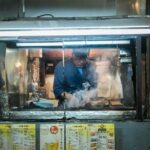
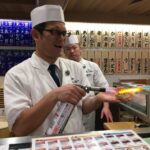
Omoide Yokocho is where Shinjuku’s personality gets louder. The tour spends about 40 minutes here, and you’ll have the option for omakase-style ordering—meaning the chef chooses what you get based on what’s best that season.
That chef-choice format is one of the reasons this tour works for first-timers. You don’t need to understand Japanese menu wording, and you don’t have to guess what to order. The guide can also help you read what’s happening at the counter and why certain pieces are served in a particular order.
A good practical note: the tour description suggests you may not eat directly inside every tiny lane people associate with Omoide Yokocho. What you can count on is that you’ll end up at an omakase sushi experience in the area, with the guide guiding you through the streets to make it feel effortless.
Kabukicho After Dark: Neon Streets With a Human Translator
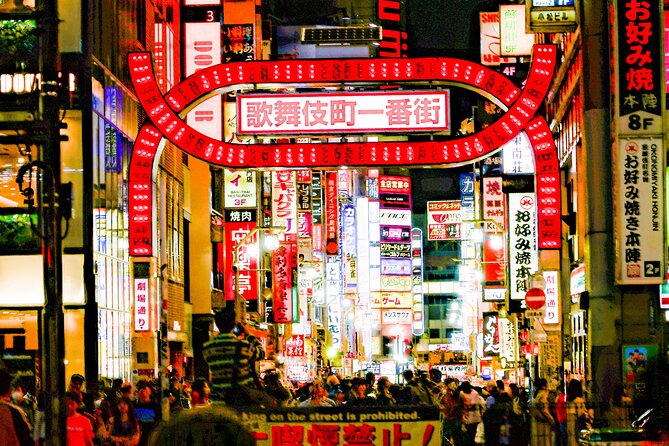
Next is the Kabukicho district walk (about 40 minutes). This is the “see the vibe” part of the night, where you’ll pass restaurants and theaters and get a feel for Tokyo’s nightlife culture.
This isn’t a sightseeing lecture. It’s more like having someone point out what you’re actually looking at. You’ll notice signage, street patterns, and how people move through the area, and you’ll understand why it feels the way it does.
Kabukicho can be a little intense if you’re not used to it. The upside of having a guide is that you can step back from the noise and focus on what’s useful: where to look, what to ignore, and how the neighborhood functions at night.
You can also read our reviews of more evening experiences in Tokyo
Godzilla Road & the Head: A Quick Fan Stop With Meaning
Then you get a short 5-minute stop at Godzilla Road & Head. It’s presented as a special place for Godzilla fans, where you can see the head and also learn about its history.
This is a classic “small stop, big payoff” moment. Even if you’re not a hardcore Godzilla fan, it’s an easy photo stop and a fun break from constant eating and street-walking. It also gives you a pop-culture anchor for the rest of the evening.
Nishishinjuku Finale: Dessert or a Drink to Close the Loop
The last food moment lands back in Nishishinjuku, with about 30 minutes for the finale. You’ll wrap up with unique Japanese desserts or drinks, depending on what you choose.
This ending choice is smart. After sushi and Wagyu, your appetite might not want another savory heavy bite. Dessert and drinks help reset your palate while still letting you keep the social, nightlife-friendly mood going.
It also gives you a chance to ask last-minute questions—like where to go next in Tokyo, what to try during the rest of your trip, and how to plan around opening hours. That’s where the small-group format pays off.
Sushi and Wagyu Together: What the Food Pairing Really Does
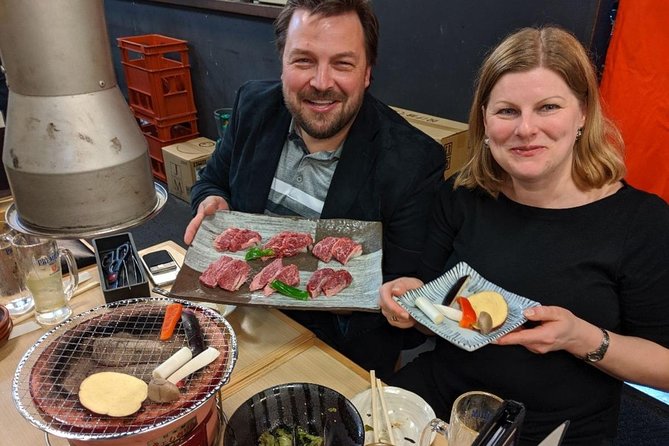
The core idea of this tour is pairing two of Japan’s most famous textures: fresh sushi and grilled Wagyu. Sushi tends to feel clean and precise. Wagyu grilling feels smoky, rich, and comforting.
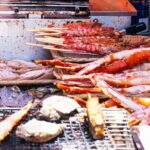
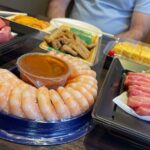
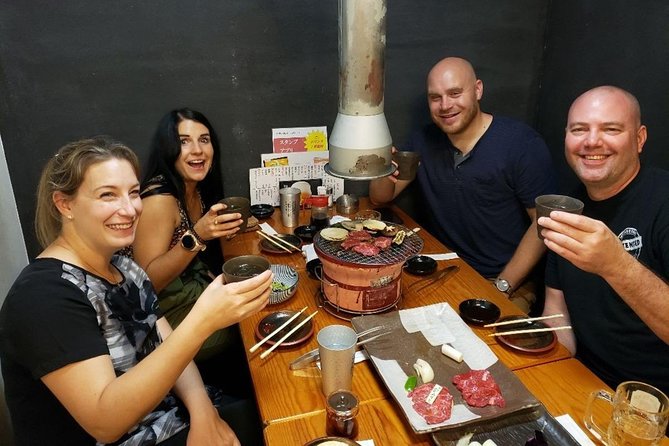
The Wagyu part is specifically described as being grilled on shichirin stoves. That detail matters because it changes the experience from “order and eat” to “watch heat and timing.” When you can see the cooking method, you can taste the difference between fat rendering and how the meat is handled.
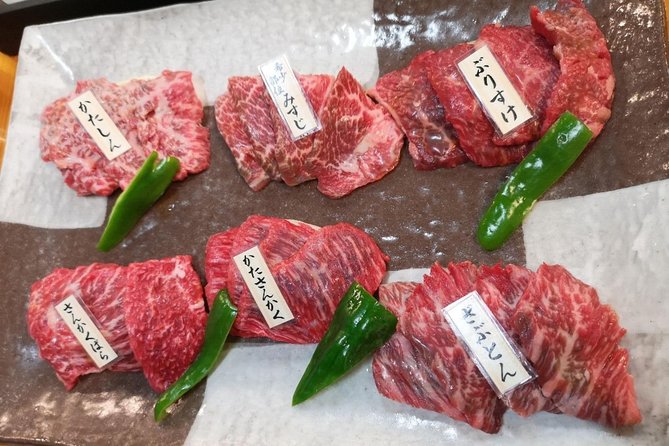
Some groups also describe the format very specifically, like an 8-piece omakase sushi set and A5 Wagyu tasting (in one case described as five cuts). Even if your exact breakdown varies, the guiding promise is consistent: you’ll get sushi plus a meaningful Wagyu portion, not just a token taste.
Price and Value: Why $111.62 Can Make Sense in Tokyo
At $111.62 per person for about 3 hours, the math works best if you’re aiming for “one guided night” rather than “many separate meals.”
What you’re really paying for is three things at once:
- Guided sourcing (you’re taken to places you’re unlikely to find solo)
- Premium ingredients (fresh sushi and famous Wagyu beef)
- A nightlife walk with context (Kabukicho + Godzilla stop)
In other words, you’re not just buying food. You’re buying translation, timing, and access—especially with the omakase element and the shichirin grilling experience.
If you love eating, this is the kind of tour where your “food budget” gets consolidated into one ticket. If you’re a light eater who hates walking at night, you might find it pricier than a casual ramen plan. But for most people, the included tastings and the guided route justify the cost.
Guides Make It: From Casual Conversation to Better Ordering
One of the most repeated strengths in the experience is how the guides handle people. Names that come up in praise include Yuki, Molly, Megumi, Hiro, Yuma, Minnie, Aoi, Karen, and Mimi.
Common threads in the feedback are practical:
- Guides answer questions about food and daily life in Japan
- They make sure everyone understands what they’re eating
- They help with ordering choices when you’re unsure what to pick
The small-group size (max 7) seems to be the reason this stays personal. You’re more likely to have a real back-and-forth than a one-sided monologue.
If you want more out of Tokyo than just eating, this is the right style of guide: one that gives you enough cultural context to help you enjoy the city after the tour too.
Practical Tips: Weather, Smoking, and Dietary Reality
Tokyo’s weather can be extreme. The tour notes summer highs around 40°C (110°F) and winter lows around -5°C (20°F). Plan for that. Bring water in summer and layers in winter, even if the forecast looks mild earlier in the day.
Comfort matters because you’ll be walking through multiple neighborhoods at night. Wear shoes you don’t mind getting scuffed. You’ll also be outside around neon streets, so a light jacket can help even when you think it won’t.
Two notes you should treat seriously:
- Allergies and dietary needs: The tour says they can’t guarantee allergy-free food and kitchens may not belong to the operator. Substitutions might not be possible at certain stops.
- Vegetarian request: You can request a vegetarian course, but it must be done by the day before. They can’t provide it on the tour day.
Smoking is another real-world factor. The tour may visit areas where smoking isn’t prohibited, and they may not be able to change venues if that happens. If smoke bothers you, plan accordingly (and know that Japan’s smoking rules can be more location-dependent than you’d expect).
Who Should Book This Tour (and Who Might Not)
This tour is a great fit if you:
- Want sushi + Wagyu in one night without doing research
- Like nightlife neighborhoods and want a guided “what am I looking at?” experience
- Prefer smaller groups where the guide can help with ordering and questions
You might skip it if you:
- Need fully allergy-controlled dining
- Hate walking at night or get overwhelmed by neon and crowds
- Only want a light snack experience rather than a full foodie meal arc
Also, this is ideal early in your trip. A guided night like this helps you learn how Shinjuku neighborhoods work, so you’re more confident exploring on your own afterward.
Should You Book Tokyo Night Foodie Tour in Shinjuku?
If you’re excited by the combination of omakase-style sushi, shichirin-grilled Wagyu, and a guided walk through Kabukicho and Godzilla Road, this is an easy yes. The price feels fair when you consider you’re getting both premium food and a well-organized route that loops back to where you started.
Book it if you like interactive guides and you want to eat first, learn as you go, and end with dessert or a drink. Take it cautiously if allergies are a big deal for you, or if smoking could spoil the evening. If that’s your situation, you’ll want to plan for extra communication before you go.
FAQ
How long is the Tokyo Night Foodie Tour in Shinjuku?
The tour lasts about 3 hours.
Where does the tour start and end?
It starts at 1-chōme-2-8 Nishishinjuku, Shinjuku City, Tokyo 160-0023, Japan and ends back at the meeting point.
What food experiences are included?
You’ll enjoy seasonal sushi (including an omakase-style option), Wagyu beef grilled on shichirin stoves, plus dessert or drinks at the end.
Is this tour good for vegetarians?
A vegetarian course can be requested, but you must request it by the day before. Vegetarian options can’t be guaranteed if you request on the day of the tour.
Can the tour accommodate allergies?
The tour notes it can’t guarantee allergy-free food and substitutions may not be possible at every stop.
How big is the group?
The experience has a maximum of 7 travelers.
Can I get a full refund if I cancel?
Yes. You can cancel up to 24 hours in advance for a full refund.