REVIEW · MANILA
Manila Food Tour: Explore World’s Oldest Chinatown
Book on Viator →Operated by Explore Manila Tours · Bookable on Viator
Binondo smells like snacks and old stories. This small-group Manila Chinatown food walk strings together 8 Chinese-Filipino tastings in about 3 hours, starting at Binondo Church and ending with sweet hopia. It’s the kind of tour that makes the neighborhood feel understandable fast: food first, stories right alongside.
Two things I really like about it: you’ll sample sweet and savory classics rather than one-note street food, and the guides (like Nel and Jian, and others you may see such as Chloe, Jenelle, or Rian) are clearly used to moving groups through tight restaurant spaces without turning the whole thing into chaos. One practical consideration: it’s not suitable for vegans, so check your dietary needs before you book.
In This Review
- Key Things I’d Watch For in This Binondo Food Tour
- Binondo, Manila’s Oldest Chinatown: Why This Tour Works
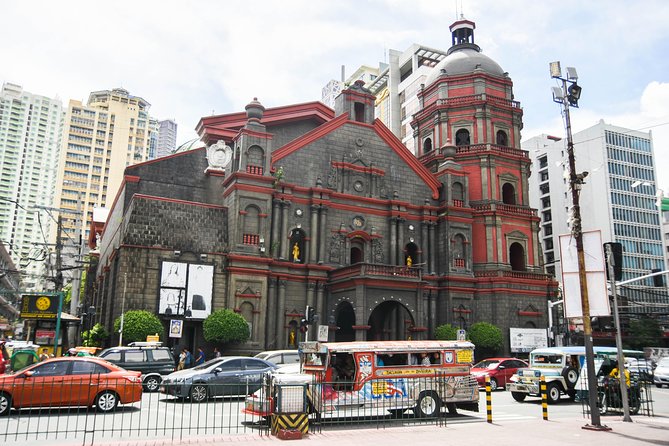
- Meeting at Binondo Church and Getting Oriented Fast
- Carvajal Street Bites: Lumpia Smells and Kuchay Ah Pie
- Dumplings and the Bread-and-Butter of Craft
- Mami Noodle Soup: Filipino Comfort Food in Chinatown Clothing
- Classic Dimsum Stop: Why This Bite Matters
- Hopia Bakery Finale: Flaky Sweet Pastries With Chinese-Filipino Roots
- Walking, Timing, and the All-Important Food Pace
- Price and Value: $60 for 8 Tastings (and a Route You Don’t Have to Hunt)
- Who This Tour Fits Best (and Who Might Want to Rethink It)
- Should You Book This Manila Chinatown Food Tour?
- FAQ
- How much does the Manila Food Tour cost?
- How long is the tour?
- Where does the tour start and where does it end?
- What is the maximum group size?
- What food and drinks are included?
- Is the tour suitable for vegans?
- Is transportation included in the price?
- Is the meeting point near public transportation?
- What if the tour is canceled due to weather or I need to cancel?
Key Things I’d Watch For in This Binondo Food Tour
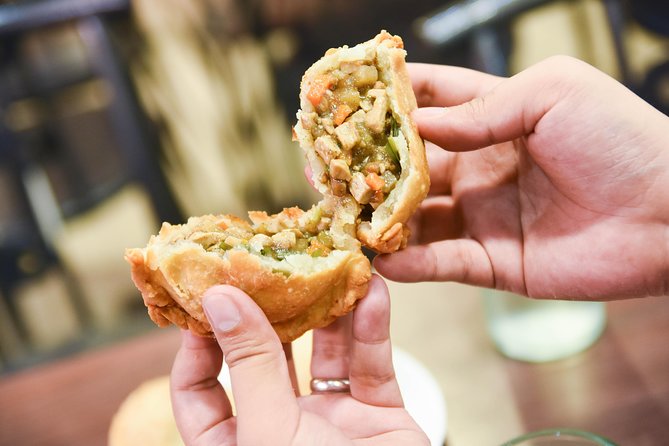
- 8 different food items that cover both snacks and more filling dishes
- Small-group format (built to keep the pacing comfortable and tables easier)
- Start at Binondo Church, a landmark that’s easy to find
- Carvajal Street to dimsum and hopia, so you get both savory and sweet finishes
- Roughly 3 hours, leaving the rest of Manila to you
Binondo, Manila’s Oldest Chinatown: Why This Tour Works
Manila’s Chinatown is not a theme park. Binondo is a real neighborhood where churches, markets, and families overlap. That’s exactly why a food tour here is smarter than trying to wing it with a map and a tight schedule.
This tour is designed around one simple idea: if you eat your way through the area, you’ll automatically learn what people actually buy and cook. You’re not just tasting food. You’re learning why it shows up, how it’s changed, and how Chinese-Filipino flavors became part of everyday Manila life.
You also get something that matters in a place like Binondo: a route that keeps you from wasting time. Instead of hunting for the next place, you move from one stop to the next while someone else handles the flow.
You can also read our reviews of more food & drink experiences in Manila
Meeting at Binondo Church and Getting Oriented Fast
Your tour meets at the Minor Basilica and National Shrine of Saint Lorenzo Ruiz (Binondo Church). That’s a big help. A recognizable landmark reduces stress, especially if you’re meeting up from a busy morning or trying to coordinate with friends.
It’s also worth noting the tour is meant to be easy on your day. It’s near public transportation, and you’ll end back at the meeting point. That means you’re not stuck figuring out how to get home after you’ve eaten your way through half of Chinatown.
The format is built around small groups. The description highlights a small group experience, and the listing also caps the total number of travelers at a set maximum. In real terms, this usually means you spend more time eating and listening, and less time waiting on huge lines and long detours.
One more detail: the tour includes a mobile ticket, which cuts down on paper searching and last-minute confusion. That’s not glamorous, but it’s a quality-of-life thing.
Carvajal Street Bites: Lumpia Smells and Kuchay Ah Pie
After your start at Binondo Church, the route heads toward Carvajal Street, where you begin with classic snack-style foods. This first stretch matters because it sets the tone.
You’ll be tasting fresh lumpia, and you’ll also try Kuchay Ah Pie. The point isn’t just variety for variety’s sake. These are early, approachable bites that help you understand the neighborhood’s flavor language right away: savory fillings, Chinese-inspired pastry dough, and the kind of comfort food that locals treat like everyday food, not a rare indulgence.
This is also where you’ll be glad you didn’t eat too much beforehand. One of the best practical tips from the experience vibe is simple: come hungry. Even if you think you can handle “just a few snacks,” you’ll be surprised how quickly the portions add up once you’re tasting more than one dish at a time.
Dumplings and the Bread-and-Butter of Craft
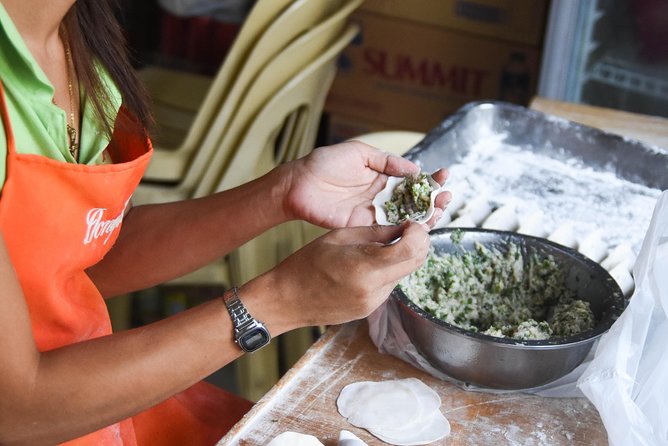
Then the tour shifts into dumpling territory, where Binondo stops being a quick snack stop and becomes a place of craft. You’ll try handmade dumplings at a spot focused on dumpling making as a real skill, not a fast assembly line product.
Dumplings are a strong choice for a guided tour. They’re easy to misunderstand if you don’t know what you’re looking at—wrapper texture, filling style, and cooking method all change the final bite. A guide helps you notice those differences instead of just saying, “It’s good.”
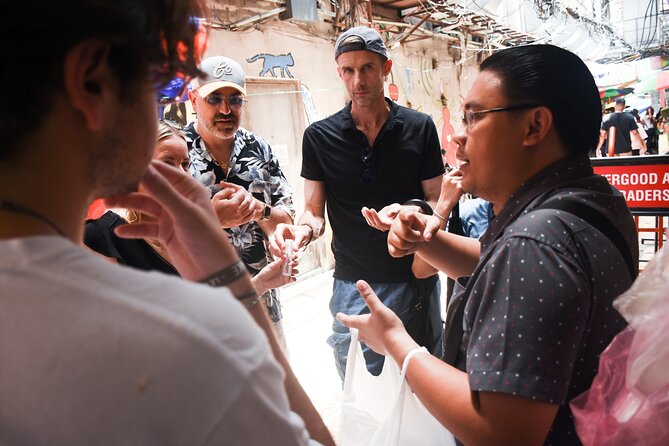
This stage of the tour is also where you’ll likely feel the value of having a group leader. Popular places can have queues, but you aren’t standing there alone trying to decode how to order. The guide’s job is to keep things moving while you focus on eating and listening.
If you’re sensitive to queues or slow pacing, this is still workable. The tour is kept to a short total duration, and the stops are spaced so you’re not waiting forever between bites.
Mami Noodle Soup: Filipino Comfort Food in Chinatown Clothing
Next up is mami, a noodle soup that fits comfortably into Filipino comfort food culture. This stop is useful because it reminds you that Chinatown food here isn’t only about Chinese dishes transplanted to Manila.
It’s also about adaptation. Mami helps explain how Filipino tastes—comfort, warmth, and satisfying broth—became part of what people in Binondo expect from “their” Chinatown food.
If you’ve ever traveled and found that food tours skew too heavily toward sweets or too heavily toward one type of dish, you’ll appreciate the balance here. Noodles reset your palate. They also make the tour feel more like a meal than a snack crawl.
Classic Dimsum Stop: Why This Bite Matters
From noodles, you move into dim sum, and this is where the tour becomes a true Chinatown highlight. You’ll try classic dimsum—a category that carries a lot of meaning in Chinese culinary culture.
For you as a visitor, dim sum is valuable because it trains your palate. You start noticing textures and styles quickly: steamed vs. fried, delicate dough vs. thicker pastry-like wrappers, and the way fillings are seasoned.
This stop is also a good moment to slow down a bit. Dimsum isn’t meant to be inhaled mindlessly. Even on a guided schedule, take a second to watch how the dish is served and to notice what flavors you can pick out on the second bite—not just the first.
Hopia Bakery Finale: Flaky Sweet Pastries With Chinese-Filipino Roots
The tour closes at a historic bakery famous for hopia. Hopia is one of those foods that feels simple until you’ve had a few varieties. You’ll taste a range of flavors, and the pastries come with that distinctive flaky, pastry-forward texture that makes it feel like a proper finale.
This last stop is especially important for two reasons.
First, you end on sweet. That’s how most successful food tours work: you eat savory through the middle, then you finish with something that sticks to your memory.
Second, hopia represents the Chinese-Filipino angle in a way that’s easy to understand. Even if you don’t know the exact background of each filling, the pastry itself tells the story through texture and technique.
Walking, Timing, and the All-Important Food Pace
The tour runs for around three hours and then you’re done. That’s a great structure for two types of trips:
- You want a strong local experience but don’t want your entire day tied up.
- You want something that feels complete without forcing you to book every meal around it.
The walking is part of the experience, but it’s not described as an all-day hike. It’s more like a neighborhood stroll with frequent stops. Still, bring comfortable shoes. If your feet are unhappy, your appetite won’t feel like a fun bonus—it’ll feel like a chore.
Also, the tour works best when you treat it as your main food plan for that window. If you arrive already full from breakfast, you may still have a good time, but you’ll likely miss the joy of tasting everything as it was meant to be tasted.
Price and Value: $60 for 8 Tastings (and a Route You Don’t Have to Hunt)
At $60 per person, this tour is priced like a mid-range food experience. What makes it feel fair is the package: you’re not just paying for food. You’re paying for the sequence—getting you from the right starting landmark to the right places in the right order, with eight different food items across sweet and savory, plus tea, soda/pop soft drinks, and bottled water.
A DIY food day in Binondo can work, but it’s harder than it sounds. You’ll spend time figuring out which places are worth it, how to order, and whether you’ll find space to eat. Here, the guide helps you handle the crowded parts so you spend your time tasting instead of negotiating.
Group size also affects value. Smaller groups tend to get through stops more smoothly, and that can matter a lot in a neighborhood where popular spots can be tight.
So ask yourself: do you want to spend your limited time in Manila trying to outsmart a food map? Or do you want a planned route with enough variety to leave you satisfied—and maybe slightly stuffed?
Who This Tour Fits Best (and Who Might Want to Rethink It)
This is a strong match for you if you:
- enjoy guided walking food tours and want context with each bite
- want a taste range instead of one single specialty
- like learning how Chinatown food became part of everyday Manila culture
It may not fit as well if:
- you’re vegan (it’s not suitable for vegans)
- you dislike guided walking or you need very quiet, minimal group interaction
- you’re hoping for a light, snack-only experience (you’ll likely feel it by the end)
One more small note from the experience tone: some guides have been described as flexible about food restrictions. But because the tour is explicitly not vegan-friendly, dietary questions should be handled upfront before you assume options exist for your specific needs.
Should You Book This Manila Chinatown Food Tour?
If you’re going to see Binondo anyway, I think this is one of the best ways to experience it in a short amount of time. The tour is built to give you a full arc: start with savory snacks, hit dumplings and dimsum, enjoy the comfort of mami, then finish with hopia.
Book it if you want variety, walkable route structure, and a guided explanation that helps the neighborhood make sense. Pass if your diet is vegan, or if you’re only looking for one or two items rather than a full tasting lineup.
Bottom line: for $60 and about three hours, you get a lot of food and a clearer view of Chinatown life than you’ll get from a random self-guided stroll.
FAQ
How much does the Manila Food Tour cost?
The price is $60.00 per person.
How long is the tour?
The duration is about 3 hours.
Where does the tour start and where does it end?
It starts at Minor Basilica and National Shrine of Saint Lorenzo Ruiz (Binondo Church), 1006 Plaza Lorenzo Ruiz, Binondo, 1006 Metro Manila, Philippines. It ends back at the meeting point.
What is the maximum group size?
The tour lists a maximum of 15 travelers, and it also notes a small group format that keeps the group to max 10.
What food and drinks are included?
The tour includes snacks of 8 different food items (sweet and savory), plus soda/pop soft drinks, tea, and water. Bottled water is also included.
Is the tour suitable for vegans?
No. The tour is not suitable for vegans.
Is transportation included in the price?
No. Private transportation is not included.
Is the meeting point near public transportation?
Yes. The meeting point is near public transportation.
What if the tour is canceled due to weather or I need to cancel?
The experience requires good weather. If it’s canceled due to poor weather, you’ll be offered a different date or a full refund. You can cancel for a full refund up to 24 hours in advance.