REVIEW · TOKYO
Shinjuku Golden Gai Food Tour
Book on Viator →Operated by Arigato Japan KK · Bookable on Viator
Shinjuku at night is a whole different city. This Golden Gai Food Tour strings together classic alleys, famous neighborhoods, and a simple food plan so you’re not wandering hungry and clueless. I like that it pairs great street-food hits with actual place-based stories, and I also like the small-group feel with a real end point in Golden Gai nightlife.
You’ll get four food stops and two included drinks, so the value feels more like a guided plan than a “meet and snack” situation. The one drawback to keep in mind: this area is made of tiny venues and narrow streets, so you may face tight seating or standing, especially toward the later bar stop.
In This Review
- Key highlights
- Entering Kabukicho at 5:00 pm from Nishishinjuku
- Tajimaya Coffee and Omoide Yokocho: Memory Lane warm-up
- Kabukicho stop: ramen tasting and the reality of nightlife districts
- Hanazono Shrine: a short cultural reset in the middle of the noise
- Golden Gai finish at Araku Bar: two drinks, tiny pubs, and optional karaoke
- Food stops breakdown: yakitori, ramen, sushi, and seasonal surprises
- Price and value: what $217 buys in a walk-and-taste Tokyo night
- Guide quality and group dynamics: why names matter
- Who should book—and who should consider another option
- Should you book this Shinjuku Golden Gai Food Tour?
- FAQ
- How long is the Shinjuku Golden Gai Food Tour?
- What time does the tour start?
- Where do I meet and where does the tour end?
- What’s included in the price?
- Can the tour work with vegetarian or pescetarian diets?
- Is karaoke part of the experience?
- Is cancellation free, and how late can I cancel?
Key highlights
- 4 food stops spanning yakitori, ramen, and sushi options (plus seasonal picks)
- 2 drinks included, with a final Golden Gai bar finish at Araku Bar
- Omoide Yokocho and its Memory Lane vibe, including bars tied to post-1950 atmosphere
- Golden Gai set-up designed for first-timers, including the “200+ tiny pubs” scale
- Max 10 travelers, which helps the tour move through small spots more smoothly
Entering Kabukicho at 5:00 pm from Nishishinjuku
This tour starts in the early evening at 5:00 pm, before Shinjuku fully turns into a sea of noise. You’ll meet at a specific address in Nishishinjuku: Shinjuku City, Nishishinjuku, 1-chōme26 Shinjuku Suisan Building. That matters, because these areas can be hard to navigate without someone who knows the entrances and shortcuts.
It also helps that the tour is built as a walk-first route. It’s about 3 hours total, and you’ll spend most of that time moving through Kabukicho and Golden Gai rather than waiting around. The pace is doable for people with moderate physical fitness (think: lots of pavement, stairs maybe, and night crowds).
The group size is capped at 10, so you’re not getting swallowed by a big bus-tour pack. In the reviews, guides like Jacob, Giula, Yoshi, Wesley, Rayhe, Alex, Osmar, Sandra, and Tommy show up repeatedly as a key part of why the experience lands. When a small group has a strong guide, the night feels less chaotic and more like a plan.
You can also read our reviews of more food & drink experiences in Tokyo

Tajimaya Coffee and Omoide Yokocho: Memory Lane warm-up
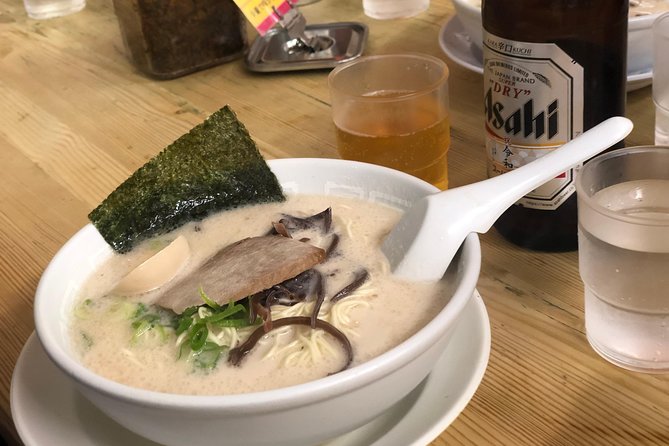
Your first stop is Tajimaya Coffee, where you meet your guide and get the trip rolling. It’s a practical start: a real “find this place, then we go” moment before the walking gets more intense. Since this is a meeting-point-driven tour, arriving on time really helps you settle in before you’re part of the flow.
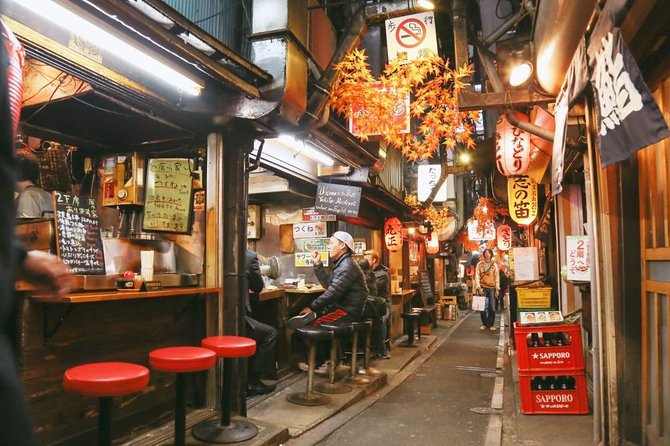
Then you head to Omoide Yokocho, also known as Memory Lane. The tour frames it as a street that feels authentically unchanged since the 1950-era bar era. Even if you only catch a few minutes of it, the atmosphere is the point: narrow lanes, old-school izakaya energy, and the kind of place where food and conversation happen close together.
This segment also sets you up for how you should eat on the rest of the tour. You’re not supposed to arrive having already eaten your dinner. One of the best practical tips from people who did the night right: come hungry, because you’ll have several tasting-style servings across multiple stops.
Kabukicho stop: ramen tasting and the reality of nightlife districts
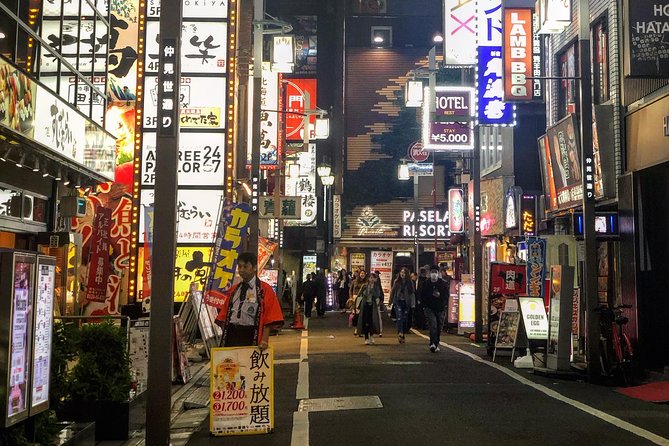
After Omoide Yokocho, you move into Kabukicho, which the tour describes as the largest and safest red light district in Asia. You’ll learn why this part of Shinjuku became one of Japan’s best-known entertainment zones. That context matters because it turns what could feel like random nightlife streets into something with meaning.
You stop for the first food sample here: the tour includes a ramen tasting (and the overall plan includes other seasonal dishes too). Ramen on this route works well because it’s filling but not too heavy for walking. It also gives you a baseline flavor profile early on, so when you later try yakitori or sushi-style bites, you can actually compare.
One consideration: Kabukicho and Golden Gai are famous for being packed and small. A review complaint that’s worth taking seriously is the chance of tight seating later in the evening, including situations where a venue is standing-room heavy. The fix is simple: keep your expectations flexible, and treat the stops as tastings rather than sit-and-stay dinners.
Hanazono Shrine: a short cultural reset in the middle of the noise
There’s a quick stop at Hanazono Shrine during the route. Even without long explanations, this kind of pause helps you reset your senses. It’s a nice contrast between the noise and neon around you and the idea of a quieter place tucked into the city fabric.
From a practical perspective, a short break like this can also make the rest of the evening easier. You’ll have less “end-of-tour fatigue” and more ability to enjoy the next food and drink stops.
Think of it as a moment to slow down for two reasons: you’ll be moving through very loud areas after, and you’ll want to stay present for the Golden Gai portion where the real payoff is the bar-hopping layout and tiny venues.
Golden Gai finish at Araku Bar: two drinks, tiny pubs, and optional karaoke
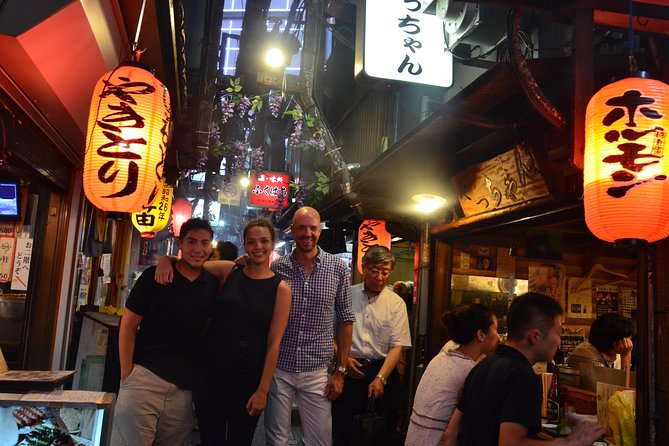
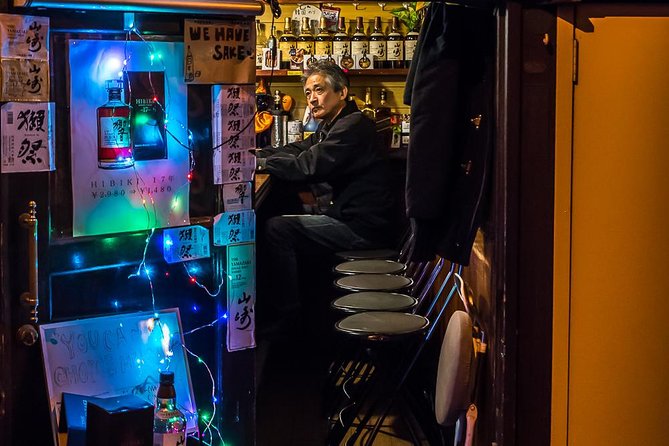
The tour ends in Shinjuku Golden Gai, with the stated ending point at Araku Bar in Golden Gai. Golden Gai is famous for the density of nightlife spaces—more than 200 pubs and stalls, including places tied to karaoke. Your guide gets you into the right “starting lane,” which is huge, because Golden Gai is not a neighborhood you naturally understand as a first-timer.
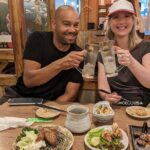
You’ll have an included cool drink while you’re in the area. That matters because Golden Gai’s best moments often happen while you’re actually inside one of those tiny bars, not just outside photographing alleys. The tour setup makes it easier to participate in the nightlife rather than only observe it.
Karaoke is also an option: the tour notes that a karaoke after party is available. If you like the idea of ending with group energy, that’s the add-on that can turn the last hour into something more memorable than just another food stop.
A few more Tokyo tours and experiences worth a look

Food stops breakdown: yakitori, ramen, sushi, and seasonal surprises
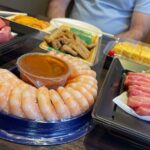
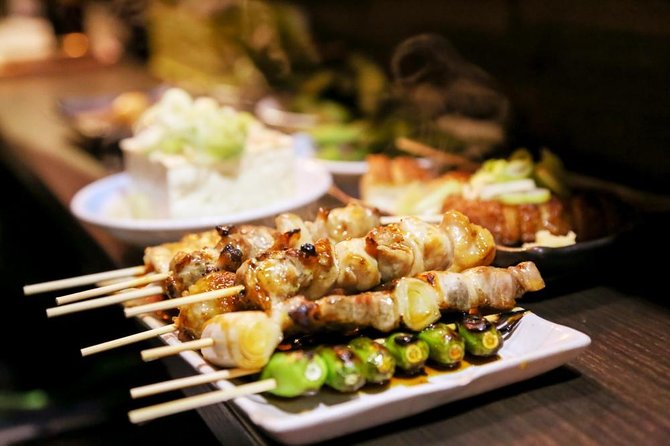
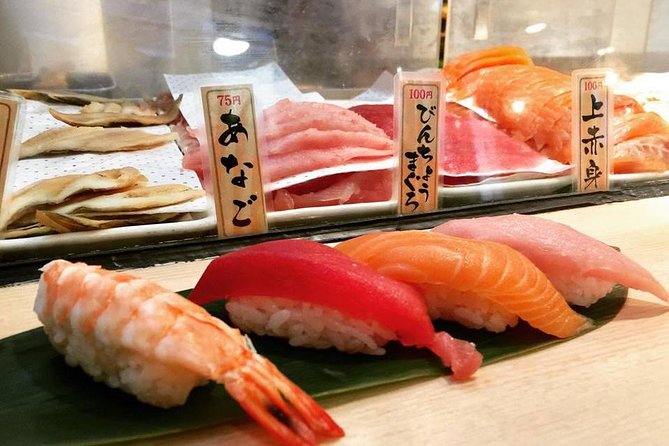
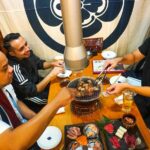
This is a 4 food stop plan, not a single restaurant crawl. The tour specifically calls out yakitori, ramen, and sushi as part of the tasting mix, and it also notes seasonal dishes. That variety is the best argument for booking: you get multiple Japanese “everyday hits” in one night without needing to research what to order in each place.
Yakitori works because it’s easy to taste across different flavors and styles, even when servings are small. Ramen is a comfort anchor, and sushi-style bites are a satisfying counterpoint to grilled and noodle dishes.
Because these are tastings, your best move is timing. Don’t snack heavily before you start, and plan to treat each stop as one step of your dinner. One recurring praise in the reviews is exactly that: people felt they ate a lot because the route keeps moving and the tastings stack up.
If you’re the kind of eater who wants a single “wow” meal at a top-end restaurant (like a kaiseki-level dinner), this tour may feel more like neighborhood eating done expertly than a luxury-food showcase. Still, for most first-timers, that’s the point: real Shinjuku flavors and small places you’d likely skip on your own.
Price and value: what $217 buys in a walk-and-taste Tokyo night
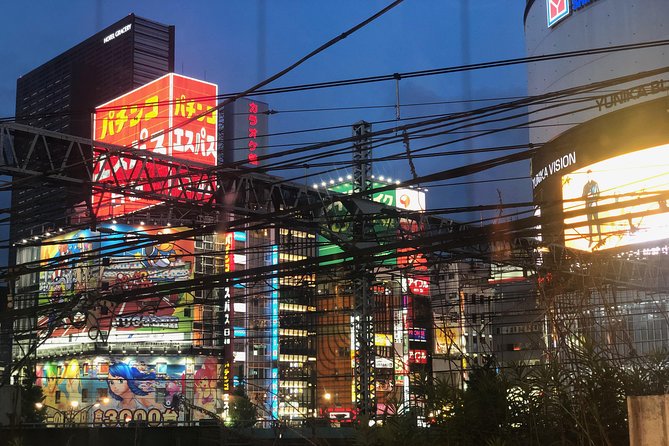
At $217 per person for about 3 hours, you’re paying for three things: a local guide, multiple tastings, and the drinks included at the end. The tour includes a local guide, two drinks, and four food stops. So this isn’t just walking plus two bites—it’s structured eating.
Is it expensive? Yes, it’s not cheap. But Tokyo food and nightlife logistics cost money: small venues, guide coordination, and the time spent getting everyone through. Also, the tour is capped at 10, which usually increases per-person cost compared with big groups.
One practical way to judge value: ask yourself whether you want a planner. If you’re the type who hates deciding what to order and where to go, this kind of guided night often feels worth it quickly. If you already know exactly where you want to eat and you love researching restaurants, you might find you’re paying more than you would for a DIY version. Still, Golden Gai is the sort of place where “research” doesn’t always translate to “easy entry.”
Guide quality and group dynamics: why names matter
The guide is the difference-maker on this tour. In the reviews, guides like Jacob, Giula, Yoshi, Wesley, Rayhe, Alex, Osmar, Sandra, and Tommy get called out for doing two jobs at once: making the route understandable and making the food feel meaningful.
When a guide is good, you don’t just eat—you learn the quick version of why each spot matters and how to handle the social rhythm of tiny bars. Several reviews mention learning etiquette, history, and cultural context alongside the tastings. That’s exactly the kind of add-on that makes the money feel more like it’s buying clarity, not just calories.
Group size helps here. With max 10, you’re more likely to keep up, hear explanations, and avoid long waits at each venue. The tradeoff is that small venues might still be tight. There’s at least one complaint in the feedback about seating coordination and the reality that some restaurants can’t always fit larger groups. If your group is sensitive to comfort, go in expecting the spaces to be compact.
Who should book—and who should consider another option
This tour is a strong fit if you want:
- A guided first-night in Shinjuku focused on food and nightlife neighborhoods
- A plan that mixes yakitori, ramen, and sushi-style bites
- Context for Golden Gai and Kabukicho so you’re not just walking past loud streets
It’s also a good option if you want flexibility for vegetarian and pescetarian diets. The tour states it’s vegetarian friendly and pescetarian friendly, and that’s a big help in Japan where meat often shows up everywhere.
I’d also suggest it for people who feel intimidated by where to start in Golden Gai. One of the most repeated wins in the feedback is how helpful it is to have someone who knows the lanes and helps you find the right places.
Consider a different option if:
- You want only high-end restaurant meals, not tastings in small venues
- You’re extremely picky about food quality and variety and need guarantees
- You’d hate any chance of standing-room conditions in later stops
Should you book this Shinjuku Golden Gai Food Tour?
I’d book it if this is your first real night in Shinjuku and you want maximum payoff per hour: four tastings, two drinks, and a guided path through Omoide Yokocho, Kabukicho, and Golden Gai. It’s also easier to justify the price when you factor in coordination and the included drinks, not just the food items.
If you’re sensitive to tight venues or you’re hunting for a single “big fancy” meal, you might feel happier with a different kind of food experience. But for the rest of us, this is a practical way to eat local and understand why Shinjuku’s nightlife is famous in the first place—while still ending in Golden Gai with time to keep exploring on your own.
FAQ
How long is the Shinjuku Golden Gai Food Tour?
It runs for about 3 hours.
What time does the tour start?
The start time is 5:00 pm.
Where do I meet and where does the tour end?
You meet at Shinjuku City, Nishishinjuku, 1-chōme26 in the Shinjuku Suisan Building area, and the tour ends in the Golden Gai area, specifically at Araku Bar.
What’s included in the price?
The tour includes a local guide, two drinks, and four food stops. Food and drink outside what’s specified aren’t included.
Can the tour work with vegetarian or pescetarian diets?
Yes. The tour notes flexibility for pescetarian and vegetarian travelers.
Is karaoke part of the experience?
Karaoke after party is available, and the tour ends in Golden Gai, where karaoke bars are part of the local scene.
Is cancellation free, and how late can I cancel?
You can cancel for a full refund up to 24 hours before the experience starts.