Sexier than your average food walk. This Osaka night tour takes you into the Yukaku past and pairs it with street-level eats in two historic areas. You’ll learn why Tobita Shinchi is often described as the last of its kind in Japan, then shift to Shinsekai’s old Luna Park vibe for a food-and-walk night.
I especially like the small group size (up to 8 people). That matters here, because the tour isn’t just sightseeing—you’re moving through sensitive nightlife streets with clear guidance on how to act. I also like the food focus: you’re not limited to the usual safe picks, and you get Osaka favorites like kushikatsu and doteyaki alongside a drink.
One drawback to consider: this is a walking tour at night, with a strong emphasis on district etiquette and history, not a long sit-down meal. If you want more time just wandering freely in the red-light area, you may feel the schedule runs tight.
In This Review
- Key highlights you’ll care about
- What you’re really buying with a $79 Yukaku night
- Tobita Shinchi: nearly 100 years of retro streets
- Shinsekai and Tsutenkaku: walking while you eat
- Osaka food stops: kushikatsu, doteyaki, and drink pairings
- Small group, big rulebook: respect in a red-light area
- Practical tips for the 6:00 pm start and 3.5 hours on foot
- Should you book Hidden Osaka: Yukaku Red Light Tour & Culinary Adventure?
- FAQ
- What is the duration of the Hidden Osaka tour?
- What time does the tour start?
- Where do we meet, and does it end nearby?
- Is the ticket mobile?
- How many people are in the group?
- Which areas are included?
- What food will we try?
- Is this tour appropriate for everyone?
- How much should I budget for food and drinks?
- Is there free cancellation?
Key highlights you’ll care about
- Tobita Shinchi history in context, including the street’s nearly 100-year retro character
- Shinsekai and Tsutenkaku food-walk energy where you eat while you move
- Bold izakaya picks like kushikatsu and doteyaki, plus drink pairings
- Respectful guidance for what to notice—and what to avoid—in the Yukaku district
- Small group pace (maximum 8 people), good for questions and smoother movement
What you’re really buying with a $79 Yukaku night
For $79, you’re paying for more than two neighborhoods and a few bites. You’re paying for a local, language-friendly guide team and a planned route that handles the “how do I act here?” part—especially important in an adult nightlife district. The tour runs about 3 hours 30 minutes and starts at 6:00 pm, which is the sweet spot for Osaka after-work energy.
Here’s the practical part: Osaka nights can be cash-heavy once you’re inside izakayas. The tour notes an average Izakaya spend of ¥4000, so treat the base price as the guided experience and budget extra for food and drinks. In fact, some people recommend choosing the base tour when possible, then paying for food directly to keep control of costs.
This is also framed as an adult experience. You should go in with open-mindedness and basic comfort around mature nightlife topics. If you want a mellow cultural stroll with zero edge, this probably isn’t your match.
You can also read our reviews of more tours and experiences in Osaka.


Tobita Shinchi: nearly 100 years of retro streets
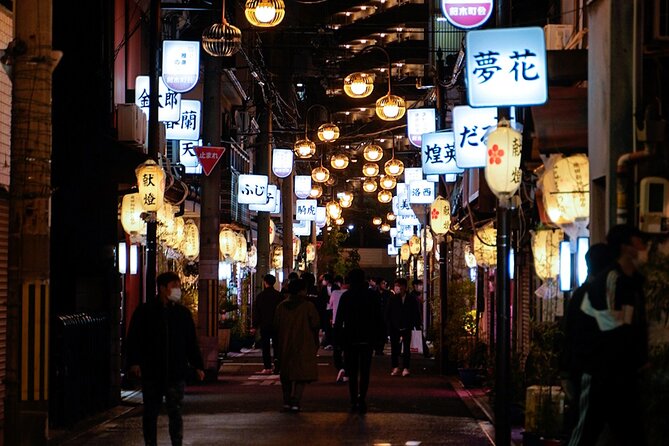
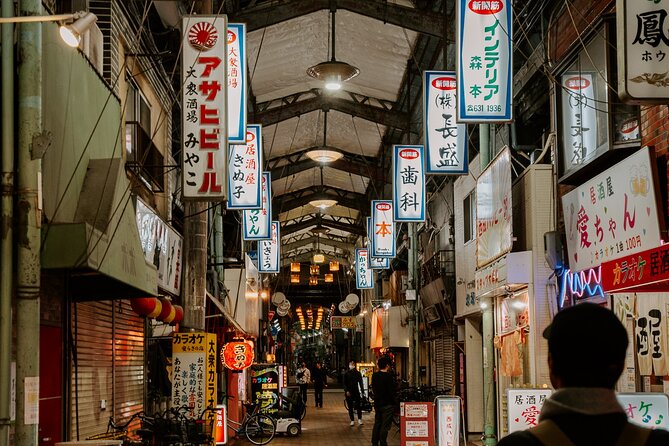
Your first stop is Tobita Shinchi, a long-running nightlife street area with a retro shopping feel that’s been around for nearly 100 years. That alone is a big draw: you’re not just learning terms in a classroom. You’re standing in the kind of street layout that shaped how the Yukaku district is understood today.
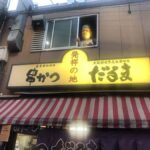
The tour also points you toward specific historical sights, plus a fun pop-culture breadcrumb: you visit a building tied to the model for the Demon Slayer red-light district look. That gives you a quick “aha” moment when you realize how modern media borrows street form and signage style.
Time-wise, this stop is about 1 hour. It’s enough to grasp the setting and hear the context, but it’s not a long free-roam session. If you love wandering slowly and staring at storefronts, plan to treat this as guided orientation first, then your own exploration afterward.
One more thing I like here: the tour is explicit about what makes Tobita significant. It’s positioned as the last of its kind in Japan—so you’ll leave with a reason behind the visit, not just photos.
Shinsekai and Tsutenkaku: walking while you eat
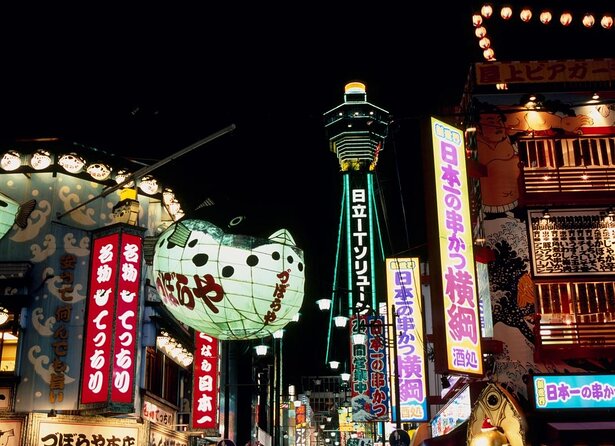
Next comes Shinsekai and Tsutenkaku. This is where the night shifts tone. The area used to be the site of Luna Park, and you can feel that history in the street vibe: old Osaka amusement-era bones, with local hangout energy layered on top.
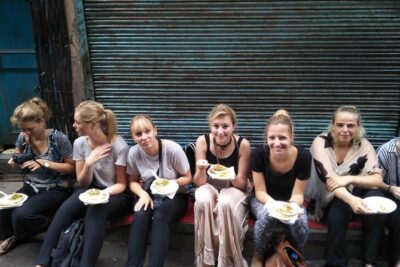
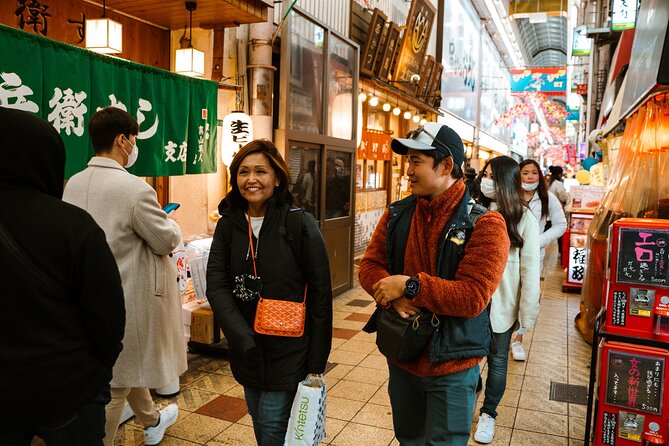
The tour includes a 2-hour stretch where you walk while eating. That format is great for two reasons. First, it keeps things moving (so you don’t spend your whole trip stuck in lines). Second, it lets you connect flavors with the neighborhoods they belong to. In other words, the food isn’t random. It’s tied to where you are.
You also get guided history—specifically about the founder of Tsutenkaku—so you understand why that landmark matters. And yes, you’ll likely pass small bars where locals snack and socialize. Some guides add practical observations too, like how the streets function at night and what kinds of places you’ll see along the way.
Potential drawback: because you’re walking and eating, there isn’t much time to slow down for extra sightseeing. If your ideal food tour is mostly standing still and talking over plates, this part can feel like “keep moving” rather than “sit and savor.”
Osaka food stops: kushikatsu, doteyaki, and drink pairings
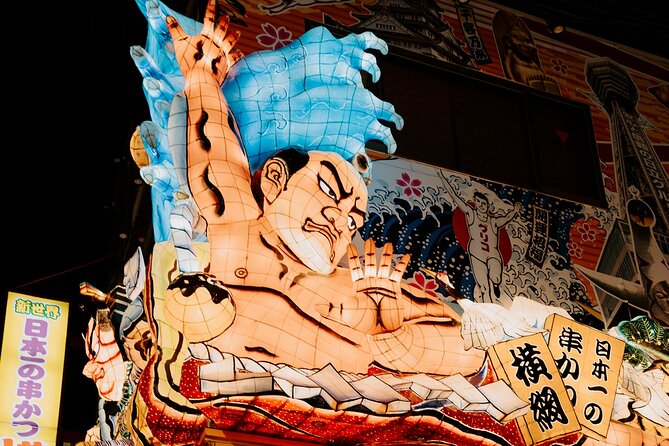
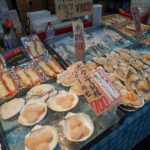
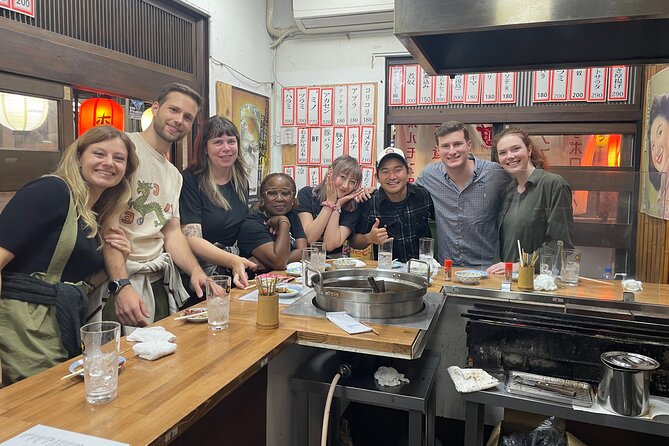
The food portion is built for bold eaters. The tour explicitly signals that you’ll try things you might not order on your own, and it pairs dishes with drinks to match. That pairing matters in Osaka: the drink choice can change how a fried, salty, or savory bite lands.
Two named highlights are kushikatsu and doteyaki:
- Kushikatsu is Osaka-style skewered cutlets, usually served with sauce and eaten quickly—so you get that street-food rhythm.
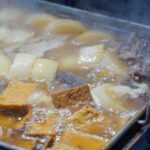
- Doteyaki is a stew-like dish made with ingredients like octopus, typically hearty and comforting, which balances the lighter snack vibe of fried items.
What I think is most valuable here: you’re not just being fed. You’re being explained. Guides are praised for picking foods you wouldn’t naturally choose and for giving enough context that you understand what you’re tasting and why it’s part of Osaka street culture.
Also, a reality check: the tour notes you should be careful with allergies, and the operator says they won’t be responsible for allergies or accidental ingestion. If you have serious dietary limits, message the provider before you book so you can confirm what’s realistic for your needs.
Small group, big rulebook: respect in a red-light area
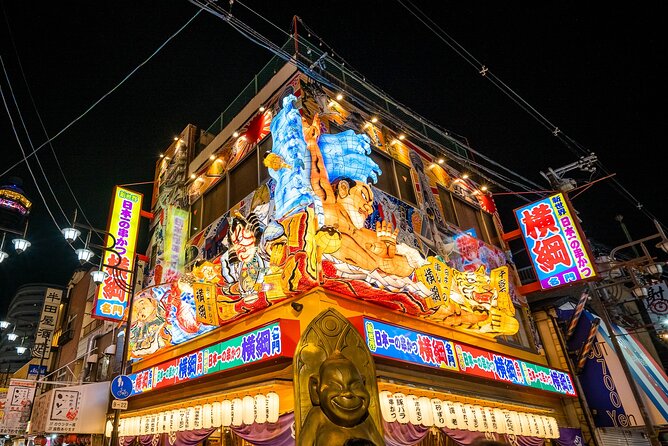
This is the heart of the experience—and also the thing that keeps it from being for everyone.
The tour through the Yukaku district is described as respectful and protocol-driven. You’ll learn what to notice and how to behave in a way that doesn’t turn a historical nightlife area into voyeurism. The tour even frames the night as including explanations of legality issues many people don’t fully grasp.
That kind of guidance is a lot of value for the money. In cities like Osaka, nightlife streets can look confusing if you’re unsure what’s private, what’s public, and what’s just for locals. Having someone who understands the norms helps you avoid awkward mistakes.
The vibe is also helped by the guides. Names that show up often include Leo, Rui, and Haruki—and across that group, the pattern is the same: humor plus clear explanations plus an effort to keep the group comfortable. People mention guides engaging questions and making the walk feel less like a lecture and more like a cultural conversation with a knowledgeable local host.
If you prefer completely polished, museum-style history, you might find this too human and too street-level. But if you want real rules and real context, this approach fits.


Practical tips for the 6:00 pm start and 3.5 hours on foot
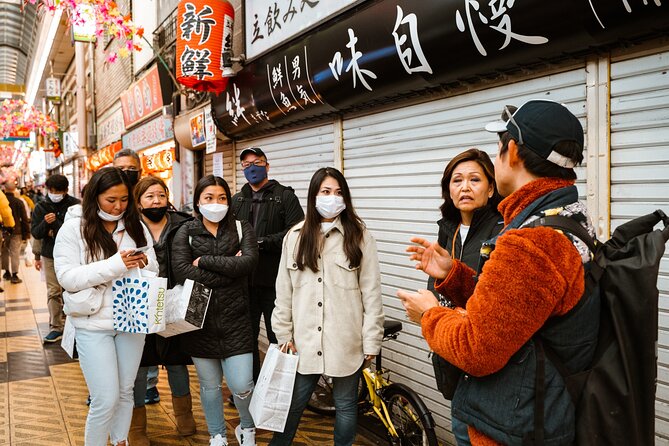
Night tours are fun, but they come with logistics. Start time is 6:00 pm, and you’ll be on your feet for a total of about 3 hours 30 minutes. The route uses public transit area access, and the operator lists the meeting point at Causerie 1-chōme-2-28 Taishi, Nishinari Ward, Osaka (557-0002). The tour ends back at the meeting point.
Come prepared for walking and weather. The experience requires good weather, and if it’s canceled due to poor weather, you’ll get offered another date or a full refund. People also specifically mention bringing an umbrella because rain can happen.
A few more practical pointers:
- Eat lightly before you go, especially if you’re sensitive to long walking periods. The itinerary is built around snacks and short stops rather than one long meal.
- Bring cash for the inevitable extras. The tour notes a typical izakaya spending level of about ¥4000.
- If you want Spanish or French options, you’ll need to send a message to arrange it.
Finally, if you’re visiting with friends, remember this is a small group (maximum 8 people). It’s easier to talk, ask questions, and keep pace.
Should you book Hidden Osaka: Yukaku Red Light Tour & Culinary Adventure?
I’d book this if you want an Osaka night that’s more honest than a standard highlights circuit. The best part is the combination: history and etiquette in the Yukaku streets plus Osaka street food like kushikatsu and doteyaki. If you like guided context and you’re comfortable with a mature nightlife setting, it’s a strong value for $79—especially as a change of pace from temple tours.
I wouldn’t book it if you need a kid-friendly or highly sanitized atmosphere, or if you hate walking on an evening schedule. And if allergies or strict dietary needs are a major concern, message the provider first so you don’t end up with a frustrating situation.
If you want a night where you understand why the streets look the way they do—and then taste Osaka in the same breath—this is the kind of tour that makes the city feel real.
FAQ
What is the duration of the Hidden Osaka tour?
The tour lasts about 3 hours 30 minutes.
What time does the tour start?
The start time is 6:00 pm.
Where do we meet, and does it end nearby?
You’ll meet at Causerie 1-chōme-2-28 Taishi, Nishinari Ward, Osaka (557-0002) and the tour ends back at the meeting point.
Is the ticket mobile?
Yes, the tour uses a mobile ticket.
How many people are in the group?
The group size is capped at a maximum of 8 people.
Which areas are included?
The tour includes Tobita Shinchi, and then Shinsekai / Tsutenkaku.
What food will we try?
You can expect Osaka dishes such as kushikatsu and doteyaki, along with food stops paired with drinks.
Is this tour appropriate for everyone?
The tour is described as not for everyone and as a mature audiences only experience. Most people can participate, but if you prefer a non-adult nightlife experience, skip this one.
How much should I budget for food and drinks?
The tour lists an average Izakaya spending amount of about ¥4000.
Is there free cancellation?
Yes. You can cancel for a full refund if you cancel up to 24 hours in advance. The experience may also be rescheduled or refunded if poor weather affects it. Confirmation is subject to availability, and you typically get it within 48 hours of booking.