REVIEW · TOKYO
Flavours of Tokyo: A Journey Through Time – Small Group Food Tour
Book on Viator →Operated by Hello! Tokyo Tours · Bookable on Viator
Food in Tokyo has a timeline. This small-group tour uses three districts and a past-to-future theme to show how ingredients, street life, and even train tracks shaped what you eat today. You’ll sample traditional bites tied to the Edo period, plus modern commuter and dessert culture.
I really like the format: maximum 9 people means you actually talk with your guide while you move through the city. I also like that the tour isn’t just random restaurant hopping—it links each bite to what was happening in Japan at the time. The main thing to consider is that it’s still a lot of walking (about 6.5 km) with stairs at subway stations, and some stops are more tasting than full-portion meals.
In This Review
- Key highlights to look for
- A 5.5-hour food timeline through Tokyo’s changing city
- Nihonbashi: Dashi lessons, ingredients you can taste, and a shrine stop
- Ginza and Yurakucho: postwar industrial Tokyo and gado shita under the rails
- Tokyo Station and Marunouchi: tamagoyaki and fruits sando for the commute home
- Akihabara: the future of food (plus desserts with pop culture)
- What you get to eat and why “tasting” can still be satisfying
- Price and value: $176 for a guided route plus a lot of food
- Guides make or break the day: Yasu, Keiko, Miko, Paiva, and more
- Logistics that matter: subway rides, stairs, and the 1-chome meeting point
- Who should book this tour, and who should skip it
- Should you book Flavours of Tokyo: A Journey Through Time?
- FAQ
- How long is the Flavours of Tokyo food tour?
- What’s the group size for this tour?
- Where does the tour start and end?
- Is transport included in the price?
- How much walking should I expect?
- What food and drinks are included?
- Can I get a refund if I cancel?
Key highlights to look for
- A three-district timeline through Nihonbashi, Ginza/Yurakucho, and Akihabara
- 14 dish tastings plus a full lunch and one included lemon sour
- Small group size (max 9) for better pacing and questions
- Edo-period foundations taught through ingredients like dashi, kombu, and katsuobushi
- Commuter Tokyo comfort food at Tokyo Station, including tamagoyaki and fruits sando
- Future-of-food stop in Akihabara, mixing classic sweets with modern pop culture
A 5.5-hour food timeline through Tokyo’s changing city
This is a 5 hours 30 minutes walking-and-tasting tour that starts at 11:30 am in Nihonbashi and ends at Akihabara Station. You’ll hit Nihonbashi, then move toward Ginza/Yurakucho and Tokyo Station, and finish in Akihabara—so you see three very different Tokyo personalities in one go.
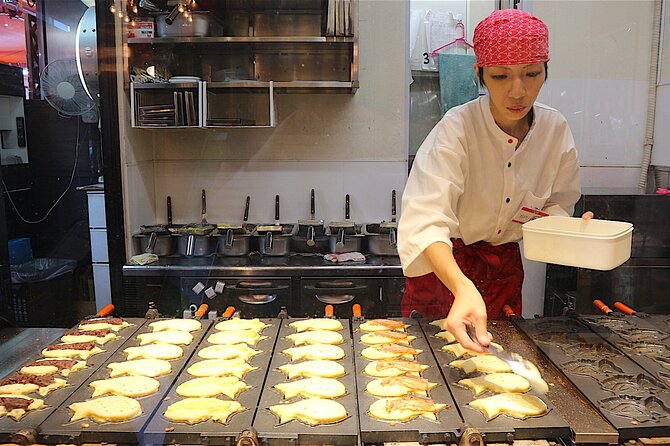
What makes the tour feel different is the structure. Instead of treating food as a list of items, your guide frames it as a story: how ingredients became staples, how the postwar city changed daily schedules (and restaurant design), and how today’s dessert culture mixes nostalgia with trend. The included food set reflects that arc, from dashi-based flavors and classic sweets to modern snacks like matcha bubble tea or ice-cream and Pokemon taiyaki.
One practical note: the tour asks for moderate physical fitness and expects around 6.5 km of walking total, plus plenty of stairs at subway stations. If you’re the type who dislikes getting your shoes wet or climbing stairs repeatedly, plan for that up front.
You can also read our reviews of more food & drink experiences in Tokyo

Nihonbashi: Dashi lessons, ingredients you can taste, and a shrine stop
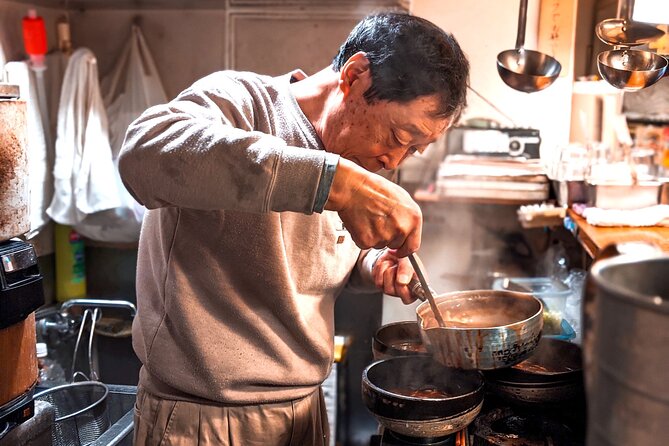
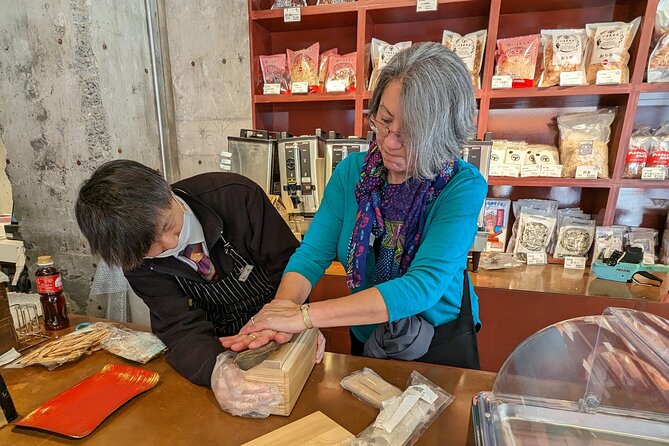
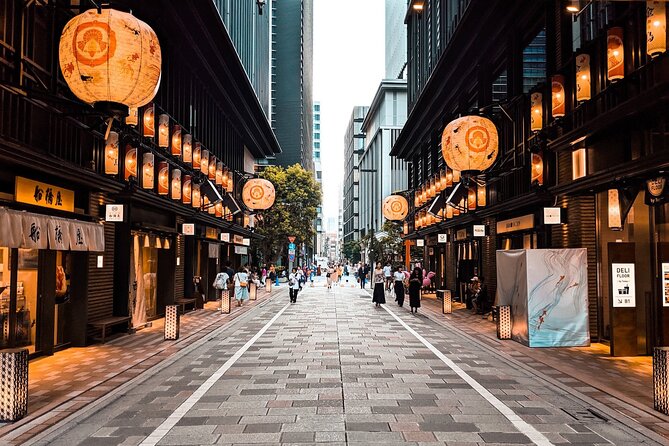
The tour begins in Nihonbashi, a place tied to old merchant Tokyo. The first stop is where the food story gets its backbone. You’ll focus on dashi, the stock that shows up as the base for many Japanese flavors, and you’ll connect it to core ingredients like kombu and katsuobushi. Even if you’ve had miso soup before, dashi is a different kind of wow: it tastes simple, but the flavor depth comes from the process and the specific ingredients.
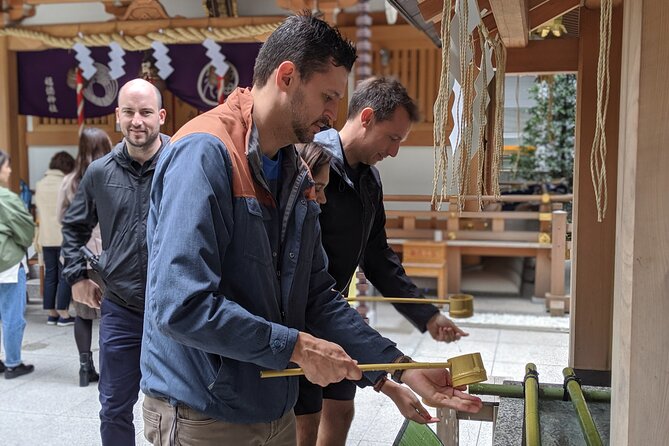
Right after that, you’ll visit Fukutoku Shrine for a short introduction to how shrines differ from temples. You’ll also learn about the idea of cleansing your spirit and praying at a shrine. This isn’t food science on a whiteboard—it’s about why certain rituals and ideas sit alongside everyday eating habits in Japan.
What I like about these first two stops is that they set you up to notice details for the rest of the day. Once you understand dashi basics, it’s easier to taste why so many dishes feel comforting and layered rather than heavy or sweet.
Ginza and Yurakucho: postwar industrial Tokyo and gado shita under the rails
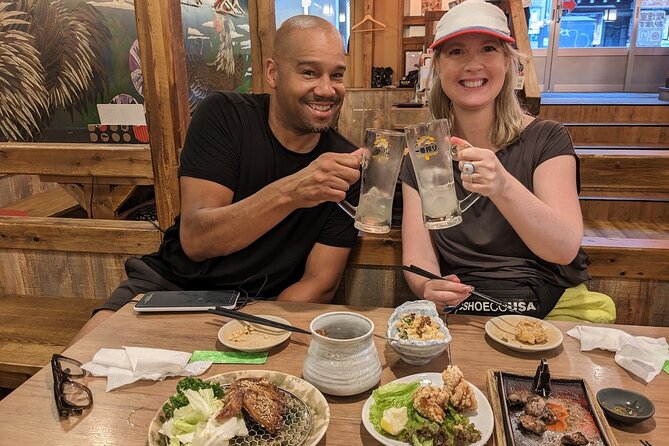
From Nihonbashi, the tour moves toward Ginza and Yurakucho. This is where the theme shifts from ingredients to daily life. You’ll learn how Japan industrialized after the war, and how that created new routines—especially the rise of salarymen and the small drinking/eating spaces that came with their schedules.
A key idea your guide introduces here is gado shita, the name for small bars and restaurants built under railway tracks. It’s a concept that makes perfect sense once you stand in that kind of urban space: food that fits into quick, flexible social time; places designed for after-work visits; flavors built to be satisfying without turning the night into a long formal meal.
You then stroll from this rail-adjacent world toward a more official-looking Tokyo landmark. A stop at the Tokyo International Forum happens on the route, and the framing is interesting: you’re walking from the railway tracks area toward Tokyo Station, so the city’s “old function meets new scale” energy stays in view.
Tokyo Station and Marunouchi: tamagoyaki and fruits sando for the commute home
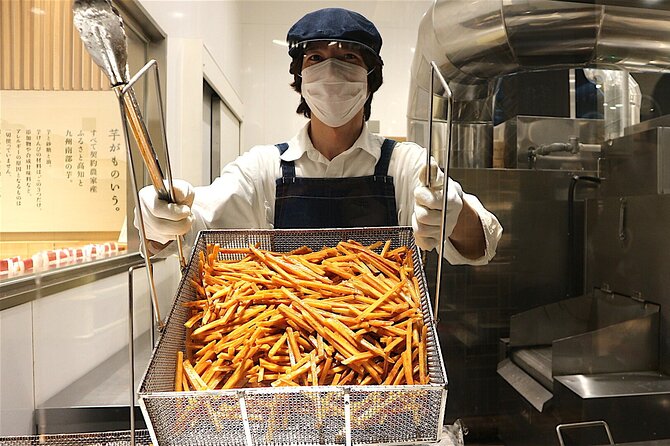
Tokyo Station is one of those places that feels like a whole city inside the city. Here, your tour shifts into snack-and-lunch territory in a very specific way: foods associated with going home after work.
At Tokyo Station Marunouchi Ekimae Hiroba and also at the Daimaru Tokyo area, you’ll try two very classic items:
- Tamagoyaki, the Japanese omelette you’ll see on every menu because it’s portable, comforting, and not shy about flavor.
- Fruits sando, made with Japanese milk bread and filled with fresh fruit and whipped cream.
Why these work on a food tour: they’re not just tasty. They represent a modern Tokyo rhythm—sweetness and softness you can pick up quickly, but still made with enough care that it feels special.
You also pass through Kitte Marunouchi, a shopping complex in the same general station zone. Even if you don’t buy anything, it’s a useful pause point because it connects the idea of Tokyo as both commuter machinery and retail theater. Plus, after hours of walking, these “stop and breathe” moments matter.
And yes, lunch is included on the tour. The tour lists lunch items like yakitori and tempura soba, along with the station favorites you’ll try here. So you’re not stuck on only tiny bites all day.
Akihabara: the future of food (plus desserts with pop culture)
The final neighborhood is Akihabara, known for electronics shops, maid cafes, and anime culture. Food here is presented with a “future of Japan” angle, meaning you’ll see how traditional techniques and ingredients get repackaged into fun, playful desserts.
This is where some of the tour’s most memorable included items show up. From the included snacks list, expect things in the orbit of:
- Pokemon taiyaki
- matcha bubble tea or ice-cream
- daifuku or dorayaki
- and other sweet bites like imo kenpi (candied sweet potato)
The stop is about 45 minutes, which is a good pace for Akihabara. You get enough time to enjoy the food without turning the area into a random electronics scavenger hunt.
Also, if you’re the kind of person who likes food that looks like it belongs on social media, Akihabara delivers. Just keep your expectations grounded: it’s still a tasting tour, so you’ll want to eat mindfully, not try to force everything into one big meal.
A few more Tokyo tours and experiences worth a look

What you get to eat and why “tasting” can still be satisfying
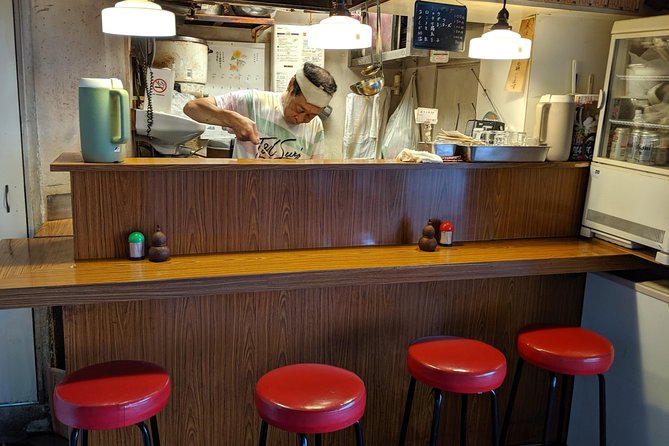
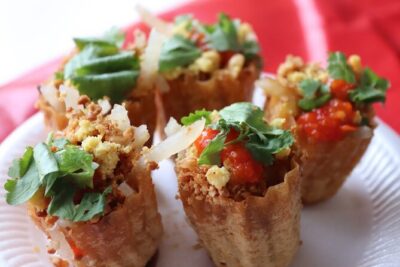
The tour advertises 14 dishes, plus lunch and one included drink: lemon sour. The included snack list is broad enough that you should finish feeling like you got a real cross-section of what Tokyo snacks and comfort foods are like, including things tied to traditional bases (like dashi with kombu and katsuobushi) and classic fried flavors (like satsuma-age).
At the same time, tasting means many portions are intentionally small. A few included items are also described in the list as something like “try/do” rather than a full plate you could happily eat as dinner by itself. That’s not necessarily a bad thing—it’s how you fit so many items into one afternoon—but it does affect how full you feel at the end.
My practical advice: treat this as a strong lunch-plus-snacks plan, not as the only meal you’ll ever need. On a day when you’ll be walking a lot elsewhere, you might still want a light dinner later, just to avoid the sugar crash.
Price and value: $176 for a guided route plus a lot of food
At $176 per person, you’re paying for more than food. You’re buying:
- a structured route across three districts,
- a guide who explains the why behind the flavors,
- and a pre-set list of snacks and meals (including lunch and lemon sour).
In Tokyo, paying for quality food one stop at a time adds up fast—especially when the tour takes you through places you might not naturally choose on your first day. The “value” here is the combination: you get help picking what to eat, you get context so it tastes more meaningful, and you get a smoother path through neighborhoods that can feel confusing even with good transit apps.
If you’re a pure food-only shopper who wants full-size plates at every stop, you might feel $176 is heavy for a tasting style. But if you like learning as you eat, the price is easier to justify.
Guides make or break the day: Yasu, Keiko, Miko, Paiva, and more
This kind of tour depends heavily on the guide’s personality and pacing. The strongest recurring praise in the provided feedback centers on guides who mix story, friendliness, and quick problem-solving.
Names that came up include Yasu, Keiko, Miko, and Paiva. People described them as engaging, accommodating, and thoughtful with the group. One report also mentioned a guide preparing a presentation booklet with ingredients, dishes, and even historical photos, and another mentioned that the guide followed up with photos and dish names after the tour—nice little touches that make the experience feel organized rather than chaotic.
I’d treat that as a good sign if you care about conversation. In a small group, you can ask questions, and you’ll likely get answers tied to what you’re tasting right then.
Logistics that matter: subway rides, stairs, and the 1-chome meeting point
The tour uses your own payment for transport, but it’s not a huge maze. You’ll take two short subway rides, and everything else is walking between areas.
Start point is:
Nihonbashi 1-chome Mitsui Building, 1-chōme-4-1 Nihonbashi, Chuo City.
End point is:
Akihabara Station 1 Chome Sotokanda.
One practical tip from the meeting-location feedback: double-check the exact station exit in your materials. One traveler said the address was clear, but the subway exit (they referenced Nihonbashi exit B12) was the missing piece at the start. So before you go, confirm the exit number and give yourself extra minutes to line up.
Also: wear comfortable shoes. Not fancy shoes. Comfortable shoes. The schedule includes stair-heavy transit stations, and the total walking is long enough to punish bad footwear.
Who should book this tour, and who should skip it
This tour is a strong match for you if:
- you’re seeing Tokyo for the first time and want a route that feels logical,
- you like your food with context (Edo ingredients, postwar habits, modern dessert culture),
- you prefer a small group and real conversations over a crowd shuffle,
- you’re okay with tasting lots of items instead of eating one massive plate at each stop.
It may not be the best choice if:
- you need a low-walking day,
- you dislike stairs at subway stations,
- or you want a purely restaurant-based crawl with large servings only.
Should you book Flavours of Tokyo: A Journey Through Time?
I’d book it if you want Tokyo food in a story-driven way—something that connects the dots between dashi-based tradition, postwar work-life dining, and future-flavored desserts in Akihabara. The small-group size and the amount of included food (14 dishes, lunch, and lemon sour) make it feel like you’re getting a full afternoon plan, not just snack samples.
I would hold off if mobility is a concern or if you’re chasing a heavy meal above all else. This tour rewards patience and curiosity. If you bring both, you’ll leave Tokyo with more than full pockets—you’ll leave with a better sense of why Japanese food tastes the way it does.
FAQ
How long is the Flavours of Tokyo food tour?
The tour runs for about 5 hours 30 minutes.
What’s the group size for this tour?
It’s a small group tour with a maximum of 9 travelers.
Where does the tour start and end?
It starts at Nihonbashi 1-chome Mitsui Building and ends at Akihabara Station (1 Chome Sotokanda).
Is transport included in the price?
Transport during the tour is not included. You’ll take two short subway rides and pay for them yourself.
How much walking should I expect?
Plan on about 6.5 km of walking total, plus stairs at subway stations.
What food and drinks are included?
You get 14 dish tastings, plus lunch (including items like yakitori and tempura soba). A lemon sour is also included.
Can I get a refund if I cancel?
The experience is non-refundable in general. If it’s canceled due to poor weather, you’ll be offered a different date or a full refund. If it’s canceled because a minimum number of travelers isn’t met, you’ll be offered a different experience/date or a full refund.