REVIEW · ROME
Rome: 3-Hour Private Golf Cart Tour with Culinary Tasting Included
Book on GetYourGuide →Operated by ROYAL TOURS ROME · Bookable on GetYourGuide
Rome hits different when you glide. This private golf cart tour is built for comfort and big views, with a local guide telling the stories as you pass the top sights. I like the fact that it’s set up to minimize walking stress, with hotel pickup and drop-off right where you’re staying.
I also really like the pace: short, guided stops at places like Campo de’ Fiori, the Colosseum, the Pantheon, and Trevi Fountain, so you get an overview without feeling trapped on a long tour. And because you ride through limited-traffic zones and tight historic alleys, you see Rome’s highlights without the usual slog.
One thing to consider: the ride goes over cobblestones and can feel bumpy. If you or someone in your group has a sensitive back, plan for that (and note that wheelchair access isn’t supported).
In This Review
- Key things you’ll notice right away
- Why a golf cart tour works so well in Rome
- Hotel pickup and drop-off: how this stays low-stress
- How the guided stops feel: short, focused, and photo-friendly
- Campo de’ Fiori: the lively starting point
- Circus Maximus: spotting the scale of ancient Rome
- Colosseum in a 10-minute hit: what you can get done
- The lunch/dinner tasting break: gelato and cappuccino moments
- Pantheon: why a quick stop still lands
- St. Peter’s Basilica: seeing it without the sprint
- Piazza Barberini to Piazza del Popolo: Rome’s grand “rooms”
- Trevi Fountain: the iconic stop (and how to enjoy it)
- Villa Borghese: a view break without long detours
- Church of Sant’Ignazio di Loyola: a quieter kind of wow
- Comfort realities: cobblestones, photos, and safety
- Price and value: is $47 per person a smart buy?
- Who this tour suits best
- Small practical tips so you enjoy it more
- Should you book this Rome private golf cart tour?
Key things you’ll notice right away
- Hotel-to-cart pickup and drop-off keeps the whole day easy and timed to your schedule.
- A reserved private golf cart means you’re not squeezed with strangers and you get more personal attention.
- Tight timing, big coverage: quick guided moments at major landmarks plus time for a real food break.
- Food tasting break in a local spot with at least some tastings featuring gelato and cappuccino.
- Cobblestones can be rough on comfort, so it’s smart to pack for a bumpy ride.
- Guides make or break it: names like Mauricio, Valerio, Leonardo, and Ruben show up with rave-level friendliness.
Why a golf cart tour works so well in Rome
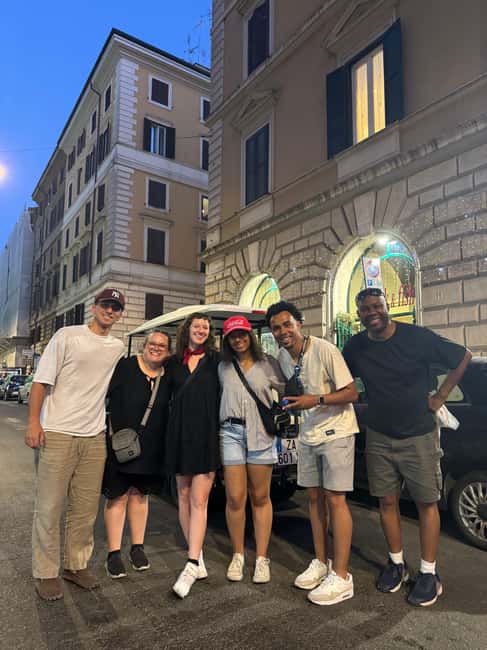
Rome is amazing, but it’s also a place where time disappears fast—especially if you’re trying to connect the Colosseum to the Vatican side in one day. A golf cart tour helps because it turns travel time into sightseeing time. You’re moving through areas you’d normally have trouble reaching, and your guide can point out details you’d miss if you were just walking past.
The biggest win for me is that this tour is designed around your comfort level. You get a driver and guide setup, plus water and photos so you don’t have to spend your energy on small logistics.
And because the tour is private, the guide can focus on your group instead of racing to keep a larger crowd moving. That makes a short tour feel less rushed.
You can also read our reviews of more food & drink experiences in Rome


Hotel pickup and drop-off: how this stays low-stress
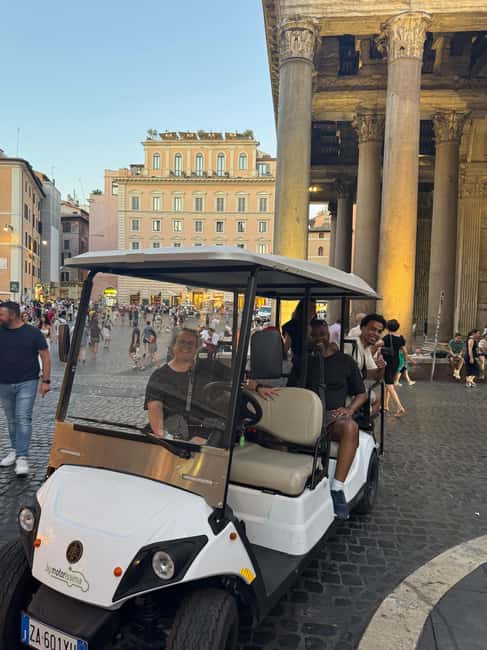
This is the kind of tour that feels practical from minute one: the driver picks you up and later drops you off right at your hotel. If you’ve ever tried to meet a tour in Rome with confusing street layouts, you already know why this matters.
The driver will call you about five minutes before pickup. That’s not just convenient—it helps you avoid the common Rome problem of wandering around while your guide looks for you.
Drop-off matters too. After a day of fountains, churches, and piazzas, it’s nice not to worry about how you’ll get back across town. It also makes the tour a great first evening option if you want to get your bearings fast.
How the guided stops feel: short, focused, and photo-friendly
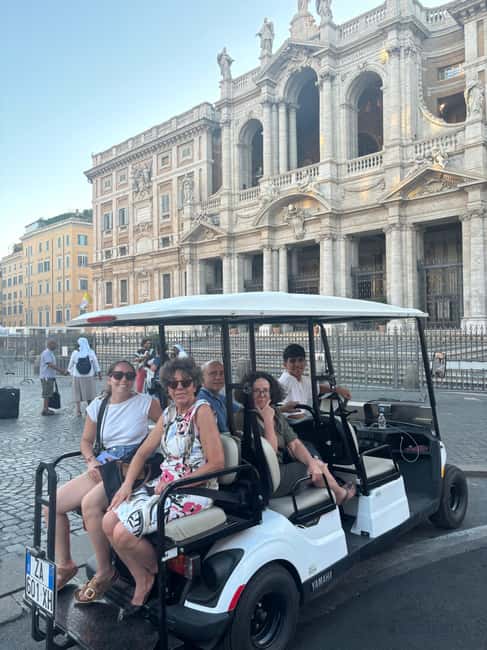
A lot of tours either (1) spend too long inside a single monument or (2) rush you past everything. This one aims for a middle lane: guided moments of about 10 minutes at each stop, which is enough time to understand what you’re seeing and take a few key photos.
A practical tip: use the quick stops to decide what you want to return to later. If something grabs you—like a church interior, a piazza view, or the vibe near a fountain—this tour gives you the context to plan your next visit without guesswork.
Campo de’ Fiori: the lively starting point
You start in the Campo de’ Fiori area, a square known for its energy and street life. Even with a short stop, your guide can set the stage: what the area represents in Rome’s daily rhythm and why it keeps pulling people in.
This opening moment is smart. You’re not immediately hit with the most famous ruins. Instead, you ease into the city in a spot that feels real, not staged. It also helps everyone in your group—kids, seniors, first-timers—settle in before the bigger icons.
Circus Maximus: spotting the scale of ancient Rome
Next up is Circus Maximus. This is one of those places where the “wow” comes from size. From the cart, you can look across the area and understand the scale in a way that’s harder to grasp from a narrow sidewalk.
Even if your time on site is brief, a good guide will connect the past to what you see today: the geography, the idea of public spectacles, and why this area mattered.
If you love Roman public life—games, crowds, power—this stop is a strong warm-up.
You can also read our reviews of more private tours in Rome

Colosseum in a 10-minute hit: what you can get done
Seeing the Colosseum from the outside can still be memorable when you know what to look for. This tour’s Colosseum stop is short, so you don’t get a full deep-dive inside. But you do get something useful: an organized introduction and a set of details that help you recognize features later when you’re back on your own.
One review highlight matched this idea: guides like Mauricio and Valerio stood out for making the experience feel fun and story-driven. That’s the point here. You’re not trying to “finish” the Colosseum in three hours—you’re building context so you enjoy whatever comes next.
The lunch/dinner tasting break: gelato and cappuccino moments
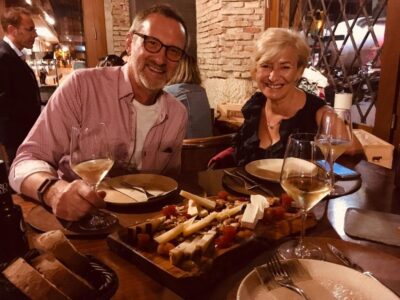
At the local restaurant, you get a food tasting break (around 25 minutes). The structure is simple: you sit, taste something local, and regroup.
In the tastings described, gelato shows up, and one highlight was a cappuccino that people said was the best they’d had in Italy. That’s a big reason this tour feels more rounded than a purely sightseeing ride—you’re not just collecting monuments, you’re collecting flavors.
Also: if you’re traveling with kids or older adults, this kind of stop keeps the tour from turning into nonstop sightseeing fatigue.
Pantheon: why a quick stop still lands
The Pantheon is one of those buildings that can overwhelm you—unless someone helps you read it. With a guided stop of about 10 minutes, you should come away understanding what makes it important and how its design still hits today.
This stop also benefits from the cart format. You’re able to get close, take photos, and then move on without spending hours weaving through crowds.
St. Peter’s Basilica: seeing it without the sprint
Then you head to St. Peter’s Basilica for another short guided stop. Again, this is about seeing the place and getting the orientation—not trying to complete every corner of the Vatican experience in three hours.
If you’re planning to visit the Vatican Museums later, this is a smart way to reduce stress now. You’ll know what to prioritize when you return.
Piazza Barberini to Piazza del Popolo: Rome’s grand “rooms”
The tour threads through several of Rome’s major piazzas, including:
- Piazza Barberini
- Piazza del Popolo
- Piazza della Repubblica
- Piazza di Spagna
- Piazza Navona
These aren’t random dots on a map. They each give you a different angle on Roman life: fashion streets, grand stairways, open squares with fountains, and classic evening energy.
In practice, the cart helps you connect these spaces smoothly. You’re not spending your tour time climbing stairs or fighting for position in tight areas. Your guide handles the flow, and you get quick orientation plus photo stops.
A note for your expectations: with short guided timing, you’ll likely enjoy these piazzas most if you’re in “overview mode.” If you want long sittings, you’ll want to build a separate plan for the one piazza you love most.
Trevi Fountain: the iconic stop (and how to enjoy it)
Trevi Fountain is the kind of place where it’s easy to feel swallowed by crowds. This tour’s approach helps because you’re moving efficiently and getting the story behind what you’re seeing, instead of just waiting.
Trevi can also be magical at night, and several guide-led experiences in the feedback leaned into evening timing. If you’re flexible with your schedule, an evening slot can be a nice way to see the fountain with more atmosphere and less daytime intensity.
Villa Borghese: a view break without long detours
You also stop at Villa Borghese, which is a good change of pace from pure monument-hopping. It’s a place where you can reset mentally, take in views, and enjoy a lighter moment in the middle or later part of the tour.
If you’re the type who likes scenic pauses—especially with older adults or families—this is a helpful stop.
Church of Sant’Ignazio di Loyola: a quieter kind of wow
One standout stop on the route is the Church of Sant’Ignazio di Loyola. This is exactly the kind of Rome stop I appreciate on a short tour: it’s memorable without being the most obvious name.
Because the guided time is limited, your guide’s storytelling matters. People specifically praised how their guides explained details and took photos, which is key in a quick church visit. When you know what to look for, even a brief stop can feel satisfying.
Comfort realities: cobblestones, photos, and safety
Here’s the honest part: Rome’s streets include cobblestones, and the cart ride can be bumpy. One helpful warning came from a guest with sensitive back issues. If that’s you, consider bringing a small cushion or wearing supportive footwear, and try to keep your expectations aligned with a “quick, scenic ride” rather than a smooth city spa.
Good news: the cart format usually feels easier than long walking for knees and balance concerns, and it lets you pause for photos without constant repositioning.
Also note: wheelchair users aren’t suitable for this tour. If mobility is a concern, you’ll want a different plan.
Price and value: is $47 per person a smart buy?
At $47 per person for a 3-hour private experience, the value depends on what you’d otherwise spend. If you’re trying to cover multiple major sights on foot, you’d spend time, stamina, and likely pay for multiple transport fixes. Here, your transport is part of the package, and your guide’s time is built in.
What makes it feel worth it:
- Hotel pickup and drop-off saves time and stress.
- You get access to hard-to-reach historic lanes in a way walking can’t match.
- You receive photos and water, which reduces the “I guess we’ll figure it out” moments.
- The stop for food tasting turns it into a real experience, not just a drive-by.
What might make it feel less worth it:
- If you want lots of museum time or long indoor stays at one place, a three-hour overview tour may not match your style. This is better for orientation and highlights.
Who this tour suits best
I think this tour is especially good for:
- Couples who want a romantic overview without hours of walking
- Families who need a route that works for kids and keeps breaks built in
- Seniors or anyone who wants to see a lot without constantly negotiating cobblestones
- First-time visitors who want to understand Rome’s layout quickly and decide what to revisit
It also works well if you’ve already seen one major site and want your guide to shape the route toward the rest. People described guide flexibility, including tailoring stops to what they hadn’t seen yet.
Small practical tips so you enjoy it more
- Bring a light layer. Even in mild months, church and piazza shadows can cool things down.
- Wear shoes that handle cobblestones.
- If one stop matters most to you, ask your guide to spend extra time there—guides described adapting the schedule based on your preferences.
- If you’re visiting at night, you’ll likely enjoy the fountains and big squares more for the atmosphere. That’s when Rome feels like a movie set, minus the hassle.
Should you book this Rome private golf cart tour?
Book it if you want a stress-light introduction to Rome’s biggest sights in a way that still feels personal. For $47 per person, the combination of hotel pickup, a private cart, guided stops, and a tasting break adds up to real convenience.
Skip it or consider a different style of tour if you need: long museum time, wheelchair access, or a completely smooth ride with minimal cobblestone exposure. This one is about moving fast enough to see a lot, while keeping the experience comfortable for most people.
If you do book, look for a guide who’s big on storytelling and photo help. Names like Leonardo, Ruben, Mauricio, and Valerio come up repeatedly for friendly guidance and keeping the trip fun, not stiff.