REVIEW · MARRAKECH
The 10 Tastings of Marrakech With Locals: Private Food Tour
Book on Viator →Operated by Withlocals · Bookable on Viator
One tour, and suddenly you get why Marrakesh eats the way it does. You’ll taste your way through the medina with a private guide and a smart mix of food plus context, from warka (paper-thin pastry) to mint tea in a beautiful riad. Guides like Houssain and Elhousain get special mentions for keeping things friendly, paced, and customized—especially for families.
Two things I really like: the private setup (just you and your guide) and the way the stops explain ingredients and techniques, not just flavors. A drawback to consider: a few people felt the pace could be rushed or the “story” weak depending on the guide, so it helps to set expectations upfront.
In This Review
- Key things that make this food tour work well
- Meeting in the medina: Place des Ferblantiers and what to expect
- Private means personal: value for $93.05 per person
- Warka and the Mellah: learn the bread before the bites
- Almond pastries and date piles at Rahba Kedima Square
- Rooftop salad stop near the Kaftan history
- Almond and avocado juice plus dry fruit trading
- Olive oil markets and the “pick your flavors” moment
- Jemaa el-Fnaa meatball kofte with homemade tomato sauce
- Tanjia in a secret place: slow-cooked flavor payoff
- Musee Boucharouite: mint tea and cookies in a beautiful riad
- El Badi Palace ruins and Koutoubia Mosque views between tastings
- What the best guides do: Houssain, Elhousain, Ismael, Omar, Adil
- Timing quirks: prayer pauses and keeping the tour on track
- Food amounts and vegetarian alternatives: how to plan your appetite
- Price and logistics: is it worth it for your trip style?
- Should you book the 10 Tastings of Marrakech with Locals?
- FAQ
- FAQ
- How long is the 10 Tastings of Marrakech with Locals tour?
- Where does the tour start?
- Is this tour private?
- What’s included in the price?
- Is hotel pickup included?
- Are there vegetarian options?
- Does the tour include admissions to sights?
- Can I cancel for a full refund?
Key things that make this food tour work well
- 10 food and drink tastings over about 4 hours, so you’re not stuck eating just one big meal
- Warka production at the start, so you understand the bread before you taste the food
- Medina landmarks between bites, including Koutoubia and El Badi Palace, not only markets
- Vegetarian alternatives available if you ask in advance
- Local-guide attention is the real value driver, with guides like Houssain, Ismael, and Adil standing out
Meeting in the medina: Place des Ferblantiers and what to expect
This tour starts back where many craftsmen work and wanderers linger: Tinsmiths Square (Place des Ferblantiers) in Marrakech. Plan to meet there on your own; hotel pickup and drop-off aren’t included. That sounds minor, but it changes the feel. You’ll arrive with your own sense of direction, then your guide takes over and helps you walk the right alleys and squares without you doing the mental math all day.
The tour runs about 4 hours. You’ll be moving at a walking pace through the medina, stopping often enough to eat, but also stopping enough to look and learn. The included tastings are small-plate style, which matters because it affects how full you’ll feel by the end.
You can also read our reviews of more food & drink experiences in Marrakech
Private means personal: value for $93.05 per person
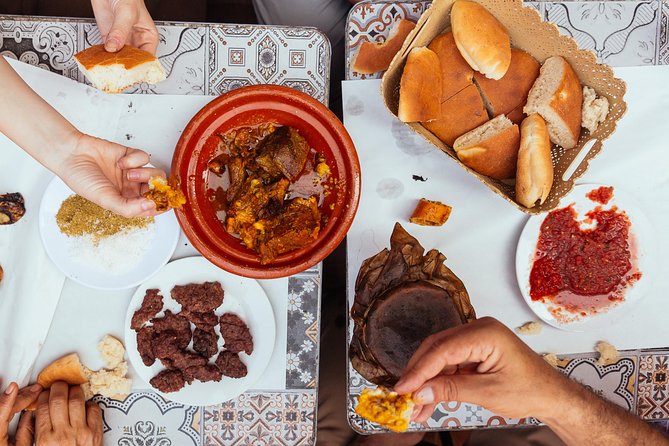
At $93.05 per person, this isn’t a bargain bus tour. It’s priced like a focused, local experience. Here’s why it can still feel like good value: you get a private guide, plus 10 included tastings (food and drinks), plus pauses to see techniques and local traditions—not just photo stops.
Also, since it’s private, you can steer the “how much” and “what kinds” of food you want. Reviews repeatedly call out guides checking preferences and handling questions well. Family-friendly results come up often too—like one parent praising Houssain for helping a younger son find foods he liked.
One practical note: tastings can be small. Some people loved that variety; others felt it was basically one cookie, one date, one drink, and so on. If you’re the type who needs a big portion to feel satisfied, plan to treat this as a start to your food day, not a replacement for dinner.
Warka and the Mellah: learn the bread before the bites
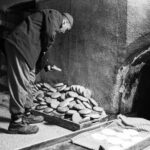
Early on, you’ll go to the Mellah area for a look at how warka is made. There’s no tasting at this first stop—think of it as the prep lesson. Warka is the thin pastry many Moroccan dishes build on, and watching it made gives you a new lens for everything that follows. It’s the kind of stop that makes the rest of the tour make sense.
Then you keep moving into the food flow. You’re not just grabbing snacks; you’re building a mental map of the ingredients and how they show up again and again in Moroccan cooking.
Almond pastries and date piles at Rahba Kedima Square
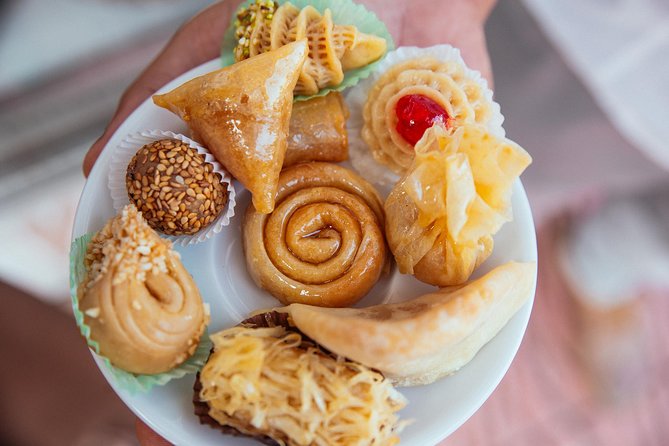
A nearby bakery stop introduces you to traditional sweets—especially pastries with almond filling. The tone here is simple: you’ll start sweet and local, in a real bakery setting, not a tourist counter where everything tastes like the same syrup.
Next comes Rahba Kedima Square, where you’ll be surrounded by mountains of dates and able to choose what you like. This is one of those moments where the medina’s scale hits you. It’s also a nice contrast to the earlier pastry stop: less delicate, more raw-and-straightforward.
If you like food experiences that let you make choices, this section is satisfying. You’re not just being handed one flavor; you’re selecting from the goods.
Rooftop salad stop near the Kaftan history
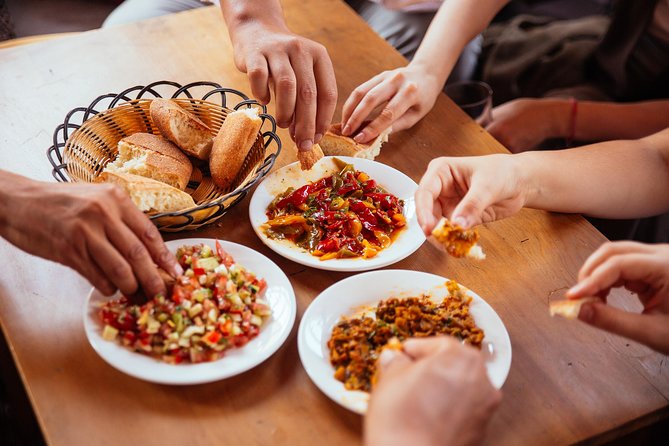
At the History of Kaftan, you’ll try three styles of Moroccan salads in a cafe setting that includes a rooftop view onto the souks streets. That view matters more than you might think. Marrakech is noisy, crowded, and fast when you’re wandering solo. From above, you get a sense of how the market lanes connect—so later, when you walk through on your own, you understand where you are.
This stop also adds variety. Up to this point, you’ve mostly leaned sweet and date-forward. Now you get herbs, fresh ingredients, and the kind of flavors that work as a palate reset before the heavier meat-and-bread foods.
A few more Marrakech tours and experiences worth a look
Almond and avocado juice plus dry fruit trading
Next you’ll stop at the Museum of La Koutoubia area, where you can drink either almond juice or avocado juice. Alongside the drinks, you’ll observe the dry fruit trading on the street. I like this kind of stop because it’s not only about what you eat—it’s about how people buy, sell, and snack in everyday life.
If you’re the type who loves watching markets at work, you’ll get a small thrill here. You can see how the trade shapes what’s available, and why sweet, nutty drinks are so common.
Olive oil markets and the “pick your flavors” moment
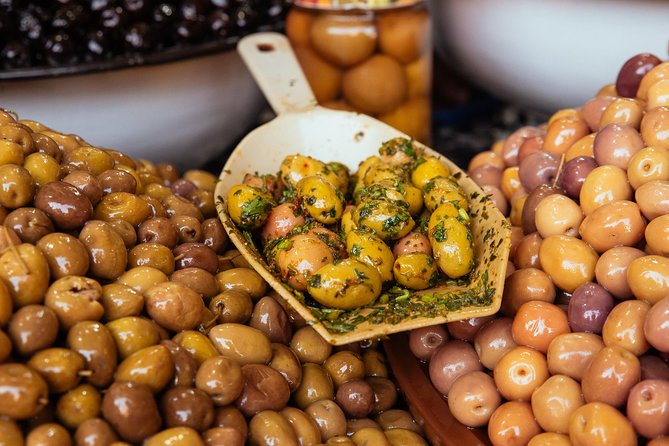
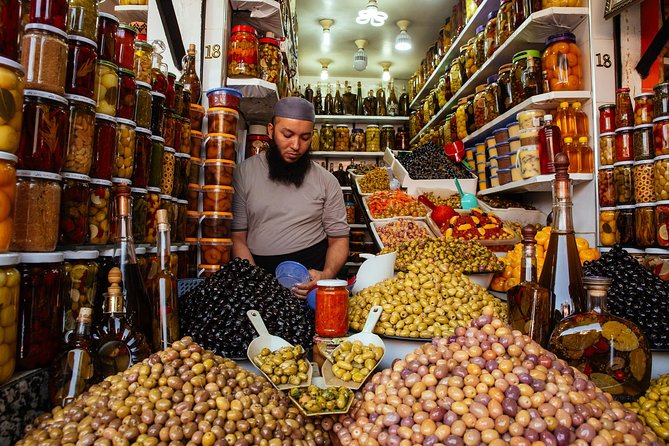
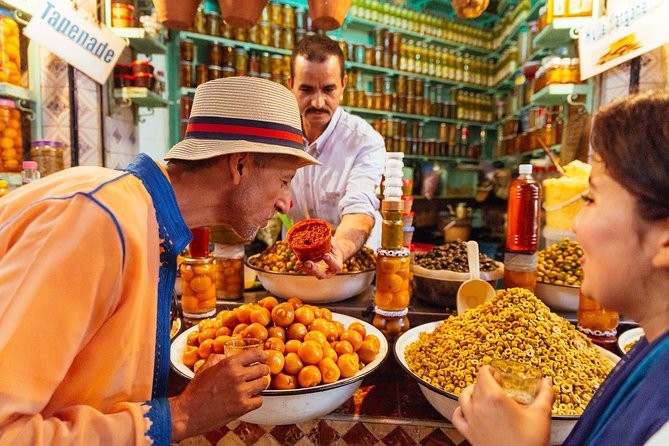
The Food Markets of Marrakech stop is for people who want to taste widely. You’ll follow the smell of olive oil and then be able to choose your own flavors and try a spread of items. That word—choose—shows up in how the best guides run this tour: they guide you through the food without turning it into a rushed checklist.
This is also the stop where you can calibrate your appetite. If you’re hungry, you’ll want to lean into sampling. If you’ve already eaten a bit that morning, you can still enjoy the variety without going too hard.
Jemaa el-Fnaa meatball kofte with homemade tomato sauce
Then you hit one of Marrakech’s best-known squares: Jemaa el-Fnaa. Here the focus turns savory with kofte, Moroccan meatballs served with home-made tomato sauce.
This is a key moment on the tour because it’s a classic street-food flavor, presented in a way that’s meant to be understood—not just wolfed down. The kofte-and-sauce pairing also helps you connect the earlier ingredient lessons to real cooking.
Tanjia in a secret place: slow-cooked flavor payoff
At the Heritage Museum Marrakech / Museé du Patrimoine, you’ll get the tour’s standout featured dish: tanjia, described as a Marrakech specialty that’s soft and slow-cooked. You’ll enjoy it in a secret place nearby, which adds to the feeling that you’re getting access to something ordinary tourists often miss.
Tanjia is also a smart choice for a food tour because it tells you how time matters in Moroccan cooking. The flavor isn’t only about spices; it’s about patience.
Musee Boucharouite: mint tea and cookies in a beautiful riad
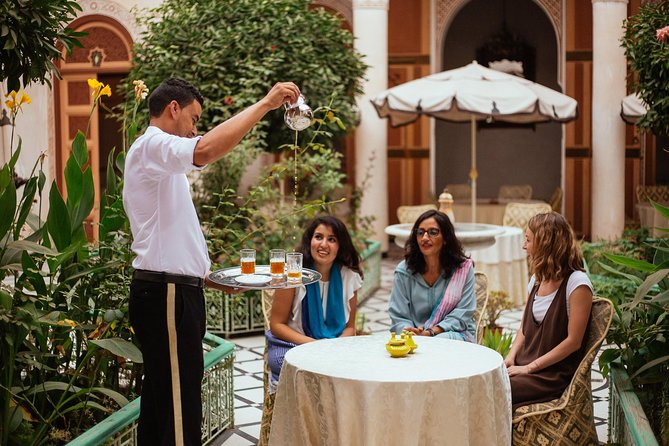
The finale is calm and sweet. At Musee Boucharouite, the tour ends with mint tea and cookies in one of the most beautiful riads in Marrakech, with stunning architecture and a good atmosphere.
This is where you digest the last few hours without standing in line. And it’s a perfect landing point for your Marrakech memories: the sounds quiet down, the tea arrives, and your guide can wrap things up with practical next steps—what to see after, where to eat next, and how to handle the medina maze.
El Badi Palace ruins and Koutoubia Mosque views between tastings
Along the walk, you’ll also pass major sights that give the tour its “Marrakech, not just food” balance. You’ll visit El Badi Palace (ruins of a palace) and Koutoubia Mosque, described as the largest mosque in Marrakech.
These stops work best as context. Food in Marrakech is tied to place—markets, neighborhoods, routines. Seeing Koutoubia and the palace ruins helps you anchor the tastings in the wider city story, even if this is still a food-forward outing.
What the best guides do: Houssain, Elhousain, Ismael, Omar, Adil
The difference between a “good” food tour and a great one is usually the guide. In the feedback I’m using to shape my expectations, certain names show up in a positive way:
- Houssain / Houssain: repeatedly praised for knowing where to go, answering questions, and being very friendly. One review highlights him working well with a younger child’s food preferences.
- Elhousain: praised for flexibility and for making the tour feel like you’re eating like locals.
- Ismael: described as delivering a full immersion in how locals eat, with every stop hitting the mark.
- Omar: noted for personable, entertaining guidance and starting at a small spot few tourists would find.
- Adil: called out for being funny and for clear, helpful orientation through the market and souks.
That said, a couple negative reviews point out the opposite: limited storytelling, weak pacing, and even guides who marched ahead or got stuck on tangents. This tour is a great concept, but the guide quality shows up fast. If you’re picky about pacing and explanations, set that tone early.
Timing quirks: prayer pauses and keeping the tour on track
There’s one practical consideration worth knowing: on certain days, your guide may take a pause for prayer. One review specifically mentioned a 30-minute step away on a Friday, though it was described as happening while the group was seated and eating, so it didn’t wreck the whole experience.
Still, it can affect your rhythm, especially if you have another plan afterward. If you’re tight on time, bring it up at the start and ask for a finish time you can rely on.
Also, if your style is slow and thoughtful, pay attention to pacing. A couple reviews complained about falling behind or about the tour feeling like a rushed sprint during the last stretch. With a private tour, you can usually ask your guide to spread the tastings more evenly across the full walk.
Food amounts and vegetarian alternatives: how to plan your appetite
The tour includes vegetarian alternatives, and you should request that when booking. That’s a big deal because food tours can accidentally ignore your needs unless the provider has time to prep.
In terms of quantity, the tasting format is small and varied. Many people say they end up full anyway. Others felt the items were small enough that the tour could feel light. Your best move: don’t plan a heavy breakfast. Treat this like a “series of bites,” and you’ll be happier with the balance.
If you want to eat like a local, also remember that Moroccan meals often come in courses and variations, not one giant plate. This tour follows that logic.
Price and logistics: is it worth it for your trip style?
For many visitors, $93.05 for a private 4-hour medina food tour is a fair trade because you’re paying for three things:
1) a local guide who helps you navigate and order,
2) access to places you’d skip on your own,
3) a structured sequence of tastings and technique lessons.
If you’re traveling solo, that private guide time can feel pricey—but it’s also the only way to get tailored pacing and tastes. If you’re traveling as a couple or small group, the value tends to feel better since you split a guide’s attention.
On the other hand, if you want a long, story-heavy cultural tour with museums as the main event, you might find the food focus more dominant than expected. The stops include museum-like and landmark elements, but this is still fundamentally about eating.
Should you book the 10 Tastings of Marrakech with Locals?
Book it if you want a food-first Marrakech walk with real stops, a local guide, and an easy way to learn how the ingredients connect. It’s especially smart as one of your early Marrakech activities, because after this you’ll know the flavors, the markets, and the neighborhoods well enough to eat confidently later.
Skip it or ask extra questions before booking if:
- you care a lot about storytelling and don’t want a tour that feels like a checklist,
- you have very tight timing after the tour,
- or you prefer big portions over small tastings.
FAQ
FAQ
How long is the 10 Tastings of Marrakech with Locals tour?
It runs for about 4 hours.
Where does the tour start?
The meeting point is Tinsmiths Square (Place des Ferblantiers), Marrakech 40000, Morocco.
Is this tour private?
Yes. It’s a private tour with only you and your local guide.
What’s included in the price?
You get the local guide, the private tour, 10 food and drinks tastings, and vegetarian alternatives.
Is hotel pickup included?
No. Hotel pickup and drop-off are not included.
Are there vegetarian options?
Yes. Vegetarian alternatives are available, and you should advise at booking if needed.
Does the tour include admissions to sights?
Admission tickets for the listed stops are marked as free, and the tour notes free admissions for stops where tickets apply.
Can I cancel for a full refund?
Yes. Free cancellation is available up to 24 hours in advance for a full refund.