REVIEW · MARRAKECH
Moroccan Food Tasting Tour and Dinner
Book on Viator →Operated by Sara Morocco Private Tours · Bookable on Viator
Some dinners start with a table; this one starts in a square. You’ll eat your way through Jemaa el-Fnaa and the Medina, guided by Hassan as you sample Moroccan pancakes, spiced soups, olives, pastries, and more. I like that the route is built for flavor and for asking questions, not just taking photos, but the trade-off is lots of walking and some stairs in the old city.
What makes this tour especially fun is the pacing: you get multiple short stops to taste, learn, and keep moving, then finish with a proper dinner. You’ll start at 6:00 pm, right as Marrakech’s evening food scene comes alive, and you’ll end back near the meeting point after about 3 hours.
In This Review
- Key highlights to look for
- Why this 6 pm Marrakech food tour is timed perfectly
- Jemaa el-Fnaa: your first tastings in Marrakech’s main square
- Medina wandering: olives souk stops and everyday family routines
- The spice-store tasting: argan oil, amlou, and mint tea
- Back in Jemaa el-Fnaa: more stalls, more questions, less guessing
- Souk Semmarine: pastries and olives for your final cravings
- Dinner after the tastings: salad, tanjia or tajine, and dessert
- The tasting list, translated into what you’ll taste
- Guides and pacing: why names like Hassan matter
- Price and logistics: does $174.47 buy enough food?
- Should you book this Marrakech Moroccan food tasting and dinner?
- FAQ
- What time does the Marrakech food tasting tour start?
- How long is the tour?
- Where does the tour meet in Marrakech?
- What’s included in the dinner?
- What food tastings are included during the tour?
- Is this a private tour?
- Does it help you avoid crowds or skip lines?
- What happens if the weather is bad?
Key highlights to look for
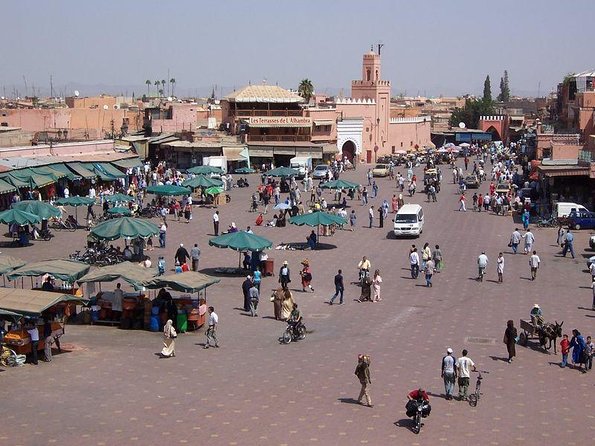
- Jemaa el-Fnaa at night: street performers nearby as you make your first tastings
- Medina food shopping route: olive souk stops and hidden lanes that focus on ingredients
- Spice-store tasting: you try pure argan oil, amlou, and mint tea while learning what makes them good
- A real meal at the end: Moroccan salad, tanjia or tajine, plus dessert
- Skip-the-crowds style access: you’re guided in a way that helps you move faster than wandering alone
Why this 6 pm Marrakech food tour is timed perfectly
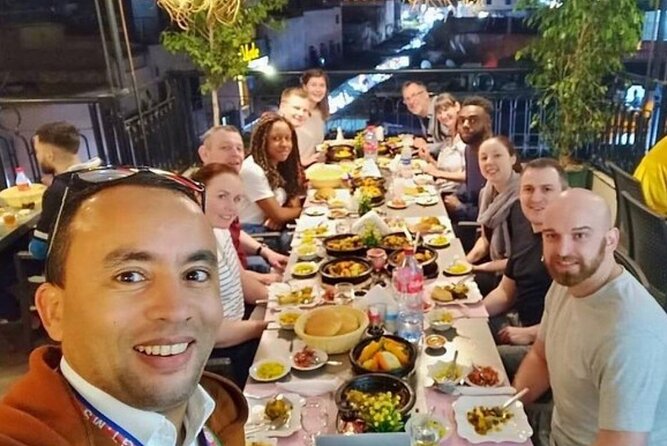
This is an evening food walk, starting at 6:00 pm and running about 3 hours. That timing matters in Marrakech: the big square and the Medinas feel more relaxed and social after dark, and food stalls are in full rhythm.
The meeting point is the Hôtel Restaurant Café de France by Jemaa el-Fnaa, on Rue des Banques. It’s also close to public transport, which helps because you’re not planning a complicated transfer just to start eating. Plus, this is a private tour for your group, so you won’t get split up, slowed down, or shuffled around with strangers.
Price-wise, $174.47 per person is not cheap, but you’re not paying for a quick snack. You’re paying for a guided route through central Marrakech, multiple tastings along the way, and a full dinner with sides and dessert. When you break it down like that, the value is stronger than many “market tours” that end after a couple of bites.
You can also read our reviews of more food & drink experiences in Marrakech
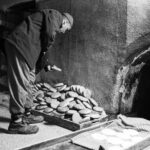
Jemaa el-Fnaa: your first tastings in Marrakech’s main square
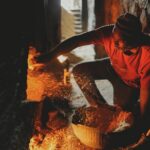
Your tour begins in Jemaa el-Fnaa, the famous main square. In the evenings, it turns into an open-air stage: acrobats, storytellers, magicians, dancers, and Gnawa musicians are all part of the atmosphere, right alongside the food stalls.
Expect your first taste(s) during this 50-minute stop. Even if you’re not trying to be an adventurous eater, this area is where Moroccan food becomes easy to understand—savory smells, sweet smells, sizzling pans, and the way vendors build repeat customers. A guide here is more than a translator; they help you connect what you’re tasting to what you’re seeing.
The drawback is the same drawback that comes with Marrakech’s big square: it can be intense. Even with a guided route designed to help you avoid some crowds, you’ll still feel the energy, and that can be a lot on a hot or windy day. If you’re sensitive to crowds or strong smells, pace yourself and drink water when you can.
Medina wandering: olives souk stops and everyday family routines
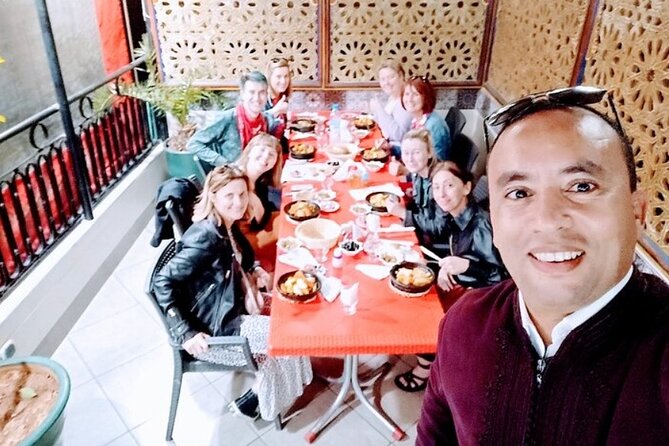
Next comes time inside the Medina of Marrakesh, where the tour shifts from performance energy to ingredient-focused browsing. This section runs about 1 hour, and the goal is to show you hidden sights and how local families go about daily life.
One highlight is the stop for the colorful olives souk. Olives in Morocco aren’t one thing—they’re dozens of preparations, with different herbs, oils, and curing styles. Your guide’s job is to help you understand what you’re looking at so you don’t leave thinking olives are just salty or just briny.
This is also where you’ll notice how the Medinas are organized by function. Different alleys have their own specialties, from spices to ingredients you can later recreate at home. That’s the value: you’re not only tasting food here, you’re learning the supply chain behind it.
Practical consideration: the Medinas mean narrow lanes and uneven footing. If you’re hoping for a fully stroller-friendly or step-free route, this isn’t described that way. Reviews for similar experiences note stairs, so plan around that if mobility is a concern.
The spice-store tasting: argan oil, amlou, and mint tea
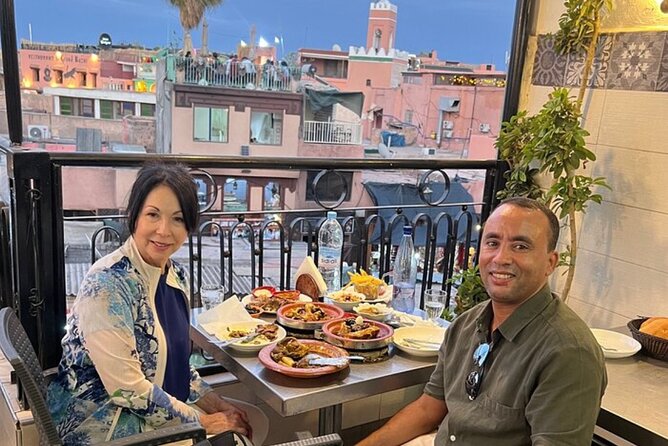
One of the most “learning with your mouth” moments is the short stop at an authentic spices store. This lasts about 30 minutes, and it’s focused on the secrets behind high-quality flavors—what the shop sells, how locals use it, and what makes it taste better.
You’ll get to taste pure edible argan oil, amlou, and Moroccan mint tea. Here’s why that matters: argan oil is often discussed as a beauty product, but tasting it helps you understand the culinary side—nutty, rich, and used to finish or enhance foods. Amllou (amlou) is a spread made from ingredients like nuts and oil, and tasting it gives you a real sense of texture and how sweet/savory balances work in Moroccan eating.
Mint tea also works like a mini crash course in hospitality. It’s not just a drink; it’s a ritual, and the flavor profile tells you how Moroccan meals handle bitterness, sweetness, and herbal aroma.
This stop is short, so come ready with questions. Ask what the store considers top quality, what you should look for in taste, and how locals pair these items with bread or pastries.
Back in Jemaa el-Fnaa: more stalls, more questions, less guessing
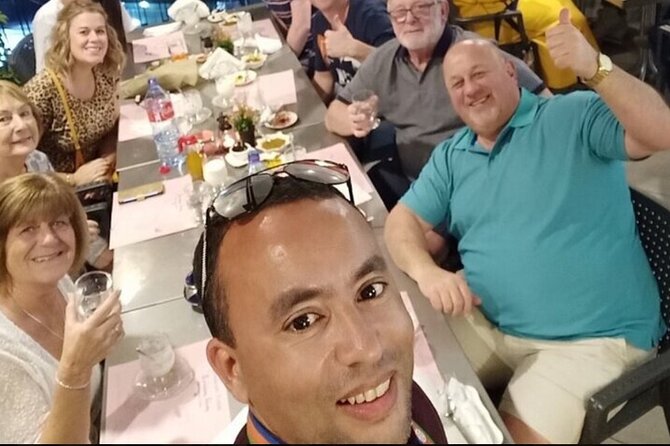
After the Medinas, you return to Jemaa el-Fnaa for another taste-driven stop, about 20 minutes. This part is specifically about eating from the stalls that local families love.
This is where the tour leans into Morocco’s everyday rhythm: taste quickly, ask questions, move on, and keep your curiosity ahead of your hunger. If you’ve ever wandered a market trying to decide what to order, you know how easy it is to miss the best options. A guide here helps you avoid that guesswork.
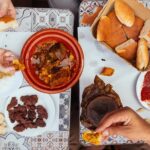
From the overall included tasting list, you should expect a mix of sweet and savory bites. Moroccan pancakes show up (either honey and cheese or onion and spices), and you’ll also see tastings like marinated olives with olive oil and spices plus organic dried fruits. The mix matters because Moroccan menus often swing between comfort-food savory and dessert-like sweetness within the same evening.
One more practical point: you’ll want an empty stomach going into this tour. Multiple guides in similar Morocco food experiences emphasize eating with room for the next course, and the structure here supports that.
A few more Marrakech tours and experiences worth a look

Souk Semmarine: pastries and olives for your final cravings
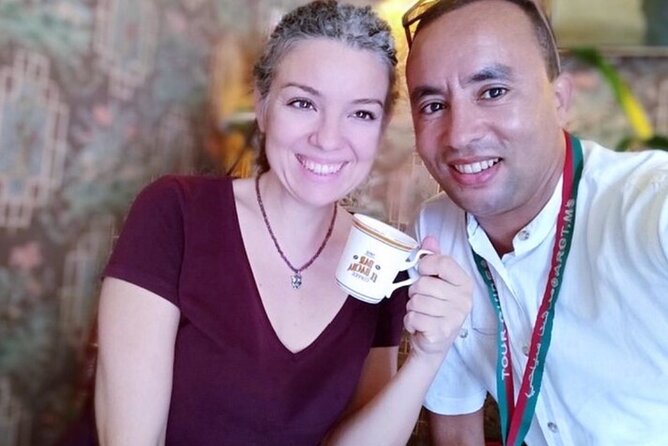
Your last stop is Souk Semmarine, about 20 minutes. This section focuses on Moroccan pastries and olives, in olives-focused hidden souks where the selection can feel overwhelming unless you’re guided.
This is a strong finish because it turns your tastings into a shopping mindset. If you enjoy what you tried, this is where you can see how vendors present their goods and how pastries look beyond a single serving. The tastings included across the tour mention things like pastilla of chicken and almonds, other Moroccan pastries, and macaroons—all of which fit what Souk Semmarine is known for.
If you’re thinking about bringing snacks home, keep in mind that many pastries can be delicate, and olives vary by preparation. Ask your guide what travels best based on how they’re handled and stored.
Dinner after the tastings: salad, tanjia or tajine, and dessert
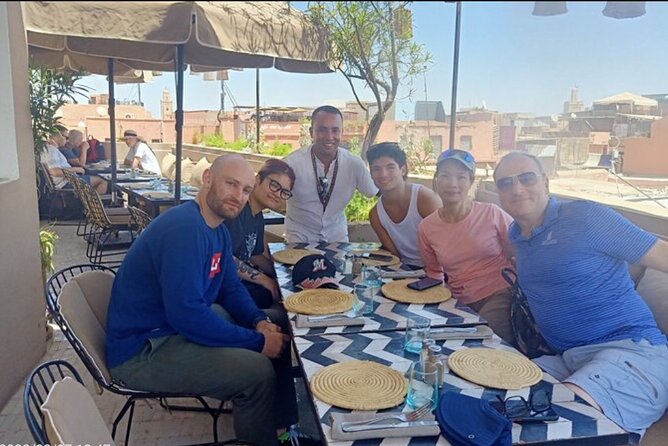
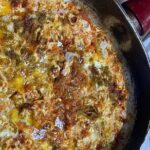
The dinner part is built to feel like a payoff, not just an add-on. Included dinner is Moroccan salad, followed by tanjia or tajine, plus dessert.
Even after the tastings, this is a real sit-down component. That matters because Moroccan meals often rely on a slower pace at the end of a sequence, where flavors settle and you can actually taste the sauce and bread pairing without rushing to the next stall.
You’ll also have Moroccan tea and sparkling water, plus coffee and/or tea included. That’s an underrated practical detail. Food tours often forget about hydration and pacing, but here drinks are part of the plan, which helps you keep energy up through a busy evening.
One caution: because your evening includes many different items—soups, breads/pancakes, pastries, olives—this dinner can land “later” than you expect. Plan to eat lightly earlier that day, not because you’ll be told to, but because your stomach will appreciate it.
The tasting list, translated into what you’ll taste
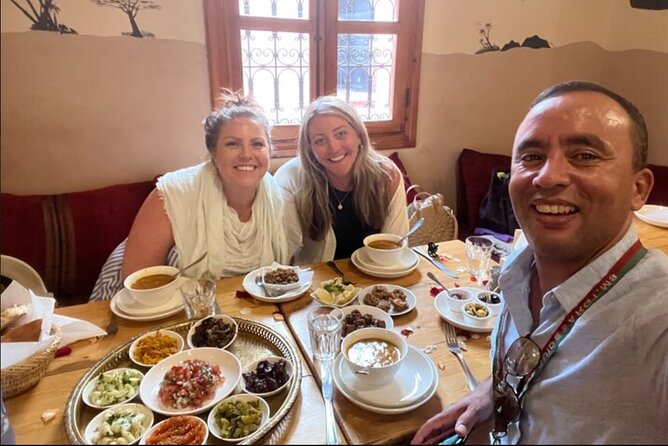
Instead of listing random dishes, this tour gives you a broad spread of Moroccan flavor categories. Here’s what’s included, in plain English terms:
- Pastilla of chicken and almonds: savory chicken with a sweet, almond-leaning vibe, often wrapped in pastry layers
- Moroccan pastries and macaroons: sweet bites that show you how Moroccan desserts balance honey, nuts, and spice
- Moroccan soups with dates and chebbakia: warm, spiced soup flavors plus a sweet component connected to Moroccan festival-style pastries
- Barbouch (snails) with spices: a more intense, seafood-meets-earth taste if you’re open to it
- Moroccan pancakes: either honey and cheese for a dessert-leaning bite, or onion and spices for a savory version
- Marinated olives with olive oil and spices: not just olives, but olives treated as a flavor system
- Organic dried fruits: sweet snacks that help you keep moving without a sugar crash
- Coffee and/or tea and Moroccan tea: finish your evening with the standard Moroccan hospitality vibe
For dietary needs: the included items clearly include meat and a snail course. If you avoid specific foods, you’ll want to check with the operator before booking so your tour matches your boundaries.
Guides and pacing: why names like Hassan matter
Hassan is the guide highlighted for the tour experience, and the best part is not just that he knows food. It’s that he’s there to explain what you’re tasting and why it matters. Other praised guides in this same style of experience include Ali, Souf, Hussain, and Mohammed, and the consistent theme across them is the same: they bring local knowledge and keep the tour lively while guiding you to the right spots.
What I like about this guide-centered approach is that it turns the walk into a conversation. You’re not passively eating; you’re learning how dishes connect to ingredients, spices, and daily habits in the Medinas.
The pacing also deserves credit. Short stops (20–50 minutes) mean you don’t get bored, and you don’t feel stuck in any one stall long enough to lose the plot. You keep moving, you keep tasting, and you keep asking questions.
And yes, plan for physical reality. The Medina involves walking, and there are mentions of stairs in similar tour feedback. If your mobility is limited, you should confirm the route details before committing.
Price and logistics: does $174.47 buy enough food?
Let’s talk value honestly. At $174.47 per person for about 3 hours, you’re paying for five things:
1) guided stops through central Marrakech (not just a single market area)
2) multiple tastings across both savory and sweet categories
3) a full dinner with salad, tanjia or tajine, and dessert
4) drinks included (tea, coffee/tea, and sparkling water)
5) help managing crowds and finding the right vendors
That’s a lot more than you get from a basic walking tour that ends after a snack. Also, this tour is reportedly booked about 40 days in advance on average, which usually means it stays in demand.
If you’re only doing one food-focused activity in Marrakech, this is one of the better-shaped options because it’s structured for maximum variety in a short time window. If you’re more of a DIY eater and you already know exactly where you’re going, you might skip it. But if you want someone to take the guesswork out of what to order and where to go, the price starts to make sense fast.
Should you book this Marrakech Moroccan food tasting and dinner?
Book it if you want a guided evening food plan that covers both the classic street scene and ingredient shopping inside the Medina. I especially recommend it as an early-trip activity because it helps you understand what you’re looking at while you explore on your own afterward.
Skip it (or ask a lot of questions first) if stairs and tight lanes would be hard for you, or if you have strict dietary limits since the included menu includes meat and snail tastings. Also, if you’re not into variety and prefer one or two foods, this style will feel like a firehose.
My rule of thumb: if you can show up hungry and walk a bit, this tour is a strong way to eat like a local in Marrakech—without guessing, without wasting hours, and with a guide who makes the flavors make sense.
FAQ
What time does the Marrakech food tasting tour start?
It starts at 6:00 pm.
How long is the tour?
The tour runs about 3 hours.
Where does the tour meet in Marrakech?
It meets at Hôtel Restaurant Café de France near Jemaa el-Fnaa, on Rue des Banques, Marrakech.
What’s included in the dinner?
Dinner includes Moroccan salad, tanjia or tajine, and dessert.
What food tastings are included during the tour?
Included tastings cover items like pastilla (chicken and almonds), Moroccan pastries and macaroons, Moroccan soups with dates and chebbakia, barbouch (snails) with spices, Moroccan pancakes, marinated olives, and organic dried fruits.
Is this a private tour?
Yes. It’s described as private, meaning only your group participates.
Does it help you avoid crowds or skip lines?
The experience notes that it helps you skip the line/avoid the crowds.
What happens if the weather is bad?
The experience requires good weather. If it’s canceled due to poor weather, you’ll be offered a different date or a full refund.