REVIEW · MARRAKECH
Authentic Moroccan Food Tour in Marrakech with Dinner
Book on Viator →Operated by One Life Trips · Bookable on Viator
Your stomach leads the way in Marrakech. This small-group food tour threads through the medina near Jemaa el-Fna with secret local stops, letting you try dishes many visitors miss, and it ends with a rooftop 3-course Moroccan dinner. I especially like how the guide builds the night around real food culture, not just random sampling, and I love the variety packed into about 3 hours. One thing to plan for: the route can include more standing and walking than you’d expect, and there’s sometimes time spent on non-food extras like a herbalist shop.
I went in expecting snacks and got a full lesson in how Moroccan meals work: sweet and savory together, mint tea that’s more ritual than beverage, and hearty dishes that explain why locals eat this way. You’ll also benefit from the small size (up to 15 people) and the fact the tour starts at Poste du Maroc in the center of everything, then returns there at night.
The price is not huge for what you get, but it’s still worth knowing the “value math.” If you’re picky about offal or you hate crowds, this won’t be your easiest evening in Morocco, so check in with dietary needs ahead of time and be ready to pass on anything you don’t want.
In This Review
- Key things I think you’ll care about
- Marrakech Street Food, Without the Guesswork
- Poste du Maroc Start Point: A Smart Way to Begin the Night
- Two Medina Routes Around Jemaa el-Fna (And Why That’s a Good Thing)
- Stop-by-Stop: What You’ll Taste in the Medina
- Route flavor set 1 (starting around the medina tastings)
- Route flavor set 2 (near the square and street food zone)
- A note about herbs and the herbalist shop
- Mint Tea and Msemmen: The Ritual Bite You’ll Remember
- The Rooftop Finish: A Real Meal After the Street Snacks
- How Much Walking and Crowd Time Should You Expect
- Price and Value: Is $54.45 a Fair Deal?
- Who This Tour Fits Best (And Who Might Be Happier Elsewhere)
- Should You Book This Authentic Moroccan Food Tour in Marrakech?
- FAQ
- How long is the Marrakech food tour?
- What does the price include?
- Is dinner included, and what style is it?
- Where does the tour start and end?
- How many people are in the group?
- Are vegetarian options available?
- Is hotel pickup included?
Key things I think you’ll care about
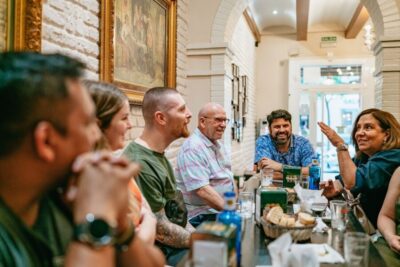
- Up to 15 people means you’re not stuck shoulder-to-shoulder the whole time
- Two possible routes around Jemaa el-Fna keep the food interesting and feel less repetitive
- Mint tea + msemmen isn’t an afterthought; it’s a real Moroccan stop
- About 10 tasting spots, not just a couple of bites, so you actually eat
- Rooftop 3-course dinner gives you a sit-down finish instead of ending on the street
- Dietary needs can be handled if you tell them after booking
Marrakech Street Food, Without the Guesswork
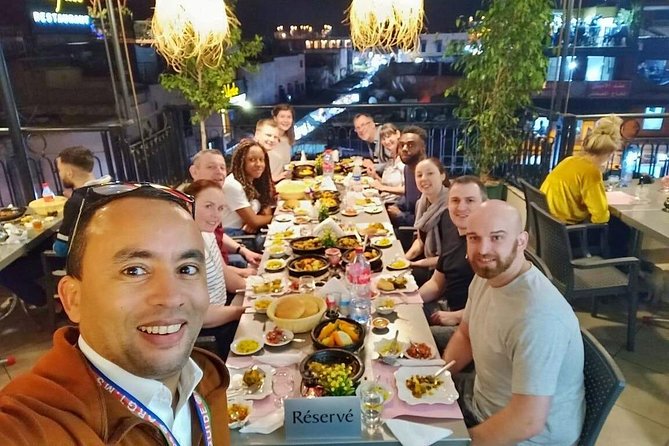
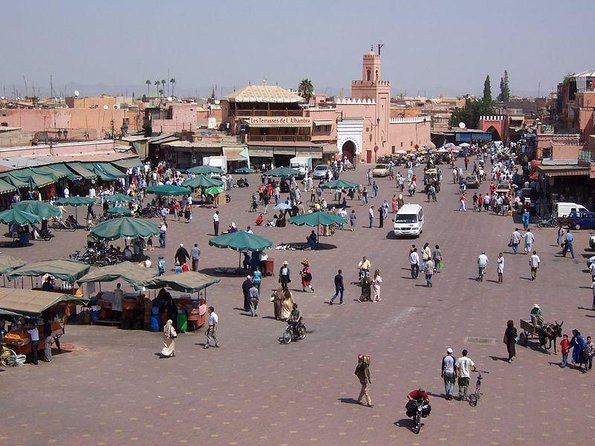
Marrakech’s medina can feel like a food maze at night. You’ll see carts, tiny counters, and signs that look similar until you’re right in front of them. This tour helps because it’s structured: you follow a guide through the alleys, hit around 10 food stops, and get the context for what you’re eating.
I like that the tour doesn’t treat food as just “cool to try.” It explains what’s going on with flavors, how dishes get made, and why certain foods show up where they do. That matters because Moroccan food is often a balance of sweet + savory in the same session: pastries and tea, soup and fried sweets, fruit and nuts, hot savory bites followed by something cooling.
The other reason it works is practical: the route is designed around Jemaa el-Fna and the surrounding medina. Instead of chasing scattered recommendations, you’re led from stop to stop, often in places that are easy to miss on your own.
You can also read our reviews of more food & drink experiences in Marrakech
Poste du Maroc Start Point: A Smart Way to Begin the Night
The meeting point is Poste du Maroc (Rue Beni Marine), right in the heart of the action. The end is back at the same spot, so you’re not left negotiating your way home after dinner.
This location is a real advantage because you can actually find your bearings. Also, the tour notes that it’s near public transportation, and it doesn’t include hotel pickup or drop-off. So if your hotel is outside the center, plan to get to Poste du Maroc by yourself first. It’s one less moving part to worry about once you’re in the medina.
One more detail that matters: you’re in a walking environment with narrow lanes. That’s normal for the medina, but if you’re traveling with someone using a stroller or if you have mobility limits, this is worth considering carefully.
Two Medina Routes Around Jemaa el-Fna (And Why That’s a Good Thing)
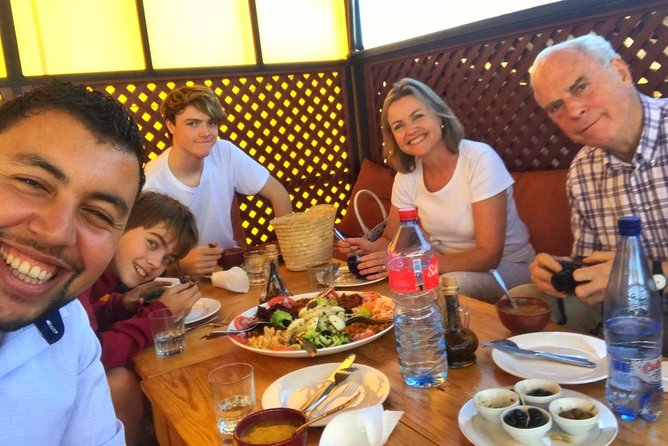
The tour runs about 3 hours and you’ll follow one of two itinerary routes depending on the guide, the season, and how the evening flows. The goal stays the same: you eat your way through classic medina favorites while learning what you’re tasting.
Here’s the key: you’re not just repeating the same checklist every night. You’ll either focus on one set of tastings first, then swing through the other set of iconic street foods near the square area.
That means you might end up with a different mix of pastries, soups, and savory bites than someone else at the same dinner time. And honestly, that makes the experience feel more like a real evening in Marrakech rather than a scripted food show.
Possible guide names you may encounter include Medhi, Houssaine, Hamza, Mohamed, Ali, and Mo. Different personalities, same overall structure.
Stop-by-Stop: What You’ll Taste in the Medina
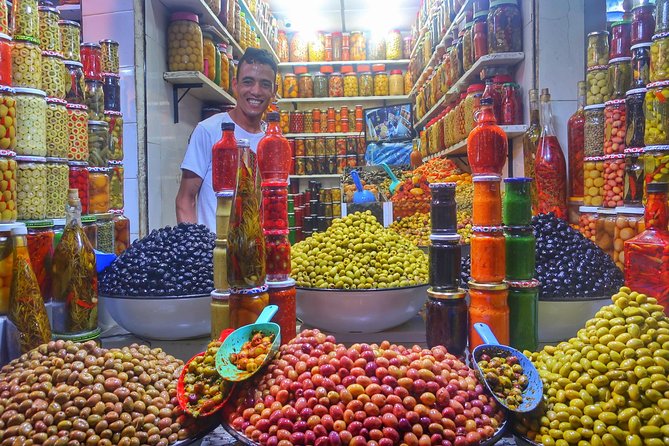
The tour uses multiple tasting stops, and the menu changes based on the route you take. Still, the food mix has a clear theme: you’ll get sweet pastries, savory street bites, and classic Moroccan tea moments.
Route flavor set 1 (starting around the medina tastings)
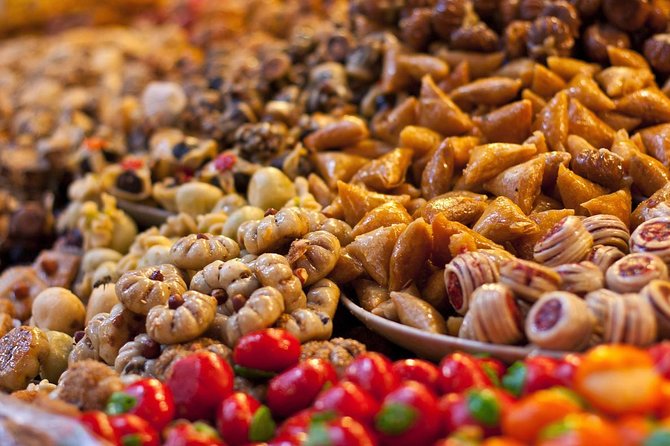
You may start with something sweet and friendly, like Moroccan coconut macaroons, described as a kid favorite. Then you’ll likely move into more iconic pastries such as Kaab Ghzal (gazelle ankles), a pastry filled with almond paste and aromatized with orange blossom water. It’s the kind of flavor combination that instantly tells you this isn’t just dessert, it’s Moroccan dessert craft.
From there, expect the classic “go-to” Moroccan soup combo: harira soup served with dates & chebakia. Harira is familiar and comforting, and it’s also strongly linked to Ramadan traditions, which is why the guide’s explanation can make the tasting feel deeper than just eating soup.
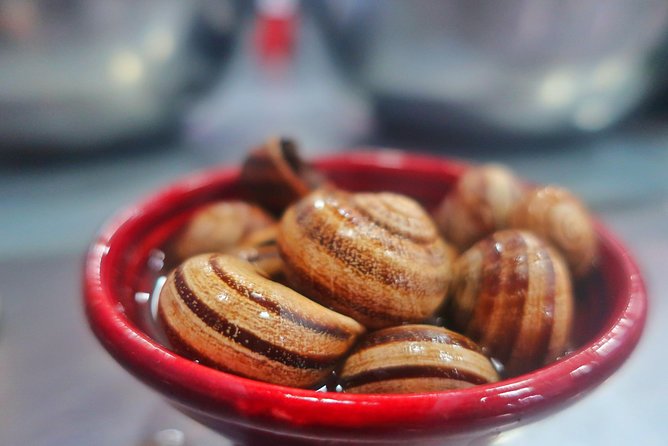
If you’re curious and not squeamish, you might also try babbouche (Moroccan snails), slowly cooked in an aromatic herbal broth. This is one of those “only in Morocco” bites that can either be fascinating or a hard pass, depending on your comfort level.
You’ll also get the mint tea culture moment: authentic mint tea & msemmen, where msemmen is a pan-fried pancake drizzled with honey and served with cheese. It sounds like a lot, and it is, but it works in the way Moroccan meals often work: multiple textures and a mix of sweet and savory.
Other likely tastings include fakya (dried fruits and nuts shared during celebrations) and Moroccan olives—the tour specifically calls out signature olives, including creamy-style olives, which is a nice break from pastry-heavy sampling.
A few more Marrakech tours and experiences worth a look
Route flavor set 2 (near the square and street food zone)
If your evening follows the other route segment, you’ll still hit harira and chebakia, but the street-food rotation shifts to include other classics.
You may try Msemen Amer, savory Moroccan pancakes stuffed with spiced fillings (often vegetables). This is popular as a teatime bite, so it fits the rhythm of the night.
Other possible savory tastings include Makkla bel Kefta, described as a Moroccan twist on shakshouka, and Sfenj, Moroccan donuts that are crispy outside and airy/chewy inside. Sfenj is one of those snacks that turns into comfort food fast.
For something refreshing in the heat, look out for Lhindiya, cactus fruit, noted as refreshing and good for cooling down. You might also get a Panaché smoothie with seasonal fruit—another way to balance fried and rich flavors.
If you’re adventurous, you might taste Rass Mbekher, described as delicately steamed sheep’s head seasoned with cumin. This is not for everyone, and you can choose not to eat every item. The tour is built around sampling, but your comfort matters more than “trying everything.”
You may also hear about Khoudenjal, listed as a hot Moroccan dish, though the exact description in the details is cut off. In practice, that’s where the guide’s explanation earns its keep: you’ll know what it is before you take the bite.
A note about herbs and the herbalist shop
Depending on pace, you may stop at a traditional herbalist shop for a short break. Some people enjoy it as a cultural detour—spices, mint tea, restroom break. Others feel it steals time from food. If you’re the type who wants zero detours, bring that expectation into your evening and don’t feel obligated to linger.
Mint Tea and Msemmen: The Ritual Bite You’ll Remember
Mint tea in Morocco is not just hydration. It’s pacing. It’s a moment where the evening slows just enough for you to reset your palate between sweet pastries, fried snacks, and richer dishes like harira.
On this tour, mint tea shows up as a guided tasting paired with msemmen. I like this pairing because msemmen has that pan-fried texture that stands up to strong flavors. Honey and cheese add sweetness and salt at the same time, so you’re not just eating one mood. You’re bouncing between flavors the way locals do.
If you don’t usually like mint tea, give it a fair chance here. Moroccan mint tea is brewed in a way that tastes different from casual versions you might have elsewhere.
The Rooftop Finish: A Real Meal After the Street Snacks
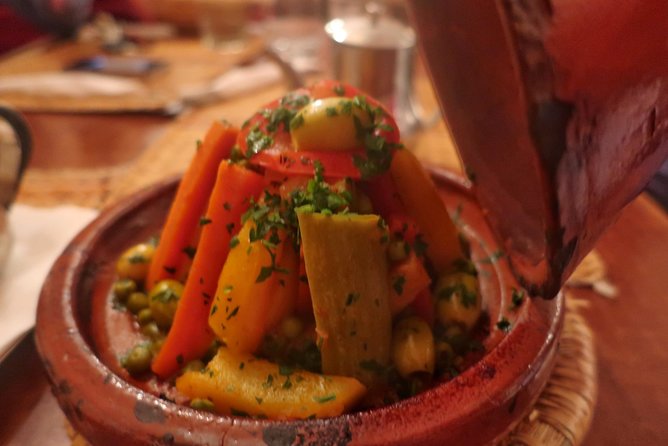
The tour ends with dinner at a rooftop restaurant with a 3-course Moroccan menu. Dinner is listed as included, and you should expect a sit-down finish after the walking and tasting.
This is where the value often shows up. Street-food nights can leave you either full of snacks or weirdly hungry at the end. A 3-course dinner gives you structure: you stop nibbling and actually eat a composed meal.
The details mention that there are various menu options, so you’ll have some choice depending on how your booking is set up. If you care a lot about what you’ll eat for the 3-course portion, it’s smart to confirm the dinner option you selected before you go.
One fair heads-up: there have been occasional complaints about the dinner portion feeling inconsistent or time feeling longer than expected for some groups. That doesn’t mean it’s always a problem, but it is a reason to double-check what’s included in your exact booking confirmation.
The upside is that multiple guide-led evenings are described as ending with people being genuinely full, often with dessert and the sense that the day didn’t end abruptly.
How Much Walking and Crowd Time Should You Expect
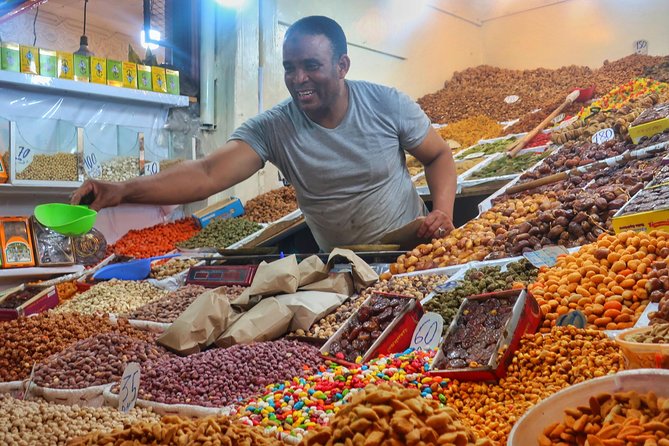
This is a medina evening. That means narrow streets, short bursts of standing, and plenty of stairs or uneven lanes depending on where the route takes you.
The tour is capped at 15 travelers, which helps with movement and lets the guide manage the group in tight spaces. Still, you should plan on being on your feet and moving between spots.
If you’re bringing young kids, expect that the pacing and noise levels can be intense in the medina. If you’re bringing a stroller, you may run into sections that are more difficult, including stair-like changes in level. This is simply how the medina works.
My practical suggestion: wear shoes you can move fast in. And if you’re prone to getting dehydrated, plan a small water top-up outside the scheduled tea stops.
Price and Value: Is $54.45 a Fair Deal?
At $54.45 per person, you’re paying for three things at once: a certified local guide, multiple tastings across the medina, and dinner.
You’re also getting a group experience, not just a private food crawl. The group size cap helps keep it manageable, and you’ll be walking a route designed around being fed rather than just shown sights.
When I think about value on food tours, I focus on two questions:
1) Do you actually leave full?
2) Do you get context that makes the food taste better?
This tour is built around around 10 food spots and a sit-down 3-course dinner, so the “full” question usually has a good answer. The “context” part is supported by how the route is framed: harira is explained as part of cultural rhythms, sweets like kaab ghzal come with meaning, and the mint tea stop isn’t treated like a tourist photo moment.
Also, the tour uses a mobile ticket, which is a small convenience but helpful when you’re in a city where you might not want to keep printing or paperwork.
It’s frequently booked about 27 days in advance, which is a hint that popular evenings sell out. If your trip dates are fixed, don’t wait until the last minute.
Who This Tour Fits Best (And Who Might Be Happier Elsewhere)
You’ll like this tour if you:
- Want a guided way to eat through Jemaa el-Fna area without guessing
- Enjoy variety and don’t mind sweet + savory in the same night
- Are curious enough to try items like snails or sheep’s head if offered
- Want an evening that ends with an actual meal, not only snacks
You might hesitate if you:
- Can’t handle walking in the medina or tight spaces
- Have strong dietary restrictions and haven’t communicated them before the tour
- Prefer only vegetarian food and want zero uncertainty (the tour says you can let them know, but you’ll want to confirm what’s possible once you book)
If you have dietary needs, tell the operator after booking. The tour specifically notes they’ll take care of you when you share details.
Should You Book This Authentic Moroccan Food Tour in Marrakech?
If your ideal Marrakech night includes guided street-food tastings and a proper rooftop dinner, I think this is a strong pick. The structure makes it easy to get fed and informed in a short window: around 10 tasting stops, mint tea with msemmen, and a sit-down 3-course finish.
Book it especially if you like your travel experiences to be practical: you want a plan, you want to know what you’re eating, and you want someone else handling the route through the medina.
My only caveat is expectation management. Go in hungry, accept that medina evenings mean standing and walking, and if dinner specifics matter to you, double-check your exact dinner option in advance. If you do that, you’ll likely leave with a head full of flavor and a stomach that’s properly finished for the night.
FAQ
How long is the Marrakech food tour?
The tour runs for about 3 hours.
What does the price include?
The price includes a certified local tour guide, specialty food sampling at multiple stops, authentic Moroccan mint tea, and dinner.
Is dinner included, and what style is it?
Yes. Dinner is included, served as a 3-course Moroccan meal at a rooftop restaurant.
Where does the tour start and end?
It starts at Poste du Maroc, Rue Beni Marine, Marrakech 48000, Morocco and ends back at the meeting point.
How many people are in the group?
The tour has a maximum of 15 travelers.
Are vegetarian options available?
If you’re vegetarian or have specific dietary needs, you should let them know after booking, and they’ll take care of you.
Is hotel pickup included?
No. Hotel pickup and drop-off are not included.