REVIEW · SINGAPORE
Singapore Bike and Bites Food Tour
Book on Viator →Operated by Lets Go Tour Singapore Pte Ltd · Bookable on Viator
Singapore is easier on two wheels. This 3-hour bike-and-bites tour gives you a fast way to cover key neighborhoods without map stress, while food stops do the talking for the city’s cultures. I like that it’s built for first-time visitors who want sights plus snacks, and that the vibe is supported by well-run guiding from folks like Alfie, Yong, Jackie, Kavin, Colin, and Simon. One consideration: the tour is for people who can handle city cycling near pedestrians and tight turns, so you’ll want to be comfortable riding before you book.
Here’s what I’d count as the two biggest wins. You get off-the-beaten-path food choices instead of only the headline restaurants, and you also get historical and neighborhood context as you move between districts. The small group size (max 15) helps keep things calm, and most riders say the pace and routes feel safe when your guide is watching the group. Still, food on this tour is intentionally bite-sized (not a full meal), so if you’re very hungry or picky about options, plan to top up after.
The route starts at Lets Go Tour Singapore and then works its way through classic inner neighborhoods—Chinatown, Little India, and Kampong Gelam—so you’re not just riding in circles. You’ll also be offered practical comfort details like bottled water, and ponchos are available if the weather turns. Rain is handled with a smart attitude: you’ll turn up, cycle in light rain when it’s safe, and you pause if visibility drops.
In This Review
- Key things you should know before you pedal
- Getting your bearings fast: the 2pm start and how it runs
- The bike setup: easy city riding, but don’t ignore your comfort level
- Chinatown on two wheels: culture you can see, then taste
- Little India: scents, color, and food that tells a story
- Kampong Gelam: Malay and Middle Eastern influences with street art energy
- Food tasting reality check: small bites, big variety
- Weather plan and comfort: ponchos, light rain, and the “pause if needed” rule
- Guides make the difference: Alfie, Yong, Jackie, Kavin, Colin, and Simon
- Price and value: what $80 buys you (and what it doesn’t)
- Who should book this bike-and-bites tour
- Should you book? My practical take
- FAQ
- How long is the Singapore Bike and Bites Food Tour?
- How much does the tour cost?
- Where do I meet for the tour?
- Is hotel pickup included?
- What food is included?
- What happens if it rains?
- Do I need prior biking experience?
- How does cancellation work?
Key things you should know before you pedal
- Three neighborhood stops that pair major sights with snack stops, not long museum-style detours
- Food tastings are bites, not big plates, so it’s more sampling than eating a full dinner
- Max 15 riders for a more personal group feel and easier control on busy streets
- Poncho + water included, and the rain plan prioritizes safety first
- A local licensed guide who adds context while you cycle, with guides like Alfie and Yong often praised for humor and clarity
Getting your bearings fast: the 2pm start and how it runs
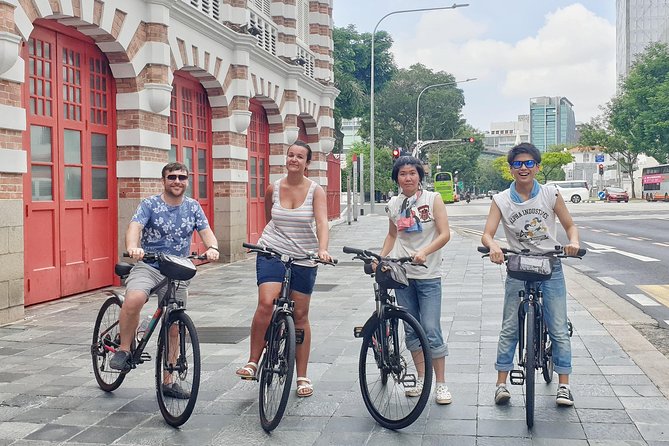
This is a straightforward, afternoon-sized tour. It starts at 2:00 pm at Lets Go Tour Singapore (Block 462 Crawford Ln, #01-57), and it ends back at the same meeting point. Hotel pickup and drop-off aren’t included, so you’ll want to plan your own way there—good news is it’s near public transportation.
The big practical benefit for you is rhythm. In about 3 hours, you’ll move through multiple neighborhoods without spending that time weaving through streets or guessing where to park. Cycling also changes what you notice: shopfronts, street signs, worship spaces, and market crowds all become part of the walk-by story, but with less leg burn than sightseeing on foot.
You’ll also want to be mentally ready for being part of a group. You follow your guide’s pace, you stop for tastings and short photo moments, and you keep moving. Several guides (including Alfie, Yong, Jackie, Kavin, Colin, and Simon) are repeatedly praised for staying aware of the group, so you’re not just left to fend for yourself on busy sidewalks.
You can also read our reviews of more food & drink experiences in Singapore

The bike setup: easy city riding, but don’t ignore your comfort level
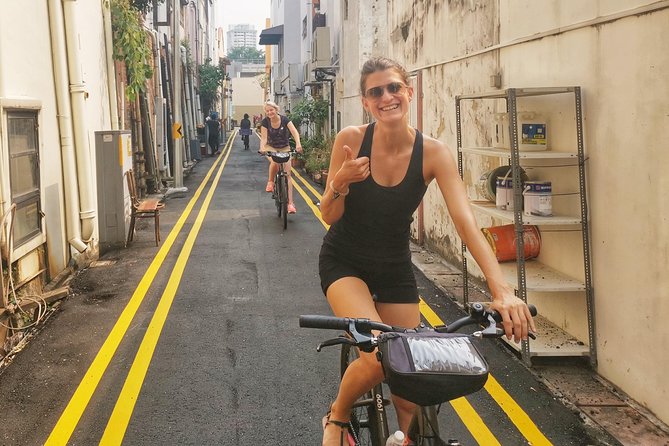
Most people can participate, and the riding is generally described as easy in inner Singapore. You’re not trying to conquer hills—think controlled city cycling with frequent adjustments for pedestrians. That said, there’s a real-world detail you should respect: Singapore sidewalks and shared paths can get crowded fast, and routes may include shared walkway/cycle-lane sections, even through a shopping centre.
So here’s the consideration I’d take seriously: if you haven’t ridden in a while, or you’re not confident around people and tight corners, you’ll feel more strain than the marketing photo suggests. One review noted the day was very busy and cycling along tight turns can be a shock if you don’t cycle much. If you’re rusty, do a quick warm-up ride beforehand (even 10 minutes) so you’re not doing first-draft bike control while you’re also learning the route.
What helps your confidence is the guide and the route choices. Riders repeatedly mention feeling safe, and they also mention that guides watch for the group while navigating through pedestrian-heavy areas. If your bike has any issues (a loose bell, chain problems), tell your guide early so they can sort it before you get too far.
Chinatown on two wheels: culture you can see, then taste
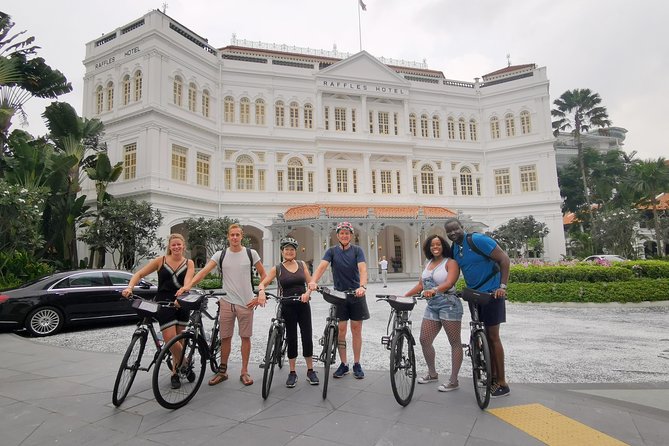
Your Chinatown stop is a short, sweet window where you get both story and street-level detail. You’ll roll through one of Singapore’s most recognizable old districts—shaped by early Chinese immigration—and then connect that history to what people actually eat and buy nearby.
The tour pacing here matters. You’re not asked to spend a long stretch in one spot. Instead, you ride in, take in a few key sights, and then you move on. That works well for first-timers because Chinatown can be overwhelming if you try to do it solo—so the guide’s route becomes a way to choose what matters most.
Food stops also change the way you read Chinatown. A quick tasting turns a name into a texture and flavor. Expect small portions: you’re sampling enough to understand the dish basics, not building a full meal. This is ideal if you like variety and want multiple neighborhoods’ specialties in one trip.
A drawback possibility for you: if you’re the type who wants to order exactly what you crave (not just try what’s available), you might find the bite format limiting. One rider wished there were more food choices. That’s not unusual for shared-food tours, so set your expectations as sampling and learning, not custom dining.
Little India: scents, color, and food that tells a story
Little India is the sensory jolt in the itinerary. You’ll see how a neighborhood can feel like a living map of culture: spices, bright storefronts, and lots of daily activity. The tour description points out its role in Indian community life in Singapore, and you’ll feel that through the contrast from Chinatown and what you encounter on the streets.
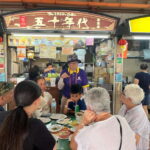
From a practical standpoint, Little India is also where food sampling really shines. The guide brings you to places you might miss on your own—especially if you’re not sure which stalls are worth your time. You’ll get bite-sized tastings that help you connect the local food scene with the neighborhood identity.
If you’re an adventurous eater, this part will likely be your favorite. Several reviews mention that even people who don’t normally go for unfamiliar street food were happy with what they tried. If you have a more western palate, expect the guide to steer you toward options that are still recognizably Singaporean but not always ultra-intense in flavor.
One heads-up: the tour is not a long sit-down experience. You’re moving, tasting, and moving again. That keeps the tour efficient, but it also means you won’t have time to linger for extra bites beyond what’s planned. If you want a second round at your favorite stall, plan to return later on your own.
Kampong Gelam: Malay and Middle Eastern influences with street art energy
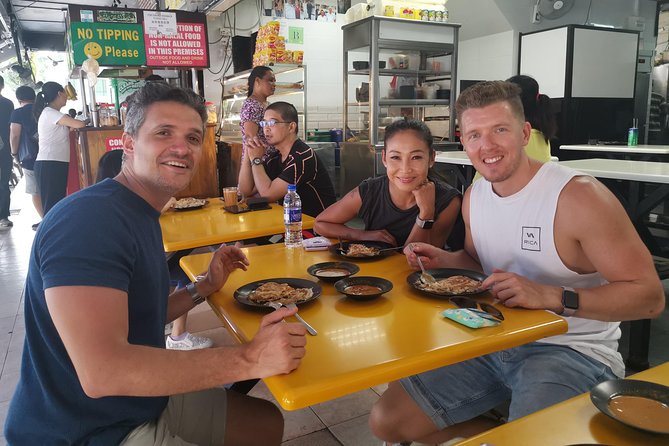
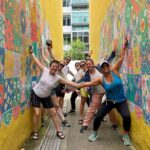
Kampong Gelam is where the tour adds a different cultural lens. This area has strong Malay heritage, and it’s now known for mixing Islamic heritage, Middle Eastern culture, and modern street art. You’ll get a brief look at landmarks and architecture while also soaking up the street vibe where people shop, gather, and snack.
Why this stop works as part of a bike tour: the neighborhoods don’t just look different—they feel different in how they’re arranged and how people move through them. Cycling helps you notice that. On foot, you might only see a slice. On a bike route, you see how streets connect and where the energy shifts.
As for the food, you’ll keep sampling bite-sized tastings. Think of it as a guided introduction to the flavors of different communities, rather than a strict “three dishes only” approach. The tour notes say to expect variety—again, not big plates—so you’ll get a taste of what locals actually reach for.
A possible downside is the same theme: if you’re expecting a hearty meal or strong preference customization, bite tastings can feel short. One rider felt the food offerings were average for the price. I don’t think that means the tour is bad—it usually means you should treat this as a culture + sampling tour. Eat enough for satisfaction, then decide if you want a heavier hawker meal after.
A few more Singapore tours and experiences worth a look

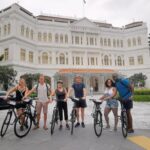

Food tasting reality check: small bites, big variety
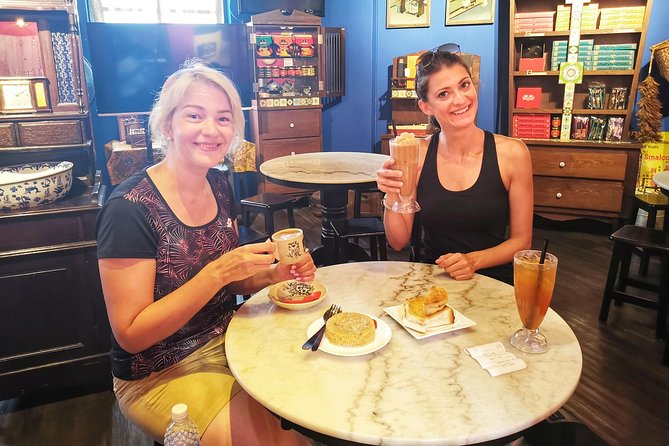
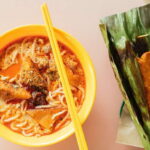
Here’s the simplest way to think about the food: expect bites, not a full banquet. The tour includes food tasting and bottled water, and ponchos are available upon request. Tastings are designed to give you a range of flavors across different areas.
So what should you do if you’re a picky eater? The best strategy is mental. Don’t come expecting your favorite dish. Come expecting to try several things that are new—or at least new to you by name. One review specifically mentioned someone not being an adventurous eater still enjoying the foods. That suggests the guide does a good job choosing accessible options.
Also, you don’t need to worry about logistics like ordering and paying at multiple places. The tasting plan reduces decision fatigue. You’ll still be able to react—if you dislike something, you’ll learn fast and the guide keeps the trip moving.
If you really need full autonomy over what you eat, then this might not be your best fit. But if you want an efficient way to sample hawker-style flavors in three neighborhoods, this tour format is exactly the point.
Weather plan and comfort: ponchos, light rain, and the “pause if needed” rule
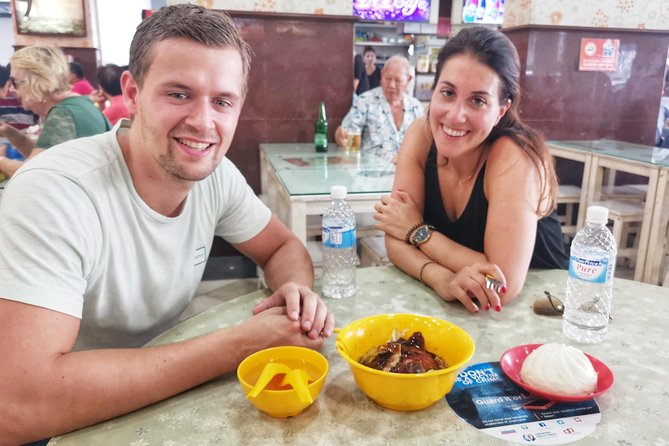
Singapore weather doesn’t care about your schedule. This tour handles it with a practical rule: you turn up regardless of weather, and you’ll continue cycling in light rain. If visibility or safety becomes a problem, you’ll pause for shelter while things clear, typically for 30–45 minutes.
That matters because it changes your risk level. You’re not stuck in a totally different plan because of a drizzle. And you get ponchos available upon request, plus bottled water.
Dress code is summer casual/sports. I’d treat that as “breathable top, comfortable shoes, and a light layer you won’t regret.” Since you’re cycling, you’ll feel airflow, but humidity can still be real. The best mindset is: you’ll be active, you’ll be outdoors, and you’ll want to stay comfortable so the food stops feel like a reward rather than a chore.
Guides make the difference: Alfie, Yong, Jackie, Kavin, Colin, and Simon
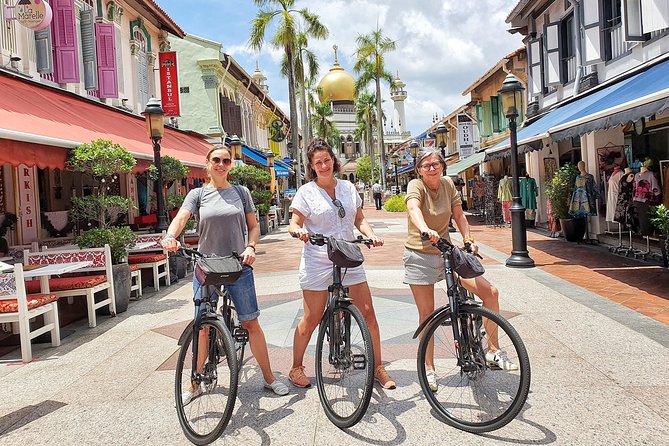
You can feel when a guide actually knows the neighborhoods. Many comments praise guides for being funny, generous with information, and good at balancing history and food. Names that come up a lot include Alfie, Yong, Jackie, Kavin, Colin, and Simon.
What you’re getting isn’t just a list of facts. Guides are also managing the human side of a bike tour: keeping the group together, watching riders, and choosing routes that work around pedestrians and traffic. Several riders explicitly mention feeling safe because the guide kept an eye on everyone while navigating the city.
If you’re the type who likes context while you travel, you’ll probably enjoy the commentary. One review highlighted that history and architecture got discussed alongside the food, not just during the tasting moments. That’s the sweet spot for me: you taste something, then you understand why it exists in that neighborhood.
The balance you should watch for is pacing and focus. Since this is a bike-and-bites tour, history is supportive rather than academic. If you wanted a museum-grade history lesson, you might feel there’s room for more storytelling facts. But if you want a good “street-level intro” that sets you up for further exploring later, the style fits.
Price and value: what $80 buys you (and what it doesn’t)
At $80 per person for about 3 hours, you’re paying for three things: a guided route, bike time, and multiple food tastings. The tour includes bottled water and a poncho option, and it includes a licensed local guide.
Here’s the value logic I’d use if you’re deciding. If you were to piece together a similar experience yourself—bike rental plus navigation plus finding trustworthy food stalls in unfamiliar neighborhoods—you’d likely spend more time (and probably more money) than you expect. This tour compresses that into a single afternoon.
But be honest about what it doesn’t promise. It doesn’t promise large servings or a full meal. It’s “tasty bites,” and that’s by design. So the value is highest if you’re open to sampling and you want an orientation to Singapore’s food culture across different communities.
If you come with a very fixed idea of what you want to eat, or you need a lot of calories, you may want to treat this as your appetizer experience and then follow up with your own hawker pick afterward.
Also, your group size stays capped at 15. Smaller groups usually mean you spend less time waiting and more time riding and tasting.
Who should book this bike-and-bites tour
This is a strong fit if you:
- Want a first-time orientation to Singapore’s inner neighborhoods in a short window
- Like the idea of combining street sights with a planned food route
- Are comfortable cycling in city conditions with pedestrians
- Prefer a smaller group experience rather than a bus tour
It’s probably not the best fit if you:
- Don’t feel confident riding a bike in busy areas
- Need a full meal’s worth of food during the tour
- Want to pick your exact dishes without sampling
Should you book? My practical take
I think you should book this tour if you want a smart, low-stress way to see Singapore’s major cultural zones and taste across them without spending your day searching for the right stalls. The biggest strengths—safety feel, small group size, and guides who keep things fun while adding real context—make it one of those “do it early” trips. It sets your bearings so later you can wander with more confidence.
Just set expectations about the food: you’re sampling bites, not ordering your ideal dinner. If you go in wanting variety and learning, $80 for a guided 3-hour cycle with multiple tasting stops can feel like a very fair trade.
FAQ
How long is the Singapore Bike and Bites Food Tour?
It runs for about 3 hours.
How much does the tour cost?
It costs $80.00 per person.
Where do I meet for the tour?
Meet at Lets Go Tour Singapore, Block 462 Crawford Ln, #01-57, Singapore 190462.
Is hotel pickup included?
No, hotel pickup and drop-off are not included.
What food is included?
The tour includes food tasting (bite-sized portions) and bottled water.
What happens if it rains?
You should still turn up. The tour continues cycling in light rain, and it pauses for shelter if visibility or safety is compromised (often 30–45 minutes). Ponchos are available upon request.
Do I need prior biking experience?
Most travelers can participate, but you should be comfortable riding a bike in city conditions with pedestrians.
How does cancellation work?
You can cancel up to 24 hours in advance for a full refund. If you cancel less than 24 hours before the start time, the amount paid isn’t refunded.