REVIEW · SINGAPORE
Kampong Glam, Little India & Chinatown with Local Street Food Tastings
Book on Viator →Operated by Signature Day Tours · Bookable on Viator
Nine tastings. Three neighborhoods. One Singapore lesson.
This private walking tour strings together Kampong Gelam, Little India, and Chinatown with a private licensed guide and included MRT rides. I like the 9 included tastings and the way the guide ties each bite to how Malay, Chinese, and Indian communities shaped Singapore’s street-food culture.
One caution: this is a paced walk with fixed stops, so plan for a bit less time for slow savoring, extra photo detours, or wiping sticky fingers. Bring small wipes, because some dishes are eaten street-style and napkins aren’t always guaranteed at hawker stalls.
In This Review
- Key points to know before you go
- Why Kampong Gelam–Little India–Chinatown is the smart way to orient yourself
- Kampong Gelam: Sultan Mosque area and Arabic street-food snacks
- Little India: market sidewalks, garlands, gold shops, and hawker-centre stops
- Chinatown: riding the MRT like locals and finishing near Buddha Tooth Relic Temple
- The nine tastings: what’s included and how the food is served
- The private guide difference: how guides like Grayson, Grace, Joseph, and Nigel shape the day
- Price and logistics for $177.65: when it feels worth it (and when it doesn’t)
- How to make the walking-food pace work for you
- Should you book this Kampong Gelam, Little India & Chinatown street-food tour?
- FAQ
- What food and drinks are included in the tastings?
- Do I need to pay for MRT tickets or admission fees?
- Where does the tour start and where does it end?
- Is hotel pickup available?
- Is the tour suitable for mobility issues?
- Can I cancel for a full refund?
Key points to know before you go
- 9 included tastings across three cultural neighborhoods, with snacks/food sharing portions plus local drinks
- Private licensed guide who keeps the story going while you eat, with strong praise for guides like Grayson, Grace, Joseph, Loy, Ian, Ray, and Nigel
- MRT tickets included, plus a Chinatown arrival that mirrors how locals move around the city
- About 3 hours on foot, with roughly three major stops timed around 35 minutes each
- Start at 56 Arab St and finish near Buddha Tooth Relic Temple in Chinatown
- Optional hotel pickup and vehicle upgrade if you want transfers instead of meeting on the street
Why Kampong Gelam–Little India–Chinatown is the smart way to orient yourself
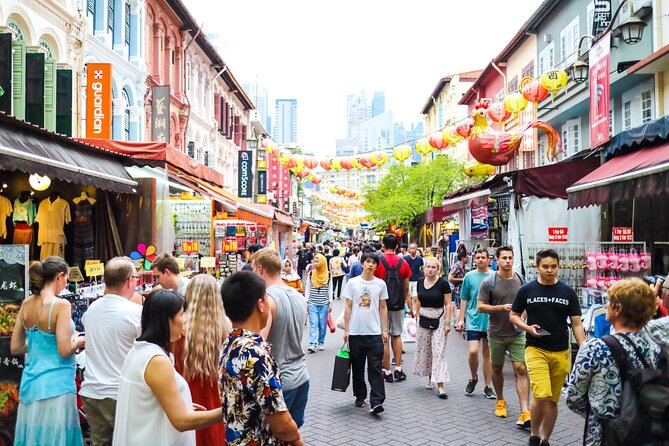
Singapore can feel like three cities stacked on top of each other: Malay roots in Kampong Gelam, Indian influences in Little India, and Chinese culture in Chinatown. This tour is built around that overlap. You walk key streets, then use the MRT between areas so you see how people actually get around, not just how a map looks.
The big value is that the food tastings match the neighborhood stories. You’re not bouncing randomly from restaurant to restaurant. You’re moving through spaces where markets, worship sites, and everyday street life all shape what you eat.
Timing is also practical. The tour runs about 3 hours, with around 35 minutes at each of the three main areas. And departure times are flexible online, with pick-up windows kept tight enough that you’re not waiting around all morning or afternoon.
You can also read our reviews of more food & drink experiences in Singapore

Kampong Gelam: Sultan Mosque area and Arabic street-food snacks
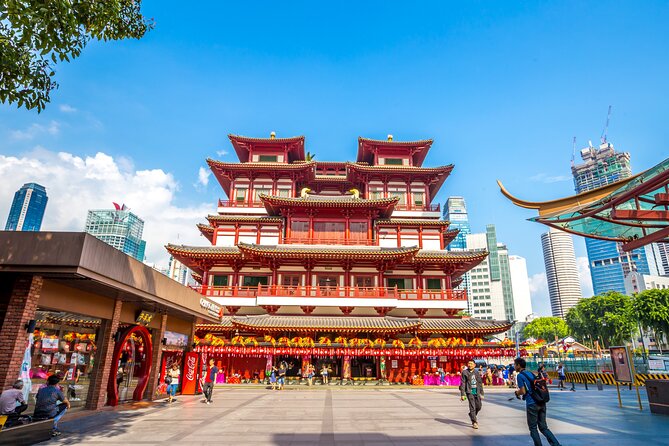
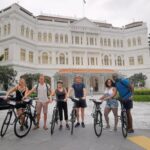
Kampong Gelam is where you feel the Malay and Muslim identity of Singapore right away. Your first stop is centered on the Sultan Mosque area, and your guide explains where this quarter came from and what you’re seeing as you walk. The tour lists the admission for this stop as free, which helps keep the start-to-finish cost feeling reasonable.
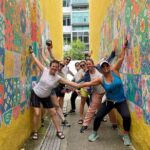
From there, it turns into street energy. Think narrow lanes, small shops, and the “walk until it smells good” kind of navigation. People in the feedback often call out the hip stretch near Haji Lane as a memorable part of the route. The food portion here tends to lean Arabic and regional Middle Eastern street snacks—small bites you can eat while you’re still soaking in the atmosphere.
What I like about this first segment is pacing. It’s a gentle warm-up before the busier sensory overload of Little India and Chinatown. You also get context early, which makes the later tastings land better.
A small reality check: this part can get crowded in peak times, so keep your phone ready for photos but don’t stop too long in the middle of the walk.
Little India: market sidewalks, garlands, gold shops, and hawker-centre stops
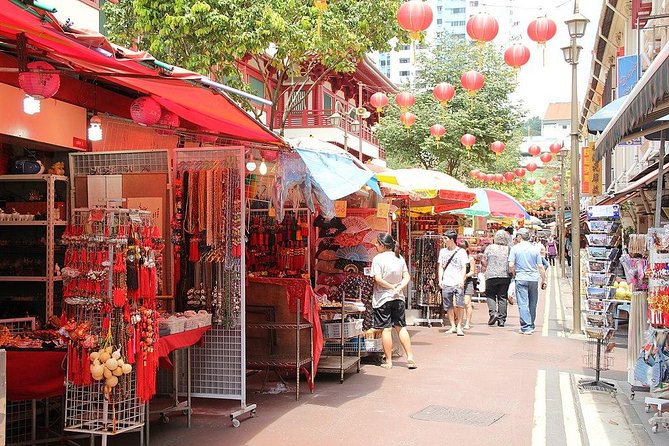
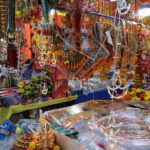
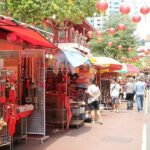
Little India is the place for sights and sounds you can’t fake: flower garland shops, fruit and vegetable stalls, goldsmiths, pawn shops, and the kind of narrow street trading that moves fast. The tour’s walking route is designed to show you more than one street photo spot—it’s about seeing how commerce and culture blend at ground level.
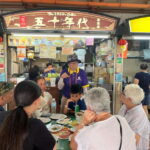
You’ll reach a hawker-centre-style food stop for part of the tastings. One standout detail from guide-led experiences here is getting tosai/tosai-style fare in a hawker setting. That matters because it’s not just about the dish. It’s about learning how street cooking works when there’s a line, a griddle, and people eating with zero ceremony and full confidence.
This stop is also a great time to practice the tour’s core mindset: eat, then ask why. Guides like Grace and Loy are frequently praised for connecting food to place—how ingredients and cooking styles show up where the community lives and works. You’ll get a story you can carry with you the rest of the day.
One practical consideration: the sidewalks and hawker areas can feel warm, and there’s often a lot going on at once. If you’re sensitive to heat or crowds, plan your water and take short pauses off to the side when needed.
Chinatown: riding the MRT like locals and finishing near Buddha Tooth Relic Temple
Chinatown on this tour is not just “walk through old buildings.” It’s a real local transit moment. You arrive via the MRT, and your guide points out what’s notable about that experience—how clean, safe, and efficient it is. That’s a subtle but useful perk because Singapore’s transit is part of how people reach daily food shopping spots.
Once you’re in the neighborhood, the route focuses on the street grid—busy lanes, activity around markets, and the food streets people use every day. Your final point is in the Chinatown area near the Buddha Tooth Relic Temple, which gives you a clear ending anchor so you don’t feel like you’re wandering off on your own.
Now, a heads-up from real-world timing: hawkers and stalls can be affected by crowd levels and temporary closures. One experience shared that a Chinatown hawker centre had a temporary closure and the area became extremely crowded, so some chicken rice stalls were closed or sold out by the time the group reached them. The guide handled it by explaining the dish context anyway and making an alternative stop. Still, it’s smart to keep expectations flexible for any one specific dish you hope to see.
The nine tastings: what’s included and how the food is served
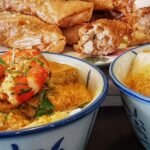
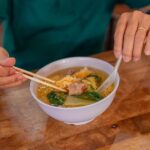
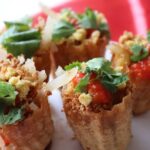
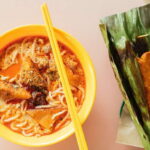
This tour is built around nine included tastings from street-food and hawker-centre style spots. The breakdown is typically 7 or 8 food/snacks served as sharing portions, plus 2 or 1 local drinks on an individual portion basis.
A key detail: not every item is a bite-sized snack. Some are more like full, ample dishes in small-form street portions. That’s great if you come hungry, but it also means you’ll want to pace yourself so you’re not overwhelmed by halfway through.
Another detail that can surprise first-timers: several foods here are eaten with fingers in the street-style way. One point raised is that in Singapore, these aren’t always treated like tourist finger-food. So if you’re squeamish, you can still do it—you just need to plan for it. This is where that earlier tip about small wipes becomes practical rather than optional.
If you want more than what’s included, additional food and drink aren’t part of the package. That’s normal for this style of tour, but it also means the best value comes from focusing on the included stops instead of treating it like a credit toward dinner.
A few more Singapore tours and experiences worth a look
The private guide difference: how guides like Grayson, Grace, Joseph, and Nigel shape the day
A walking and tasting tour lives or dies by the guide. Here, you’re getting a private licensed guide, and the comments you’ll see about specific guides are consistent: they keep things moving without feeling frantic, and they connect food to culture without turning it into a lecture.
Names that come up often include Grayson, Grace, Joseph, Loy, Ian, Ray, and Nigel. Common praise themes include:
- Clear explanations tied to what you’re eating
- Good pacing even for people who prefer a calm, low-drama day
- Thoughtful route choices and photo-friendly moments
- Extra care when someone in the group needs help moving more slowly
One guide note that’s worth taking seriously: if you’re the type who wants lots of extra time for photos, ask yourself whether you want a food story tour or a photo-time tour. When a schedule gets tight, that’s usually where disappointment happens, not with the guide’s effort.
And if you’re worried about comfort basics, you’ll be glad to know that issues like running out of wet wipes have shown up in the feedback—so I’d treat wipes as part of your packing list, not as a gamble.
Price and logistics for $177.65: when it feels worth it (and when it doesn’t)
At $177.65 per person for about 3 hours, this isn’t a cheap stroll. The value comes from bundling three things you’d otherwise spend time stitching together on your own:
- A private licensed guide to map the day and explain what you’re eating
- Nine tastings across three neighborhoods
- MRT tickets included, so you’re not paying for transit add-ons inside the tour
For first-time visitors, that combination can feel like good economics because the guide does the hard work of choosing where to go and when. You get structure plus local food depth.
It can feel pricey if your main goal is a long hang-out or if you want the freedom to stay longer at every photo stop and restaurant. One shared concern was that the tour felt rushed for extra savoring and pictures, which is a fair complaint if you planned the day like a casual sightseeing loop.
Also consider your tolerance for walking. This is mainly a walking tour, and it’s not recommended for travelers with mobility issues. If you’re close to that line, it’s worth asking about the route and pace before you book.
How to make the walking-food pace work for you
This is the part you can control, and it makes the biggest difference in enjoyment.
First, show up with a real appetite. The tour is set up so the included tastings add up. People who enjoyed the day the most often note that there’s plenty to eat and it can easily replace dinner.
Second, pack for street-food reality. I already mentioned small wipes. Add comfortable shoes and an extra layer for rain if the weather is iffy—one account praised the guide for staying solid even when it was raining.
Third, use the day’s pacing smartly. If you want photos, take them while you’re walking, not when the group stops. The goal is to stay with the flow so you don’t miss tastings while waiting for a perfect shot.
Finally, think about your neighborhood priorities. If you already know exactly what you want in one district (say, a super specific dish), this tour still works, but it’s better suited for people who want a broader slice of Malay, Chinese, and Indian street-food culture rather than chasing one target meal.
Should you book this Kampong Gelam, Little India & Chinatown street-food tour?
Book it if:
- You want a guided introduction to Singapore’s Malay, Chinese, and Indian neighborhoods in one afternoon
- You like street food and want a structured tasting plan with included MRT transit
- You enjoy learning small cultural context while you eat, not just collecting restaurant names
Skip it or think twice if:
- You need a low-walking, sit-everywhere experience
- You want lots of unstructured time for photos and slow savoring
- You’re extremely sensitive to finger-style eating or messy-but-authentic street plates
Overall, this is a strong option when you want Singapore to make sense fast—and taste good while it’s happening.
FAQ
What food and drinks are included in the tastings?
The tour includes nine tastings. This is typically 7 or 8 food/snacks served as sharing portions, plus 2 or 1 local drinks served as individual portions.
Do I need to pay for MRT tickets or admission fees?
MRT tickets are included. The Sultan Mosque area stop is listed as free admission in the tour plan.
Where does the tour start and where does it end?
The tour starts at 56 Arab St, Singapore 199753. It ends in the vicinity of the Buddha Tooth Relic Temple at 288 South Bridge Rd, Singapore 058840.
Is hotel pickup available?
Pickup is offered. If you choose the with-hotel-transfers option, pickup and drop-off are included. There’s also an option to upgrade with a private vehicle with transfers.
Is the tour suitable for mobility issues?
It is mainly a walking tour and is not recommended for travelers with mobility issues.
Can I cancel for a full refund?
Yes. You can cancel up to 24 hours in advance for a full refund. If you cancel within 24 hours of the start time, the amount paid is not refunded.