REVIEW · NEW DELHI
Old Delhi Night Food Tour – Kitchens & Local Stories
Book on Viator →Operated by Explore Routes · Bookable on Viator
Old Delhi at night is a full-senses meal. This tour starts at dusk and turns historic lanes into a night market world of sizzling grills, glowing lights, and nonstop context about what you’re eating and where you are. I love that it’s a true walk-and-eat dinner, not a few samples, and I love the small-group pace that keeps things unhurried. One thing to consider: you’ll be on your feet for a good chunk of the evening, and water isn’t included, so come ready to manage hydration.
I also like the practical approach to hygiene. The operator says every food stop is personally vetted and regularly visited for quality and cleanliness, and they’ll work with allergies (including lactose, gluten, and nut allergies) when you tell them in advance. You also get a kit for the street—hand sanitizer and wet wipes—because Old Delhi is not a place for wishful thinking.
For logistics, it’s built around public transport and simple flow: you meet near Red Fort Metro Station and finish near Jama Masjid. You even get a tuk tuk ride during the evening, which helps when the lanes get tight and your feet start sending complaints.
In This Review
- Key highlights you’ll feel right away
- Old Delhi after dusk: what changes once the lights come on
- Price and value: why $40.26 works for a dinner walk
- Your 3.5-hour rhythm: walking, pauses, and a small group that keeps it sane
- Stop 1: Chandni Chowk at dusk, where you start with comfort
- Stop 2: Vegetarian skewers with a twist (smoky, rich, and a little deceptive)
- Stop 3: Gurudwara Sis Ganj Sahib, and the story behind the visit
- Stop 4: Jama Masjid lanes, kebabs that follow the Old Delhi way
- Stop 5: Kalan Mehal under the mosque lights, then a Mughal-era sweet finish
- What’s actually included (and what you need to bring)
- Hygiene and food safety: what the tour says it does for you
- Meeting points and ending near Jama Masjid: plan your route like a local
- Who this Old Delhi night food walk is best for
- The guide factor: storytelling that makes the food land
- Should you book it? My straightforward call
- FAQ
- How long is the Old Delhi Night Food Tour?
- What does the tour cost?
- What food and drinks are included?
- Is water included in the tour?
- What’s the group size?
- Where does the tour start?
- Where does the tour end?
- Can the tour accommodate dietary restrictions or allergies?
- What is the cancellation policy?
Key highlights you’ll feel right away
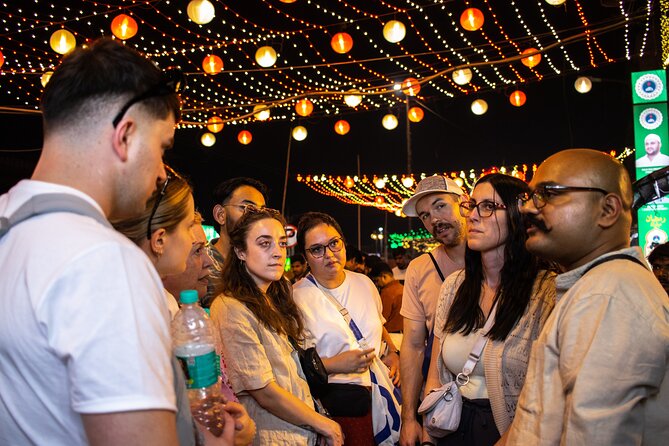
- A real dinner, with generous portions at multiple stops (not just tastes)
- Chandni Chowk classics to start, then street-food surprises that land every time
- Religious stops with context, including Gurudwara Sis Ganj Sahib and Jama Masjid
- Vegetarian skewers that wow, described as smoky and shockingly meat-like
- Mughal-era sweet finish after the kebabs, so your last bite is memorable
- Built-in hygiene tools: chai plus sanitizer and wet wipes, with vetted food stops
Old Delhi after dusk: what changes once the lights come on
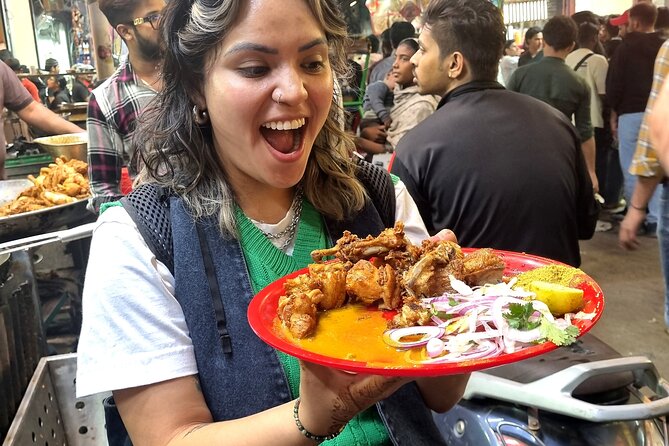
Old Delhi is different at night. During the day, the streets can feel like motion and noise. At dusk, the rhythm shifts: stalls light up, grills start working, and the whole area feels more like a living street scene than a sightseeing route.
This matters because food in Old Delhi isn’t just about taste. It’s also about timing. You’ll eat at the moment when vendors are in full swing and the lane energy is at its best. That’s why this tour is designed as an evening walk rather than a midday bite-and-run.
You’re also getting more than directions. The tour is guided with a story-forward approach, with local context tied to each location and each menu stop. If you’re the type who wants to know what you’re looking at while you’re eating, this format clicks fast.
You can also read our reviews of more food & drink experiences in New Delhi

Price and value: why $40.26 works for a dinner walk
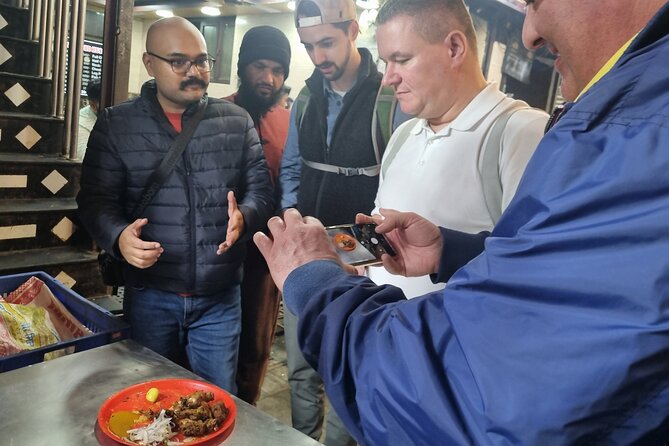
At $40.26 per person for about 3 hours 30 minutes, this isn’t a budget snack crawl. But it does make sense for what’s included: all food tastings, chai tea, a storyteller guide, a tuk tuk ride, and a small hygiene kit.
Here’s the value logic I’d use when deciding:
- You’re paying for several planned meals rather than one restaurant stop.
- You’re paying for someone who knows where to eat safely and well (the operator says stops are vetted and revisited).
- You’re paying for structure: a clear start, an end near Jama Masjid, and a route that ties together street food and major landmarks.
The main cost you’ll add yourself is simple: water isn’t included. If you factor that in, you’re still likely coming out in the same zone as buying multiple street snacks on your own, but with less guesswork and a lot more context.
Your 3.5-hour rhythm: walking, pauses, and a small group that keeps it sane
This is a walk-first experience with multiple stops. The listed stop times add up to about 3 hours 15 minutes, and the full schedule is about 3 hours 30 minutes once you include walking between lanes and the occasional buffer.
The group size is capped at 10 people, which is a big deal in Old Delhi. Smaller groups move with fewer bottlenecks, and you’re more likely to get questions answered without your guide shouting over a crowd.
Also, the pacing is described as unhurried with generous portions. That matters because Old Delhi food can be intense—spices, smoke, and rich flavors. If you rush through, you’ll taste less. If you take it slow, you’ll actually remember each bite.
Stop 1: Chandni Chowk at dusk, where you start with comfort
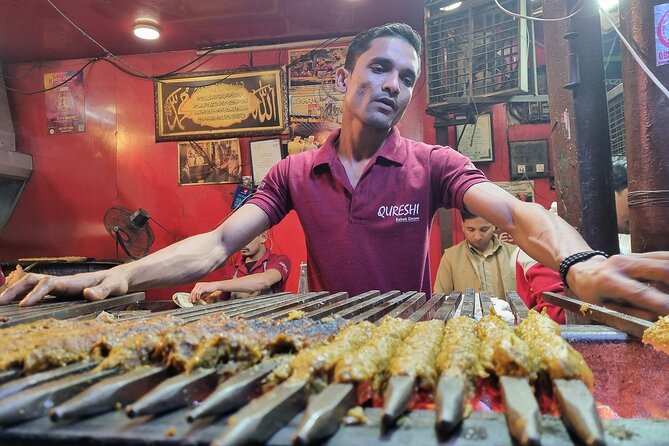
You begin at Chandni Chowk, right in the middle of Old Delhi’s action. The goal of the first stop is comfort—gentler, familiar flavors to get your stomach ready before things go full street-food mode.
This first hour is also the moment you’ll get your bearings fast. You’re not jumping into the hardest-to-navigate lanes immediately. Instead, you walk lively lanes as grills ignite and the city starts glowing. It’s a good “ease in” move that helps you feel confident by the time you’re deeper in the market maze.
A practical note: because you start near major transit, you’ll likely arrive with the city’s flow already moving. Build in enough time to find your group without stress.
Stop 2: Vegetarian skewers with a twist (smoky, rich, and a little deceptive)
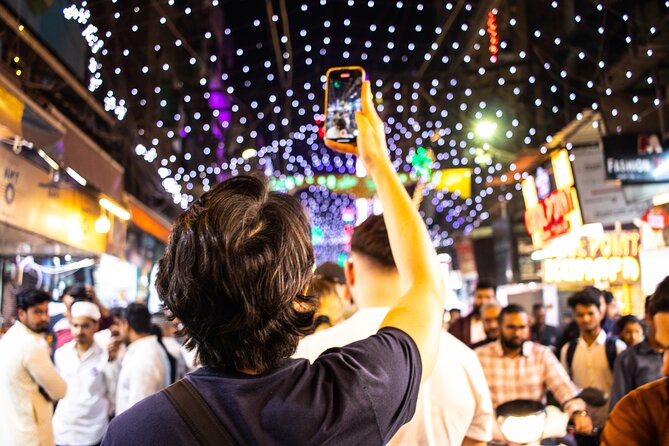
Next comes a food stop that gets attention for one reason: the skewers are vegetarian, but they’re described as smoky, rich, and shockingly meat-like. That’s a rare kind of street-food magic—when the flavor and texture tricks your expectations.
This is where the tour earns its name as a true “walk-and-eat dinner.” You’re not waiting for the big plates later. The tour starts feeding you early, and this stop is designed to make you pay attention: how the spice works, how the smoke shows up, and why the vendor’s method matters.
If you’re hoping for a vegetarian-friendly tour that still feels like dinner—not sides and salads—this is likely one of your favorite moments.
A few more New Delhi tours and experiences worth a look




Stop 3: Gurudwara Sis Ganj Sahib, and the story behind the visit
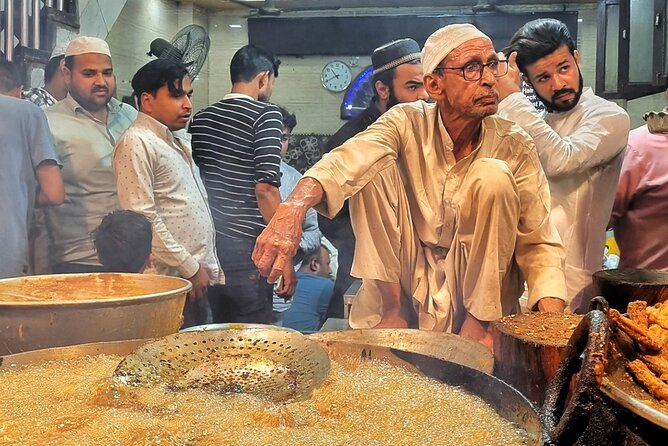
Between food stops, you get a cultural pause at Gurudwara Sis Ganj Sahib. The time here is short (15 minutes), but the intent is clear: you’re not just passing by a building. You hear the fascinating history behind the temple.
This stop is one of the best parts of the tour for people who don’t just want to eat—they want to understand why the place matters. It also gives your body a breather from the street heat and smoke.
Quick practical tip: religious spaces usually come with dress expectations. Even if you’re only there briefly, bring something simple and respectful.
Stop 4: Jama Masjid lanes, kebabs that follow the Old Delhi way

From the gurudwara, you walk into the Jama Masjid area and into narrow lanes once used by poets and craftsmen. This isn’t a background stop. It’s part of the flavor story.
Here, you stop for smoky, chargrilled kebabs prepared the Old Delhi way. The tour description emphasizes generous portions and an unhurried pace, which you’ll appreciate after the vegetarian skewer stop and before the final sweet.
Why this stop works: it connects food to place. Old Delhi’s food culture makes more sense when you see it beside landmark architecture and learn what the lane life looked like before modern tourism took over.
One small consideration: kebabs plus street-side smoke can be a lot if you’re sensitive to strong aromas. If that’s you, pace yourself and sip chai slowly when you can.
Stop 5: Kalan Mehal under the mosque lights, then a Mughal-era sweet finish
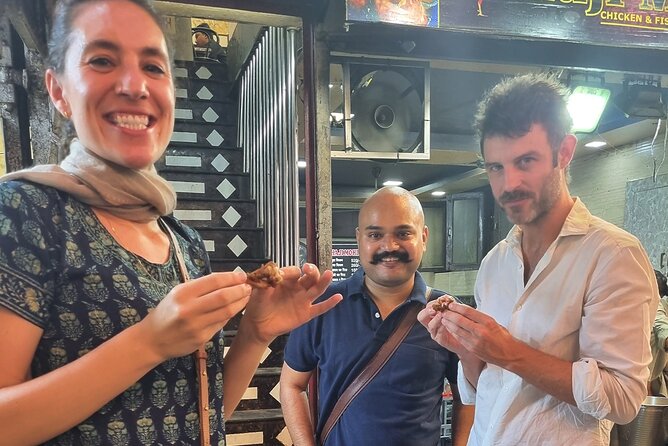
The final stop is at Kalan Mehal, and it’s described as happening under the illuminated presence of Delhi’s grandest mosque. That setting matters because it makes the last stretch feel special, not just logistical.
You’ll eat local favorites here, and then the tour ends with a classic Mughal-era dessert. Desserts in Old Delhi aren’t just “sweets.” They’re often the ending note that ties together richness, spice memory, and hospitality. Finishing with something Mughal-era makes sense, because it reflects the broader culinary heritage of the area.
This last hour is a great time to slow down and reflect on what you’ve learned: how spices are balanced, how smoke and char influence flavor, and why portion size is part of the experience here.
What’s actually included (and what you need to bring)
Included in the tour:
- All food tastings
- Chai tea
- Storyteller tour guide
- Tuk tuk ride
- Hand sanitizer
- Wet wipes
Not included:
- Water
So you should plan on bringing your own water or buying it during the walk. That’s especially important in Delhi evenings, when you may be walking, sweating a bit, and eating hot items back-to-back.
Also, because this is a walk-first dinner, I’d recommend wearing comfortable shoes with grip. Old Delhi lanes can be uneven, and you’ll want stability more than style.
Hygiene and food safety: what the tour says it does for you
This is one of the most reassuring parts of the experience. The operator states that all food stops are personally vetted and regularly visited for quality and hygiene, and they focus on authentic preparation.
They also say they can accommodate dietary restrictions and allergies, including lactose, gluten, and nut allergies, with suitable alternatives whenever possible. The key here is simple: tell them in advance so they can match you with the right version of each stop.
What I like about this approach is the realism. Street food is street food, but you can still lower risk with good vendors, good handling, and clear substitution choices.
Meeting points and ending near Jama Masjid: plan your route like a local
You start at the Red Fort Metro Station Lal Qila area, with the listed meeting point also tying to Netaji Subash Place and Lajpat Rai Market along the way. The important part for you: it’s near public transportation, which helps a lot if you’re navigating the city.
The tour ends around Meena Bazaar / Jama Masjid area, and specifically at Gate No. 1, Jama Masjid Metro Station.
That ending is convenient because Jama Masjid is a natural hub for your next move. After dessert, you can hop onto metro without backtracking far.
One more practical detail: there’s a mobile ticket, so have your phone ready for check-in.
Who this Old Delhi night food walk is best for
This tour fits best if you want:
- A full dinner that includes multiple tasting stops
- Street food plus context, not just food with no explanation
- A small group (up to 10) so the experience stays human-sized
- Food safety handled thoughtfully, with flexibility for allergies
- Less shopping and fewer tourist traps, because this is described as zero tourist traps and zero shopping stops
If you’re the type who loves markets but hates feeling lost, you’ll probably like the structure. The walk-and-eat design also makes it easier to eat your way through Old Delhi rather than picking places one by one while you’re tired.
If you dislike heavy walking, or if you get overwhelmed by smoke and crowded lanes, then this might be harder. The tour is still manageable for most people, but it’s built for movement.
The guide factor: storytelling that makes the food land
A big part of why this tour earns such high praise is the storytelling style. The experience is explicitly described as a storyteller guide, and one guide name that shows up in the positive feedback is Faizy. People highlight how he takes them to places where locals eat, and that alone makes a big difference in a city like Old Delhi.
Even if you only remember a few facts from the evening, those details change how you taste. When you know why a dish exists or what a place meant, the flavors become tied to meaning instead of just noise and spice.
Should you book it? My straightforward call
Book this tour if you’re looking for a proper Old Delhi dinner on foot with chai, real food stops, and local storytelling. The small group size, the vetted food approach, and the promise of zero shopping stops are exactly the kind of signals that usually separate a good evening from a chaotic one.
Skip it (or think carefully) if:
- you don’t want to walk much,
- you’re not comfortable with smoky street food aromas,
- or you strongly prefer sit-down restaurants over street-side eating.
If you do book, one smart move is to send your dietary needs clearly in advance (especially lactose, gluten, or nut allergies). And plan for hydration since water isn’t included. With that handled, you’ll be set up for an evening that feels like Old Delhi after dark should: eating first, learning as you go, and finishing with a sweet note under the mosque lights.
FAQ
How long is the Old Delhi Night Food Tour?
It runs for about 3 hours 30 minutes.
What does the tour cost?
The price is $40.26 per person.
What food and drinks are included?
All food tastings and chai tea are included.
Is water included in the tour?
No. Water is not included.
What’s the group size?
The tour has a maximum of 10 travelers.
Where does the tour start?
The start point is listed near Red Fort Metro Station Lal Qila, in the Chandni Chowk area (with nearby reference points around Netaji Subash Place and Lajpat Rai Market).
Where does the tour end?
The tour ends near Gate No. 1, Jama Masjid Metro Station, in the Meena Bazaar area.
Can the tour accommodate dietary restrictions or allergies?
Yes, dietary restrictions or allergies (including lactose, gluten, and nut allergies) can be accommodated with suitable alternatives when you inform the team in advance.
What is the cancellation policy?
You can cancel for a full refund up to 24 hours before the experience starts. If you cancel less than 24 hours before, the amount paid is not refunded.