REVIEW · KYOTO
Kyoto Food Tour of 10 Tastings with Wagyu, Mochi & More Surprises
Book on Viator →Operated by Secret Food Tours · Bookable on Viator
Kyoto tastes better when you follow a guide. This small-group walking tour strings together classic Kyoto neighborhoods with 10 tastings like yuba tofu, wagyu sushi, and mochi, finishing in Gion. You start in central Kyoto near Karasuma Oike, meet your guide holding an orange umbrella, and spend about 3.5 hours eating and strolling.
I especially like the way the tour builds from savory comfort food into Kyoto specialties—katsudon first, then the market tastings with yuba tofu and sake. I also like the ending: a matcha-focused stop with a hot-or-cold tea tasting, plus sweet dessert like daifuku mochi with seasonal fruit filling.
One thing to consider: this is a walking tour. Expect a fair amount of pavement, and if you want very detailed, deep explanations in strong English, you may have to set expectations—some guides are softer-spoken.
In This Review
- Key things to know before you go
- Karasuma to Gion: eating while the streets do the sightseeing
- Finding your group fast: Starbucks, Karasuma Oike, and that orange umbrella
- Stop 1: the quick intro over coffee energy
- Stop 2: katsudon with a Kyoto twist at a local tonkatsu spot
- Stop 3: Nishiki Market’s long stretch—yuba tofu, sake, fishcakes, and more
- Stop 4: walking the Kyoto postcard route—Pontocho and the Kamo River
- Stop 5: okonomiyaki the Kyoto way in a small, quaint restaurant
- Stop 6: matcha tea ceremony vibes and sweet finish with mochi
- The food lineup: what you’re really paying for
- The guide experience: friendliness helps, but clarity matters
- Logistics that actually matter: weather, walking, and what to bring
- Who this tour suits best (and who should skip it)
- Should you book it?
- FAQ
- How long is the Kyoto food tour?
- Where does the tour start and how do I find it?
- Where does the tour end?
- What food and drinks are included?
- How many people are in the group?
- Is hotel pickup and drop-off included?
- Is there walking involved?
- Can the tour accommodate dietary requirements?
- What’s the cancellation policy?
Key things to know before you go
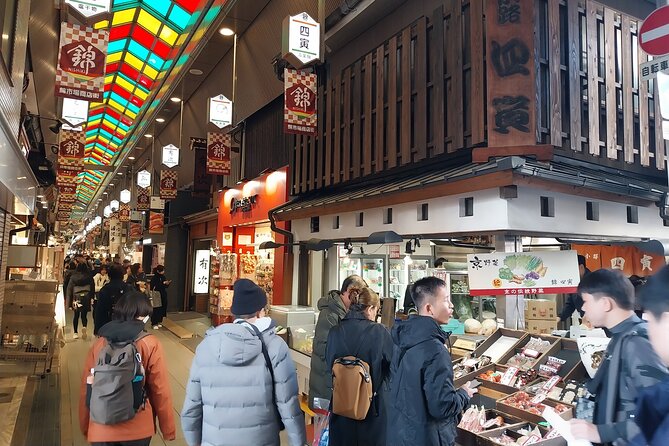
- A Karasuma to Gion route that mixes food with major Kyoto streetscapes like Pontocho and Kamo River views
- 10 tastings that include wagyu sushi, yuba tofu, fishcakes, okonomiyaki, and seasonal daifuku mochi
- Drinks are part of the deal, including draft beer plus a Kyoto sake tasting
- Easy meeting point by Subway Karasuma Oike, Starbucks across from exit 5, with the guide identifiable by an orange umbrella
- Max 10 people, so it feels laid-back instead of chaotic
- Menu changes can happen based on location availability and weather, so go flexible
Karasuma to Gion: eating while the streets do the sightseeing
This tour is built on a simple idea: you don’t need to choose between food and sightseeing in Kyoto. You walk from central Karasuma area toward Gion, and every chunk of the route has a reason to exist. That means you get Kyoto’s food culture and the visual payoff—Pontocho lanes, Kamo River viewpoints, and the Gion vibe—without hopping across town all day.
You’ll cover about 3 hours 30 minutes total, and you’ll move the whole time. Wear shoes you trust. The route is friendly for first-timers because it stays in areas you’ll want to see again after the tour—especially around Nishiki Market and Gion.
You can also read our reviews of more food & drink experiences in Kyoto

Finding your group fast: Starbucks, Karasuma Oike, and that orange umbrella
The meeting point is very straightforward: Starbucks near Subway Karasuma Oike, specifically across the street from exit 5. Your guide will introduce themselves and get you oriented, and they’re easy to spot because they’re wearing an orange umbrella.
That matters more than you might think. Kyoto can feel like a maze when you’re hungry and jet-lagged, so starting clean like this helps you get into the eating mood quickly. You’ll also get a quick tour overview before you start, which keeps the next couple of hours from feeling like random snacking.
Stop 1: the quick intro over coffee energy
You start with a short meetup that’s basically all business: meet the guide, confirm your group, and get a tour rundown. The “ticket” part here is free, and it’s only about 10 minutes.
Practical tip: use this moment to settle your stomach. If you arrive late, you might slow down the whole line. So be early enough to feel calm, not rushed.
Stop 2: katsudon with a Kyoto twist at a local tonkatsu spot
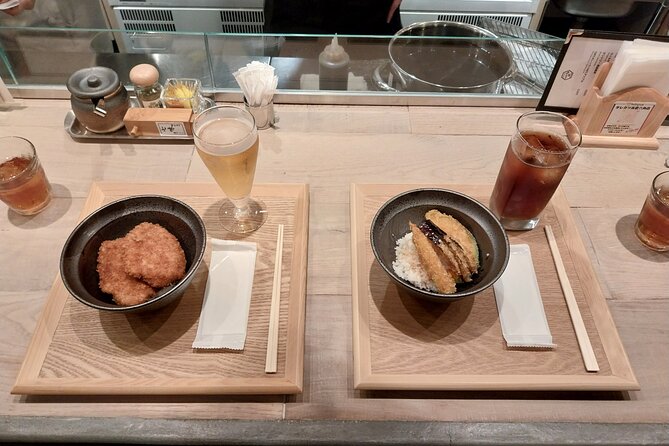
Next you go to a tonkatsu restaurant area at Shijo Kawaramachi for your first proper bite. This is where you try katsudon with a sweet local twist, served as a traditional Japanese comfort dish.
Why this stop works: it gives you something filling and familiar in flavor, even if you’re new to Japanese food. Pork katsu is satisfying, and the sweet Kyoto-style angle helps you understand that the city’s tastes aren’t just about raw fish and tea—they also love warm, hearty flavors.
One caution: several people note the tour can lean toward fried items. Katsudon is one of those. If you dislike fried food in general, that’s the one part of the menu you should pay extra attention to before committing.
Stop 3: Nishiki Market’s long stretch—yuba tofu, sake, fishcakes, and more
Then you enter the heart of Kyoto eating: Nishiki Market. This part is the longest stop—about 1 hour 30 minutes along the roughly 400 meters of the market street—so you’ll have time to look around, not just scarf samples and run.
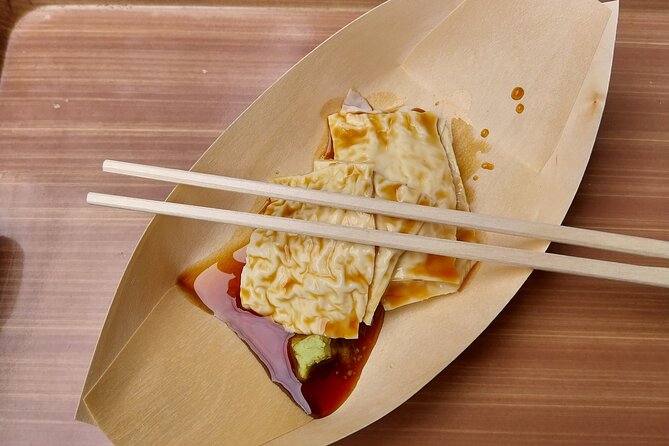
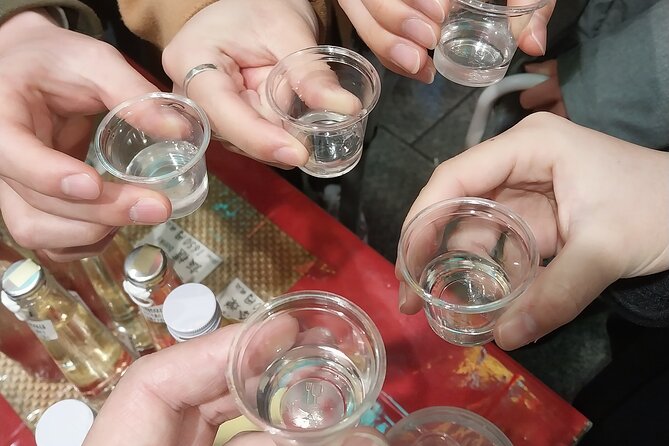
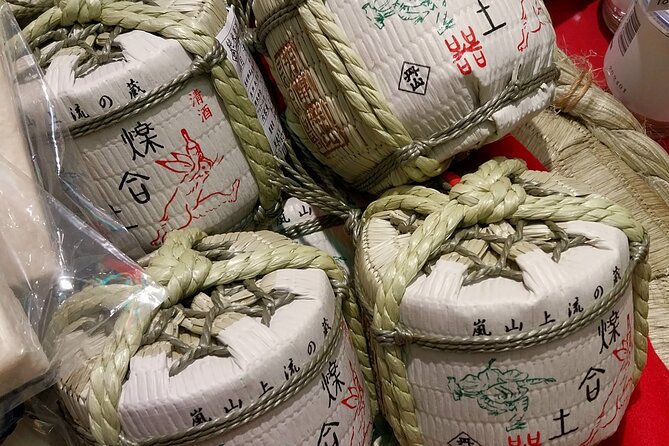
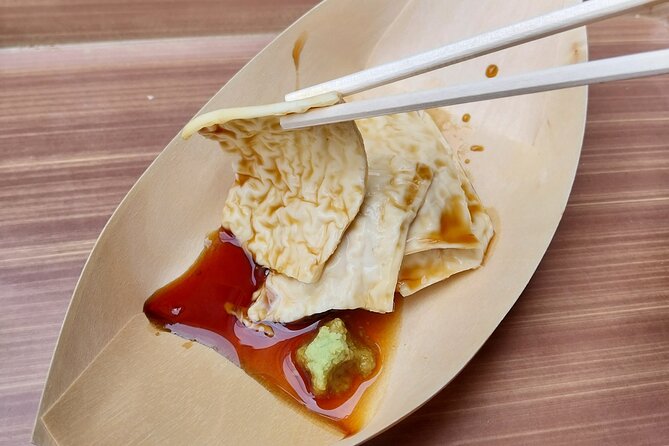
This is also where the tour feels most Kyoto-specific. You’ll get a yuba tofu presentation, which is a big deal locally. Yuba is Kyoto’s signature soy product—thin sheets formed during simmering soy milk—and tasting it as part of a short explanation helps you understand why it’s not just another tofu item. It’s a texture-and-technique thing.
In the same market stretch, you’ll also try things like:
- a sake tasting (plus a glass of draft beer as part of the included drinks)
- fresh fishcakes with different flavors
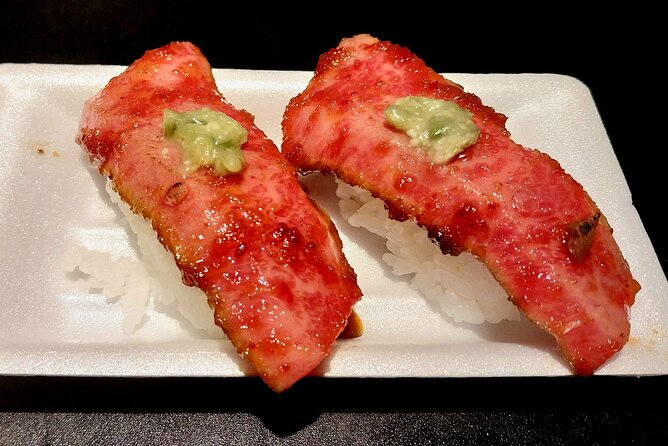
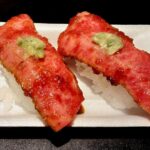
And as part of the overall tasting lineup, you should expect other standout bites such as wagyu sushi. On market-heavy tours like this, wagyu often shows up in a “small plate but big impact” format, so you get the feel of a premium ingredient without a full restaurant sit-down.
Here’s a helpful mindset: treat Nishiki like an eating sampler, not a full meal. You’ll likely want to ask small questions about how things are made or how to eat them. If you’re polite and curious, the guide will usually steer you to the tastier approach.
A few more Kyoto tours and experiences worth a look
Stop 4: walking the Kyoto postcard route—Pontocho and the Kamo River
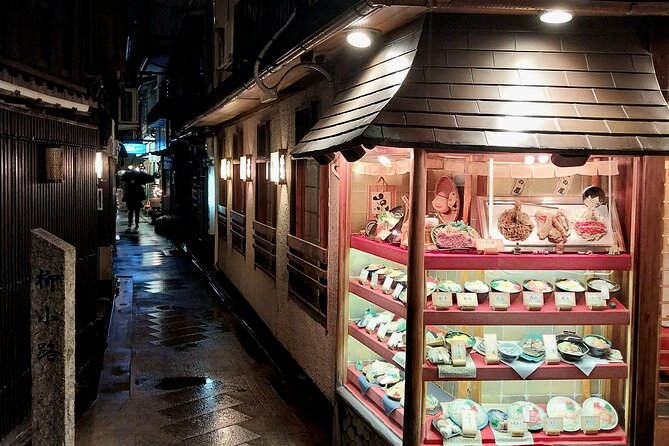
After the market, you shift from eating mode to strolling mode. You move through streets in the Gion area and get view time for Pontocho and the Kamo River before heading deeper into Gion.
This is a nice reset for two reasons. First, it gives your stomach a breather between tastings. Second, Kyoto’s food culture lives in the street-level details—alleys, signage, tiny shops, and the way neighborhoods look at walking pace.
If you’re coming in from a long day of sightseeing, this section is also a mental breather. You’re not staring at menus for every bite. You’re just walking through the city’s visual storyline.
Stop 5: okonomiyaki the Kyoto way in a small, quaint restaurant
Back in Gion, you stop for okonomiyaki prepared the Kyoto way. This is about 30 minutes and served in a restaurant setting rather than as pure street food.
Okonomiyaki is one of those dishes where small regional differences matter. Even if you’ve had it elsewhere, Kyoto-style has its own angle in how it’s built and served. On this tour, it lands as your “hearty middle” meal after you’ve sampled lighter bites in the market.
This is also a good place to slow down and eat like a human, not a speed-eater. If your tour pace feels fast earlier, you’ll probably appreciate having a sit-down moment here.
Stop 6: matcha tea ceremony vibes and sweet finish with mochi
Near the end, you hit the tea side of Kyoto. You’ll stop at a well-known matcha venue and enjoy a Japanese tea tasting—hot or cold depending on the season and what’s available.
This is the point where the tour closes the flavor loop: savory foods earlier, then the calmer, bitter-sweet world of matcha. Even if you’re not a die-hard tea person, tasting matcha in the context of a Kyoto-focused venue makes it easier to understand what people mean when they talk about quality.
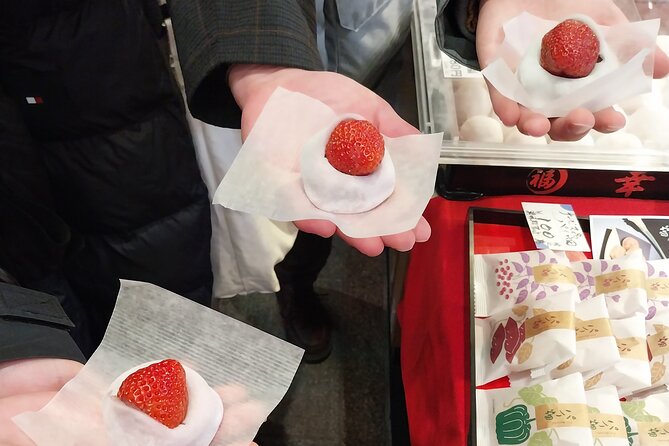
And this is also where daifuku mochi tends to fit. The included menu specifically calls out daifuku with seasonal fruit filling, which gives you a rounded sweet ending after all the savory tastings.
If you’re sensitive to caffeine, choose your tea style carefully. The tour doesn’t require you to force anything—you can usually sip and pace yourself.
The food lineup: what you’re really paying for
At $142 per person, the price isn’t just for food samples. It includes a structured route, 10 tastings, and drinks—specifically a glass of draft beer, a Kyoto sake tasting, and a Japanese tea tasting. That’s a lot of what you’d otherwise pay for across multiple stops.
You’re also paying for convenience and pacing. Kyoto has hundreds of places to eat, but you can’t realistically find the best spots while juggling train stations and language. A guided route helps you spend your energy on tasting, not negotiating menus.
That said, it’s not a luxury fine-dining crawl. It’s a walking street-food and specialty mix. If you want long explanations at every bite or you hate fried foods, consider that. A couple of people have felt the selection leaned too fried and didn’t always match the price. So go into it expecting a mix of fried comfort food plus market specialties, not a fully raw and fresh-only itinerary.
The guide experience: friendliness helps, but clarity matters
This tour is capped at 10 travelers, which usually keeps the group calm and gives your guide room to answer questions. That’s the big advantage of small-group tours in Kyoto: you’re not just one face in a crowd.
In the feedback tied to this experience, guides like Yuma and Tomoro have been mentioned as friendly and capable, especially during market walking and tastings. Still, since tour narration depends on the individual guide, your own experience may vary. If you really want strong English detail, don’t be shy about asking simple questions like what each bite is and how Kyoto-style differs from other regions.
Logistics that actually matter: weather, walking, and what to bring
This experience requires good weather. If it’s canceled due to poor weather, you’ll be offered a different date or a full refund.
You should also plan for walking. Comfortable shoes aren’t a suggestion—they’re how you enjoy the tour instead of counting blisters. Bring water if you run hot. And with multiple tastings plus beer and sake, pace your drinking. You want to enjoy Gion at the end, not stumble through it.
Finally, the menu can change depending on availability. That’s normal for Kyoto food tours, where a tiny shop’s hours or ingredients can shift. If you have dietary needs, contact the tour in advance so they can cater appropriately.
Who this tour suits best (and who should skip it)
You’ll likely love this tour if:
- you want a single organized route from Karasuma toward Gion
- you enjoy trying a range of Kyoto flavors, from yuba tofu to matcha
- you like market atmosphere and don’t mind walking between stops
- you want included drinks like beer, sake, and tea
You might be less happy if:
- you hate fried foods and want only fresh, light bites
- you’re expecting a very academic food-history tour with constant deep explanations
- you want a mostly seated, minimal-walking experience
Should you book it?
Yes, if your goal is a 3.5-hour Kyoto food-and-streets walk with multiple tastings and included drinks, anchored by Nishiki Market specialties and a matcha finish in Gion. The route makes sense for first-timers because it ends in a spot you’ll want to explore after you’re done—Minami Gion, near Gion Shijo Station and a short walk toward Yasaka area landmarks.
I’d book with a small caution: go in ready for a mix that includes fried items like katsudon, not a strictly health-leaning or fresh-only menu. Also, if you’re very picky about narration detail, ask what to expect from your guide or choose a day you can relax and enjoy the food even if descriptions are lighter.
If you want Kyoto food that’s practical, structured, and actually fun to walk through, this one makes sense. If you want total control over every bite, you may do better building your own list.
FAQ
How long is the Kyoto food tour?
It lasts about 3 hours 30 minutes.
Where does the tour start and how do I find it?
You meet at Starbucks across from exit 5 of Subway Karasuma Oike Station. The guide wears an orange umbrella.
Where does the tour end?
The tour ends at the entrance of the Minami Gion district. The closest subway station is Gion Shijo on the Keihan Line, and it’s a few steps from the Yasaka shrine area.
What food and drinks are included?
Included tastings include yuba tofu, katsudon with a sweet local twist, okonomiyaki, wagyu sushi, fresh fishcakes, daifuku mochi with seasonal fruit filling, and a secret dish. Drinks include a glass of draft beer, a sake tasting, and a Japanese tea tasting (hot or cold).
How many people are in the group?
The tour has a maximum of 10 travelers.
Is hotel pickup and drop-off included?
No, hotel pickup and drop-off are not included.
Is there walking involved?
Yes. The tour involves a fair amount of walking, so comfortable shoes are recommended.
Can the tour accommodate dietary requirements?
If you have dietary requirements, contact the tour in advance so they can cater for them as best as possible.
What’s the cancellation policy?
You can cancel for free up to 24 hours in advance for a full refund. Within 24 hours of the start time, the amount paid is not refunded.