REVIEW · CURACAO
Curacao Private Food Tour
Book on Viator →Operated by All Up To You Tours Curacao · Bookable on Viator
Curaçao tastes better with a plan. This private food tour strings together Punda views, neighborhood murals, beach air, and multiple local bites in one morning-length loop, plus a stop at the Curacao Distillery. It’s the kind of outing that turns a first visit into something you actually remember.
I especially love how the tour mixes food with place. You’re not just handed snacks; you’re shown why people eat them where they do, and your guide ties it to what’s happening in the streets around Punda. The second thing I really like: it’s private, and the guide I got was Bart, a fourth-generation Curaçaoan who knows the island from the inside.
One consideration: you will eat a lot. If you have allergies, this isn’t a safe pick, and if you’re not ready for a big food day, pace yourself from the start.
In This Review
- Key highlights you’ll feel fast
- What $135 gets you in this private Curaçao tasting tour
- The private van and short walks: how the pace works
- Stop-by-stop flavor trail through Punda and beyond
- Stop 1: Rif Fort for port history and Punda backdrops
- Stop 2: Brionplein for batido and Queen Emma Bridge context
- Stop 3: Colorful Steps near Queen Juliana Bridge
- Stops 4 and 5: Quintastraat and Willemstraat for Kaya Kaya murals
- Stop 6: Terrace Plaza for pastechi choices and a quick bar peek
- Stop 7: Marie Pampoen Beach for sate batata and sea-breeze snacks
- Stop 8: Landhuis Chobolobo for the Curacao Distillery and Blue Curacao lessons
- Stops 9 and 10: Wilhelminaplein and Breedestraat for the Punda stroll feel
- Stop 11: Sha Caprileskade and the floating market history
- Stop 12: Old Market for your final lunch choices
- Why these specific dishes hit (and how to order without stress)
- Batido: your start button
- Pastechi: the comfort classic
- Sate batata: beach-season energy
- Lunch at Old Market: where it all pays off
- Landhuis Chobolobo and Blue Curacao: the liquor stop that makes sense
- Pacing tips so you don’t leave tired and disappointed
- Who should book this private Curaçao food tour
- Should you book this Curaçao Private Food Tour
- FAQ
- How long is the Curacao Private Food Tour?
- What time does the tour start, and where do we meet?
- Is pickup available?
- Is the tour private or shared?
- Does the tour include the Blue Curacao distillery visit?
- Is this tour okay if I have allergies or if I’m under 18?
Key highlights you’ll feel fast
- Private guide time with a local Curaçaoan perspective, not a big-group script
- Air-conditioned comfort plus short walks where it makes sense for photos and street views
- A full food arc: batido smoothie, pastechi, sate batata, and a proper lunch
- Punda photo stops at Rif Fort and the Colorful Steps, plus murals from Kaya Kaya
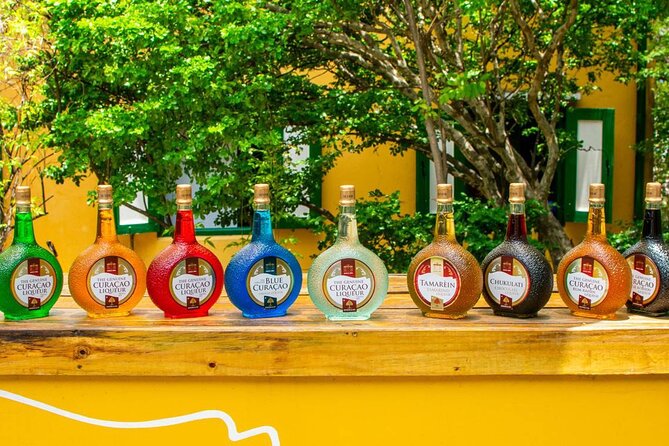
- Blue Curacao distillery visit at Landhuis Chobolobo with the liquor story built in
- Finish strong with lunch at the Old Market, including options like awa di lamunchi or juice di tamarijn
What $135 gets you in this private Curaçao tasting tour
At $135 per person, the value here comes from two things: time and access. You’re paying for a guided route through Punda and beyond, plus multiple tastings that add up fast if you try to copy them on your own.
A typical day on Curaçao can turn into snack hunting plus taxi hopping. This tour is built to reduce that friction. You start at 9:30 am, spend around 4 to 5 hours, ride around in an air-conditioned vehicle, and then do the walking portion through the city center with your guide holding the map in their head.
And you’re not just tasting. You’re learning the local meaning behind what you’re eating. That’s the part that makes the food feel less like random samples and more like a story you can follow.
The private van and short walks: how the pace works
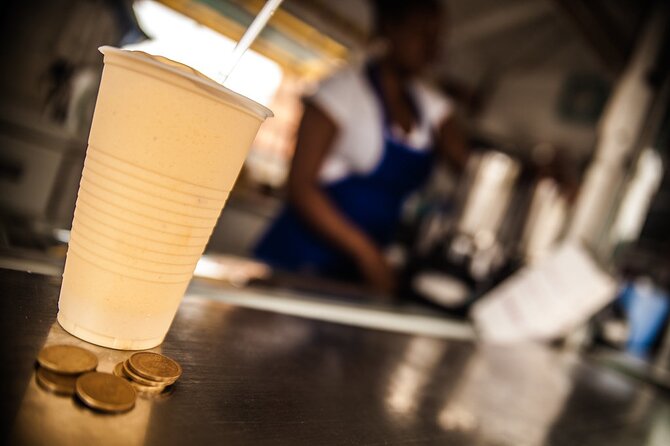
You’ll move mostly by vehicle, with short stops designed for photos and quick tastes. The walking segments are manageable, and the rhythm keeps you from getting stuck in one long waiting line for a single dish.
This is also a smart choice if you want to see Punda without planning. Your guide handles the route, timing, and the “which place should I try next” decisions. Even one detail like starting with a batido smoothie helps set the tone: you begin cool and refreshed, then build appetite as the day goes on.
The tour ends back at the meeting point, so you’re not left wondering how to get back after you’ve eaten enough to forget your own schedule.
Stop-by-stop flavor trail through Punda and beyond
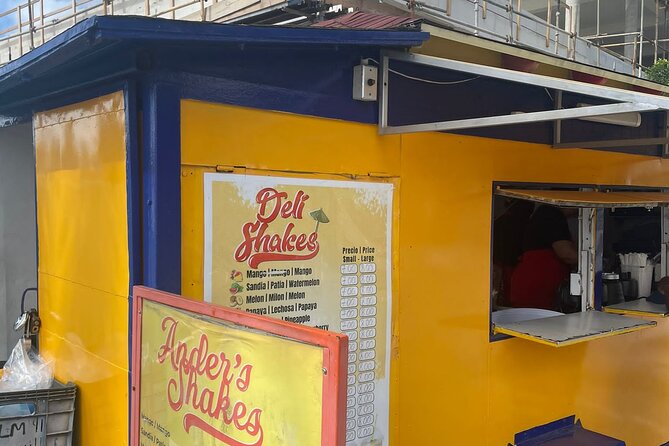
Think of this as a loop that blends views, street art, and food stops. Each stop is short on paper, but together they add up to a complete Curaçao morning.
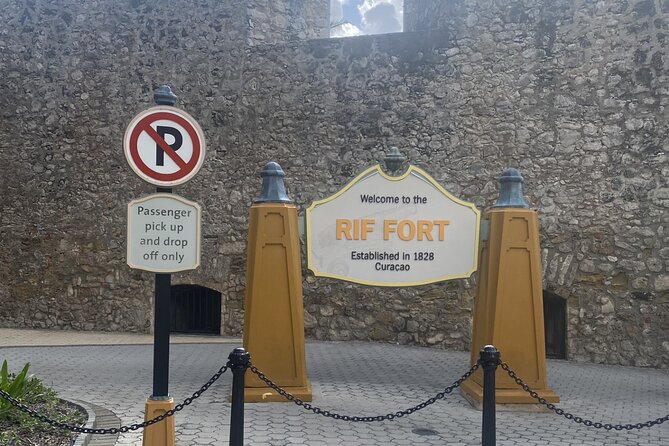
Stop 1: Rif Fort for port history and Punda backdrops
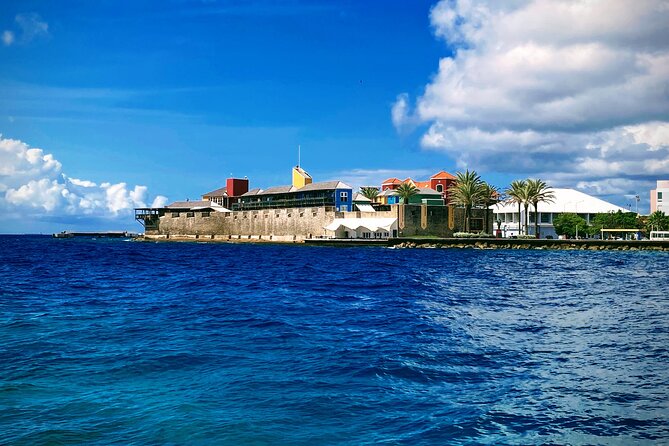
You begin at Rif Fort with a view and a photo moment. The guide covers the history tied to Rif Fort, Punda, and the port Sint Anna Bay. You also get a chance to take pictures with colorful Punda behind you from the second floor of Rif Fort Village.
Why it matters: it gives you orientation fast. Once you can see Punda from a distance, the next stops make more sense.
Stop 2: Brionplein for batido and Queen Emma Bridge context
The food tour kicks into flavor mode with a refreshing batido, with your choice of local fruit smoothie. This stop also connects you to the Pedro Luis Brion story and gives you a closer look at Queen Emma Bridge, nicknamed the Swinging Old Lady.
Practical note: start-time folks often feel sleepy in the morning. A batido fixes that quickly.
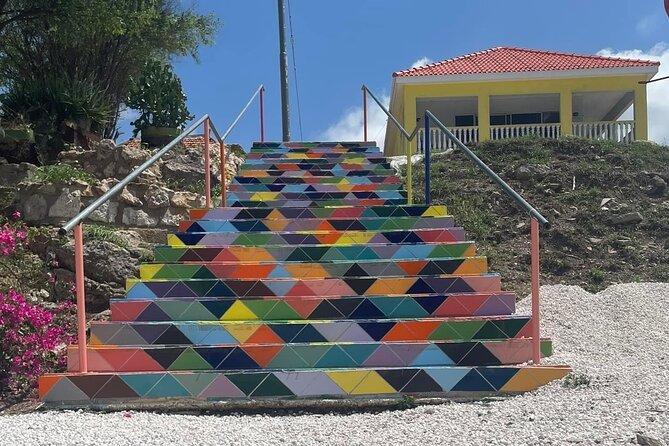
Stop 3: Colorful Steps near Queen Juliana Bridge
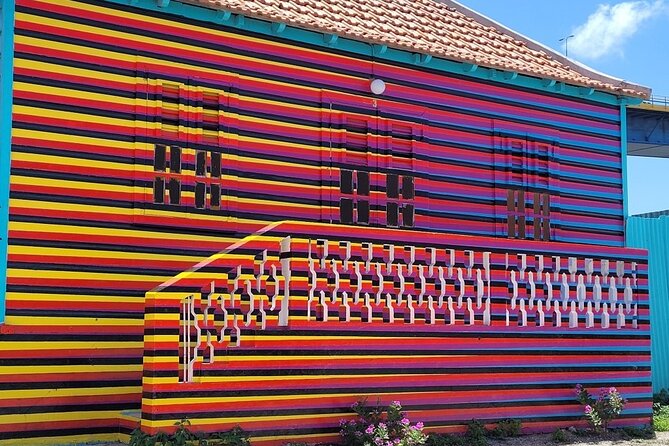
Next comes the Colorful Steps, a well-known photo stop. You’ll pause long enough to take in the view of Queen Juliana Bridge up close.
This is the kind of stop that’s worth it even if you’re not a serious photographer. The point isn’t just the picture; it’s seeing how the bridge sits in the neighborhood so later views feel less generic.
Stops 4 and 5: Quintastraat and Willemstraat for Kaya Kaya murals
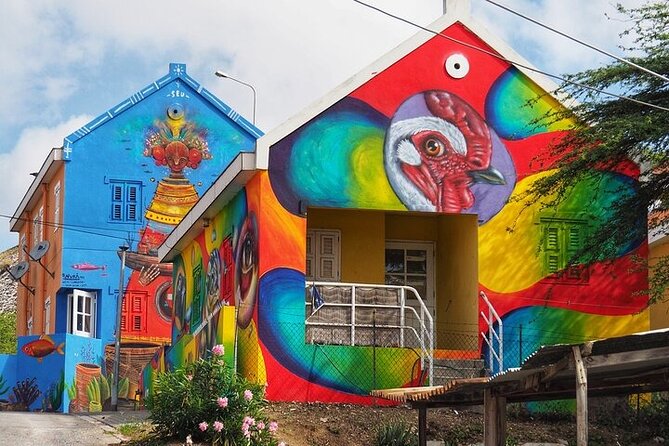
You’ll make quick stops for murals added over the years through the yearly Kaya Kaya block party. Both Quintastraat and Willemstraat get time in the route, letting you see how local and international artists shaped the walls around you.
Why this works: you don’t need museum tickets to understand modern Curaçao creativity. It’s on the street, right where you’re walking.
Stop 6: Terrace Plaza for pastechi choices and a quick bar peek
At Terrace Plaza, you’ll try a local pastechi of your choice. This is one of the main comfort-food moments, and you get a chance to glance across the street at Netto Bar, known as the oldest bar in Curaçao.
Possible drawback: if you have a sweet tooth and tend to eat fast, pastechi can disappear before you realize you’ve been in “eat mode” for an hour. Slow down and let the flavors land.
Stop 7: Marie Pampoen Beach for sate batata and sea-breeze snacks
Then you shift from streets to breeze. At Marie Pampoen Beach, you’ll sit down for sate batata while enjoying the sea air. Your guide also explains how international influences show up in local cuisine, which helps you connect today’s dishes to older trade and migration stories.
This stop is a pressure-release valve. After murals and walking, having a seated moment makes the rest of the tour easier to enjoy.
Stop 8: Landhuis Chobolobo for the Curacao Distillery and Blue Curacao lessons
Now comes the alcohol and distilling portion. You’ll visit the Curacao Liqueur Distillery at Landhuis Chobolobo. Plan around 40 minutes here, and admission is included.
What you’ll get from this stop: the distillation process behind the world-famous Blue Curacao liquor, plus the history story tied to the site. Your guide’s job is to turn a bottle you’ve seen in bars into something you can actually picture.
If you’re under 18, you’ll still enjoy the learning part. The tour notes that alcohol consumption has a minimum age requirement of 18.
Stops 9 and 10: Wilhelminaplein and Breedestraat for the Punda stroll feel
After the distillery stop, the route shifts back into sightseeing rhythm. At Wilhelminaplein you’ll sit and relax after Punda sightseeing, with a pass by the famous Curacao sign.
Then you ride along Breedestraat, the main street in Punda, and along Handelskade, which is on the UNESCO World Heritage List. It’s a strong “yes, I’m in the right place” stretch, especially if this is your first time seeing Willemstad from the ground.
Stop 11: Sha Caprileskade and the floating market history
You’ll pass by Sha Caprileskade, where your guide talks about the history of the floating market. This is short, but it adds a different angle—food not just as a dish, but as a way communities traded and gathered.
Stop 12: Old Market for your final lunch choices
The tour ends at the Old Market with a delicious local lunch. You’ll have options to choose from various local dishes, plus you can add traditional awa di lamunchi or juice di tamarijn.
This is where the “come hungry” advice becomes real. The tour clearly expects you to be ready to eat through multiple stops, and you’ll likely want to save room for the final meal so you don’t end up grazing and regretting it later.
Why these specific dishes hit (and how to order without stress)
A big reason this tour works is that it doesn’t scatter random snacks. It focuses on a few signature flavors you’ll actually recognize later in your trip.
Batido: your start button
The batido smoothie at Brionplein sets the pace. It’s refreshing and gives you a quick hit of local fruit flavors before the heavier foods show up.
I’d treat it like a smart warm-up. If you’re sensitive to cold drinks, take smaller sips and see how it sits with you.
Pastechi: the comfort classic
Pastechi at Terrace Plaza is a key stop. You’ll have a choice of pastechi, and this is the moment where your guide’s food-and-place story clicks: you’re eating what locals grab, not what a tourist menu might imitate.
If you want to maximize the experience, try to keep the first bite for savoring. Don’t chase it with water immediately. Let the crust and filling do their thing.
Sate batata: beach-season energy
Sate batata at Marie Pampoen Beach is the island’s snack-meets-meal vibe. It’s also perfectly placed because you get to sit, breathe, and reset while the guide talks about how influences shape local cuisine.
Lunch at Old Market: where it all pays off
Your lunch at the Old Market is where you stop thinking about snack math and start thinking about satisfaction. The menu includes options, and you can round it out with awa di lamunchi or juice di tamarijn.
The practical win: by the end, you leave full and you also get ideas for where to go next based on what you liked today.
Landhuis Chobolobo and Blue Curacao: the liquor stop that makes sense
A liquor distillery visit can feel like a detour on some food tours. Here, it’s timed as a major story stop, with included admission and a dedicated 40 minutes.
What you’re learning isn’t just branding. You’re hearing about the distillation process behind Blue Curacao and the history tied to the site at Landhuis Chobolobo. That turns the drink from a souvenir into something with a real island connection.
Also, this is one of the best places for questions. If you’re curious about ingredients, sweetness levels, or how Blue Curacao became famous, your guide can connect those dots while you’re standing in the place where the story starts.
Pacing tips so you don’t leave tired and disappointed
This tour tends to pack a lot into 4 to 5 hours. The best strategy is to show up ready.
First, don’t eat a big breakfast right before. The most common advice from people who’ve done it is simple: come hungry. There’s enough food that you might struggle to finish everything, and that’s part of the design.
Second, take your time at the sit-down moments. Marie Pampoen Beach gives you a breather. Old Market lunch is also a reset. If you rush past those, the end can feel like one long food sprint.
Third, wear shoes that work for short city walks. You’ll be moving between stops, and the tour mixes vehicle time with walking time through the city center.
If you need a slower rhythm, it’s worth flagging that early. One guest shared that the guide adjusted pace thoughtfully for sciatic issues, and that’s exactly the kind of care you should ask for up front.
Who should book this private Curaçao food tour
This is a great fit if you want all three: food, neighborhood sightseeing, and local context.
Book it if:
- You’re spending a short amount of time and want a high-impact first-day plan around Punda
- You like mom-and-pop style eating and discovering places you wouldn’t find on your own
- You’re a history-and-food person, and you want recipes explained through people and neighborhoods, not just dates
- You prefer private guide attention over joining a crowd
It’s not ideal if:
- You have any food allergy. The tour is not recommended for that situation.
- You don’t want alcohol-related content. The distillery stop is part of the experience, and alcohol consumption has a minimum age of 18.
Should you book this Curaçao Private Food Tour
If your goal is to leave Curaçao with more than photos, I’d book it. The combination of Punda sights, multiple tastings, and a Blue Curacao distillery visit is a strong use of a half-day. And because it’s private, you can ask questions and set your comfort level without dealing with a large group.
Just go in with the right mindset: come hungry, expect a lot of food, and plan to enjoy the ride as much as the bites.
FAQ
How long is the Curacao Private Food Tour?
The tour runs about 4 to 5 hours.
What time does the tour start, and where do we meet?
It starts at 9:30 am at the Renaissance Mall & Rif Fort area (Gouverneur van Slobbeweg, Willemstad).
Is pickup available?
Yes, pickup is offered, and the tour ends back at the meeting point.
Is the tour private or shared?
It’s private. Only your group participates, and there’s a minimum of 2 travelers per tour.
Does the tour include the Blue Curacao distillery visit?
Yes. You visit the Curacao Liqueur Distillery at Landhuis Chobolobo for about 40 minutes, and admission is included.
Is this tour okay if I have allergies or if I’m under 18?
The tour is not recommended for travelers with any type of food allergy. Alcohol consumption has a minimum age requirement of 18 years old.