REVIEW · BANGKOK
Bangkok Private Walking Food Tour with 10+ Tastings in Chinatown
Book on Viator →Operated by Secret Food Tours · Bookable on Viator
Chinatown is the quickest route to Bangkok flavor. This private 3-hour walking tour packs 10+ tastings into Chinatown and nearby food streets, with a local guide who steers you toward what locals actually eat. I love the sheer range, from savory bites like shrimp dumplings and spicy basil chicken over jasmine rice to a sweet ending with black sesame dumplings in ginger tea, and I love that my guide, Jan, explained what to look for at each stall so you can order with confidence.
One thing to plan for: this is a fair amount of walking, and Bangkok humidity can hit hard, so comfy shoes and loose clothing matter more than people expect.
In This Review
- Key highlights you’ll feel (not just read)
- Chinatown to Talat Noi: why this route is worth your time
- Meeting at Hua Lamphong: how the tour starts (and how to prepare)
- Stop-and-eat pacing: when malls and landmarks join the food route
- Chinatown food stops: the dumplings and buns that set the tone
- Street-food comfort zone: spicy basil chicken, satay, and noodle soup
- Monday’s menu is different
- The sweet ending and the “secret dish” moment
- Value and appetite math: what you’re really paying for at $250
- Practical tips so the walk stays fun (not sweaty)
- Who this private walking food tour is best for
- Should you book this Bangkok Chinatown walking food tour?
- FAQ
- FAQ
- How long is the Bangkok Private Walking Food Tour?
- Is this tour private?
- What are the tastings included in the tour?
- Does the menu change depending on the day?
- Where do we meet for the tour?
- Do I need transportation to join the tour?
- What should I wear?
- Can you accommodate dietary requirements?
- What if weather is bad or I need to cancel?
Key highlights you’ll feel (not just read)
- 10+ tastings plus an exclusive secret dish, included on every tour
- Day-specific menus (Monday differs from Tuesday–Sunday)
- Chinatown focus, one of Bangkok’s go-to areas for Chinese food and goods
- Duck noodle soup tends to be a standout order on the tour
- Planned breaks with big landmarks and malls, useful when it’s hot
Chinatown to Talat Noi: why this route is worth your time
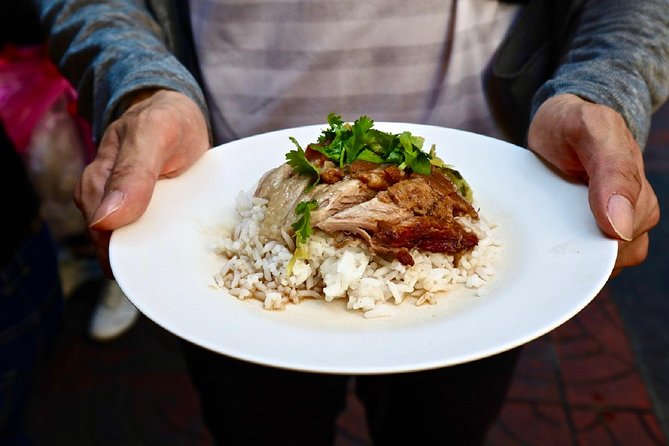
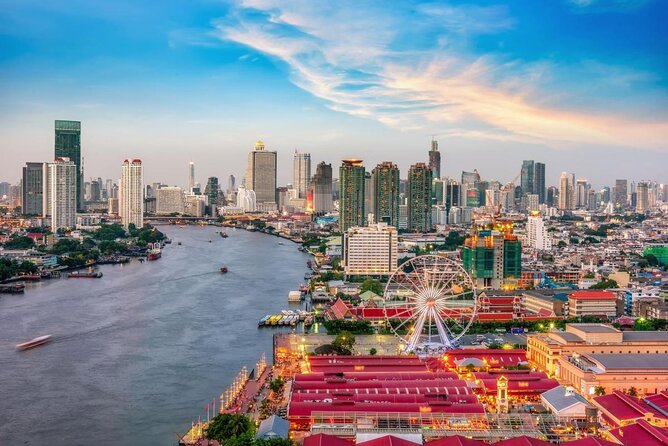
This isn’t a long sightseeing day. It’s a focused food walk built around neighborhoods where you can smell what’s cooking and see families running the counters. Chinatown in Bangkok is one of the largest in the world and it’s a serious food destination, not just a “look at the street signs” stop.
What makes the experience work is the flow: you’re eating at multiple places close enough to keep momentum, but not so tightly packed that you feel rushed. You also get a mix of styles. Expect familiar Thai favorites like papaya salad alongside Chinese-influenced items like shrimp dumplings and steamed buns with red pork, plus other regional bites that show up in Bangkok’s street-food mix.
There’s also the “secret dish” element. It’s not just another plate for the photo. It adds a sense of discovery because you’re not just repeating the same well-known items. When you’re paying for a food tour, that extra unknown matters.
You can also read our reviews of more walking tours in Bangkok

Meeting at Hua Lamphong: how the tour starts (and how to prepare)
You start near Hua Lamphong Rong Mueang, Pathum Wan. The tour ends back at the meeting point, so you don’t need to worry about figuring out pickup logistics later. It runs about 3 hours, and you’re in a private setting where only your group joins.
Because transportation isn’t included, plan to arrive early enough to get settled before the walk begins. The tour is near public transportation, which makes it easier, especially if you’re staying in central Bangkok.
Bring comfortable shoes. This tour is described as involving a fair amount of walking. And with humidity in the mix, you’ll enjoy it more if your feet aren’t fighting you the whole way. I’d also bring a small bottle of water, even if you don’t need to drink constantly.
Stop-and-eat pacing: when malls and landmarks join the food route
Your itinerary includes stops that look like they belong in a normal city day, including a large multi-storey mall with around 2,000 shops and a Tokyu department store, plus an open-air mall that used to be docks for the East Asiatic Company. There’s also another major mall stop listed, plus a brief look at Bang Rak, known for being called the village of love and for marriage registrations around Valentine’s Day.
Why would a food walk include big malls and big names? Two reasons: weather control and orientation. Bangkok heat can make street-food hours feel long, especially in summer. A mall stop gives your body a breather while you keep moving through the city.
These stops also help you understand the geography. Chinatown isn’t an isolated bubble. It sits next to major commercial areas and river-side connections, and your route reflects that. You’ll come away with a better sense of how neighborhoods connect.
Chinatown food stops: the dumplings and buns that set the tone
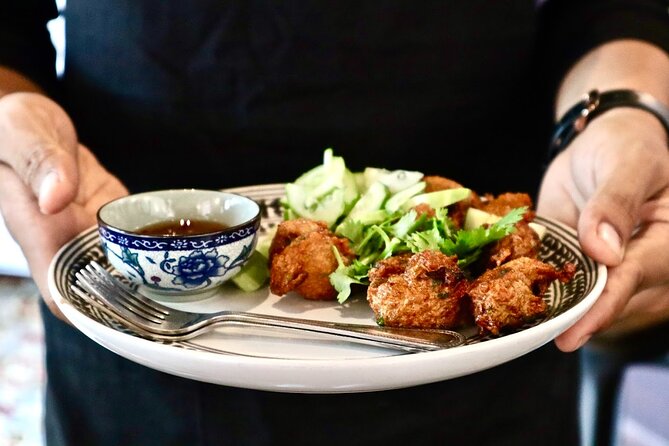
When the tour shifts into Chinatown mode, you’re in the right mental lane: eat first, then ask questions. Chinatown is known for Chinese culture and traditional goods, and the food scene is built on that same blend of old techniques and neighborhood staples.
Included on the typical Tuesday–Sunday menu are:
- Shrimp dumplings
- Steamed buns with red pork
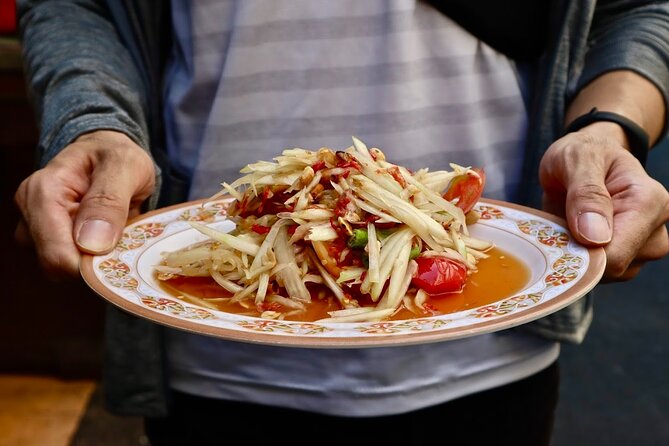
- Papaya salad (Thai style)
- Chinese donut with pandan custard
This mix is smart because it hits different textures. Dumplings give you a handheld, satisfying bite. Steamed buns bring softness and savory depth. Papaya salad gives you the sharp, tangy contrast that cuts through richer flavors. And the pandan custard donut is a dessert-adjacent bridge that keeps you from feeling like you only get sweet at the end.
If you’re the type who usually orders too much savory and then feels “done” before dessert, this lineup solves that. It spreads the sweetness out and keeps your palate awake.
One practical tip: take smaller bites than you think you need at the first stop. You’re stacking more than 10 tastings across the route, and it’s easy to get full early if you go at everything like a bottomless buffet.
Street-food comfort zone: spicy basil chicken, satay, and noodle soup
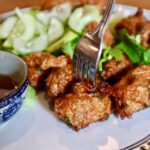
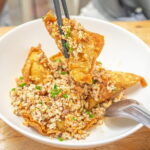
As the tour continues, you’ll move into classic Bangkok street flavors. One of the included favorites on Tuesday–Sunday is spicy basil chicken served over jasmine rice. That dish is a great “anchor” tasting because it’s aromatic, sauce-forward, and instantly readable. If you like basil in Thai cooking, you’ll understand why it shows up everywhere.
You’ll also get:
- Pork or chicken satay with peanut sauce
- Duck noodle soup
- Black sesame dumplings in ginger tea (later as the sweet finish on Tuesday–Sunday)
Satay brings a smoky, grilled note with a salty, nutty peanut sauce. The duck noodle soup tends to be a crowd-pleaser on this tour, and it makes sense. It’s warm, filling, and balanced, and it helps you slow down for a minute so the rest of the tastings feel easier after.
If you’re choosing what to focus on during the noodle stop, don’t just chase heat. Taste the broth and noodle texture first, then adjust with any condiments offered. The goal is to eat in layers, not just in chunks.
You can also read our reviews of more food & drink experiences in Bangkok

Monday’s menu is different
If your tour date is Monday, the included lineup shifts. You can expect spicy basil, steamed buns (noted for Monday), stewed pork knuckle with rice, banana roti, roll noodle soup with pork belly, plus fruit and a cold dessert.
That change matters because it changes the “feel” of the walk. Monday reads more like a heavier, meat-forward street spread, while Tuesday–Sunday leans a bit more into variety of dumplings, basil chicken, satay, and the duck noodle centerpiece with the black sesame ginger tea finish.
Either way, the structure stays the same: you get multiple small plates and you end on something warm and sweet.
The sweet ending and the “secret dish” moment
Most food tours start strong and coast. This one tries to do the opposite: it keeps the final stretch interesting.
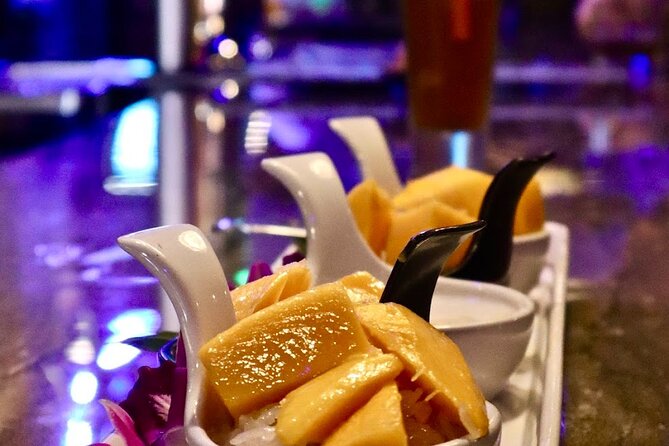
On Tuesday–Sunday, you end with black sesame dumplings in ginger tea. That combination is comforting and a little soothing after all the savory heat. Sesame brings depth and a nutty edge, while ginger tea makes it feel light enough to keep tasting instead of putting you into a food coma.
On top of that, every tour includes our delicious secret dish. Since it’s a consistent “always included” feature, it’s worth treating it like the finale clue. If you’ve been paying attention to how the guide talks about flavors, you’ll likely pick up cues about what makes that dish special and how it fits into the local food logic.
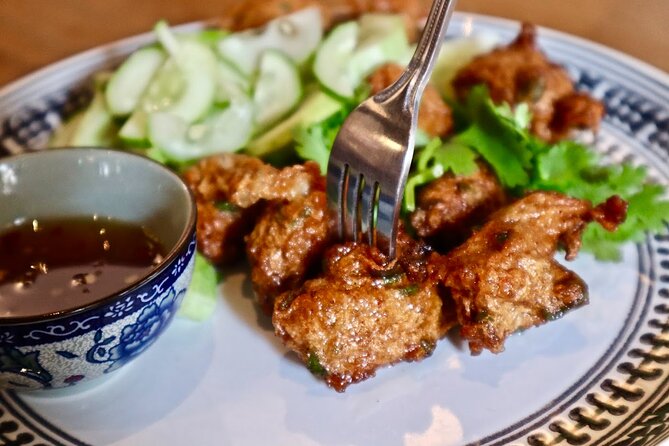
And if the tour lineup includes items mentioned in the overview like crispy Thai pancakes, it’s another way the route plays with texture. Crispy foods give you a palate reset after softer items like buns and dumplings.
Value and appetite math: what you’re really paying for at $250
Let’s talk about the big number: $250 per person.
For a food tour, that price is usually about three things: time with a guide, the number of stops, and how much food you’re given along the way. Here, the tour is about 3 hours and includes 10+ tastings, plus the exclusive secret dish. When you add in that this is private, it’s more about paying for a more controlled experience than for a discount buffet.
If you’re an adventurous eater, this tour makes financial sense because you’re not trying to plan a whole food “route” yourself. In a city like Bangkok, it’s easy to find street food, but it’s harder to find the right order of bites, the best timing, and the places where you can eat safely and comfortably without second-guessing.
If you’re a light eater or you don’t like trying new things, it can feel like a lot. But if you want a guided sampling day where you can walk away with a clearer sense of what to eat next time, the value clicks fast.
Practical tips so the walk stays fun (not sweaty)
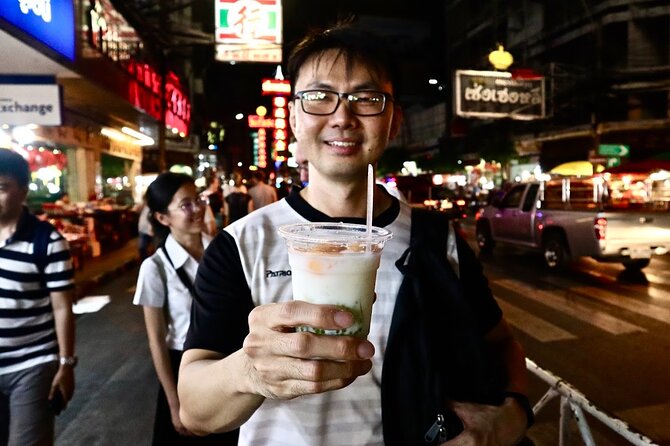
This is where you can make or break the experience.
- Wear comfy shoes. You’ll be on your feet for a fair amount of time.
- Dress for humidity. Light layers help. Bring something you’re okay getting a little damp.
- Eat lightly before you go, not nothing. If you arrive starving, you’ll overeat early and won’t taste as much later.
- Plan your water. The tour doesn’t include transportation, and it doesn’t mention bottled water, so have a plan for hydration on your own.
- Ask about dietary needs early. The tour notes that you should contact them in advance for dietary requirements so they can cater as best as possible.
Also note that the itinerary and menu can change based on location availability and weather. That’s normal for street food. The upside is that your guide can adjust so you still get the “shape” of the tour: multiple tastings, Chinatown focus, and the sweet finish.
Who this private walking food tour is best for
This tour is a great match if you want:
- A small-group private experience where you can ask questions
- A concentrated way to learn Bangkok food without building your own route
- A mix of savory and sweet, not just one type of dish
- A guide-led day that includes both food and nearby landmarks so you get context
It may be less ideal if:
- You dislike walking in hot, humid weather
- You only want one or two dishes and hate the idea of tasting lots of small plates
- You need a highly controlled environment for every stop, since street food means conditions can vary
If you’re traveling with friends or family and you want everyone to have a fair shot at enjoying multiple bites, private tours like this usually land well because you’re not stuck waiting on strangers.
Should you book this Bangkok Chinatown walking food tour?
If you love the idea of eating your way through Chinatown with a clear plan and a guide who helps you order smarter, I think this is a strong booking. The standout reasons are simple: 10+ tastings, the included secret dish, and the mix of items that hits dumplings, buns, basil chicken, satay, noodles, and a sweet ending with black sesame and ginger tea.
The main reason to hesitate is the walking and the humidity. If you can handle that with good shoes and light clothing, the experience is the kind of Bangkok day you remember.
If your schedule is tight or you’re picky, ask about menu and dietary fit early. And go in with the mindset that you’re sampling, not finishing every plate like a contest.
FAQ
FAQ
How long is the Bangkok Private Walking Food Tour?
The tour lasts about 3 hours.
Is this tour private?
Yes. Only your group will participate.
What are the tastings included in the tour?
The tour includes 10+ tastings such as shrimp dumplings, steamed buns with red pork, papaya salad, Chinese donut with pandan custard, spicy basil chicken over jasmine rice, satay with peanut sauce, duck noodle soup, and black sesame dumplings in ginger tea, plus a secret dish. Specific items can vary by day.
Does the menu change depending on the day?
Yes. The tour notes different menus for Monday versus Tuesday–Sunday. For example, Monday includes items like stewed pork knuckle with rice and banana roti, while Tuesday–Sunday includes options like shrimp dumplings and duck noodle soup.
Where do we meet for the tour?
You meet at Hua Lamphong Rong Mueang, Pathum Wan, Bangkok 10330, Thailand.
Do I need transportation to join the tour?
Transportation is not included, but the meeting point is near public transportation.
What should I wear?
Comfortable shoes are recommended because the tour involves a fair amount of walking, and the area can be humid.
Can you accommodate dietary requirements?
You should contact the tour in advance for dietary requirements so they can cater as best as possible.
What if weather is bad or I need to cancel?
The tour requires good weather. If canceled due to poor weather, you’ll be offered a different date or a full refund. You can cancel for a full refund up to 24 hours in advance; within 24 hours, the amount paid is not refunded.