REVIEW · MADRID
10 Tapas Cooking Class Experience in Madrid with Sangria
Book on Viator →Operated by A Punto Cooking School · Bookable on Viator
Tapas cooking at 4 pm is the best warm-up. You’ll work hands-on in a small kitchen in central Madrid, learning how to make up to ten tapas, then you sit down for a home-cooked dinner with included sangria. I especially liked the tight group feel (max 15) and how the chef keeps everyone moving at their own station. One thing to weigh: they say they do not adapt the whole menu for dietary restrictions, and there’s no guaranteed vegetarian option.
You get an English-led class (and a mobile ticket), plus a souvenir apron. The meal isn’t just a snack either—you’re making real dishes you can actually recreate later, from cold soups to bravas and squid sandwiches.
In This Review
- Key Points To Know Before You Go
- Cooking 10 Tapas in Madrid at 4:00 pm
- Your 2.5-Hour Schedule: From Station Work to Dinner
- Meeting point and timing
- What happens during the class
- The dinner moment
- How Station-Based Cooking Works (and Why It Matters)
- The Menu: What You’ll Cook (and What It Teaches)
- Starter: Salmorejo
- Starter: Idiazabal lollipops
- Starter: Coca with sobrasada or vegetables
- Main: Ajillo shrimps
- Dessert: Horchata torrijas
- Spanish omelette (with potatoes, with or without onion)
- Starter: Gilda skewers
- Starter: Squid sandwich
- Main: Patatas bravas
- Sangria (your included drink)
- Sangria, Wine Pairing, and Non-Alcoholic Reality
- Value for $82.24: What You’re Really Paying For
- Who This Tapas Class Suits Best
- Considerations before booking
- Tips to Get the Most Out of the Class
- Final Verdict: Should You Book This Madrid Tapas Class?
- FAQ
- How long is the tapas cooking class?
- Where is the meeting point in Madrid?
- What language is the class offered in?
- How big is the group?
- Is hotel pickup or drop-off included?
- Is there a vegetarian option?
- Can the menu be adapted for dietary restrictions?
- What’s included in the price?
- What’s the minimum age, and is alcohol included for everyone?
- What are the cancellation terms?
Key Points To Know Before You Go
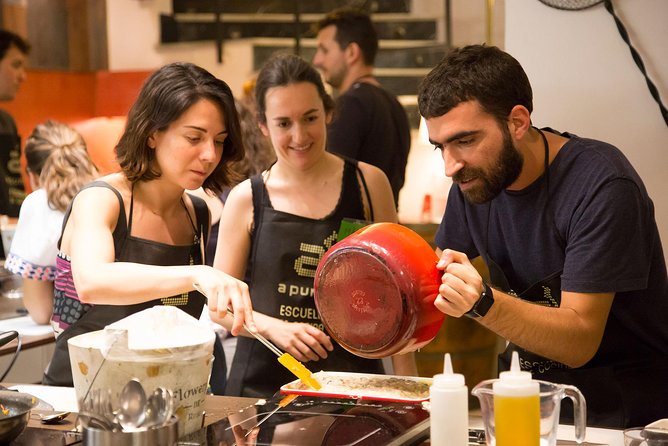
- Small group size (max 15) makes it easier to get questions answered without waiting around.
- Chef-led station cooking means you’re not just watching; you’re doing the work.
- Up to ten tapas plus a sit-down dinner so you leave properly fed.
- Included sangria is the fun part of the evening, but non-alcoholic options may be limited.
- No full menu dietary tailoring and no guaranteed vegetarian menu, so plan ahead.
Cooking 10 Tapas in Madrid at 4:00 pm
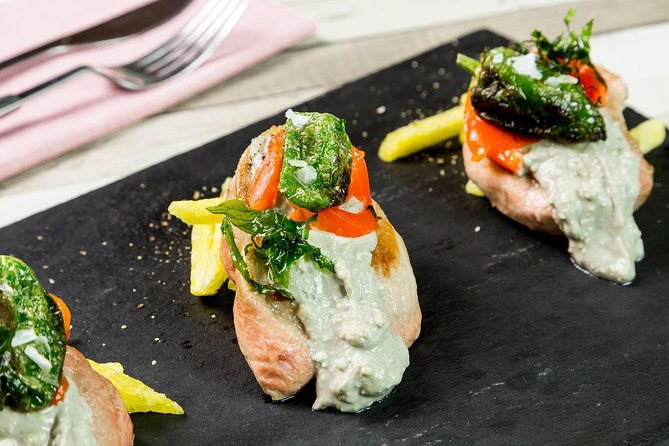
If your Madrid plan includes late dinners and bar-hopping, this class is a smart alternative. It starts at 4:00 pm, so you’re cooking while the day still feels alive, then you end with a meal that’s already in your hands.
What makes this experience especially practical is that you’re not learning tapas as a concept. You’re learning them as a set of techniques—cold soups, frying, assembling, seasoning, and timing—so you can copy the approach later when you’re back home.
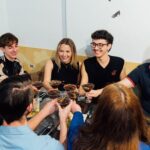
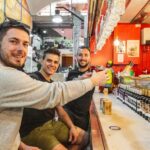
The session is also built for social energy without turning chaotic. The group is capped at 15, and you’ll cook in a shared kitchen with stations. That balance shows up in the reviews: people repeatedly call it fun, relaxed, and well organized, with the chef and team staying on top of clean-up and supplies.
The overall vibe is friendly, but it’s still a real cooking class. You’ll be expected to help—chop, assemble, stir, plate. If you’re the type who likes hands-on travel, this fits. If you prefer sitting back and just sampling, you might find it a bit hands-on for your taste.
You can also read our reviews of more cooking classes in Madrid

Your 2.5-Hour Schedule: From Station Work to Dinner
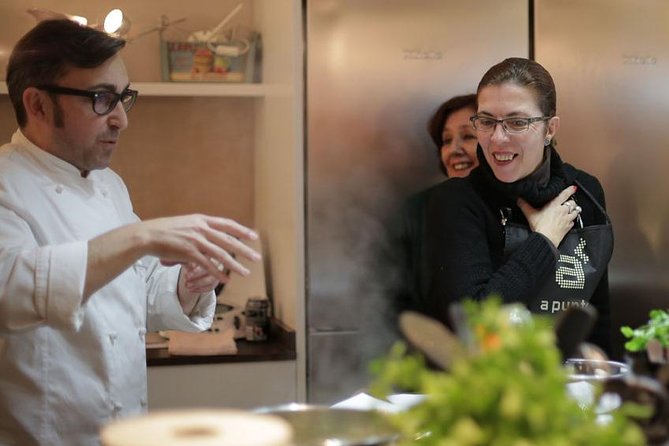
This experience runs about 2 hours 30 minutes, and it follows a straightforward flow: meet, cook, eat, and head back where you started. The end is listed as returning to the meeting point.
Meeting point and timing
You meet at C. de la Farmacia, 6, Centro, 28004 Madrid, and the start time is 4:00 pm. The tour ends back at the same meeting point, and there’s no hotel pickup/drop-off, so you’ll want to build in time to get there on your own via public transit.
What happens during the class
In the kitchen, you’ll rotate through tasks as needed. You don’t necessarily do every step of every dish, but you should expect to actively contribute to multiple items. One review noted that each participant worked on at least one tapa, and that groups shared stations with clear division of tasks.
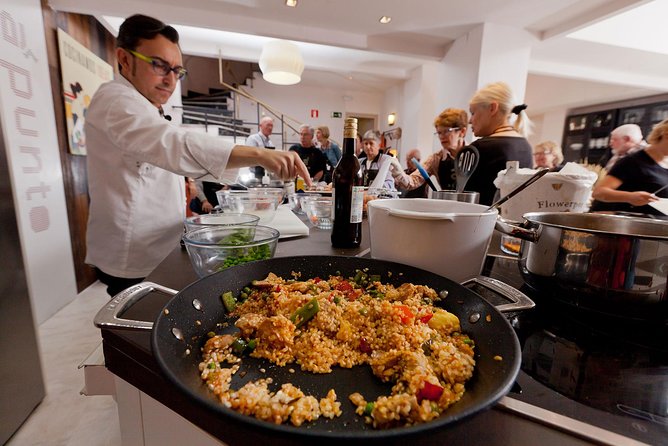
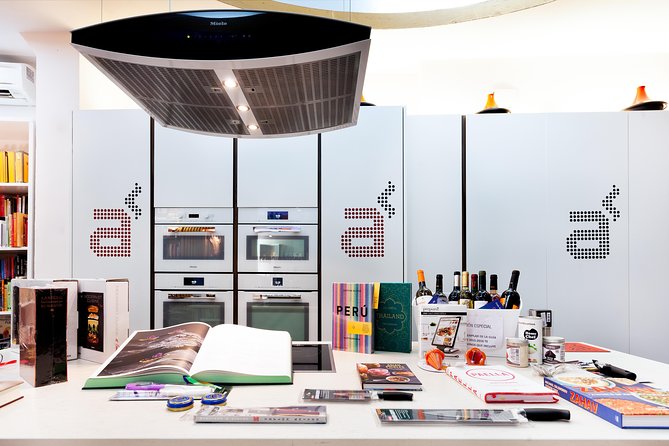
A detail I found useful: the kitchen layout is described as an L-shaped space, which helps accommodate multiple stations and people working in parallel. The chef supervises, and the assistant supports with keeping things stocked and the workspace tidy.
The dinner moment
After cooking, you eat the tapas meal you helped create. Reviews mention leaving with food and leftovers at times, which is a nice bonus if you’re the kind of traveler who hates wasting good food. Either way, the dinner is part of the deal—not an optional add-on.
A few more Madrid tours and experiences worth a look

How Station-Based Cooking Works (and Why It Matters)
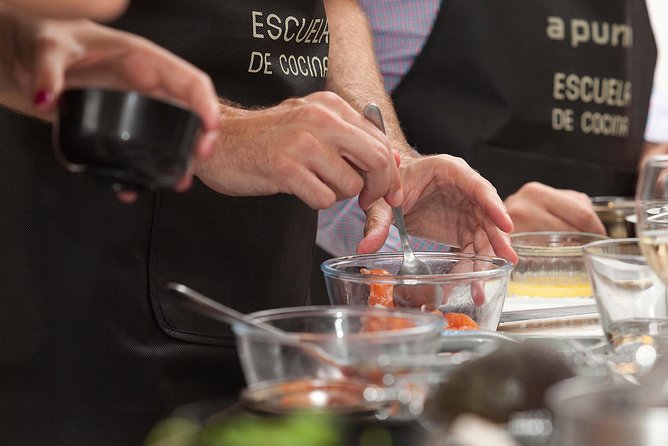
This is not a lecture. It’s a station setup where the chef teaches and the team keeps the kitchen running.
Here’s what that means for you on the ground:
- You’ll be busy. You’ll have tasks, and you’ll feel part of the action. Multiple reviews emphasize that the chef keeps everyone engaged and included.
- You’ll learn through doing. Recipes don’t stay abstract when you’re holding the ingredients and assembling the dish.
- You’ll share the load. Since there are up to ten tapas, tasks are split. You might not do every step, but you’ll see how different dishes come together.
One review also flagged a “fast start” with instructions moving quickly at the beginning. That’s a real consideration: if you’re the type who needs slower pacing to feel confident, arrive a little mentally prepared to start learning fast. The good news is that the same reviews praise the instructors for patience and answering questions once things are rolling.
You can also use strategy. One review suggests choosing the station you most want to learn about. That’s solid advice. If there’s a tapa you know you’d eat again in a restaurant—like patatas bravas or ajillo shrimp—focus your attention there.
The Menu: What You’ll Cook (and What It Teaches)
The class is built around making up to ten tapas dishes, and the sample menu gives you a clear idea of the range. This is a great mix because it teaches different cooking styles, not just similar “small plates.”
Here’s what you can expect to see and make.
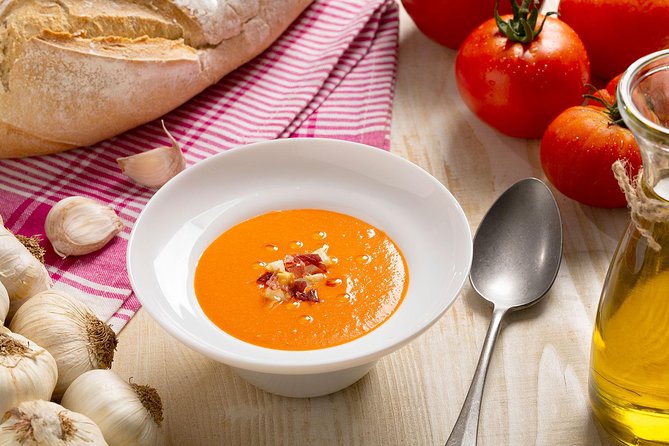
Starter: Salmorejo
Salmorejo is a typical Spanish cold tomato soup. Learning it teaches you how Spanish cold soups rely on texture and balance rather than heat. Even if you’re not a soup person, it’s a useful foundation for the kind of layering and seasoning Spanish tapas often depend on.
Starter: Idiazabal lollipops
These are made using Idiazabal sheep cheese, described as among the best sheep cheeses in Spain, shaped into lollipops. The big value here is technique: portioning, shaping, and getting flavor right with a strong local cheese.
If you like sheep cheese or want to understand Spanish regional ingredients beyond olive oil and jamón, this is one of the more memorable items.
Starter: Coca with sobrasada or vegetables
Coca is sort of like a Spanish pizza, and this one is described as typical from the Balearic Islands. You can learn how to work with toppings and dough-style bases. If you choose vegetables for your version, it’s also a way to understand how tapas handles flavor without meat as the only star.
Main: Ajillo shrimps
Ajillo shrimps are fresh shrimp with garlic and lots of olive oil. This teaches you the classic Spanish balance: garlic for aroma, olive oil for richness, shrimp cooked just enough to stay tender.
Dessert: Horchata torrijas
Horchata torrijas are described as a French-toast-like dish using horchata, a typical drink from the Levante. This is a clever ending because it shows how Spanish sweet flavors can be familiar in texture but distinct in taste. If you’re curious about horchata beyond drinking it, this gives you a reason to remember it.
Spanish omelette (with potatoes, with or without onion)
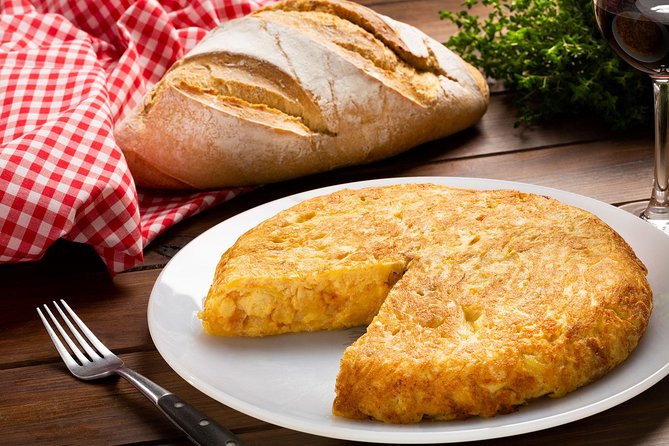
This is a classic setup. You’ll get to decide with or without onion, which is great because it lets you tune the dish to your taste. It also teaches a key omelette concept: potato and egg harmony, not overcooked eggs.
Starter: Gilda skewers
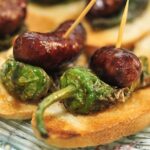
Gilda skewers include ingredients like olives and anchovies, plus more. Gilda is one of those tapas ideas that’s simple on paper but powerful in flavor. It’s a good lesson in how Spanish bite-sized food often works through salty, briny, punchy components.
Starter: Squid sandwich
This is described as a very typical Madrileño sandwich made with fried squid and aioli sauce. The takeaway isn’t just taste—it’s technique. Fried seafood plus a creamy sauce teaches you how tapas handles contrast: hot/crisp with cool/rich.
Main: Patatas bravas
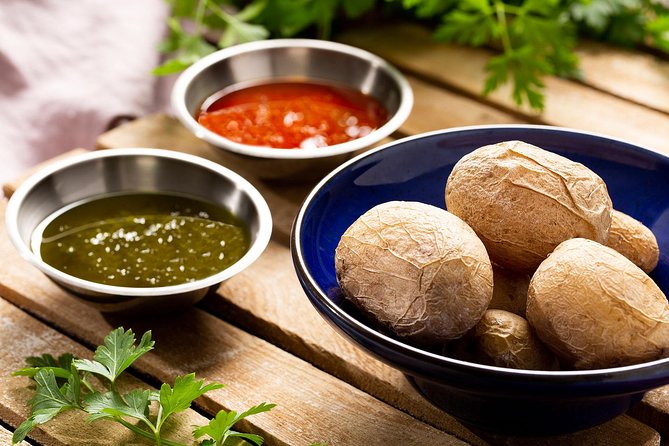
Patatas bravas are potatoes with a “special spicy tomato sauce.” This teaches a tapas staple that’s easy to replicate once you know the sauce style and how it’s served.
Sangria (your included drink)
Sangria is described as homemade with fresh fruit and spices. The fact it’s homemade matters because it’s usually less candy-sweet and more spice-forward than the bottled stuff.
Sangria, Wine Pairing, and Non-Alcoholic Reality
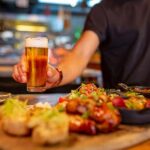
The evening centers on sangria, and it’s included. You’ll also sit down to the dinner with a selection of regional wines mentioned as part of the pairing.
Here’s the practical part: if you’re skipping alcohol, plan for limited choices. One review specifically called out a non-alcoholic replacement as soft drink, and another response from the provider basically confirmed they don’t have a huge variety of non-alcoholic drinks. That doesn’t mean the class is bad—it means you should set expectations and decide whether you’re okay with the substitution.
Also, note the tour states a minimum drinking age of 18. So if you’re under 18, you’ll still participate in the cooking and eat, but you should not expect alcohol.
Value for $82.24: What You’re Really Paying For
Yes, $82.24 can feel steep at first glance—especially if you’re picturing tapas as something you buy for a few euros on a street corner. But this price is for a specific package:
- You get a chef-led class with hands-on work.
- You get ingredients and everything needed to cook.
- You get the home-cooked dinner.
- You get free sangria (plus wine pairing is mentioned).
- You get a souvenir apron.
The best value part is the instruction. If you’ve ever eaten tapas and wondered how the pros build flavor in small bites, this class is basically a shortcut. You’re paying to learn how to assemble several tapas styles in one sitting, not just to eat.
That’s why reviews call it memorable even when people label it expensive. It’s one of those “you’ll remember what you made” experiences, not just a meal you ate.
Still, keep your expectations honest. It’s not a private chef session. It’s a shared, small-group experience where the chef moves quickly because there are many dishes in the time window.
Who This Tapas Class Suits Best
This is a strong fit if:
- You want a fun, interactive evening instead of a passive food tour.
- You like meeting people from different places while cooking.
- You want practical tapas skills you could repeat later.
- You enjoy both classic Spanish flavors and regional touches (Balearic coca, Levante horchata).
It’s also a good choice if you’re traveling with someone who enjoys planning but also wants spontaneity—because you’re in charge of your hands-on role, but the day is structured.
Considerations before booking
You’ll want to think twice if:
- You have strict dietary needs. They say they do not adapt the whole menu for dietary restrictions.
- You’re vegetarian and need a full vegetarian menu. The info says there’s no vegetarian option for the whole menu, even though almost half of the tapas proposed are vegetarians.
- You’re booking a larger celebration. It says no parties allowed, and not to book if you’re celebrating a party of more than 5 people.
Tips to Get the Most Out of the Class
A few small moves will make your experience smoother:
- Pick the station you care about most. With multiple tapas moving at once, it helps to anchor your attention.
- Ask questions mid-cooking, not only at the end. That’s when you’ll actually apply the answer.
- Come ready to work. Reviews repeatedly mention being kept busy, interacting, and cooking rather than watching.
- If you avoid alcohol, plan ahead. Non-alcoholic choices may be a soft drink replacement, and the provider notes limited variety.
- If you care about replication at home, ask about any recipe sharing. One review hinted recipes might be provided; if written steps matter to you, ask during the session.
One extra bonus detail: there’s mention of cookbooks upstairs at the location. If your class leaves you hungry for more, you might enjoy browsing when the timing allows.
Final Verdict: Should You Book This Madrid Tapas Class?
I think this is a very good booking for travelers who want more than just tasting. The combination of small-group size, hands-on station cooking, and a full meal with included sangria makes it feel like a proper experience, not a quick stop on a busy itinerary.
Book it if you’re excited to cook multiple Spanish tapas and learn techniques—especially if you don’t mind a lively pace. I’d be cautious if you need strict dietary accommodations or if you’re expecting a fully vegetarian menu.
If your goal in Madrid is to eat well and also understand how those flavors are built, this is one of the cleaner ways to do it in a single evening.
FAQ
How long is the tapas cooking class?
The experience lasts about 2 hours 30 minutes.
Where is the meeting point in Madrid?
You meet at C. de la Farmacia, 6, Centro, 28004 Madrid, Spain.
What language is the class offered in?
The class is offered in English.
How big is the group?
The tour has a maximum of 15 travelers.
Is hotel pickup or drop-off included?
No. Hotel pickup and drop-off are not included.
Is there a vegetarian option?
There is no vegetarian option for the whole menu. The menu includes many vegetarian tapas, but they don’t guarantee a fully vegetarian meal.
Can the menu be adapted for dietary restrictions?
They ask you to advise dietary requirements at booking, but they also state they do not adapt the whole menu for dietary restrictions.
What’s included in the price?
Included are the cooking class and all ingredients, a home-cooked dinner, free sangria, and a souvenir apron.
What’s the minimum age, and is alcohol included for everyone?
The minimum age is 14. The minimum drinking age is 18, so alcohol is only for those 18 and older.
What are the cancellation terms?
You can cancel for a full refund up to 24 hours in advance. If you cancel less than 24 hours before the start time, the amount paid is not refunded.