REVIEW · BARCELONA
Barcelona Food Tour: Tapas, Drinks and Delights with a Local
Book on Viator →Operated by Do Eat Better Experience · Bookable on Viator
Barcelona is easiest when you eat first.
This Gothic Quarter tapas tour gives you guided stops that cover the Catalan ritual of vermuteo plus a serious mix of classics like croquetas, fried anchovies, and Crema Catalana. I like that you’re led into places you’d miss on your own, and that the tastings come with drink pairings (wine, cava, vermut). The main drawback to plan around is that you’ll do a fair amount of walking on narrow old streets, so it’s not ideal if you want a slow, no-steps evening.
What also makes it worth your time is the small group size, typically capped at 12, so the guide can keep things personal. You’ll start at Plaça de l’Àngel in Ciutat Vella and end near Carrer de Jaume I, after about 3 hours 30 minutes of tasting and strolling.
In This Review
- Key things to know before you go
- Why a Gothic Quarter tapas tour feels like a shortcut
- Stop by stop: what you’ll experience in the Barri Gòtic
- The real value of this first stop
- Carrer de la Mercè: a long-running tapas bar moment
- A practical tip
- Carrer del Regomir: pan con tomate, pimientos, and cava
- The takeaway
- Plaça de Sant Josep Oriol: small square, big snack energy
- If you want photos
- Plaça Sant Jaume: Crema Catalana and a turron-flavored finish
- Why this section matters
- What’s actually in the meal (and how you’ll feel at the end)
- Food swaps are part of the deal
- Drinks: vermut, wine, and cava with age limits
- What to expect in tone
- Group size and guide vibe: what your experience likely hinges on
- A balanced note
- Where it starts and how the route works
- Timing tip that saves stress
- Price: does $65.33 feel fair for what you get?
- The one cost you may still consider
- Who should book this tapas tour
- Who might want a different plan
- Should you book it? My practical take
- FAQ
- Where does the tour start and where does it end?
- How long is the Barcelona tapas tour?
- What’s included in the price?
- Is alcohol included, and do I need to be 18?
- How many people are in the group?
- What kinds of foods are you likely to taste?
- Are there vegetarian options?
- Is the tour wheelchair-friendly or very strenuous?
- What if the weather is bad?
- Do I need to tip?
Key things to know before you go
- Vermut and drink pairings are part of the story, not just a bonus
- At least four food stops with the equivalent of a full meal by the end
- Seasonal swapping is normal, so expect small changes in what you taste
- Old-school bar stops you won’t find without local guidance
- Dessert focus includes Catalan crema (lunch only) and an ice-cream finish
- Max group size of 12 keeps the pace and questions manageable
Why a Gothic Quarter tapas tour feels like a shortcut
The best thing about this format is how it saves you from Barcelona’s restaurant overload. Instead of wandering for hours hoping to land on the right place, you follow a route through Ciutat Vella and eat your way through regional favorites in a steady rhythm.
I also like the way the guide frames food as local culture. You’re not just tasting; you’re learning how dishes are made and why they matter in Catalonia and Spain. That turns a snack tour into something that actually helps you understand where you are.
You can also read our reviews of more food & drink experiences in Barcelona



Stop by stop: what you’ll experience in the Barri Gòtic
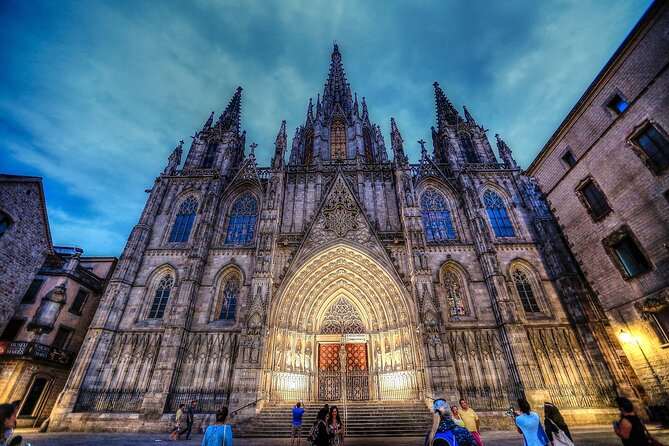
Your walk begins in the Gothic Quarter, where the streets feel medieval even when your phone says otherwise. This first stretch is built around a classic tapas flow: quick bites, short waits, and enough time at each stop to actually taste and talk.
At the first place, you’ll get a mix that’s designed to introduce you to Catalan Spain fast: think traditional tapas with typical wines and a look at the ritual around vermuteo. You’ll also taste one of the early famous desserts documented in the region’s culinary story—part of why this tour is more than fried food and clinking glasses.
The real value of this first stop
It’s not just the food. It’s the guide’s context. When you hear why a vermut is served the way it is, it changes how you order for the rest of the trip.
Carrer de la Mercè: a long-running tapas bar moment
Next you head to Carrer de la Mercè, a lively street where you can also spot the basilica tied to the neighborhood’s identity. This is where the tour leans into an older Barcelona feeling: an established tapas bar that’s still operating the way locals recognize.
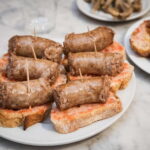
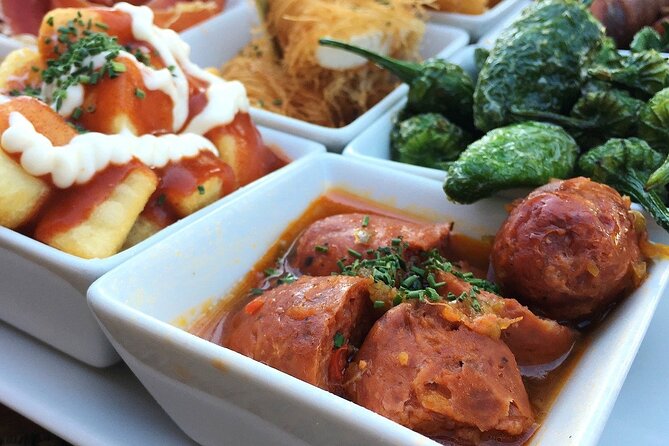
Here, you’ll taste a glass of local wine paired with tapas such as fried anchovies, tomato salad, and a sausage montadito served with bread spread with tomato juice (pan con tomate). The menu mix is clever because it hits key flavors quickly: salt and crunch from the anchovies, acidity and freshness from the tomato salad, and comfort from the sausage-on-bread combo.
A practical tip
If you’re the type who always orders the same thing, this is the stop that helps you reset. The anchovies and tomato salad are both straightforward, but the way they’re presented makes it easier to compare flavors without getting overwhelmed.
A few more Barcelona tours and experiences worth a look



Carrer del Regomir: pan con tomate, pimientos, and cava
As you keep walking toward Carrer del Regomir, you’ll see how the tour builds variety without turning into a circus. This part usually includes pan con tomate, pimientos del padron (small green peppers fried and salted), and a classic Spanish potato tortilla.
Drink-wise, you’ll get cava, often described as Spanish champagne. That matters because it changes the texture of what you taste. Crisp bites like peppers and tortilla work especially well when there’s carbonation and acidity doing some lifting.
The takeaway
You’ll start to notice a pattern: tapas here are designed for sharing, but the flavors are distinct enough that you can still tell what you’re eating. That’s one reason people end up feeling more “in the know” after this tour.
Plaça de Sant Josep Oriol: small square, big snack energy
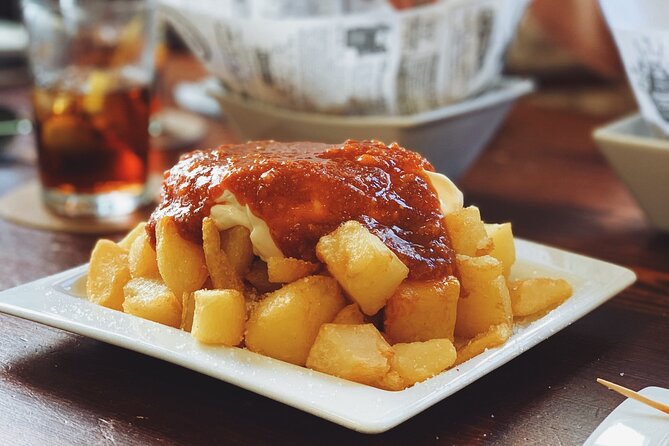
Then you reach Plaça de Sant Josep Oriol, a smaller square behind the Basilica de Santa Maria del Pi. It’s one of those places where the setting is calmer than the main tourist corridors, and that’s a good thing during a multi-stop meal.
The tasting here leans into pintxos—bite-sized toppings and combinations that Barcelona and the wider Spanish food world do so well. If you’re in town on a weekend, there’s an artists’ market in the area, and you might even see someone painting en plein air.
If you want photos
Don’t rush this stop. The square and surrounding lanes are the kind of places where a quick snapshot looks better when you pause instead of sprinting.
Plaça Sant Jaume: Crema Catalana and a turron-flavored finish
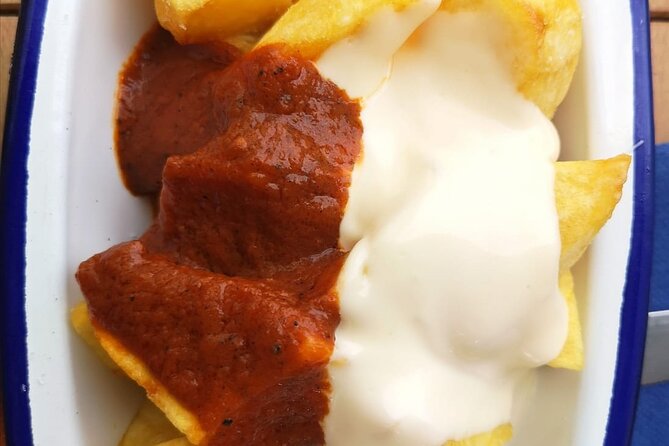
The administrative heart of the city is also a dessert magnet. Plaça Sant Jaume is where you can view landmarks like city hall and the Catalan government headquarters from the outside, and it sits right by one of the region’s older bakery shops.
This is where dessert becomes the main event. You’ll taste Crema Catalana at the bakery, noted as the official regional dessert, but the tour info also flags that this is lunch only. In the evening version, the finish is a handmade ice cream flavored with local ingredients, with turron specifically mentioned.
Why this section matters
If you’ve only tried desserts in tourist traps, this is a chance to taste a landmark sweet in a more grounded way. Also, it helps you learn what to ask for later when you want one last bite after dinner.
What’s actually in the meal (and how you’ll feel at the end)
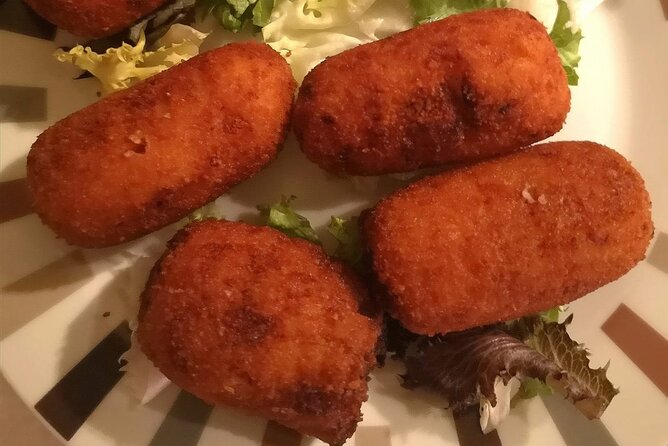
The sample menu gives a good map of the tour’s structure. You can expect items like croquetas (béchamel with cured ham), vermut, fried anchovies, potato tortilla, sausage montadito, tomato salad, pimientos del padron, and then Catalan cream and ice cream depending on the time of day.
A key detail: the tour includes meals at least four food stops, and the end result is described as the equivalent of a full meal. That’s a major part of the value equation because you’re not paying only for “samples.” You’re paying for a planned sequence that fills you up.
Food swaps are part of the deal
The tastings can change based on season and partner availability. That’s normal in this kind of tour, and honestly it’s better than a rigid menu that falls apart when a bar runs out.
Drinks: vermut, wine, and cava with age limits
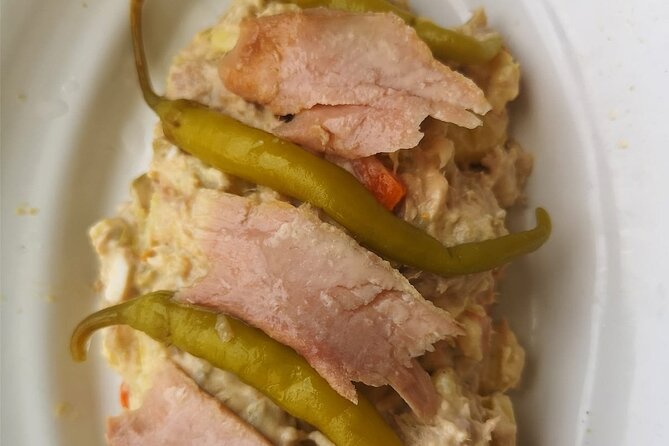
This tour includes alcoholic beverages in a fixed amount for guests over 18, plus water. You’ll see multiple drink styles along the walk: local wine at one stop, cava at another, and vermut as a Catalan ritual experience.
If you don’t drink alcohol, the tour says non-alcoholic options are available. For me, this is one of those “small details that matters,” because it means you won’t sit there watching everyone else drink while you taste nothing.
What to expect in tone
The tasting is clearly guided, so you should feel comfortable asking how to pair things. The guide is there to explain what you’re tasting, not just hand you food.
Group size and guide vibe: what your experience likely hinges on
The tour caps at 12 travelers, and a bunch of the standout praise centers on the guide’s engagement and ability to make both food and the neighborhood feel alive.
Different guides have led the tour, including Andrea, Ophélie, Miguel, Thomas, Daiam, and Diane, and the recurring theme is the same: they connect food to place, and they answer questions along the way. One guide style even mentions showing people toward the ocean from the walk, which tells you the tour isn’t purely locked to tasting menus.
A balanced note
One less-than-perfect comment highlights the idea that you may want more history, or more polish around logistics at a specific stop. That doesn’t sound like the typical pattern, but it’s a good reason to bring the right mindset. Expect good food first, and use questions to steer the conversation toward architecture, culture, or cooking techniques.
Where it starts and how the route works
You meet at Plaça de l’Àngel in Ciutat Vella. The tour ends on Carrer de Jaume I, and the end point can shift slightly depending on partner availability.
The duration is about 3 hours 30 minutes. With multiple stops, that time usually means a steady pace: walk between places, then settle in for a set of tastings. It’s described as suitable for moderate physical fitness—so if you’re comfortable with uneven sidewalks and some stairs, you should be fine.
Timing tip that saves stress
Show up a few minutes early. In older-city meeting points, it’s easy to overlook the exact spot, especially if you’re juggling the camera and your hunger.
Price: does $65.33 feel fair for what you get?
At $65.33 per person, the tour’s value comes from three things you don’t usually get together in Barcelona:
- Multiple food stops with the equivalent of a full meal by the end
- Drink pairings with fixed amounts of wine/vermouth/cava plus water
- A local English-speaking guide who ties the food to the neighborhood
If you were to recreate this on your own, you’d likely pay similar amounts just for a couple of tapas + drinks, then spend your time hunting for places worth it. Here, the planning is done for you, and the route through the Gothic Quarter reduces decision fatigue.
The one cost you may still consider
Gratuities aren’t included. Tips aren’t required, but if you feel the guide delivered a great experience—food guidance plus city context—then a tip is your chance to say thanks.
Who should book this tapas tour
This one is a great fit if:
- you want a structured way to eat well in the Gothic Quarter
- you like tapas variety more than one big sit-down meal
- you enjoy guided explanations, especially around Catalan traditions like vermuteo
- you prefer small-group energy over big tour herds
It’s also a good “first-night” choice if you need local direction for where to eat next. Multiple guides are praised for exactly that: helping people feel confident about ordering and exploring after the walk.
Who might want a different plan
You might skip this tour if:
- you have severe, life-threatening food allergies (the tour info says those guests can’t participate)
- you hate walking through old streets with short stops
- you want a meal that’s entirely customizable from a menu (this is a guided tasting format)
If you’re vegetarian, vegetarian options are available, and the team is asking you to inform them of dietary restrictions before booking. That’s the smart move anyway, because it prevents last-minute awkwardness.
Should you book it? My practical take
I’d book it if you want a reliable, high-output way to taste Catalonia without guessing. The combo of at least four food stops, drink pairings, and a dessert finish in the historic center is exactly the kind of “pay once, taste more” deal that makes sense for a short trip.
I’d hesitate only if you’re very picky about walking pace or you need totally specific food choices regardless of what a partner bar has that day. In that case, ask about vegetarian needs and discuss your limits before you commit.
FAQ
Where does the tour start and where does it end?
It starts at Plaça de l’Àngel in Ciutat Vella, Barcelona. The tour ends at Carrer de Jaume I in Ciutat Vella, and the end point may shift slightly depending on partner availability.
How long is the Barcelona tapas tour?
The duration is about 3 hours 30 minutes.
What’s included in the price?
The tour includes meals with at least four food stops, a selection of alcoholic beverages (fixed amount for guests over 18), water, and an English-speaking local tour guide.
Is alcohol included, and do I need to be 18?
Yes, alcoholic drinks are included in a fixed amount for customers over 18. Non-alcoholic options are available.
How many people are in the group?
This tour has a maximum of 12 travelers.
What kinds of foods are you likely to taste?
The sample menu lists items like croquetas, fried anchovies, potato tortilla, tomato salad, pimientos del padron, sausage montadito, and desserts such as Catalan cream and handmade ice cream (with local ingredients like turron). Tastings may change by season.
Are there vegetarian options?
Yes, vegetarian options are available. You should inform the provider of any dietary restrictions before booking.
Is the tour wheelchair-friendly or very strenuous?
It’s described as requiring moderate physical fitness. You should be comfortable with walking in an older part of the city.
What if the weather is bad?
The experience requires good weather. If it’s canceled due to poor weather, you’ll be offered a different date or a full refund.
Do I need to tip?
Gratuities are not included, and tipping is optional. If you feel the guide did a great job and you loved the food and drinks, you can consider tipping.