REVIEW · STRASBOURG
Strasbourg: Traditional Food Walking Tour with Tastings
Book on GetYourGuide →Operated by _Do Eat Better Experience · Bookable on GetYourGuide
Strasbourg tastes better when someone else plans it. This 210-minute food walking tour pairs classic sights with serious Alsatian tastings across historic eateries and modern cafés. I especially like the way you get a “from the region, not just the menu” mix: bretzels, cheese, choucroute garnie, and sweets like Pain d’épices and Tarte Flambée.
One watch-out: it’s very food-forward, and you’ll want to arrive hungry.
You’ll also cover a nice chunk of the old city at an easy pace, but it isn’t designed for everyone. The tour isn’t suitable for mobility impairments, and the stops can stack up quickly if you’re sensitive to crowds or long standing.
In This Review
- Key Things to Know Before You Go
- A 210-Minute Strasbourg Tasting That Feels Like a Real Meal Plan
- Price and Value: Why $116 Can Make Sense Here
- Finding the Start: Place d’Austerlitz and the Miniature Strasbourg
- The Walking Route Through Strasbourg’s Most Photogenic Neighborhoods
- Stop 1: Bretzels, Charcuterie, and a Cheese Shop Start
- Choucroute Garnie and Vineyard Stories (When You Want the Heart of Alsace)
- Alsatian Wine, Beer, and How Your Guide Sets the Pace
- Desserts You’ll Actually Remember: Pain d’Épices, Kugelhopf, Tarte Flambée
- How Much Food, How Fast, and What That Means for Your Day
- Guides That Make It Personal: Raphael, JP, Christine, Loubna, Nahama
- What to Bring (and What to Skip) for a Smooth Taste Day
- Is This Tour for You? Quick Fit Guide
- Should You Book This Strasbourg Food Walking Tour?
- FAQ
- How long is the Strasbourg traditional food walking tour?
- How many food stops are included?
- What drinks are included?
- Where do I meet the guide?
- What languages is the tour offered in?
- Is hotel pickup or drop-off included?
- How big are the groups?
- What should I bring or wear?
- Is it suitable for everyone with mobility needs?
Key Things to Know Before You Go
- Meeting at Place d’Austerlitz makes it easy once you spot the miniature of Strasbourg.
- Four or more tasting moments (with water and at least one alcoholic drink) means you’re eating, not sampling.
- Alsace staples are the focus: charcuterie, cheese, choucroute garnie, Pain d’épices, and more.
- Group size stays small (up to 12), so you’re not lost in the shuffle.
- Guides can be bilingual (English and French), and they bring the city’s food stories to life.
- Come prepared to be full. Multiple portions can be more than you expect.
A 210-Minute Strasbourg Tasting That Feels Like a Real Meal Plan
This tour is built for people who want Strasbourg cuisine with context. You’re walking through the heart of the city while your guide explains what’s behind the dishes, why the region does it this way, and how today’s food scene fits alongside the traditional basics.
The big idea is simple: you don’t just taste a bite and move on. You go to places where you can actually understand the flavor profile of Alsace, from cured meats to sauerkraut-forward classics and dessert that leans spiced and comforting.
You’ll also get a steady rhythm: sight stops plus food stops, so the experience stays fun even if you’re not chasing restaurant photos. And since at least one alcoholic drink and water are included, your guide can pace the tastings without you constantly thinking about “what do I order next?”
You can also read our reviews of more tours and experiences in Strasbourg.
Price and Value: Why $116 Can Make Sense Here
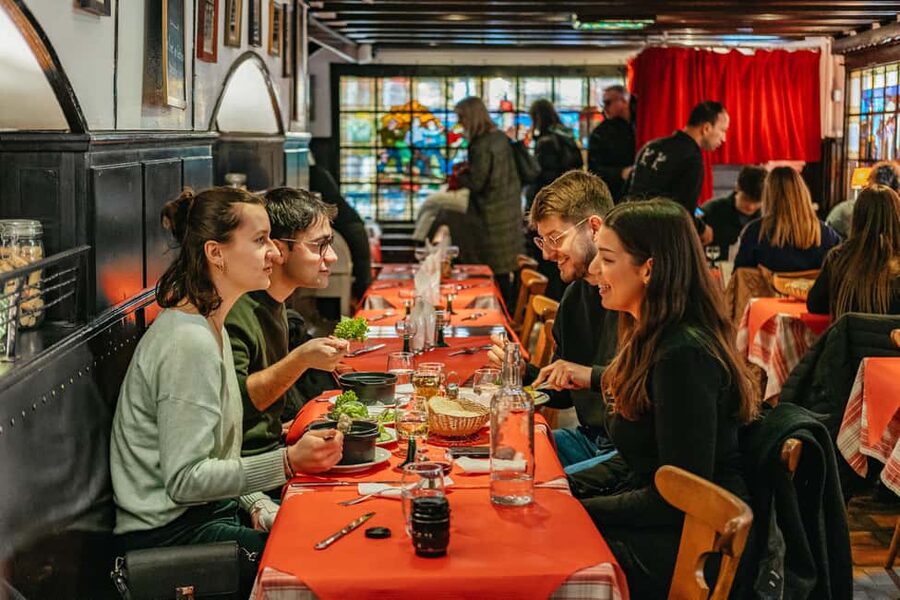
At $116 per person, this isn’t the kind of walking tour you book on a whim. The value comes from the structure: at least four food stops, one serving at each stop, plus water and at least one alcoholic drink.
What helps most is that the portions often feel substantial. Several people note the quantity is enough that nobody finishes everything, and you leave comfortably stuffed rather than mildly entertained.
If you like food tours that act like a guided version of a smart itinerary, this one fits. If you only want light snacking, you’ll likely feel overfed by the end. The tour is designed for “you’ll be full” energy.
Finding the Start: Place d’Austerlitz and the Miniature Strasbourg
You meet at Place d’Austerlitz, in front of the miniature of Strasbourg. That detail matters, because it’s the clearest landmark the tour gives you.
If you’re using GPS, be prepared to spend an extra minute or two getting your bearings. One common hiccup is that directions can point you to a place that looks close but isn’t the exact meeting spot. The fix is straightforward: use Place d’Austerlitz as your target and look for the miniature landmark.
Also plan to wear shoes you can stand in. This tour is a walk with tastings, so you’ll be on your feet more than you might think from the total duration alone.
The Walking Route Through Strasbourg’s Most Photogenic Neighborhoods
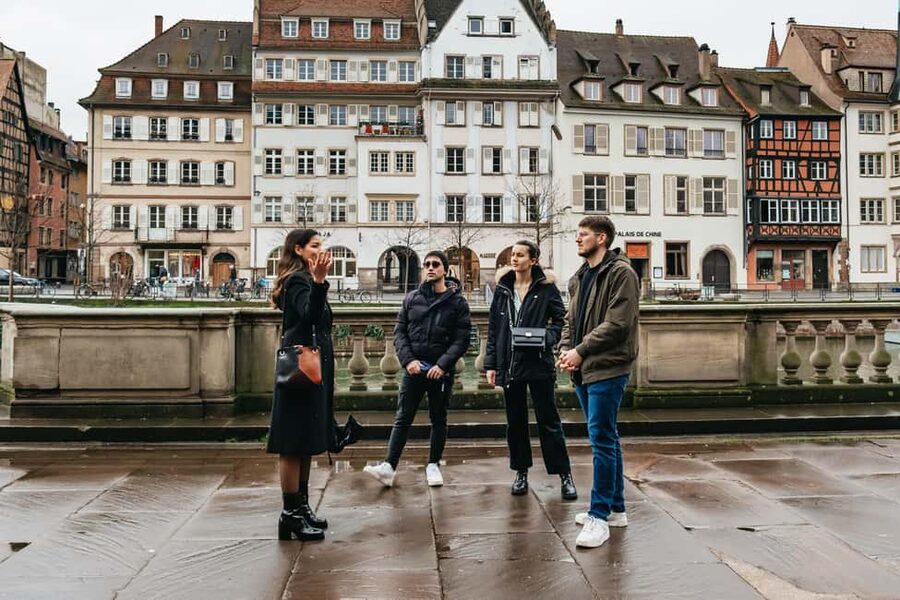
The route takes you through the city’s core, starting at Place d’Austerlitz and moving toward some of the most recognizable areas. You’ll pass by the Fortwenger Strasbourg cathedrale area, then head through Rue des Grandes Arcades, and you’ll spend time in Petite France before finishing back around there.
A few practical notes based on how people experience the day:
- The walking is generally easy in terms of effort, and it’s mostly flat.
- You don’t cover ground like a marathon city tour. It’s paced around where the food stops happen.
- You still get plenty of “Strasbourg moments,” including classic views that your guide may position you to photograph.
If your plan for Strasbourg is to see the big sights and eat well without researching every address, this route is efficient.
Stop 1: Bretzels, Charcuterie, and a Cheese Shop Start
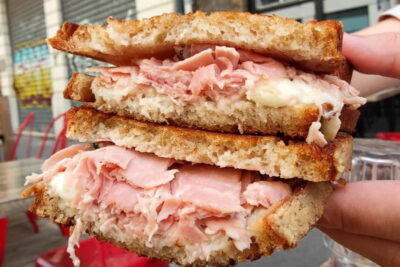
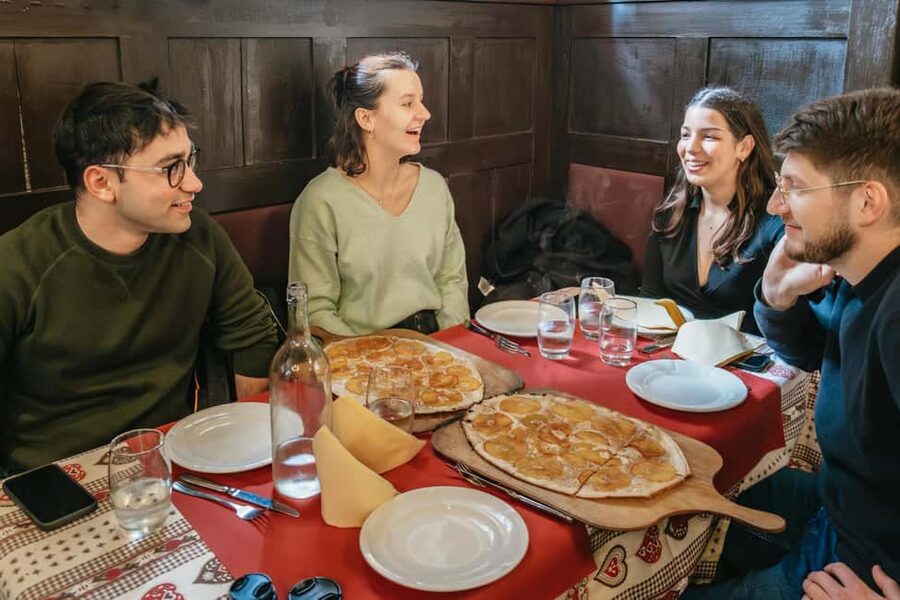
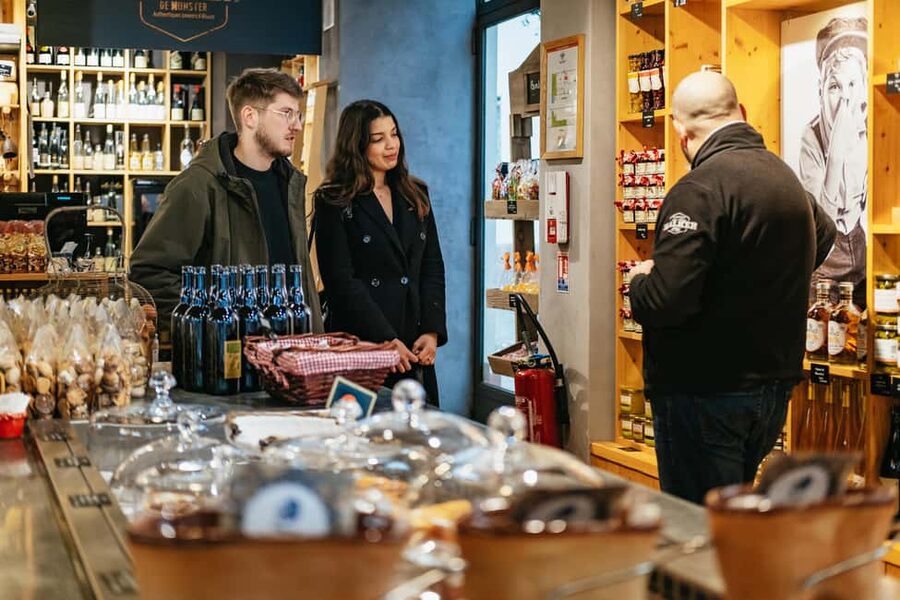
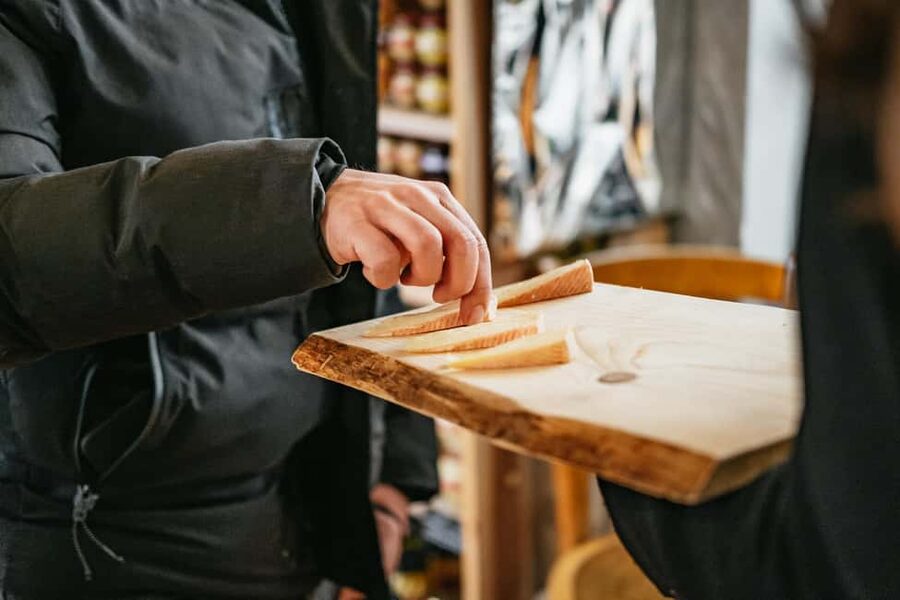
The first tastings are the Alsace essentials. You begin with a selection of charcuterie, often paired with soft bretzels, and you’ll move on to local cheese at a dedicated cheese shop.
This opening matters because it sets the flavor language for the rest of the tour. Alsace cuisine can feel bold if you’re not expecting it: cured meats with deep seasoning, cheese with distinct personality, and bready support in the form of bretzels. When you taste this early, later dishes like sauerkraut-based meals make more sense.
One tip: save some appetite for what comes after. Some people are tempted to get full on the meats and bread first, but the tour’s later savory and sweet moments are where the day really broadens.
Choucroute Garnie and Vineyard Stories (When You Want the Heart of Alsace)
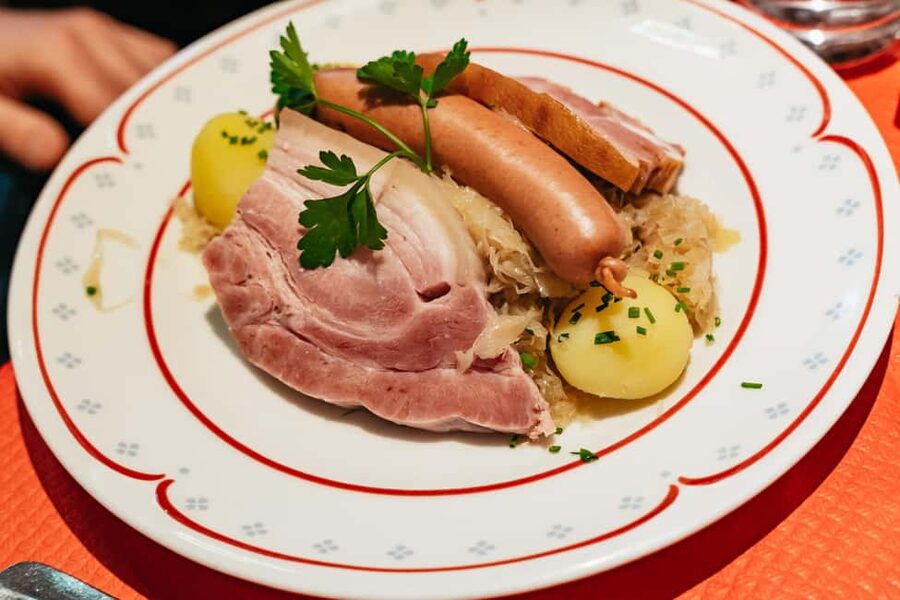
One of the standout regional dishes on this tour is choucroute garnie. It’s the gastronomy symbol of the region, built around smoked sausages and sauerkraut, usually served in a hearty, filling portion.
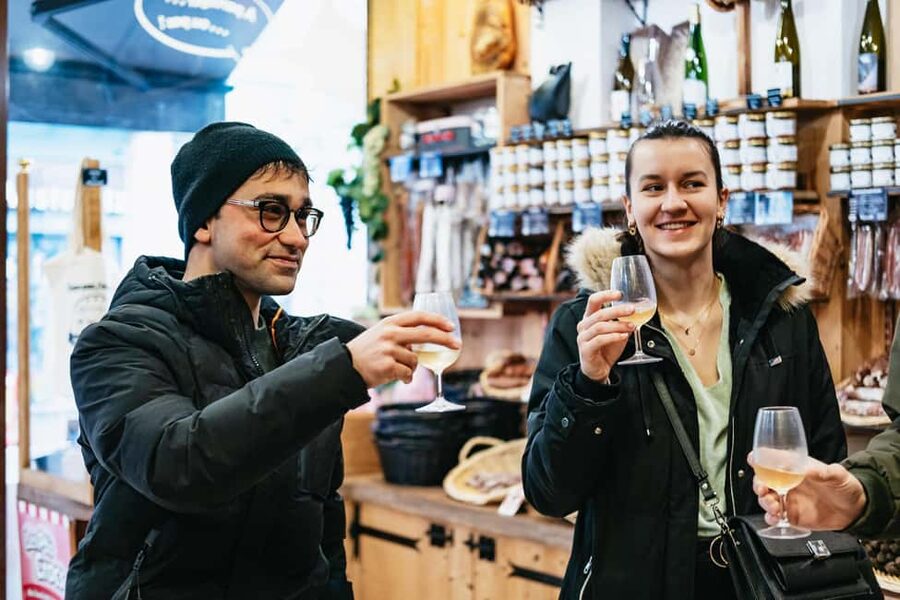
This is also the moment where your guide can connect food to place. You’ll taste Alsatian wine and learn why the region is famous for its vineyards, so you’re not just eating—you’re building the “why” behind the pairing and the local pride around wine culture.
What I like about this part of the tour is the balance. It’s not only seafood-and-salad tourism. It’s a proper regional meal style, heavy on comfort and tradition, which is exactly what many people come to Alsace for.
If you’re someone who gets easily overwhelmed by strong flavors, start slow with the sauerkraut element. It’s part of the dish, and you’ll want to appreciate it rather than muscle through it.
Alsatian Wine, Beer, and How Your Guide Sets the Pace
You’ll include at least one alcoholic drink, and in practice, tastings can include wine and beer depending on the stops and the plan for that day. Your guide also supplies water, which is useful when you’re stacking multiple tastings.
The practical win here is that your guide controls the pacing. Instead of you bouncing between menus, you get a guided sequence that usually makes sense: savory first, then deeper regional dishes, and finally dessert.
One small consideration: taste is personal. A few people mention that the wine wasn’t to their preference even while it was clearly part of the regional experience. If wine isn’t your thing, lean into the non-wine options offered at the tastings and focus on the food side of the tour.
Desserts You’ll Actually Remember: Pain d’Épices, Kugelhopf, Tarte Flambée
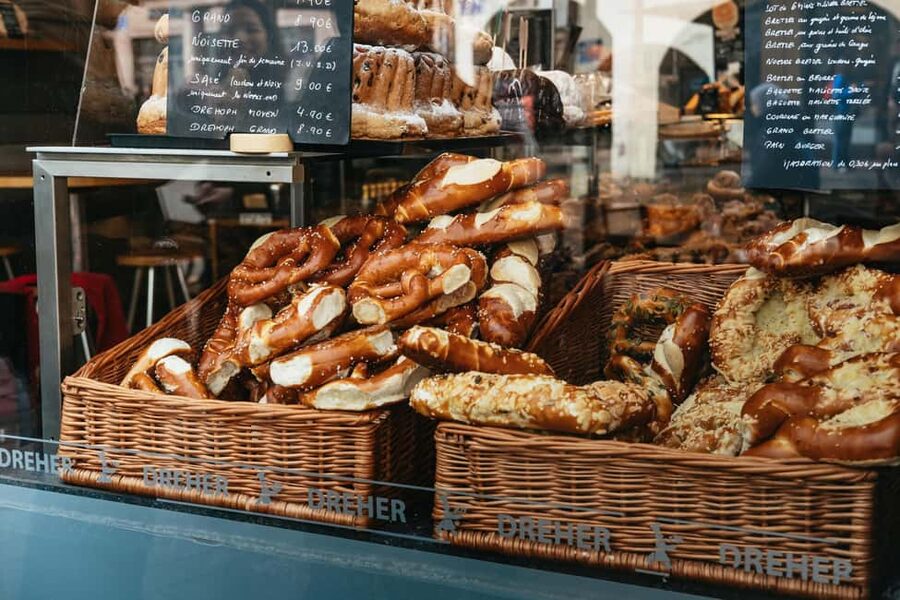
Alsace desserts show up in a way that feels seasonal and flexible. You might try Alsatian gingerbread, known as Pain d’épices, and other sweet options that can vary depending on what’s available.
You may also encounter Kugelhopf and Tarte Flambée (tasting can vary by season). Tarte Flambée is often associated with Alsace more broadly, and it’s a fun contrast to spice-forward gingerbread. It gives you another way to read the region’s flavors without repeating the same sweetness over and over.
This is also where you get a good “compare and learn” experience. If you’ve had gingerbread before, Pain d’épices in Alsace tends to taste more deeply spiced and grounded, and it pairs nicely with the earlier savory notes you’ve already tasted.
How Much Food, How Fast, and What That Means for Your Day
This tour is designed so you leave full. Multiple notes point out that portions are generous, and it’s common for people to walk away unable to finish everything.
That has two consequences for your planning:
- Eat light before the tour, or skip breakfast if you’re doing an earlier departure.
- Bring a mindset that this is closer to a guided lunch + tastings than a stroll with snacks.
In terms of pace, it usually doesn’t feel rushed. One theme in the experience is that the walking is easy and the stops take enough time for you to actually eat and understand what you’re tasting.
If you’re traveling with kids, the format can work too, since people mention guides being good with families and still keeping the history portion clear. Just remember: the food quantity is real.
Guides That Make It Personal: Raphael, JP, Christine, Loubna, Nahama
A big part of the success here is the guide quality. Names that show up include Raphael, JP, Christine, Loubna, and Nahama—and the common thread is that they mix city stories with food explanations.
People also describe guides who:
- keep the pace comfortable rather than a hard sprint,
- point out history without turning it into a lecture,
- and offer useful recommendations for where to eat or drink afterward.
One subtle but valuable benefit: guides may help you hit key Strasbourg photo spots, not by rushing you, but by guiding where to stand and when. That makes the tour feel like it’s doing double duty as an orientation to the city.
What to Bring (and What to Skip) for a Smooth Taste Day
This is a practical walking tour, so pack for comfort:
- Bring comfortable shoes.
- Avoid bringing pets or luggage / large bags, since these aren’t allowed.
If you’re someone who gets cold easily, consider a light layer. Strasbourg can feel chilly, and you’ll spend time standing at tasting counters and inside shops. You’re not told to bring umbrellas or anything specific, so just think “walkable day, dress for standing around.”
Most importantly, plan your schedule around being full. It’s hard to enjoy a big dinner right after a tour like this unless your dinner plan is something lighter.
Is This Tour for You? Quick Fit Guide
This tour is best for you if:
- you want a guided way to taste Alsace without hunting down addresses,
- you like both traditional dishes (like choucroute garnie) and Alsace dessert staples,
- you’d rather learn what you’re eating than just check a box.
It may not be the best fit if:
- you only want small bites,
- you dislike cured meats or sauerkraut flavors,
- you need mobility-friendly routing, since it’s not suitable for mobility impairments.
Also, if you’re a solo traveler, the small group format can help you feel comfortable rather than like you’re being swallowed by a crowd.
Should You Book This Strasbourg Food Walking Tour?
Book it if your Strasbourg plan includes food you can’t easily replicate on your own. The combination of historic walking, generous tastings, and a guide who ties food to local life is exactly the kind of “first visit” value that makes a city tour worth it.
Skip it if you prefer a lighter snack experience or if you already plan to eat a full sit-down meal before and after. This tour is meant to replace part of your eating day, not just add a dessert stop.
If you’re okay with being very well fed, you’ll likely leave feeling like you finally understand what Alsace tastes like.
FAQ
How long is the Strasbourg traditional food walking tour?
The tour lasts 210 minutes.
How many food stops are included?
The tour includes at least 4 food stops, with a serving at each stop.
What drinks are included?
Water is included, and at least 1 alcoholic drink is included during the tour.
Where do I meet the guide?
Meet at Place d’Austerlitz, in front of the miniature of Strasbourg.
What languages is the tour offered in?
The guide speaks English and French.
Is hotel pickup or drop-off included?
No. Hotel pickup and drop-off are not included.
How big are the groups?
The tour has a maximum of 12 people and requires a minimum of 2 people to operate.
What should I bring or wear?
Wear comfortable shoes, since it’s a walking tour.
Is it suitable for everyone with mobility needs?
It is not suitable for people with mobility impairments.