REVIEW · BORDEAUX
Traditional Gourmet Food & Wine Tour in Bordeaux
Book on Viator →Operated by The Bordeaux Foodie · Bookable on Viator
Canelés first, then Bordeaux’s big landmarks. This traditional gourmet food and wine tour strings classic tastings together with fast hits of Bordeaux architecture and famous wedding spots, all in a 3.5-hour walk. I like the way you sample your way through the city instead of treating food as an afterthought.
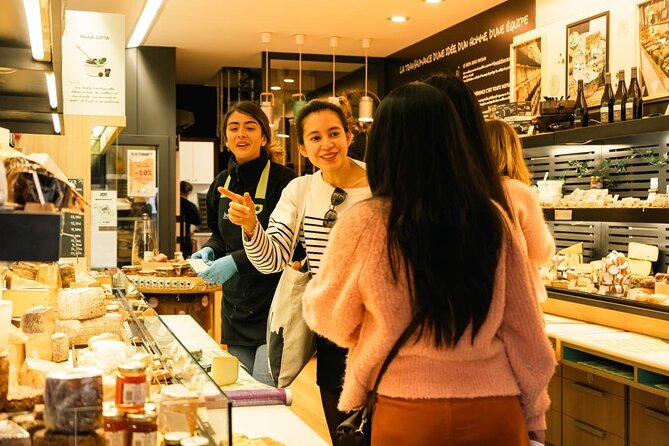
Two things I really liked: the sheer variety of bite-sized local specialties (cannelés, pastries, honey, cheeses, charcuterie, and chocolates) and the human touch from your guide, Alexandra, who asks about preferences and steers you toward what fits. You also end in a wine cellar with regional bottles, so the flavors feel tied to Bordeaux, not just traded through.
One consideration: it depends on good weather and it’s still a walking tour, so if you want lots of long sit-down breaks, you may feel a bit rushed.
In This Review
- Key things to know
- What You’re Really Buying for $123.09
- Starting at Place Pey-Berland and the Canelé Moment
- Saint-André Cathedral: More Than a Pretty Facade
- Hôtel de Ville: City Power, Then Food Power
- Rue des Remparts: Bread, Pastries, Honey, and Charcuterie
- Porte Dijeaux: Roman Echoes and the Stories at the Gate
- La Galerie des Grands Hommes: Old Market Energy, Modern Upscale Pace
- Place de la Comédie: Opera Views and Chocolates from a Classic Maker
- The 11-Hectare Garden Break: The Reset Bordeaux Deserves
- Finishing in a Wine Cellar at Rue Notre Dame (Chartrons)
- What the Group Size and Guide Style Do for You
- Price, Portions, and the Best Way to Pace Yourself
- Who This Tour Suits Best (and Who Might Want Another Option)
- Should You Book This Bordeaux Food and Wine Tour?
- FAQ
- How long is the Bordeaux Traditional Gourmet Food & Wine Tour?
- Where does the tour start and end?
- Is the tour in English?
- How big is the group?
- What food and drink is included?
- Do I get a mobile ticket?
- What if the weather is poor?
- What is the cancellation window for a full refund?
- Are service animals allowed?
Key things to know
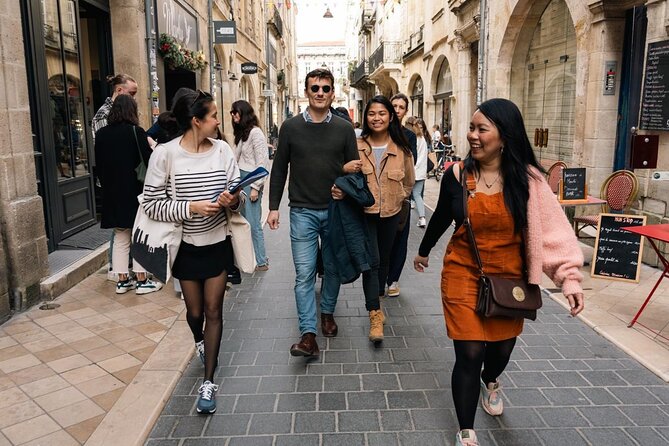
- Up to 8 people means you get attention and easier conversations at each shop
- Food-first flow: cannelés near the cathedral, then honey/charcuterie along Rue des Remparts, then chocolates by the opera area
- Alexandra’s style: she asks what you like and helps you shop for what you’ll enjoy later
- Wine cellar finish: regional wines in a local cellar give the tastings a proper ending
- Historic stops, not a museum slog: cathedral/city hall gates and squares keep the walk anchored in place
- A breather in a big public garden: 11 hectares of calm for a reset during the walk
What You’re Really Buying for $123.09
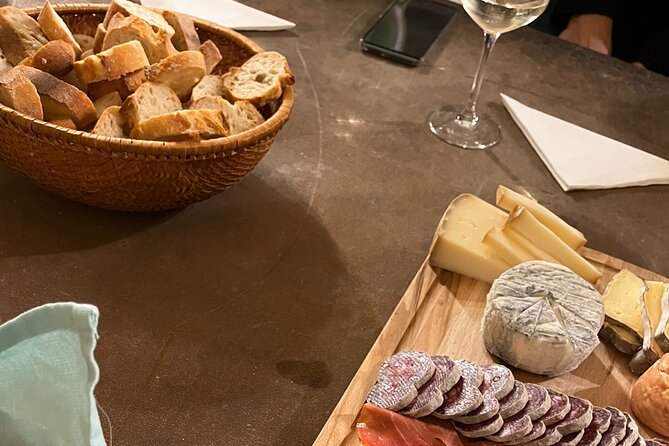
For $123.09 per person, you’re not paying for one fancy meal. You’re paying for a guided loop where you get a steady rhythm of tastings: fresh bread and pastry, cannelés, honey, local cheese and charcuterie, chocolates, and regional wine. That mix matters, because Bordeaux food is about pairing. This tour teaches your taste buds how the pieces fit.
It also feels like a practical use of time. At roughly 3 hours 30 minutes, you cover central Bordeaux highlights without burning half a day getting from place to place. And because it’s offered in English with a mobile ticket, it’s an easy plan to fold into a sightseeing morning or afternoon.
The best part for value is that you leave with more than memories. You’ll see bakeries, chocolatiers, wine shops, and specialty counters you could walk past on your own. After the tour, you’re better equipped to return and buy things you actually want.
You can also read our reviews of more food & drink experiences in Bordeaux

Starting at Place Pey-Berland and the Canelé Moment
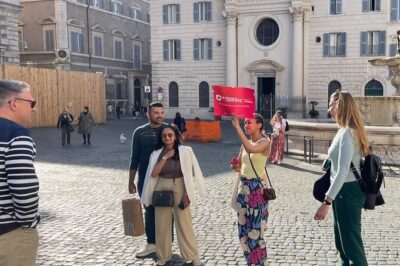
Your tour kicks off at Place Pey-Berland in the heart of Bordeaux, the kind of square that immediately gives you context. From here, Alexandra connects the Pey Berland Tower and the nearby Saint-André Cathedral to the city’s social life and landmark stories, including the famous weddings tied to this area.
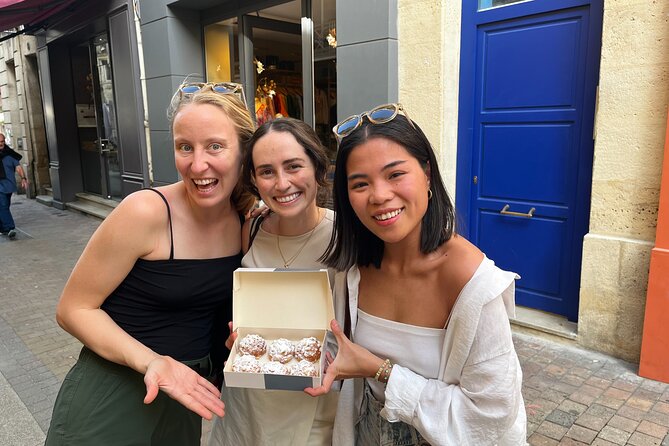
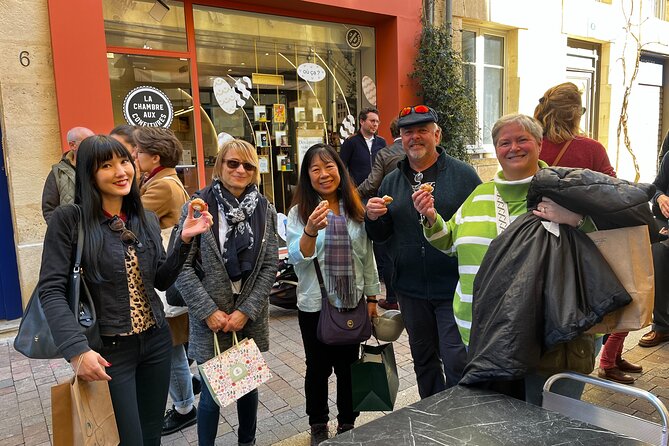
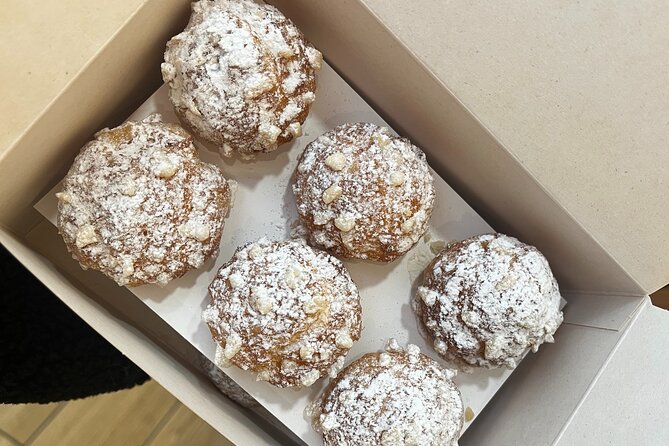
Then you do the right thing first: you taste the cannelés close by. Cannelé is Bordeaux comfort food with a cult following, and the tour’s early timing works well. You get a baseline flavor early, so later tastings make more sense.
If you’re new to Bordeaux, this start is smart because it orients you fast. Place Pey-Berland is a shortcut to understanding where people gather, where ceremonies happen, and how the city’s identity concentrates around major stone landmarks. And yes, the cannelé stop is free admission—meaning you focus on tasting instead of tickets and lines.
Saint-André Cathedral: More Than a Pretty Facade
A quick walk puts you right at Cathedrale Saint-Andre Bordeaux, one of the most central sights in town. Alexandra talks about the cathedral as an architectural centerpiece, but what I like is how she frames it as part of lived history rather than a photo-op.
One detail that gives the stop weight is the cathedral’s connection to the Camino de Santiago pilgrimage route. That changes how you look at a building. It’s not only local Catholic heritage; it’s also a node in a broader network that drew travelers to churches across Europe.
This is also where Alexandra brings up the idea of weddings that took place here. That matters because Bordeaux isn’t just grapes and shopping. It’s also rites, rituals, and community gatherings that spill into the streets. It’s a reminder that food in a city like this grew from people celebrating, waiting, arriving, and meeting.
Hôtel de Ville: City Power, Then Food Power
A couple of minutes away, you’ll reach Hotel de Ville de Bordeaux, a building built between 1771 and 1784. What I like about this stop is the way it changes your mental map. You go from religious landmark to civic landmark fast, which helps you understand how the city’s center functions.
The building’s former role as the Archbishop’s Palace of Bordeaux gives it an extra layer. Today it’s the administrative hub, but the tour helps you see the continuity. You’re basically looking at the city’s authority moving from church influence to government influence, while the public square life continues around it.
You don’t spend long here, and that’s a good thing. The tour keeps momentum. You’re not stuck reading placards. You’re moving, tasting, and learning bits you’ll actually remember.
Rue des Remparts: Bread, Pastries, Honey, and Charcuterie
If you want one stretch that feels like real food touring, it’s Rue des Remparts. The street name is a clue to what used to surround this area—ramparts and medieval boundaries. Today it’s a calm-ish, walkable corridor with small specialty shops and food counters.
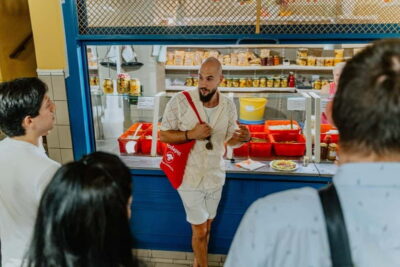
This is where the tour leans hardest into eating. You stop by multiple places to taste bread and pastries, and you also do a honey tasting. There’s time to buy charcuterie, which is useful because it turns the tour into a shopping strategy, not just tasting.
Here’s the practical angle: honey is one of those flavors that’s easier to appreciate once you’ve already tasted bread and pastry. The sweetness shows up next to salt and butter. Charcuterie then ties everything together. You start thinking in pairings, the way locals do.
Also, it’s not just one store with one sample. The structure of this part of the walk helps you compare. You’ll see how shops think about flavor, portioning, and what they consider worth offering right now.
A few more Bordeaux tours and experiences worth a look

Porte Dijeaux: Roman Echoes and the Stories at the Gate
From Rue des Remparts, you move toward the Porte Dijeaux, an arched gate that marks an entry point in the city’s long timeline. Alexandra uses it to give you a sense of how old Bordeaux sits underneath the modern map.
The tour shares different theories about the site. Evidence suggests a link to a Roman-era temple honoring Jupiter, while other accounts frame it as a boundary between the historic city and the Jewish district. Either way, the point is clear: gates like this were never only traffic control. They were cultural and political edges.
This is a quick stop, but it works because it doesn’t interrupt your food flow too much. You get a short historical reset. Then you’re back to shopping and tasting soon after.
La Galerie des Grands Hommes: Old Market Energy, Modern Upscale Pace
Next you enter the Galerie des Grands Hommes area, in the so-called golden triangle. What I like here is the contrast. In the 18th century, this area was an old market, and now it’s known for refined architecture, higher-end shops, cultural venues, and top dining spots.
It helps you understand Bordeaux’s transformation: commerce doesn’t disappear; it changes its skin. The tour doesn’t force you to memorize dates. It shows you the shift through what’s around you now.
If you’re the type who likes to buy good gifts, you’ll likely enjoy this area. It’s also a natural bridge between earlier food stops and the tour’s grand finale flavors near the opera square.
Place de la Comédie: Opera Views and Chocolates from a Classic Maker
At Place de la Comédie, Bordeaux does its best grand-spectacle face. This square is framed by the Grand Théâtre and the Grand Hôtel de Bordeaux facing each other, and Alexandra points out views in different directions that connect to major sights like the Monument aux Girondins at Place des Quinconces.
Then you get the sweet stop that makes sense right here: chocolate tastings from one of the oldest chocolate institutions in Bordeaux. The placement is smart. Chocolate tastes better when you’re relaxed and looking out over a big public space, not standing in a cramped storefront forever.
This part of the tour also nudges you toward smart souvenir shopping. If you’ve ever bought sweets that turn out to be too sweet or too generic, you’ll appreciate tasting first. You learn what you actually like before you spend.
The 11-Hectare Garden Break: The Reset Bordeaux Deserves
After the central squares and specialty stops, you get a breather in the 11-hectare garden Bordeaux locals call the lungs of the city. That detail is more than marketing. A large public green space gives you room to slow down, digest, and talk without the constant sound of crowds and shop chatter.
Even if you don’t picnic, it’s a useful pause. By now, you’ve tasted enough salt, sugar, bread, and wine flavors to appreciate a calm moment. If your feet are starting to complain, this is the kind of stop that saves the overall experience.
It’s also why timing matters. A walk tour can feel tiring if it’s only hard pavement and standing in lines. This garden stop breaks that pattern.
Finishing in a Wine Cellar at Rue Notre Dame (Chartrons)
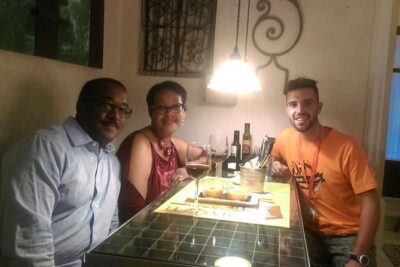
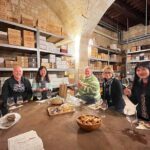
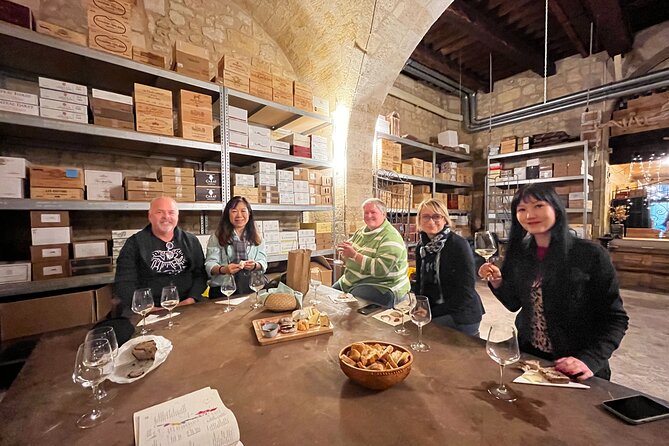
The tour ends in a cozy wine cellar at the beginning of Rue Notre Dame in the Chartrons district, at 3 Rue Notre Dame. This is where the tastings “click” into something cohesive. You’re not just eating. You’re tasting with Bordeaux wine alongside regional flavors.
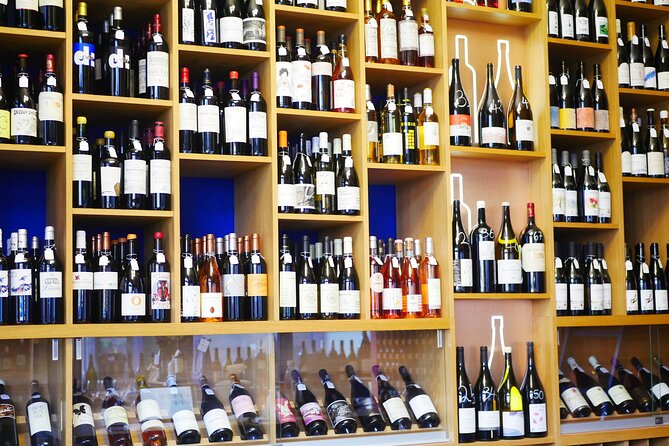
The included regional wines matter because they reflect local style rather than generic tour-scented pours. After honey, cheese, charcuterie, cannelés, and chocolate, wine becomes the glue. You start to notice how acidity, sweetness, and tannins change the way bread crust, caramelized pastry edges, and chocolate finish in your mouth.
And because the end point is in a lively, known wine area, it’s a good springboard for your next stop. You’ll likely feel confident ordering something similar without freezing up at the menu.
What the Group Size and Guide Style Do for You
This tour caps at 8 travelers, and it shows. It’s not a cattle-car experience. You can ask questions, and Alexandra can adjust how she guides you through shops.
A couple of the best moments come from how the tour feels personal. In the feedback shared about Alexandra, I noticed a pattern: she asks guests about preferences and helps you choose items that will match your tastes. One review also mentioned she worked to make sure there were gluten-free options available for a guest, which suggests she takes dietary needs seriously when possible.
Also, the guide links food to the city’s people and places. That’s why the history doesn’t feel tacked on. It explains why the tastings happen where they do.
If you’re traveling solo, you won’t feel lost. If you’re with a partner, it’s easy to share bites and compare reactions. And if you’re a first-time Bordeaux visitor, it’s a fast way to get your bearings without turning the day into a checklist.
Price, Portions, and the Best Way to Pace Yourself
Let’s talk portions, because they affect enjoyment. This is a tasting tour, so don’t expect one giant sit-down platter. Instead, you get multiple stops with smaller servings. That’s good news if you like variety and don’t want to commit to one meal too early.
To get the most from it:
- Keep water handy, and sip between tastings
- Save room in your stomach for cannelés and chocolates
- Plan to eat a fuller dinner later, since the tour uses bites and pairings to build flavor
Also consider your timing. A 3.5-hour tour plus shopping makes a great lead-in to a later meal. If you schedule it right before dinner, you’ll likely be satisfied rather than stuffed.
At $123.09, you’re paying for access, guidance, and the fact that you’re tasting multiple specialty foods you’d otherwise have to hunt down. For Bordeaux, that’s the right kind of value: not cheap, but efficient and flavor-heavy.
Who This Tour Suits Best (and Who Might Want Another Option)
This tour is a strong match if you:
- love trying multiple local foods in one morning or early afternoon
- want history tied to real places, not just museum-style facts
- like guided shopping, especially for gifts or edible souvenirs
- enjoy pairing food with regional wines
You might consider another option if:
- you dislike walking or standing for stretches
- you prefer long restaurant meals over tastings
- you’re traveling during uncertain weather, since the experience requires good weather
Because it’s priced for tastings plus wine cellar time, it’s less ideal if you only want one or two items and skip most of the stops.
Should You Book This Bordeaux Food and Wine Tour?
I’d book it if your goal is to understand Bordeaux through food, not just to collect sights. The combination of cannelés early, honey and charcuterie along Rue des Remparts, chocolates near Place de la Comédie, and a proper finish in a Chartrons wine cellar is a smart, tasty path through the city.
One more reason: it’s highly rated, with a 5-star average from 81 reviews and a strong recommendation rate. That kind of consistency usually means the guide knows how to keep groups engaged and tasting in the right order.
If you’re planning ahead, note that it’s typically booked around 70 days in advance, so choosing your dates early helps.
Go for it if you like authentic local flavors, short walking segments, and a guide like Alexandra who makes the experience feel personal rather than scripted.
FAQ
How long is the Bordeaux Traditional Gourmet Food & Wine Tour?
It’s about 3 hours 30 minutes.
Where does the tour start and end?
It starts at Place Pey Berland, 33000 Bordeaux, France. It ends at 3 Rue Notre Dame, 33000 Bordeaux, France, in a wine cellar at the beginning of Rue Notre Dame in the Chartrons district.
Is the tour in English?
Yes, it’s offered in English.
How big is the group?
The tour has a maximum of 8 travelers.
What food and drink is included?
Included are freshly baked breads from a bakery, regional wines in a local wine cellar, the best cannelés in Bordeaux, gourmet chocolates tastings, honey tastings, local cheese and charcuterie, and a local pastry.
Do I get a mobile ticket?
Yes, it uses a mobile ticket.
What if the weather is poor?
The experience requires good weather. If it’s canceled due to poor weather, you’ll be offered a different date or a full refund.
What is the cancellation window for a full refund?
You can cancel up to 24 hours in advance for a full refund.
Are service animals allowed?
Yes, service animals are allowed.