REVIEW · ASAKUSA
Tokyo: Asakusa & Sensoji ー Oldest Temple Walking Tour (2hrs)
Book on Viator →Operated by Local Guide Stars · Bookable on Viator
One of Tokyo’s oldest sights is right here. This 2-hour Asakusa walk takes you from Kaminarimon (Thunder Gate) into Senso-ji and on through the surrounding shopping streets with a local guide.
I especially like the mix of Senso-ji temple rituals and practical street-level Tokyo. You’ll get hands-on moments like drawing a fortune, washing up for purification, and experiencing incense smoke in a calm, guided way.
One consideration: the tour description emphasizes street-food tasting, but what you end up tasting can vary day to day, so if food is your top priority, ask your guide what’s included that day.
In This Review
- Key takeaways before you go
- Why Asakusa starts at Kaminarimon’s Thunder Gate
- Senso-ji rituals: fortune, purification, incense, and prayer
- Nakamise Shopping Street: souvenirs plus real street-level atmosphere
- Yogodo and the koi pond: a short stop with a story
- Matcha time at Kaminari Issa
- Hoppy Street: Edo-era vibe with day-drinking energy
- The Edo-style snack lane: skewers and menchi-katsu
- Finishing at Ozeki Asakusa Kaminarimon Grocery & Supermarket
- Pro chef knives and traditional sharpening option
- Price and timing: $19.90 for a small-group temple walk
- Getting the most out of it: what to bring and how to act
- Who should book this Asakusa walking tour
- Should you book it?
- FAQ
- FAQ
- How long is the Asakusa & Sensoji walking tour?
- What does it cost per person?
- Where do I meet, and when does the tour end?
- Is there any admission cost for the main stops?
- Is there street food or sweets included?
- How large is the group?
- Can I cancel for a full refund?
Key takeaways before you go
- Senso-ji’s rare blend of Buddhist temple and Shinto shrine makes this more than a standard temple stop
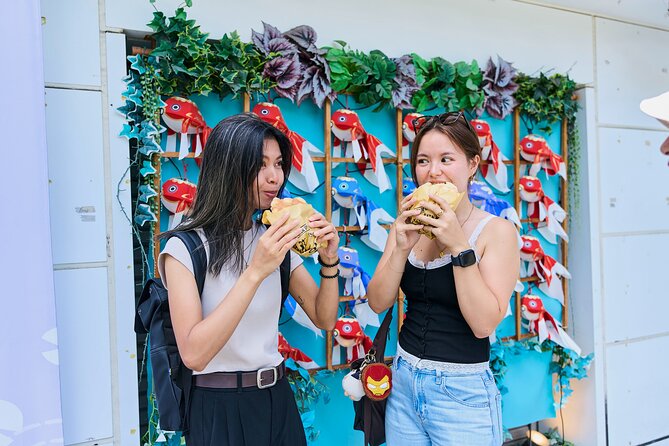
- Nakamise shopping + guided food stops help you navigate the crowds without wasting time guessing
- Yogodo with Jizo statues and a koi pond is a great short photo pause with meaning behind it
- Hoppy Street and Edo-style streets show Asakusa beyond the main landmark zone
- A local supermarket finish is surprisingly useful if you want real Japanese everyday items
- Small group size (max 15) keeps the walk manageable for a 2-hour route
Why Asakusa starts at Kaminarimon’s Thunder Gate
Asakusa has that classic Tokyo feeling: old streets packed with modern energy. The tour begins at Kaminarimon, the outer gate of Senso-ji. Your guide explains the gate’s real name and the story behind the famous features, so you’re not just looking at big signage and guessing.
This is a smart starting point because it sets the rhythm for the whole visit. You’ll know what you’re seeing before you step deeper into the temple grounds. And since Asakusa is a maze of shops, having someone point out where things are (and what matters) helps you get your bearings fast.
Senso-ji rituals: fortune, purification, incense, and prayer
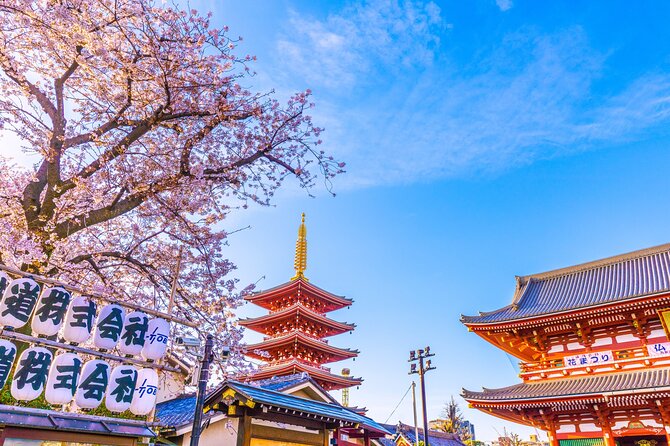
Senso-ji isn’t just about sightseeing. It’s a living place of worship, and the guide helps you participate in the traditional moments.
At the temple, you can expect a clear run-through of common practices:
- drawing a fortune
- doing the hand purification ritual with water
- experiencing the incense smoke
- offering a traditional prayer
Even if you’re not religious, these steps make the temple feel human and understandable. It also helps you avoid the awkward moment of thinking everyone else knows what to do while you stand there politely confused.
Senso-ji is also known for a rare coexistence of Buddhist worship and a Shinto shrine. That mix gives Asakusa a unique spiritual texture. You’re watching two traditions share the same sacred space, not treating them like separate tourist checklists.
Nakamise Shopping Street: souvenirs plus real street-level atmosphere
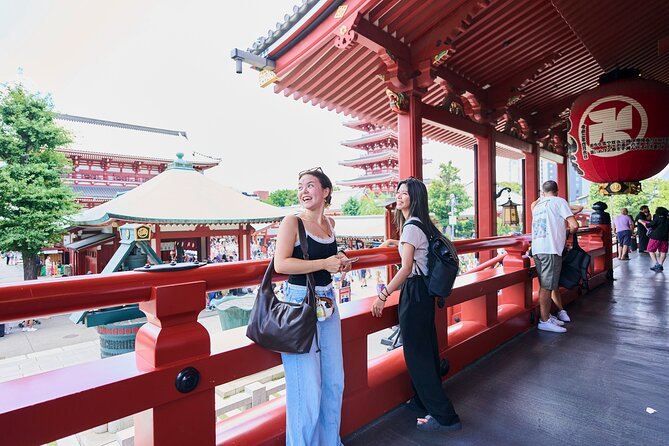
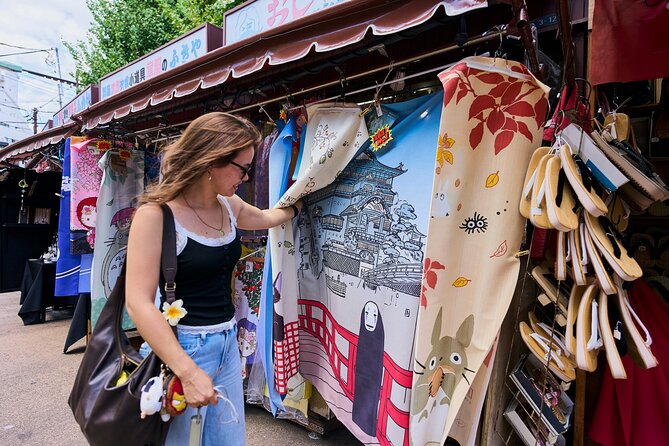
Once you’re past the outer gate, the route brings you into Nakamise Shopping Street. This is where you’ll see the classic Asakusa souvenir lanes, snack stands, and long-established storefronts.
The best part here is not just shopping. It’s learning how to pace yourself. Nakamise can pull you in a hundred directions at once, so the guide’s focus on what to look for keeps you from drifting into random alleys and overpriced traps.
You’ll have a chance to indulge in street food and shop for souvenirs. Expect to find well-known items like melon bread, plus lots of small snacks you can sample along the way. If you’re the type who likes to bring home edible souvenirs, this is the section that makes the whole walk feel worth it.
Yogodo and the koi pond: a short stop with a story
After the main temple area, you get a quieter, more specific moment at Senso-ji Temple Yogodo. This part of the experience is short, but it’s packed.
You’ll see:
- a goshuin (temple seal) desk
- a pond with koi fish
- rows of Jizo statues tied to a well-known story
- a popular photo spot
This is a great pause if you want more than landmark photos. Jizo statues are often associated with protection and care for children and travelers in Japanese Buddhist contexts, but here the guide frames the story so the statues don’t just look like decoration. Even the koi pond is more than a background feature; it adds calm visual rhythm right in the middle of a busy area.
Matcha time at Kaminari Issa
Right after Yogodo, the route includes a quick stop at Kaminari Issa, with a sweets shop specializing in rich matcha flavors. You can try desserts like matcha soft serve, matcha truffles, and seasonal treats.
This is a nice move strategically. Temple visits in Japan often take concentration, and sweets give you a reset without leaving the neighborhood. Also, if you don’t want a full sit-down meal, these are the kinds of stops that keep you going during a short 2-hour experience.
Hoppy Street: Edo-era vibe with day-drinking energy
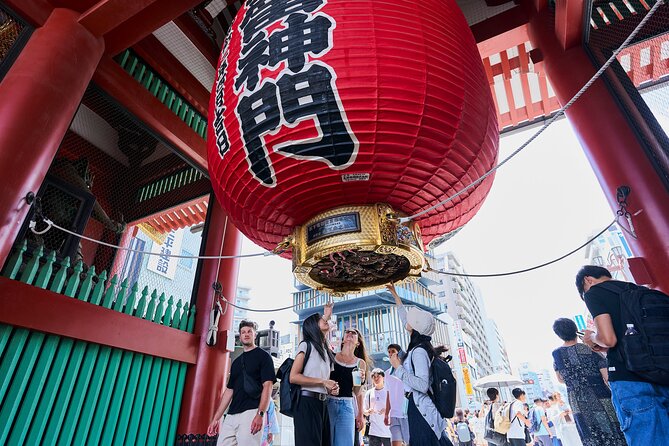
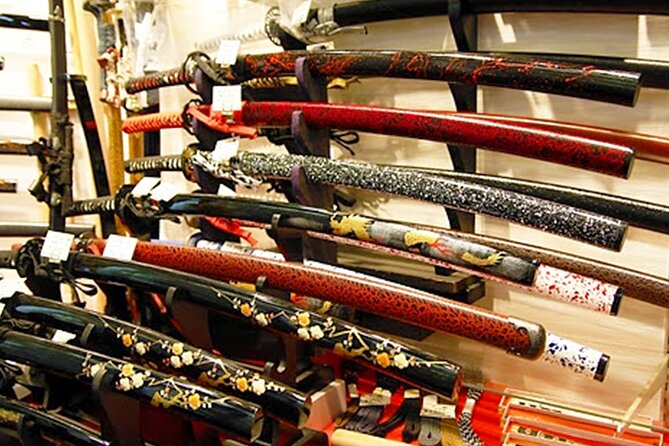
From here, the tour shifts into streets that feel distinctly Asakusa. Hoppy Street is a key segment, and your guide points out storefronts that evoke the Edo period—things like sword stores and kimono shops that are still part of everyday street life.
You’ll also get to observe locals enjoying daytime drinks. That detail matters because it shows how Asakusa functions as a neighborhood, not just a museum district for daytime tourists.
This part of the walk also connects to one of the tour’s standout categories: you may encounter a samurai sword and ninja gear type of shopping along the route, including the more serious sword stores and playful gear shops. Even if you’re not buying, it’s fun to see how the stories of old Japan get translated into modern storefronts.
The Edo-style snack lane: skewers and menchi-katsu
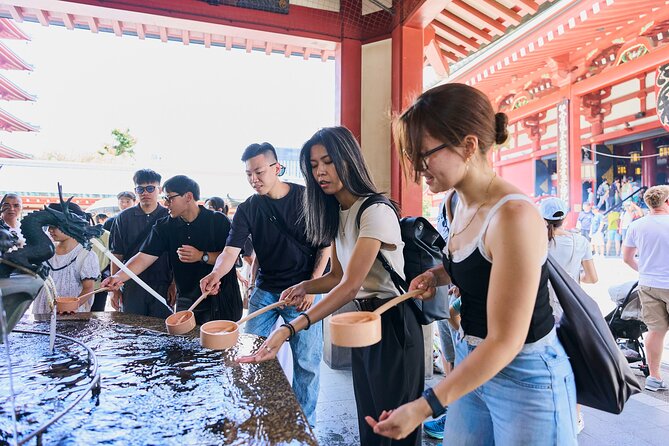
Next comes another lively street styled after old Edo, with retro-feeling storefronts and lots of small food options. The route encourages you to look out for quirky details like vending machines, but the focus stays on practical eating.
Two snacks mentioned as common go-tos here:
- menchi-katsu (fried minced meat cutlets)
- skewers
This section is perfect for travelers who want to eat while walking, but also want someone to guide the order of operations. Instead of spending your mental energy reading every sign, you can follow the guide and fit a few tasty bites into a short time frame.
Finishing at Ozeki Asakusa Kaminarimon Grocery & Supermarket
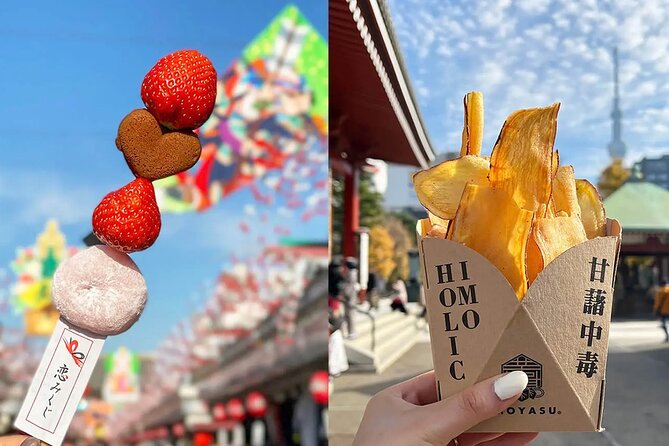
The tour doesn’t end in another souvenir trap. It finishes at Ozeki Asakusa Kaminarimon Grocery & Supermarket, where you can browse everyday Japanese groceries and pick up practical souvenirs.
I love this kind of ending because it’s useful. You get ideas for what locals actually buy. And if you’re traveling with food restrictions or want to avoid only eating snacks you can’t identify, browsing a grocery helps you make smarter choices.
It’s also a fun contrast: you start at a sacred temple, move into shopping streets, and end in a supermarket that feels like real life.
Pro chef knives and traditional sharpening option
If you’re the kind of traveler who likes craftsmanship, there’s an optional add-on: your guide can introduce you to a local knife shop where you may get to see traditional sharpening in action.
Japanese knives are famous for precision and craftsmanship, and the point of this stop is not just looking. It’s understanding how that reputation is tied to everyday tools and trade skills—exactly the kind of thing you’d miss if you only followed the postcard version of Asakusa.
Even if you don’t buy anything, watching the process can be oddly calming. It turns a tourist area into a place where real work is happening.
Price and timing: $19.90 for a small-group temple walk
At $19.90 per person, this tour is priced like a bargain for what you get: a guide, a structured route across multiple highlights, and a small group capped at 15 travelers.
For a 2-hour experience, the key value isn’t that it tries to pack every famous object into your camera roll. It’s that it organizes Asakusa into a route you can actually enjoy without getting lost. Senso-ji and the surrounding streets are huge. A guide turns that sprawl into something you can finish with energy left.
Also, since most admissions at the major stops are listed as free, your money goes toward guidance and experience design, not ticket fees stacking up.
A quick note on how the time feels: it’s not a slow, reflective temple meditation. It’s a well-paced walk with short stops. That’s ideal if you want to see a lot in limited time, especially if you’re pairing this with other Asakusa plans.
Getting the most out of it: what to bring and how to act
To enjoy this type of walk, come ready to do small cultural basics without overthinking them.
Bring:
- comfortable walking shoes (you’ll move through shopping streets)
- a charged phone (you’ll have a mobile ticket)
- cash for snacks and small purchases (you might want extras beyond what you plan)
When you reach Senso-ji:
- be respectful around worship moments
- follow the guide’s cues for rituals like purification
- if you want to draw a fortune, do it calmly and don’t rush others
This is also a good tour for travelers who don’t want to spend time figuring out etiquette. The guide’s job is to make the cultural parts feel doable.
Who should book this Asakusa walking tour
This tour is a strong match if you want:
- a guided introduction to Senso-ji that explains what you’re seeing
- a mix of temple, shopping streets, and everyday Japanese street food
- a short format that fits into a tight Tokyo schedule
- a less chaotic experience than wandering alone through Asakusa’s dense lanes
It’s also good for families and jet-lagged visitors because the route is manageable and the pacing is built around short stops. In the tour world, I’ve seen guides like Keiko, Yui, Josh, Nono, Nanami, Naoto, Naruto, and Aiko praised for being engaging, friendly, and helpful with practical suggestions. That matters because the best part of a short tour is how well the guide reads the group.
Should you book it?
Yes, I’d book it if you’re doing Asakusa for the first time and you want a focused 2-hour route that covers the essentials without turning into a sprint. The Senso-ji rituals, the Nakamise shopping, and the Edo-style street food streets make it feel like more than one landmark.
I’d be a little cautious only if street-food tasting is the one thing you refuse to compromise on. Since the experience includes street food and sweets in its concept, make sure you’re clear with the guide about what tastings are happening during your time slot.
If you want a practical, guide-led way to experience old Tokyo flavor in a small group, this is a smart use of your time.
FAQ
FAQ
How long is the Asakusa & Sensoji walking tour?
The tour runs about 2 hours.
What does it cost per person?
The price is $19.90 per person.
Where do I meet, and when does the tour end?
You meet at Kaminarimon Police Box, 1-chōme-3-1 Asakusa, Taito City, Tokyo 111-0032, Japan. The tour ends back at the meeting point.
Is there any admission cost for the main stops?
The listed admissions for the major temple and shopping stops are free.
Is there street food or sweets included?
The tour highlights local street food with tasting, and it also includes a sweets stop featuring matcha desserts.
How large is the group?
The tour has a maximum of 15 travelers.
Can I cancel for a full refund?
Yes. You can cancel up to 24 hours in advance for a full refund. If you cancel less than 24 hours before the start time, the amount you paid isn’t refunded.