REVIEW · ASAKUSA
Tokyo : Asakusa Food Tour – 12 Dishes & 3 Drinks
Book on Viator →Operated by Local Guide Stars · Bookable on Viator
Tokyo’s food scene makes sense at night.
This Asakusa tour is a focused way to taste the neighborhood’s classics, with a guided route that strings together local izakaya food and sake tasting without the guesswork.
Two things I really like: you get a real set of 12 unique dishes and 3 drinks, including Tokyo street favorites like monjayaki (a savory pancake) and yakisoba, plus comfort-food stops like conbini ice cream. And you also get a human guide who helps you order, pace yourself, and understand what you’re eating—people have especially praised guides such as Nonoka and Ai for being friendly and easy to follow.
One thing to plan for: this is a lot of food and drinks in about 3 hours, and any extras outside what’s included must be paid in cash. Come hungry, but don’t assume you can cover everything with card.
In This Review
- Key points to know before you go
- Why Asakusa at dusk feels easier to enjoy
- Price and pacing: does $89.83 feel fair?
- Rokumonsen Honten: okonomiyaki you watch get made
- Wasake Sake Experience: tasting across styles, not just one bottle
- Taiyaki Sawada: the warm fish-shaped finish
- Hoppy Street stroll: learning the vibe between meals
- Senso-ji at night: a quick look that actually works
- What else is included in the 12 dishes (so you know what to expect)
- Getting the logistics right: how to make the evening smooth
- Who this Asakusa food tour is best for
- Should you book this Asakusa Food Tour?
- FAQ
- What time does the Asakusa Food Tour start?
- How long is the tour?
- What food and drinks are included?
- Is the tour in English?
- Do I need cash during the tour?
- Where do I meet, and where does the tour end?
- Can I cancel for a full refund?
Key points to know before you go
- 12 dishes and 3 drinks in roughly 3 hours, so you’re not hunting menus all night
- English-only tour with a small group size (max 15), which helps questions and timing
- Okonomiyaki at a hands-on spot plus a dessert stop built around taiyaki
- Sake variety tasting with explanations on how sake is made and how to enjoy it
- Hoppy Street and an evening Senso-ji visit, giving you food plus atmosphere
Why Asakusa at dusk feels easier to enjoy
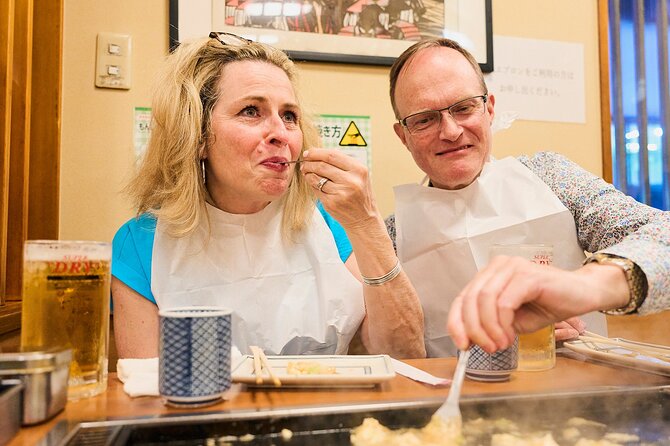
Asakusa is one of Tokyo’s most walkable “old downtown” areas, and doing it at night changes the whole mood. You’re not just looking at sights. You’re moving at a foodie pace, with stops that naturally pull you from one flavor to the next.
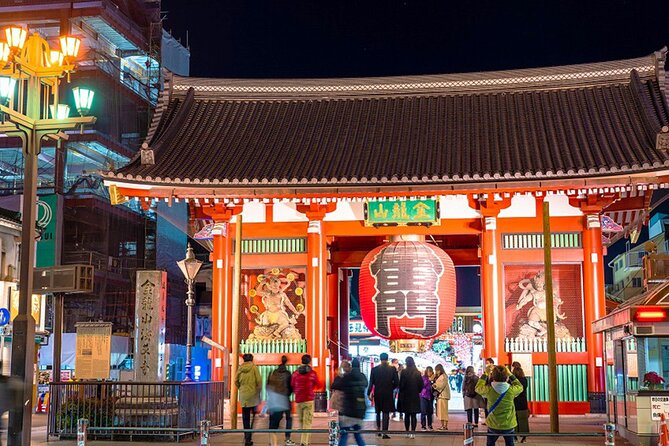
The tour starts at 6:30 pm and keeps you on a tight loop that ends back at the starting point. That matters because Asakusa can feel like a maze if you’re doing it solo after dark. With a set meeting spot near the Kaminarimon Police Box, you’ll get your bearings fast and then spend your energy eating instead of orienting.
Another smart touch: the short stop at Senso-ji is scheduled for nighttime viewing. You get the temple’s illuminated look without needing a whole separate afternoon plan. Many people also find the nighttime timing a lot more manageable than peak daytime crowds.
You can also read our reviews of more tours and experiences in Asakusa.
Price and pacing: does $89.83 feel fair?
At $89.83 per person, this isn’t a bargain-basement snack crawl. But it’s also not overpriced for what you get: 12 dishes plus 3 drinks, spread across about 3 hours.
The value comes from two places:
- You’re buying “momentum.” A guide handles what to order, when to move, and how to fit multiple food types into one outing.
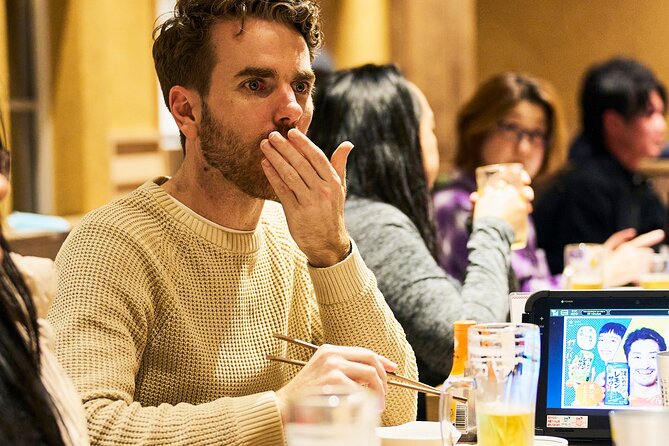
- You’re tasting variety, not just repeating the same item in different forms. The lineup includes Japanese comfort staples (like yakisoba), a downtown-style savory pancake (monjayaki), and a sweet dessert that fits the area.
Also, because it’s a group tour with a fixed schedule, you’re less likely to overpay at tourist traps. You’re more likely to eat where locals go, especially since the experience is built around a local favorite restaurant and a sake bar.
Only keep one caution in mind: this is a heavy-food tour. If you’re the kind of person who prefers light bites, you might feel stuffed before the end. If you’re excited to sample and you like eating with your hands-free—because you’re walking—you’ll likely have a great time.
Rokumonsen Honten: okonomiyaki you watch get made
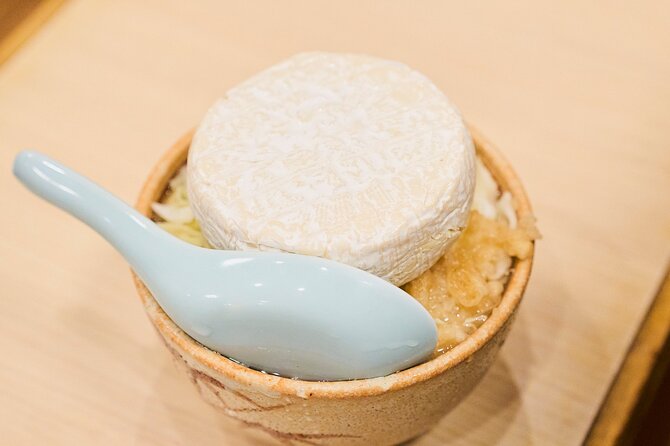
This stop is the anchor. You’re heading to Rokumonsen Honten, where the core idea is simple: you get classic okonomiyaki cooked in front of you.
That “chef at the griddle” moment is part of why food tours work. You’re not eating something you can guess your way through. You’re watching the process, which makes the food land better. You also get a clearer sense of texture—how the batter sets, how toppings behave when heated, and how it ends up as something you can actually recognize and repeat later.
In Asakusa, okonomiyaki fits right into the late-night rhythm. Think savory pancake comfort, the kind of dish you eat when you want something warm and satisfying. One review highlighted a Tokyo-style pancake with Camembert, which is a fun example of how this dish can be more interesting than plain toppings.
What to consider: this is one of the most filling stops. If you have a sensitive stomach or you’re prone to getting full fast, you’ll want to pace your bites and save your energy for the sake and desserts later.
Wasake Sake Experience: tasting across styles, not just one bottle
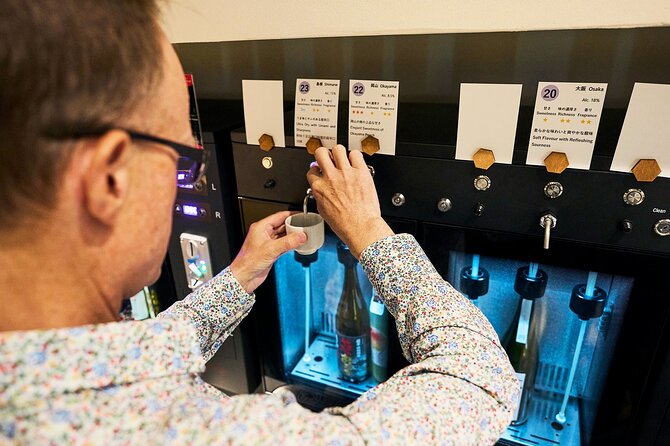
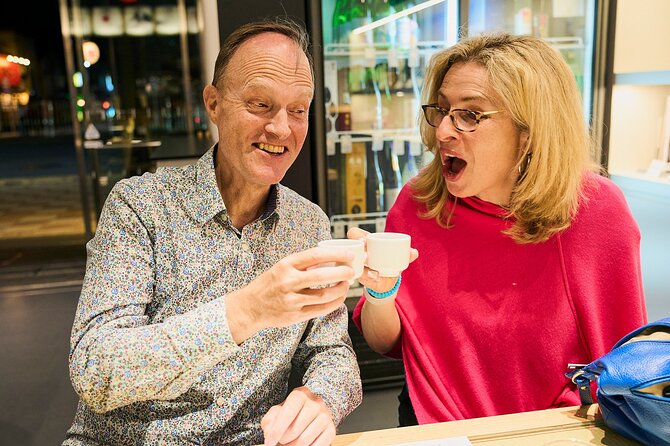
Food is only half the story here. The Wasake Sake Experience focuses on sake, and it’s structured as an introduction plus tasting.
You can expect:
- A chance to try several types of sake, since the selection ranges from crisp and dry to fragrant and sweet
- Explanations about how sake is made
- Tips on how to enjoy sake, including thinking about pairing and flavor direction
This works well for first-timers. If sake has felt intimidating in the past, this format helps you treat it like a set of flavors, not a single drink you either like or don’t like.
Another practical plus: the tour rhythm means you’re not wandering between food and drink. The guide keeps it moving, so you can learn and taste without turning the night into a long, uncertain search for the next place.
One consideration: you should be ready for a few sips. Even if you don’t drink much, you’ll still want to pay attention to what each style tastes like, since that’s part of the point.
Taiyaki Sawada: the warm fish-shaped finish
Next up is dessert, and it’s built around Taiyaki Sawada (Asakusa shop). Taiyaki is a warm, fish-shaped pancake filled with whatever filling you choose.
The best part here is the timing. After savory food and sake, this kind of warm sweet hits like a reset button. And because taiyaki is iconic in Japan, it’s a dessert you’ll recognize right away even if you’ve never had it.
What I like about this stop is the simplicity. No complicated tasting menu required. You’ll get that classic fish-shape experience, and you can focus on the texture contrast: warm outside, filled inside.
Possible drawback: it’s only about 15 minutes at this stop, so if you’re hoping for a long sit-down dessert moment, this isn’t that. It’s more of a quick, satisfying sweet before you head back through the neighborhood.
Hoppy Street stroll: learning the vibe between meals

One highlight you shouldn’t skip is the stroll through Hoppy Street. This area is known for drink-focused energy, and it helps you understand why izakaya culture feels so social in Japan.
Even if you don’t stop for extra orders, walking through the street gives you context. You’ll see how the “snack with a drink” mindset fits the local pace. It also helps you connect the dots between what you’re eating on the tour and what you’d see if you stayed out longer on your own.
The practical value is big: this gives you atmosphere without adding another full meal stop. That means your tour stays near the 3-hour mark and doesn’t turn into a marathon.
Keep in mind: since this is a tour where extras must be paid in cash, you’ll want to have some on hand for anything you feel tempted to buy while you’re walking.
Senso-ji at night: a quick look that actually works
The tour ends with a visit to Senso-ji Temple, with about 10 minutes to enjoy it in the evening light. This is Tokyo’s oldest temple, and seeing it illuminated changes the feel from daytime sightseeing.
I like this kind of short, purposeful stop because it prevents “tour fatigue.” You get the main visual moment and then you’re free to keep your night going with clear next steps. And because the stop is scheduled around nighttime, it often feels calmer than heading there at the busiest hours.
If your day is already full of temples and museums, this 10-minute window can be the right amount. If you’re a serious Senso-ji photographer, you may want to come back later on your own after the tour ends.
What else is included in the 12 dishes (so you know what to expect)
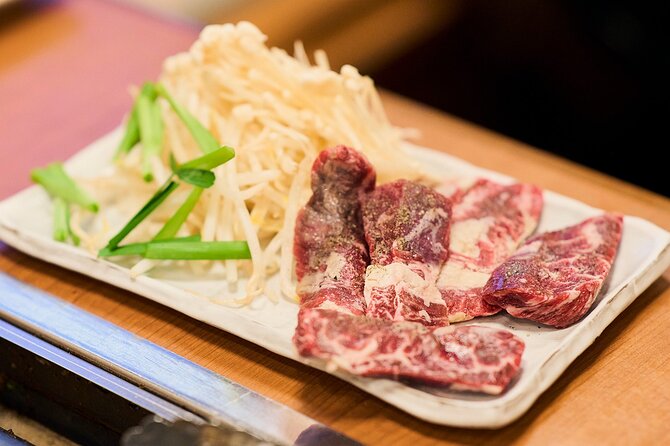
The tour’s headline promise is 12 unique Japanese dishes and 3 drinks. Some items called out include:
- Monjayaki, a savory pancake style tied to old downtown Tokyo
- Yakisoba, Japanese stir-fried noodles
- Conbini ice cream, which is a fun way to cap off the meal with something easy and familiar in Japan
You’ll also be moving between a local-favorite restaurant and a sake-focused stop, so the dish types aren’t all the same category. You’re getting a spread of textures: pancake-style bites, noodle-style comfort, and sweets.
Important note for your appetite: even though it’s “12 dishes,” you’ll still want to think like this is a tasting tour. Portions are likely designed for walking and sampling. Still, with pancakes, noodles, and dessert, you can easily end up feeling full.
Getting the logistics right: how to make the evening smooth
A few small details can make the difference between an easy night and a rushed one.
- Bring cash for extras. Anything outside the included food and drink has to be paid in cash. The tour is also a good chance you’ll want to buy something small while walking.
- Use your mobile ticket. You’ll have a mobile ticket for the experience, which helps at check-in.
- Know the language setup. The tour is conducted in English only, and Japanese language support isn’t available. If you’re comfortable with basic travel English, you’ll do fine.
- Plan your meeting spot. The start is at the Kaminarimon Police Box in Asakusa. The tour ends back at the meeting point, so you don’t have to navigate a separate drop-off.
Group size matters too. With a max of 15 travelers, you’ll still be part of a group, but it’s small enough that the guide can keep things moving without feeling like a crowd-management exercise.
If you need wheelchair access, the tour notes that you should notify them so the reservation can be modified as needed. Don’t wait until the last moment.
Who this Asakusa food tour is best for
This is a great pick if you fit any of these:
- You want a guided introduction to Asakusa food culture without spending your evening decoding menus
- You’re curious about sake, especially if you want a taste of styles rather than committing to one bottle
- You enjoy walking short distances and trying a mix of savory and sweet
- You like meeting other people during travel, since the tour format naturally brings people together
It might be less ideal if:
- You hate “heavy meal” pacing and prefer smaller, slower tastings
- You only want one or two specific items and don’t care about variety
- You need a fully vegetarian or fully allergy-specific outing, since the provided information does not list dietary accommodations. If you have dietary needs, it’s smart to contact the operator before booking.
Should you book this Asakusa Food Tour?
Yes, book it if you want a simple plan for a Tokyo night that centers on real local comfort food and sake tasting. At $89.83, the best part is not the sticker price—it’s the fact that you’re getting a structured tasting route (12 dishes, 3 drinks) in about 3 hours, with stops like Rokumonsen Honten, Wasake Sake Experience, and a classic taiyaki finish.
Skip it only if you’re a light eater, you don’t want to be on your feet for the whole evening, or you’re uncomfortable with the cash-only rule for any extra purchases.
If you’re aiming to experience Asakusa the way locals do—snacks, drinks, and a little temple sparkle—this is a solid, low-stress way to do it.
FAQ
What time does the Asakusa Food Tour start?
It starts at 6:30 pm.
How long is the tour?
The tour lasts about 3 hours.
What food and drinks are included?
The tour includes 12 unique Japanese dishes and 3 drinks.
Is the tour in English?
Yes, the tour is conducted in English only. Japanese language support is not available.
Do I need cash during the tour?
Any extras beyond what’s included must be paid in cash, so it’s a good idea to bring some.
Where do I meet, and where does the tour end?
You meet at the Kaminarimon Police Box in Asakusa, and the tour ends back at the same meeting point.
Can I cancel for a full refund?
You can cancel for a full refund if you cancel at least 24 hours before the experience’s start time.