REVIEW · HANOI
TASTE OF HANOI – walking street food adventure
Book on Viator →Operated by Beyond Vietnam · Bookable on Viator
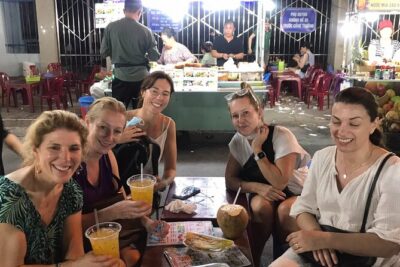
This 3-hour walking street food adventure is built around tasting what locals actually order, not a list of parade-worthy stops. I like that it’s packed with variety, and the guide’s job is to explain the why behind each bite, including neighborhood context and a few useful Vietnamese phrases.
Two things I especially like: you get 7 dishes plus a local drink for one set price, and you’ll be guided through the Old Quarter on foot with a small group size (max 8). One consideration: it’s not recommended for travelers with severe dietary restrictions, so if you have strict needs, you should message ahead before booking.
In This Review
- Key takeaways before you go
- Why this Hanoi street food walk feels different
- Starting at Thai Cam Pagoda: easy meet-up, quick street orientation
- Stop-by-stop Hanoi: from a light starter to Bun chà on Hang Quạt
- Hang Trống: a light, fresh starter to set your pace
- Hang Quạt Street (Street of Fans): Bun chà that hits the meat-and-flavor sweet spot
- Hang Ma to Hàng Lược: Bánh mì and noodle soup on the same walking spine
- Hang Mã Street: Bánh mì near market lanes
- Phố Hàng Lược: comb street and noodle soup comfort
- Dong Xuan Market area: you’ll see the old-school market rhythm
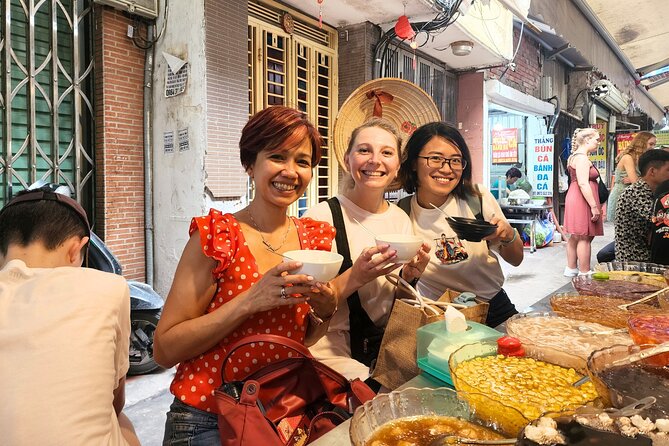
- Thanh Hà and Hàng Chiếu: the traditional dessert arc
- Phố Thanh Hà: a traditional dessert in a small but active street
- Phố Hàng Chiếu: a light final treat for sweet-tooths
- Hoàn Kiếm Lake finish: coffee, conversation, and culture stories
- The value of $35: what you’re paying for besides food
- Who this Hanoi food adventure fits best
- Quick practical tips so you enjoy every stop
- Should you book Taste of Hanoi walking street food?
- FAQ
- How long is the Hanoi walking street food tour?
- What is included in the price?
- What does the $35 per person cover?
- Where does the tour start and end?
- Is there pick-up or drop-off?
- How big is the group?
- Is it suitable for people with dietary restrictions?
- What happens if the weather is poor?
- Is the tour held near public transportation?
Key takeaways before you go
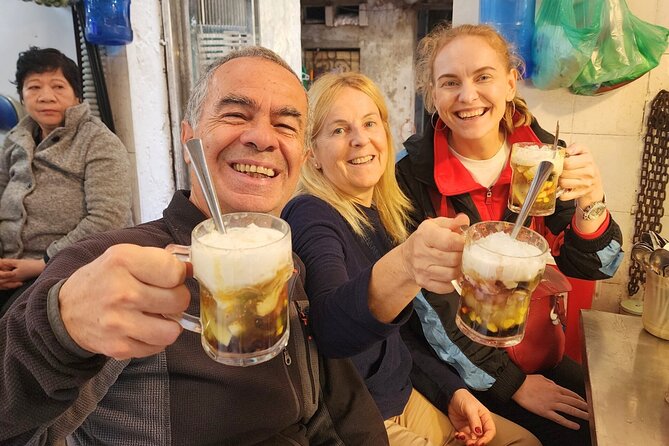
- Small group pacing: up to 8 people, so you can ask questions without feeling rushed.
- 7 tastings, not a single meal: you’ll sample enough to feel full without waiting for one big sit-down.
- Old Quarter, off-the-tourist-path vibe: you’ll pass through classic streets, but the focus is local favorites.
- Story-forward guidance: the guide shares neighborhood history and practical language bits, not just instructions to eat.
- Weather-ready comfort: conical hat on sunny days, raincoat on rainy days.
- Ending at Hoan Kiem Lake: coffee or another drink while you get the final wrap-up stories.
Why this Hanoi street food walk feels different
Hanoi street food can be overwhelming fast. The lanes are busy, the smells are loud, and every vendor seems confident. What makes this tour click is the structure: you don’t just walk into random stalls. You move stop to stop with a guide translating the food culture into something you can taste and understand.
The other big difference is attitude. This isn’t presented as a checklist. It’s framed as a way to experience daily life through food—how the neighborhood shaped what people eat, and how those dishes show up again and again in regular routines.
And yes, you should expect to eat. Seven dishes plus a drink in about three hours is enough to turn your Old Quarter wandering into a full-on food plan. The goal is that you leave with a belly full of familiar comfort flavors, and a few stories you’ll remember longer than any single dish.
You can also read our reviews of more walking tours in Hanoi



Starting at Thai Cam Pagoda: easy meet-up, quick street orientation
You’ll start right by Thai Cam pagoda, at the address listed as Đình – Chùa Thái Cam (16 P. Hàng Gà, Hàng Bồ, Hoàn Kiếm). The meeting point is convenient because it’s in the Old Quarter grid, where you can usually connect via public transport without needing a car.
You also get a small-but-smart first piece of street confidence: the conical hat on sunny days or a raincoat if the weather turns. It sounds like a cute detail, but it matters when you’re walking several lanes. You’re not stuck figuring out what to do with sun or sudden rain.
The itinerary note also helps: walking time is included in the time at each destination. So when a stop says 20 minutes, that’s not just “arrive and eat for 20.” You’re really getting a complete mini-moment at each place.
Stop-by-stop Hanoi: from a light starter to Bun chà on Hang Quạt
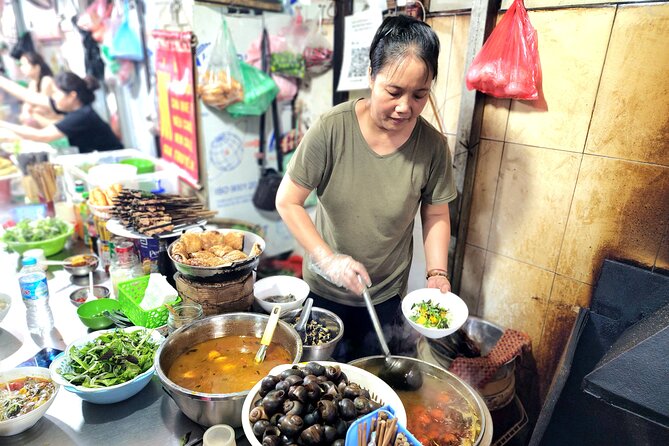
Hang Trống: a light, fresh starter to set your pace
Your first stop on Hang Trống is designed like a good warm-up: a light and fresh starter dish. This is smart because Hanoi street food can run from delicate to heavy pretty quickly. Starting easy helps you enjoy the later hits without feeling sick from overeating too fast.
Even though it’s a quick start, it still sets the tone. You’re learning how the tour thinks—focus on taste first, then the story behind it.
Hang Quạt Street (Street of Fans): Bun chà that hits the meat-and-flavor sweet spot
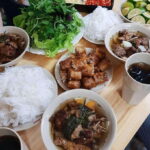
Next you move to Hang Quạt Street, famously tied to fans. It’s a classic Old Quarter lane, and the tour uses it for one main reason: bun chả.
Bun chả is the dish that people travel to Hanoi for. You get that balance of flavors that makes the whole plate feel complete—savory, tangy, and just a little smoky depending on what you’re served. It’s also a great “middle of the tour” anchor, because it gives you something hearty after your lighter opener.
Timing at this stop is longer than the others (about 30 minutes). That usually means more than one taste moment—enough time to eat calmly and hear what your guide wants you to notice.
You can also read our reviews of more food & drink experiences in Hanoi

Hang Ma to Hàng Lược: Bánh mì and noodle soup on the same walking spine
Hang Mã Street: Bánh mì near market lanes
You’ll pass through Hang Mã Street for a bánh mì stop. This lane is known for its busy market feel and shops selling traditional Vietnamese items like lanterns, paper goods, and decorations. The food here matters, but the setting helps you understand why these streets stayed important: commerce, craft, and daily errands all live side by side.
Bánh mì is the perfect counterpoint to bun chả. It’s quicker, snappier, and easier to keep moving with. You’ll get that satisfying crunch and flavor mix without feeling like you need a long pause.
Phố Hàng Lược: comb street and noodle soup comfort
A short walk away is Phố Hàng Lược—the comb street—where the tour introduces one of Hanoi’s go-to comfort foods: noodle soup. The exact style isn’t named in the details, but the intent is clear: this is where the tour shifts from sandwiches and grilled flavors into warm, soothing carbs.
This stop at about 25 minutes gives you enough time to slow down just a bit. It also helps you rebalance if earlier bites landed heavy. Noodle soup is one of the best “reset foods” in Hanoi because you’re not just eating—you’re warming up your whole system.
Dong Xuan Market area: you’ll see the old-school market rhythm
Dong Xuan Market is one of the busiest and oldest markets in the city, and it’s an interesting stop even if you’re not eating there. The details say it offers lots of products, except food. That matters because it changes how you see the Old Quarter: it’s not only about meals. It’s about how people buy what they need, repair what they can, and keep the city running.
The tour positions this as a nearby checkpoint, with about 20 minutes on the clock. You’ll be able to take in the atmosphere and get a sense of what local life looks like right next door to where you’re tasting street food.
If you’re the type who loves context—why a neighborhood has certain streets and goods—this part adds value. If you only want food, you might find it a little less food-focused than the other stops, but it’s still part of the culture picture.
Thanh Hà and Hàng Chiếu: the traditional dessert arc
Phố Thanh Hà: a traditional dessert in a small but active street
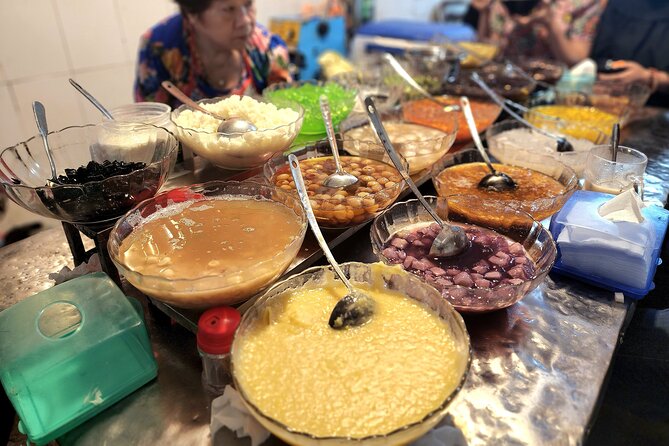
Next is Phố Thanh Hà, a street described as small, with a wide variety of treats. This is where the tour brings in one of Hanoi’s traditional desserts.
Since the specific dessert name isn’t provided in the details, I’ll frame it as what matters most: you’re shifting from savory to sweet at a point when you’re likely hungry again—not starving, but ready for a palate change. Dessert stops like this are a smart design choice. They prevent the tour from turning into one long savory stretch.
Phố Hàng Chiếu: a light final treat for sweet-tooths
After Thanh Hà, there’s another short stop at Phố Hàng Chiếu, about 10 minutes, described as a light treat. The warning is basically: if you have a sweet tooth, this is hard to resist.
A short sweet finale is the right way to end the tasting sequence. You’re not stuck with a heavy dessert that slows you down. You get a last hit of sugar and satisfaction, then you move into the finish.
Hoàn Kiếm Lake finish: coffee, conversation, and culture stories
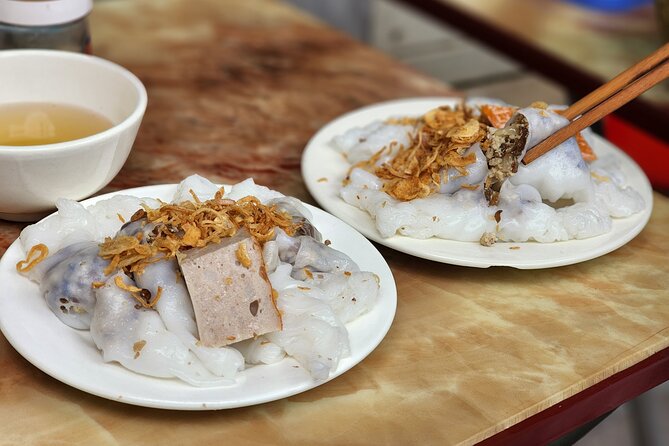
The last stop is Hoàn Kiếm Lake, the Lake of the Restored Sword. This is where the tour shifts gears from eating to reflecting.
You’ll have time for coffee or another drink if coffee isn’t your thing. There’s also room for chatting and more stories about Hanoi—its people and culture. This part is valuable because it turns the tour from food-only into a memory you can explain later to friends.
It’s also a practical win. By the time you reach the lake, you’ve walked enough lanes that your legs want a pause, and the coffee stop gives you a clean landing point before you head back to your hotel.
The value of $35: what you’re paying for besides food
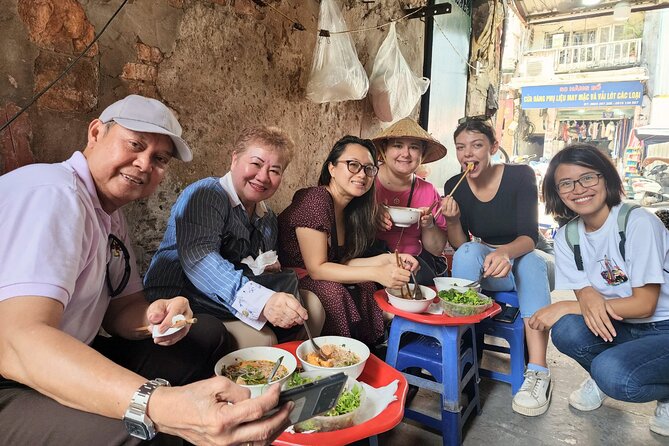
At $35 per person for roughly three hours, what you’re really buying is coordination and interpretation.
You’re getting:
- 7 delicious Hanoi dishes
- a refreshing local drink (coffee, fresh juice, or tea)
- an English-speaking local guide
- conical hat or raincoat depending on weather
- a small group experience (max 8)
That’s not just “food.” It’s timing, routing, and someone helping you choose and understand what you’re eating. Without a guide, you might find great snacks, but you might also miss the best order, the best vendor selection, or the meaning behind the dish styles.
Also, food tours at this price point can often feel like they’re padded with too much walking. Here, the itinerary includes walking time in the stop durations, which helps keep expectations realistic. You’re not guessing whether you’re spending half your time moving and half your time eating.
Who this Hanoi food adventure fits best
This tour is a strong match if you want:
- a walking street food plan with clear stops
- local-flavor focus, with fewer “photo stop” distractions
- a guide who tells stories, plus neighborhood context
- a calm, small-group vibe where questions are welcome
The review highlight about a guide named Linh also points to one more bonus: a focus on learning neighborhood history and picking up a few Vietnamese phrases. Even if you only remember two or three words, it changes how you interact with vendors later.
If you’re traveling solo, this can be a friendly way to break out of hotel-day routine. If you’re with friends, the shared pace makes it feel like a team event, not a race.
If you have severe dietary restrictions, the tour isn’t recommended. But if you just want to avoid a few items and can communicate clearly, you might still find options—especially since there’s feedback praising veggie-friendly choices.
Quick practical tips so you enjoy every stop
- Bring cash for personal extras. Extra food or drink isn’t included.
- Wear comfortable shoes. Old Quarter walking adds up fast.
- Go in with an appetite, not a full meal. The design expects you’ll finish with coffee and stories.
- If you’re vegetarian or avoiding something specific, tell your guide early and clearly. The tour may have options, but it still isn’t built as a strict medical diet experience.
Should you book Taste of Hanoi walking street food?
Book it if you want a guided way to eat your way across Hanoi’s Old Quarter without spending your vacation guessing where to go. The mix of seven tastings, a drink, and a story-focused local guide is exactly how I like food tours to work: you eat, you learn, and you move at a human pace.
Skip it (or ask a lot of questions first) if you have severe dietary restrictions or if you hate walking. This is built around lanes, timing, and regular stops, so comfort and flexibility matter.
If your priority is authentic street flavors, a small-group experience, and real-life neighborhood context, this one is a good fit.
FAQ
How long is the Hanoi walking street food tour?
It runs for about 3 hours.
What is included in the price?
The tour includes 7 dishes, a refreshing local drink (coffee/fresh juice/tea), an English-speaking local guide, and a conical hat on sunny days or a raincoat on rainy days.
What does the $35 per person cover?
It covers the full guided walking adventure with the included tastings and drink. Extra food or drinks are not included.
Where does the tour start and end?
Both the start and end are at Đình – Chùa Thái Cam, 16 P. Hàng Gà, Hàng Bồ, Hoàn Kiếm. The tour ends in front of Thai Cam pagoda.
Is there pick-up or drop-off?
No pick-up & drop-off service is offered.
How big is the group?
The tour has a maximum of 8 travelers.
Is it suitable for people with dietary restrictions?
It is not recommended for travelers with severe dietary restrictions.
What happens if the weather is poor?
The tour requires good weather. If it’s canceled due to poor weather, you’ll be offered a different date or a full refund.
Is the tour held near public transportation?
Yes, the meeting area is near public transportation.