REVIEW · PARIS
Paris: Pastries Food Tour in Le Marais with a Culinary School
Book on Viator →Operated by Maison Fleuret — The Baking School · Bookable on Viator
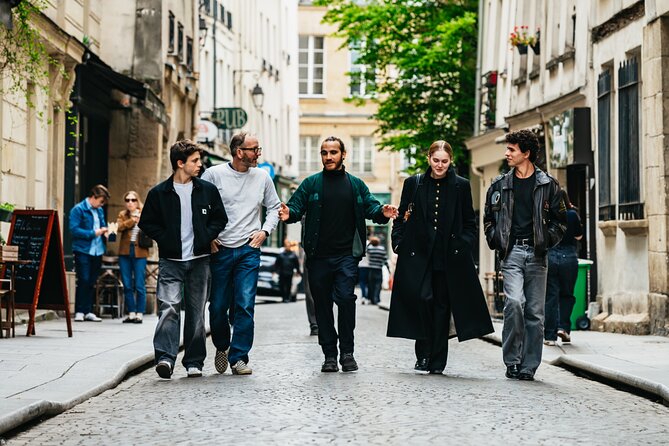
Pastry trails beat most souvenir stops. This 3-hour Le Marais walk mixes six included tastings with chef-level pastry insight, plus landmark stops you’d normally miss. I like that it’s on foot, which makes it easy to pause for photos and actually notice the neighborhood details.
My favorite part is the way the guide connects each bite to place and technique, from classic French doughs to newer twists. One thing to consider: you’ll be eating a lot in a short window, so plan for comfortable walking shoes and don’t schedule anything tight right after.
In This Review
- Key Highlights at a Glance
- Le Marais in About 3 Hours: The Real Value
- Rue de Turbigo Start: A Pain au Chocolat Praliné With a Modern Turn
- Rue Montorgueil: Culinary Artisans, Chef Names, and a Shop With Daily New Creations
- The Classic Twist at the Oldest Spot: Baba au Rhum and a Chocolate Éclair Where It Was Invented
- Le Marais Landmarks Between Bites: Nicolas Flamel, Hidden Passages, and National Archives
- Rue de la Verrerie: French Craft Meets Oriental Flavors
- Before the Jewish Neighborhood: A Local-Favored Secret Pastry Shop
- Eglise Saint-Paul Saint-Louis: Versailles-Era Architecture in Plain Sight
- Place des Vosges Finale: Choose Your Signature Pastry
- Cour et Jardin de l’Hôtel de Sully: The Secret Garden Moment
- What You’ll Learn From Each Bite (And How to Use It the Rest of Your Trip)
- Tour Logistics That Affect Your Comfort
- Price and Value: Is $114.65 Worth It?
- Who This Pastry Tour Fits Best
- Should You Book This Le Marais Pastries Tour?
- FAQ
- How long is the Paris Pastries Food Tour in Le Marais?
- How much does the tour cost?
- Is the tour offered in English?
- How many people are in the group?
- What’s included in the price?
- What are the start and end points?
- Do I need private transportation?
- Can I cancel for a full refund?
Key Highlights at a Glance
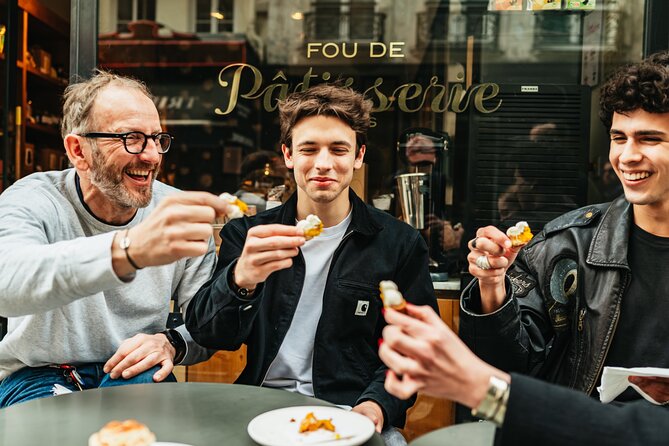
- Six tastings at multiple addresses so you get variety instead of repeat flavors
- On-foot pacing that keeps photos and quick street-side looks easy
- Le Marais pastry connections that usually stay behind professional doors
- Historic stops built into the route like Place des Vosges and Eglise Saint-Paul Saint-Louis
- Personal recommendations at the end so you can keep eating intelligently after the tour
Le Marais in About 3 Hours: The Real Value
This tour runs about 3 hours and keeps the group small, with a maximum of 8 people. That matters because a small group usually means less waiting at counters and more time for questions. You also get a mobile ticket, which is handy in a city where you’ll be in and out of your phone all day.
Now the price: $114.65 may sound like a splurge, until you look at what’s included. All pastries and viennoiseries are part of the deal at six different locations, in generous amounts, plus water. In Paris, that can add up fast if you’re buying treats one-by-one. Here, you’re paying for access and know-how: the tasting plan, the historical context, and the guide’s recommendations for what to hunt for later.
It’s also offered in English, and the reviews point to the big win: you don’t just get desserts. You get the story behind them, plus practical tips on where to go next.
You can also read our reviews of more food & drink experiences in Paris


Rue de Turbigo Start: A Pain au Chocolat Praliné With a Modern Turn
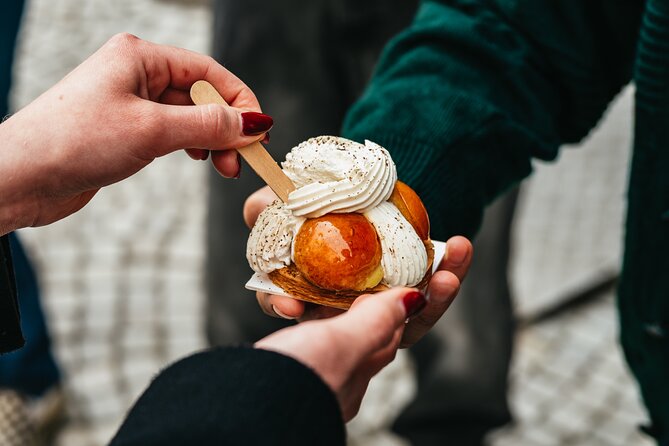
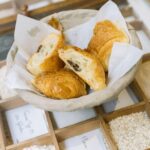
You begin at 18 R. de Turbigo in the 2nd arrondissement, right in the pastry-and-market zone. The first taste is a pain au chocolat praliné, but not the plain-vanilla version. This one is described as a modern twist to the classic, with caramelized hazelnuts folded into the chocolate profile.
Why this start works: it sets your palate fast. Pain au chocolat is familiar, so you can notice the changes. Then praliné adds a nutty sweetness that helps you read the rest of the tour’s flavors.
Practical note: if you show up hungry, you’ll be in a great place. If you show up overly full, you might feel like you’re fighting a sugar marathon.
Rue Montorgueil: Culinary Artisans, Chef Names, and a Shop With Daily New Creations
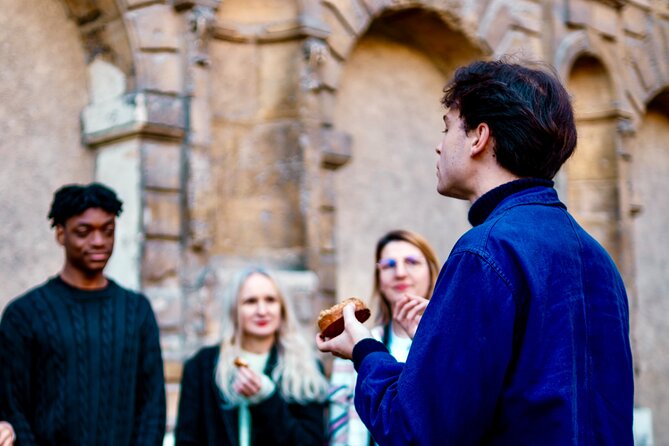
Next you move into Rue Montorgueil, one of those Paris streets where food culture is basically the main language. Here, you taste pastries at an innovative pastry shop where new creations arrive daily from top pastry chefs.
You’ll get a lineup of recognizable names tied to current pastry trends, including Nina Métayer, Nicolas Guercio, and Pierre Chirac. Even if you don’t track French pastry celebrity culture, the chef connections matter because they signal technique. Expect modern textures and flavor combos that feel intentional, not random.
What I like about this stop is the mix of history and present-day craft. Rue Montorgueil is known as a hub for culinary artisans, so you’re not just eating in a vacuum. You’re tasting while you walk through the kind of street where serious pastry shops want to be seen.
The Classic Twist at the Oldest Spot: Baba au Rhum and a Chocolate Éclair Where It Was Invented
A few minutes away, the tour hits a standout: baba au rhum in the place where it was invented over 300 years ago. You’re also tasting a chocolate éclair, and you’ll learn why this stop feels historic in a hands-on way.
Here’s the context you should enjoy while you eat: this is described as Paris’s oldest pastry shop, founded in 1730 by the official pastry chef of Louis XV. So you’re not just ordering a dessert. You’re eating in the long shadow of the people who built French pastry as a craft.
And don’t miss the interior details. The shop’s interiors are credited to Paul Baudry, the artist linked to the frescoes of the Opéra Garnier. That’s one of those Paris connections that makes the city feel smaller and more connected.
Possible drawback: this area can feel like a magnet for sweets. If you’re sensitive to alcohol notes, the baba au rhum may be a bit more intense than the other tastings. Taste it as a single experience, then clear your palate with water and a slow pace.
Le Marais Landmarks Between Bites: Nicolas Flamel, Hidden Passages, and National Archives
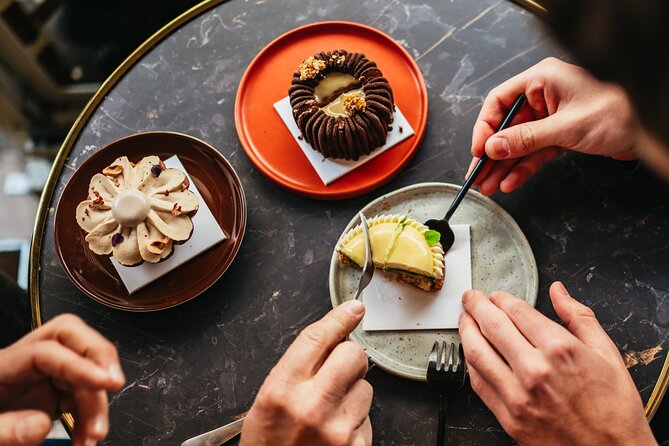
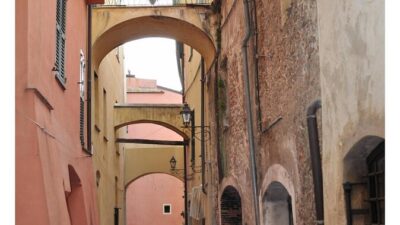
This part turns the tour from purely edible to properly atmospheric. You’ll pass the famous Maison de Nicolas Flamel, then explore charming hidden passages. That word matters: these aren’t just scenic alleyways. They’re part of what makes Le Marais feel like a maze you can enjoy.
You’ll also admire the impressive National Archives building, described as 17th-century. Even if you don’t go inside (the tour here focuses on walking and brief landmark moments), the exterior is a reminder that Le Marais is not only about trend and taste. It has administrative gravity too.
Why this stop is worth it: it breaks up the sugar load with real-world context. After a couple pastry tastings, your brain needs a change of scenery. These sight moments keep the tour from feeling like you’re just moving from shop to shop without any sense of place.
A few more Paris tours and experiences worth a look




Rue de la Verrerie: French Craft Meets Oriental Flavors
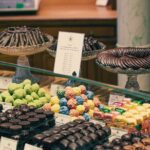
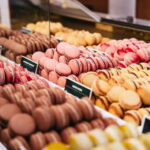
Now you get a tasting described as pastries blending oriental flavors with French craftsmanship. Le Marais has long been shaped by different cultures and migration patterns, and this stop is a food-language example of that mix.
You’ll want to pay attention to how flavors are built. When French pastry plays with non-French flavor profiles, the result can be either clumsy or brilliant. The tour frames this as a balanced fusion, so treat it like a study session: notice the sweetness level, the spice or aroma cues, and how the pastry base supports the flavor rather than hiding it.
Before the Jewish Neighborhood: A Local-Favored Secret Pastry Shop
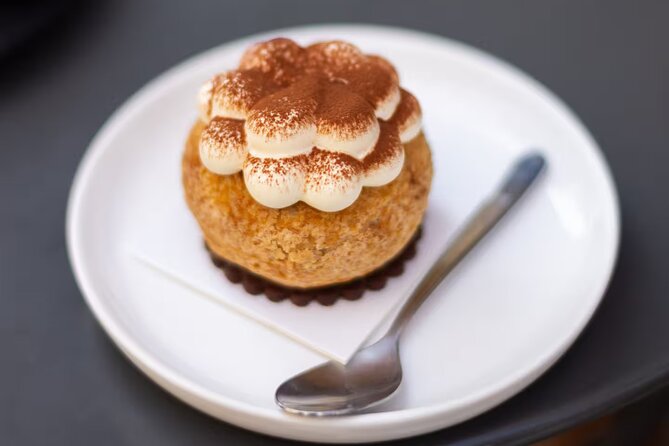
Right before you enter the Jewish neighborhood area, you stop at what’s described as a last hidden gem pastry shop. Locals are said to know it for an extraordinary balance of flavors, impeccable technique, and a dedication to seasonal ingredients.
That combo is the real lesson here. A lot of pastry shops can do something sweet. Fewer can do something sweet that still feels clean, precise, and seasonal. If you’ve ever tried a French pastry that tastes like it was thrown together for a marketing photo, this is the opposite energy: technique first, gimmicks last.
One tip for you: when you taste something like this, don’t just focus on what’s delicious. Try to identify what’s subtle. Seasonal pastry often has a flavor note that only shows up once you slow down.
Eglise Saint-Paul Saint-Louis: Versailles-Era Architecture in Plain Sight
The tour doesn’t end with food. You also get a church stop: Eglise Saint-Paul Saint-Louis, described as a 17th-century church built by Jules Hardouin-Mansart, the architect behind the Palace of Versailles.
This is a smart move in a pastry tour because it gives your body a break and your eyes a change of focus. Also, it helps connect Paris landmarks that often feel separate in your head. Versailles, the Opéra, major Paris architecture, and Le Marais pastry culture start feeling like one network.
Even if churches aren’t your thing, the architectural connection is interesting: it’s a reminder that the people funding and shaping art and design weren’t limited to palaces and opera houses. They show up in everyday neighborhoods too.
Place des Vosges Finale: Choose Your Signature Pastry
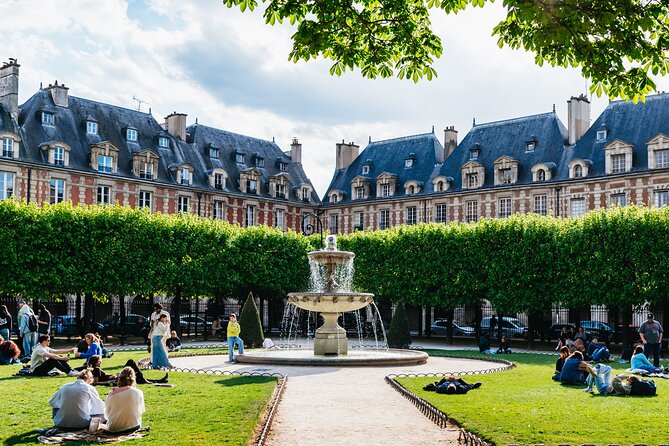
You close at Place des Vosges, one of the most photogenic squares in Paris. But it’s not a walk-by moment. You finish at a favorite bakery in town for a final tasting where you can choose a signature pastry like:
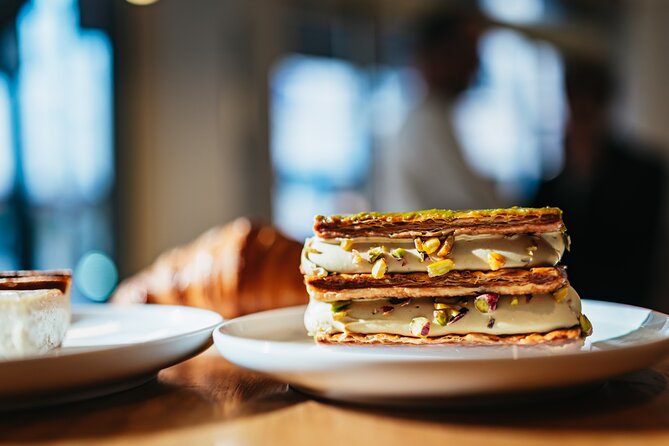
- pistachio millefeuille
- a slice of flan
- tiramisu turned into an entremets
This is the part where you can match your last bite to your mood. If you want something structured and creamy, pick millefeuille. If you want comfort and custard, flan. If you want coffee-chocolate notes, go tiramisu-style.
What I like here is the pacing: you’ve sampled classic, modern, historic, and fusion flavors by now. Your last choice feels like a reward instead of another random bite.
Cour et Jardin de l’Hôtel de Sully: The Secret Garden Moment
One more stop adds that Le Marais magic feeling: the Cour et jardin de l’Hotel de Sully. You’re led through a hidden garden tucked behind a 17th-century private mansion, and you’ll move through a secret passage that ends you near Place des Vosges.
Why this matters for you: it turns the ending into a memory you’ll keep. Food tours can blur together. A tucked-away courtyard does not.
Also, it’s a great cap to the walking route, because it’s calm. After three hours of eating and street noise, you get a reset spot.
What You’ll Learn From Each Bite (And How to Use It the Rest of Your Trip)
The big praised aspect of this tour is that you don’t leave with just a sugar buzz. You leave with context: history about Le Marais pastry culture, and practical guidance for what to try next.
Here’s how I suggest you use that when you’re still in Paris:
- If you loved the modern twist aspect, look for shops that explain fillings and texture, not just flavor.
- If you liked the historic stops (like the oldest pastry shop story), aim for older addresses and established names when you’re hunting a classic.
- If you enjoyed the fusion angle, don’t only chase the most famous pâtisseries. Also watch for places that mention ingredients and seasonal changes.
You’ll also likely get personalized recommendations to keep the pastry plan going. That’s the real endgame. The best tours don’t just fill your stomach. They help you navigate the city like a person who knows what they’re doing.
Tour Logistics That Affect Your Comfort
This is a walking tour, so comfort matters more than you might think. You’ll spend about 3 hours on your feet in central Paris, hitting multiple streets and landmarks. Bring shoes you can walk in without thinking about it.
Group size is capped at 8, which helps keep the route moving. Tastings are included and provided in generous amounts, so you won’t feel like you’re doing a single tiny sample-and-run. Still, plan for the fact that multiple pastries across six locations means you should pace yourself during tasting stops.
Transportation is not included, but the tour doesn’t require it. You’re meant to move on foot between stops, using the area’s public transit if needed to reach the start.
Price and Value: Is $114.65 Worth It?
For me, the question isn’t only whether the tour is expensive. Paris is expensive. The question is what you’re buying.
You’re paying for:
- Six tasting locations with pastries and viennoiseries included
- A local guide with historical insights tied to what you’re eating
- Built-in landmark stops in Le Marais (not just shop windows)
- Water included
If you were to buy similar amounts of pastry across multiple top shops in one afternoon, you’d likely spend a comparable amount without the guide’s context. Also, without a plan, you’d risk repeating similar flavors. This tour forces variety, and that makes your overall trip tastier per euro.
Given the 4.9 rating and the strong recommendation rate, this is one of those purchases that tends to land well when you follow its basic rules: come hungry-ish, walk comfortably, and don’t overbook yourself.
Who This Pastry Tour Fits Best
This tour is a great match if you:
- want Le Marais food culture with a clear tasting plan
- like historical connections that go beyond street names
- enjoy learning technique and ingredient logic, not just eating sugar
- want a small-group experience in a busy central area
It may be less ideal if you:
- need a completely quiet pace (the route is active and on foot)
- don’t handle strong flavors well, especially alcohol-forward desserts like baba au rhum
- hate the idea of eating several pastries back-to-back
Should You Book This Le Marais Pastries Tour?
If you’re serious about pastry and you want your Le Marais day to feel guided instead of random, I think this is worth booking. The combo of chef-level pastry stops, landmark walking, and personalized follow-up recommendations is the sweet spot.
One extra thing to consider: it’s often booked ahead (on average, about 61 days). If you’re traveling in a popular season or you have a tight schedule, book earlier so you don’t end up choosing a less convenient time.
FAQ
How long is the Paris Pastries Food Tour in Le Marais?
It runs for about 3 hours.
How much does the tour cost?
The price is $114.65 per person.
Is the tour offered in English?
Yes, it is offered in English.
How many people are in the group?
The tour has a maximum of 8 travelers.
What’s included in the price?
You get tastings of pastries and viennoiseries from six different locations, an expert local guide, historical insights, water, and all pastries are included.
What are the start and end points?
The tour starts at 18 R. de Turbigo, 75002 Paris and ends at 6 Rue du Pas de la Mule, 75003 Paris near Place des Vosges.
Do I need private transportation?
No. Private transportation is not included, but the tour is designed for exploring on foot.
Can I cancel for a full refund?
Yes, you can cancel for a full refund up to 24 hours in advance. If you cancel less than 24 hours before, the amount paid is not refunded.
If you want, tell me your travel dates and whether you prefer classics or modern pastry styles, and I’ll suggest a smart plan for what to eat before and after this tour so you don’t run out of room.