REVIEW · ALICANTE
Paella & Sangria Class with Tapas and Market Visit
Book on Viator →Operated by Free Walking Tours Alicante · Bookable on Viator
Paella and sangria, the Alicante way. This 3.5-hour class pairs a walk through Mercado Central with hands-on cooking in a real working kitchen, led by Federico (often called Fred). I love that you choose the paella style (seafood, meat, or vegetarian), and I also love how much you’re doing yourself—from ingredient picking to building the flavors for the rice. One thing to consider: if you’re expecting huge “ocean-sized” shrimp or a more wine-forward sangria, the local ingredient approach and traditional sangria recipe may feel different.
The payoff is simple: you shop, cook, and sit down together to eat what you made, in small groups that keep the pace friendly. Reviews land high here (4.8 overall, 95% recommend), and the small group limit matters because it makes it easier to ask questions and actually get hands-on.
In This Review
- Key things you’ll notice fast
- Mercado Central: where your paella starts (and your questions get answered)
- From the market to a local restaurant kitchen
- The paella process: rice is the star, not the pile of stuff
- Choosing your paella type
- What you’ll actually learn while cooking
- Sangria you make: how traditional mixes taste (and why)
- Tapas + side dishes: more than just a “snack”
- If you’re picky or have preferences
- Timing and pacing: what 3 hours 30 feels like in real life
- Value check: why $59.26 can make sense (or not)
- Who this suits best (and who should think twice)
- Practical tips to get the most out of the class
- So, should you book this Alicante paella and sangria class?
- FAQ
- FAQ
- What’s the meeting point for the paella and sangria class?
- How long is the experience?
- Is the class offered in English?
- How many people are in the group?
- Can I choose between seafood, meat, or vegetarian paella?
- Does the experience include sangria and is there an age limit?
- What’s the main first stop on the itinerary?
- What happens if the experience is canceled due to not enough travelers?
- Is free cancellation available?
Key things you’ll notice fast
- Mercado Central shopping with real talk about ingredients, like olives and Iberian ham
- A working kitchen, not a show kitchen, where locals actually eat
- Pick your paella style: seafood, meat, or vegetarian
- Rice-focused flavor building, including the sofrito/salmorreta base and stock
- Sangria you make yourself, using a traditional mix that includes orange juice and soda
- Small group energy, often around 7–8, with a max of 16
Mercado Central: where your paella starts (and your questions get answered)
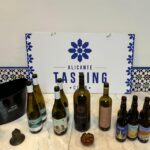
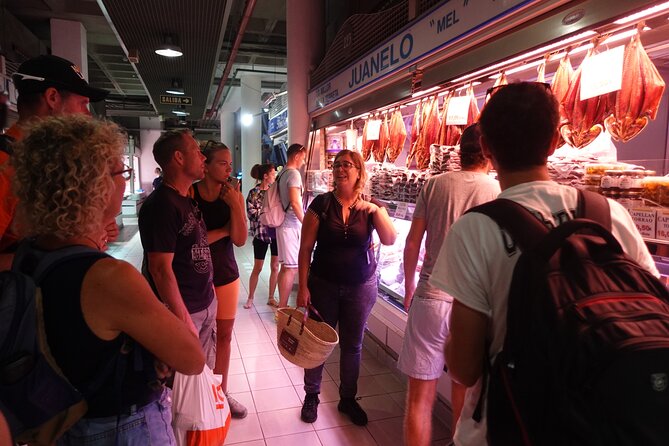
The experience kicks off at Plaza 25 de Mayo, then you head to Alicante’s Mercado Central d’Alacant. This is the part you can’t fake. You’re not just looking at food; you’re learning how local cooks think about it. The guide talks through what makes ingredients worth buying: olives, hams, different cuts and cured meats, and the seafood choices that shape the final dish.
In the market, I’d focus on asking two types of questions:
- What’s best to buy today for paella flavor?
- What’s local here, not just imported and generic?
You’ll also get a sense of how the market supports Alicante’s food culture—especially when your guide points out how certain products connect to the region’s tastes. One highlight in the comments: people came away knowing more than just how to cook rice. They learned how to pick and handle key pieces of the meal.
And yes, the market visit is fun on its own. Browsing stalls with an instructor beside you changes the whole feel. You notice details you’d otherwise miss, like what kind of cured meats are typical, and how olives are used beyond “tossed on a plate.”
You can also read our reviews of more shopping tours in Alicante
From the market to a local restaurant kitchen
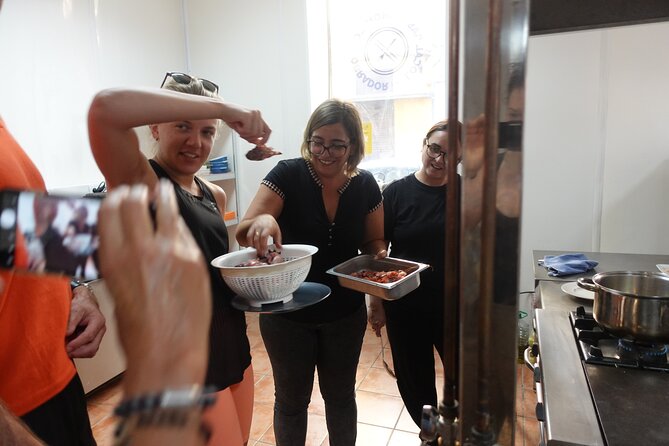
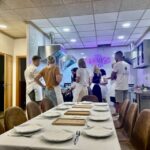
After shopping, you walk to a real restaurant kitchen. This matters. A lot of cooking classes turn into set-piece theater. This one stays grounded: you’re cooking in a place where meals are actually prepared and served.
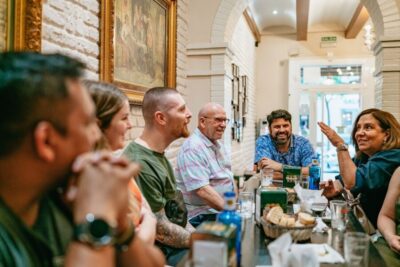
Small-group size helps here. The max is 16 travelers, and many classes run smaller (some groups have been as small as 7). That usually means:
- You rotate through tasks without waiting forever
- The chef and hosts can actually guide you
- You’ll feel included rather than parked at the edge with a camera
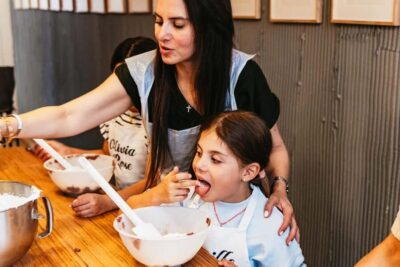
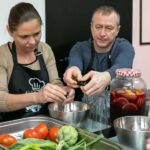
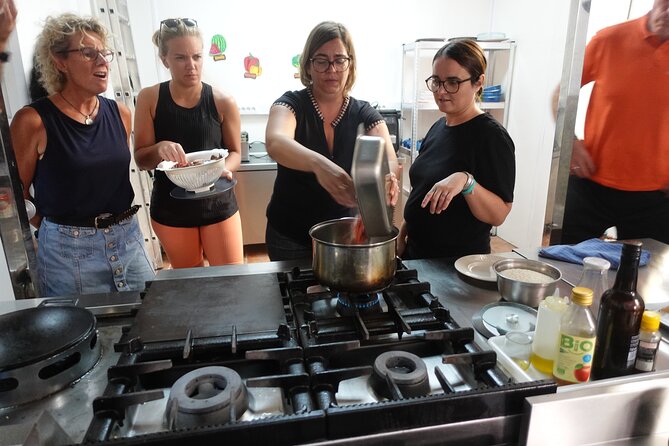
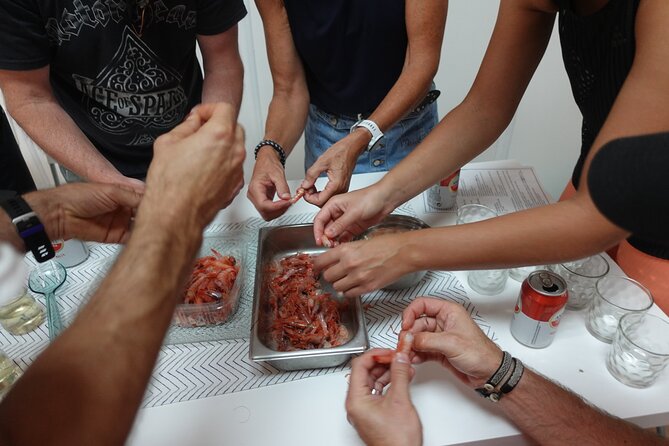
In the kitchen, you’ll do prep steps before the main cooking. Depending on the group and timing, you might chop, prepare parts of the meal, help balance the sangria mix, or prep seafood/fish components. You don’t need knife skills. You just need a willingness to do a small task and pay attention.
One nice touch: guides are good at switching between English and Spanish when needed, so even if the group has mixed language comfort, the class keeps moving.
The paella process: rice is the star, not the pile of stuff
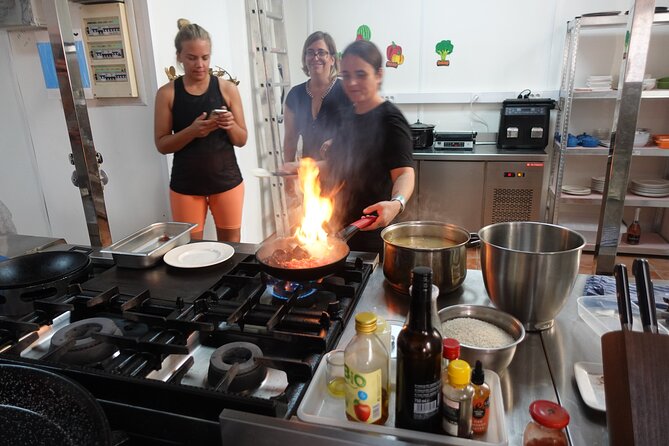
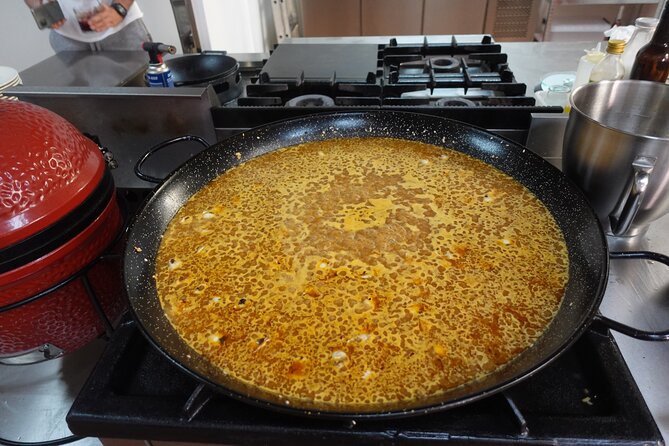
Here’s the biggest concept this class teaches: paella flavor comes from the stock and the rice, not from stuffing the pan with random chunks.
You’ll hear this clearly during the cooking steps. The guide builds the flavor foundation using the sofrito base (often described as salmorreta) and a broth made with the ingredients you prepped. This is also why the class spends time in the market. Your choices there affect the stock.
Choosing your paella type
You pick one style:
- Seafood paella
- Meat paella
- Vegetarian paella
That choice keeps the class feeling flexible. You get to cook what fits your taste, instead of forcing everyone into one template. It also shapes which ingredients you handle during prep and how the dish is flavored.
What you’ll actually learn while cooking
The core steps you’re guided through typically include:
- Making the base (including salmorreta/sofrito)
- Preparing broth/stock that carries flavor into the rice
- Cooking while adjusting for balance (so the rice turns out right)
And you’ll get an explanation of why “more toppings” isn’t the goal. The class aims for the paella style you’d recognize in Alicante: flavors built through technique and ingredients, rather than an international mash-up.
A realistic note on seafood expectations
One negative review complained about small shrimp size. The response from the provider clarifies their approach: local bay shrimp sizes can be smaller than big “ocean shrimp,” but they prioritize freshness and quality. If you’re the type who only likes giant shrimp, you should know this could clash with your expectations. The dish is still designed to be authentic to the region’s ingredient reality.


Sangria you make: how traditional mixes taste (and why)
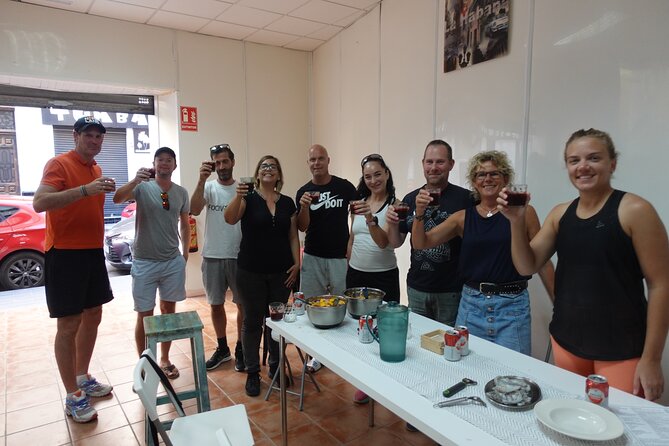
While the paella is cooking, you move into tapap-style bites and sangria prep. You’ll create your own sangria, and you’ll get the reasoning behind the recipe.
The traditional approach described is not just wine plus fruit. It includes:
- orange juice
- soda (to give lift and cut)
- and additional components like fruit, syrup, and liquor
So if you expect a more wine-forward drink, or you dislike the idea of mixing soda into sangria, this may not match your personal preference. That said, this style is part of what makes sangria feel like a Spanish table drink rather than a wine substitute.
Tapas + side dishes: more than just a “snack”
Paella is the main event, but the meal around it is where the Alicante flavor lands. You can expect multiple components, not just one entrée and a drink.
From the details provided, your class meal can include:
- tapas made during the workshop (often alongside sangria prep)
- a tomato salad with salted fish
- cured ham (Iberian ham is specifically mentioned)
- sausage from the mountains (mentioned as a cold offering)
- olives
- crisps
- fresh fruit to finish
One reviewer even called out that they learned about different ham and brine flavors in olives, and how these pair with what you’re cooking. That’s useful because it gives you a mental map of how Spanish meals move: salt, fat, acidity, and contrast—then rice ties it together.
If you’re picky or have preferences
You can choose your paella style, which helps. But the data doesn’t say the class offers broad dietary substitutions beyond that paella choice. If you have a serious allergy, you’ll want to double-check in advance with the provider since ingredients are tied to what you shop for in the market.
Timing and pacing: what 3 hours 30 feels like in real life
This class runs about 3 hours 30 minutes. The structure is pretty clear:
1) Market visit and ingredient selection
2) Walk to the kitchen and prep
3) Cook the paella while tapas and sangria are part of the rhythm
4) Sit down and eat
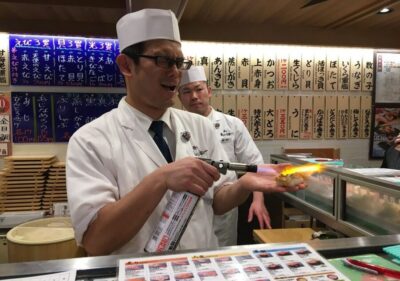
The pacing works because each block has a job. In a good class, you don’t spend too long watching. Here, the goal is participation: you’ll help with prep and take turns with cooking tasks. Some classes also include hands-on steps like using a blow torch for fish, which shows how practical the setup can be.
In a group of 7–8, it tends to feel smoother and more personal. In a group closer to the max of 16, you’ll still participate, but you might wait your turn more often. Either way, you’ll end up eating what you made, and that’s a huge part of why the experience feels worth it.
Value check: why $59.26 can make sense (or not)
Let’s talk money honestly.
At about $59.26 per person for roughly 3.5 hours, you’re paying for:
- market guiding
- guided cooking instruction
- a professional chef and host support
- ingredients used for paella, sangria, and the meal sides
You’re also paying for the fact that this is in a restaurant kitchen and a real market environment, not a generic demo space. Many people leave thinking the value was strong because they didn’t just eat; they learned and helped create.
That said, value is personal. If your main goal is to try paella without any interest in cooking steps, you might question the cost. If your main goal is a hands-on culinary day with market context, it lines up nicely.
The class also reports that groups often book about 19 days in advance, which usually means people are buying it because they want the market + cooking combo, not because it’s a random add-on.
Who this suits best (and who should think twice)
This is a great fit if you:
- want to understand paella as a technique, not just a dish
- like learning through shopping at a real market
- enjoy small group interactions and cooking tasks
- want to choose between seafood, meat, or vegetarian paella
It might be less satisfying if you:
- dislike sangria mixes that include orange juice and soda
- expect jumbo seafood regardless of what’s locally available
- prefer an ultra-flexible menu for allergies or strict diets (the class is built around market ingredients)
Also, the alcohol part matters. There’s a minimum age requirement of 18 for alcohol consumption, so plan accordingly if you’re traveling with younger people.
Practical tips to get the most out of the class
A few things will make your time smoother:
- Wear comfortable shoes. You’ll walk between the market and kitchen.
- Arrive a few minutes early. Meeting is at Plaza 25 de Mayo near public transportation, but timing helps.
- Go in curious, not picky. Paella flavor is rice-and-stock driven, so ask why the guide makes certain choices.
- Pick the paella style you’ll truly eat. The class choice affects what you prep and what you cook.
- Ask about ingredient “quality vs size.” If seafood size is your priority, it’s better to align expectations early.
One more tip: when your guide mentions specifics like olive brines, ham types, or how salmorreta builds the base, write down the ideas mentally. Those are the details that make you feel like you learned something real—not just how to follow steps.
So, should you book this Alicante paella and sangria class?
If you want a food experience that feels tied to place—market to kitchen to table—this is a strong choice. The small-group limit, the choice of paella style, and the repeated emphasis on stock-driven rice make it more educational than a typical cooking show. Add in the market experience and the chance to eat cured meats, salad, tapas, and the sangria you mix, and you get a full Alicante meal with context.
I’d especially recommend it if you’re the type who likes eating and learning how the food is built. If your expectations are strictly about giant seafood portions or you only like sangria that tastes like undiluted wine, keep those preferences in mind before you book.
FAQ
FAQ
What’s the meeting point for the paella and sangria class?
The tour starts at Plaza 25 de Mayo, Pl. 25 de Mayo, 03004 Alicante (Alacant), Spain. It ends back at the same meeting point.
How long is the experience?
It runs about 3 hours 30 minutes.
Is the class offered in English?
Yes, it’s offered in English.
How many people are in the group?
The experience has a maximum of 16 travelers.
Can I choose between seafood, meat, or vegetarian paella?
Yes. You can choose your paella style: seafood, meat, or vegetarian.
Does the experience include sangria and is there an age limit?
Yes, sangria is part of the class. Alcohol consumption has a minimum age requirement of 18.
What’s the main first stop on the itinerary?
You begin at Mercado Central d’Alacant, where your guide leads you through the market and you select ingredients for your meal.
What happens if the experience is canceled due to not enough travelers?
If it’s canceled because the minimum number of travelers isn’t met, you’ll be offered a different date/experience or a full refund.
Is free cancellation available?
Yes. You can cancel for a full refund up to 24 hours in advance of the start time.