REVIEW · HUE
Hue Food Tour by Walking or Cyclo or Motorbike with Driver
Book on Viator →Operated by Adventure Journey · Bookable on Viator
Hue snacks taste better at street level. This 3–4 hour tour strings together Dong Ba Market, the Citadel area, and the riverfront, using scooter, cyclo, or walking so you can see how Hue eats every night. You also get dish context, not just a list of what’s on the table.
What I love most is the way the tour starts at a real food engine. Dong Ba Market is where the ingredients and rhythm of the city show up, and that early stop sets you up to understand why certain flavors belong to Hue.
The second big win is the guide. Guides like Phuong or Nhi show up with strong English and a sense of humor, and that matters when you’re choosing between similar-looking plates. One thing to consider: if you ride a scooter or cyclo, you’ll be on the move for much of the evening, and some guests note the food portions can feel like a lot.
In This Review
- Key things to know before you go
- Hue street food, but with real city routing
- Dong Ba Market at 17:30: where ingredients start the story
- Citadel area food stops: royal context without the snooze
- Over Truong Tien Bridge: banh khoai and nem lụi moments
- Along the Perfume River branch: Han Mac Tu Street specialties
- Price and value: what $35 actually buys you
- Scooter and cyclo option: comfortable riding, but go in smart
- Guide matters more than you think
- What the food flow feels like (and why it can be a lot)
- Practical tips for a smoother evening
- Should you book the Hue Food Tour?
- FAQ
- How long is the Hue Food Tour?
- What does the Hue Food Tour cost?
- Where does the tour start?
- Is pickup available?
- What transport options do I have?
- What’s included in the tour price?
- What isn’t included?
- Is it private?
- What is the cancellation policy?
Key things to know before you go
- Multiple ways to travel: scooter/motorbike with driver, cyclo, or walking
- Dong Ba Market first: admission included, plus a hands-on feel for local ingredients
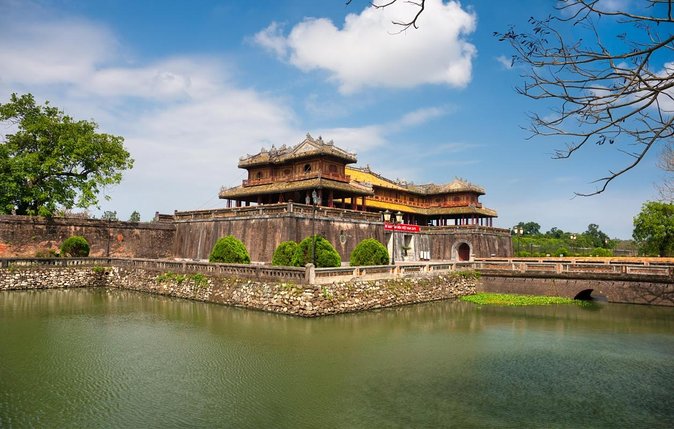
- Citadel area stop: admission free, with cultural context around royal-era Hue
- River-and-bridge route: you’ll cover short walking stretches plus scenic viewpoints
- Hue-specific dishes: banh khoai, nem lụi, cơm hế, and more local favorites
- Private group experience: only your group participates, with an English-speaking guide
Hue street food, but with real city routing
Hue food isn’t meant to be treated like a museum. It’s loud, casual, and intensely local. This tour is designed for that reality: you taste while you move through the places locals actually use—markets, neighborhood eateries, and river-area streets—so the food feels like part of the city, not something staged for tourists.
One of the smart parts is the flexibility in transport. If you want zero effort, you can go by motorbike or cyclo with a driver. If you’d rather slow down and chat more, walking is an option too. Either way, you’re on a route that avoids long detours, so you get back-to-back bites instead of long gaps.
I also like the timing. The tour runs in the late afternoon into the evening (starting at 17:30), when stalls are fully awake and dinner energy starts building. That’s when you’ll get the best sense of what people really eat after work or school.
You can also read our reviews of more walking tours in Hue
Dong Ba Market at 17:30: where ingredients start the story
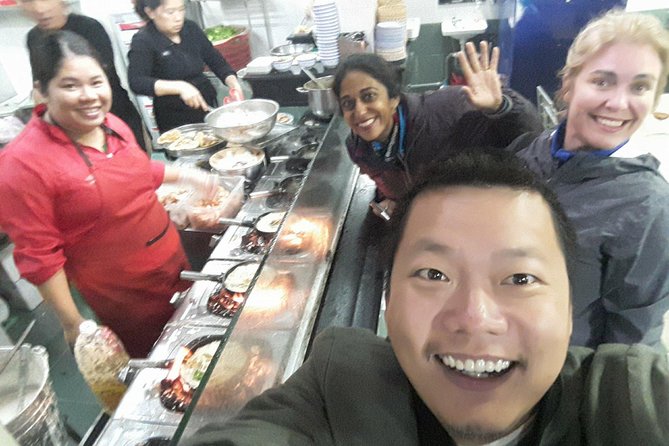
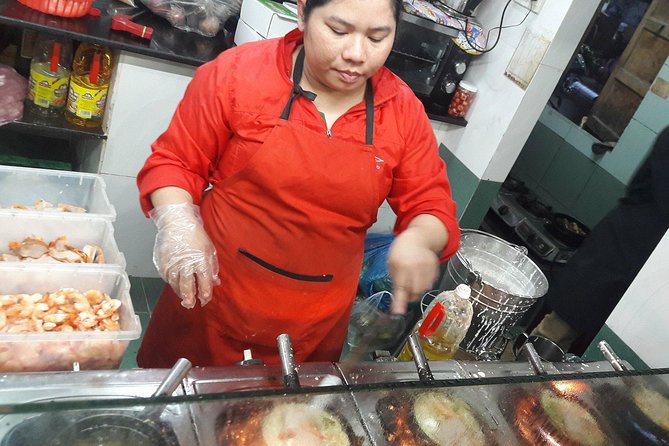
Dong Ba Market is the kind of stop that changes how you taste everything afterward. Instead of ordering blindly, you see the market as an ingredient hub—where wholesalers and everyday sellers overlap. The tour includes a ticket for this portion, so you’re not just wandering around guessing what matters.
You’ll get time to look, ask, and connect flavors to ingredients people use daily. That context is especially helpful in Hue, where some dishes depend on very specific herbs, starches, and savory bases. When you later eat something like a fried pancake or a rice-based specialty, you’ll understand what’s doing the work.
A practical note: markets can be busy and warm in the early evening. If you’re sensitive to crowds, keep comfortable shoes on and bring a light layer. The good news is the market stop is only about 30 minutes, so it doesn’t drag.
Citadel area food stops: royal context without the snooze
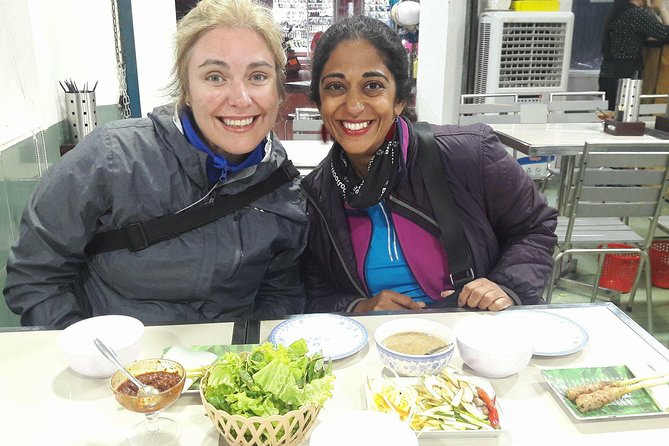
After the market, you continue toward the Citadel area, also referred to as the Hue Imperial City area. This segment is about 45 minutes, and admission is listed as free for the time you’re there. In plain terms: you’re not paying extra to get a sense of why Hue’s food culture has its own identity.
You’ll make some stops in local restaurants during this section. What you gain isn’t just taste, it’s explanation—your guide shares history and culture linked to Vietnamese royalty and how that legacy shows up in local life. Even if you’re not a history fan, the context helps because it gives meaning to the idea of Hue as a food city, not just a travel stop.
The best way to approach this part is with a curious mindset. Ask why certain dishes feel more “Hue” than “Vietnam,” and watch how your guide connects ingredients and preparation styles to local preferences. If you’re vegetarian, halal, or have a strong allergy, this is also the time to be very clear with your guide before you order.
Over Truong Tien Bridge: banh khoai and nem lụi moments
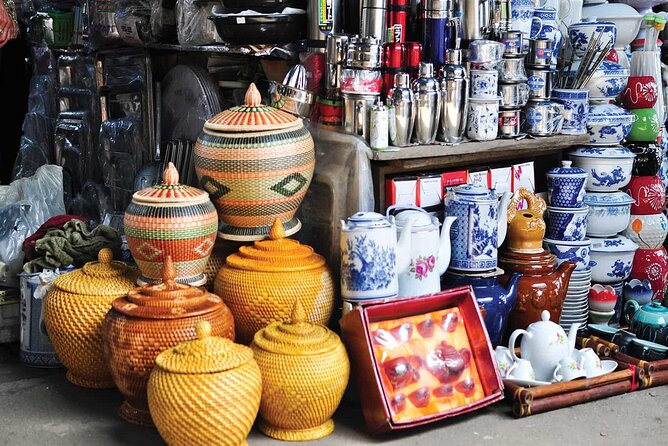
Next comes a short move over Trang Tien Bridge (the stop time here is about 10 minutes). It’s not just a photo break. Walking this stretch helps you feel the geography—how Hue’s food life connects to the river and to neighborhood streets.
This is where the tour leans into two classic Hue hits:
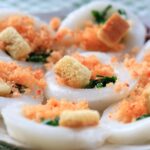
- Bánh khoai (Hue fried pancake), a signature savory treat
- Nem lụi (grilled minced pork skewers), smoky and satisfying
These are “walk up, eat now” foods. You’ll want to take your time here, because texture is part of the magic: the crunch on the pancake and the char on grilled skewers can be different depending on the stall’s method. Your guide’s role is to steer you to places serving the style Hue is known for.
One consideration: bridge-and-street stops can bring you into closer contact with traffic and street noise if you chose the scooter option. Wear something that’s comfortable for movement and keep your phone secured.
Along the Perfume River branch: Han Mac Tu Street specialties
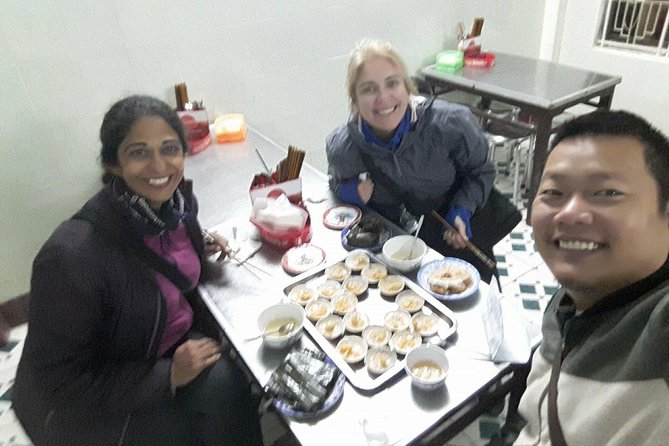
The final big stretch is near the river, around Han Mac Tu Street along the Nhu Y river branch. This part lasts about 1 hour, and admission is free because you’re mainly eating and walking street-level.
This is also where you’re told to expect dishes that are particularly associated with Hue—like cơm hế, a local rice specialty that stands out because it’s not just “generic street food.” Depending on what’s available on the night, you’ll likely see a mix of savory plates and local desserts.
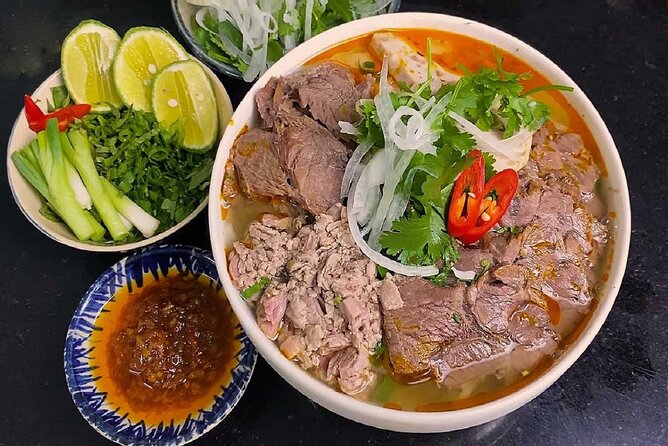
From the tour description, you can also anticipate classics such as steamed fern-shake cake and beef noodle soup. The overall pattern is smart: you’ll work through a mix of flavors—savory starters, a more filling main, then something sweet—so the final hour doesn’t feel like you’ve only had one type of food all evening.
If you’re someone who gets overwhelmed by choices, this portion is exactly why guided tours are worth it. You’re eating where you might not know to go on your own, and you’re not stuck translating menus while hungry.
You can also read our reviews of more food & drink experiences in Hue
Price and value: what $35 actually buys you
At $35 per person for a 3–4 hour experience, you’re paying for more than snacks. The included items matter:
- An English-speaking foodie tour guide
- Transport support depending on option (motorbike/cyclo with driver)
- Pickup if you book the cyclo/scooter version
- Market and stop admissions where listed (including Dong Ba Market)
- Travel insurance covered up to 20,000,000 vnd
That combination is the real value. A lot of food tours in Asia can be “just eat this, then eat that,” with you paying extra for transport or entry fees. Here, the structure does the work. Even if you’d enjoy Hue food on your own, the route saves time and removes guesswork.
One more practical value point: because it’s a private group experience (only your group participates), you’re less likely to feel rushed or shuffled. That matters when you’re eating street food at multiple stops and you want small pauses to ask questions.
Scooter and cyclo option: comfortable riding, but go in smart
Some of the strongest praise I see for this tour is about the ride itself. People mention getting picked up and then feeling comfortable behind the driver, even if they don’t ride often. One older couple noted they had never ridden before and still felt at ease with the way their guide handled the experience.
Still, you should plan for the reality of city streets. You’ll be on a motorbike/cyclo for parts of the route, so you’ll want:
- Closed-toe shoes
- A phone you can secure easily
- Water if you tend to get thirsty in traffic (drinks aren’t included)
Also, if you’re sensitive to motion or prefer stable ground, walking might feel easier. You can still get the full food emphasis with the zero-wheels option.
Guide matters more than you think
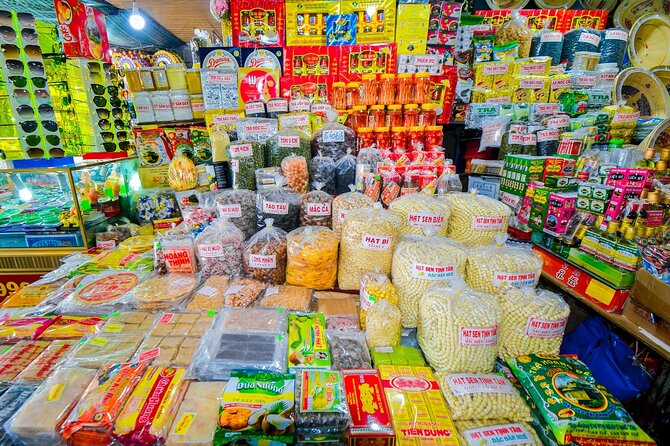
Food tours live and die by the guide’s choices. And with this one, the guide role is big: they coordinate timing, steer you to local stalls, and explain what you’re eating and why it’s part of Hue’s everyday cuisine.
Names I’ve seen attached to these tours include Phuong, Nhi, Hong, and Hung. In every case, the point isn’t the name—it’s the delivery. Guides here are described as funny, comfortable with English, and quick to pick dishes that feel local rather than generic.
If you have dietary needs or allergies, communicate that when you book and again on the spot with your guide. The tour notes that you should inform the travel consultant or local guide about any dietary restrictions or allergies, so you’re not stuck guessing once you’re at the counter.
What the food flow feels like (and why it can be a lot)
This tour isn’t a single-plate tasting. It’s a “taste your way” route across multiple stops. Based on the dish types described, you can expect a spread that includes both savory and sweet items—Hue fried pancake, grilled minced pork skewers, beef noodle soup, and a local dessert like steamed fern-shake cake.
That’s great if you love variety. It’s less great if you eat small portions or have a sensitive stomach. Some guests explicitly note there was a lot of food—so come hungry, but don’t force it. If something isn’t your favorite, share with your group or ask your guide what’s next so you can pace yourself.
A simple strategy:
- Start with one bite to understand the base flavor
- Pause between dishes
- Don’t sprint through the sweet part just because it arrives last
Practical tips for a smoother evening
Here are the small things that can make the difference between a good food night and a great one.
Wear: comfortable shoes and something breathable. You’ll do short walking segments—especially around Truong Tien Bridge and the river-area streets.
Bring: a light layer. Late afternoon can shift fast, and being in and out of shaded market areas can feel cooler.
Decide early: if you’re doing cyclo/scooter, think about how you’ll hold your phone and wallet. Traffic is part of the experience, so keep things secure.
Eat smart: if you know you’ll struggle with spicy or heavy fried foods, tell your guide. They can often adjust what you try within the local menu style.
Plan your day: since it runs around 3–4 hours starting in the evening, schedule it when you’re not already committed to a big dinner somewhere else. Let this be your dinner plan.
Should you book the Hue Food Tour?
Book it if you want Hue street food with structure. The combination of Dong Ba Market, Citadel-area restaurant stops, and river-adjacent specialties gives you variety without requiring you to figure out where to go alone. The included guide, insurance, and transport (for scooter/cyclo options) add up to real value for the price.
Skip or choose the walking option instead if you’re not comfortable riding a scooter or if you know you get overwhelmed by lots of food in one sitting. Also, if you have strict dietary needs, plan to communicate clearly so your guide can steer you safely.
If you’re staying in Hue for just a short time and want one evening that feels like local life—not a checklist—this tour is one of the easiest ways to make that happen. You’ll leave with a fuller sense of Hue’s ingredients, not just a full stomach.
FAQ
How long is the Hue Food Tour?
It runs about 3 to 4 hours.
What does the Hue Food Tour cost?
The price is $35.00 per person.
Where does the tour start?
The start point is Co.opmart Huế, 06 Trần Hưng Đạo, Phường, Huế, Thành phố Huế 49150, Vietnam.
Is pickup available?
Pickup is offered if you book the food tour by cyclo/scooter.
What transport options do I have?
You can go by motorbike with driver, cyclo, or go on foot (walking).
What’s included in the tour price?
An English speaking foodie tour guide, local street food specialties, motorbike/cyclo with driver depending on your option, pickup if you choose cyclo/scooter, and travel insurance are included. Some admissions are also included (like Dong Ba Market), while Citadel time is listed as admission free.
What isn’t included?
Drinks and shopping are not included, and tips for the guide & driver are not included. Food for infants or anything not mentioned is also not included.
Is it private?
Yes. It’s a private tour/activity, so only your group participates.
What is the cancellation policy?
You can cancel for a full refund if you cancel up to 24 hours in advance of the experience’s start time.