REVIEW · KOLKATA
Bengali Nights Kolkata Food Tour with 13+ Tastings
Book on GetYourGuide →Operated by A Chef's Tour · Bookable on GetYourGuide
Kolkata tastes like history. On this Bengali Nights food tour, you get 13+ tastings and travel by local transport like the metro and a classic rickshaw, while your guide (often Avik) links each stop to Bengal culture. What I like most is how you move through real neighborhoods on foot, then settle into old-school kitchens where food comes with stories.
One heads-up: this tour is not a good fit for vegetarians or people who are lactose intolerant, since some tastings won’t be available and there are no alternatives at those stops.
In This Review
- Key things I’d plan for
- Arriving at Esplanade: why the meeting point matters
- The warm start: lassi, mutton kosha, and century-old cooking
- Old Calcutta by night: walking lanes, temples, and local daily life
- Seafood stops: chingri in coconut cream and fish in banana leaf
- Moving by rickshaw: the wooden-cart experience and why it’s worth it
- Kabiraji and the Scotland connection: food with a migration story
- Onion bhajis, gram salads, and sweet-shop style balance
- Coconut sherbet and Bengali sweets: the palate reset you’ll crave
- The grand finale: a colonial coffee shop with debate in the air
- Price and value: what $40 buys you in real terms
- Who should book this tour (and who should skip)
- Quick practical tips before you go
- Should you book Bengali Nights Kolkata Food Tour?
- FAQ
- FAQ
- How long is the Bengali Nights Kolkata Food Tour?
- How many tastings will I get?
- Where do I meet the guide?
- Is hotel pickup included?
- What size is the group?
- Is the tour vegetarian-friendly?
- Are alcoholic drinks included?
- What language is the tour guide?
- Does the tour run in rain?
- Is it suitable for people with food allergies?
Key things I’d plan for
- 13+ tastings across multiple places so you can taste a lot without choosing every stop yourself
- Old Kolkata route on foot with temple-and-street-life sights that add meaning to the food
- Transport variety including metro, local bus, and rickshaws (and even the old tram)
- Seafood and meat-focused classics like mutton kosha and banana-leaf fish
- A guide who connects dishes to the city with Calcutta-era stories, not just menus
- Small group size (max 8) for a calmer pace on narrow lanes
Arriving at Esplanade: why the meeting point matters
You meet at Esplanade Metro Station, Exit Gate 4, on S.N. Banerjee Road. This is an easy anchor for the city: you can reach the Blue Line and Green Line stations, and using the metro helps you avoid the traffic chaos that can swallow a night’s plans.
I like that the tour starts with public transport rather than a van pickup. It means you get to feel Kolkata’s rhythm right away, and you’re not stuck waiting around in a hotel lobby while the tour clock runs.
If you’re using a taxi, the operator recommends Uber, with fixed pricing and either cash or card payment. One practical note if you travel from abroad: you’ll need internet on your phone for Uber to work.
You can also read our reviews of more food & drink experiences in Kolkata



The warm start: lassi, mutton kosha, and century-old cooking
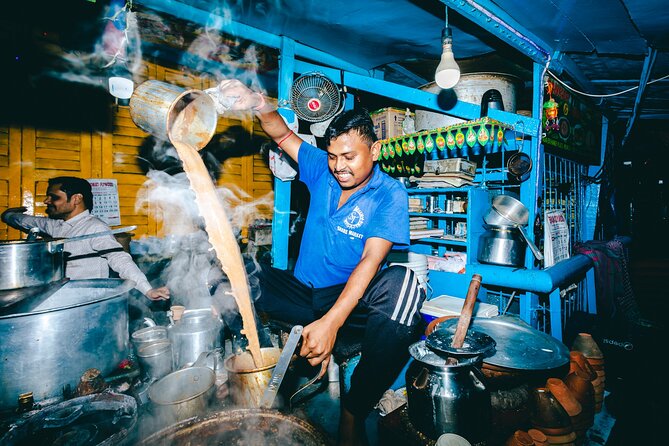
The evening opens with an easy win: a local lassi from a street vendor. It’s a classic move in Bengali food culture—cool, creamy, and a nice reset before you start stacking savory bites.
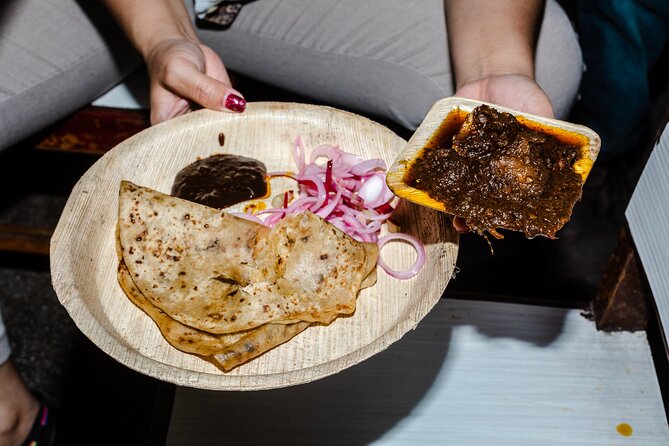
Then you head to a tiny joint known for mutton kosha. The highlight here is the age and reputation of the place—this kitchen has been serving its version for more than a century. That matters because kosha is not a quick-cook dish. It’s about slow development of flavor, and tasting it in an old establishment gives you a clearer sense of why this style of cooking became local comfort food.
What makes this stop work for you:
- You taste a signature Kolkata dish early, while your appetite is still fresh.
- Your guide explains what makes the kosha style distinct, so the food connects to the city instead of being just another curry.
The only downside? If you show up even slightly hungry, the early portions can hit fast. Come ready to eat.
Old Calcutta by night: walking lanes, temples, and local daily life
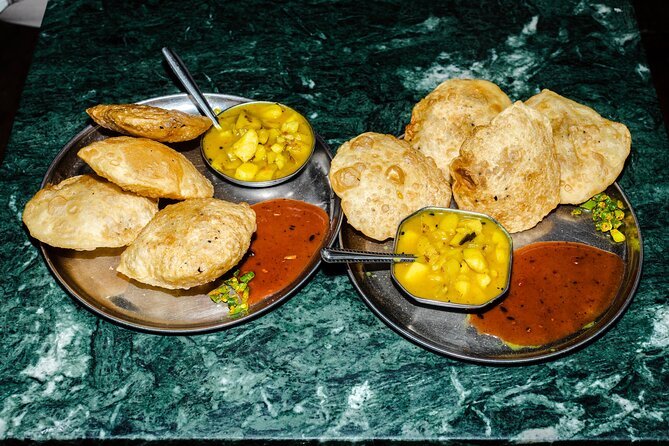
Between meals, you’re not stuck in a restaurant line. You walk through older parts of Kolkata where temple details and everyday street life show up in the background of your route.
This section is where the tour becomes more than food. You start noticing how Bengali meals fit into daily routines—morning markets, evening conversations, and the way neighborhoods keep their own tempo. It also helps you understand why some places stay famous for decades: people return because the food belongs to their everyday map.
A key practical point: Kolkata nights can mean sticky air or sudden showers. Bring comfortable shoes, and if rain looks likely, take an umbrella. The tour runs come rain or shine.
Seafood stops: chingri in coconut cream and fish in banana leaf
Kolkata is known for seafood, and this tour treats it seriously rather than as a token sampling.
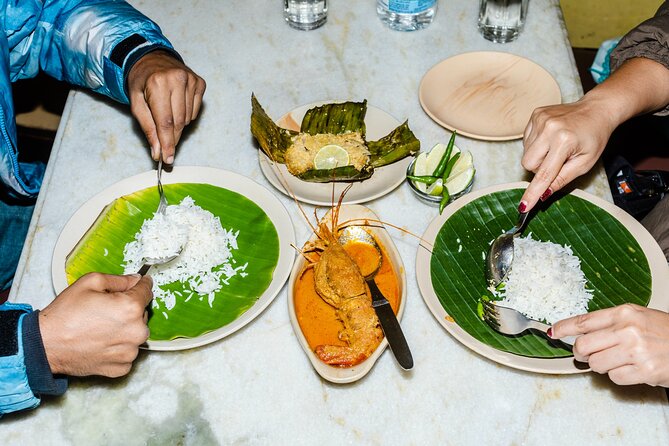
You’ll visit celebrated local seafood restaurants, where you can try prawns in a chingri coconut cream sauce. Chingri—prawns—is a Kolkata favorite, and pairing it with coconut cream is a good example of how regional flavors feel both rich and balanced.
Another memorable item is curried fish steamed in a banana leaf. Banana leaf steaming changes everything: it keeps moisture in, and it adds a subtle aroma without making the dish taste perfumed. It’s the kind of preparation style that makes you realize banana leaf isn’t just “eco packaging.” It’s part of the cooking language.
If you’re making a decision based on dietary needs: this seafood-focused stretch is great for meat-eaters, but not ideal for vegetarians. And if you’re lactose intolerant, your options may shrink in ways you can’t swap at the table.
Moving by rickshaw: the wooden-cart experience and why it’s worth it
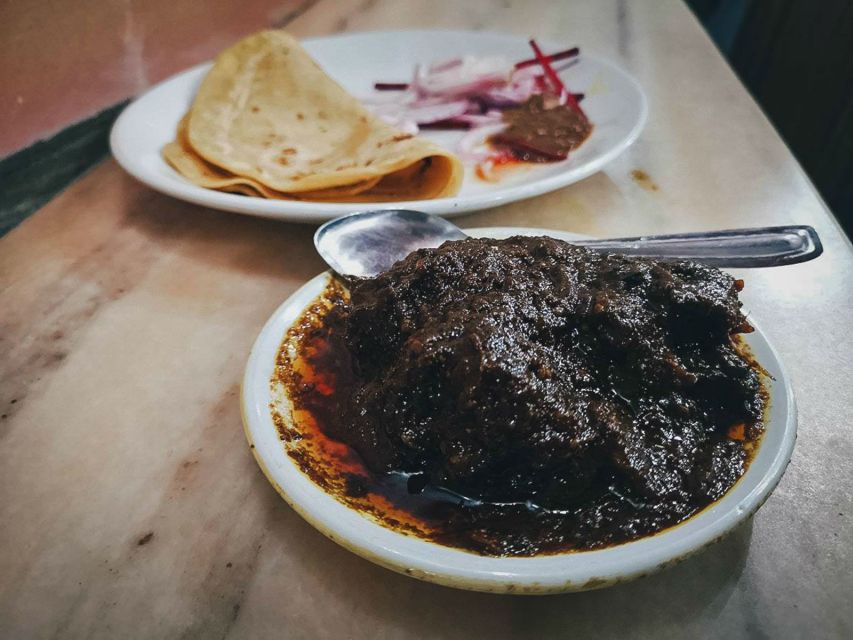
One of the coolest logistics perks is that you don’t just snack and shuffle. You also ride.
After a seafood stop, you climb aboard one of the old richshaws—wooden rickshaws that still exist in India in this kind of format. Even if you’ve ridden rickshaws before, this one adds a historical layer because of its visual, older style and because it’s used right as you shift between neighborhood sections.
It’s a short ride, but it changes the tempo. You get a break from walking, and your view of the area expands—streets you passed on foot start making sense as a connected neighborhood.
Kabiraji and the Scotland connection: food with a migration story
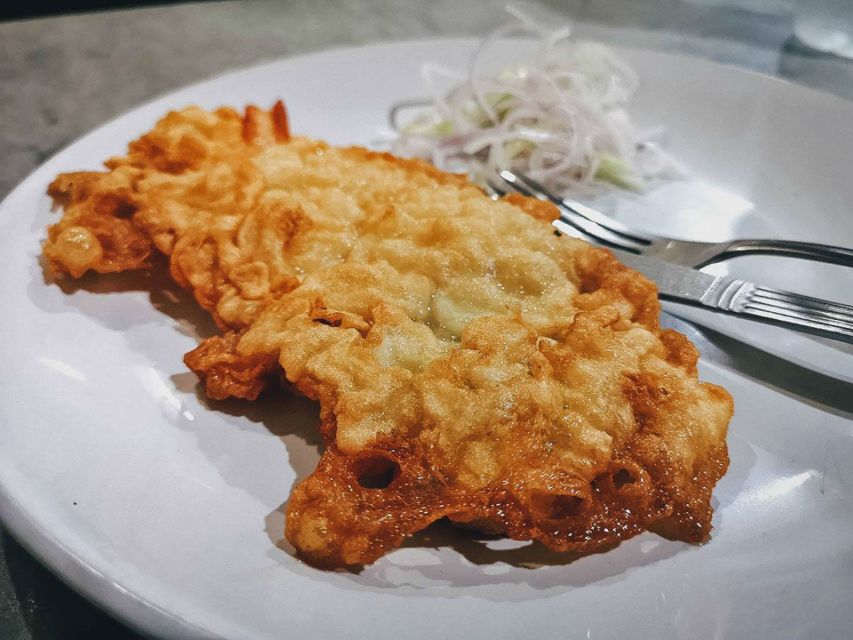
At the next point on the route, you’ll try a prawn kabiraji at a legendary kitchen started by a Scot in the 19th century.
That detail is more than trivia. It’s a reminder that Kolkata’s food identity didn’t grow in isolation. Ingredients and techniques traveled, then adapted to local taste. Trying a dish with a foreign origin story right in the place where it’s been practiced for generations gives you a direct line from history to dinner.
This stop is also a good example of what the tour does well: it doesn’t treat food as a checklist. It builds meaning through context.
Onion bhajis, gram salads, and sweet-shop style balance
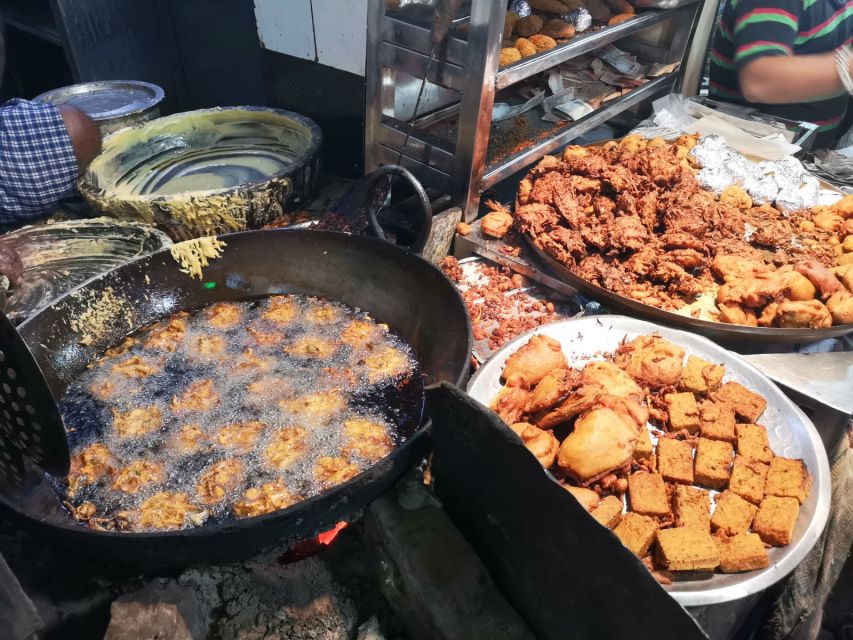
You’ll also taste the lighter, crunchy side of Bengali street snacks.
The route includes onion bhajis—deep-fried, savory, and often at peak satisfaction when eaten hot. You’ll also try gram salads made from herbs and pulses. That contrast—crispy fried bites followed by fresher, herb-forward salad flavors—keeps you from feeling like every stop is the same flavor weight.
And yes, you’ll see College Street as part of the evening. It’s known for book sellers, with university students crossing through on the way back from lectures. It’s a specific Kolkata vibe: books in the air, casual energy, and plenty of people-watching while you transition between food stops.
Coconut sherbet and Bengali sweets: the palate reset you’ll crave
After the savory section, the tour brings you to a local cafe for coconut sherbet. Coconut drinks are a smart reset in hot climates, and this one also helps clear the palate before you hit sweets.
Then you head to a nearby sweet shop for Bengali treats. Bengali sweets can be heavy—sugar, dairy (often), and nuts—but tasting them as part of a planned sequence makes it manageable. If you’re lactose intolerant, this is one of the areas where your tour may include fewer options, since some sweets rely on dairy and there are no substitutions.
The grand finale: a colonial coffee shop with debate in the air
The last stop leans into atmosphere: an old colonial coffee shop where students are debating, ceiling fans spin overhead, and waiters serve coffees in traditional garb.
This matters because it’s not just a “dessert endpoint.” It’s a cultural mirror. Coffee culture here isn’t about fast, automated service—it’s about lingering, chatting, and treating conversation like part of the meal.
If you tend to forget that food is also social, this finish helps you remember.
Price and value: what $40 buys you in real terms
At about $40 per person for a 4-hour evening, you’re paying for more than bites.
Here’s the value math as it plays out:
- 13+ tastings (and often up to a 15-taster menu) across multiple locations means you don’t have to choose your own route.
- Your guide adds translation between food and place, connecting dishes to Bengal and Calcutta-era stories.
- You move using public and local transport, including the metro and rickshaws, which also saves you from taxi hunting.
This is also small-group travel (max 8). That affects value too. Smaller groups keep the walk calmer on narrow streets and give your guide more time to answer questions while you’re eating.
The main reason someone might feel it’s not worth it is if you’re hoping for a vegetarian-friendly menu or if you have serious allergies. The tour explicitly isn’t suitable for people with food allergies, and lactose intolerance reduces available tastings.
Who should book this tour (and who should skip)
This tour is a strong match if:
- You want Kolkata food with history and city context, not just restaurant hopping.
- You enjoy street snacks but want a guide to handle the order and pacing.
- You like variety: seafood, meat curries, fried snacks, and sweets within one evening.
It’s not a good fit if:
- You’re vegetarian or lactose intolerant. You’ll miss several dishes, and there are no alternatives at stops that can’t adjust.
- You have food allergies. The tour doesn’t position itself as allergy-safe.
Also, if you get travel anxiety around street food, I get it. One of the best things you can do is follow the guide’s lead on what to eat and keep expectations realistic. The tour includes bottled water, which helps with basic comfort.
Quick practical tips before you go
- Wear comfortable shoes. You’ll walk through backstreets.
- Dress for the weather and carry an umbrella if rain is possible.
- Come hungry. This is designed for tasting, not sipping.
- Use the metro to save yourself from traffic stress.
- If you’re meeting at Esplanade, arrive a bit early so you can confirm you’re at Exit Gate 4 on S.N. Banerjee Road.
Should you book Bengali Nights Kolkata Food Tour?
If you want one Kolkata night that feels like you’re getting local food plus local city context, this is an easy yes. The combination of multiple tastings, older neighborhoods, and transport like the metro and wooden rickshaws makes it feel purposeful, not random.
Skip it if you need vegetarian meals, lactose-free swaps, or allergy-safe handling. And if your plan is mostly “sit in air-conditioned comfort,” you’ll likely find the walking and street-stops less appealing.
If you’re flexible with spice and ready to eat, you’ll leave with a much sharper understanding of Kolkata—one bite at a time.
FAQ
FAQ
How long is the Bengali Nights Kolkata Food Tour?
It lasts 4 hours.
How many tastings will I get?
The tour offers a 15-taster menu at multiple locations, including 13+ different Bengali dishes and drinks.
Where do I meet the guide?
Meet at Exit Gate 4 of Esplanade Metro Station on S.N. Banerjee Road (street level).
Is hotel pickup included?
No, pick-up and drop-off at your hotel are not included.
What size is the group?
It’s a small group limited to up to 8 participants.
Is the tour vegetarian-friendly?
No. It is not suitable for vegetarians, and vegetarians or lactose intolerant guests may miss 2–3 tastings with no alternatives available.
Are alcoholic drinks included?
No, alcoholic drinks are not included.
What language is the tour guide?
The tour guide speaks English.
Does the tour run in rain?
Yes, it operates come rain or shine.
Is it suitable for people with food allergies?
No. It is not suitable for people with food allergies.