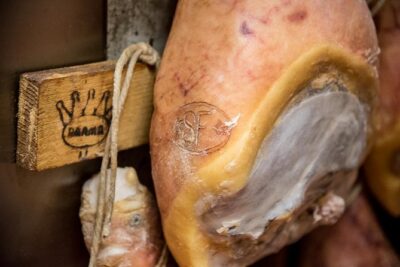
Trastevere has a way of making you hungry fast. This 3-hour Roman food tour mixes walking sights with real, order-at-the-counter flavors, from aperitivo cold cuts to artisanal gelato. I especially like the small group size (no more than 12), because it keeps the pace relaxed and the guide’s attention personal, like when David (one of the guides you could meet) keeps things funny and easy to follow.
My other favorite part is the built-in flow: wine tastings with each main stop, plus a sit-down dinner with two Roman pastas and a meat dish. The one drawback to plan around is that you’ll do plenty of walking and standing outside the restaurant, so bring comfy shoes and expect to be on your feet.
In This Review
- Key highlights you’ll feel on the ground
- Why Trastevere in the evening is a smart choice for food
- Starting near Piazza Farnese: an aperitivo that explains Roman taste
- Campo de’ Fiori tastings: where you learn to order without guessing
- The street-food stop: baccalà and suppli style classics
- A quick scenic break by the Tiber and Piazza Trilussa
- Trastevere dinner: two Roman pastas, a meat dish, and wine
- The limoncello finish: sweet, bright, and very Roman
- Gelato finale: how to spot real gelato and not regret it
- Guides and group energy: the difference between “food tour” and “good night”
- Price and value: what $58 actually buys you here
- Who should book, and who should skip
- Should you book Rome Food Tour: Hidden Gems of Trastevere with Dinner & Wine?
- FAQ
- How long is the Rome Food Tour: Hidden Gems of Trastevere with Dinner & Wine?
- Where does the tour start?
- What’s included in the price?
- Is hotel pickup or drop-off included?
- How many people are in the group?
- What food will I try on the tour?
- Is the tour suitable for gluten intolerance?
- Is the tour wheelchair accessible?
- What should I bring?
- Are stops ever changed?
Key highlights you’ll feel on the ground

- Small group limit (12 max) makes it easier to ask questions and stick close to the guide.
- Aperitivo-style start with local cold cuts and wine sets the tone right away.
- Roman street food tastes include classics like fried cod (baccalà) and suppli style bites.
- A real trattoria sit-down meal with two pastas, a meat course, and wine included.
- Gelato finale plus how to spot the real stuff so you leave with an Italian dessert rulebook.
Why Trastevere in the evening is a smart choice for food

I like tours that teach you how to eat well in a place, not just where to eat. Trastevere at night is perfect for that. The streets are made for casual wandering, and the food stops fit the rhythm of an Italian evening: snack, sip, snack again, then sit down.
This one also respects your time. In three hours, you get multiple tastings plus a proper dinner, without turning Rome into a marathon. If you’re only in the city for a short visit, you’ll still walk away knowing what to order next time you’re on your own.
One more practical note: the tour is designed for an intimate group, with a maximum of 12 people. That matters, because food tours are usually noisy and crowded when the group is big. Here, your guide can keep the conversation going and adjust on the fly if someone’s curious or hungry.
Starting near Piazza Farnese: an aperitivo that explains Roman taste

You’ll start with a meeting point near Piazza Farnese (with an option that starts there and then moves on foot). From the first move, the tour leans into an Italian idea you’ll hear everywhere: aperitivo. It’s not just a drink. It’s a whole setup that teaches you how Romans build an evening.
The first food moment is an aperitivo-style spread—local cold cuts like prosciutto and salami, plus cheeses. The wine is part of the package, not an add-on. You’re meant to taste and compare, so you start learning how flavors work together: salty cured meats, savory cheeses, and a glass that keeps everything from getting heavy too fast.
It also helps that the stop is described as a long-running place in the neighborhood, with over a century of serving the community. That kind of continuity usually means less guesswork for first-timers. You can focus on eating instead of hunting.
Campo de’ Fiori tastings: where you learn to order without guessing

After the aperitivo start, the route heads toward Campo de’ Fiori, and the tour breaks this area into two distinct food moments. The first is a sit-and-sample taste stop that gives you a baseline for Roman flavors. The second is more of a street-food scene, so you get both the calm version and the grab-and-go version.
This setup is smart. Campo de’ Fiori is the kind of place where you can easily overpay if you pick the wrong stall. By having a guide steer you, you’re less likely to spend money on something that looks good but tastes flat. You also learn what locals treat as normal street eating.
One practical detail: the tour includes tastings that are designed to be bite-sized. That matters because you’re walking between stops. You shouldn’t feel stuffed before dinner, but you also shouldn’t arrive at the restaurant starving and rushed.
The street-food stop: baccalà and suppli style classics

Roman street food is all about texture and flavor contrast. Here, you’ll get to try fried fish options like baccalà (fried cod) and also a suppli style snack depending on the venue. In plain terms: crispy outside, soft inside, and a satisfying handheld convenience that fits the city’s fast pace.
Why this stop works: it gives you a classic you can recognize later. If you taste fried cod here, you’ll be able to spot it on menus in other neighborhoods and decide whether it’s a good version or just a tourist imitation.
The tour also keeps the pacing friendly. There’s time for you to sample one of these favorites and then continue walking without that awkward feeling that the best part is over too soon. You’ll also get another wine tasting at this stage, which helps balance the fried flavors.
If you’re the kind of traveler who likes to understand food rather than just eat it, this is your moment. Your guide isn’t simply handing you bites; they’re explaining what makes these street foods Roman in the first place.
A quick scenic break by the Tiber and Piazza Trilussa

Between tastings and dinner, the tour adds a short scenic walk. You’ll have a photo stop by the Tiber River for views on the way, and then a visit around Piazza Trilussa.
I like this break because it turns the night into more than just a food circuit. After standing, biting, and sipping, you get a small reset: look around, stretch your legs, and get your bearings. In a city as big as Rome, a walk that includes a few visual cues can make the rest of your trip feel easier.
Also, Piazza Trilussa is the sort of place where you can pause and watch daily life. Even if you don’t stay long after the tour ends, it gives you a mental map of Trastevere’s mood.
Trastevere dinner: two Roman pastas, a meat dish, and wine

Now for the main event. In Trastevere, you’ll spend the bulk of the evening at a friendly local restaurant for a sit-down meal. This is where the tour stops being “snack-focused” and becomes a real dinner experience.
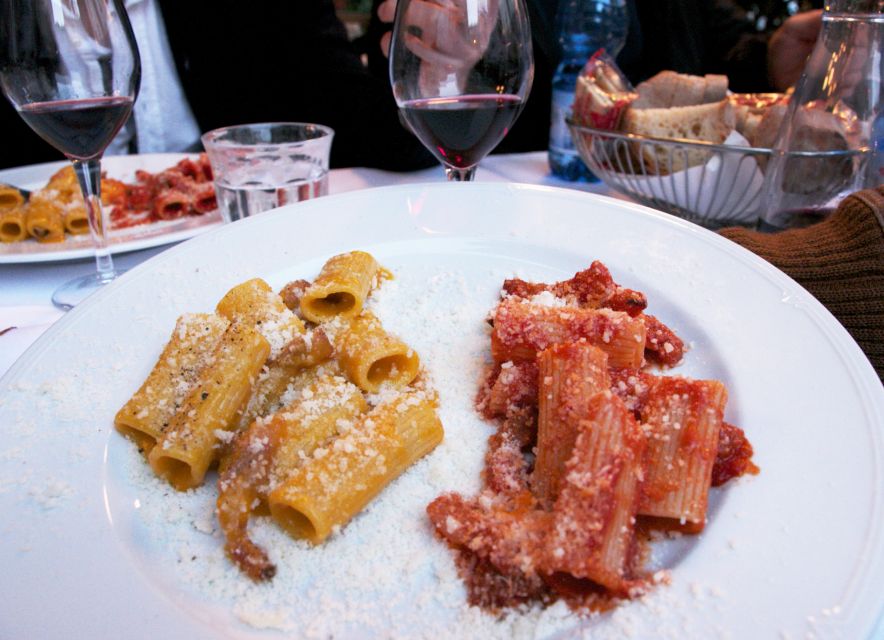
You’ll sample two popular Roman pastas plus a meat dish. Wine is included, and the idea is that you sit, relax, and actually enjoy the table instead of eating on the move.
This meal format is excellent value when you compare it to buying dinner plus wine on your own. Most food tours either give you small bites only, or they toss in one course and call it dinner. Here, you get a structured meal with enough variety to cover different Roman favorites.
It’s also the stop that helps justify the tour’s price. You’re not just sampling four items and calling it a day. You’re eating a full dinner with drink included, and you’re doing it with a guide who can help you navigate the choices if the menu feels intimidating.
The limoncello finish: sweet, bright, and very Roman

After dinner, the tour includes limoncello. This part feels like dessert’s older, brighter cousin. It’s a small wind-down that fits the timing of an Italian evening.
I like finishes like this because they tie the night together. You’ve moved from aperitivo meats to street bites to pastas and wine—then you end with something that signals the meal is truly over. It’s not just “more sugar.” It’s a flavor cue that helps you remember the experience.
If you’re someone who likes the whole rhythm of Roman dining, not just the food, you’ll appreciate this ending.
Gelato finale: how to spot real gelato and not regret it
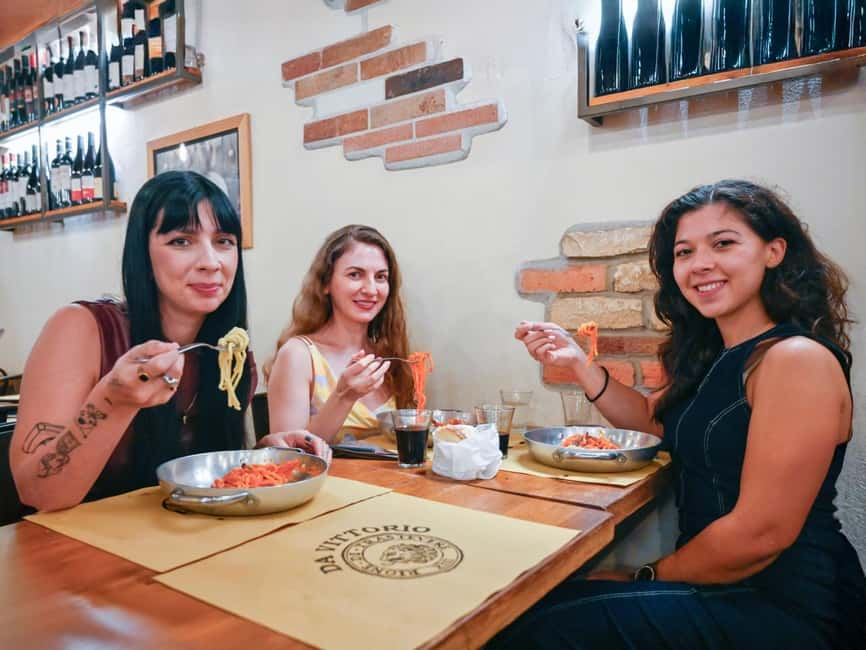
The tour ends with a visit to an artisanal gelato place in Rome—described as one of the best. You’ll also get a lesson on how Italians identify pure gelato over impostors.
That matters more than people think. Gelato can be disappointing when it’s too airy, too icy, or built around shortcuts instead of real ingredients. The guide’s tips help you avoid buying the wrong kind just because it looks photogenic.
Also, the timing is smart. You’re already done with dinner and full stop. Dessert now feels like a proper nightly ritual rather than something that steals your appetite.
A bonus: since the group is small, the gelato stop feels relaxed. You’re not herded through a line like a stampede.
Guides and group energy: the difference between “food tour” and “good night”
This tour’s standout theme is how lively the guides are. Names you might meet include David, Oscar, Daniele, Federica, Mario, Michel, Fiona, Claudio, and Davide. Across these different guides, the pattern is the same: they’re engaging, funny, and they connect food to how Rome works as a city.
I like that because it affects the quality of your experience immediately. If your guide can explain what you’re eating in clear, human language, the tastings feel meaningful. When the guide adds local context—how certain dishes became normal, why people eat them in certain moments—you stop thinking of the night as a checklist.
The small group size also keeps things from turning awkward. When the tour is limited to 12 people, the guide can pace you and keep conversation flowing instead of shouting over a crowd.
One more detail to keep in mind: the tour is walking heavy. A 4 out of 5 note pointed out that you’re standing for much of it, except during dinner. So if you need frequent seats, pack that reality into your expectations.
Price and value: what $58 actually buys you here
At $58 per person, this is priced like a mid-range food-and-drink experience. The good part is that the inclusions are substantial for the time: 15 tastings, 3 wine tastings, a 3-course sit-down meal (two pastas plus a meat dish, with wine), plus gelato and limoncello.
If you try to recreate this alone, you’d likely pay more in total for dinner, wine, and dessert than the tour price—especially once you add the “learning factor” of having someone pick the right places. The tour isn’t just feeding you; it’s steering you toward Roman food experiences that you might not find quickly on your own.
Also, the 3-hour length is a big value point. It’s long enough to feel like a proper evening but short enough that you’ll still have energy for the rest of Rome after.
So my take: if you’re the type who wants a high-impact first bite of a neighborhood—Trastevere specifically—this price tends to make sense.
Who should book, and who should skip
This tour fits best if you:
- Want a guided introduction to Trastevere food culture in one night
- Enjoy walking and tasting instead of just sitting in one place
- Like wine pairings and want them included without planning
It may not be ideal if you:
- Need a lot of seating. You’ll stand during parts of the walk.
- Have a gluten intolerance. This tour is listed as not suitable for gluten intolerance.
- Use a wheelchair or need special assistance for mobility. Wheelchair access isn’t supported, and strollers aren’t allowed.
If you’re traveling with a child under 6, note that a child can join for free if they won’t be eating. If they will eat, you’ll need a ticket.
Should you book Rome Food Tour: Hidden Gems of Trastevere with Dinner & Wine?
I’d book it if your goal is simple: eat a lot of Roman classics, get wine included, and learn how to order and spot good gelato—without spending extra time planning. The small group cap and the guide’s energy show up again and again in the way the night is described, and the structure (aperitivo to street food to sit-down dinner to gelato) keeps it satisfying.
Skip it if you can’t handle walking and standing, or if gluten intolerance is an issue for your meal choices. Also, if you hate restaurant meals and prefer only quick snacks, this one includes a full sit-down dinner, so it leans more “dinner evening” than “constant roaming.”
If you’re ready for a true Trastevere evening where food drives the schedule, this tour is an easy yes.
FAQ
How long is the Rome Food Tour: Hidden Gems of Trastevere with Dinner & Wine?
It lasts 3 hours.
Where does the tour start?
The meeting point can vary depending on the option booked. One listed starting point is Europavia – Italia (S.R.L.), Piazza Farnese, 105, and you then travel on foot from there.
What’s included in the price?
Included are an English-speaking foodie expert guide, 4 food stops, 15 tastings, 3 wine tastings, a 3-course sit-down meal, and artisanal gelato.
Is hotel pickup or drop-off included?
Hotel pickup and drop-off are not included. Drop-off locations are listed, and meeting points can vary by option.
How many people are in the group?
The tour is limited to a maximum of 12 participants.
What food will I try on the tour?
You’ll sample Roman cold cuts during an aperitivo-style start, Roman street food (including fried cod/baccalà and suppli depending on the venue), two Roman pastas plus a meat dish at dinner, limoncello, and gelato.
Is the tour suitable for gluten intolerance?
No. The tour is listed as not suitable for people with gluten intolerance.
Is the tour wheelchair accessible?
No. Wheelchair users are unable to be accommodated, and strollers or baby carriages aren’t supported.
What should I bring?
Bring comfortable shoes and a passport or ID card.
Are stops ever changed?
Yes. Stops are subject to change due to seasonal or holiday venue closures.