REVIEW · CHARLESTON
Charleston Private Brunch Tour: Biscuits, Shrimps, Grits and More
Book on Viator →Operated by Secret Food Tours · Bookable on Viator
Brunch with Charleston history is a neat trick. This private 3.5-hour walk pairs iconic King Street-era sights with a proper meal: shrimp & grits, biscuits, and sweet tea. You move block to block, learning what makes the neighborhoods feel different from one stop to the next.
I love the tight combo of food first energy plus real landmarks you can picture later. I also like that the stops connect—King Street, antebellum houses, a movie palace, and even a former railroad station all show up in one route.
One consideration: at $370 per person, it’s a splurge, and you’ll do a fair amount of walking. If you’re not into moving for a morning meal, this might feel like more workout than brunch.
In This Review
- Key highlights at a glance
- Why this brunch-and-history combo works in Charleston
- First stop on King Street: Upper King Design District
- William Aiken House: antebellum detail you can actually spot
- Art Deco movie glamor at the American Theater
- Charleston Music Hall: a railroad past (Tower Depot)
- Visitor Center in the old Deans Warehouse
- The Wraggborough connection you’ll notice once you know it
- Aiken-Rhett House: a Charleston double house idea
- Marion Square and the weekend farmers market vibe
- Hotel Bennett: modern luxury with 18th-century signals
- Fire Station 2/3: the 1886 earthquake aftermath
- The brunch spread: biscuits, shrimp & grits, pimento cheese, and more
- Where you end: Babas on Cannon
- Value and pacing: is $370 per person a smart use of time?
- Who this tour fits best (and who should skip it)
- Should you book this Charleston private brunch tour?
- FAQ
- How long is the Charleston Private Brunch Tour?
- What’s included in the $370 per person price?
- Is this tour private?
- Where do we meet, and where does the tour end?
- Do I need comfortable shoes?
- Can the tour accommodate dietary requirements?
- Are gratuities included?
- What happens if I need to cancel or if weather is bad?
Key highlights at a glance
- A private group route that keeps the pace comfortable and lets the guide tailor explanations
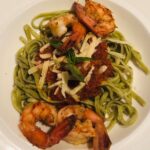
- Brunch classics included, including warm biscuits, passionfruit-mango sweet tea, fried green tomatoes with creamy shrimp & grits, and pimento cheese sides
- Historic stops without added entry fees per stop, since the listed admissions are free
- Architecture variety from antebellum domestic complexes to Art Deco movie glamor
- Saturday-friendly timing for Marion Square Farmers Market, if you hit the weekend
- Helpful handling of dietary needs, with guides known to set up alternatives (ask in advance)
Why this brunch-and-history combo works in Charleston
Charleston is one of those places where history is everywhere, but it can blur together fast. This tour solves that. Instead of bouncing between random attractions, you follow a focused route that ties together specific streets and buildings, then rewards you with classic local food along the way.
The format is also practical. You’re not doing a long museum day. You’re out for roughly 3 hours 30 minutes, walking at an easy, guided pace while eating several small portions that add up to a real brunch. The private setup matters, too: you get attention from the guide rather than sharing commentary with a large crowd.
And the menu theme is solid. It’s not just trendy Instagram plating. You’re served familiar lowcountry and Southern favorites—warm biscuits, fried green tomatoes, shrimp and grits, and pimento cheese—plus a sweet drink like passionfruit-mango sweet tea. That pairing helps you understand the cuisine as part of daily Charleston life, not as a special occasion only.
You can also read our reviews of more private tours in Charleston

First stop on King Street: Upper King Design District
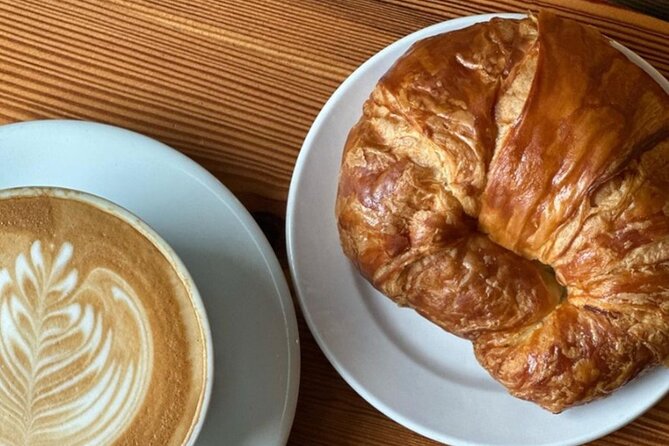
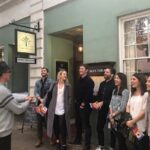
You start at 456 King St, in the Upper King area. This is where Charleston’s age shows immediately. King Street is more than 300 years old, and it’s known as the second most historic street in the city (with Meeting Street ahead of it in that ranking).
What I like about beginning here is the orientation. Early on, you get a sense of where you are and why this part of town matters. The guide also gives context for the streets you’ll keep seeing later, which makes the rest of the day feel less like wandering.
Practical note: the listed stop time is about 20 minutes, so you’re not rushed. Still, it’s outdoors, and Charleston mornings can shift quickly. Wear shoes that can handle sidewalks and quick pace changes.
William Aiken House: antebellum detail you can actually spot
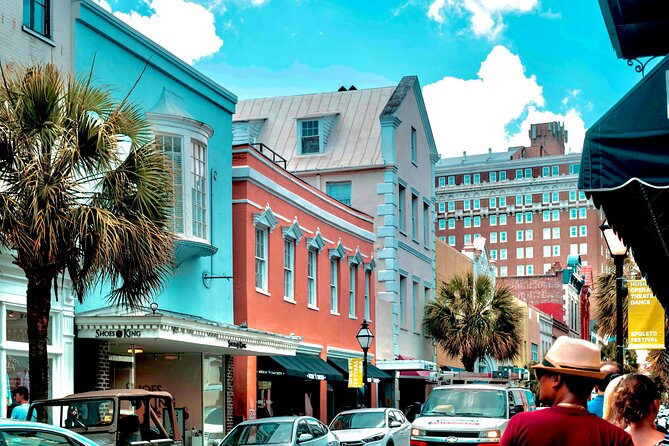
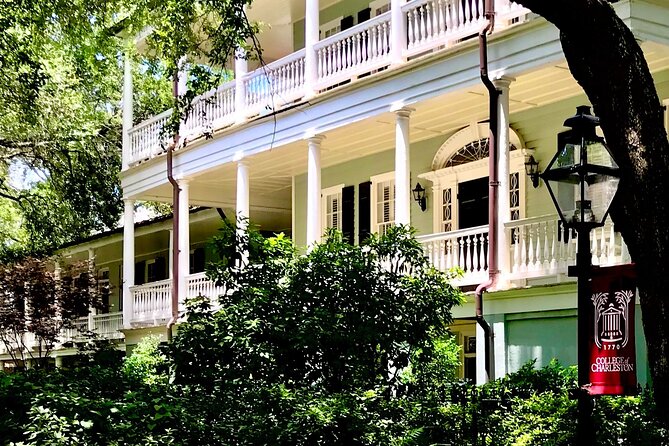
Next comes the William Aiken House, described as one of the best preserved complexes of antebellum domestic structures in Charleston. It’s tied to William Aiken Jr., a governor of South Carolina, and also to his father, who owned the South Carolina Canal and Railroad Company.
This stop works because it’s specific. The guide doesn’t treat the house like a generic old building. You learn the name connections and the larger story of how wealth and industry shaped Charleston neighborhoods. It gives you a way to read the architecture instead of just admiring it.
Also, the stop is marked at about 20 minutes with free admission. That’s a good ratio for a brunch tour. You get real content without spending half your morning standing in a long entry line.
Art Deco movie glamor at the American Theater
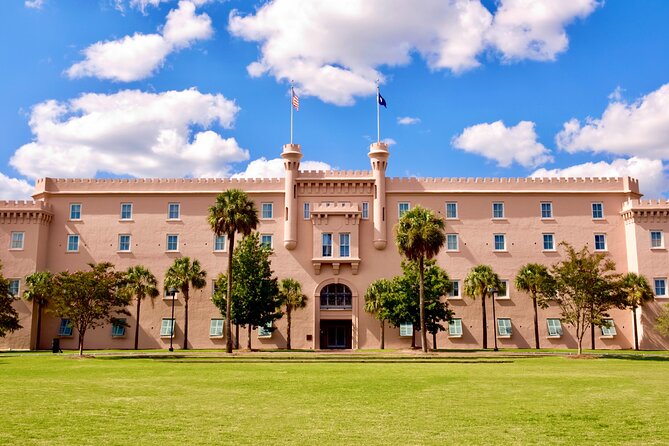
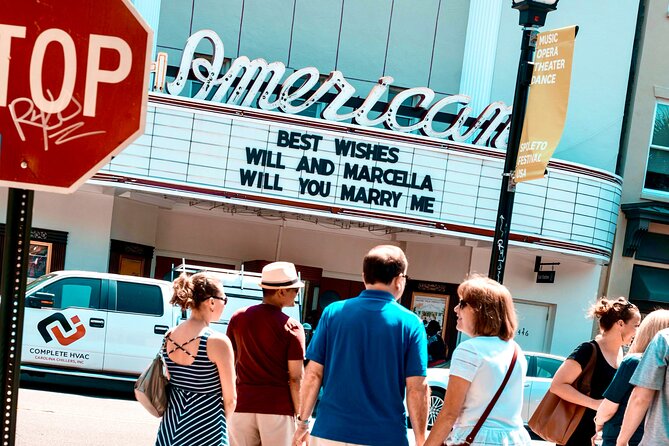
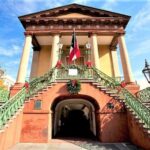
Then the route shifts from antebellum to glamour: the American Theater. It opened in 1942 as Charleston’s premier movie house, and it’s known for Art Deco architecture and that classic Hollywood feeling—marquees, lights, and showmanship.
What you gain here is tonal contrast. Charleston isn’t frozen in the 1800s. This building signals a later era when the city’s entertainment scene mattered too. It helps you understand how Charleston layers time rather than replacing it.
The stop runs about 30 minutes and is listed with free entry. If you like architecture and want a break from purely colonial/antebellum cues, this one is a fun turn.
Charleston Music Hall: a railroad past (Tower Depot)
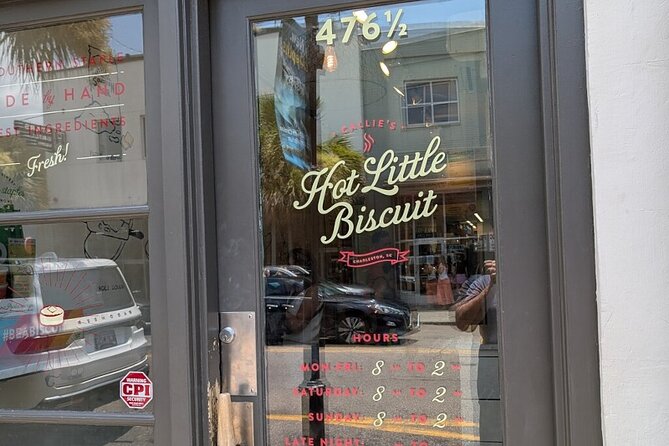
From there you reach Charleston Music Hall, historically known as The Tower Depot. This matters more than it sounds. It was built between 1849 and 1850 as a passenger station for the South Carolina Railroad. It was designed by Charleston architect Edward C. Jones.
I love stops like this because they change how you think about the city’s layout. Railroads don’t just move trains. They shape where people live, work, and gather. Seeing a music venue inside a former passenger station gives you a clear mental picture of Charleston’s transformation over time.
The scheduled stop is about 20 minutes, with free admission listed. You’ll get the essential story without lingering too long for a food-forward experience.



Visitor Center in the old Deans Warehouse
Next is the Charleston Visitor Center, located in the old Deans Warehouse between Ann and John Streets. It’s part of a cluster of related railroad buildings known collectively as the William Aiken House and Associated Railroad Structures, and it’s listed as part of a National Historic Landmark District.
This stop is short (about 30 minutes), but it’s useful for one key reason: it gives you a reference point. After you’ve seen houses, theaters, and a depot, a visitor center location tied to the rail story helps everything connect. You can walk away knowing what to look for when you explore on your own later.
The Wraggborough connection you’ll notice once you know it
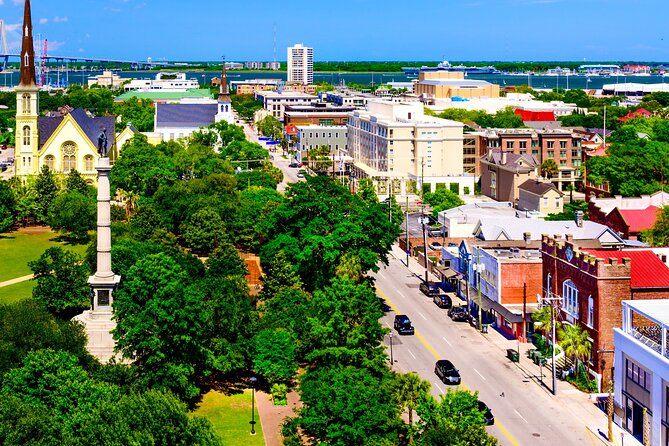
The route also includes a naming story tied to Wraggborough—the neighborhood is named for William Aiken (and his descendants), along with two city parks and seven streets in Charleston.
This is the kind of detail that makes future sightseeing easier. Once you’ve heard a place-naming thread, you start spotting it everywhere. It also adds a human element to the architecture: names aren’t just labels; they’re evidence of who influenced the city.
Aiken-Rhett House: a Charleston double house idea
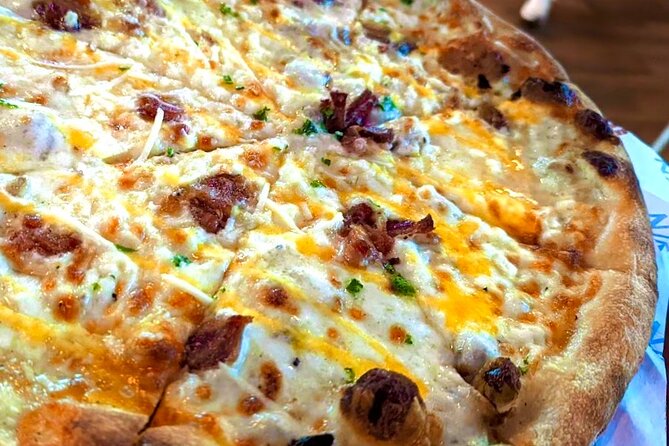
Then you get more antebellum texture at the Aiken-Rhett House. It’s described again as one of the best preserved complexes of antebellum domestic structures in Charleston. The house is originally configured as a Charleston double house, with entrance along Judith Street on the south side.
What I like here is that it’s not just a pretty facade lesson. A “double house” design is a reminder that domestic life in Charleston had patterns shaped by social structures and practical needs. Once you hear the explanation, you’ll start recognizing how homes were planned rather than just what they looked like.
This stop is scheduled at about 40 minutes and listed with free admission. It’s long enough to absorb the details, which is a good use of time in a tour that’s still food-based.
Marion Square and the weekend farmers market vibe
Next is Marion Square, which is one of the most pleasant areas in downtown Charleston. On Saturdays, the Marion Square Farmers Market runs there, and locals and visitors shop for fresh food and local treats.
Even if you’re not there on a Saturday, the square functions like a small social hub. You can see how Charleston’s food culture isn’t confined to restaurants. It shows up in outdoor markets and quick bites.
This is a brief stop, about 10 minutes with free admission listed. Think of it as a reset—walk, look around, and get ready for the next shift.
Hotel Bennett: modern luxury with 18th-century signals
The route continues to Hotel Bennett, which opened on January 27, 2019. The build took about 20 years from planning to groundbreak in 2015, then 47 months to construction. The design aims to feel like it connects to the 18th century by using Charleston historic homes as references.
This part matters because Charleston’s tourism economy doesn’t freeze the city in time. It keeps building. The guide’s framing helps you see the hotel as part of a continuing story, not a random modern block.
It’s about 20 minutes, listed with free admission. You’ll get enough to understand the design concept without turning this into a full hotel visit.
Fire Station 2/3: the 1886 earthquake aftermath
After the hotel, you stop at the Charleston Fire Department, Station 2/3. This includes a strong historical hook: it was the third fire station built after the 1886 earthquake. It replaced the former Marion Steam Fire Engine Company nearby.
This is one of those stops that adds texture. You’re used to thinking of Charleston as beautiful and old, but disaster recovery and civic planning shaped the city too. It also changes the pace in a good way—less glamour, more practical survival history.
The scheduled stop is about 10 minutes, with free admission listed. Short, but memorable if you enjoy civic history.
The brunch spread: biscuits, shrimp & grits, pimento cheese, and more
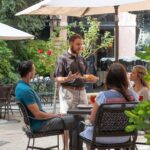
By the time you’re eating, you’ve already walked through enough different eras that the food feels like another clue to how Charleston works. The included items are clearly built around Southern comfort and lowcountry flavor.
Here’s what’s included on the tour:
- Banana Bread and warm, flaky biscuits
- Passionfruit-mango sweet tea
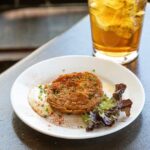
- Crispy fried green tomatoes served with creamy shrimp & grits
- Crispy Brussels with Southern-style pimento cheese
- Pecan cluster paired with Santome Prosecco
- Our secret dish (the tour keeps this one as a surprise)
What I like about this lineup is the variety of textures. You get crunchy and creamy in the same spread, plus sweet bread and biscuits to balance the savory portions. The sweet tea is a smart choice too—brunch drinks should refresh you, not overwhelm your palate.
Also, the tour is designed to support dietary needs if you plan ahead. The information says to contact the operator in advance for dietary requirements. In past tours, guides such as Nathan have arranged alternatives for vegetarian and gluten-free members of a group and even worked around multiple food allergies. If you have restrictions, that’s exactly the kind of proof you want to see.
One other practical point: because it’s a tasting-style brunch rather than a single sit-down meal, you’ll likely finish satisfied but still ready to keep exploring afterward.
Where you end: Babas on Cannon
The tour wraps at Babas on Cannon, located at 11 Cannon St. That ending spot is close to the downtown core, so it’s a nice place to continue your day without a long commute.
Even though the tour’s included tastings cover the main brunch goal, having the finish in a restaurant area gives you an easy next step—something light if you’re still hungry, or a coffee if you need a breather after the walking.
Value and pacing: is $370 per person a smart use of time?
At $370 per person for about 3 hours 30 minutes, this isn’t a budget food tour. It’s priced like a private experience, and that matters because you’re getting a route with lots of landmark stops and a full brunch tasting package.
So where does the value come from?
- You’re paying for private pacing plus a guide who ties food to place.
- You’re paying for multiple major landmarks on one coherent walk, with stops listed as free admission.
- You’re getting a complete brunch set, including biscuits, tea, savory mains, sides, and a drink.
If you’re traveling solo, it can still make sense only if you strongly value guided history and you want brunch handled for you. For couples or small groups, private tours usually feel more reasonable because you share the cost of attention.
This is also a good pick if you’re doing Charleston for the first time and want a fast start. You’ll come away knowing the basics of the city’s architectural timeline and where to go next.
Who this tour fits best (and who should skip it)
This tour fits best if you:
- want a guided walk through Charleston’s key architectural moods
- love food paired with stories, not food alone
- prefer a private group experience rather than a big crowd
- appreciate Southern classics like shrimp and grits and pimento cheese
I’d think twice if you:
- don’t enjoy walking (the tour notes a fair amount of it)
- want a long sit-down brunch with minimal movement
- are looking for a low-cost option
Should you book this Charleston private brunch tour?
If you’re the type who likes learning as you go—and you want a brunch that feels local, not generic—I’d book it. The best part is the balance: you’re fed well while getting a structured sense of Charleston’s neighborhoods, from King Street-age landmarks to rail-era buildings and Art Deco movie glamor.
If you’re price-sensitive, try to match the tour to your travel style. This one works when you want an efficient, guided morning that sets up the rest of your trip. If you’d rather buy food on your own and wander freely without a planned route, you may find more flexibility elsewhere.
FAQ
How long is the Charleston Private Brunch Tour?
It’s about 3 hours 30 minutes.
What’s included in the $370 per person price?
The tour includes banana bread, warm biscuits, passionfruit-mango sweet tea, crispy fried green tomatoes with creamy shrimp and grits, crispy brussels with Southern-style pimento cheese, a pecan cluster, Santome Prosecco, and a secret dish.
Is this tour private?
Yes. Only your group participates.
Where do we meet, and where does the tour end?
You start at 456 King St, Charleston, SC 29403, and the tour ends at Babas on Cannon, 11 Cannon St, Charleston, SC 29403.
Do I need comfortable shoes?
Yes. The tour involves a fair amount of walking, so comfortable shoes are recommended.
Can the tour accommodate dietary requirements?
You should contact the tour in advance about dietary requirements so they can cater as best as possible.
Are gratuities included?
No. Guides gratuity is not included.
What happens if I need to cancel or if weather is bad?
You can cancel for a full refund up to 24 hours in advance. The experience requires good weather, and if it’s canceled due to poor weather, you’ll be offered a different date or a full refund. It also has a minimum traveler requirement; if it doesn’t meet that, you’ll be offered a different date/experience or a full refund.