REVIEW · VERONA
1.5 Hour Food Tour in Verona with Tastings & Sightseeing
Book on GetYourGuide →Operated by Slow Travel · Bookable on GetYourGuide
Verona tastes better when you walk it. In just 1.5 hours, this small-group tour pairs olive oil, pizza-style street food, chocolate, and Risino with guided stops around the UNESCO historic center. It’s an efficient way to get your bearings fast, without sitting through a museum lecture you didn’t buy.
I especially like two things: the olive oil tasting (classic, spicy, and truffle) that teaches you how locals build flavor, and the guide storytelling that turns landmarks into context you can actually remember. One consideration: tastings skew sweet at the end, and the tour can’t accommodate gluten and lactose allergies, so you’ll want to check food needs early.
In This Review
- Key highlights you’ll feel right away
- Why this 90-minute food walk works in Verona
- Redoro olive oil tastings: the flavor lesson you’ll carry all day
- Piazza Bra to Porta Borsari: medieval and Roman sights at a human pace
- The bruschetta and street-food pizza moment (plus the Boscaini story)
- Chocolate in Verona: from Royal Court connections to a shop since 1970
- Risino at Pasticceria Flego: Verona rice turned into dessert
- How guides make the difference (Leonardo, Christina, Miriam)
- Price and value: what $51 buys you (and what it doesn’t)
- Food constraints: gluten and lactose are the big ones to plan for
- Who should book this tour (and who might not)
- Tips to get more out of your 1.5 hours
- Should you book this Verona food tour?
- FAQ
- How long is the Verona food tour?
- What does the tour cost?
- Where does the tour start?
- What food is included in the tastings?
- Is the tour suitable for vegetarians?
- Can the tour accommodate gluten and lactose allergies?
- Can I cancel and get a refund?
Key highlights you’ll feel right away
- Start at Redoro and sample classic, spicy, and truffle olive oil before you eat anything else
- A guide who connects food to place, from Verona and Lake Garda traditions to medieval and Roman sights
- Street-food pizza and bruschetta with EVOO, including a Verona-style pizza explanation tied to local history
- Chocolate shop storytelling, including a shop history dating to 1970 and links to the Royal Court of Savoy
- Risino at Pasticceria Flego, a finger cake of custard and rice that fits Verona’s rice reputation
- Small group (up to 10) for a more personal pace while you walk
Why this 90-minute food walk works in Verona
Verona can feel easy to romanticize and hard to organize. This tour is built to solve the second problem. You get a tight route through the historic core, paced for talking, tasting, and short sight stops—so you’re not racing the clock or losing the thread of what you’re looking at.
For $51, the value comes from two places. First, it’s not just one snack. You’re sampling multiple food moments: olive oil varieties, bruschetta with extra virgin olive oil, street-food-style pizza, three chocolate selections, and Risino. Second, the guide time matters. You pay for a person who explains what you’re tasting and why those landmarks matter—Castelvecchio, the Roman-era arch, and the medieval structures you’d otherwise walk past.
One more practical plus: it’s short enough to fit into a first or second day. If you’re building a Verona plan, this is a smart “orientation plus snacks” move.
You can also read our reviews of more food & drink experiences in Verona
Redoro olive oil tastings: the flavor lesson you’ll carry all day
You meet at Bruschetteria Redoro on Corso Porta Nuova, near a medieval wall with two arches and a clock. Look for the small olive trees around the shop, plus a grill. This start point is more than convenient—it sets the tone.
At the oil mill shop, you’ll sample three olive oil types: classic, spicy, and truffle. Then you connect that to what comes next with bruschetta made with extra virgin olive oil. The tour frames Verona and the Lake Garda area as part of the olive-growing story, so the oil doesn’t feel like a gimmick. It’s the first ingredient that helps you understand everything from bread choices to how tomatoes and chocolate will taste later.
The guide also makes the tasting feel less like “sip and move on.” You’ll get the sense that olive oil in Italy is not one flavor—it’s a spectrum, and the differences affect how you perceive salt, acidity, and richness.
If you love food details, this is the part that will stick with you.
Piazza Bra to Porta Borsari: medieval and Roman sights at a human pace
After the first tasting, you start walking through the UNESCO-listed center. The stop rhythm is designed for short attention spans. You’ll spend a little time where it counts, then move on.
Here’s the sightseeing flavor you can expect along the way:
- Piazza Bra: a quick look that helps you anchor where you are in Verona’s main historic area.
- Museo Lapidario Maffeiano: a short stop that nudges you toward Roman traces you may want to chase later.
- Castelvecchio Bridge: the bridge-and-castle area is one of the easiest “wow” moments for first-time visitors, especially when someone points out what you’re seeing beyond the postcard view.
- Porta Borsari: you get an important city landmark with Roman-era presence—again, made clearer by guide context rather than just standing there taking photos.
- Piazza Erbe: a quick, lively-feeling stop that rounds out the tour’s historic-core loop.
The tour also highlights sights you’ll likely hear explained even when the walk is brief: Castelvecchio, the Roman Triumphal Arch of the Gavi family, and elegant 18th-century palaces. The key is pacing. You’re not expected to memorize a timeline. You’re meant to see the layers—medieval walls and Roman remnants—without burning your day.
The bruschetta and street-food pizza moment (plus the Boscaini story)
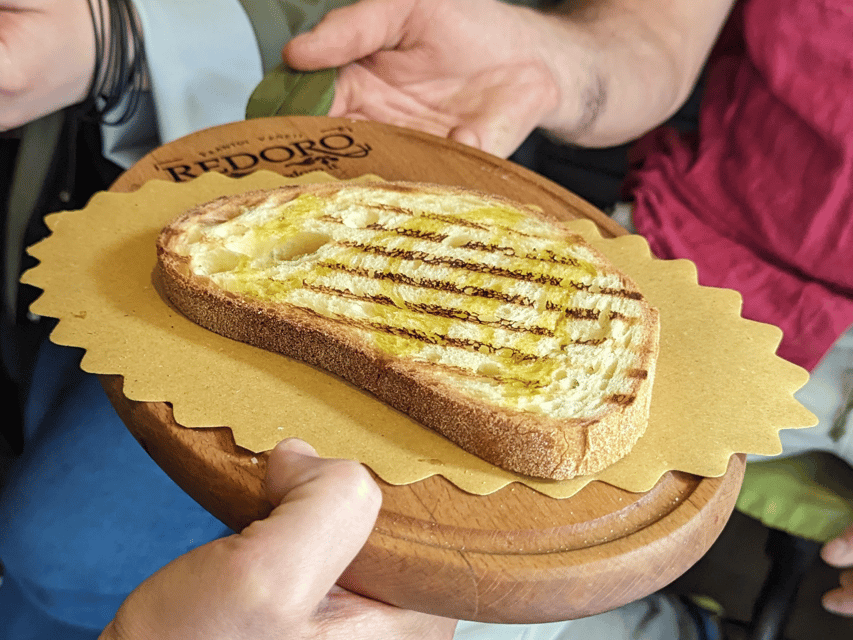
Food-wise, this is where the tour starts to feel like a real meal, not a string of mini tastings.
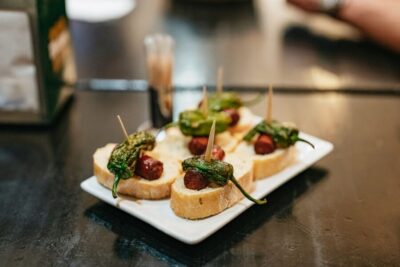
You’ll have bruschetta with extra virgin olive oil, tied directly to the olive-growing traditions you heard about at the start. Bread, oil, and tomatoes can sound simple—until you taste them in the order the tour sets up. That order helps you notice how each bite teaches you something.
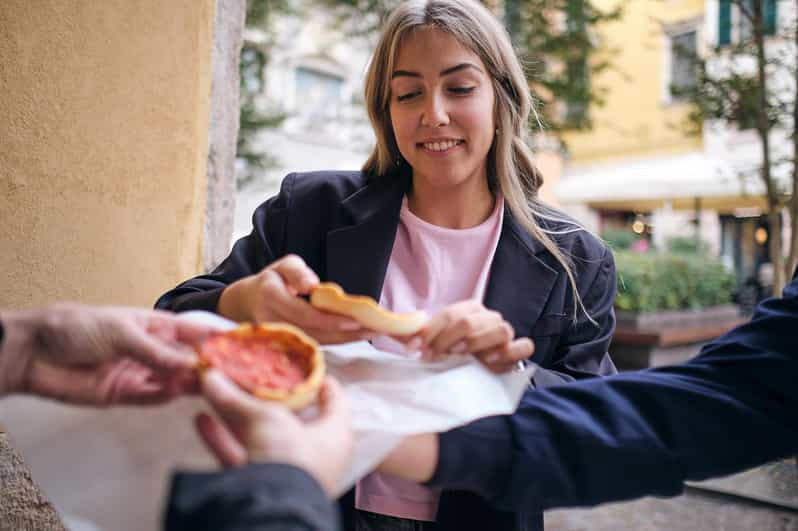
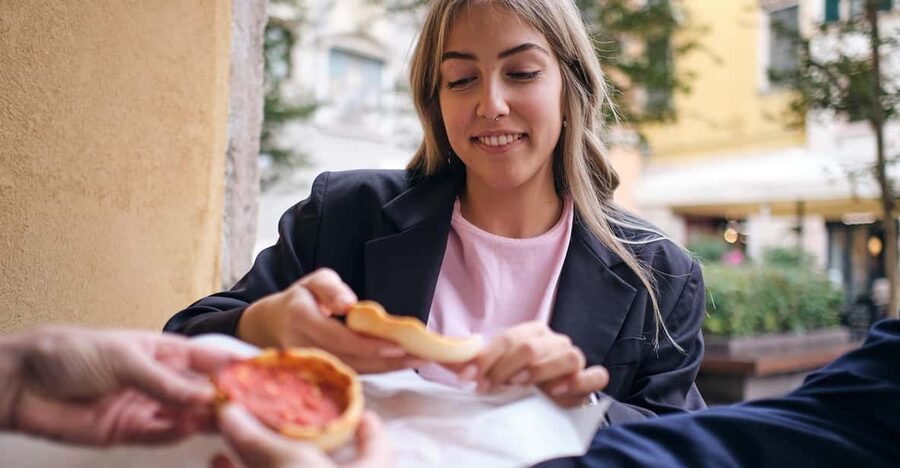
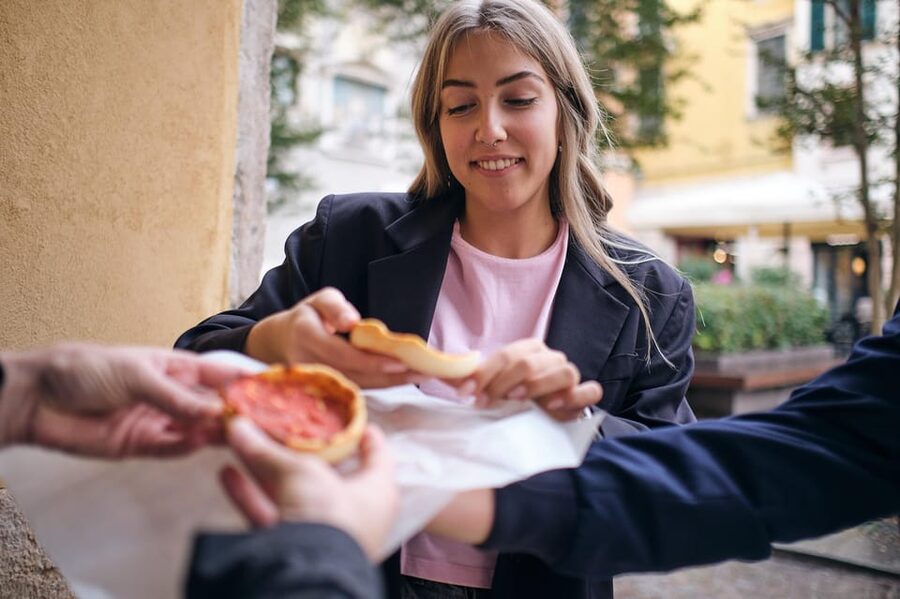
Then comes the street-food-style pizza stop. The tour explains how pizza works in Verona as a local adaptation of a Neapolitan root. One specific detail I like from the tour description is the story that a Verona version was introduced after the Boscaini family visited southern Italy. This adaptation includes a softer dough made with milk and an excellent tomato sauce seasoned with classic Italian spices.
Even if you’re not a pizza nerd, the point lands: Italian street food is often regional food history in edible form. You’re not just eating a slice—you’re learning why a familiar dish tastes different here.
One small caution: the tour aims for a balanced experience, but it doesn’t promise equal heft at every stop. If you’re arriving very hungry, you may still want to plan a late lunch or early dinner after.
Chocolate in Verona: from Royal Court connections to a shop since 1970
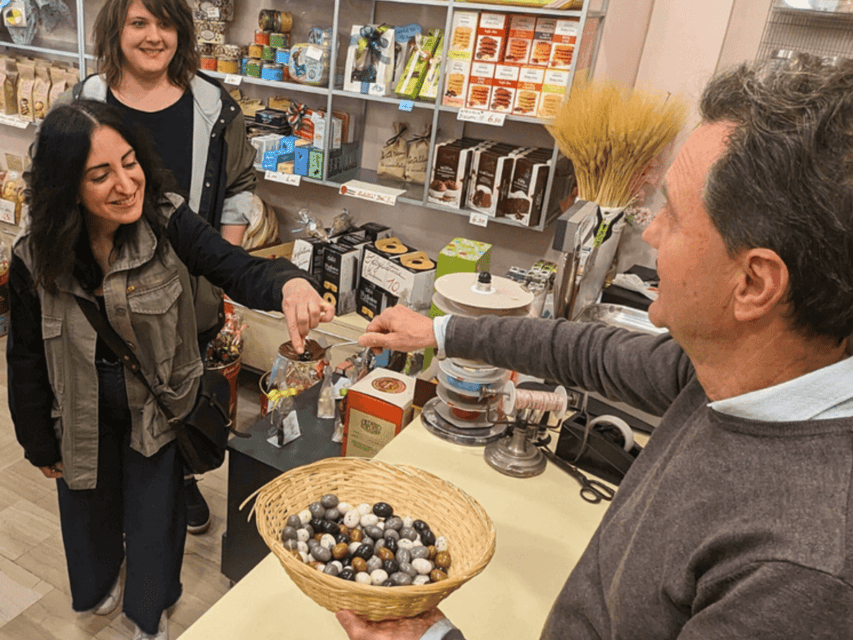
Then you shift gears—sweet, but not mindless.
The tour takes you to a chocolate shop established in 1970. It connects the shop’s story to Italian chocolatiers who originally catered to the Royal Court of Savoy, which helps explain why Italian chocolate culture has a more “crafted” identity than some people expect.
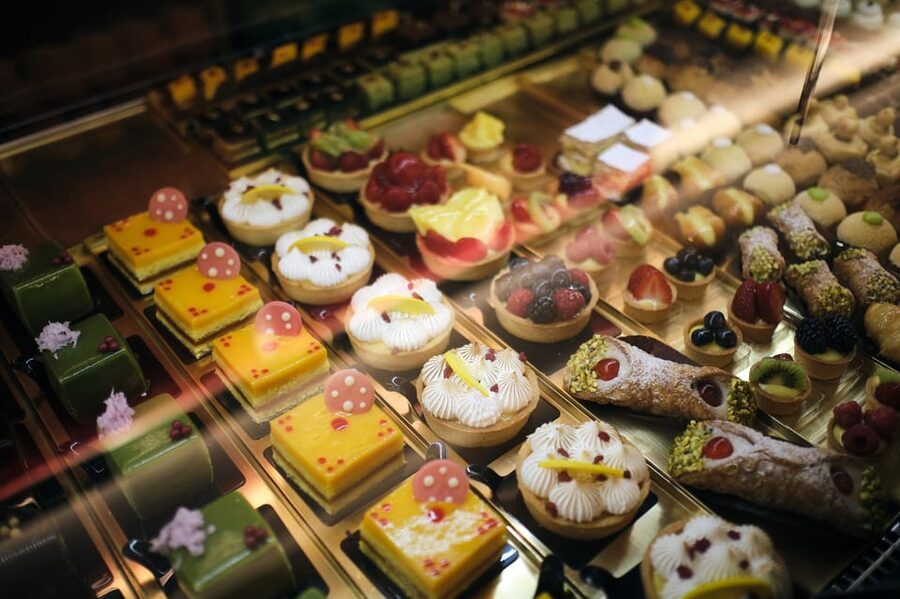
You sample three iconic Italian chocolate selections, and the guide explains differences in how cocoa beans are processed for mass production versus artisan methods. That’s the kind of explanation that makes a tasting feel worth it. Otherwise, you’d just be counting pieces.
The tone at this stop also seems to be part of the charm. In guides’ performance, the chocolate stop is often where the energy rises and you get a bit of personality—like chatting with the shop owner and hearing a quick human story while you taste.
If you have a sweet tooth, this stop will likely be a highlight. If you don’t, it’s still a useful contrast after savory bites and oil-forward flavors.
A few more Verona tours and experiences worth a look

Risino at Pasticceria Flego: Verona rice turned into dessert
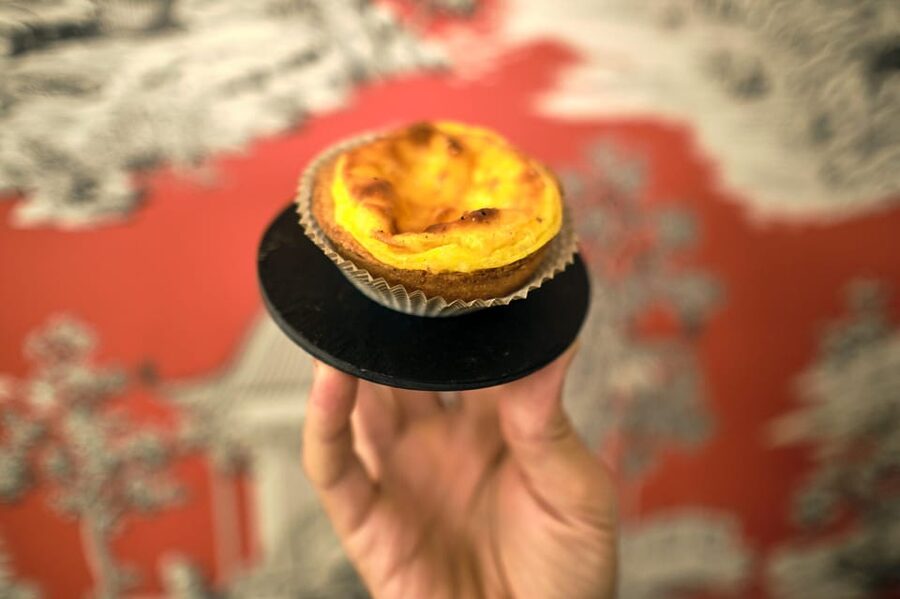
The final stop is Pasticceria Flego, where you taste Risino. It’s described as a finger cake made with custard and rice, and the tour frames it as Verona’s celebration of rice production—useful context if you’ve only thought of rice as something for risotto.
This end point matters because it ties the tour theme together. The tour isn’t only about taste. It’s about traditions—olive-growing, street-food customs, chocolate processing, and rice used in both savory and dessert forms.
Also, Risino is a natural closer. It’s portioned for a tour stop, but it still feels like a proper regional specialty rather than a cookie pulled from a generic display case.
How guides make the difference (Leonardo, Christina, Miriam)
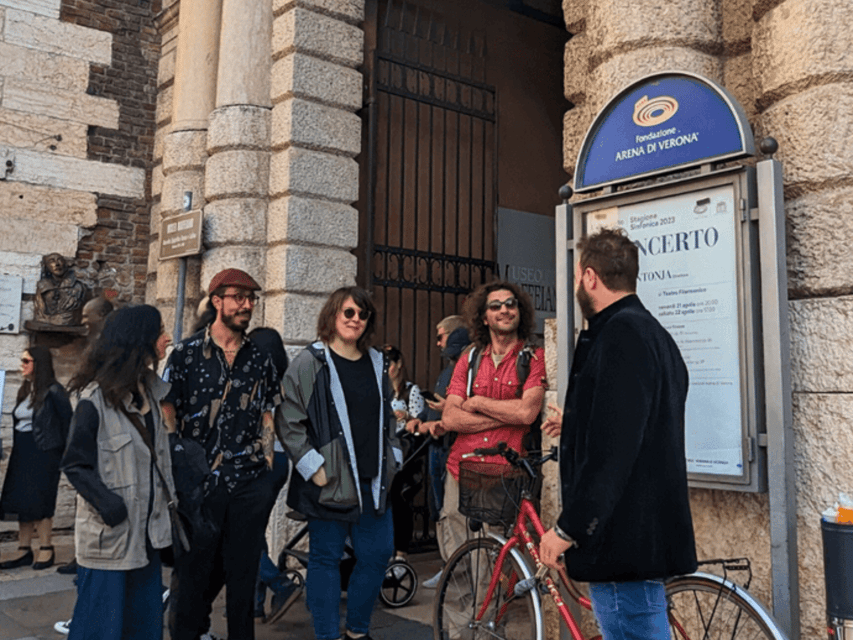
This tour is small-group, which means the guide’s style affects everything. Based on what I’d expect from the guide-led format, the best moments tend to be where the guide connects three things in one breath: what you’re tasting, what you’re seeing outside, and what it means historically or culturally.
You’ll see that in the guide names and approaches. I’ve seen guides like Leonardo praised for being well informed and for keeping the energy cool and relaxed. Christina is noted for friendliness and for giving useful recommendations—especially when people ask where to go next for dinner. Miriam gets strong notes for a great selection of food and clear city facts as you walk.
You can help yourself here with one simple tactic: ask a question after each stop. Not a big speech—just one focused question like What am I supposed to notice in the flavor? or Which landmark matters most here? You’ll get more out of a short tour that way.
Price and value: what $51 buys you (and what it doesn’t)
Let’s talk value without pretending you’re getting a bargain. $51 for 1.5 hours is in the fair range for a guided food tasting with multiple stops.
What you’re getting for that price:
- Guided time through the historic center
- Olive oil tastings (classic, spicy, truffle) at the start
- Bruschetta with extra virgin olive oil
- Street-food-style pizza
- Three chocolate selections
- Risino rice cake
What’s not included:
- Museum or attraction entrance fees
- Any extra food you decide to buy
So yes, it’s value-focused, not all-inclusive sightseeing. If you’re hoping for museum tickets, you’ll need to pay those separately or plan your own museum time on another day.
Food constraints: gluten and lactose are the big ones to plan for
This is the most important “read this twice” section if you have dietary needs.
- Gluten and lactose allergies: the tour cannot cater
- Vegetarians: you’re welcome
- People with gluten intolerance: not suitable
That matters because some stops are tied to bread, pizza-style items, and desserts. Even if you feel comfortable asking at restaurants, this tour isn’t set up to adjust for those specific allergies.
If you’re gluten-free or lactose-sensitive, I’d skip this one unless you can confirm safe alternatives directly with the provider before booking.
Who should book this tour (and who might not)
I think this tour is a great fit if:
- You want a first-day Verona orientation with food you’ll remember
- You like short walks and getting multiple tastings without planning each stop
- You’re curious about how ingredients reflect local tradition—olive oil, rice dessert, chocolate processing, and street-food pizza adaptations
- You’d enjoy talking to a guide in English or Italian (whichever you prefer)
I’d think twice if:
- You need gluten-free or lactose-free options (the tour can’t accommodate)
- You only want savory food (the tour includes multiple sweet-focused moments, especially toward chocolate and Risino)
- You expect long museum visits (entrances aren’t included, and the sightseeing stops are brief)
Tips to get more out of your 1.5 hours
A short tour rewards good decisions. Here are mine:
- Bring comfortable shoes. This is a walking-focused experience, with repeated short stops.
- Pace your questions. Ask one question during each food stop, then watch and taste again once the guide moves on.
- If you’re planning dinner the same day, ask for an osteria suggestion. A guide tip can save you time and help you land in a place that fits your mood.
- Don’t overstuff yourself right before the tour. You’ll want room for olive oil with bread, pizza-style food, chocolate, and Risino.
Should you book this Verona food tour?
Book it if you want a smart, compact way to taste Verona and learn how the city’s food traditions connect to its medieval and Roman sights. The olive oil start at Redoro, the pizza-and-bruschetta savory sequence, and the ending with Risino at Pasticceria Flego create a full storyline in 90 minutes.
Skip it (or at least contact the provider first) if gluten or lactose is an issue for you. Also, if you hate sweets, you should know the tour finishes with chocolate and dessert-forward items.
If you’re flexible, hungry in a good way, and you like walking with a guide who explains what you’re seeing, this is an easy yes.
FAQ
How long is the Verona food tour?
The tour lasts 1.5 hours.
What does the tour cost?
The price is $51 per person.
Where does the tour start?
You meet in front of Bruschetteria Redoro in Corso Porta Nuova, by the Redoro olive oil area. The shop has little olive trees around and a grill, and nearby you’ll see two arches on a medieval wall with a clock.
What food is included in the tastings?
You’ll have tastings that include bruschetta with extra virgin olive oil, street food style pizza, three chocolate selections, and Risino (a rice cake) plus olive oil tastings at the start.
Is the tour suitable for vegetarians?
Yes, vegetarians are welcome.
Can the tour accommodate gluten and lactose allergies?
No. The tour cannot cater for gluten and lactose allergies, and it is not suitable for people with gluten intolerance.
Can I cancel and get a refund?
Yes. Free cancellation is available up to 24 hours in advance for a full refund.