REVIEW · GINZA
Tokyo Allstar Food Tour
Book on Viator →Operated by Arigato Japan KK · Bookable on Viator
Tokyo can feel like two cities in one night. This 3-hour evening food walk strings together Ginza’s polished glow, Gado Shita under the elevated tracks, and a more rustic finish in Shimbashi.
I like two things a lot here. First, you get small-group attention while you work through local izakayas and yakitori—exactly the kind of places most people skip because they look too busy or too niche. Second, dessert and local customs are built into the flow, so you’re not just snacking your way through Tokyo with no context.
One watch-out: at this price point, the tour can feel lighter than you might want if you expect a full dinner. You’ll get tastings plus one complimentary drink, but extra drinks and food cost extra, and a couple stops can lean more sample-and-sell than heavy-hitting meals.
In This Review
- Key highlights that make this tour worth your time
- Ginza to Shimbashi in 3 hours: what the route really gives you
- Price and food value: $231 for tastings, not a full dinner
- Where you start: Seiko House Ginza Clock Tower and the big-city “welcome”
- Gado Shita under the tracks: yakitori night gets real fast
- Ginza contrast: designer melons, theater sidewalks, and pastry windows
- Shimbashi ending: rustic izakayas and a night that stays local
- Tastings, dessert, and dietary needs: what you should know before you go
- Which guides you might get (and what to look for in your guide)
- Who should book this Tokyo Allstar Food Tour
- Should you book? My call based on the experience design
- FAQ
- How long is the Tokyo Allstar Food Tour?
- Where does the tour start and end?
- What’s included in the price?
- Are additional drinks or food included?
- Can I get vegan, vegetarian, or gluten-free options?
- Is the tour family-friendly?
- Is there an age limit for drinking alcohol?
- What happens if the weather is bad?
Key highlights that make this tour worth your time
- Small group (max 10) for quicker questions and less waiting around at each stop
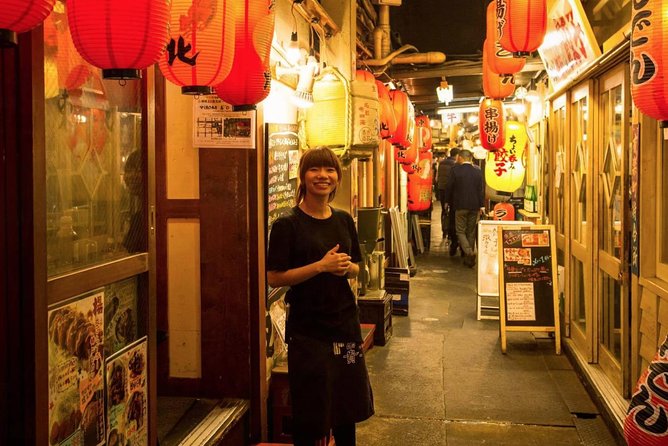
- Gado Shita under the train tracks for classic neon streets and resident-style izakayas
- Yakitori + drinks + dessert, with a guided explanation of food customs along the way
- Ginza contrast moments like Ginza Six and Kabuki-za so you see more than just alley food
- Shimbashi’s rustic izakayas as the ending zone when you want the Tokyo-night vibe
Ginza to Shimbashi in 3 hours: what the route really gives you
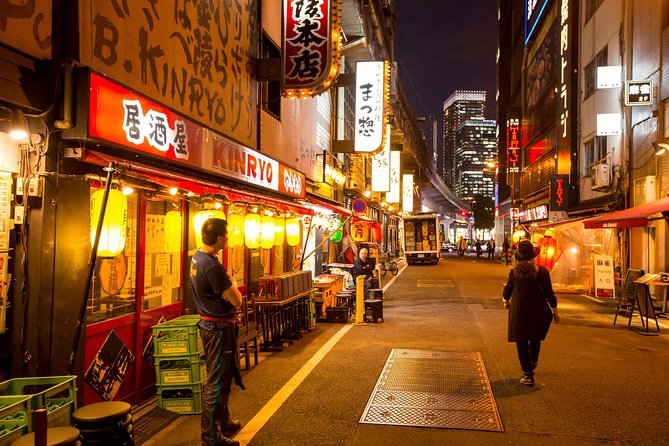
This tour is timed for the sweet spot of the day. You start at 4:00 pm in central Ginza, when shops are still open but the streets are switching on for dinner. That means you get the visual contrast Tokyo does so well: elegant department-store light, then the darker, neon-packed energy under the train lines.
The route is designed as a “see it, taste it” loop. You’re not just wandering for the sake of wandering. You’re moving between neighborhoods with very different food habits and price points, then finishing in an area known for old-school, low-key eateries.
It helps that the group size is capped at 10. In practice, that matters because Tokyo is busy. A small group means you’re less likely to lose track of the group, and your guide can spend real time on what you’re eating and why it matters.
Price and food value: $231 for tastings, not a full dinner
At $231 per person, you’re paying for four things at once: a local guide, access to places off most people’s radar, multiple tastings, and a dessert stop. The tour includes regional food tastings (including dessert), one complimentary drink, and four food stops.
Here’s the value math I’d use before you book:
- If you like food + stories (why people eat certain items, how izakayas work, what to look for), the guide component can be worth a lot in Tokyo.
- If you’re the type who measures tours by volume alone, you may want to treat this as a strong snack tour with a final dessert, not a full meal replacement.
- Extra drinks and extra food are not included, so your total night spending can creep up after the tour.
A couple people noted that certain stops can function like a quick tasting paired with a sales moment (think tea or cookies with the shop owner hoping you buy more). I don’t think that’s automatically bad. It’s just good to know what you’re walking into so you can keep your expectations aligned with what’s included.
Where you start: Seiko House Ginza Clock Tower and the big-city “welcome”
You meet near the Seiko House Ginza Clock Tower (4-chōme-5-11 Ginza). This is a smart starting point because it’s recognizable, central, and easy to reach using public transport. Even if Ginza isn’t your favorite neighborhood to hang out in, it works as a bright launch pad for an evening tour.
From there, you’ll pass major landmarks and shopping icons as you move. Stops include spots around:
- Takarazuka Theater
- Ginza Six
- Kabuki-za (Kabuki Theater)
Why these matter: Ginza is where a lot of Tokyo’s “showmanship” lives—lighting, architecture, display windows, the whole idea that eating out is part of culture, not only fuel. You’ll also feel a very real contrast once the route drops toward older street energy.
Practical tip: this part can involve sidewalks that are wide but crowded. Keep a comfortable pace, and plan on some walking before you even reach the first eating moment.
Gado Shita under the tracks: yakitori night gets real fast
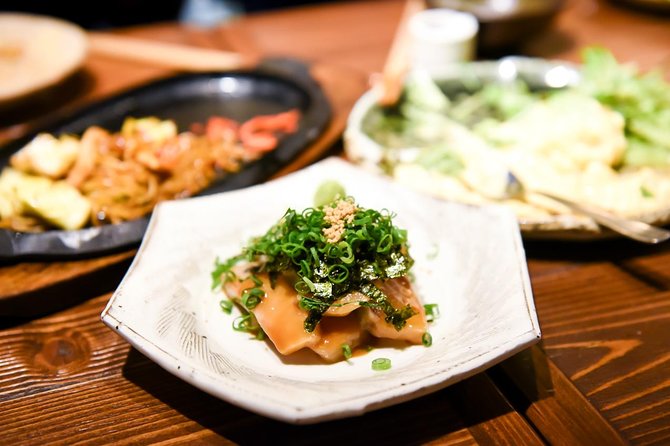
One of the strongest parts of the tour is the shift to Gado Shita, an area directly under the elevated train tracks. The description says it harkens back to older Tokyo, and that’s the feeling you’re chasing: narrow streets, neon signage, and the kind of smell you can only get near active kitchens.
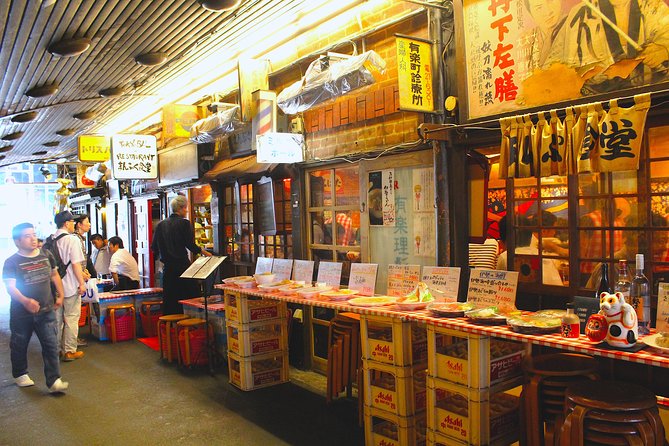
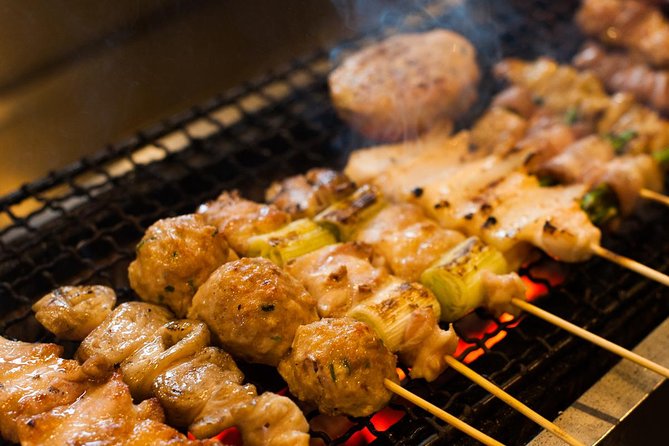
This is also where you’ll likely spend time with local izakayas—pub-style places where the menu is less about fine dining and more about sharing plates, sipping drinks, and making the night last. The tour includes yakitori tastings along the way, plus drinks as part of the experience.
What I’d watch for at these stops:
- Yakitori is often chicken-focused, but the exact set of skewers can vary. If you avoid pork, flag it right away when you book, because some tastings can include pork-based options.
- You’ll want to pace yourself. You’re eating multiple bites across the route, and the tour is about 3 hours total—so the early portion sets your pace for the whole night.
If you like your Tokyo evening more grounded and less showroom-like, Gado Shita is the highlight lane.
Ginza contrast: designer melons, theater sidewalks, and pastry windows
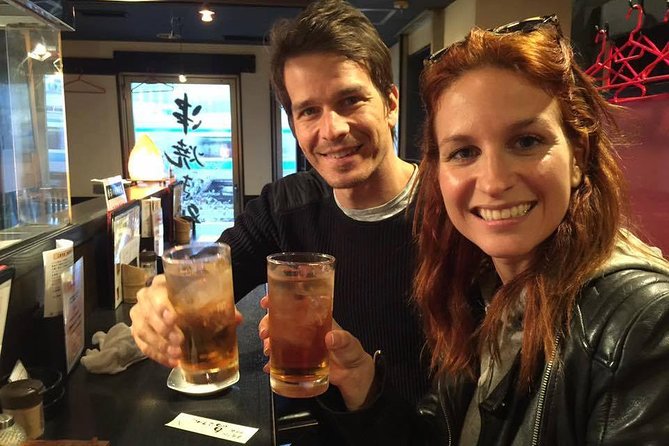
After the under-track energy, the tour swings you back toward upscale Ginza. This isn’t random. It’s the point: you get to see how food culture changes when you move from resident-packed lanes to polished shopping streets.
You’ll pass high-end food displays—yes, including those famous oversized, price-tag-level moments like designer melons sold for about $500. You’ll also walk past carefully decorated pastry displays that tempt you even if you’re already thinking about dinner.
This segment is useful if you want a quick understanding of Tokyo’s range:
- In one area, you eat standing close to the kitchen rhythm.
- In another, you’re looking at gifts, luxury fruit, and pastries arranged like art.
One drawback to keep in mind: these stops are visual and contextual, not necessarily heavy food moments. If you’re hoping for back-to-back full tastings every 15 minutes, you may find this part more like guided sightseeing with food culture explanations.
Shimbashi ending: rustic izakayas and a night that stays local
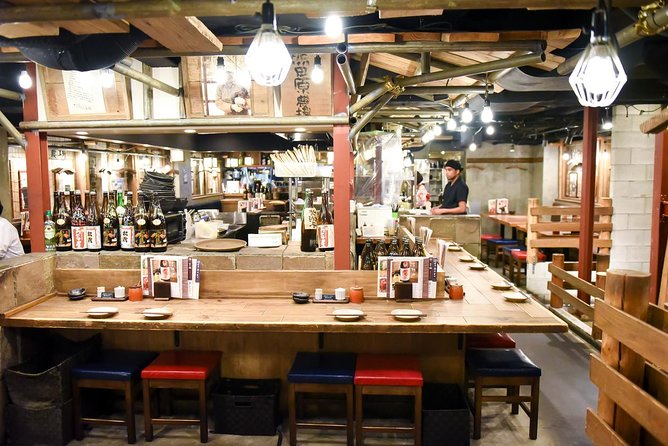
The tour finishes in Shimbashi, starting its “real meal” mindset where it counts. Shimbashi is described as a place with authentic local eateries and izakayas, and that aligns with the vibe you get when you look for a neighborhood that’s not trying to be a theme park.
You’ll end near JR Shimbashi Station, and along the way you may pass a shrine stop like Karasumori Jinja. That adds a breath of tradition between the food stops—Tokyo nights often layer modern eating with quiet cultural markers, and this tour uses that rhythm.
By this point, you’ll probably feel the walking catch up with you. That’s not a complaint; it’s why the ending zone matters. Shimbashi is a good place to land when you want the atmosphere to match the food style: casual, flavorful, and built around lingering.
If you find yourself still hungry at the end, that can be normal with Tokyo food walking tours. The included tastings can be filling, but this one is not marketed as a guaranteed full dinner. I’d plan a real meal after you finish—especially if you tend to skip lunch or eat lightly.
Tastings, dessert, and dietary needs: what you should know before you go
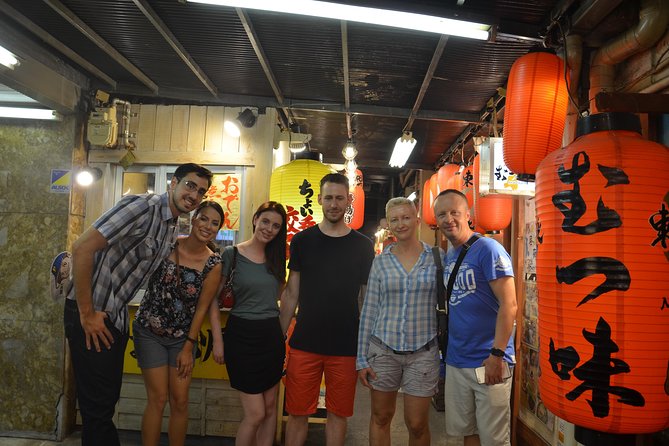
The tour includes local tastings, dessert, and one complimentary drink. It also states Vegan, Vegetarian, Pescetarian, and Gluten-Free Friendly options.
That said, two practical notes matter:
- Not every ingredient restriction can be handled the same way everywhere, especially when tastings are tied to specific shop menus.
- If you have a strong restriction like no pork, don’t just hope it’s covered. Flag it early, because some Japanese set menus include pork even when chicken skewers are also offered.
Alcohol policy: the minimum drinking age is 21. The tour is marked family-friendly, but drinking is limited accordingly.
Also, keep in mind the walking requirement. The tour asks for a moderate physical fitness level. You’re moving through multiple neighborhoods, including areas under train lines and around stations, so expect stairs and uneven pedestrian flow.
Which guides you might get (and what to look for in your guide)
You won’t control your guide, but you can control what you’ll pay attention to once you meet them. In the guide stories that tend to be praised, the common theme is that the guide blends food customs with humor and practical pointing.
Names that come up often include Josh, Ryan, Kay, Norma, Bryan, and Shige’—and people also mention guides like Yuko and Asami. If your guide is strong on explanations, you’ll get extra value from even the smaller tasting moments because you’ll know what you’re tasting and how it fits into Tokyo food culture.
A good sign: the guide gives quick, clear instructions at each stop (what to eat first, how to order a follow-up drink, how to handle common questions). A tour like this lives or dies on that flow.
Who should book this Tokyo Allstar Food Tour
This tour is a great fit if you:
- Want an evening food experience that mixes yakitori and izakayas with guided context
- Like walking between contrasting Tokyo neighborhoods rather than doing only one area
- Enjoy small-group pacing (max 10) so you can ask questions without getting rushed
It may not be the best fit if you:
- Want a heavy, restaurant-style dinner as part of the included price
- Have strict dietary needs and prefer a tour where you can see a clear, fixed menu (this one offers dietary flexibility, but tastings are tied to specific venues)
- Are sensitive to shopping-like stops, since some stops can lean into sample-and-sales
If you’re planning a full food-heavy night, treat this as your early-to-mid evening food foundation, then book a normal dinner afterward.
Should you book? My call based on the experience design
If your goal is to learn Tokyo through food—especially izakayas, yakitori culture, and the contrast between Gado Shita and Ginza—this is an easy yes. The small-group size, the route design, and the inclusion of dessert make it feel like more than a random snack stroll.
Book it if you can handle walking and you’re okay with the idea that this is tastings plus stories, not an all-in meal package. Skip it if you’re expecting big portions every stop or if $231 feels too high for a couple of bites and one drink.
If you want, tell me your dietary restrictions and what kind of dinner you like (sit-down, casual, seafood, meat). I can help you decide whether to pair this with a specific type of post-tour meal in Shimbashi or Ginza.
FAQ
How long is the Tokyo Allstar Food Tour?
It runs for about 3 hours, starting at 4:00 pm.
Where does the tour start and end?
It starts at the Seiko House Ginza Clock Tower area in Ginza and ends at JR Shimbashi Station.
What’s included in the price?
You get a local guide, regional food tastings including dessert, one complimentary drink, and four food stops.
Are additional drinks or food included?
No. Any additional drinks or food are not included in the tour price.
Can I get vegan, vegetarian, or gluten-free options?
Yes. The tour is listed as vegan, vegetarian, pescetarian, and gluten-free friendly.
Is the tour family-friendly?
Yes, it’s family-friendly. Children must be accompanied by an adult, and passport information copy is required for kids 10 and above.
Is there an age limit for drinking alcohol?
The minimum drinking age is 21.
What happens if the weather is bad?
The tour requires good weather. If it’s canceled due to poor weather, you’ll be offered a different date or a full refund.