REVIEW · LISBON
Taste Lisbon: an Itinerant Full Portuguese Meal by Do Eat Better
Book on Viator →Operated by Do Eat Better Experience · Bookable on Viator
Lisbon tastes better on foot. This tour threads together iconic neighborhoods and proper Portuguese comfort food, led by a local guide from Do Eat Better. You’ll do a full meal across multiple stops (at least 4) while walking Lisbon streets and picking up context as you go.
I love that the food list hits real classics, not just a few teaspoons of everything. Expect croquettes, sardines, a bifana pork sandwich, petiscos (Portuguese tapas), and finishers like pastel de nata and ginjinha. I also like the value angle: water is included, and you’ll get at least 2 alcoholic drinks (with non-alcohol options available).
One thing to plan for: Lisbon is hilly, and the route isn’t flat. If you push a stroller or have mobility limits, this can be tough, so I’d book only if your walking comfort matches a moderate fitness level.
In This Review
- Key things that make this tour worth your time
- A 3.5-hour Lisbon food walk that mixes neighborhoods and landmarks
- Price and included value: what $78.44 buys you here
- Stop 1: getting oriented, then starting your real meal
- Stop 2 at Garrafeira Nacional: croquettes in a famous market setting
- Stop 3 in Chiado: walking past key sights before the bifana
- Stop 4 near Praca Luis de Camoes: sardines-style appetizers in the Bairro Alto orbit
- Stop 5 in a traditional tasca: petiscos and the art of cheating your hunger
- Stop 6 at Praca do Comercio: pastel de nata and ginjinha to close it out
- What to expect walking-wise: hills, pace, and how to avoid feeling rushed
- Alcohol, age rules, and non-drink options that still work
- Seasonal substitutions and how to plan around dietary needs
- Who should book Taste Lisbon, and who should think twice
- Should you book this tour?
- FAQ
- How long is the Taste Lisbon tour?
- What’s included in the meal?
- Are drinks included?
- What are the age rules for alcohol?
- Is the tour offered in English?
- How many people are in the group?
- Can you accommodate dietary requirements or allergies?
Key things that make this tour worth your time

- A full meal in 3.5 hours, not a snack crawl
- Landmark-to-lanmdark walking through neighborhoods like Chiado and Bairro Alto
- Classic Portuguese hits: croquetas, bifana, petiscos, pastel de nata
- Drinks and water included, with non-alcohol options
- Small group (max 12), so you’re not shouting over a crowd
- Guides like Diana or Bruna may share extra Lisbon context and keep the pace right for the group
A 3.5-hour Lisbon food walk that mixes neighborhoods and landmarks
This is a small-group, English-speaking walking tour built around food and the streets around it. You’ll meet at the Estátua do Marquês Sá da Bandeira near Praça Dom Luís I, then move on foot through central areas where the sights are part of the experience, not an afterthought.
The itinerary is intentionally stop-based. You’re not just eating in one place and calling it a day; you’re walking from market to districts to traditional eateries, with quick landmark moments along the way. It’s a practical way to get your bearings while also learning what to order in each neighborhood.
The group size stays small (up to 12), which matters in Lisbon. In tight streets and busy tasting spots, smaller groups move faster and spread out better. That usually means less waiting and more time with the guide to ask questions about what you’re eating.
A few more Lisbon tours and experiences worth a look


Price and included value: what $78.44 buys you here
$78.44 is not an impulse buy, but it can be a strong value in Lisbon if you compare it to paying separately for several sit-down meals. Here, you’re paying for a guide, multiple guided tastings, and the convenience of having everything timed so you’re fed across the route.
You get an itinerant full meal across at least 4 stops, plus water. And you’ll receive at least 2 alcoholic drinks as part of the experience, served to guests 18+ (non-alcohol options are available). That turns the tour from a food-only event into a true evening-out format.
Another value point: you’re guided into local-facing venues rather than hunting for a menu on your own. The tastings are designed as a sequence, so the flavors build, not repeat. Even if you love Portuguese food already, it’s the ordering tips and pacing that usually make the difference.
Stop 1: getting oriented, then starting your real meal
The tour begins with a local expert guide at the meeting point near Praça Dom Luís I. From there, you’ll settle into the walk and the plan: this is a food-focused route that culminates in a full meal across multiple tasting moments.
This is also the phase where the guide sets expectations. You’ll hear what’s coming next and how the tastings connect to Lisbon culture, and you’ll get a sense of how the evening will feel. Plan for steady movement right away, since the “eating stops” are interwoven with walking.
One practical note: while a sample menu is provided, tastings may change by season and partner availability. That doesn’t mean the quality drops; it means you should show up ready to be flexible.
Stop 2 at Garrafeira Nacional: croquettes in a famous market setting
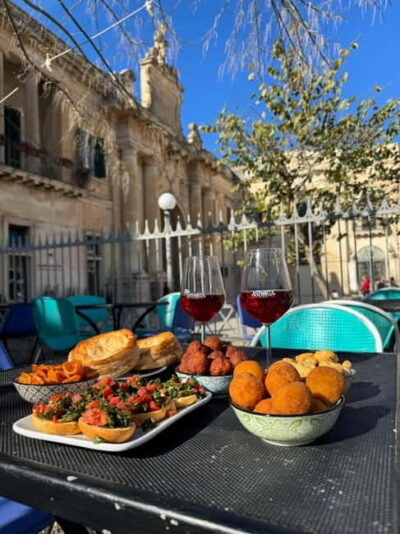
Garrafeira Nacional is where the tour turns from walking into eating. You’ll step into a well-known Lisbon market atmosphere and focus on croquettes, which makes sense fast: they’re crispy, comforting, and easy to share while you’re on the move.
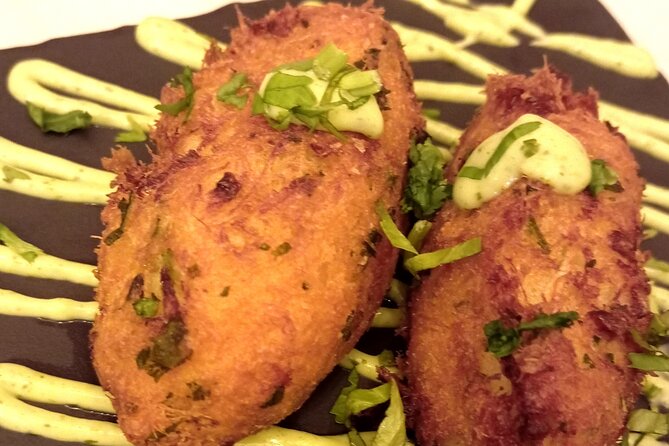
You’ll likely start with a cod croquette, a classic Portuguese choice that highlights how seafood flavor can be both delicate and satisfying. This is a good stop for first-timers because it’s familiar enough to enjoy immediately, yet distinct from what you might have at home.
The market setting is also useful for learning. You get a feel for what Portuguese snacks look like in real life: not fancy plates, but straightforward, flavorful bites. If you’re the kind of traveler who likes to understand how locals shop and snack, this is a smart place to begin.
Stop 3 in Chiado: walking past key sights before the bifana
Chiado is a strong neighborhood choice for this route because it blends pretty streets with everyday life. As you head there, you’ll pass landmarks such as Praca de Sao Paulo, the Pink Street, and the National Theater.
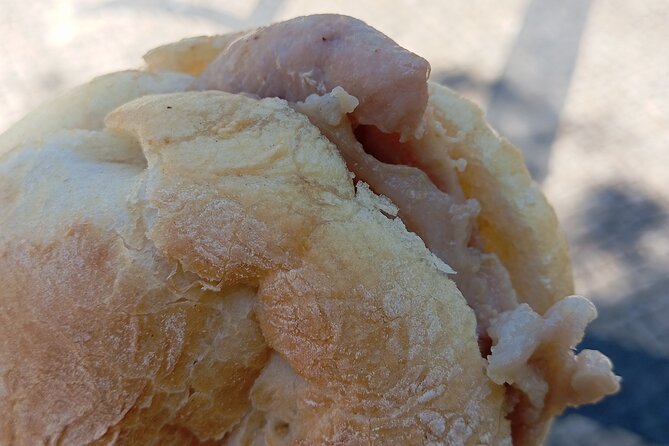
Then comes the food moment: the bifana, the beloved Portuguese pork sandwich. It’s simple on paper, but the details matter—soft bread and tender pork are the key. If you’ve never had one, this stop is where you’ll understand why it’s such a street-food superstar in Portugal.
I like this stop because it gives you a clear mental map of Lisbon. You’re walking through a recognizable area, seeing famous streets, and then tasting a dish you can later seek out on your own. That’s the tour’s “repeat value”: you leave knowing what to order later, not just what you ate today.


Stop 4 near Praca Luis de Camoes: sardines-style appetizers in the Bairro Alto orbit
From Chiado, the tour flows toward the Bairro Alto area, which is known for its steep streets, historic trams, and street life. The walk toward Praca Luis de Camoes helps connect the dots between Lisbon’s viewpoints and how people actually move around the city.
At this stop, you’ll enjoy local appetizers. Sardines are part of the sample menu, and this pairing makes sense: Lisbon seafood has a strong tradition, and sardines are a quick way to experience that in a bite-sized format.
This is also a tasting sweet spot because the route is still in motion. You’re not waiting around for a full sit-down meal; you’re learning how Portuguese cuisine works in the in-between spaces—snack places that feel like part of the neighborhood fabric.
If you’re sensitive to salty foods, keep water close. Portuguese dishes often lean into punchy flavor, especially seafood and cured items.
Stop 5 in a traditional tasca: petiscos and the art of cheating your hunger
Rua dos Sapateiros is where Lisbon’s food culture shows up as more than a list of dishes. You’ll walk through Baixa and Bairro Alto, then settle into a traditional tasca, the everyday Portuguese eateries known for comfort and familiarity.
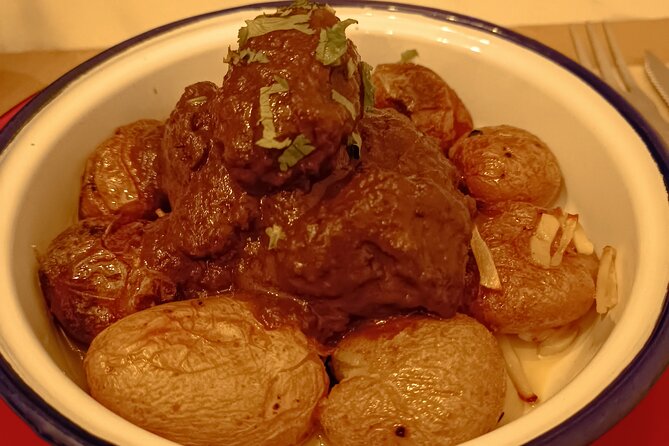
Here, you’ll try petiscos, Portuguese tapas-style small plates meant to keep you satisfied without committing to a full course meal. This stop is valuable because it teaches you how Portuguese dining is often structured: people snack, share, and keep the table moving with new bites.
If you want something beyond the set-sample flavors, this is also where you may see variations. Some people really enjoyed dishes like cabbage soup with chorizo, for example, which signals that the selection can include hearty, local comfort food depending on what’s available.
This is also a good stop for asking your guide questions about what’s worth ordering later. After petiscos, you’ll know how to navigate Portuguese menu language instead of guessing.
Stop 6 at Praca do Comercio: pastel de nata and ginjinha to close it out
The final stretch lands back in Baixa, with Praca do Comercio as your end point. This is Lisbon’s historic and commercial heart, and it’s the kind of setting that makes the whole walk feel complete: you started with classic bites, and you finish in a big open square with a sweet payoff.
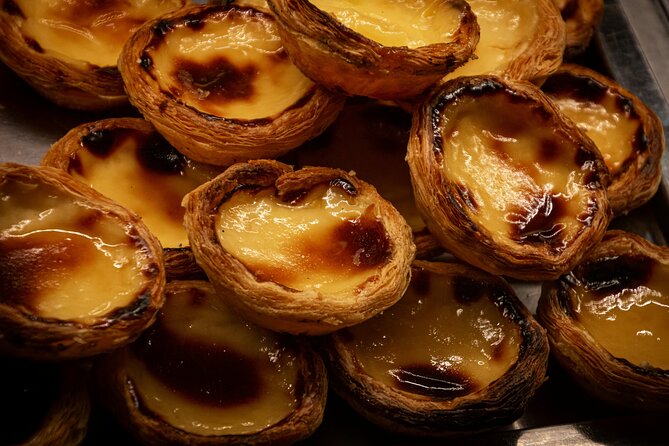
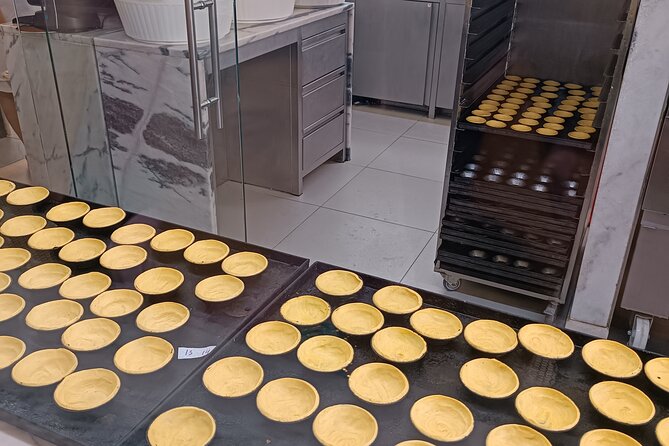
For dessert, you’ll have pastel de nata, the flaky, creamy custard pastry Portugal is famous for. The sample menu also mentions ginjinha, the sour cherry liqueur that locals often treat like a must-try finish—if you’re in the mood for something boozy.
This end stop is more than sugar. It’s your chance to slow down after all the walking and digestion work you’ve done over the last few hours. If you’re the type who likes to end strong, this is the right pairing: pastry first, then a small sip or taste of the cherry liqueur if you choose to go that route.
What to expect walking-wise: hills, pace, and how to avoid feeling rushed
This tour requires moderate physical fitness and it’s explicitly not flat. Lisbon has hills, and the route reflects that. Even if you’re fit, you should plan for uphill stretches and cobbled sections that can slow your pace.
From experience with how these routes typically run, you’ll likely rack up serious walking time. One guest noted around 10,000 steps, and that feels realistic for a 3.5-hour itinerary that includes five-plus food stops across central neighborhoods.
If you’re traveling with a stroller or have mobility concerns, I’d take the “hills” warning seriously. The tour can be manageable at a slower group pace, but cobblestones and slopes can make pushing difficult.
Bring shoes you can trust. Think grip, not fashion. You don’t want sore feet turning the later tasting stops into a chore.
Alcohol, age rules, and non-drink options that still work
Alcohol is part of the included package here. You’ll get at least 2 alcoholic drinks, and the tour specifies that only one alcoholic drink is served for travelers 18+ (so the policy is built around responsible portioning).
The tour also states that non-alcohol options are available. That matters because Portuguese food tastes better when you’re comfortable with the drinks you choose, and you don’t have to force yourself into wine or spirits if you’d rather sip water or a non-alcohol alternative.
If you’re someone who prefers to keep it light, you can still enjoy the pacing of the tour. The main point is the food sequence, and the drinks are there to complement—not replace—what you’re eating.
Seasonal substitutions and how to plan around dietary needs
The tastings described can change based on season and partner availability. That’s normal for food tours, and it’s often a positive: it keeps things fresh and tied to what local vendors have that week.
If you have dietary requirements, you should indicate them at the time of booking. The tour information notes that guests with severe or life-threatening food allergies can’t participate for safety reasons. That’s a firm boundary, so don’t plan on last-minute swaps once you’re on the street.
For less urgent needs (like avoiding certain foods), communication ahead of time is your best move. You’ll have a better chance of getting accommodations if you give details early rather than trying to improvise during tastings.
Who should book Taste Lisbon, and who should think twice
I think this tour is a great fit if you want a high-quality sampling of Portuguese classics in a short window, and you also like walking and neighborhood context. It works well for first-timers because it mixes recognizable sights with hands-on food learning, like how petiscos are ordered and how a bifana is built.
It also suits travelers who like small groups. With a maximum of 12, you’re more likely to get a real conversation with the guide rather than a scripted lecture.
I’d think twice if hills are a deal-breaker. The tour asks for moderate fitness, and it’s clear the route won’t be flat. If you know you’ll struggle with slopes, consider talking to the provider before booking.
Should you book this tour?
Yes, if you want a guided, multi-stop Portuguese meal that feels like an evening out, not a tiny snack experiment. At $78.44, the included food at at least 4 stops, the water, and the drinks help justify the price if you’d otherwise pay for several meals and tastings on your own.
Book it especially if you like the idea of learning Lisbon through neighborhoods like Chiado and Bairro Alto, with a real food stop at each turn. Guides such as Diana or Bruna have a reputation for making the walk relaxed and informative, and that matters for enjoying the pacing.
Skip it if you can’t handle hills or you need a step-free, low-movement route. This is a walking itinerary first, and food is built into that movement.
FAQ
How long is the Taste Lisbon tour?
It’s about 3 hours 30 minutes.
What’s included in the meal?
You’ll eat an itinerant full meal across at least 4 stops. All food is included.
Are drinks included?
Yes. You’ll receive at least 2 alcoholic drinks, and water is included. Non-alcohol options are available.
What are the age rules for alcohol?
The minimum drinking age is 18. For travelers 18+, the tour notes that only one alcoholic drink is served.
Is the tour offered in English?
Yes, it’s offered in English, and the guide may speak both English and Portuguese during the tour.
How many people are in the group?
The tour has a maximum of 12 travelers.
Can you accommodate dietary requirements or allergies?
You can indicate dietary requirements at booking. For safety reasons, guests with severe or life-threatening food allergies cannot participate.