REVIEW · KABUKICHO
Takoyaki making experience ~Japan’s popular street food~
Book on Viator →Operated by Bancre Inc. · Bookable on Viator
Takoyaki flips are harder than they look. In the heart of Shinjuku’s Kabukicho, this class turns Japan’s favorite street snack into a hands-on mini lesson: you pour batter, add chopped octopus, cook, flip, and finish with the classic toppings.
I love that you’re not just watching. You cook on a real takoyaki griddle and use sticks to turn the little balls into that round, crisp-on-the-outside shape. I also love the human touch: the guide Mai is described as patient and steady, which matters a lot when you’re trying something a bit fiddly with family.
One drawback to keep in mind: the experience is quick and focused, so you may get guidance that feels more like quick pointers than a slow step-by-step lecture, especially if English support is limited and a translator is used.
In This Review
- Key Things I’d Watch For Before You Go
- Why Shinjuku Kabukicho Is the Perfect Place for Takoyaki
- The Setup: What You’re Doing From the First Minute
- The Cooking Lesson: Batter, Octopus, and Flipping Skills
- Finishing Touches: Sauce, Mayo, Bonito, and Aonori
- Timing, Group Size, and Family Friendliness
- Price and Value: What $26.43 Really Buys You
- Getting There and Making the Most of Your Time
- Should You Book This Takoyaki Making Experience?
- FAQ
- How long does the takoyaki making experience last?
- Where does the experience start and end?
- How much does it cost?
- Is bottled water included?
- How many takoyaki can I make?
- Do two people share one cooker?
- What toppings are provided at the end?
- Are there any age rules?
- What if I need help with English?
- What is the cancellation policy?
Key Things I’d Watch For Before You Go
- Real hands-on cooking: you pour batter into round holes, add chopped octopus, then flip to get the right shape.
- Crispy outside, fluffy inside goal: that texture is part of what you’re learning to produce.
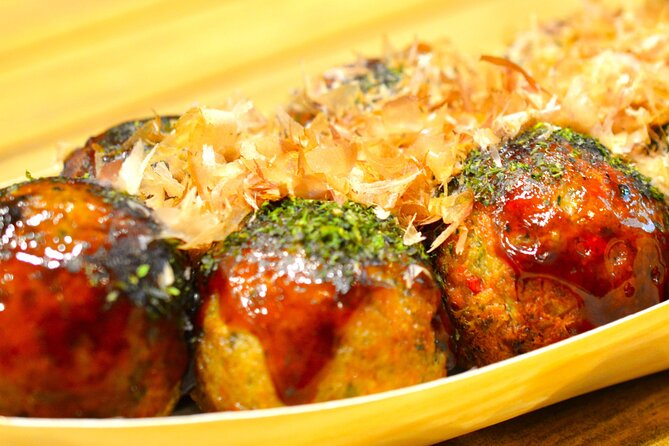
- Classic toppings included: sauce, mayonnaise, dried bonito flakes, and aonori green laver are part of the finishing.
- Small class vibe: up to 6 people, with the option for two people to share one takoyaki cooker.
- About 12 per person: you can make up to 12 takoyaki, so you’ll actually get your fill.
- Kabukicho location: it’s close to major landmarks like the Godzilla hotel area, and near public transport.
Why Shinjuku Kabukicho Is the Perfect Place for Takoyaki
Shinjuku’s Kabukicho is exactly the kind of neighborhood where you’d expect street food to feel fun, loud, and easy to jump into. That’s a big part of the appeal here: you’re learning takoyaki in an area known for late-night energy and snacks—so the experience feels like a real slice of city life, not a staged demo.
This class is built around the moment that makes takoyaki special: the sizzle when batter hits the griddle, the steam when octopus cooks inside, and the satisfying moment when you’re eating something hot that you made yourself. At about one hour, it’s short enough to fit into a busy Tokyo day, but long enough that you’re not just doing a token taste.
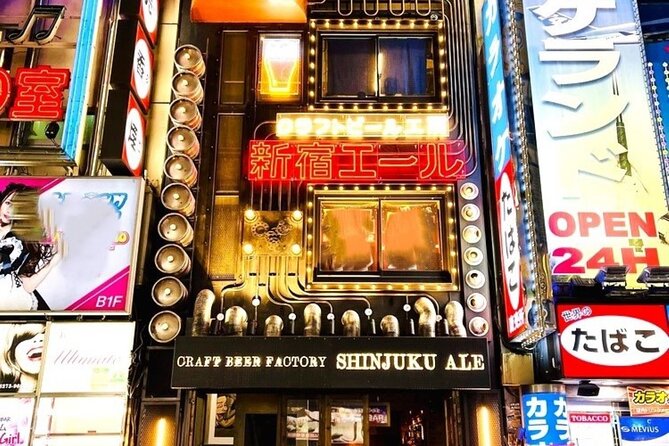
And location helps. The meeting point is at Shinjuku Ale (1F/2F), 1-chōme-14-5 Kabukichō—so you’re not losing time hunting for a side street in the dark. You also end back at the start, which makes planning the rest of your evening simpler.
You can also read our reviews of more food & drink experiences in Kabukicho
The Setup: What You’re Doing From the First Minute
When you arrive, you’ll want to let the staff know your reservation. Some staff may not be fluent in English, so you could see a translation machine used to keep things moving. That means you should expect a class format that relies on seeing the process as much as hearing it.
Before the cooking gets going, you’ll be working with the core takoyaki method:
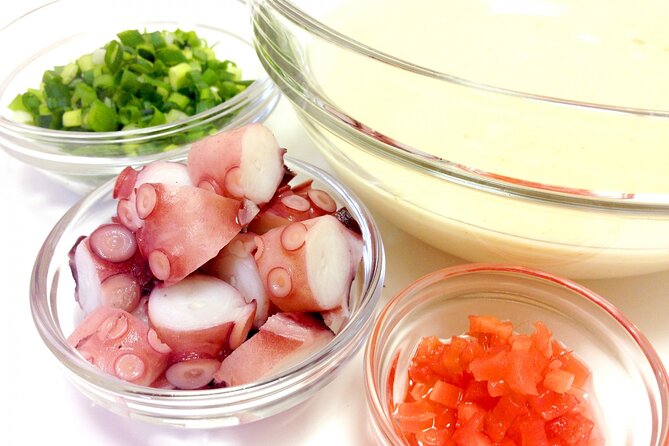
- batter made from water and eggs
- poured into a round hole on a specialized griddle
- chopped octopus added inside each ball
- cooked until they form that rounded shape
This matters because takoyaki is all about technique at the cooking stage. If you get the batter distribution wrong or don’t flip at the right time, the texture can go sideways—so the class is designed to keep you active, not waiting.
The class also gives you a practical setup for sharing. Two people can use one takoyaki cooker, which is handy for couples or small groups. If you’re traveling with kids, this helps everyone get hands-on rather than watching from the side.
The Cooking Lesson: Batter, Octopus, and Flipping Skills
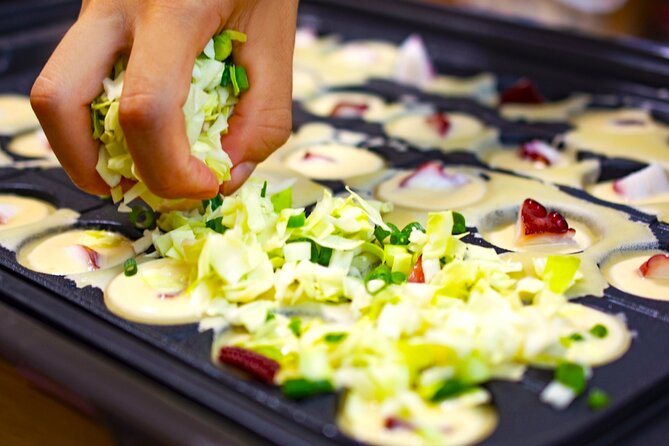
Here’s the heart of the experience: you grill your own takoyaki. The goal is that sweet spot where they’re crispy on the outside and fluffy on the inside. That texture comes from heat, timing, and how the batter sets around the octopus filling.
Expect a repeatable rhythm:
- batter goes into the round molds
- chopped octopus goes into the center
- you cook until they start setting
- you flip so they cook evenly and stay round
Flipping is the part people remember. Those little balls don’t always cooperate on the first try, and using sticks takes coordination. That’s why a patient guide like Mai (mentioned for being steady and helpful) is such a big deal. When the class pace is friendly, you’ll learn faster because you’re not stressed while you’re trying to turn each ball.
You can make up to 12 takoyaki per person, which is enough to matter. You’re not just practicing one or two tries; you get a real chance to improve as the class goes along—especially if you’re with family and you can swap turns.
Also, plan to be ready for the sensory part. This is hot, greasy (in a very satisfying way), and fast-moving. If you’re going to eat right away at the end, you’ll want to pace yourself during cooking so you still enjoy the tasting portion.
Finishing Touches: Sauce, Mayo, Bonito, and Aonori
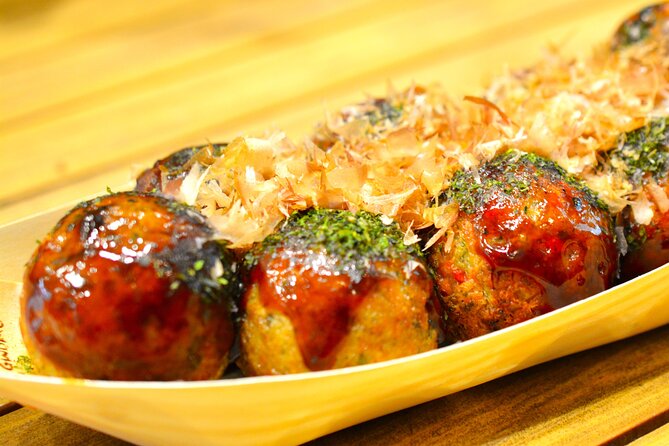
After cooking, takoyaki isn’t just eaten plain. It’s finished with the classic toppings that give it that signature look and flavor profile.
In this class, you’ll specifically be able to try:
- sauce
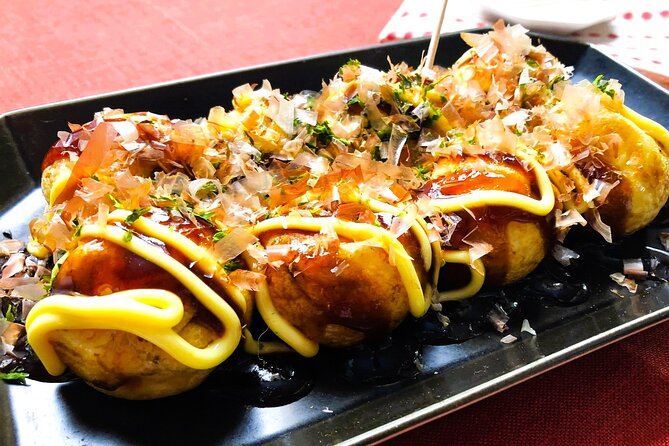
- mayonnaise
- dried bonito flakes
- aonori (green laver)
This is where takoyaki shifts from cooking project to street-food snack. Toppings make it feel complete—like you’re truly eating what you’d find on Japanese sidewalks. They’re also part of the fun with groups because everyone can choose how much to add.
The staff will serve your takoyaki hot, and the experience ends when you finish eating. That time structure is nice: you don’t get stuck in a long sit-down meal, and you can carry the satisfaction with you as you head back out into Tokyo.
One small practical note: your best bet is to taste soon after finishing, while it’s still hot. Takoyaki is at its best right after cooking, when the outside stays crisp and the filling stays warm.
Timing, Group Size, and Family Friendliness
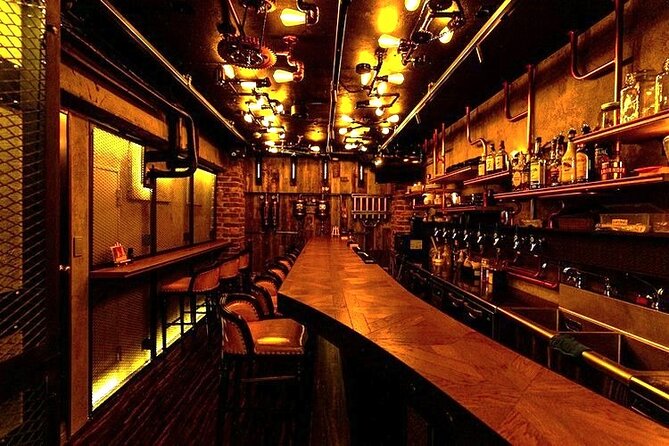
This is a small group experience with a maximum of 6 travelers. For Tokyo classes, that size helps the guide actually spend time with you, instead of rushing through everyone like a conveyor belt.
The class runs about one hour, so it’s ideal when you don’t want to commit to a half-day cooking tour. It’s also easier for families. Kids and tweens can join because the cooking task is hands-on but manageable—especially when the guide is patient with the flipping.
There’s also an important rule to know: participants under 20 must be accompanied by a parent or guardian. And underage drinking is prohibited under Japan’s Minors’ Alcoholic Beverage Law. If you’re considering adding drinks, keep this in mind.
About drinks: bottled water is not included. If you want extra beverages or meals beyond what’s part of the class, that will be on you. Some add-ons can be pricey, so I’d treat the base class as the main event and only add drinks if it fits your budget.
A few more Kabukicho tours and experiences worth a look

Price and Value: What $26.43 Really Buys You
At $26.43 per person, this sits in the “worth it if you want hands-on” category. You’re paying for more than a snack tasting. The price covers all fees and taxes, plus the structured cooking time with a dedicated takoyaki cooker setup.
You also get a meaningful quantity: up to 12 takoyaki per person. In a one-hour class, that’s a lot of food you helped make. The value is highest if you enjoy practical cooking activities and you want to learn a repeatable street-food skill you could attempt again later.
Where the value can feel weaker: if you expected a longer, more thorough walkthrough or a slower pace. The experience is short. It’s designed to get you cooking quickly and eating right away.
Still, if your priority is hands-on takoyaki in a convenient central area, this price is easy to justify.
Getting There and Making the Most of Your Time
You’ll start at Shinjuku Ale (1F/2F) in Kabukicho and return there when the activity ends. The location is near public transportation, which helps when you’re balancing Shinjuku subway stops with a class schedule.
You’ll also use a mobile ticket. That’s simple in practice: keep it handy on your phone so staff can find your reservation fast when you arrive.
If you’re planning your day, build in a little buffer. One hour can feel tight once you add walking time through Kabukicho and finding the exact spot inside the building. Tokyo is easy once you’re oriented, but Kabukicho can be a little chaotic at first.
A good strategy: pair this with a food-focused evening plan nearby. Since you’ll be eating takoyaki at the end, you might want to skip a heavy dinner before class and save your appetite for other street snacks after.
Should You Book This Takoyaki Making Experience?
I’d book it if you want a hands-on street-food experience in central Tokyo. It’s family-friendly, small-group, and built around learning the actual steps: batter, octopus, cooking, flipping, and classic toppings. If you care about doing something instead of just watching, this fits.
I might skip it if you’re expecting a slow, lecture-style class with lots of detailed explanation in English. The pace is fast, and language support may rely on a translation machine.
If you’re deciding based on risk, here’s the honest takeaway: the cooking part has a learning curve (flipping especially), but that’s also why it feels satisfying when it works. With patient guidance like Mai’s, the class is more about fun progress than perfection.
FAQ
How long does the takoyaki making experience last?
It runs about 1 hour (approx.), and it ends when you finish eating.
Where does the experience start and end?
It starts at Shinjuku Ale (1F/2F), 1-chōme-14-5 Kabukichō, Shinjuku City, Tokyo 160-0021, Japan, and it ends back at the meeting point.
How much does it cost?
The price is $26.43 per person.
Is bottled water included?
No. Bottled water is not included.
How many takoyaki can I make?
You can make up to 12 takoyaki per person.
Do two people share one cooker?
Yes. Two people can use one takoyaki cooker.
What toppings are provided at the end?
The class includes finishing sauces and toppings such as mayonnaise, sauce, bonito flakes, and aonori (green laver).
Are there any age rules?
Participants under 20 years old must be accompanied by a parent or guardian. Underage drinking is prohibited under the Minors’ Alcoholic Beverage Law.
What if I need help with English?
Some staff may not be fluent in English, and a translation machine may be used.
What is the cancellation policy?
You can cancel for a full refund if you cancel up to 24 hours in advance of the experience start time. If you cancel less than 24 hours before, the amount paid will not be refunded.