REVIEW · HONG KONG SAR
Small-Group Hong Kong Island Food Tour
Book on Viator →Operated by Hello Hong Kong · Bookable on Viator
Hong Kong Island tastes like a story you can eat. This small-group tour mixes Cantonese classics with British influence in old neighborhoods, with a guide who helps you order and eat confidently. I especially like how you hit local spots where tourists tend to feel out of place, and how the food comes with real context, not just facts on a sign. The main drawback to flag: it’s not a good fit if you’re vegetarian, gluten-free, or have seafood allergies.
You’ll start in Sheung Wan with yum cha dim sum served on a trolley, then work your way across Hong Kong Island toward Wan Chai for roast meat and dan tat egg tart. Along the way, you’ll also pause for tea-shop sweets, a dried-seafood area, a centuries-old wet market vibe, and a short scenic transport hit on the Ding Ding tram plus the Mid-Levels escalator views. If you’re expecting a slow, sit-down meal marathon, adjust your mindset: this is a walking-and-sampling morning focused on getting you full, not stuck.
In This Review
- Key Highlights to Look For
- Sheung Wan Yum Cha: Starting With Trolley Dim Sum
- Wonton Noodles: The Simple Dish That Needs a Local Master
- Milk Tea: The British Legacy You’ll Actually Drink
- Ding Ding Tram to Roast Meat: Char Siu With Old-World Cred
- Dan Tat Egg Tart: Ending Sweet, Not Just Finishing
- More Than Food: Markets, Medicine Shops, and Mid-Levels Views
- How the Route Feels: Walking Time, Group Size, and Real-Life Pace
- Price and Value: What You’re Really Paying For
- Who Should Book This Hong Kong Island Food Tour
- Should You Book It? My Decision Checklist
- FAQ
- What’s the tour duration and time?
- How much does the Small-Group Hong Kong Island Food Tour cost?
- What foods and drinks are included?
- Is the tour suitable for vegetarians or gluten-free diets?
- Is the tour conducted in English?
- Can I cancel for a full refund?
Key Highlights to Look For
- Small group of up to 9 people, so your guide can keep things moving and answer questions.
- Yum cha dim sum on a trolley at an old tea house atmosphere that feels like it’s been running forever.
- A Michelin Guide–recommended wonton noodle stop plus the city’s classic Hong Kong-style flavors.
- Ding Ding tram ride for a real slice of everyday local life (historic, double-decker vibes).
- Dan tat egg tart at a long-running bakery—a Cantonese twist on an English dessert idea.
- More than food stops like Graham Street Market and the Mid-Levels Escalator to connect dishes to place.
Sheung Wan Yum Cha: Starting With Trolley Dim Sum
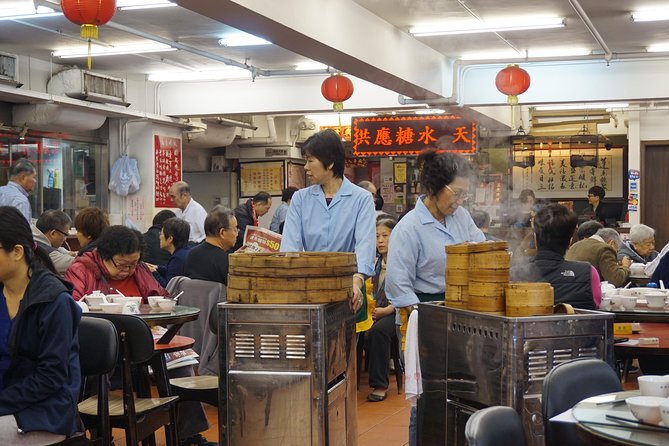
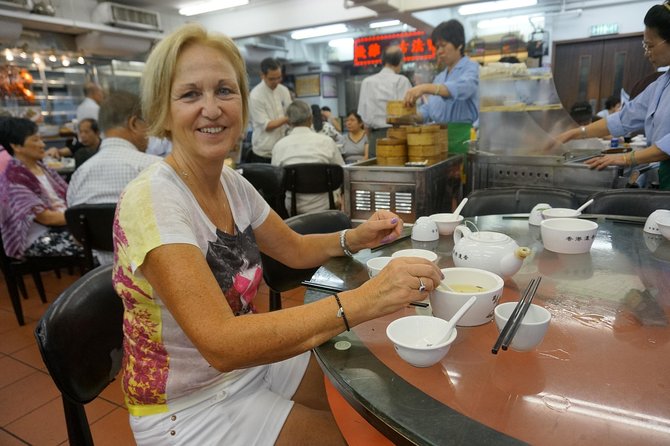
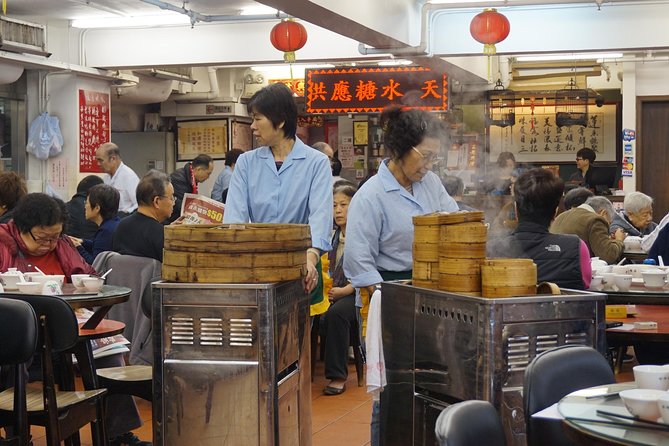
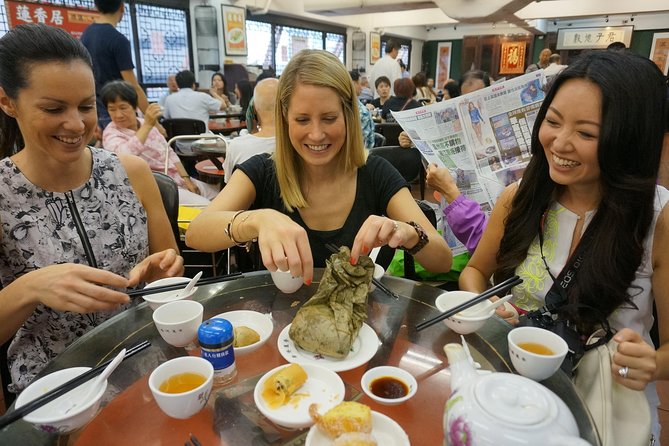
If you want the quickest route to understanding Hong Kong food culture, begin with yum cha. This tour meets you in Sheung Wan and kicks off at an old tea house where your first dish arrives the way it’s meant to: dim sum served by trolley. Expect a lively, crowded restaurant feel, the kind that tells you locals treat meals like a social habit, not a tourist checklist.
What I like here is the pacing and setup. You don’t just get food on a plate; you get a moment where the room teaches you how to eat—shared tables, quick service, and the rhythm of ordering. You’ll also learn what’s typical for this style of Hong Kong breakfast, and why dim sum matters beyond being tasty.
One practical note: the tour strongly suggests you arrive hungry and don’t eat breakfast beforehand. That advice is there for a reason. With five food stops built in, you’ll want your appetite, especially before the wonton noodles and roast meats later on.
You can also read our reviews of more food & drink experiences in Hong Kong SAR
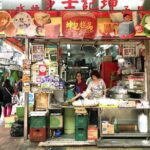
Wonton Noodles: The Simple Dish That Needs a Local Master
Next up is a family-run spot from the 1960s known for wonton noodles, one of Hong Kong’s most famous “simple but hard to perfect” foods. This isn’t the kind of meal you should approach like a generic bowl of soup. In Hong Kong, wonton noodles live or die by texture, seasoning balance, and the way the noodles hold up in broth.
You’ll taste a Hong Kong specialty at a place you’d be unlikely to stumble into on your own. That’s the real value of this stop: you get the version of the dish locals actually go back for, not an adaptation.
If you have seafood concerns, keep this in mind. The tour is explicitly not suitable for seafood allergy and it also isn’t built for gluten-free needs. Even if you personally can handle some ingredients, the tour’s focus is Cantonese local cooking, and it isn’t set up for substitutions.
Milk Tea: The British Legacy You’ll Actually Drink
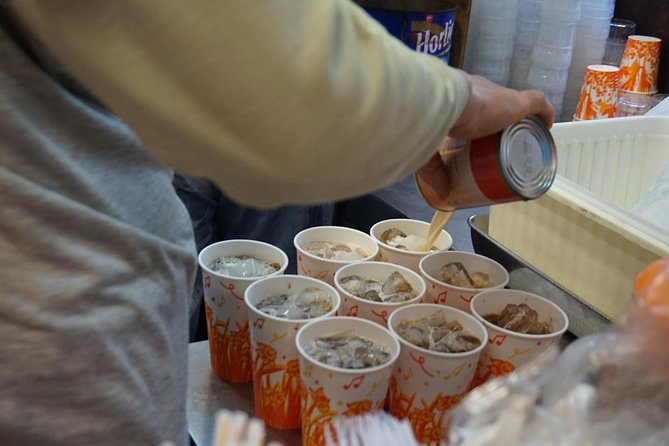
Between savory bowls and roast meat, you get a cup of Hong Kong milk tea, one of the city’s most recognizable everyday drinks. The tour frames it as a lingering flavor connection from Britain, but the important part for you is how it tastes in the context of Hong Kong eating. Milk tea is not a side quest here—it’s part of the meal culture.
I like that this stop slows you down just enough. After noodle and dumpling energy, milk tea gives you a pause, a sensory reset, and a different rhythm before the next round of food.
Also, if you’re a tea person, watch how you react to sweetness and strength. Hong Kong milk tea often lands in a stronger, richer zone than what people expect. You’ll learn how locals think about it, not just how it’s made.
Ding Ding Tram to Roast Meat: Char Siu With Old-World Cred
Then comes a ride on the Ding Ding tram, one of Hong Kong’s iconic electric streetcar systems. It’s historic (running since the early 1900s under British rule), and it’s also just fun. The best part is the realism: you see daily life move past the tram windows while you’re headed to the next meal.
Your next food stop centers on English char siu, served at a family-run restaurant said to date back to the Qing dynasty era (pre-20th century). Yes, you’re reading that right: a dish with British-era naming comes to life in a Cantonese roast-meat tradition. You’ll get a mix of traditional roasted meats with rice and homemade sauces, so you’re tasting more than one flavor family in one stop.
This is where the tour’s “history through food” approach becomes practical. You’re not just hearing that Hong Kong blended influences; you’re tasting the results—sweet, smoky roast notes, and sauces built for rice. You’ll also get a guide to help with language barriers, which matters on Hong Kong menus that can feel intimidating if you don’t speak Cantonese.
Dan Tat Egg Tart: Ending Sweet, Not Just Finishing
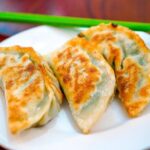
By the time you reach the dan tat, you’ll be in that “I’m full but I still want one more bite” zone. This tour ends with egg tart (dan tat) from a bakery with about 60 years of history. The tour ties the dan tat to a Cantonese take on an English-style custard tart, which is exactly the kind of cultural loop that makes the whole day make sense.
What I like about ending here: it’s a strong final payoff that matches the tour’s theme. You started with Cantonese dim sum. You moved through British-era echoes in milk tea and the roast-meat naming. Now you finish with a dessert that’s both comfort food and cultural remix.
Try to savor it slowly, not like a hurried last-minute snack. The difference is real if you pay attention to the custard texture and the pastry crunch.
A few more Hong Kong SAR tours and experiences worth a look
More Than Food: Markets, Medicine Shops, and Mid-Levels Views
This is the part that makes the tour feel like Hong Kong Island instead of “five meals in a row.” Between food stops, you’ll also see small-business Hong Kong—tea candy shops, soy sauce producers, and specialty trade areas.
A few highlights you’ll encounter:
- You’ll pass through Sheung Wan dried seafood territory, where ingredients used in Chinese cooking and tonic traditions cluster in one area.
- You’ll stop at a tea shop to try preserved candies—fruit-based sweets made the traditional way.
- You’ll get a Graham Street Market moment with the kind of street-market energy locals actually use for daily errands. The street is sloped and lined with stalls that can range from fresh vegetables to seafood-focused shops.
You’ll also see stops that connect directly to old Hong Kong systems of everyday life. The tour includes a family-run soy sauce producer, a dried seafood shop, a Chinese medicine shop dating back to the 1940s, and a look at what’s described as the city’s oldest wet market. These stops matter because they show you food culture as supply chain and tradition, not just finished dishes.
Then there’s the scenery and movement. You’ll spend time near the Mid-Levels Escalator, described as the world’s longest outdoor escalator system, about 800 meters and lifting around 135 meters. It’s a great “view moment” after eating, plus it helps you understand how Hong Kong connects neighborhoods vertically.
The route also includes a stop tied to Tai Kwun, a restored heritage space in Central. Even if you don’t go inside, you’ll feel the shift from older food commerce to Hong Kong’s modern reuse of historic buildings.
The day isn’t all serious, either. Near the end, you’ll pass Southorn Playground in Wan Chai, a place where sports and quick bites mix with office-day life.
How the Route Feels: Walking Time, Group Size, and Real-Life Pace
This tour runs about four hours, starting at 9:30 am and ending in Wan Chai. That timing is ideal if you want a food-heavy morning without losing your whole day. You’ll cover a good chunk of Hong Kong Island on foot, plus short transport moments.
The small-group cap—maximum 9 travelers—isn’t just a marketing line. It keeps your tour from turning into a slow-moving conga line outside restaurants. It also makes it easier for your guide to keep you fed and moving, and to handle quick questions as they come up.
English is the working language on the tour. That helps a lot with ordering and basic communication in Cantonese-heavy settings. A big theme in the guide feedback I saw is attention to comfort details like timing and meal amounts. Some guides even manage the day with a practical sense of humor, including guidance on where to find the best bathroom stop on your route.
If you’re the type who hates tight schedules, this still might work, but go in expecting a lively pace. This isn’t a slow stroll with a single big meal. It’s a sampling day where everything is sized so you finish comfortably full.
Price and Value: What You’re Really Paying For
At $115.52 per person for about four hours, you’re not just paying for food. You’re paying for access, planning, and translation support in places that would be intimidating without a local guide.
Here’s what’s included:
- Dim sum / yum cha experience
- Wonton noodle soup
- Hong Kong milk tea
- Egg tart
- Traditional dried fruit sweets
- Ding Ding tram ride
- Char siu (BBQ pork)
You’re also getting a guide who provides local food history and helps you navigate language barriers. When you factor in that number of stops plus the time on the ground, the price starts to look like a bundled deal rather than five separate restaurant decisions.
Is it “cheap”? No. But it can be good value if you care about eating at the kinds of places where locals go, and if you want someone to connect the dots—Cantonese traditions, British-era influences, and how you taste that mix in the actual dishes.
If you’re the type who plans your own food crawl, you might spend less solo. Still, you’d likely spend more time searching—and you’d miss the context and the help with menus that this tour focuses on.
Who Should Book This Hong Kong Island Food Tour
This tour fits best when you want a structured way to eat your way through Hong Kong Island without getting lost in language or logistics. It also suits you if you like history, but you want it delivered through food and neighborhoods, not museum lectures.
It’s a poor fit if:
- You’re vegetarian
- You need gluten-free food
- You have seafood allergies
- You’re bringing kids age 5 or below
If you’re traveling solo, the small group size can feel welcoming. Several guides on this route are repeatedly praised for being personable and keeping the experience fun while still staying organized.
Guide quality is a big part of why people rate this highly. Names you might see associated with top guide experiences include Ivy, Andy, Mel, Alex, Sinclair, and Jane. Whoever you get, the pattern is clear: clear English, good pacing, and a focus on getting you enough food at each stop.
Should You Book It? My Decision Checklist
Book this tour if you want:
- A morning that combines Cantonese comfort food with British-influenced Hong Kong flavor stories
- A plan that takes you through key neighborhoods like Sheung Wan and ends in Wan Chai
- A guide to handle language barriers and keep you from second-guessing what to order
Consider skipping or switching if:
- You’re strict about dietary needs (especially gluten or seafood allergies)
- You dislike walking and want a purely seated experience
- You already have your heart set on a different area of Hong Kong that day
My practical advice: come with an appetite, plan to take photos, and wear shoes that can handle sloped streets. If you do those three things, you’ll come away with a fast, well-fed understanding of how Hong Kong tastes and why it tastes that way.
FAQ
What’s the tour duration and time?
The tour runs for about 4 hours and starts at 9:30 am, ending in Wan Chai.
How much does the Small-Group Hong Kong Island Food Tour cost?
It costs $115.52 per person.
What foods and drinks are included?
Included are dim sum/yum cha, wonton noodle soup, Hong Kong milk tea, egg tart (dan tat), traditional dried fruit sweets, char siu (BBQ pork), plus a Ding Ding tram ride.
Is the tour suitable for vegetarians or gluten-free diets?
No. The tour is not suitable for vegetarians or gluten-free guests, and it’s also not suitable for people with seafood allergies.
Is the tour conducted in English?
Yes, the tour is conducted in English.
Can I cancel for a full refund?
Yes. You can cancel up to 24 hours in advance for a full refund. If you cancel less than 24 hours before the start time, you won’t receive a refund.