REVIEW · SICILY
Palermo Street Food tour: art, history and ancient markets
Book on Viator →Operated by Palermo a Piedi - Walking Tour · Bookable on Viator
Palermo’s markets are your tastiest classroom. This 3-hour street food walk combines Arab-origin food streets, baroque corners, and big-name sights like Teatro Massimo and Palermo Cathedral, all while you snack on classic local favorites. I especially like how the plan feeds you more than once, not just a token bite, and how the guide connects what you see to the city’s changing eras. One thing to consider: it’s a walking tour with multiple fried items, including meusa, so if you avoid certain foods or need very specific dietary options, you’ll want to think ahead.
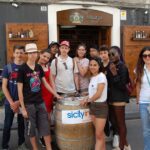
The guide part is what makes the whole experience click. On this tour, local names come up often, like Fabrizio and Maurizio, and the vibe is practical: they explain what you’re looking at, keep the group moving at a good pace, and then point you toward where to keep eating after the tour. If you’re the type who enjoys history without sitting in a museum chair all day, this format fits.
In This Review
- Key points you should know
- Why Palermo Street Food Works: Markets + Monuments in One 3-Hour Loop
- Starting at Piazza Olivella: Where You Get Grounded Before You Snack
- Capo Street Market on via Porta Carini and via Bandiera
- Dainotti’s da Arianna: The Frying Stop That Changes How You Judge Street Food
- Teatro Massimo and Palermo Cathedral: Two Different Kinds of Big Deal
- Quattro Canti and Piazza Olivella: Baroque Street Corners with Real Meaning
- Teatro dell’Opera dei Pupi and Via Vittorio Emanuele: Palermo’s Oldest Street and a UNESCO Craft
- The Tasting Menu: What’s Included and How It Usually Feels Like Lunch
- How the Guide Shapes the Day: Names Matter, and So Does the Local Voice
- Price and Value: Is $49.77 a Smart Deal?
- Who Should Book This Tour (and Who Might Want a Different Plan)
- The Quick Booking Call: Should You Book Palermo Street Food: Art, History and Ancient Markets?
- FAQ
- How long is the Palermo street food tour?
- What’s the price per person?
- Where does the tour start and where does it end?
- What time does it start?
- What street food tastings are included?
- Is a drink included?
- Are there any admission fees you still need to pay?
- What are some of the main sights you visit?
- What’s the group size limit?
- What if the weather is bad?
- Can I cancel for a full refund?
Key points you should know
- Capo Street Market is the daily Arab-influenced food street that sets the mood fast
- Multiple Palermo classics are included: panelle, crocchè, sfincione, arancina, cannolo
- Cathedral time is built in, and in practice you don’t need to budget for it here
- Major landmarks are paired with food stops, so the history feels real
- Small groups (max 16) make it easier to ask questions and get help choosing what to eat
- Teatro dell’Opera dei Pupi (Mimmo Cuticchio) adds a distinctly Palermo layer to the day
Why Palermo Street Food Works: Markets + Monuments in One 3-Hour Loop
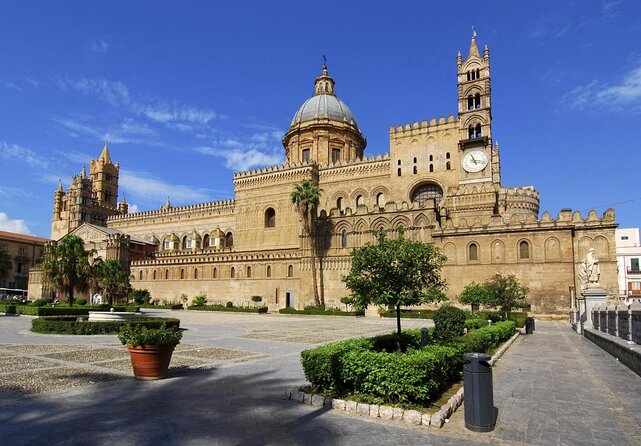
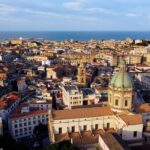
This is the kind of tour that helps you understand Palermo by experiencing it in layers. You start in places where food is the language, then you walk toward the city’s power centers—churches, squares, and famous architecture—without switching gears too many times.
The value is in the mix. You get guided time at key sights like Palermo Cathedral and the Quattro Canti, plus a structured street-food tasting that includes a full list of famous staples. That matters because street food in Palermo can be overwhelming when you’re wandering on your own. Having an expert and an organized plan means fewer wrong turns and faster access to the places locals trust.
If you like your travel with a purpose—learn a bit, see a bit, eat a lot—this format is a good match. Just remember it’s still outdoors and you’ll be walking, so plan around comfortable shoes and the day’s weather.
You can also read our reviews of more food & drink experiences in Sicily
Starting at Piazza Olivella: Where You Get Grounded Before You Snack
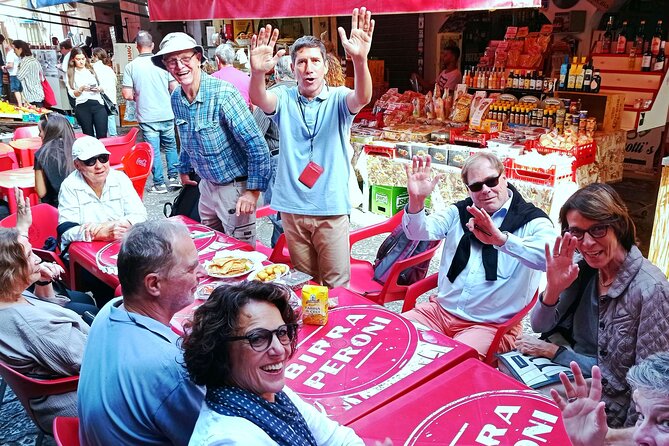
You begin at Piazza Olivella (90133 Palermo), a convenient historic-center spot near via Roma. The meeting point puts you close to the area where the markets live (Ballarò and Vucciria are nearby), so the tour starts with the right energy: everyday life, food stalls, and street scenes rather than quiet museum rooms.
Because the tour is about orientation, you’ll notice the guide doesn’t just hand you facts. They tend to give the city framework early—how Palermo’s location and rulers shaped what you see now—so monuments like the Cathedral don’t feel random when you reach them later.
Timing is straightforward: the tour starts at 10:30 am, and it’s designed to work well with cruise-day schedules too. If you’re on a cruise, there’s a port meeting at 10:00 am, and the tour ends within an easy walk of the port.
Capo Street Market on via Porta Carini and via Bandiera
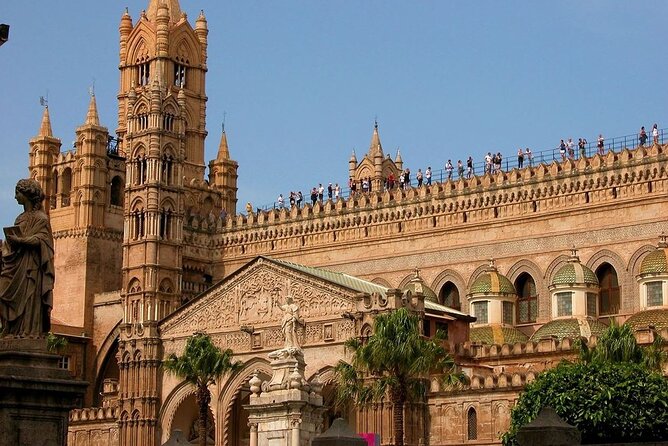
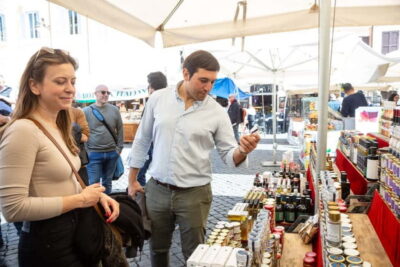
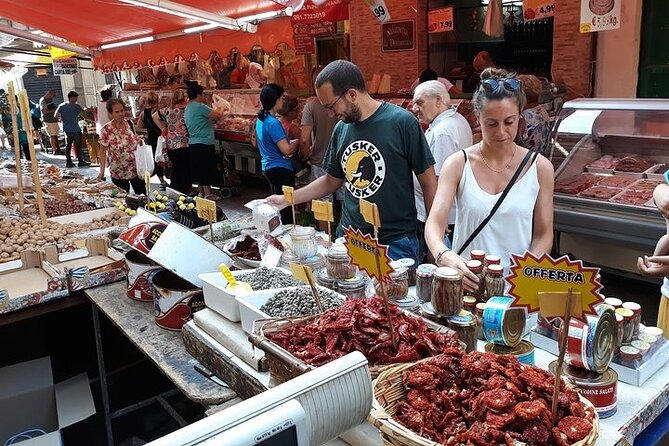
This is where you feel Palermo’s market heartbeat. You’ll cross into the Capo Street Market, described as an ancient daily food market of Arab origin. The setting matters: you’re not standing in a staged tourist bazaar. You’re walking the kind of streets where people come every day to eat, buy, and chat.
Why it’s a strong first stop: it’s a shock of texture and smell that teaches you the city’s food logic. You’ll see how the market shapes what becomes street food—things made to be carried, eaten quickly, and shared.
What to expect for your senses: lots of activity, crowded footpaths in the classic market rhythm, and the moment where the guide starts steering you toward what’s worth ordering. The visit is short (about 20 minutes), so it’s not a long browsing session. It’s more like a fast introduction that sets you up for the tastings that follow.
One practical note: markets can be lively under changing light and temperatures. Go with the mindset that this is part food-street discovery, part guided snack route.
Dainotti’s da Arianna: The Frying Stop That Changes How You Judge Street Food
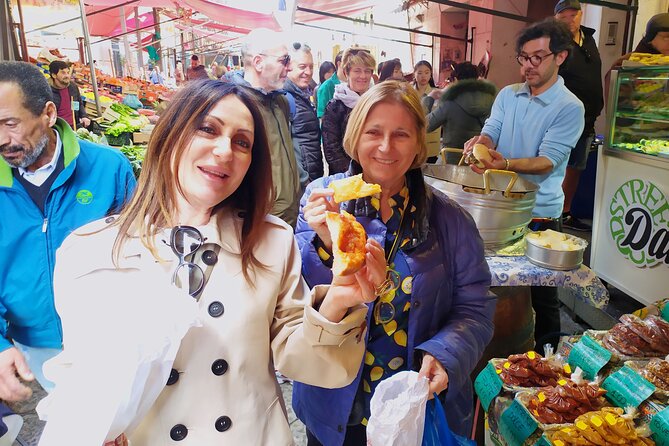
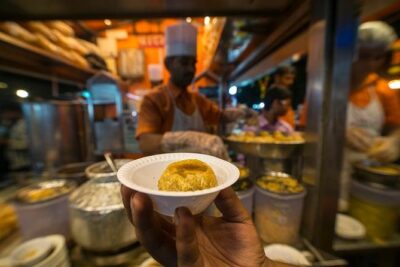
Next comes a proper friggitoria moment: Dainotti’s da Arianna, where the tasting includes fried favorites. The big detail here is that Dainotti is presented as the best fryer in Palermo, and it’s linked to a TV competition called Quattrorestaurants.
This stop is valuable because it’s not just about eating. It’s about learning what “good” means in Palermo street food. Fried foods can be hit-or-miss, depending on oil temperature and freshness. When a guide sends you to a place recognized for frying well, you’re reducing the odds of getting disappointed.
You’ll get about 45 minutes here, and that time usually means you’ll order, taste, and let the guide explain the dish names and what to pay attention to. Even if you’ve had fried snacks elsewhere, the goal is to taste them in their home format.
If you’re a careful eater, this is still a good stop because the menu choices are classic and clearly defined in the tour’s tasting list. That said, it’s still fried food, so plan to pace yourself and save room for the sweets later.
Teatro Massimo and Palermo Cathedral: Two Different Kinds of Big Deal
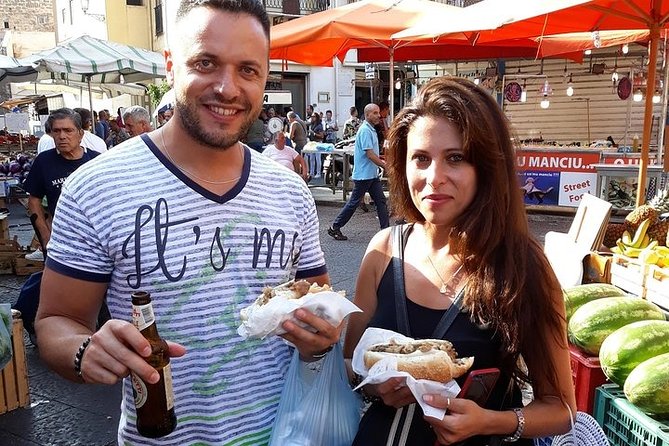
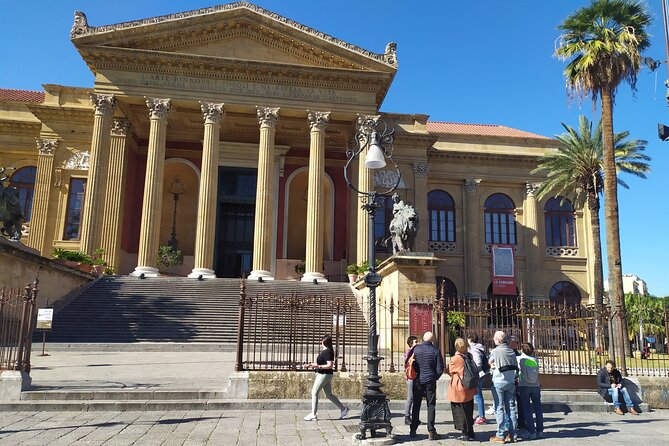
At some point, the tour shifts from snack-level streets to the city’s ceremonial face. You’ll stop at Teatro Massimo, described as the largest opera house in Italy. Even if you’re not an opera person, this works as a visual reset. It’s a reminder that Palermo’s story isn’t just markets and churches; it also includes cultural institutions built to impress.
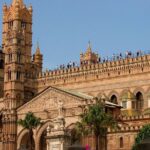
Right after, you reach Cattedrale di Palermo, the city’s main Catholic church and archbishopric. The Cathedral is described as 12th century, with artwork added over time. It’s also part of the UNESCO Arab-Norman itinerary alongside Monreale and Cefalù (listed with Palermo).
Two practical advantages here:
- Cathedral admission isn’t a separate cost on this tour (it’s listed as free ticket time).
- It’s a short stop (about 20 minutes), so you get the big highlights without losing half your day.
The reason this pairing feels smart: it connects the Arab-Norman theme to what you’re seeing on the street. You walk from market energy into a monument built to reflect shifting power and culture. Even if you don’t remember every detail, the city starts to make sense.
A few more Sicily tours and experiences worth a look

Quattro Canti and Piazza Olivella: Baroque Street Corners with Real Meaning
One of the best Palermo experiences is how it turns street intersections into set pieces. At Quattro Canti (also called Ottagono del Sole and Teatro del Sole), you’ll stand at an octagonal square built in the early 1600s at the meeting of two main roads: via Maqueda and the Cassaro (today Via Vittorio Emanuele).
This stop is only about 10 minutes, but it’s worth it because the square is visual shorthand for Palermo’s baroque style. You see how the city planned drama at the street level, not only inside churches.
From there, you reach Piazza Olivella, where you can take in the majestic church of Sant’Ignazio and the former convent complex that houses the Archaeological Museum. The stop is around 15 minutes. Museum admission fees are not included, so think of this moment as more about the architecture and the context—unless you choose to pay separately on your own schedule.
The quick takeaway: Quattro Canti tells you how Palermo staged its power. Piazza Olivella tells you how religion and learning sat side by side in daily life.
Teatro dell’Opera dei Pupi and Via Vittorio Emanuele: Palermo’s Oldest Street and a UNESCO Craft
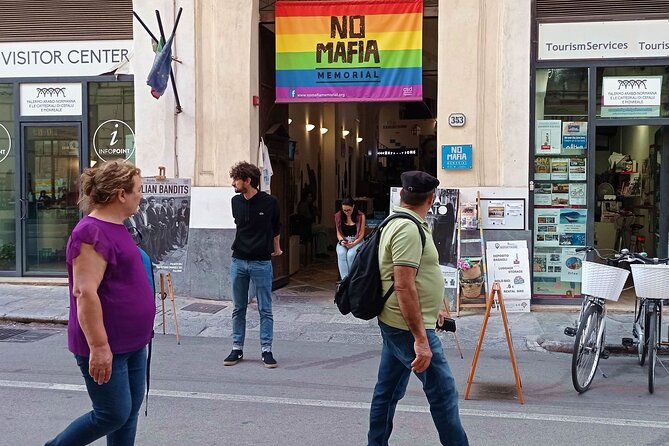
Now the tour turns distinctly local. You’ll stop at Teatro dell’Opera dei Pupi by Mimmo Cuticchio, connected to a traditional Palermo show dating back to 1800, and noted as UNESCO heritage. This is the kind of cultural stop that’s easy to miss if you’re only chasing big monuments.
What makes it special is the identity angle. Opera dei Pupi is not international brand culture. It’s a street-level tradition with a specific regional style, and Palermo keeps it alive through performers and audiences.
Then you finish with Via Vittorio Emanuele, identified here as the ancient Cassaro, described as Palermo’s oldest street lined with palaces, churches, and convents. That’s about 15 minutes of walking through a corridor that feels like the city’s backbone.
This finale is helpful because it gives you a map in your head. After you see the street plan and the major corners, you’ll be better at wandering afterward without getting lost in the wrong neighborhoods.
The Tasting Menu: What’s Included and How It Usually Feels Like Lunch
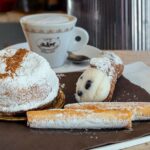
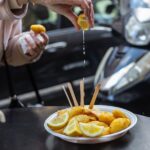
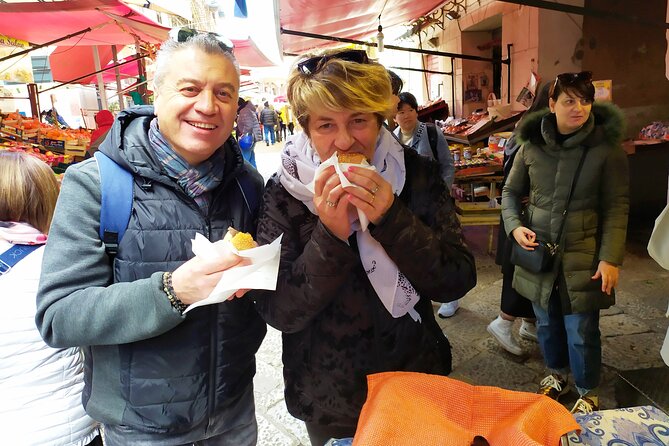
Your included tasting list is clearly defined and classic. You’ll try:
- panelle (chickpea fritters)
- crocchè
- sfincione
- arancina
- cannolo
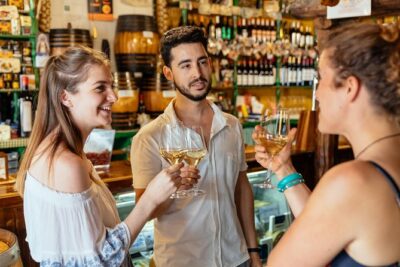
And you get one drink of your choice between water, cola, or beer.
This is more than “sample-size.” With the full set of savory items plus cannolo, it often lands like a late lunch for many people. The guide also advises where to continue with more food and drinks after the tour, which is great if you want to keep momentum instead of stopping after dessert.
Food pacing tip: keep an eye on order sizes. When you’re eating fried classics back-to-back, the best strategy is to take small bites and let each dish hit before moving on.
Also, pay attention to names. If you’re curious, learning what panelle and crocchè are made of helps you order confidently later. The guide’s job is to make the menu understandable, not just handed to you.
How the Guide Shapes the Day: Names Matter, and So Does the Local Voice
This tour leans hard on the guide’s ability to teach without turning it into a lecture. People often highlight that the guides move dynamically, answer questions, and keep things entertaining. Two names show up repeatedly: Fabrizio and Maurizio. Both are presented as true Palermo insiders, quick with humor, and good at remembering names early so the group feels personal.
What I like about this approach is that it changes how you walk through historic center streets. Instead of just ticking off landmarks, you get context: why certain monuments sit where they do, how Palermo’s role as a former capital left fingerprints, and what local legends or “mysteries and secrets” mean when you stand in front of stone that’s been altered over centuries.
Just as important: the guide doesn’t stop after the final bite. You’ll get suggestions for where to continue eating the best foods, including desserts. That means the tour acts like a launchpad for the rest of your Palermo days.
Price and Value: Is $49.77 a Smart Deal?
At $49.77 per person, you’re paying for a short, guided walking experience with a structured tasting. On paper, street food can look cheap until you start adding up multiple orders, drinks, and the time cost of figuring out where to go.
Here, you get:
- a guide leading you through historic streets
- multiple tastings that cover both savory and sweet
- a drink included
- Cathedral visit time included
- access to major sights like Teatro Massimo and Quattro Canti
For many budgets, this is a good trade: you pay once, then you’re not spending extra energy hunting for the right stall. Plus the group is capped at 16 travelers, which usually means you get more attention than the mass-market food tours.
If you’re already the kind of person who wants a guided orientation walk plus a real food plan, this price feels reasonable.
Who Should Book This Tour (and Who Might Want a Different Plan)
This tour is a strong fit for you if:
- you want art, history, and ancient market scenes together
- you like walking tours that teach you something practical
- you enjoy classic Palermo street food and want it in an organized tasting route
- you want local recommendations right after the tour ends
It might be less ideal if:
- you dislike fried foods or know you won’t eat certain items (the broader tasting includes classic Palermo fried dishes, and meusa comes up as part of the street-food focus in the tour’s description)
- you want a slow, do-it-yourself stroll with no structure
- you’re sensitive to weather, because the experience is noted as requiring good weather
The Quick Booking Call: Should You Book Palermo Street Food: Art, History and Ancient Markets?
Book it if you’re in Palermo for a short time and want high value. This is a smart way to get your bearings fast, eat the big classics, and see major stops like Palermo Cathedral and Quattro Canti without spending your energy guessing.
Skip or consider alternatives if your priorities are strictly museums with long indoor time, or if you’re not able to eat the typical street-food style included in the tasting. Also, check the day’s weather expectations since the tour depends on good conditions.
If you want a day that feels both edible and educational, this tour hits the sweet spot.
FAQ
How long is the Palermo street food tour?
It runs for about 3 hours.
What’s the price per person?
The price is $49.77 per person.
Where does the tour start and where does it end?
It starts at Piazza Olivella (90133 Palermo) and ends at Quattro Canti, Piazza Vigliena (90133 Palermo).
What time does it start?
The start time is 10:30 am.
What street food tastings are included?
Included tastings are panelle, crocchè, sfincione, arancina and cannolo.
Is a drink included?
Yes. You get a drink of your choice between water, cola and beer.
Are there any admission fees you still need to pay?
Museum admission fees are not included. Cathedral entry is listed as free for this tour.
What are some of the main sights you visit?
You see the Cathedral of Palermo, Quattro Canti, and Teatro Massimo, plus stops connected to Via Vittorio Emanuele and the local Opera dei Pupi tradition.
What’s the group size limit?
The tour has a maximum of 16 travelers.
What if the weather is bad?
The experience requires good weather. If it’s canceled due to poor weather, you’ll be offered a different date or a full refund.
Can I cancel for a full refund?
Yes. You can cancel up to 24 hours before the experience’s start time for a full refund.