REVIEW · JAIPUR
Jaipur@Twilight Guided Heritage City walk tour with Food Tasting
Book on Viator →Operated by Seagull Jaunt · Bookable on Viator
Jaipur shifts into a whole new mood after dark. This guided Jaipur@Twilight walk threads through narrow lanes and packed bazaars while stories of Jaipur’s past and present play out side by side. You get the day-to-night “glitter” effect, plus hands-on crafts and a food tasting that keeps the walk from feeling like just sightseeing.
I especially like the craft-focused stops: you can watch marble idol work going from sketch to finished painting at Khajane Walon Ka Rasta, including details like gold work on marble artifacts. I also love the bangle market focus, where you’ll see the lac bangle-making process and the bridal-jewelry look that Jaipur does so well.
One thing to plan for: Albert Hall Museum entry isn’t included, so decide ahead of time if you want to pay for museum time.
In This Review
- Key highlights worth caring about
- How twilight makes Jaipur feel like a living city
- Where to start (Raj Mandir) and where the walk ends (Albert Hall)
- Khajane Walon Ka Rasta and Khejado Ka Rasta: marble idols from sketch to finish
- Tripolia Bazar and Thakur Uday Singh Ji Haveli: art, lamps, and a quiet pause
- Maniharon ka Rasta and the bangle market: lac bangles and bridal spectacle
- Johri Bazaar to Achar Wali Gali: sweet bites and the Pickle Man of India
- The e-rickshaw ride and Albert Hall Museum night views
- Price and value: why $29.96 can feel like a bargain
- Getting the most out of the walk: what to expect with a small group
- Who should book this Jaipur@Twilight walk (and who should skip)
- Should you book this twilight heritage walk?
- FAQ
- How long is the Jaipur@Twilight guided heritage walk with food tasting?
- How much does the tour cost?
- Where do I meet the guide and where does the tour end?
- Is Albert Hall Museum admission included?
- What kinds of stops does the tour include?
- What food is included during the tastings?
- How large is the group?
- What if the weather is bad?
- What is the cancellation and refund policy?
Key highlights worth caring about
- Twilight timing that changes everything as shops light up and lanes feel alive without the midday heat
- Marble idol craft, step-by-step from sketching to final painting (and the gold-on-marble look)
- Tripolia Bazar with a British-era touch via gas lamps at Thakur Uday Singh Ji Haveli
- Maniharon ka Rasta for bangles and bridal décor including the look of lac bangles and shop displays
- Food tasting plus a famous pickle stop that adds real local flavor to the route
- Small group energy and an e-rickshaw hop to Albert Hall Museum for night views
How twilight makes Jaipur feel like a living city
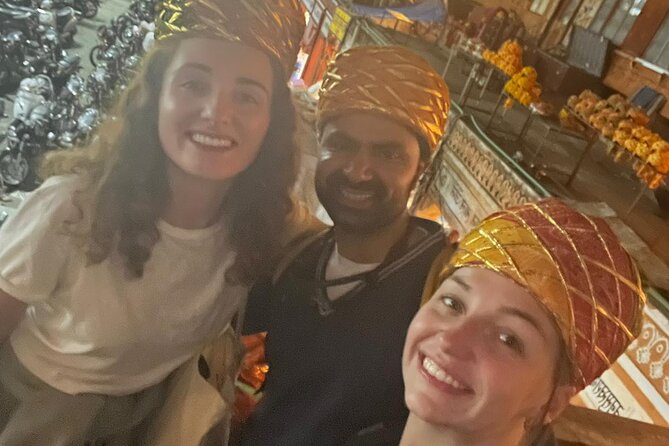
Even if you know Jaipur’s landmarks on a map, the city hits differently at twilight. Daylight is fading, but markets aren’t winding down. That mix means you can watch storefronts and workshops come alive under lamps, while the architecture keeps showing new colors as the light changes.
This walk is built around that in-between hour. You’ll be moving through lanes and bazaars where the sights you’d otherwise miss in daylight start snapping into focus. Think: jewelry displays glowing, craft details becoming easier to see, and havelis feeling less like buildings and more like stages.
A big plus is the pacing. It’s not a “run from place to place” plan. It’s timed like an evening stroll with a purpose, so you can look up at facades, notice materials, and actually take in the way artisans work.
You can also read our reviews of more walking tours in Jaipur



Where to start (Raj Mandir) and where the walk ends (Albert Hall)
The tour meets at Raj Mandir Cinema in the Panch Batti area. That’s a practical choice because it’s easy to orient yourself in C-Scheme, and you’re starting close to a central reference point.
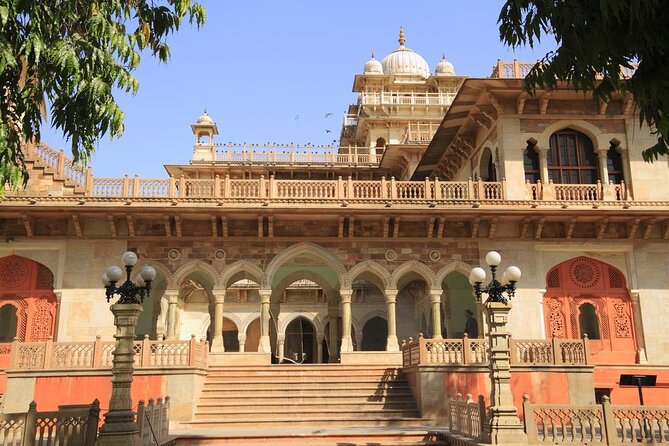
You end at Albert Hall Museum, specifically at Ram Niwas Garden. Ending at a landmark like this is helpful because it gives you an obvious “finish line” for your night. It also makes it easier to connect to dinner plans afterward instead of feeling stranded in the maze of bazaars.
You’ll also cover part of the route via e-rickshaw later on. This is smart in Jaipur at night: you still get the street-and-lights atmosphere, but you’re not exhausted before the final stop.
Khajane Walon Ka Rasta and Khejado Ka Rasta: marble idols from sketch to finish
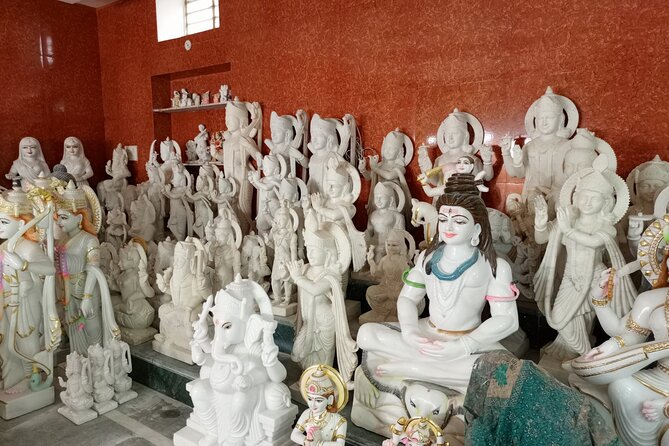
This is one of the tour’s most distinctive stretches because it’s not about passive looking. At Khajane Walon Ka Rasta (on the way toward Khejado Ka Rasta), you’re centered on statue making as a process, not just a finished product.
What I like about this stop is the “from first mark to final painting” feel. You get to see work moving through stages—starting with sketches and moving toward the final painted marble statue look. When you’re watching craftsmen do the steps, you start noticing why Jaipur’s religious art feels so precise and deliberate.
The tour also calls out skilled idol artisans and the contrast between Indian and European art styles. Even without over-explaining it, you can usually spot what that means in the detailing—how shapes are formed, how finishing touches are handled, and how stylistic influences show up in ornament.
If you care about craftsmanship, this stop is the one you’ll remember later. It gives your brain something concrete to hold onto while you transition into more market-heavy areas.
Tripolia Bazar and Thakur Uday Singh Ji Haveli: art, lamps, and a quiet pause
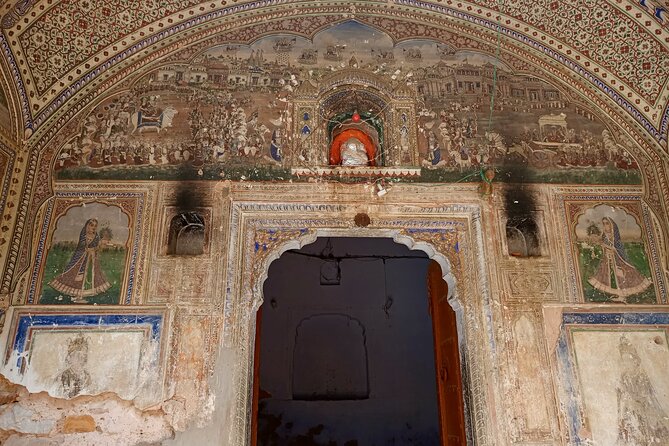
After the craft focus, you shift into architectural storytelling at Tripolia Bazar. Here you visit Thakur Uday Singh Ji Haveli, an older mansion-style space where the look of the past is part of the attraction.
What makes this stop practical is that it’s also a breather. Markets are busy; havelis can feel calmer because you’re inside a defined space. You get miniature-style wall art and paintings, plus the interesting detail of British empire–time gas lamps and even a vintage car on display.
That combination matters because it shows Jaipur as a layered city, not a single-era postcard. You’re watching older local design meet later-era artifacts and lighting. The effect works especially well at twilight, when the lamps and interior lighting feel more intentional.
A small caution: you’ll only spend a short window here. So if architecture is your top priority, use this time to slow down—look at the wall paintings and lighting rather than racing for the “best photo.”
Maniharon ka Rasta and the bangle market: lac bangles and bridal spectacle
The tour’s bangle focus is one of the strongest parts of the whole evening. Maniharon ka rasta literally ties into the idea of bangle makers, and the street atmosphere reflects that. You’ll see long lines of colorful bangles and jewelry that lean heavily into bridal styling—ornate, detailed, and meant to be seen.
This is also where the tour highlights the lac bangle-making process. Seeing the process (rather than just the final bangles in a display case) is what turns this from shopping into understanding. Lac bangles are part of Jaipur’s identity, and watching how they’re made helps you appreciate why the look is so specific.
And at twilight, the lighting makes the bangles do something extra. Even if you’re not buying, you’ll still enjoy the visual rhythm—colors against stone, the shine catching as you walk past.
One thing to keep in mind: markets like this can be tight. If you’re the type who hates crowds, position yourself with enough space to look without blocking other people moving through.
You can also read our reviews of more food & drink experiences in Jaipur




Johri Bazaar to Achar Wali Gali: sweet bites and the Pickle Man of India
This part of the walk is where the tour earns its “food tasting” name. You start this segment after tasting sweet dishes, then you head toward Gopal Ji ka Rasta and onward to Achar Wali Gali.
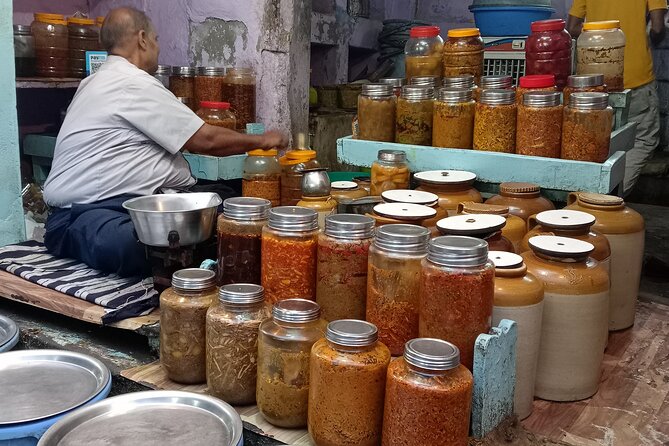
Here’s the standout detail: you get to meet the Pickle Man of India, recognized by Discovery Channel, and visit a shop of pickles that’s described as having a 195-year-old history. That kind of longevity is a big deal in a bazaar environment. It suggests the flavors and methods have been refined over generations, not just invented for tourists.
From a practical standpoint, this is also a smart timing choice. By the time you reach this stop, you’ve been walking long enough to appreciate a snack break without killing your appetite for later dinner.
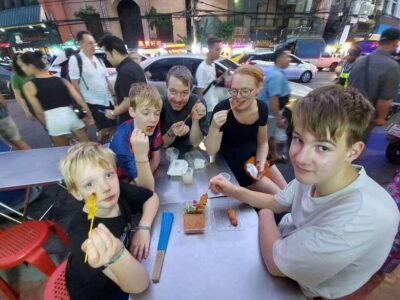
The tasting also helps you move through the market with better context. When you’ve tasted something locally made, you can look at the shelves and jars and think, This isn’t just decor. It’s preserved flavor built for Jaipur life.
The e-rickshaw ride and Albert Hall Museum night views
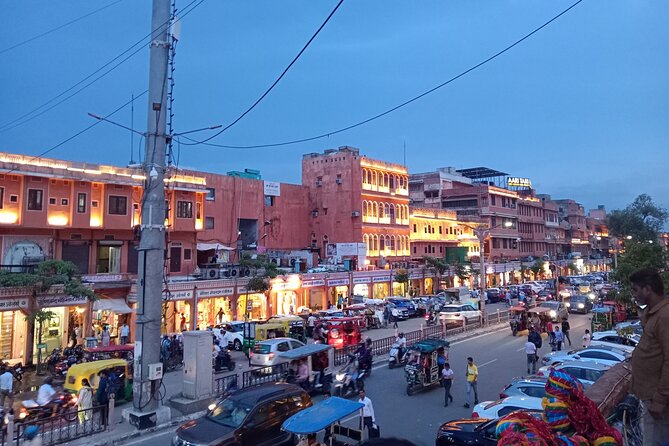
Later in the tour, you switch gears with an e-rickshaw transfer toward Albert Hall Museum. The point isn’t speed. It’s atmosphere. You’ll enjoy night views of Jaipur markets along the way, plus the garden-area lighting as you approach the museum.
Albert Hall Museum is a classic finish because it’s a major landmark with enough open space to reset your senses after dense lanes. At twilight, the lighting around the museum area can feel like a stage set: you get cleaner sightlines, and the architecture looks more dramatic as the sky darkens.
Important planning note: Albert Hall Museum admission isn’t included. So treat this as both a viewpoint and an optional ticketed stop. If you’re the kind of visitor who wants museum time, budget separately. If you’re mainly here for the craft-and-market route, you can still enjoy the night approach and surrounding garden views without feeling like you missed “the main thing.”
Price and value: why $29.96 can feel like a bargain
At $29.96 per person, you’re paying for a few things at once: guided interpretation, multiple craft-focused stops, and food tasting that breaks up the walking.
This isn’t just a “see five streets” tour. The value comes from the variety of experiences packed into about 2 hours 30 minutes to 3 hours. You’re getting:
- Craft observation (marble idol making and lac bangles)
- Cultural architecture (Thakur Uday Singh Ji Haveli)
- Local taste stops (sweet tasting and a historic pickle shop)
- Night atmosphere (the twilight lighting effect plus e-rickshaw transfer and Albert Hall views)
Also, the group size is capped at 10 travelers. Small groups usually mean you can ask questions and keep your bearings better in crowded bazaars. That matters more than people expect, especially when you’re moving through lanes where it’s easy to lose context without a guide.
You’re also dealing with evening timing, which can be a hidden cost if you’d otherwise pay for tuk-tuk transfers or spend money on snacks you don’t know are worth it. Here, the structure helps you keep control of costs while still eating.
Getting the most out of the walk: what to expect with a small group
This is a mobile-ticket tour, and it runs like a guided route, not a free-for-all. You’ll want to dress for walking and for changing temperatures as day turns into night. Even in cooler months, Jaipur evenings can feel different once you’re out in open lanes.
Because you’ll be passing through markets and visiting a haveli, your best strategy is simple: look first, then decide if you want to get closer. Tight spaces mean your attention matters. Try to watch the process in the craft areas, then use the browsing energy in the bangle and jewelry streets.
The tour also seems to allow flexibility when possible. One review mentions a guide named Umesh who adjusted the start time when the booking was last minute and the schedule was tight. That’s a good sign: if your evening plans are complicated, it’s worth asking what can be adjusted rather than assuming everything is fixed.
Who should book this Jaipur@Twilight walk (and who should skip)
You’ll likely love this tour if:
- You want crafts with real processes, not just souvenirs
- You care about Jaipur’s havelis and how lighting changes their feel
- You like evening bazaars but don’t want to navigate them alone
- You want a food moment built into the route, not a random stop
You might want to skip if:
- You mainly want big-ticket monuments and long museum time (Albert Hall entry isn’t included and the museum stop is brief)
- You strongly dislike crowded market lanes, even with a small group
- You expect a lot of sitting time. This is a moving heritage walk.
If you’re doing Jaipur for the first time, this is a strong add-on to a more monument-heavy day. It helps you understand Jaipur as a working city: art, jewelry, food, and architecture all intertwined.
Should you book this twilight heritage walk?
I think it’s an easy yes for most visitors who want an authentic Jaipur evening. The craft focus is genuinely practical, not just decorative. Marble idol work, lac bangles, bridal jewelry streets, and a historic pickle shop give you a story you can carry home, not just photos you scroll past.
Book it if you can match your schedule to a 2.5–3 hour window and you’re okay with walking through market areas. Skip or be cautious if you’re counting on Albert Hall Museum admission being included, because that part is extra.
If you want a memorable Jaipur night without turning your evening into logistics homework, this is a smart use of time.
FAQ
How long is the Jaipur@Twilight guided heritage walk with food tasting?
It runs about 2 hours 30 minutes to 3 hours.
How much does the tour cost?
The price is listed as $29.96 per person.
Where do I meet the guide and where does the tour end?
You meet at Raj Mandir Cinema (C-16, Bhagwan Das Rd, Panch Batti, C Scheme, Ashok Nagar, Jaipur) and the tour ends at Albert Hall Museum in Ram Niwas Garden.
Is Albert Hall Museum admission included?
No, Albert Hall Museum admission is not included.
What kinds of stops does the tour include?
The tour includes Khajane Walon Ka Rasta/Khejado Ka Rasta for statue making, Thakur Uday Singh Ji Haveli in Tripolia Bazar, Maniharon ka rasta for bangle making and bridal jewelry areas, Johri Bazaar and Achar Wali Gali for food and pickles, and a night approach to Albert Hall Museum.
What food is included during the tastings?
The tour includes a curated food tasting experience, with sweet dishes noted during the route before you move toward the pickle stop.
How large is the group?
The tour has a maximum of 10 travelers.
What if the weather is bad?
The experience requires good weather. If it’s canceled due to poor weather, you’ll be offered a different date or a full refund.
What is the cancellation and refund policy?
You can cancel up to 24 hours in advance for a full refund. If you cancel less than 24 hours before the start time, the amount paid is not refunded.