REVIEW · LISBON
Food Tour: Portuguese wine & Tapas with Ginjinha Tasting
Book on GetYourGuide →Operated by Discover Lisbon · Bookable on GetYourGuide
One simple bite can change how you see a city. This Lisbon food tour strings together Portuguese petiscos (shareable tapas), a guided wine setup, and a ginjinha tasting so you get flavor first, explanations second. I especially liked how the guide builds context around what you’re eating, and how the stops feel social without turning into a sprint. The main thing to consider: petiscos are small by design, so if you come hungry for a full meal, you may still want something after.
I also liked the relaxed rhythm. You’re not doing “check one more thing” tourism; you’re tasting in local spots and getting practical suggestions for where to go next. In feedback, guides like Ricardo and Muhammed stood out for making the group comfortable and for telling stories that actually connect to the food. Still, you should expect appetizer-sized portions, so plan your evening accordingly.
Finally, the experience is a clear fit for people who enjoy tasting different things and learning while they eat. If you have food restrictions, you’ll need to communicate them ahead of time, since the tour only includes what the guide serves.
In This Review
- Key points you’ll care about before you go
- Lisbon’s tapas mindset: small dishes, big personality
- Where the tour starts in Praça Luís de Camões (and how to find your guide)
- The 2.5-hour flow: 3 petiscos tasting stops plus a longer final spot
- Stop 1: your first local restaurant tasting (the flavor baseline)
- Stop 2: second tasting stop (you’ll start noticing patterns)
- Stop 3: the longer final restaurant stop (more time to enjoy)
- Ginjinha tasting: the sour-cherry liquor moment
- What you actually eat: petiscos as a sharing strategy
- The guide experience: where the real value comes from
- Price and value: is $40 worth it?
- Who should book this tour (and who should skip it)
- Practical tips so you enjoy it more
- Should you book this Portuguese wine and tapas with ginjinha tour?
- FAQ
- How long is the Lisbon wine and tapas tour?
- What’s included in the price?
- Do I get to try vegetarian options?
- Is there any extra food or drink beyond what the guide serves?
- What should I do if I’m traveling with luggage?
- Is the tour suitable for people with mobility impairments?
Key points you’ll care about before you go
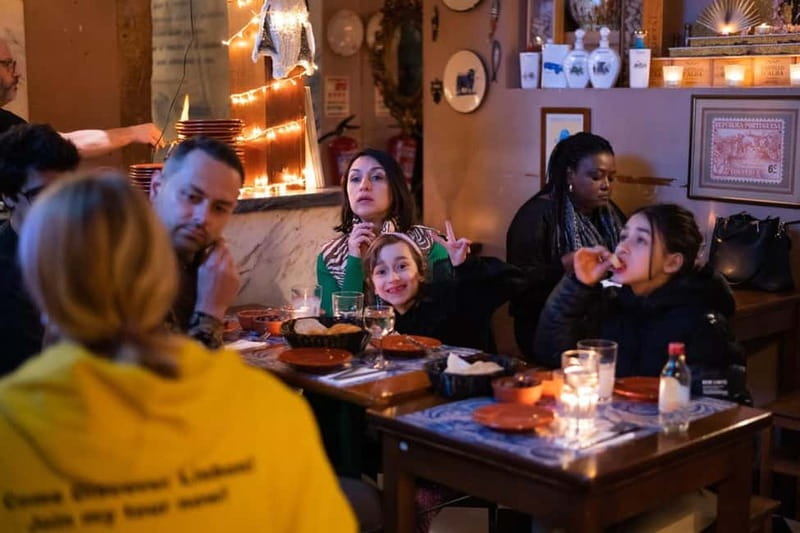
- Petiscos-style sampling: 3 traditional small dishes designed for sharing, not full plates.
- Ginjinha sour-cherry liqueur included: a real taste of classic Lisbon.
- Portuguese wine or water with tastings: built into each stop.
- English and Spanish live guides: live storytelling plus local tips at restaurant level.
- Meeting in Praça Luís de Camões with yellow gear: easy to spot and easy to start on time.
Lisbon’s tapas mindset: small dishes, big personality
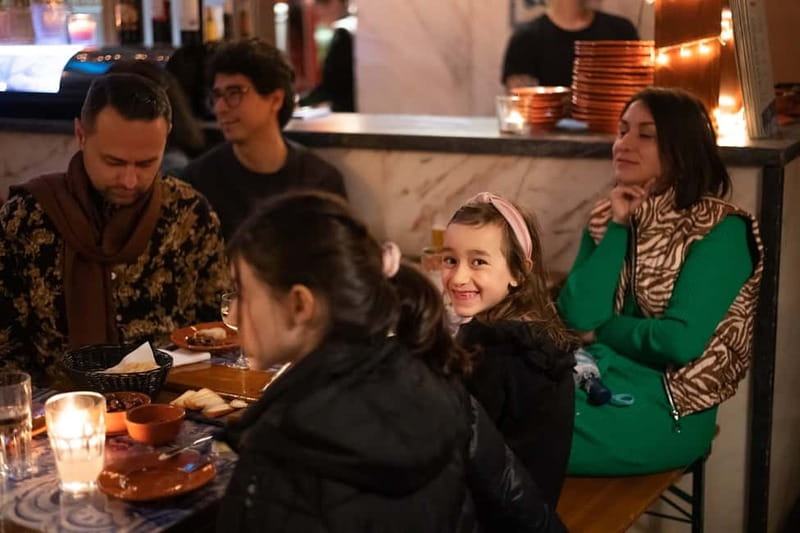
Portuguese food can feel straightforward on the surface. Then you start tasting it and realize there’s a lot going on in how flavors are built. That’s exactly what I like about this tour format. You’re not locked into one theme like seafood only or sweets only. You’re trying different traditional bites, and you get to compare how they taste with wine and (eventually) the famous sour-cherry liquor.
The word petiscos basically means small dishes to share. That tells you how to approach the evening: take it slow, let the flavors land, and think “tasting menu” rather than “sit down and get stuffed.” In a city like Lisbon—where you often eat socially—sharing is also part of the culture, not just a menu style.
You can also read our reviews of more food & drink experiences in Lisbon

Where the tour starts in Praça Luís de Camões (and how to find your guide)
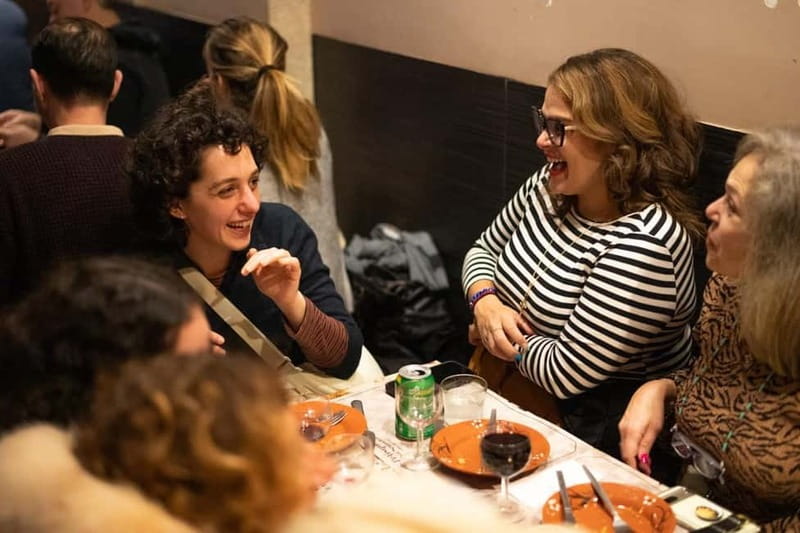
The meeting point is in the center of Praça Luís de Camões, near the statue. On the day, look for the team with yellow umbrellas or yellow hoodies, and your guide should be wearing a yellow t-shirt.
This matters more than it sounds. A clear meeting point helps you settle faster, especially if you’re meeting in the city center on an evening schedule. The tour runs about 2.5 hours, so there’s less margin for wandering off track.
You’ll return to the same area at the end. That makes it easier to continue on your own afterward—grab a view, find dessert, or connect with dinner plans without a complicated “get to X and Y” scramble.
The 2.5-hour flow: 3 petiscos tasting stops plus a longer final spot
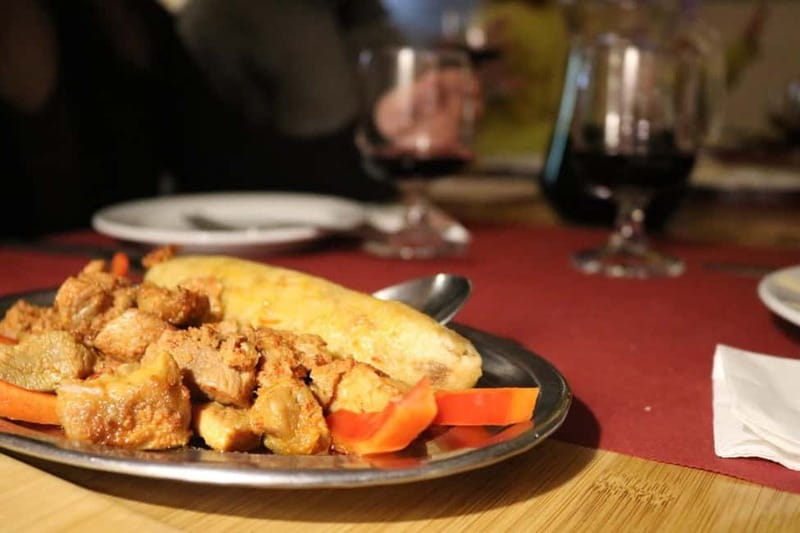
The tour is built around three main tasting moments, each served at local restaurants. You’ll have food and wine tastings, and the timing is structured so you get enough to compare flavors without losing the group to restaurant chaos.
Here’s the structure in plain terms:
- Two standard tastings of about 30 minutes each
- A third, longer tasting of about 45 minutes at a smaller restaurant stop
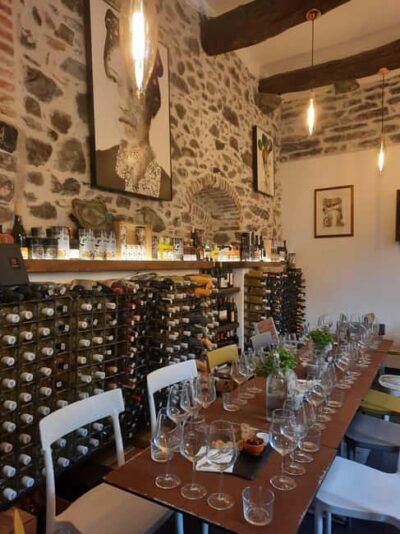
At each restaurant, you’ll get the same core idea: try Portuguese favorites in a local setting, then hear the guide’s explanation so you know what you’re tasting and why it matters.
Stop 1: your first local restaurant tasting (the flavor baseline)
The first food stop is the one that sets the baseline for the rest of the tour. You’ll start with a Portuguese wine or water, then move into one of the petiscos tastings. This is a good time to get your bearings: notice how sauces, seasoning, and texture play together, and watch how the dish is meant to be shared.
The guide will also share stories about Portuguese food and culture here. Even if you’re not a “food history” person, it helps you understand why the dish is served the way it is—small plates, casual conversation, and a focus on variety over one massive main course.
A practical tip: go into the first stop ready to taste, not ready to photograph every bite. You’ll learn faster and enjoy more if you focus on flavor notes like salt level, acidity, and how the wine pairs.
Stop 2: second tasting stop (you’ll start noticing patterns)
By the second restaurant, you’ll usually start to recognize patterns in Portuguese cooking. The guide’s job is to connect those patterns to the culture—like how casual sharing works, and why tapas in Lisbon feel social and relaxed rather than formal.
Again, you’ll have about 30 minutes for wine and food. That means you get enough time to eat, ask questions, and regroup without feeling rushed. In feedback, people also liked that there wasn’t a lot of walking between restaurants—useful in Lisbon, where cobblestones can be tiring if you’re doing long stretches.
A few more Lisbon tours and experiences worth a look




Stop 3: the longer final restaurant stop (more time to enjoy)
The final tasting stop lasts longer—about 45 minutes. This is where the tour tends to feel most like a real evening out. You’ll taste more, settle in a bit, and likely get more guidance on what to order next if you come back later.
Feedback also pointed out that guides bring the experience to life with fun delivery and practical knowledge. And one highlight mentioned in reviews: some nights include excellent fado performances at the restaurant level. That’s not something I’d bet on blindly, but it’s worth knowing because if it happens, it’s a memorable bonus that fits the theme of Portuguese evening culture.
Ginjinha tasting: the sour-cherry liquor moment
The tour includes a ginjinha tasting, which is Lisbon’s famous sour-cherry liqueur. This is the kind of drink that can split opinions fast: some people love the tart cherry hit, others find it too intense. Either way, it’s a signature taste.
What I like about including ginjinha on a tapas tour is that it ends up being a flavor bookend. You’re not only tasting savory bites and wine; you also get a sweet-tart Portuguese classic that tells you something about local drinking culture.
If you’re planning to pace yourself, sip the ginjinha and then re-try the petiscos flavors with that new taste in mind. Sour fruit can shift how you perceive salt, fat, and spice.
What you actually eat: petiscos as a sharing strategy
You’ll be served 3 typical local petiscos across the tour. These are small dishes meant for sharing, and that’s where the tour’s best strength and its only drawback meet.
Best strength: the sampling approach. Instead of committing to one dish, you get variety. You can compare flavors across restaurants without needing to order multiple full meals yourself.
Only drawback: quantity. One review summary called it out directly—this is appetizer-style food, so you might not feel fully satisfied by the end. That doesn’t mean it’s low quality; it just means you should plan your evening like this:
- Come for a tasting experience
- Expect to eat, but not necessarily a full meal’s worth
- Consider reserving a later spot for a main course if you get hungry easily
If you’re the type who enjoys multiple small bites—this tour fits you perfectly.
The guide experience: where the real value comes from
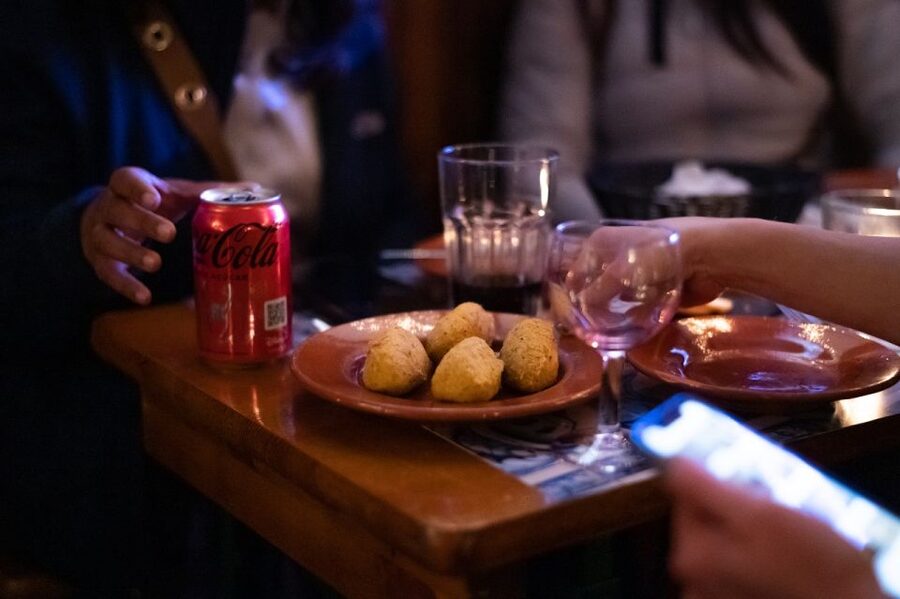
Food tours can be hit-or-miss when the guide is stuck reading menu descriptions. Here, the guide angle is part of the product: you’re told stories about what you’re eating, and you get local tips from restaurant staff while you’re there.
In reviews, Ricardo earned strong praise for attention and making people comfortable, and Muhammed stood out for storytelling. That matters because Portugal is a place where context turns random dishes into something you remember. When you hear why a dish is served as a small shared plate, you start recognizing the pattern on your own later.
Also, the tour is in English and Spanish with a live guide. So you’re not just catching glimpses of food; you’re getting guidance you can use for the rest of your trip.
Price and value: is $40 worth it?
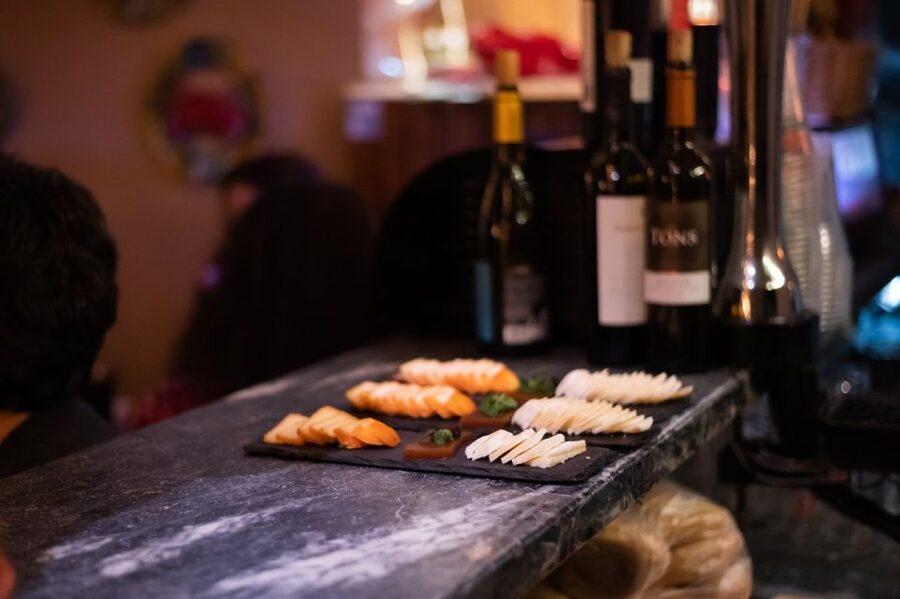
At $40 per person for about 2.5 hours, you’re paying for more than the food. You’re paying for:
- A guided sequence through multiple local restaurant settings
- Three included petiscos tastings
- Wine (or water) included with tastings
- The ginjinha tasting
- Cultural stories and practical recommendations
The math works best if you would’ve paid for multiple restaurant stops anyway. If you planned to self-tour, you’d still likely spend money on two or three tastings plus drinks. The tour reduces your decision fatigue and saves you from guessing where to go in a city that can overwhelm first-timers.
Where the value equation changes: if you’re hoping for a meal-level portion size. Since petiscos are small, you may end up adding your own dinner afterward. If that doesn’t bother you, you’ll feel like you got your money’s worth.
Who should book this tour (and who should skip it)
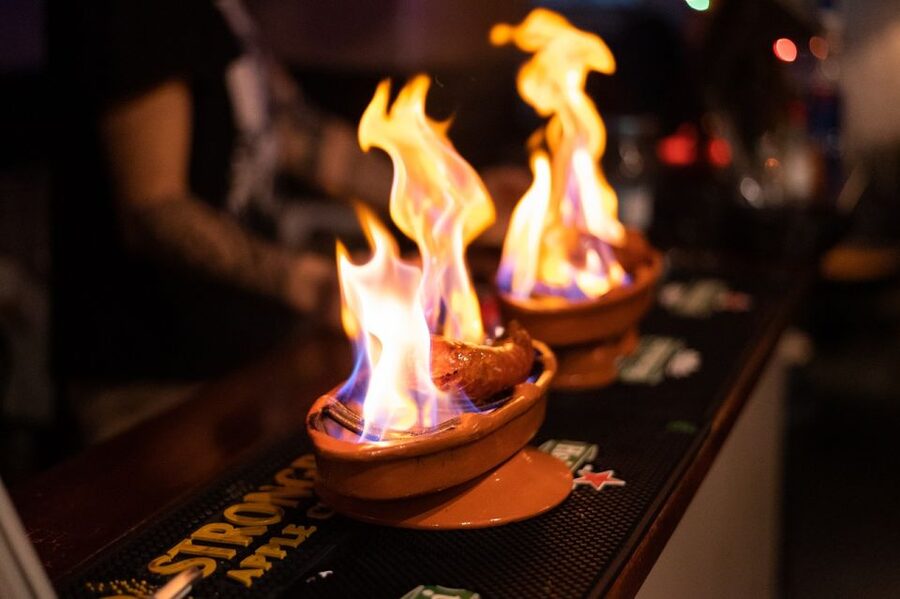
I’d recommend this tour if you:
- Like trying multiple foods without committing to one big meal
- Want a guided route so you can focus on taste instead of logistics
- Enjoy social eating and conversation in local restaurants
- Are curious about ginjinha and want it as part of a structured tasting evening
I’d be more cautious if you:
- Need mobility-friendly experiences (this tour is not suitable for people with mobility impairments)
- Need large-bag friendly conditions (luggage or large bags aren’t allowed)
- Want large portions to feel “done” at the end of the tour
Practical tips so you enjoy it more
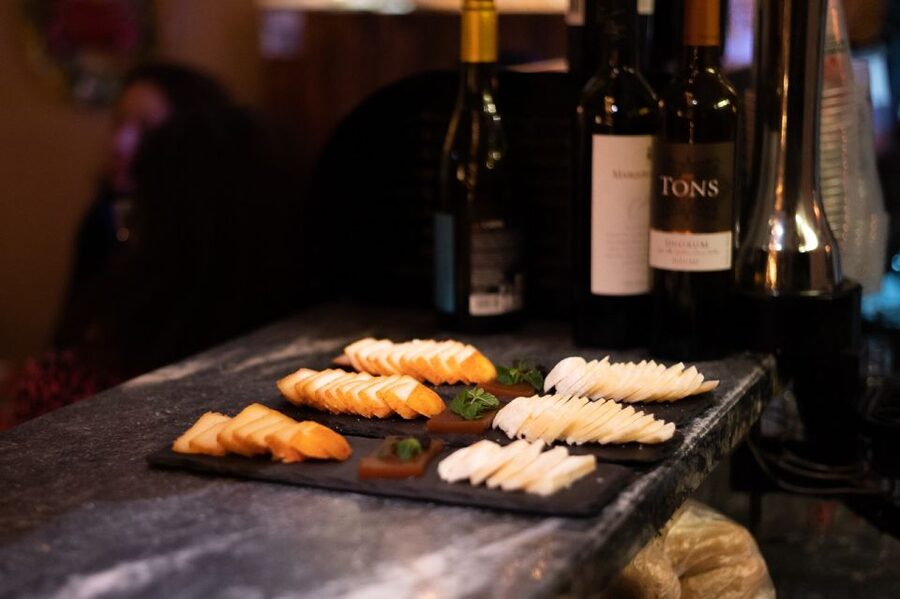
Come hungry, but also come with the right expectations. Petiscos are small, so savor each dish and don’t rush. If you pace yourself at one stop, you’ll enjoy the next stop more, because your taste buds won’t be overwhelmed.
Also, drink responsibly. Wine and ginjinha are included, so you’ll likely feel the evening. If you’re planning to walk a lot afterward, keep the pace calm.
If you have dietary restrictions, message ahead. Vegetarian options can be conveyed upon request before 24 hours of the tour, and the operator asks you to share restrictions so they can try to accommodate. That’s the right move, because the tour doesn’t include additional food beyond what the guide provides.
Should you book this Portuguese wine and tapas with ginjinha tour?
If you want a fun, local-feeling Lisbon food evening, I think it’s a smart booking. The blend of petiscos, wine, and a built-in ginjinha tasting gives you a well-rounded start without having to plan multiple stops on your own. And the biggest strength you can feel in your experience is the guide’s storytelling and the restaurant-level tips that help you keep eating after the tour ends.
Book it if you’re okay with small dishes and you’re looking for variety and learning while you taste. Skip it if you need big portions or you’re not comfortable with a restaurant-based tour format.
FAQ
How long is the Lisbon wine and tapas tour?
It runs for about 2.5 hours. Exact starting times vary by availability.
What’s included in the price?
The tour includes a guide, 3 traditional Portuguese petiscos, a ginjinha tasting, and Portuguese wine or a bottle of water, plus stories about Portuguese culture.
Do I get to try vegetarian options?
Vegetarian options can be conveyed upon request before 24 hours of the tour. If you have food restrictions, tell the operator in advance so they can try to accommodate you.
Is there any extra food or drink beyond what the guide serves?
No. Only the food and drinks included in the tour are covered. Additional items are not included.
What should I do if I’m traveling with luggage?
Luggage or large bags aren’t allowed on this activity.
Is the tour suitable for people with mobility impairments?
No. This activity is not suitable for people with mobility impairments.