REVIEW · VERNAZZA
Cinque Terre: Pesto Making Class with Wine and Food Tasting
Book on GetYourGuide →Operated by CINQUE SENSI PESTO CLASS · Bookable on GetYourGuide
Pesto gets real when you grind it. I like the handmade mortar-and-pestle method and the way you taste as you go with wine and Ligurian bites. One consideration: it’s not suitable for gluten intolerance, so check your needs before you book.
This class is set in a working-feeling Cinque Terre cellar near Vernazza train station, and it’s close enough that you don’t have to start your day with a long hike just to find it. Instructors teach in English, and the vibe is kept friendly with a small group capped at 8; one instructor you’ll likely meet is Carol.
Choose your session based on how hungry you are: the 12:30 or 5:30 full meal includes gnocchi and more pairings, while the 3:00 snack keeps the skills and flavors but lightens the timing.
In This Review
- Quick highlights to know before you go
- Why a pesto class in Vernazza feels smarter than a “food tour”
- Meeting in Vernazza: how to find the cellar without stress
- Inside the cellar: what “small group” changes in a cooking class
- The pesto-making lesson: the “mortar first” approach
- Wine, cheese, focaccia, and EVO oils: tasting that teaches pairing
- Full meal at 12:30 or 5:30: gnocchi paired with pesto
- The 3:00 snack session: same skills, lighter timing
- Price and value: what $77 includes (and what that means for your day)
- Who this class suits best (and who should skip it)
- What to bring and what to expect during the session
- Should you book this Cinque Terre pesto class?
- FAQ
- How long is the Cinque Terre pesto making class?
- Where is the meeting point in Vernazza?
- What are the different session times, and what do you get?
- Is the class taught in English?
- Is it wheelchair accessible?
- Is it suitable for gluten intolerance?
- What should I bring, and is outside food allowed?
Quick highlights to know before you go
- Handmade pesto with real technique using a mortar and pestle, not a shortcut
- Wine tasting in stages paired with cheese, focaccia, EVO oils, and more
- Full-meal sessions get gnocchi with your pesto (only at 12:30 or 5:30)
- You learn basil handling as part of building the sauce correctly
- Perfect timing if you’re using Vernazza as a base since the meeting point is steps from the station
- Small group pacing (limited to 8) keeps the class relaxed and teachable
Why a pesto class in Vernazza feels smarter than a “food tour”
Cinque Terre can be a lot: train arrivals, steep stairs, long lunch lines, and the usual scramble to find something that feels local. This experience cuts through that. You’re not just eating pesto—you’re learning how Ligurian pesto is made by hand, then tasting it with the kind of food and wine that actually makes sense in the same small space.
What makes it worth your time is the combination of skills and setup. You get a structured flow (wines first, basil prep second, pesto-making third), and you end with a dish that uses what you just made. That’s how you go from I ate pesto once to I can make pesto that tastes like it belongs here.
Meeting in Vernazza: how to find the cellar without stress
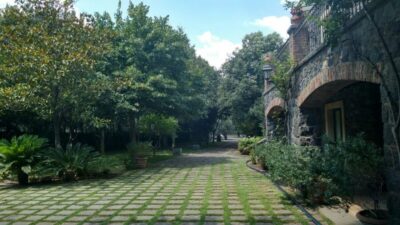
You meet from Vernazza train station, then hike up about 20 meters. Look to your left for a stone building.
That short walk matters more than you might think. In Cinque Terre, you’re always fighting time—your train might be one moment away, and the cliffs don’t care about your schedule. This meeting point is practical: you can arrive, locate the building quickly, and settle in without needing a taxi or a second plan.
Practical tip: wear comfortable shoes. Even though it’s not a long trek, that little up-walk on uneven surfaces is enough to punish people in sandals.
Inside the cellar: what “small group” changes in a cooking class
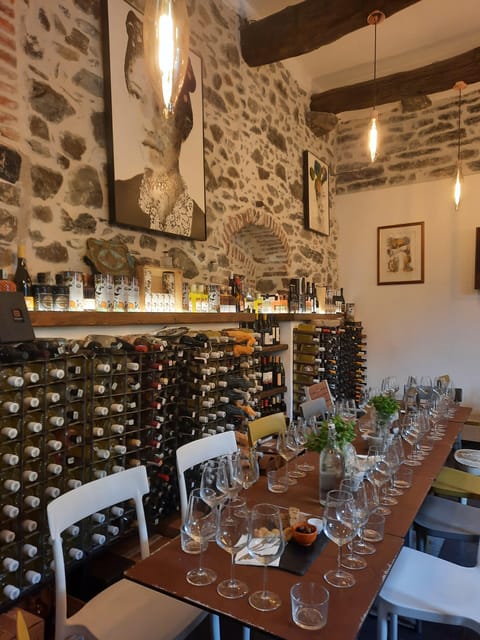
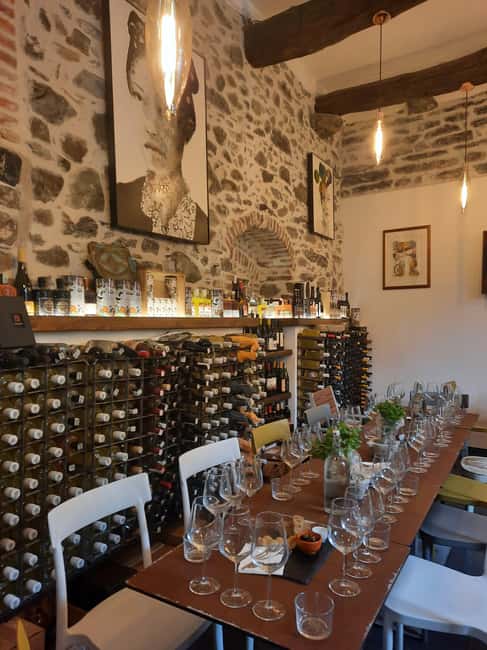
The class happens inside a characteristic Cinque Terre cellar, with ancient stones and wooden beams. It’s not staged like a show kitchen. You’re in a traditional food space that makes the whole idea of local technique feel believable.
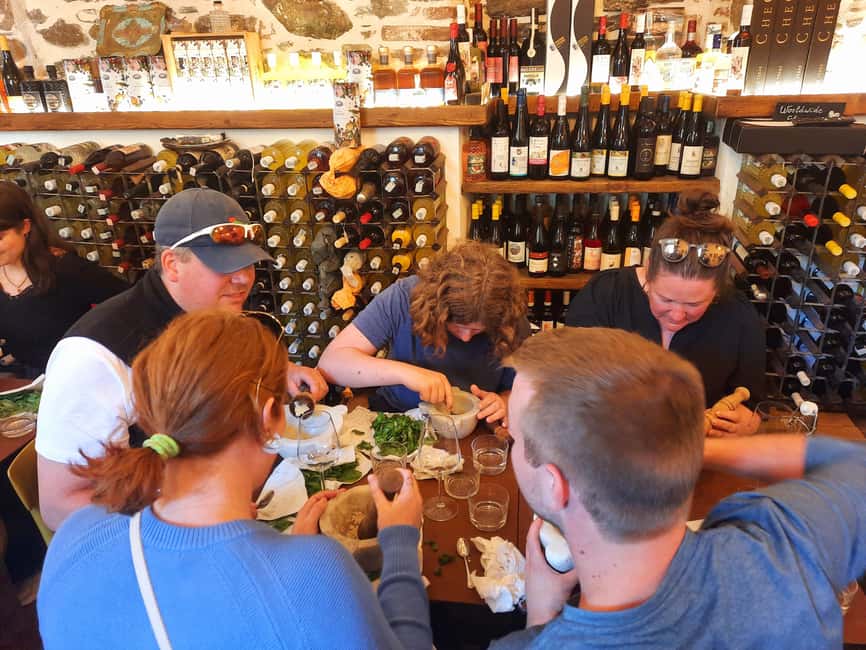
With a small group limited to 8, the pacing is more human. You’ll have time to work at the mortar, ask questions, and actually notice the steps—especially when it comes to handling fresh basil leaves. In bigger groups, people can end up watching. Here, the format is designed so you do the work.
Also, it’s wheelchair accessible, which is a big plus in an area where many experiences are built around stairs and narrow corners. If you need that, this is one of the cooking experiences you can consider without immediately guessing whether the route will cooperate.
The pesto-making lesson: the “mortar first” approach
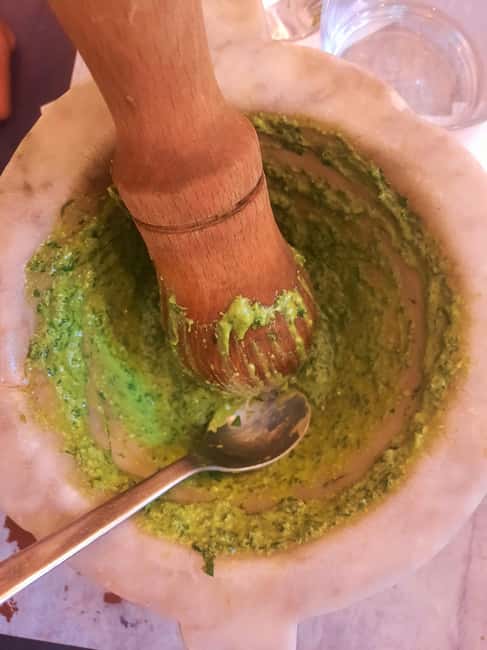
The core of the experience is learning to make traditional Ligurian pesto from scratch using a mortar and pestle.
That sounds simple, but the hand method changes everything. Crushing and grinding ingredients forces you to notice texture and timing. You learn why certain steps matter, like how to treat basil so it stays fresh and fragrant instead of turning into a tired, bruised mess.
In this class, the technique isn’t just theory. You’ll prepare the basil at one stage of the tasting flow, then you’ll make the pesto later with your own hands. Then you get to taste the result in the authentic way—paired with the food that’s meant to catch the sauce.
If you’ve ever tried pesto at home, you already know the biggest difference isn’t the ingredients—it’s the method. This class targets the method, so you leave with something you can repeat.
Wine, cheese, focaccia, and EVO oils: tasting that teaches pairing
One of my favorite parts of this class is the way the tasting is built into the cooking, not tacked on at the end.
In the full-meal sessions, the flow looks like this:
- First, you start with a wine plus local cheeses, focaccia, and selected EVO oils
- Then, you enjoy a second wine while preparing the basil
- Next, after you make the pesto, you taste it the authentic way with fresh gnocchi, served directly from the mortar, paired with a third wine
- Finally, you end with a liqueur and chocolate pairing for something sweet
That structure is genuinely useful for you. It trains your palate in the moment you’re learning. Instead of trying to remember later whether olive oil tastes “better” next to basil, you’re tasting while your basil is still in your hands.
In the 3:00 snack session, you get the same idea in lighter form: pesto making plus wine tasting, accompanied by cheese, EVO oils, focaccia, and bread. Same flavors, shorter finish.
Full meal at 12:30 or 5:30: gnocchi paired with pesto
If you’re the type who wants this to count as lunch (or a substantial pre-dinner break), pick the 12:30 p.m. or 5:30 p.m. full meal.
Here’s what makes that timing feel practical:
- You start with cheeses, focaccia, and oils to set the palate.
- You prep basil while enjoying the second wine, so you learn without feeling rushed.
- You make pesto in the mortar and then taste it paired with gnocchi.
- You get the full ending with liqueur and chocolate, so you don’t leave the cellar needing dessert somewhere else.
The gnocchi part is the key difference. Gnocchi is included only at 12:30 or 5:30, which is why those sessions feel more like a complete “eat and learn” experience. Also, serving gnocchi directly with the pesto you made is a simple but memorable touch. You get to taste the sauce at its freshest stage, not after it’s been sitting around.
If you’re visiting later in the afternoon, the 5:30 option can also work well as an early dinner plan. You’ll still get that wine-and-snack rhythm, but you can then head to a traditional dinner afterward without feeling like you’re starting from zero.
The 3:00 snack session: same skills, lighter timing
Not everyone wants a full meal at midday in Cinque Terre. Heat, crowds, and hiking plans can make lunch feel like a big commitment. That’s why the 3:00 p.m. light snack experience is such a smart alternative.
You still learn the traditional techniques—again, pesto-making by hand with a mortar and pestle—and you still get a wine tasting. The difference is mainly volume and timing.
You’ll be accompanied by cheese, EVO oils, focaccia, and bread, with pesto as the star you produce yourself. It’s a good choice if:
- you want to fit this between walks and train connections
- you prefer smaller portions
- you’re planning a proper dinner later and don’t want to be full during it
Price and value: what $77 includes (and what that means for your day)
At $77 per person for 1.5 hours, this isn’t a “cheap activity,” but it also isn’t just a cooking demo you watch from a chair.
You’re paying for several things that would otherwise cost money separately in Cinque Terre:
- Wine tasting as part of the class flow
- Food pairings like cheese, focaccia, EVO oils, and bread
- Your pesto-making session (including the ingredients and mortar-and-pestle instruction)
- For the full-meal option, gnocchi, plus a liqueur and chocolate finish
- Water is included
The other value piece is the format: a small group limited to 8. That matters because pesto is hands-on. You’re more likely to leave with confidence about the steps, not just a nice plate of food.
So if your goal is “learn and eat,” the price feels fair. If your goal is “just eat a little pesto,” you might be happier with a simpler food stop on your own budget.
Who this class suits best (and who should skip it)
This is a good fit if you want something practical, not just scenic. You’ll get technique, then you’ll eat what you made. It’s also a nice break from constant hiking because it’s short (1.5 hours) and you’re doing the work indoors in a cellar.
It’s also been enjoyed by people across a wide age range, including groups that mixed very young adults with seniors, so it doesn’t feel designed only for one demographic.
Skip it if:
- you have gluten intolerance (it’s listed as not suitable)
- you’re expecting a class focused on written recipes only—this is about doing and tasting
If you’re vegetarian, you might find it workable, since there’s mention of alternative ingredients being offered to accommodate a vegetarian friend during the experience. Still, if you have any serious dietary constraints, it’s smart to confirm what’s possible with the host when you book.
What to bring and what to expect during the session
Keep it simple:
- wear comfortable shoes
- bring water
- consider snacks for before or after, especially if you picked the lighter session
During the class, they specify not allowed: food, so don’t plan to bring your own picnic into the cellar. Think of this as a managed tasting and cooking flow where they handle the food side.
Expect an instructor-led class in English. You’ll learn steps, handle basil, grind ingredients with the mortar, and then taste your results in the provided meal setup.
Should you book this Cinque Terre pesto class?
If you like the idea of learning a signature Ligurian skill and then eating it immediately, book it. The biggest reasons are practical: you get hands-on mortar-and-pestle pesto, plus a structured wine-and-food pairing that makes the lesson stick. And the fact that it’s near Vernazza train station makes it easy to slot into a Cinque Terre day without adding stress.
I’d pass if gluten intolerance affects you, since it’s explicitly listed as not suitable. And if you only want a quick snack with zero instruction, you might prefer a simpler food stop.
Otherwise, this is a solid value for a short, memorable, teachable experience in the middle of the Cinque Terre rhythm.
FAQ
How long is the Cinque Terre pesto making class?
The class lasts 1.5 hours.
Where is the meeting point in Vernazza?
You start from Vernazza train station, hike up about 20 meters, and look on your left for the stone building.
What are the different session times, and what do you get?
There are two full meal sessions at 12:30 p.m. and 5:30 p.m., which include a wine tasting flow and gnocchi with your pesto. There is also a 3:00 p.m. light snack session with pesto making plus wine tasting, cheese, EVO oils, and focaccia/bread, but no gnocchi or liqueur-and-chocolate finish.
Is the class taught in English?
Yes, the instructor provides the class in English.
Is it wheelchair accessible?
Yes, the experience is listed as wheelchair accessible.
Is it suitable for gluten intolerance?
No. It is not suitable for people with gluten intolerance.
What should I bring, and is outside food allowed?
Bring comfortable shoes and water (snacks are listed as something to bring). Outside food is not allowed, since the class includes its own tastings and meal items.