REVIEW · MUNICH
Christmas Markets Food Tour in Munich
Book on Viator →Operated by Radius Tours GmbH · Bookable on Viator
Munich in December is all lights and longing. This 3-hour Christmas markets food tour turns that sparkle into something practical, with stops around Old Town plus included Glühwein and Bavarian bites. It’s a fun way to shop and snack while learning why these markets look the way they do.
I like two things most: the food-and-drink sampling (not just a walk past stalls) and the way the guide stitches history and traditions into the route. In past tours with guides like Thomas, Leon, and Elizabeth, the pacing gets a lot of praise, especially for keeping the group together in crowded squares.
One thing to consider: it’s still a guided schedule, so if you want to linger in one market for an hour, you may feel a little pushed. You’ll get short exploring windows, then move on.
In This Review
- Key takeaways before you go
- A three-hour Old Town walk with warm drinks and snack breaks
- Radius Tours: the easy start and the first cookie hit
- Stachus and the nearby squares: where the guide sets the rhythm
- Marienplatz Christkindlmarkt: the classic centerpiece
- Residenz Munich Christmas village: a palace setting for the season
- Sendlinger Tor and the route between markets: learning why towns build stalls
- Odeonsplatz Medieval Market: costumes, buskers, and crafts with a time-travel feel
- Food and drink: what’s included and what to actually pay attention to
- Shopping strategy for gifts and regional delicacies
- Pacing and group size: staying together without feeling rushed
- Price and value: why $66.38 can make sense in Munich
- Who should book, and who should maybe skip
- Should you book this Christmas Markets Food Tour in Munich?
- FAQ
- How long is the Christmas Markets Food Tour in Munich?
- Where does the tour start, and when does it begin?
- Where does the tour end?
- Is the tour offered in English?
- What’s included in the ticket price?
- What food and drinks do you get on the tour?
- How many people are in a group?
- Do I get time to shop at the markets?
- What if I need to cancel?
- What happens if the weather is poor?
Key takeaways before you go
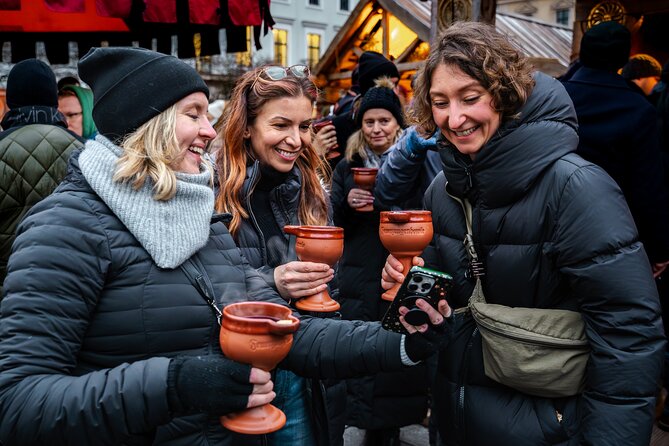
- Included Glühwein and Feuerzangenbowle: your warm-up drink is part of the ticket, not an add-on you have to budget for.
- Several markets in one afternoon: Marienplatz, a Residenz-area market, and a medieval-style finale near Odeonsplatz.
- Bite-sized Bavarian favorites: lebkuchen (gingerbread-style cookie), plus sweet almonds and sweet chestnuts.
- Small group size (max 15): easier to stay together and follow the guide through tight crowds.
- History that stays on your feet: the guide connects Christmas market traditions to what you see at each stop.
- Built-in shopping time: enough browsing to pick up gifts and regional delicacies without you guessing where to start.
A three-hour Old Town walk with warm drinks and snack breaks
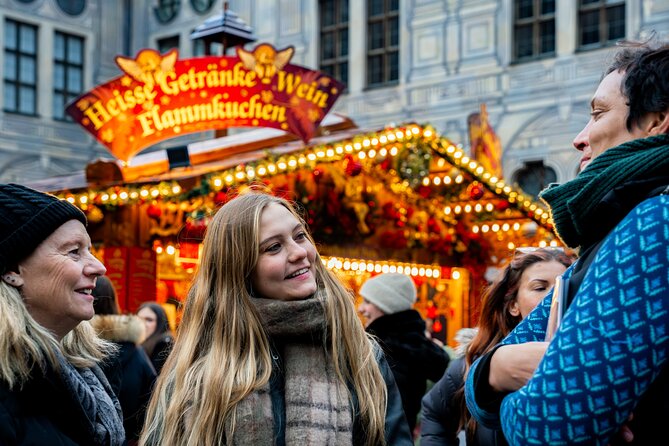
Meet your guide in the afternoon and get moving through ornamented streets. This tour is designed for a relaxed but efficient pace: you’ll cover a handful of markets in central Munich, then end where you can keep exploring on your own.
The headliner is that it’s not just sightseeing. You’re there for the tastes—your first cup of Glühwein or cider is included, and later you’ll get more bites along the way. The alcohol part matters because it changes how you experience the markets: you don’t just stand around deciding what to drink; you can sample the classics and stay comfortable in winter cold.
Also plan for walking. Expect enough steps to feel it. Even on tours praised for good pacing, people still mention needing a bathroom break at some point, and the route is timed—so don’t count on long detours.
You can also read our reviews of more food & drink experiences in Munich

Radius Tours: the easy start and the first cookie hit
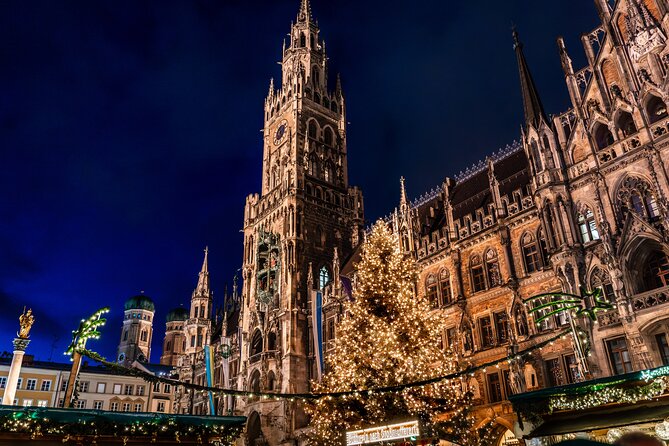
The tour begins at Radius Tours at Dachauer Str. 4 (easy to reach with public transportation). It’s a good setup because you’re not wandering around hoping someone finds you in the crowd.
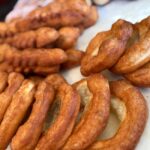
At the start, you’ll get a taste of traditional Bavarian Christmas cookies right at the office before heading out. Think of it as a warm-up for what comes next: lebkuchen-style flavors, spice-cake vibes, and the kind of sweet you’ll keep seeing in stalls as you walk.
This early stop also helps with logistics. You get the group together, hear the plan, and then you can focus on the markets rather than the meeting point.
Stachus and the nearby squares: where the guide sets the rhythm
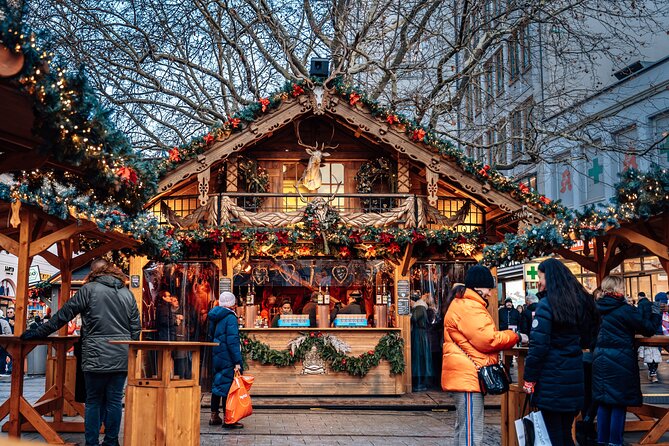
Stachus is your first square stop on the Christmas markets route. You get a bit of time there to orient yourself in the center of Munich and then transition into the market areas the guide wants you to see.
This part of the tour works well if you’re new to Munich. Squares like this are where you can feel the city’s layout, and the guide’s job is to turn geography into meaning—explaining how Munich’s markets evolved and how traditions show up in what’s sold.
A small caution: this is a walking tour with scheduled stop times, so if you’re hoping to photograph every stall for 20 minutes, you’ll need to prioritize. Use the tour time to discover what’s worth your later return.
Marienplatz Christkindlmarkt: the classic centerpiece
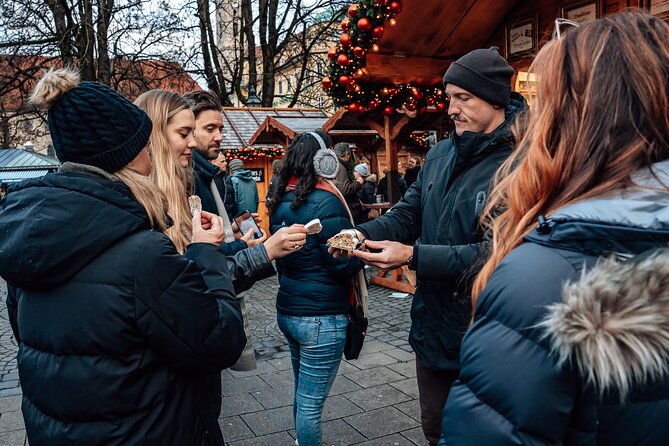
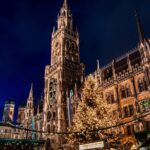
Your route brings you to Marienplatz for the biggest market vibe in Munich. This is where the stalls feel most concentrated, and it’s a natural place for your guide to explain the market’s role in local Christmas culture.
You’ll have time to browse traditional shops and gift stalls while smelling the usual suspects—spices and baked goods drifting between booth fronts. This is also the part of the afternoon where you can buy souvenirs without it feeling random. If you see something you like at Marienplatz, there’s less need to hunt for the same thing later.
One practical tip: Marienplatz is also where you’ll see a lot of visitors. The guide’s presence helps here because you’re not stuck scanning aimlessly. You know where to look first, what to sample, and what to save for later shopping.
Residenz Munich Christmas village: a palace setting for the season
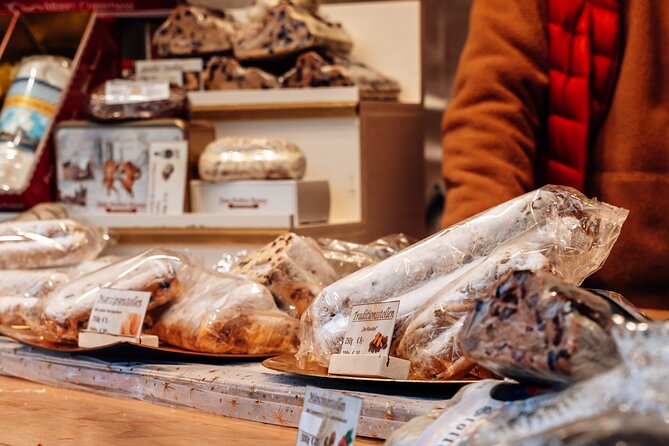
Next up is the Christmas village in the Munich Residenz area. This stop is different from the standard street markets because it’s tied to a more formal, historic backdrop—the former royal family’s residence.
Even if you’re not a history person, the setting changes the mood. Markets inside or near a palace complex tend to feel less like a shopping strip and more like an event. You get that sense of ceremony that fits Munich’s Christmas identity.
The tour here is also a good moment to slow down mentally. You’re not just collecting snacks; you’re watching how German Christmas markets blend faith, folklore, and local craft traditions into a single visitor experience.
A few more Munich tours and experiences worth a look

Sendlinger Tor and the route between markets: learning why towns build stalls
The route includes the Sendlinger Tor market area (in the broader path between Old Town highlights). This matters because it shows a pattern: Munich doesn’t have just one Christmas market. It’s a network of stalls that spill across different neighborhoods and time periods.
That’s where the guide’s explanations earn their keep. You’ll hear how long-running traditions shaped the look of the markets and why certain food and crafts became repeat stars. One example mentioned on the tour is lebkuchen, a gingerbread-like cookie that’s been a Christmas staple since the 14th century. When you know that kind of detail, buying a cookie becomes more than a sugary impulse—it becomes a small, edible piece of continuity.
This middle stretch is also where you’re likely to pick up a travel habit you can use later in Munich: walk with intent. If something looks great, taste it now, because later queues and crowd flow can make it harder.
Odeonsplatz Medieval Market: costumes, buskers, and crafts with a time-travel feel
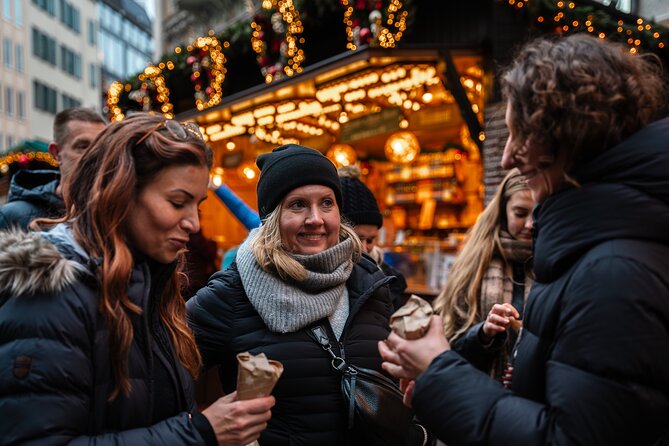
The tour ends at the medieval-style market near Odeonsplatz. This is the most “storybook” moment on the route, with performances, medieval buskers, and colorful costumes along the way.
If you’ve ever wanted a Christmas market that feels like it stepped out of a history book, this is where you get it. It’s also a smart finale: by the time you arrive, you’re warm (you’ve had included mulled wine), you’ve already eaten the core classics, and you can focus on atmosphere and browsing.
You’ll also be able to continue shopping after the tour concludes. That’s useful because the medieval market feels like it has more variety in crafts and themed entertainment, so you may want extra time to pick what you like best.
Food and drink: what’s included and what to actually pay attention to
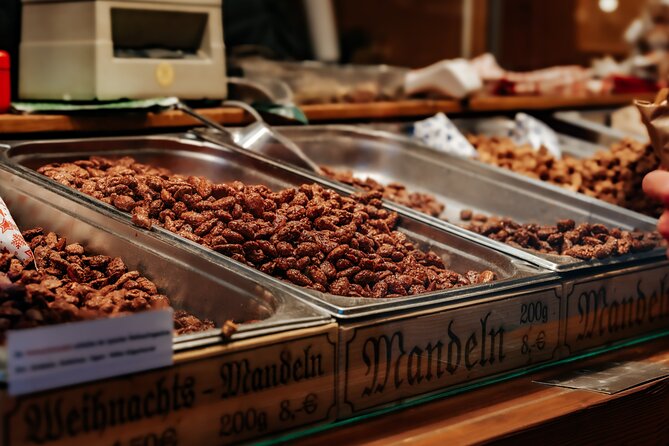
This is one of the best-value parts of the tour. You’re not left to self-navigate the menu—your guide brings you through a mix of traditional snacks and drinks that you can’t easily assemble on your own without doing a lot of trial-and-error.
Included tastings include:
- Lebkuchen: gingerbread-like cookies that are a Christmas classic.
- Sweet almonds: a popular market snack you’ll keep seeing.
- Sweet chestnuts: another winter staple flavor.
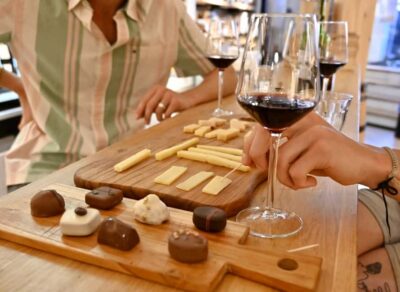
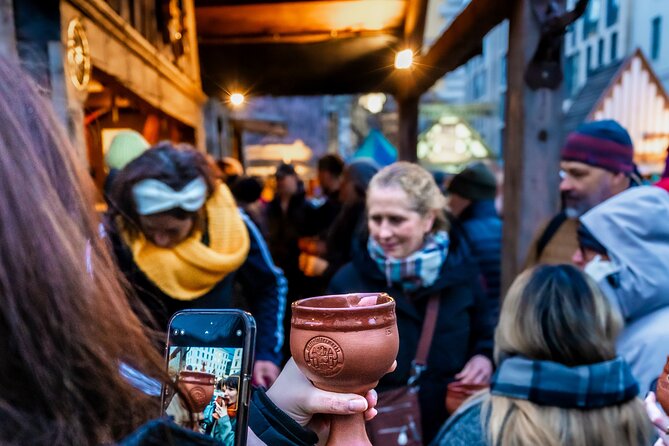
- Alcoholic beverages: Glühwein and Feuerzangenbowle (hot mulled wine in different varieties).
In cold weather, Glühwein does two things. It makes the tour comfortable, and it also helps you understand how Germans treat these markets: as social stops, not just photo stops. And Feuerzangenbowle can be especially memorable because it’s a mulled-wine experience with its own character.
If you don’t drink alcohol, you can still enjoy the snacks and culture. But the tour’s included drink plan is a big part of why it’s priced the way it is.
Shopping strategy for gifts and regional delicacies
You’ll shop at multiple Christmas market locations around Munich’s Old Town. That’s great, but markets can trick you into buying randomly. Here’s how I’d handle it during this kind of tour:
First, use the tour to spot three categories:
1) edible gifts (cookies, sweet snacks)
2) craft souvenirs (handicrafts)
3) one “memory item” (something you can’t find at home)
Second, buy the edible stuff earlier in the afternoon so you’re not carrying everything while you walk. Your route covers several stops, so shop with your legs in mind.
Third, look for regional cues. This tour is built around Bavarian Christmas culture, so prioritize items that feel local to the market tradition rather than generic holiday décor. Your guide’s history explanations make it easier to tell what’s meaningful.
You’ll also have enough time to browse. Just don’t expect unlimited wandering at every stall. This isn’t a slow, all-day Christmas market drift—it’s a smart orientation plus sampling.
Pacing and group size: staying together without feeling rushed
The group is capped at 15 travelers, which is ideal for a winter walking route. Small enough that the guide can manage crowd flow, large enough that you’re still part of a lively group.
Most guides on this tour get consistent praise for keeping pace and keeping everyone together. People highlight guides like Thomas and Emmett for moving smoothly through busy areas. On the flip side, a few people wished they had more time at each market, which makes sense: you’re covering multiple stops on a set schedule.
My advice: treat the scheduled browsing time as your selection phase. Pick your favorites during the tour, then do a slower second pass on your own after you finish—especially at Marienplatz and the medieval market near Odeonsplatz.
Price and value: why $66.38 can make sense in Munich
At $66.38 per person for a roughly 3-hour guided experience, you’re paying for three things at once: a guide, structured time at several markets, and food-and-drink that’s included.
Here’s the value math that matters: mulled wine adds up fast in tourist areas, and included drinks like Glühwein and Feuerzangenbowle are a real part of the ticket value. Pair that with the snack lineup—lebkuchen, sweet almonds, sweet chestnuts—and you’re getting more than just one or two bites.
You’re also paying for guidance through the crowd logic of the markets. Without a plan, you can waste time walking in circles, missing certain booths, or spending money on the most obvious options only. With a guide, you get a sequence that makes sense.
Is it worth it for everyone? If you love wandering and don’t care about structure, you can absolutely DIY Munich markets on your own. But if you want the best parts with less guesswork and you like learning what you’re eating, the price starts to look fair.
Who should book, and who should maybe skip
This tour is a strong fit if:
- you’re visiting Munich for the first time and want an efficient overview
- you want included drinks and multiple snack tastings
- you like Christmas traditions explained in a practical, walking-friendly way
- you plan to do more market shopping later and want your favorites identified first
You might skip it if:
- you want long, slow browsing time at each market
- you’re traveling with very tight timing and hate fixed schedules
- you don’t drink alcohol and feel that the drink-focused value is wasted for you
Also, bundle up. This is an outdoor walking route in Old Town, and winter weather can change your comfort fast.
Should you book this Christmas Markets Food Tour in Munich?
Book it if you want a guided route that turns Christmas markets into a focused afternoon of taste, history, and smart shopping. The included Glühwein/Feuerzangenbowle plus classic Bavarian snacks make it hard to duplicate the experience without spending extra time and money on your own.
Skip it if you’re the type who wants to spend hours in one market soaking up every stall and you already know you’ll return to explore slowly anyway. In that case, a self-guided day might fit better.
If you’re unsure, here’s my rule of thumb: do this tour on day one. It helps you learn what you want to revisit, and then your later market time can be more intentional.
FAQ
How long is the Christmas Markets Food Tour in Munich?
The tour runs for about 3 hours.
Where does the tour start, and when does it begin?
It starts at Radius Tours, Dachauer Str. 4, 80335 München, Germany. The start time is 2:00 pm.
Where does the tour end?
The tour concludes at the Medieval Market near Odeonsplatz in Munich’s city center (Marienplatz area).
Is the tour offered in English?
Yes, it is offered in English.
What’s included in the ticket price?
You get a guide and a 3-hour guided walking tour. Snacks are included, and alcoholic beverages are included (Glühwein and Feuerzangenbowle).
What food and drinks do you get on the tour?
You’ll sample a variety of local Bavarian snacks including lebkuchen (gingerbread-like cookie), sweet almonds, and sweet chestnuts. Alcoholic options include Glühwein and Feuerzangenbowle.
How many people are in a group?
The maximum group size is 15 travelers.
Do I get time to shop at the markets?
Yes, the tour includes multiple market stops with time to browse and shop for handicrafts and regional delicacies.
What if I need to cancel?
Free cancellation is available if you cancel at least 24 hours before the experience start time for a full refund.
What happens if the weather is poor?
This experience requires good weather. If it’s canceled due to poor weather, you’ll be offered a different date or a full refund.