REVIEW · CHIANG MAI
Chiang Mai: Temples and Street Food Night Tour by Tuk Tuk
Book on GetYourGuide →Operated by Oh-Hoo · Bookable on GetYourGuide
Night temples in Chiang Mai feel personal. This private tuk tuk night tour strings together iconic Lanna-style landmarks with real market food time, so you get an easy sense of the city after dark; I especially liked Wat Chedi Luang and the chance to snack at Mueang Mai or Warorot markets. One thing to keep in mind: a formal guide isn’t listed as included, so depending on who you get, English support may vary.
You’ll also like the practical setup: hotel pickup and drop-off (within 5 km of the old town) and a classic tuk tuk ride for a compact 2-hour loop. The trade-off is that entrance fees (90 THB) and your food and drinks are on you, and you’ll want to arrive on time because late arrivals can mean you’re marked a no-show.
In This Review
- Key Things That Make This Tour Worth Your Time
- Why a Tuk Tuk Night Tour Works in Chiang Mai
- Pickup, Timing, and the 2-Hour Pace
- Wat Chedi Luang: The Big Stupa Temple After Dark
- Wat Phra Singh Woramahawihan: The Gold Temple and Its Gardens
- Three Kings Monument: Founder Legends in a Short Stop
- Mueang Mai and Warorot Markets: What to Eat and What to Shop
- What You’re Really Paying For: The $41 Value Angle
- Driver, Language, and How to Handle Communication
- Temple Etiquette You Should Actually Follow
- Who This Tour Suits Best (And Who Should Skip It)
- Should You Book This Chiang Mai Night Tuk Tuk Tour?
- FAQ
- How long is the Chiang Mai Temples and Street Food Night Tour by Tuk Tuk?
- What’s the price, and how many people does it cover?
- Is hotel pickup and drop-off included?
- What are the main stops on the tour?
- Are entrance fees included?
- Is food and drinks included?
- Do I need a guide for the tour?
- Will the tour skip the ticket line?
- What should I wear for temple visits?
- Is the tour suitable for people with mobility impairments?
- What’s the cancellation policy?
Key Things That Make This Tour Worth Your Time
- Wat Chedi Luang’s Big Stupa: a 700-year-old temple with Lanna-inspired details and an Emerald Buddha replica
- Two temple stops in daylight-level detail, at night: quick 20-minute visits that still let you see the key points
- Three Kings Monument legend stop: a short break for photos and story about how Chiang Mai began
- Market time built into the route: you’ll head to Mueang Mai and/or Warorot to eat and browse
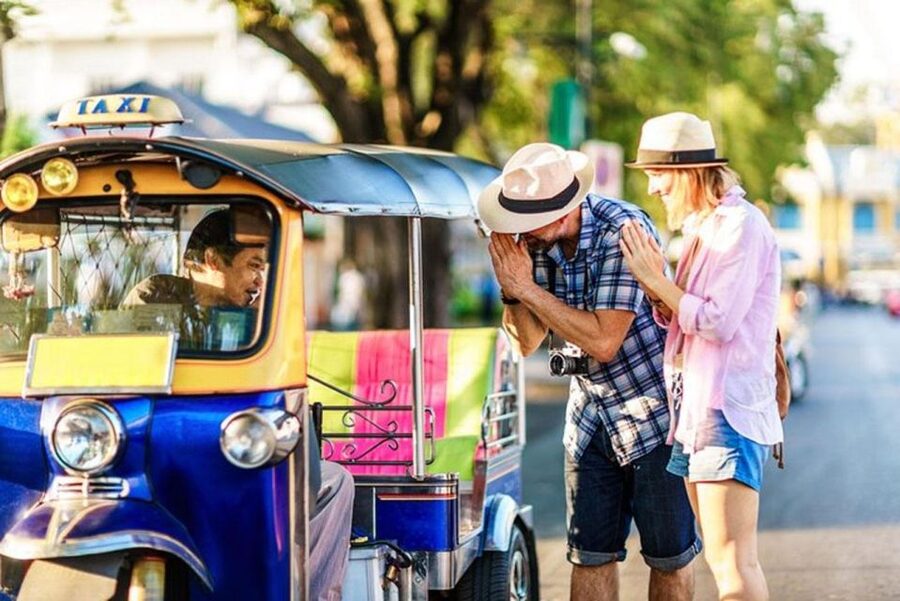
- Tuk tuk, not a bus: easier to move through tight areas when you’re trying to pack in several sights
- Skip-the-ticket-line promise: helpful when you’re on a tight 2-hour schedule
Why a Tuk Tuk Night Tour Works in Chiang Mai
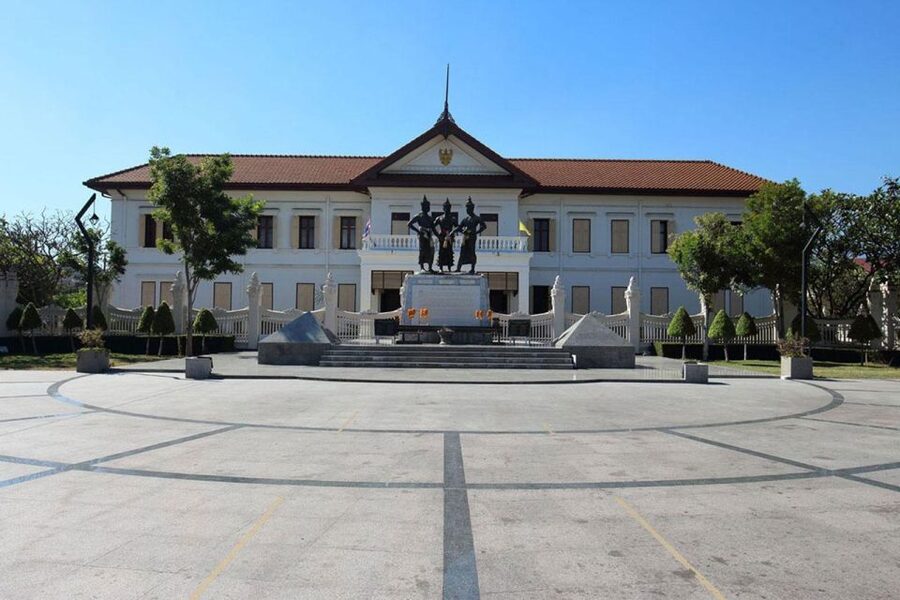
A night tour by tuk tuk is a smart way to start in Chiang Mai because it reduces decision fatigue. You don’t have to plan routes between temples, monuments, and food areas—someone else handles the driving while you focus on seeing and snacking.
I also like that the stops are short and focused. Instead of spending your whole evening stuck in one place, you get a spread: a major historic temple, a second big temple, a monument photo stop, and then market time.
You can also read our reviews of more food & drink experiences in Chiang Mai



Pickup, Timing, and the 2-Hour Pace
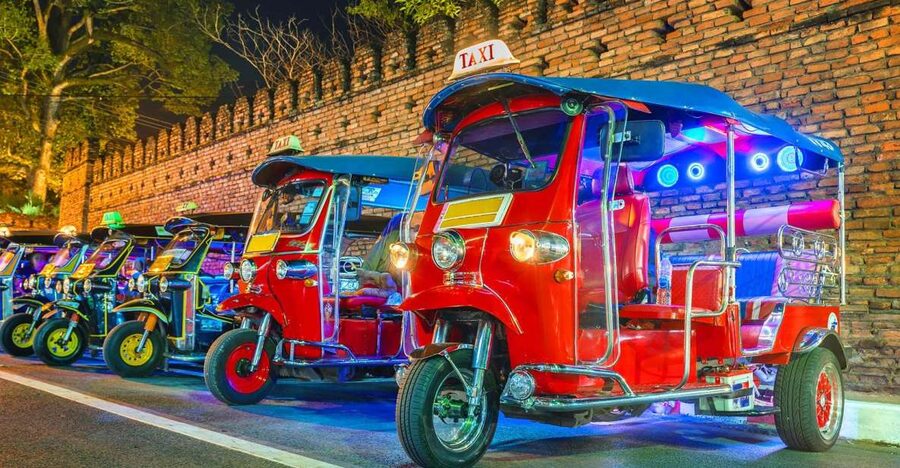
This runs about 2 hours, and the exact start time depends on availability. After pickup, your schedule is built around several 20-minute blocks, which is a good match for first-timers who don’t want a long night out.
A couple of details matter here:
- Your pickup is for hotels within a 5 km radius of Chiang Mai’s old town, and the provider confirms the time by email.
- Plan to be waiting in the lobby at least 10 minutes early. If you arrive more than 10 minutes late, you may be treated as a no-show.
One more practical note: temple opening and closing times can affect what you can actually see. If you start late in the evening, some sights may be closed, so don’t expect every stop to feel equally detailed. Build in flexibility.
Wat Chedi Luang: The Big Stupa Temple After Dark
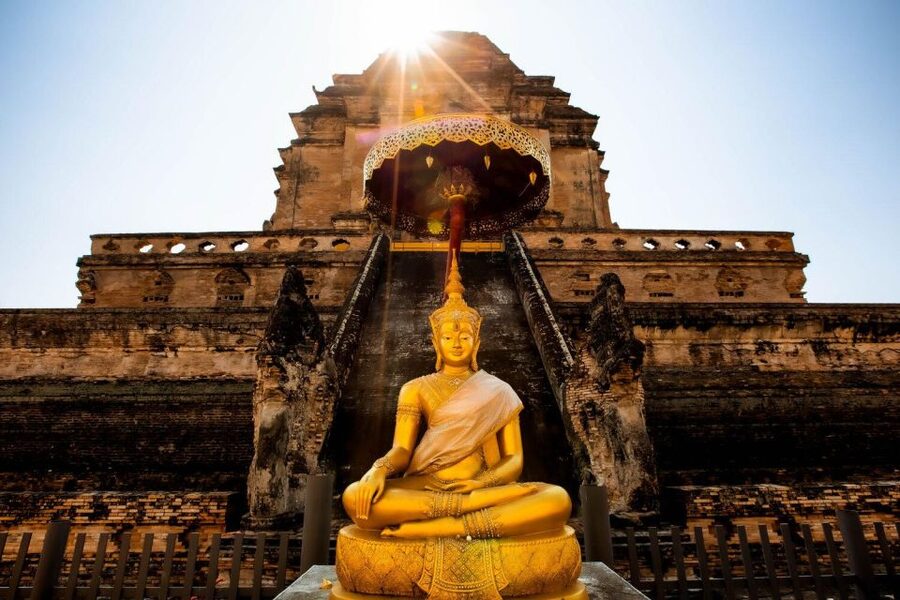
Wat Chedi Luang is the star of the first half. You’ll visit this 700-year-old temple—called the Temple of the Big Stupa—and you’ll have time to look at the Lanna-style design cues that make northern Thai temples feel distinct.
What I’d watch for during your stop:
- The overall structure and the way the temple complex is laid out.
- The replica of the Emerald Buddha, which ties this site to the wider Chiang Mai religious story even though it’s a copy.
- How the place changes at night. In the evening, the mood tends to feel quieter and more contemplative than the big daytime crowds.
You’ll likely spend about 20 minutes here, so aim to arrive ready to see the main features quickly. If you want deep photo work, consider using the market stop for browsing instead.
Wat Phra Singh Woramahawihan: The Gold Temple and Its Gardens
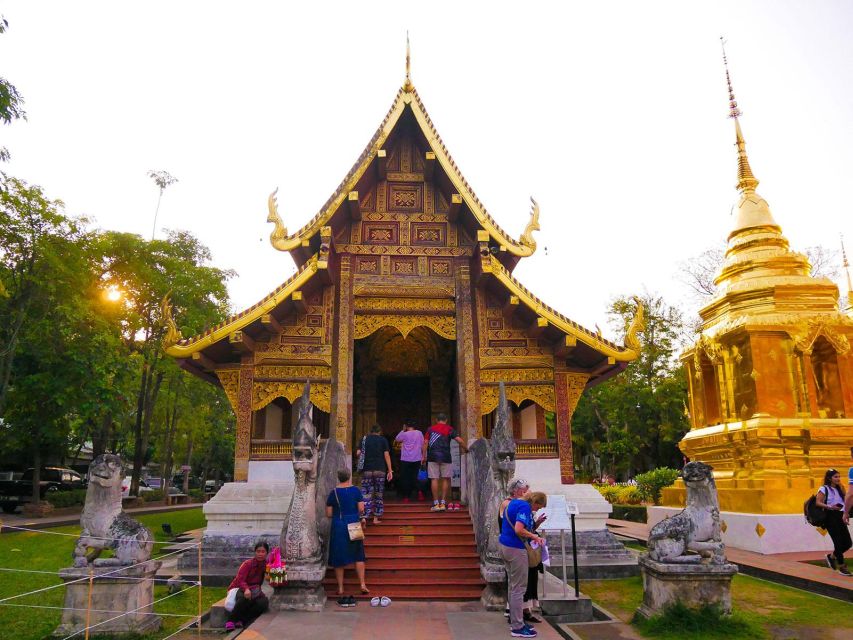
Next comes Wat Phra Singh Woramahawihan, a 14th-century temple stop that’s famous for its northern Thai architectural style. This is the kind of place where the details reward even a short visit—especially if you keep your eyes open for patterns and the temple’s relationship to its surroundings.
During your 20-minute visit, I’d focus on:
- The temple’s key architectural elements (fast but noticeable).
- The gardens and designed grounds. The tour gives you just enough time to feel that calm, landscaped rhythm.
Because the stop is brief, it’s easy to miss things if you’re busy eating street food earlier in the evening. Keep your phone charged, but also keep room for slower looking. This is the stop that helps the night feel grounded in place.
Three Kings Monument: Founder Legends in a Short Stop
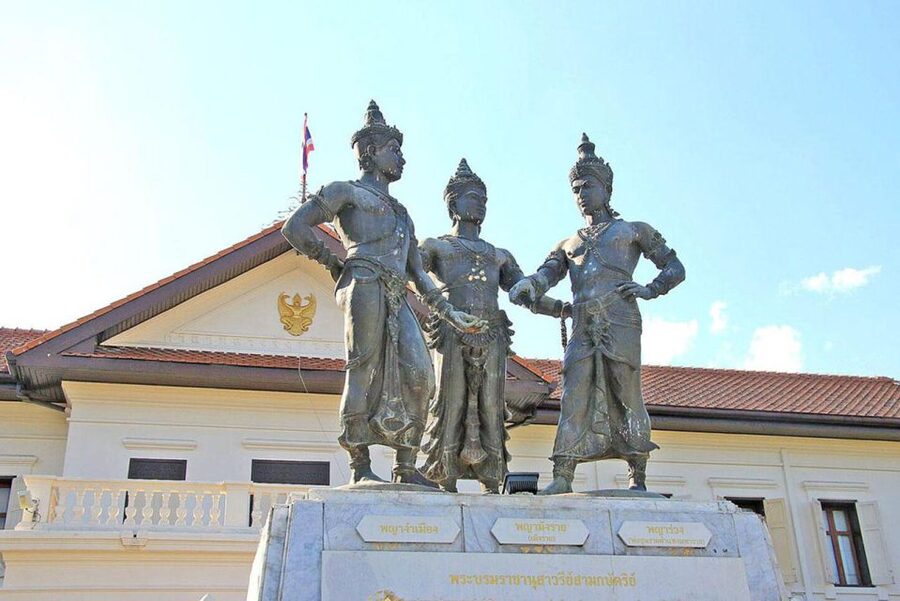
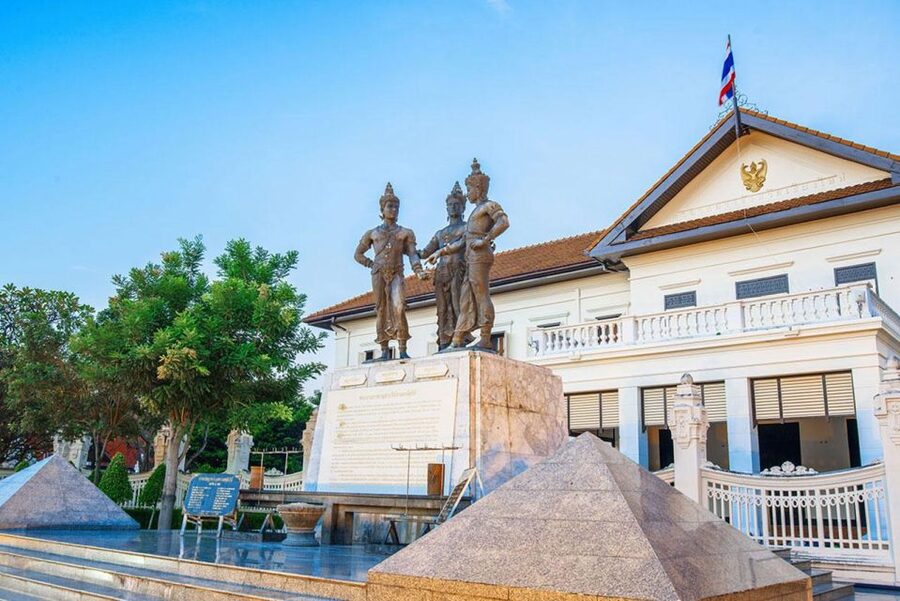
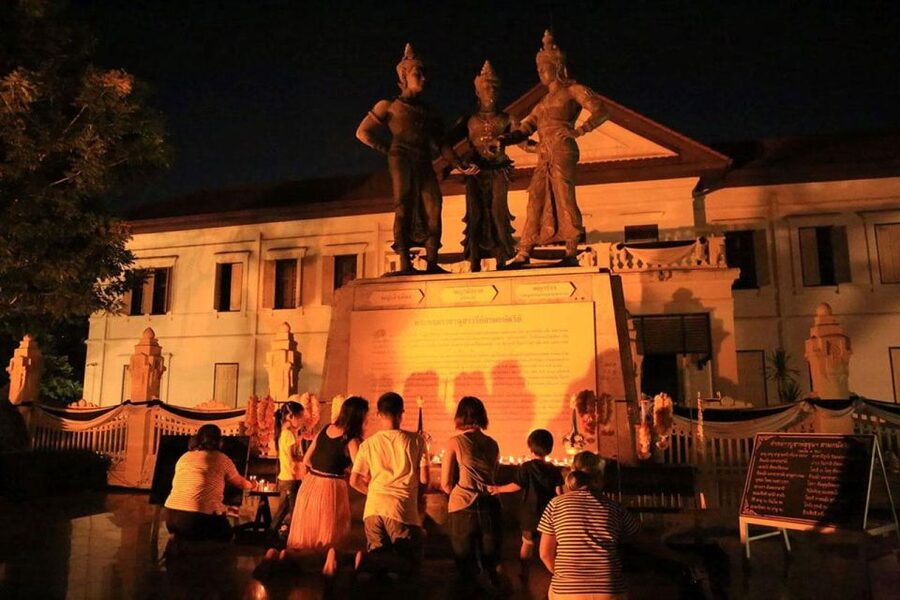
Between temples, you’ll stop at the Three Kings Monument, with time for sightseeing and photos. The payoff here is not huge—more like a short break to connect the dots about Chiang Mai’s beginnings.
What this stop adds to the whole evening:
- It gives you a story beat between the religious sites.
- It’s a good waypoint for orientation, so later market wandering feels less random.
You’ll have about 20 minutes here. Use it to grab a few photos, read any accessible info on-site, and then move on. This is not the kind of stop where you want to stall if you’re aiming to eat well.
A few more Chiang Mai tours and experiences worth a look



Mueang Mai and Warorot Markets: What to Eat and What to Shop
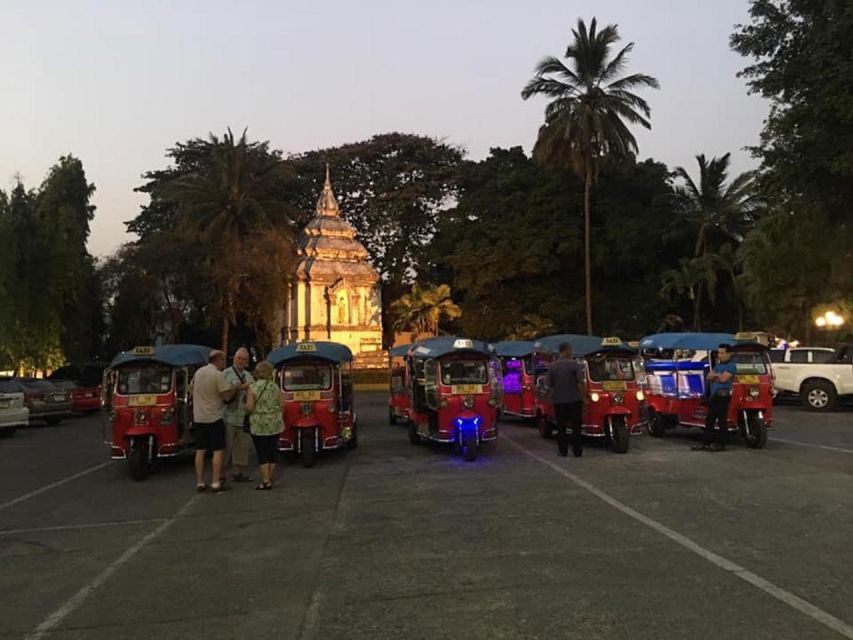
This is where the tour turns into real vacation fuel. After the temple and monument section, you’ll head to the Mueang Mai Market and Warorot Market area (your route may reflect one or both stops depending on timing).
These markets are built for browsing and eating. You can look for:
- Everyday snacks and cooked street food
- Fresh items (you’ll see lots of produce-style vendors)
- Souvenirs like small goods and even jewelry
A detail from past experiences that stuck with me: people have described finding very fresh seafood choices—one group specifically mentioned shrimp large enough to seem like a fist-sized meal, cooked to order. That’s not a guarantee, but it’s a good sign you’ll likely have plenty of tempting, made-fresh options.
Important for your planning: food and drinks aren’t included, so treat this like a planned food stop, not an all-you-get deal. Bring cash if you can, and decide early whether you’re eating a full snack-meal or sampling just a couple items.
What You’re Really Paying For: The $41 Value Angle
At about $41 per group (up to 2 people), this tour is priced like a logistics package. You’re paying for:
- A night tuk tuk ride
- Hotel pickup and drop-off within 5 km of old town
- A driver
- Travel accident insurance
- Entrance skip-the-ticket-line handling
- A compact route that hits multiple major sights in 2 hours
What you’re not paying for:
- A guide (listed as not included)
- Food and drinks
- Entrance fees (90 THB)
So is it good value? For most first-timers, yes—because the tour reduces the hassle of getting between sites at night and helps you start exploring without doing a ton of upfront planning. If you already know exactly how you’ll move around Chiang Mai and you want to spend longer in markets, you could DIY. But if you want a clean first-night circuit, this price often feels fair.
Driver, Language, and How to Handle Communication
The driver is listed as speaking Thai and English, which sounds reassuring. Still, real-life experience can vary—some groups have described situations where the driver’s English wasn’t strong, and then an English-speaking person was contacted to help with communication. Others have mentioned guides with good English, like Oy and Chai, supporting the route with explanations.
Here’s how I’d approach it as a traveler:
- Bring a simple plan: point out you want to see temples and eat at the markets.
- Use short questions and don’t overthink it. Bodies and gestures go a long way with a tuk tuk driver.
- If you care about specific temple details, be ready to ask clearly at the start.
Also, remember it’s a private group, so you’re not stuck sharing your attention with strangers.
Temple Etiquette You Should Actually Follow
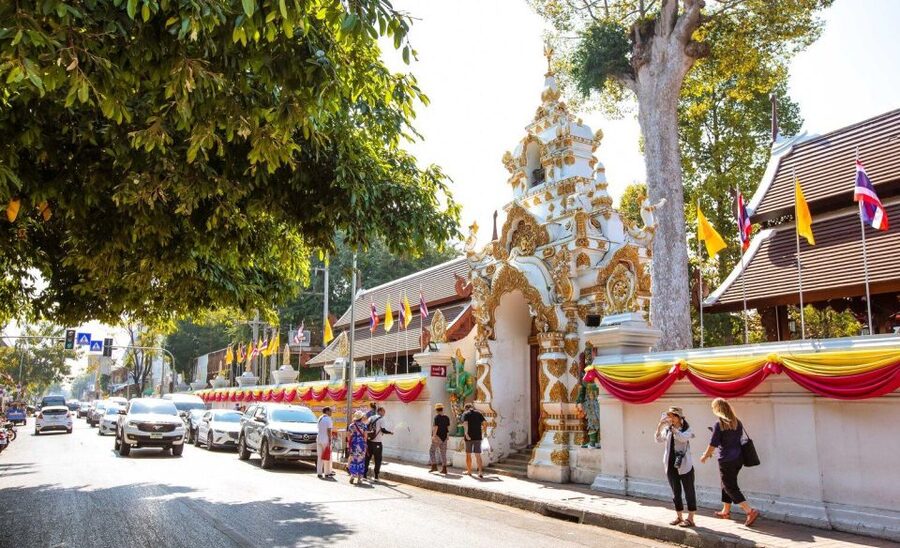
This is one place where your evening goes smoother if you follow local rules. The tour notes that you should cover your shoulders and legs when entering temples.
That’s practical, not moralizing. It helps you move through the space comfortably, and it avoids awkward last-minute outfit adjustments while you’re trying to stay on schedule.
Who This Tour Suits Best (And Who Should Skip It)
This works especially well if you:
- Want a first-night introduction to Chiang Mai without over-planning
- Like short, focused sightseeing stops
- Plan to spend time eating in markets rather than rushing past them
- Prefer private transport (tuk tuk) over shared vehicles
It may not be ideal if you have mobility impairments, since it’s noted as not suitable.
If you’re traveling as a couple or small group, it also fits the price model well since the pricing is per group up to 2.
Should You Book This Chiang Mai Night Tuk Tuk Tour?
Book it if you want a time-efficient, low-stress evening that hits the big religious sights and then gives you real market time to eat and browse. The $41 price makes more sense when you factor in the tuk tuk logistics, hotel pickup within old town range, and the skip-the-ticket-line handling.
Skip it (or at least rethink) if you’re expecting a full guide-led lecture at every stop. The materials list the guide as not included, and language support can depend on the people assigned. Also, if you hate splitting your attention between many short stops, consider a longer temple-and-food focused plan instead.
FAQ
How long is the Chiang Mai Temples and Street Food Night Tour by Tuk Tuk?
It’s listed as 2 hours. Starting times vary, so check availability for the exact schedule.
What’s the price, and how many people does it cover?
The price is $41 per group up to 2. You may be able to fit a third person in the tuk tuk depending on size (and the note mentions age around 12 or the guide’s judgment).
Is hotel pickup and drop-off included?
Yes. Pickup and drop-off are included for hotels within a 5 km radius of Chiang Mai’s old town.
What are the main stops on the tour?
The tour includes Wat Chedi Luang, Wat Phra Singh Woramahawihan, the Three Kings Monument, and market time at Mueang Mai Market and Warorot Market.
Are entrance fees included?
No. Entrance fees are not included and are listed as 90 THB.
Is food and drinks included?
No. Food and drinks are not included.
Do I need a guide for the tour?
A guide is listed as not included. The tour includes a driver, and communication support may depend on the language situation on the day.
Will the tour skip the ticket line?
Yes, the tour notes skip the ticket line.
What should I wear for temple visits?
You’re advised to cover your shoulders and legs when entering temples.
Is the tour suitable for people with mobility impairments?
No. It’s listed as not suitable for people with mobility impairments.
What’s the cancellation policy?
You can cancel up to 24 hours in advance for a full refund.