REVIEW · CATANIA
Catania: Underground and Street Food Walking Tour
Book on GetYourGuide →Operated by Etna 'Ngeniousa · Bookable on GetYourGuide
Catania has a whole second city underground. This 2.5-hour walking tour mixes secret sub-surface spaces with serious street-food time. I especially love following the underground Amenano river to the thermal baths, and I like that the market stop feels local, not staged. One heads-up: it involves a few steps (some irregular) and tight, underground areas, so it’s a bad match if you’re claustrophobic or have mobility limits.
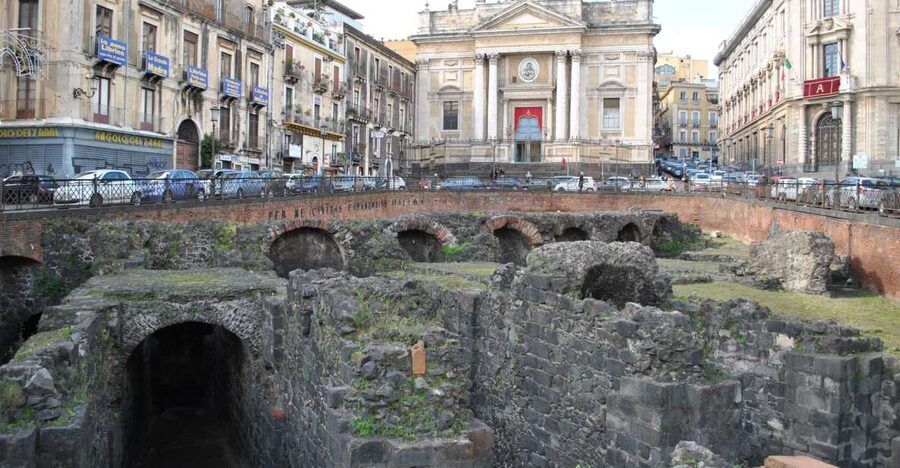
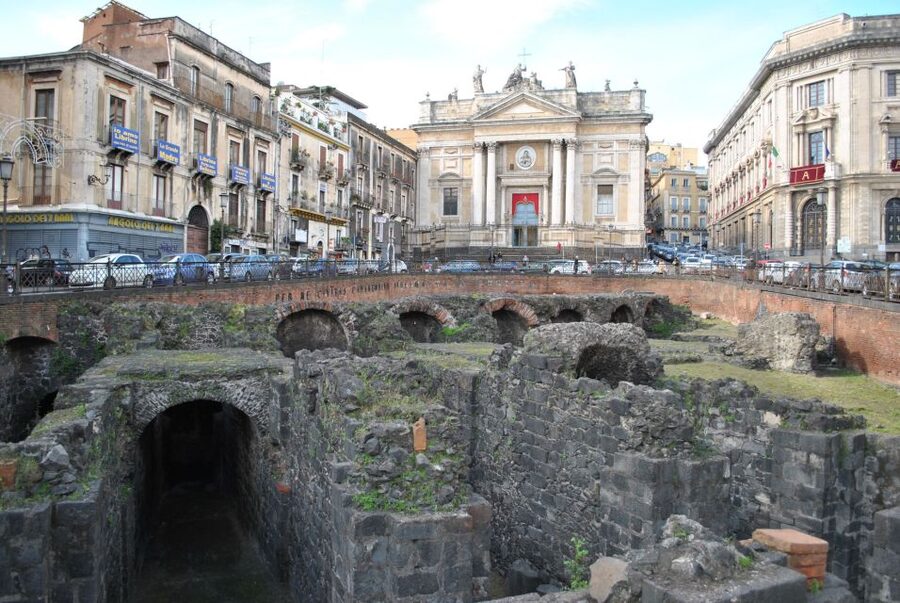
You’ll start at Piazza Stesicoro in front of the Roman black amphitheater ruins—look for the entrance with two columns and your guide’s nameplate. Guides such as Oreste (often with an archaeology background) and Matilde consistently set the tone: clear explanations, fast pacing, and smart swaps when some underground sections aren’t accessible.
In This Review
- Key tour takeaways
- Where the tour starts: Piazza Stesicoro and the Roman black amphitheater
- Piazza Carlo Alberto street food: when the market is the main event
- Entering underground Catania: secret churches and the city under the city
- Etna’s power in a prehistoric cave: the volcanic angle you’ll remember
- Roman funeral chapel and the “history sandwich”
- Amenano to the thermal baths: water you can follow
- Via Etnea and Piazza del Duomo: baroque drama and lava-stone symbolism
- The kiosk stop: mandarin e limone and a proper Sicilian send-off
- Pacing, steps, and who should skip this tour
- What makes the guide matter here
- FAQ
- How long is the Catania Underground and Street Food Walking Tour?
- Where do we meet the guide?
- Is the tour canceled if it rains?
- What food and drink do I try?
- What languages are available for the guide?
- Is this tour suitable if I have claustrophobia or motion sickness?
- Should you book this tour?
Key tour takeaways
- Amenano river route: you track the underground water story all the way to the thermal baths
- Secret underground sites: bombed-church ruins, prehistoric cave spaces, and lesser-seen rooms
- Roman layers above and below: from the amphitheater at street level to a funeral chapel underground
- Piazza Carlo Alberto street-food break: you eat during the loud, real market moment
- Via Etnea to Piazza del Duomo: baroque churches and the black lava stone elephant
- Mandarino e limone drink: a true Catanian-style kiosk moment with your guide
Where the tour starts: Piazza Stesicoro and the Roman black amphitheater
Your day kicks off at Piazza Stesicoro, right by the entrance to the Roman black amphitheater ruins. Find the spot with two columns, then scan the crowd for the nameplate. This is the perfect warm-up: you’re in Catania’s oldest “under your feet” zone before you even head underground.
The group is intentionally small, capped at 10 people, so you’re not getting swept along like a number in a mass crowd. You’ll also get a real live guide experience in Italian, French, Spanish, or English. If you’ve ever felt like walking tours blur into background noise, this format is much easier to pay attention to.
There’s also a practical advantage to starting here: once you’re near the Roman core, the tour can flow into underground access without you wasting time backtracking across town. Even if you arrive a little early, you’ll feel the energy in the area, and that helps you settle in fast.
You can also read our reviews of more walking tours in Catania

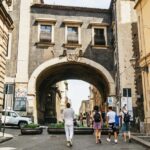
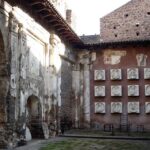
Piazza Carlo Alberto street food: when the market is the main event
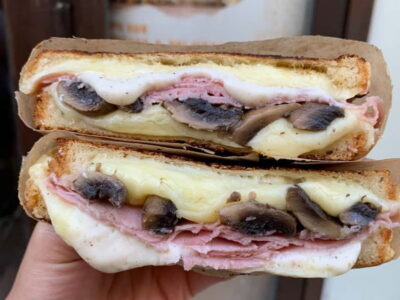
One of the best parts is that you eat in the market zone at the right time—right when Piazza Carlo Alberto feels like a working neighborhood. You’ll have a guided walk through the area with a food break built in, so it’s not just a quick taste at the end.
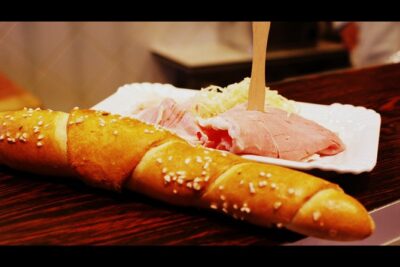
Expect a short stop centered on street food and local snacks, with a bit of market atmosphere that feels noisy and crowded in the way Sicilian markets usually do. After that first tasting break, you get another smaller dessert or snack moment later, so you’re not stuck with one rushed food stop.
What makes this work for you is pacing. If you’re the type who gets hangry, this tour basically feeds you on schedule while keeping the rest of the walking time efficient. And since you’re in the market with a guide, you’re more likely to try what locals actually go for, not only the most obvious tourist options.
Practical note: the tour is on foot and includes some steps. If you know your body hates uneven ground, wear shoes you trust. Your feet will do the talking here.
Entering underground Catania: secret churches and the city under the city
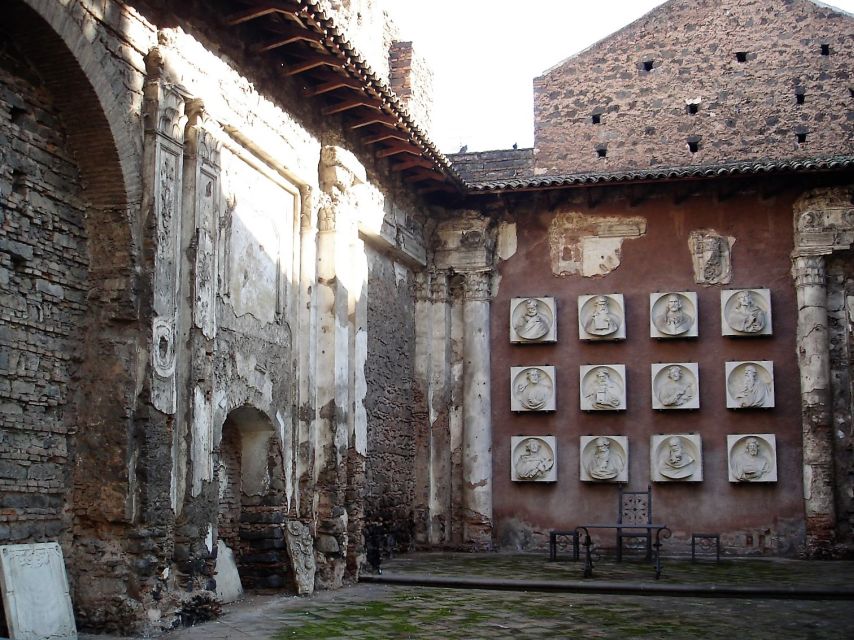
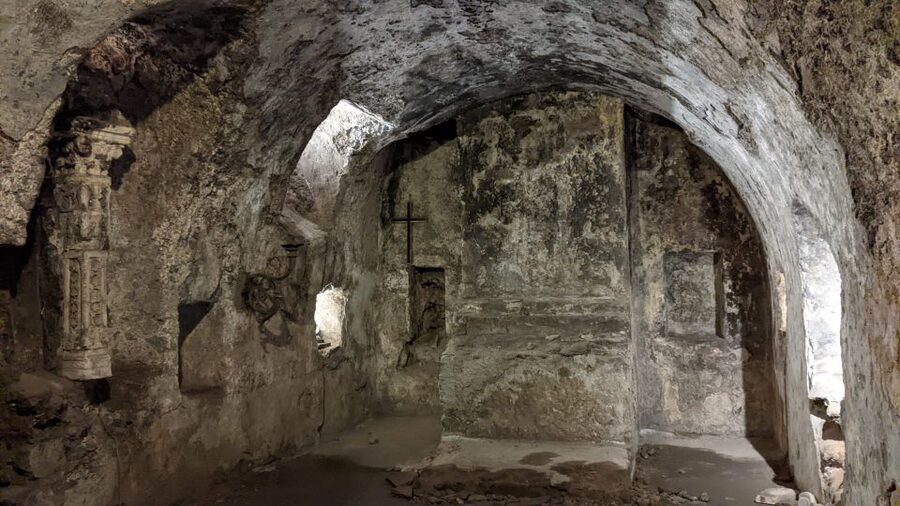
Now comes the wow moment: you step into Catania underground with a guided visit that lasts about 30 minutes. The story is layered—religion, war damage, and older-than-you-think spaces all show up. You’ll hear how bombed-church ruins and hidden passageways connect to the city’s later rebuilding.
The feeling you’re chasing is hard to fake: it’s the contrast between the street-level Sicily you see in five seconds and the underground Sicily you only get with access. You’re not just looking at walls. You’re following a narrative about how people used the space beneath Catania over centuries.
You’ll also visit another underground hidden site for about 25 minutes, which helps the tour avoid becoming repetitive. In a good underground tour, the guide doesn’t just point at rocks—they explain why that specific spot matters. The guides here tend to do exactly that, and that’s a big reason this tour scores so well.
If you’re sensitive to enclosed rooms, this is where you need to self-check. Claustrophobia is specifically listed as a mismatch, and it’s not hard to see why once you start moving through basement-like and subterranean passages.
Etna’s power in a prehistoric cave: the volcanic angle you’ll remember
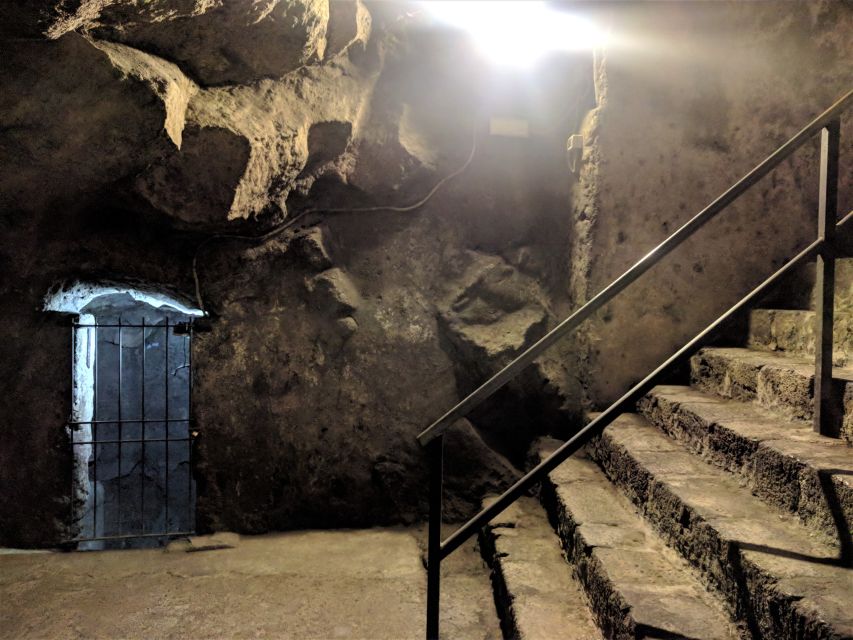
Catania is basically a conversation with Etna. This tour gives you a physical version of that story by pointing you toward a prehistoric cave linked to volcanic power and eruptions.
What I like about including Etna in the underground part is that it’s not a separate bus-day excursion. You’re seeing how volcanoes shaped the city over time, not just hearing general facts. Underground spaces make that connection feel more real because the stone and layers are right there.
Even if you’ve already read about Etna, you’ll likely enjoy how the guide ties the geology to what people built and believed. It’s a different angle than the usual viewpoint from above, and that matters when you’re trying to make a short stay feel complete.
Roman funeral chapel and the “history sandwich”
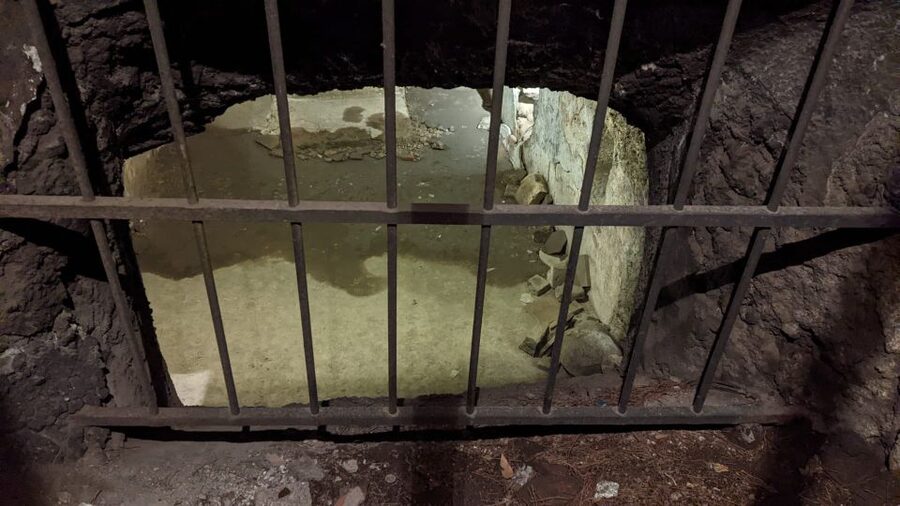
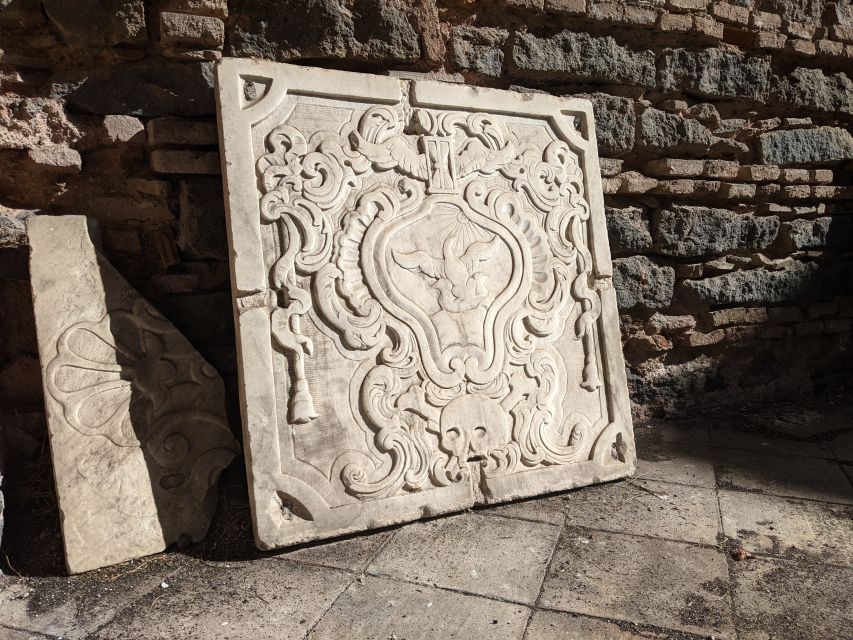
One of the tour’s strengths is how it keeps stacking eras. You’ll see an ancient Roman funeral chapel, and that gives the tour a strong anchor: Catania wasn’t starting from scratch each century. The current city is built on layers, and the guide helps you read those layers.
I call it a history sandwich because it doesn’t feel like a museum lecture. You’re physically moving from one underground space to another, and each stop adds context. That makes the timeline easier to keep in your head.
Also, many tours show Roman things above ground and call it a day. Here, you get Roman-style meaning underground, then you move back toward the street-level baroque and cathedral area later. The contrast is satisfying and helps you understand why the city looks the way it does now.
You can also read our reviews of more food & drink experiences in Catania


Amenano to the thermal baths: water you can follow
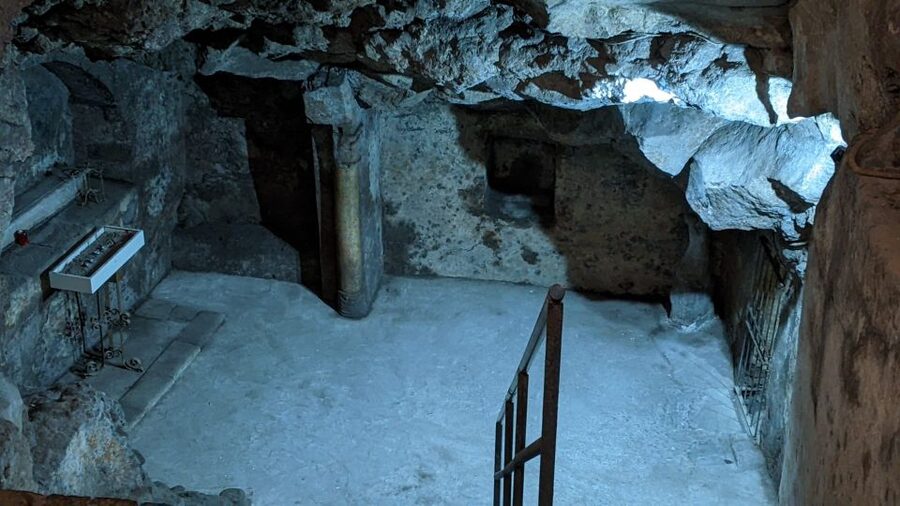
The most story-driven section for me is the underground water route. The tour follows the mysterious underground river Amenano toward the thermal baths, which are part of what keeps Catania’s underworld from feeling purely spooky.
This is one of those experiences that’s hard to describe until you see it: you’re basically tracing a practical natural system that affects daily life. When people built and used places like the baths, they weren’t doing it randomly. The underground water story guided decisions.
The thermal bath visit is guided and lasts about 30 minutes. That means you’re not just wandering around soaking your feet and hoping someone explains what you’re looking at. You’re there with context, which makes the experience more memorable.
Even better: this segment gives you a change of pace after more rugged underground walking. It’s still underground, but it’s connected to comfort and tradition.
Via Etnea and Piazza del Duomo: baroque drama and lava-stone symbolism
After the underground part, you come back up into the classic Catania city rhythm. You walk along Via Etnea, the main street, taking in aristocratic palaces and late baroque churches. This section works as a reset. Your eyes need daylight after underground stops.
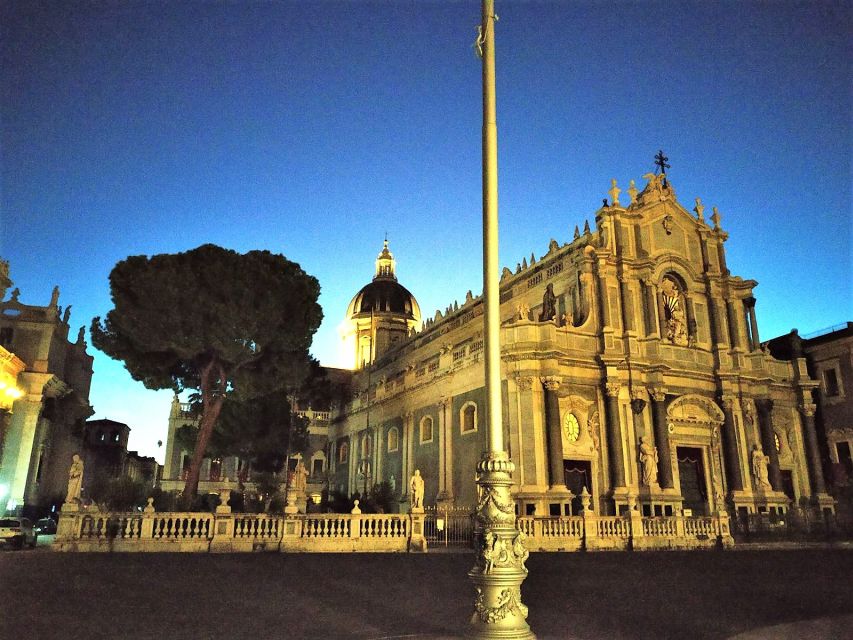
Then you head toward Piazza del Duomo. This is where the tour’s visual identity hits you: the cathedral square features the enigmatic black lava stone elephant. It’s one of those details you’ll want to see in person, because pictures never show the way the stone texture reads against the light.
You’ll also discover the basement of the cathedral, which ties back to the tour theme: Catania keeps its secrets even under famous buildings. If you thought the underground portion ended with caves and passages, this is the moment that proves you wrong.
The kiosk stop: mandarin e limone and a proper Sicilian send-off
Near the end, you get that final local-food-and-drink feeling. Your goodbye includes a typical drink at a kiosk: mandarino e limone—a sweet and citrusy combo that locals treat as normal, everyday pleasure.
You also stop at Via S. Gaetano alla Grotta, 5 for a cocktail moment (about 10 minutes). This gives you one more chance to sample something local while you’re still with the guide, so you can ask what you’re tasting and how people order it.
This is also where the tour feels most human. After all that underground history, the drink is a reminder that Catania isn’t only ancient. It’s lived in now—loud streets, quick sips, and people who know exactly what they like.
Pacing, steps, and who should skip this tour
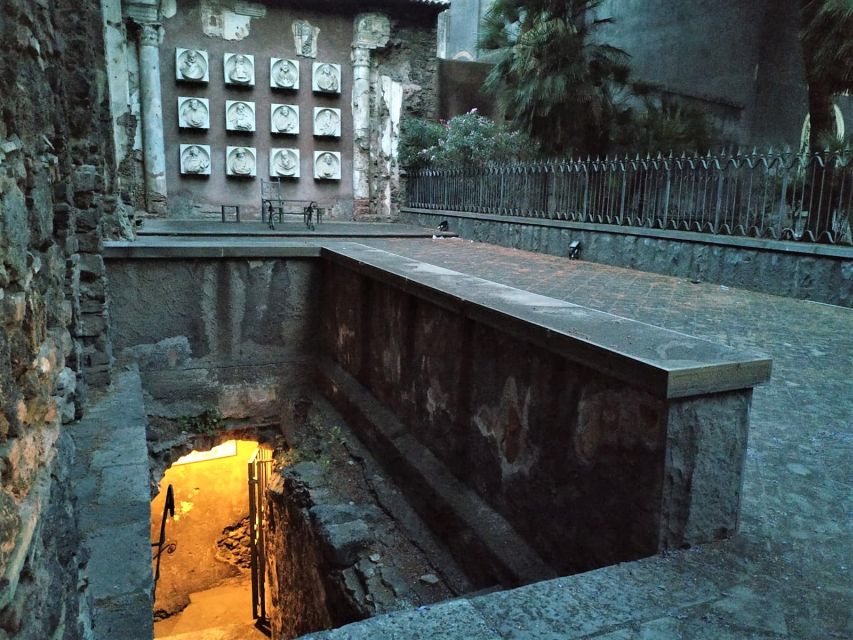
This tour is short—about 2.5 hours—but it’s not a sit-and-watch experience. You’ll be on foot with a few climbs of steps, and some may be irregular. That matters because it changes the effort level more than you’d expect from the duration.
Also, this is specifically not suitable for:
- people with mobility impairments
- wheelchair users
- people with claustrophobia
- people with motion sickness
- people over 280 lbs / 127 kg
If you fit those categories, it’s worth choosing a different Catania experience. Underground walking tours can be surprisingly tiring even for people who handle stairs fine.
The good news for the rest of you: the tour is designed to keep moving. It’s efficient, and it doesn’t try to make you “endure” long indoor waits.
What makes the guide matter here
What separates a so-so underground tour from a memorable one is what your guide does with the spaces. In this case, guides like Oreste and Matilde are consistently praised for making the layers understandable without slowing down.
One reason you’ll feel that quality is that guides don’t treat underground sites as guaranteed. If certain areas aren’t accessible (like when conditions limit what can be used), the tour can replace stops with other underground options chosen by the organization. That keeps the experience full instead of leaving you standing around.
That adaptability is important because Catania underground access depends on what’s open and safe. A tour that can swap intelligently is better value than one that just shrugs and shortens the day.
FAQ
How long is the Catania Underground and Street Food Walking Tour?
The tour lasts 2.5 hours.
Where do we meet the guide?
Meet at Piazza Stesicoro, at the entrance (two columns) of the Roman amphitheater. The guide waits there with a nameplate.
Is the tour canceled if it rains?
It runs rain or shine. It may only be canceled if conditions are prohibitive or if some sites can’t be used, in which case the organization may replace them.
What food and drink do I try?
You’ll have street food and local snacks at the open-air market, plus a local drink: mandarino e limone. There’s also a cocktail stop at Via S. Gaetano alla Grotta, 5.
What languages are available for the guide?
The guide speaks Italian, French, Spanish, and English.
Is this tour suitable if I have claustrophobia or motion sickness?
No. The tour is listed as not suitable for people with claustrophobia or motion sickness.
Should you book this tour?
Book it if you want Catania to feel three-dimensional: street baroque on top, and hidden rooms, caves, and the Amenano water story underneath. The small group size and the strong focus on both underground access and real market food make it good value for a short stay.
Skip it if stairs, enclosed spaces, or uneven underground walking would stress you out. If you fit the limits, you’ll get a compact, high-impact view of how Catania became Catania.