REVIEW · BRUSSELS
Brussels: City Center Guided Food Tour with Tastings
Book on GetYourGuide →Operated by NO DIET CLUB · Bookable on GetYourGuide
Brussels tastes better when you walk with a pro. This guided food tour is a tight 3-hour stroll through the city center where you snack on real Belgian classics, not just souvenir food, with fries cooked in beef fat and Liège waffles often leading the parade. Guides like Amélie make the stops feel personal, with city stories tied to what’s on your plate.
I like that the guide doesn’t just hand you bites; they connect them to Brussels and Belgian food culture. The tour runs as a small group (up to 10), and it’s vegetarian-friendly, so you’re not stuck with salad while everyone else eats. The main thing to plan for: tastings can vary by season, and veggie selections may depend on what’s available that day.
In This Review
- Key reasons this Brussels food tour works
- Meeting Patatak on Rue de la Bourse: The 3-Hour Plan
- Savory Start: Beef-Fat Fries, Frikadelle, and Fish Croquettes
- Sweet Finale: Liège Waffles and Belgian Chocolate
- Guides Who Connect Food to Brussels Streets
- Vegetarian-Friendly, With Seasonal Reality Checks
- Price and Value: Is $75 Worth It?
- Where to Go Next After the Walk
- Should You Book This Brussels Food Tour?
- FAQ
- How long is the Brussels City Center Guided Food Tour?
- Where is the meeting point?
- What is included in the price?
- Is the tour vegetarian-friendly?
- What languages are offered for the live guide?
- How big is the group?
Key reasons this Brussels food tour works

- You get multiple savory and sweet tastings instead of one meal, so you sample more of Brussels in less time.
- Beef-fat fries and classic comfort foods help you understand why Belgian street eating is a full art.
- Guides make it interactive, with friendly pacing and good care for dietary preferences.
- Small group size keeps it from turning into a herd.
- Vegetarian options exist, but seasonal changes mean you should expect some variation.
- You leave with practical recommendations for where to eat next in the area.
Meeting Patatak on Rue de la Bourse: The 3-Hour Plan
This is a walking tour focused on the center of Brussels, with food tastings included. No hotel pickup or drop-off means you’ll meet on your own. The meeting point is simple: stand in front of Patatak on Rue de la Bourse and look for your guide.
The tour lasts about 3 hours and runs in English or French with a live guide. Group size is capped at 10 participants, which matters more than it sounds. You get a rhythm that feels social, not chaotic, and it’s easier to ask questions when you’re not shouting across a crowd.
Because it’s food-first, your “route” is really a sequence of tastings. You’ll walk between local eateries the guide selects, spend enough time at each stop to actually taste and ask questions, then end with a better sense of where to eat on your own the rest of your trip.
You can also read our reviews of more food & drink experiences in Brussels

Savory Start: Beef-Fat Fries, Frikadelle, and Fish Croquettes
The savory half is the part that makes Brussels instantly click, even if it’s your first time in town. Plan to walk in with at least a modest appetite, because you’ll keep tasting as you go.
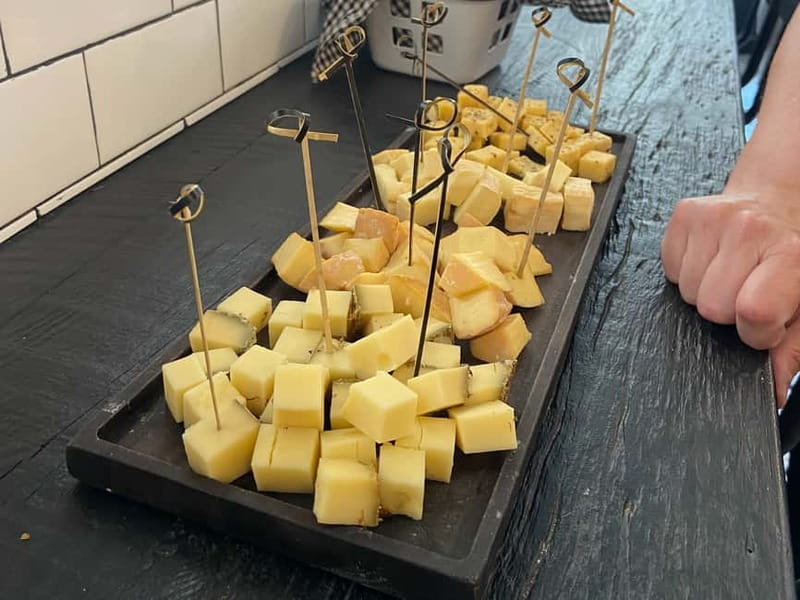
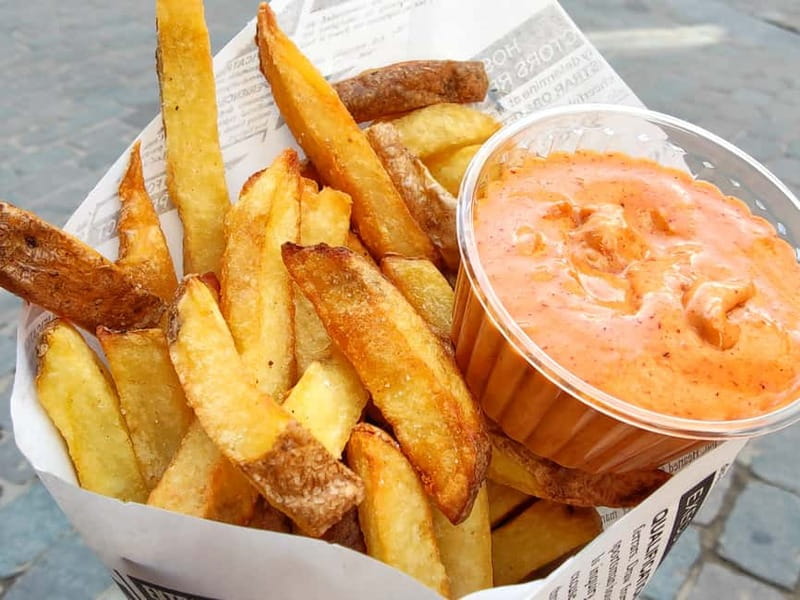
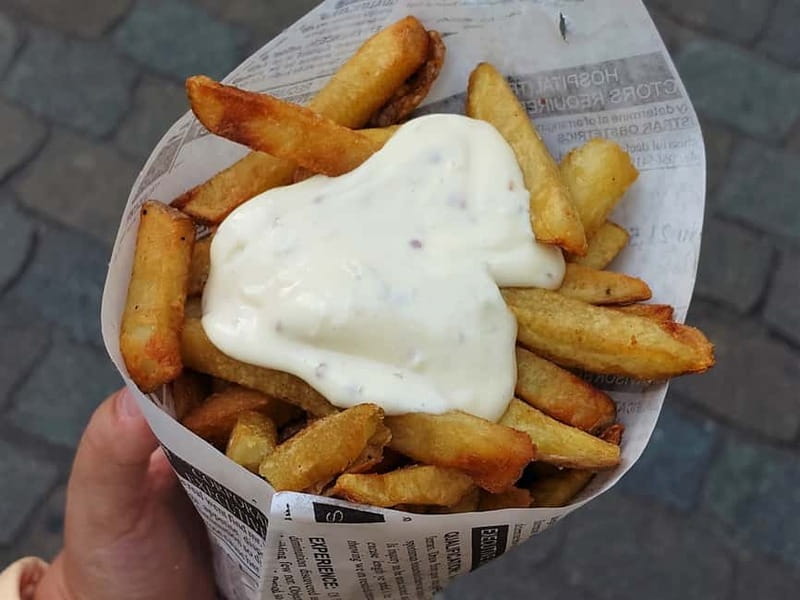
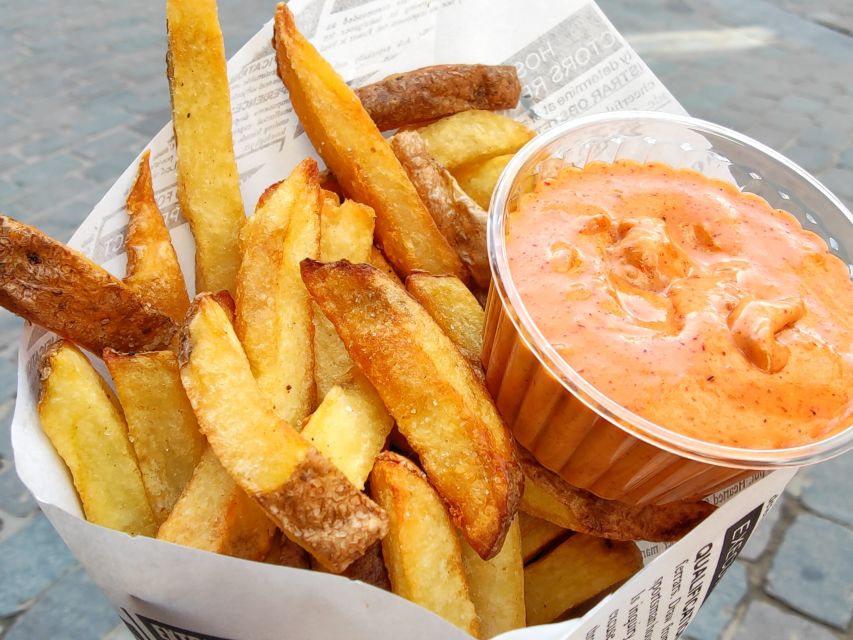
A highlight is fries cooked in beef fat. This is one of those Brussels details that sounds odd until you taste it. The flavor is deeper and more old-school than the fries you get in most places. It also explains why Belgian fries are treated like a serious snack, not a side dish.
Next, you might get a taste of something hearty like a homemade frikadelle. Frikadelle is Brussels/Belgian comfort food in meat-and-spice form, the kind of thing locals recognize as satisfying and filling. This stop is about understanding the “everyday classic” side of Belgian eating, not just the dessert crowd-pleasers.
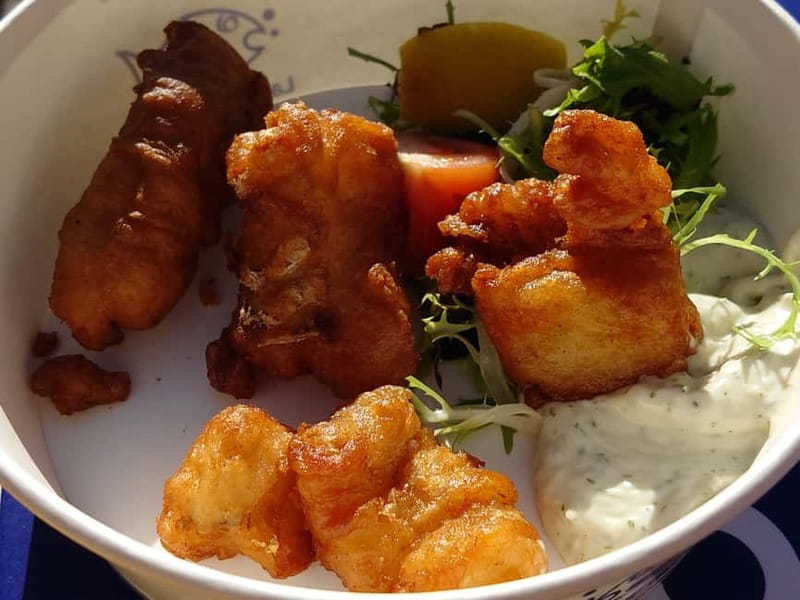
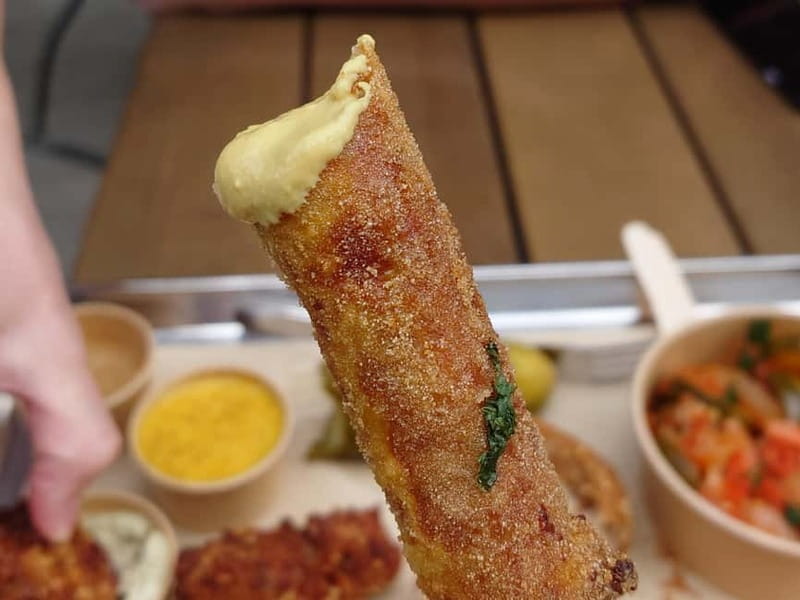
You can also expect fresh fish croquettes on the savory track. In Belgium, fish is not an afterthought, and croquettes show that idea in a portable, street-friendly way. You’ll likely find the texture and seasoning are the point here: crisp outside, creamy or soft inside, with a flavor that tastes like it belongs to Belgian snack culture.
One more reason the savory sequence works: it gives you a mix of tastes and textures—salty, rich, fried, and meaty—so the sweet stops later don’t feel random. They feel like a continuation.
Sweet Finale: Liège Waffles and Belgian Chocolate
Then comes the sugar part, where the tour shifts from salty comfort to signature Belgian sweetness.
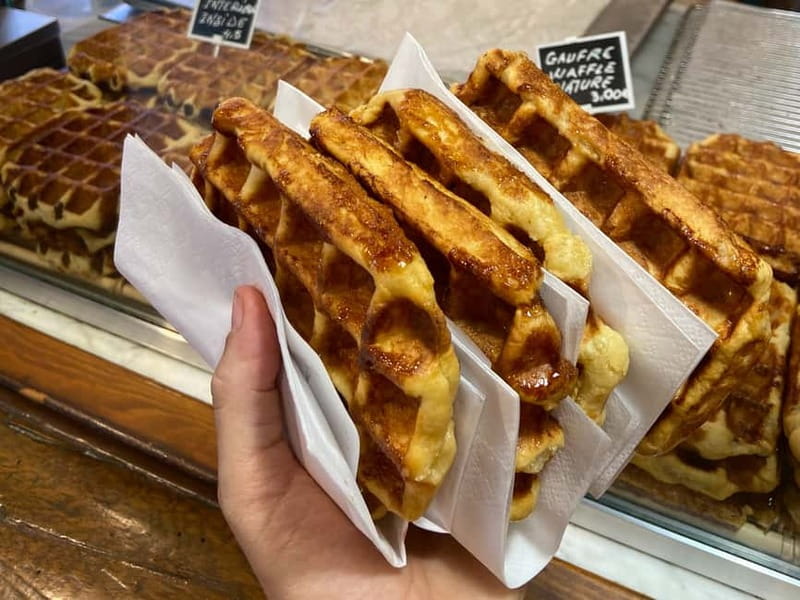
The big name on the list is Liège waffles. These aren’t just waffles in general. Liège waffles are known for their distinct dough and often a sweet, caramelized style that makes you understand why people get a little emotional about them. If you’ve had waffles elsewhere, you’ll taste the difference here fast.
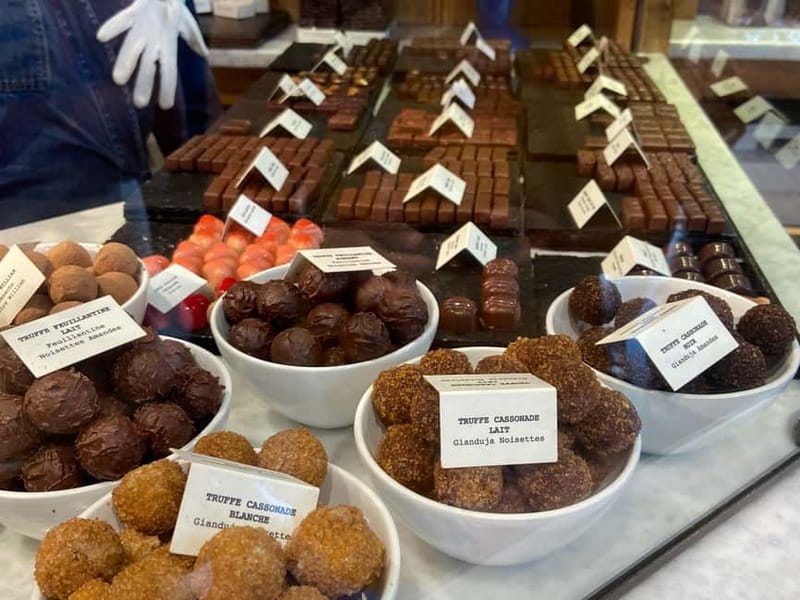
Belgian chocolate usually shows up as well, and it’s not treated like a token sample. The guide helps you taste it with intention—what to notice, how it differs from the chocolate you might buy at home, and how Belgium became the chocolate capital people still point to.
If you’ve been eating steadily, you may hit the “I’m full but I still want one more bite” moment. One helpful practical reality: if you run out of space, you may be able to take some of the last sweet item to go, so you don’t waste it.
This sweet segment also helps you think beyond desserts. In Brussels, sweets aren’t separate from the food scene. They’re part of it, tied to bakeries, markets, and long-standing habits.
Guides Who Connect Food to Brussels Streets
The best part of this tour is the guide—the way they turn food stops into a story about the city.
Guides you may meet include names like Amélie, Chloé, Lea, Kathleen, Olivia, Marine, and Clara. The consistent pattern is how they handle the walk: friendly, upbeat, and focused on what you’re tasting. They also add city context as you move—so you’re not just eating, you’re learning how Brussels fits together.
A few “small but telling” examples from the tour style you can expect:
- The guide typically offers recommendations for places to eat after the tour, so you can keep the food momentum going.
- They tend to answer questions and keep the group moving at a comfortable pace, which helps if you’re mixing languages or traveling solo.
- Some guides go extra miles for practical needs during the experience, like helping someone solve an issue mid-tour and then sending follow-up ideas.
And there’s another subtle win: in a small group, the guide can help you meet fellow food lovers without the awkwardness that can happen on larger tours.
Vegetarian-Friendly, With Seasonal Reality Checks
If you eat vegetarian, this tour is a good sign: vegetarian options are available. That’s not a promise of identical meals every time, though.
Here’s the reality: tastings may vary based on the season. So your vegetarian plan depends on what local spots have ready that day. One person noted that veggie options could be more thoroughly researched, which is a fair caution. In practice, it means you should go in with flexibility and expect some variation rather than a guaranteed lineup.
What you should do as you’re walking:
- Speak up about your preferences early with your guide.
- Expect that some stops may be swapped to match what’s available, especially for the savory items.
- Keep an eye on the sweet choices, because vegetarian-friendly options often show up there too (waffles and chocolate can still be part of the plan).
Good vegetarian tours don’t treat diet as an afterthought. This one at least signals that the guide has experience working with different preferences.
Price and Value: Is $75 Worth It?
At $75 per person for about 3 hours, this tour isn’t a casual cheap bite—it’s a deliberate food experience.
What makes it value-friendly is that food tastings are included and there are multiple stops. You’re paying for:
- guided selection of quality places
- the convenience of eating your way through several classics
- small-group time with a local guide
Brussels food isn’t usually expensive in one single-ticket way, but the cost adds up fast when you order one item at a time across the day. Here, you’re stacking tastings into one structured afternoon. That structure is the value.
Also, because the group is limited to 10 participants, you’re not paying for a crowd experience. You’re paying for a guide who can actually interact.
Where to Go Next After the Walk
One of the reasons this tour is useful even after you finish eating is the recommendations you get at the end. The guide isn’t just telling you what to eat in theory. They point you toward good spots in the area for the rest of your stay.
It helps that the walk is in the center. After the last tasting, you’re already oriented around key neighborhoods, so turning those suggestions into dinner plans is easier.
You might even catch a seasonal bonus. For example, one guest mentions an added moment connected to the herring festival near St. Catherine’s. Don’t plan your entire trip around it, but it’s a nice reminder that a guide who pays attention to local calendars can add a little extra flavor to the day.
Should You Book This Brussels Food Tour?
Book it if you want a practical Brussels introduction through food. This is especially smart if:
- it’s your first time in Brussels and you want the highlights without guessing
- you like learning while you snack, not sitting through a lecture
- you want a small-group experience that feels friendly
- you want Belgian classics like beef-fat fries, frikadelle, fish croquettes, Liège waffles, and chocolate in one afternoon
Skip it (or consider a different style) if you’re not up for tasting several foods. Even with a comfortable walking pace, this tour is very filling. And if your vegetarian needs are very specific, be ready for seasonal variation in what’s offered that day.
FAQ
How long is the Brussels City Center Guided Food Tour?
The tour lasts 3 hours.
Where is the meeting point?
Meet your guide in front of Patatak on Rue de la Bourse.
What is included in the price?
The tour includes the walking tour, guide, and food tastings.
Is the tour vegetarian-friendly?
Yes. Vegetarian options are available, and the tastings can vary by season.
What languages are offered for the live guide?
The live tour guide is available in English and French.
How big is the group?
The group is small, limited to 10 participants.