Your first Beijing night can be a food shortcut.
This guided hutong crawl packs mutton hotpot, a rooftop-style bell tower view, and classic Beijing flavors into just 3.5 hours, starting right near Shichahai. I like that the walk follows the older alley grid—so you’re not only eating, you’re also learning how everyday Beijing life fits around these historic lanes. Plus, you get a real taste of Muslim-influenced Beijing cooking, not just the usual tourist menu.
Two things I really like: the hotpot-and-beer stop with copper pots and clear broth, and the Beijing noodles served in a courtyard noodle house where you can see how local people actually eat. Both feel like meals you’d miss on your own.
One possible drawback: this is a walking-focused tour and it’s not suitable for mobility impairments. Also, one of the tastings involves the baijiu culture—so if alcohol is a hard no for you, tell the guide in advance.
In This Review
- Key points you’ll care about
- Start at Shichahai, Then Walk Into Old-Beijing Life
- Mutton Hotpot and Craft Beer With a Bell Tower View
- The Courtyard Noodle House Where Everyone Says Beijing Noodles
- The Rare Muslim Dish Linked to Empress Cixi
- Spring Pancakes, Served Fresh Like a Family Reunion
- Why the Hutong Walk Is Part of the Meal (Not Just Movement)
- Value Check: Why $75 Can Actually Make Sense Here
- The Guides Are the Secret Sauce
- Who Should Book This Hutong Food Tour (and Who Should Skip It)
- Should You Book This Beijing Hidden Gems Guided Food Tour?
- FAQ
- What time does the Beijing food tour start?
- Where exactly do I meet my guide?
- How long is the tour?
- How much walking is included?
- What food and drinks are included?
- Which dishes are part of the tasting lineup?
- Is the tour okay for people with mobility impairments?
- Can the tour run if there aren’t enough people?
- Do I need to tell them about dietary needs?
Key points you’ll care about
- Shichahai meeting spot near Line 8 (Exit C), so you can show up fast and start on time
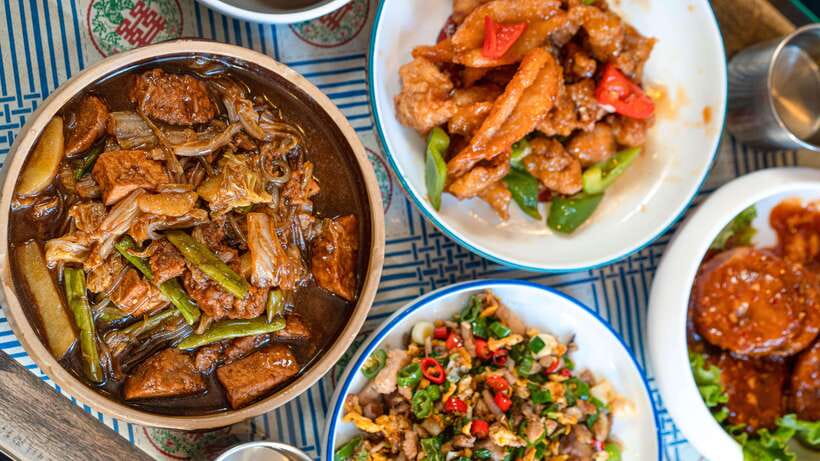
- Copper hotpot + clear broth paired with a locally brewed craft beer
- Courtyard-style hole-in-the-wall noodles where locals call it Beijing noodles for a reason
- A rare Muslim dish linked to Empress Cixi, served in a neighborhood spot
- Spring pancakes “like a burrito”—fresh, family-style, and tied to the spring festival tradition
Start at Shichahai, Then Walk Into Old-Beijing Life
The tour begins at Shichahai Metro Station (Line 8), Exit C, street level. Your guide meets you upstairs outside the exit, and you should aim to arrive about 10 minutes early so you don’t have to rush in the busy evening flow.
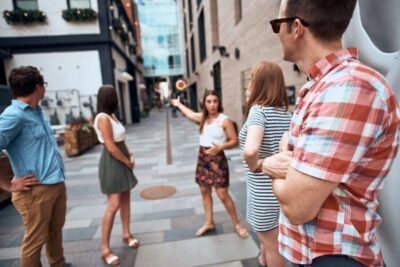
From there, you’ll cover about 1.5 miles (2.5 km) of hutong alleyways at an easy pace with plenty of eating breaks. The route matters because hutongs aren’t just scenic. They’re the structure of daily life—narrow lanes connecting courtyard homes built by officials and wealthy families, shaped over many centuries. Even when you’re just moving a few blocks, you start to understand why Beijing’s old neighborhoods feel like little worlds.
I like that your guide doesn’t treat the walk as background. You’ll hear what the word hutong means and how these lanes have evolved over time, especially in relation to the Forbidden City area. That context makes each stop land harder—like you’re tasting history, not just ordering food.
You can also read our reviews of more food & drink experiences in Beijing
Mutton Hotpot and Craft Beer With a Bell Tower View
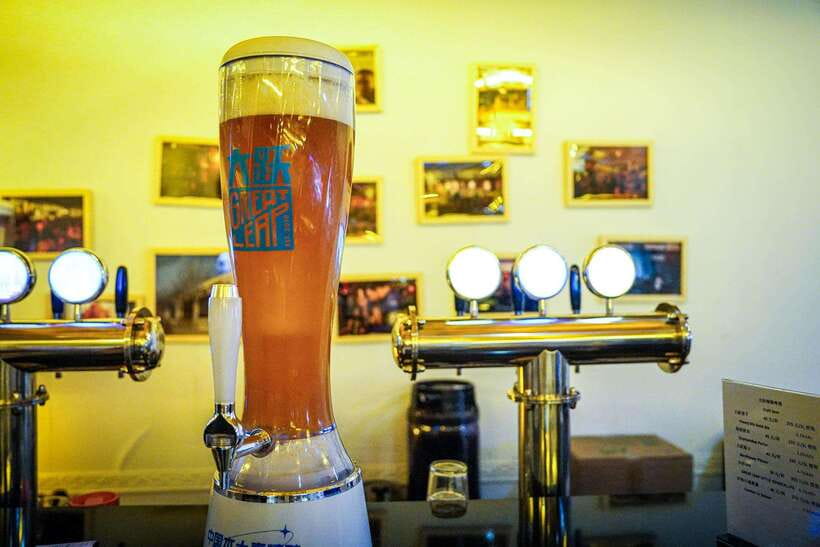
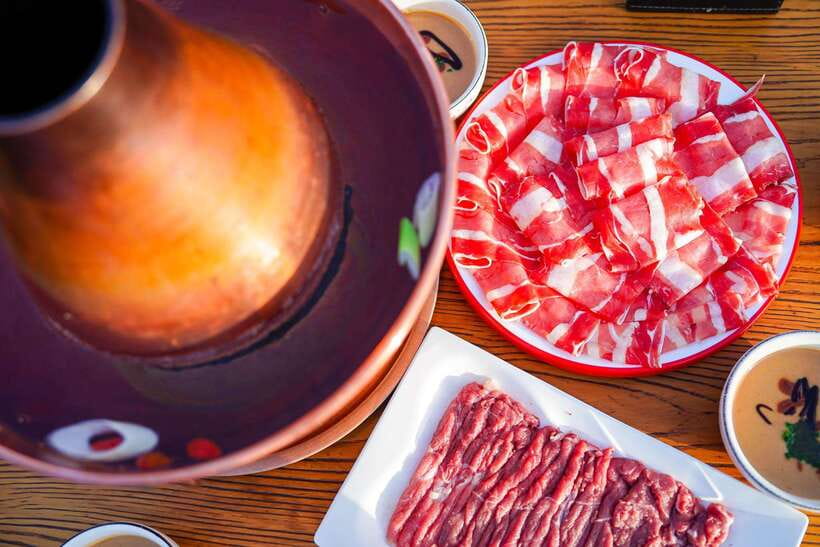
The first “wow” meal is Beijing hotpot, served in traditional style with a clear broth and a copper pot. You’ll cook thin slices of mutton and beef quickly in the pot, then dip pieces into a sauce built around sesame paste.
Here’s what makes this stop feel worth it: the broth is the star. With a clear broth, you can actually notice ingredient quality and flavor instead of everything getting masked by a heavy sauce. And when the mutton hits the broth, you get that clean, warming hotpot taste that Beijing does so well in cool evenings.
You also get a pint of locally brewed craft beer with this meal. Many people think of beer as a generic add-on. Here it reads as a deliberate pairing for hotpot—familiar enough to drink easily, but local enough to feel like part of the city’s food culture.
The icing on the evening is the view—this place offers rooftop-style sightlines of Beijing’s historic bell tower area. It turns a regular hotpot meal into an “okay, this is Beijing” moment, especially once the evening light softens the skyline.
Practical tip: hotpot moves fast. Don’t wait until the pot is empty—start ordering your rhythm early, especially if your group tends to linger on the walk before the meal.
The Courtyard Noodle House Where Everyone Says Beijing Noodles
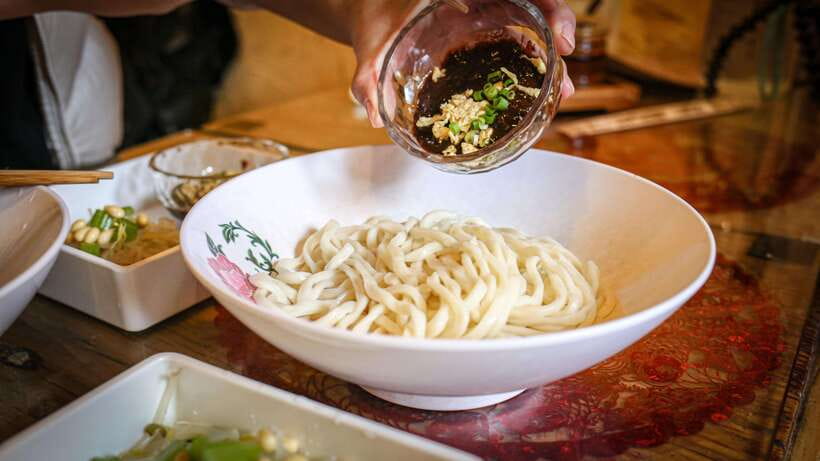
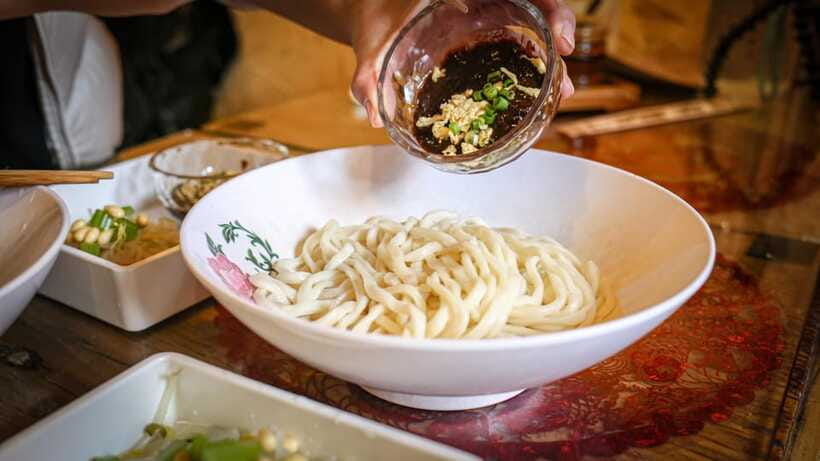
Next up: noodles. In Beijing, people don’t always overthink it. When they want noodles, they’re talking about Beijing noodles—so named in a way that sets up expectations.
This stop is in a hole-in-the-wall noodle house hidden inside a hutong courtyard. You’ll get their made-from-scratch secret recipe, served in a way that feels more personal than a big restaurant menu. The point isn’t fancy plating; it’s flavor consistency and the right noodle bite.
I like that this isn’t framed as “one more dish.” It’s treated like a core Beijing identity food. If you’ve only had noodles elsewhere in China, this gives you a baseline for what locals mean when they say Beijing.
What to watch for: because it’s a small courtyard setup, seating can feel tight and the environment is simple. Go with the mindset that you’re there to eat well, not to sit comfortably for an hour.
The Rare Muslim Dish Linked to Empress Cixi
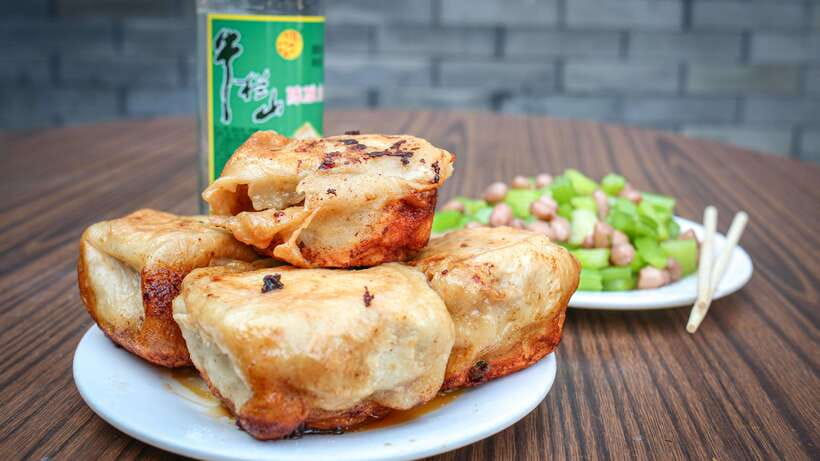
One tasting is described as a rare Muslim-style Beijing speciality, and it’s the kind of dish you usually only find if you have a local guide steering you. The spot is a neighborhood eatery where it’s frequented almost exclusively by local men, and you may see baijiu kept behind the counter.
The dish is famous enough that it’s known as a favorite of Empress Cixi. That doesn’t mean you’ll get a museum-level performance—it’s still a working local counter-style restaurant—but the lineage gives the meal extra weight. You’re eating something that has survived changing times and still belongs to the neighborhood.
This stop is also where you get a real sense of how Beijing’s food scene isn’t one single uniform thing. You’re tasting a thread of Muslim influence inside hutong life, not just generic Chinese food branding.
One consideration: if you don’t want alcohol at all, mention it ahead of time. The tour includes unlimited beer and sodas, but the cultural baijiu presence at this particular stop is part of the experience.
Spring Pancakes, Served Fresh Like a Family Reunion
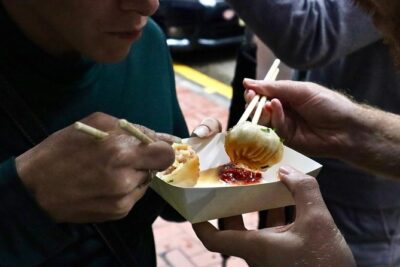
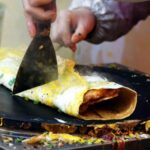
The last major food stop centers on spring pancakes, a dish traditionally enjoyed with family during Chinese New Year to celebrate the arrival of spring and a good harvest. This restaurant is run by a husband-wife team, and the pancakes are made fresh to order.
The tour’s description of how you eat them is useful: you eat the spring pancake like a burrito—wrapping fillings in a way that makes it handheld and fast. That matters because by the end of the tour, you’re often full. The burrito-style approach helps you keep going without turning the meal into an eating marathon.
Why I think this stop lands: spring pancakes connect food to timing and family. It’s not only about taste; it’s about season. And once you’ve walked hutongs and eaten hotpot and noodles, you’re ready to appreciate a dish that feels lighter and more “together” in spirit.
Also, because the pancakes are tied to the spring celebration tradition, you’re tasting something that’s meant to be shared, not just consumed.
Why the Hutong Walk Is Part of the Meal (Not Just Movement)
A food tour can easily turn into a string of transactions: arrive, eat, leave, repeat. This one puts the hutong walk front and center.
You’ll be moving through historic alleyways dating back to the 12th century, formed between courtyard houses built by government officials and wealthy families. That timeline doesn’t feel like trivia while you’re walking. It shows up in the layout—small lanes, turns, and courtyards that make Beijing feel like a layered map rather than one big boulevard.
The guide also explains how hutongs have changed over time. That’s important because it stops the story from becoming romantic nostalgia. You’ll get the sense that old Beijing isn’t frozen; it’s lived in, rebuilt, and adapted.
A small but real bonus from the structure: the walk between stops gives your body a breather. You’re eating substantial food—hotpot and noodles, plus pancakes—so that gentle movement helps you digest instead of feeling like you’re stuck in one restaurant chair all evening.
Value Check: Why $75 Can Actually Make Sense Here
At $75 per person for a 3.5-hour experience, the value depends on what you want from Beijing.
This tour works if you like:
- A guided introduction so you don’t spend your first night guessing where to eat
- Multiple local tastings (it’s described as four food stops, equivalent to dinner)
- Included drinks, including a pint of craft beer and unlimited beer and sodas
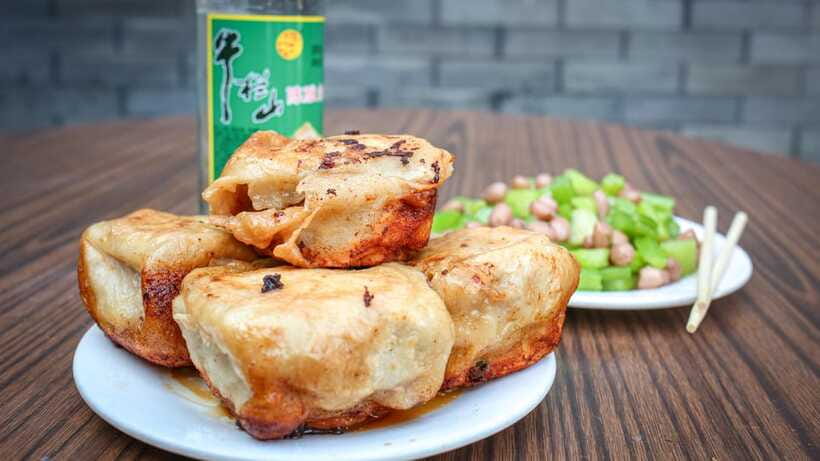
It’s also a good deal because the stops aren’t just big-name, “I walked by it” places. The noodle house is in a courtyard. The hotpot place includes a view and serves copper-pot hotpot. The rare Muslim dish is tied to a specific neighborhood counter culture. The spring pancakes are made fresh by a husband-wife team.
If you tried to replicate this on your own, you’d likely spend time finding places and taking taxis between spots you can’t easily locate. Here, the planning is handled for you—without turning it into a conveyor belt of tourist traps.
Where it might feel less cost-effective: if you hate walking, or if you refuse all alcohol and most tastings don’t fit your diet. The tour does ask you to advise dietary requirements when booking, but it’s still built around fixed local dishes.
The Guides Are the Secret Sauce
One reason this tour earns so many strong ratings is the way the guide brings it to life. Names that show up repeatedly include Janice, Joe, Tony, Haitao, Winnie, Yoyo, Zoey, Uyi, Carmen, TEAGAN, and Bonnie.
Across those guides, the pattern is consistent: you’ll get clear English, a lot of food context, and stories tied to hutongs and what you’re eating. People also highlight that the pace feels unhurried, even though you cover four places. That balance is exactly what you want in a guided food crawl: enough structure to keep it flowing, not so much that you feel rushed at each stop.
If you’re a “tell me what I’m tasting” person, you’ll likely enjoy the way each dish gets explained—especially the “why this dish, why here” angle that makes the rare items feel less random.
Who Should Book This Hutong Food Tour (and Who Should Skip It)
This fits you best if:
- You want an authentic Beijing night without spending your time decoding menus
- You like classic foods with local identity: hotpot, noodles, spring pancakes
- You’re comfortable eating in smaller, neighborhood-style spots
- You enjoy beer with dinner, plus you’re open to learning about other spirits in the culture
You might want to skip it if:
- You have mobility limitations (it’s specifically noted as not suitable for mobility impairments)
- You can’t do alcohol and don’t want the cultural baijiu presence at the rare dish stop
- You dislike walking through older alleyways in the evening, since this includes about 2.5 km on foot
Also, note that the itinerary can adjust based on vendor operations and availability. That’s common for food tours, but it can matter if you’re fixated on a single dish. The good news: the tour is designed so replacements stay within the same spirit of “excellent local tastings.”
Should You Book This Beijing Hidden Gems Guided Food Tour?
I’d book it if this is your first or early night in Beijing and you want a fast, flavorful way to get oriented. The combination of hutong walking, copper-pot hotpot, courtyard noodles, a rare Muslim dish tied to Empress Cixi, and fresh spring pancakes gives you a spread that feels genuinely Beijing, not just “Chinese food sampler.”
I’d hesitate if walking is a challenge for you, or if your dietary rules are strict enough that you might not enjoy most of the set dishes. In that case, message your needs clearly when booking and don’t assume every stop can be fully adjusted.
If you want a guided evening that actually changes how you understand the city, this is the kind of tour that earns your time.
FAQ
What time does the Beijing food tour start?
The tour begins at 6:30 PM. Plan to meet your guide 10 minutes before the start time at the designated meeting point.
Where exactly do I meet my guide?
Meet at Shichahai Subway Station, Exit C, Street Level. Your guide will be upstairs outside the exit.
How long is the tour?
The tour lasts about 3.5 hours.
How much walking is included?
You’ll walk about 1.5 miles (2.5 km) through hutong alleyways.
What food and drinks are included?
You’ll have 4 food stops with tastings (described as equivalent to dinner), plus a pint of locally brewed craft beer. Unlimited beer and sodas are also included.
Which dishes are part of the tasting lineup?
The tour includes mutton hotpot with craft beer and a view, Beijing noodles from a hidden noodle spot, a rare Muslim-style dish linked to Empress Cixi, and spring pancakes made fresh to order.
Is the tour okay for people with mobility impairments?
No. It is not suitable for people with mobility impairments.
Can the tour run if there aren’t enough people?
There is a minimum of 2 people required for the tour to operate. If it doesn’t meet that minimum, you may be offered an alternative date or a full refund.
Do I need to tell them about dietary needs?
Yes. You should advise of any dietary requirements when booking.