REVIEW · ATHENS
Athens: The Classic Food Tasting Tour
Book on GetYourGuide →Operated by Αthens Food on Foot · Bookable on GetYourGuide
One smell of fresh pastry and you’re in Greece. This classic Athens food tour strings together old-district eats and market sights for 3–3.5 hours, with 18+ tastes along the way. I especially like how it balances comfort food (mpougatsa, koulouri) with regional flavor (Cretan cheese, olives, raki), so you leave with a real sense of what locals actually order.
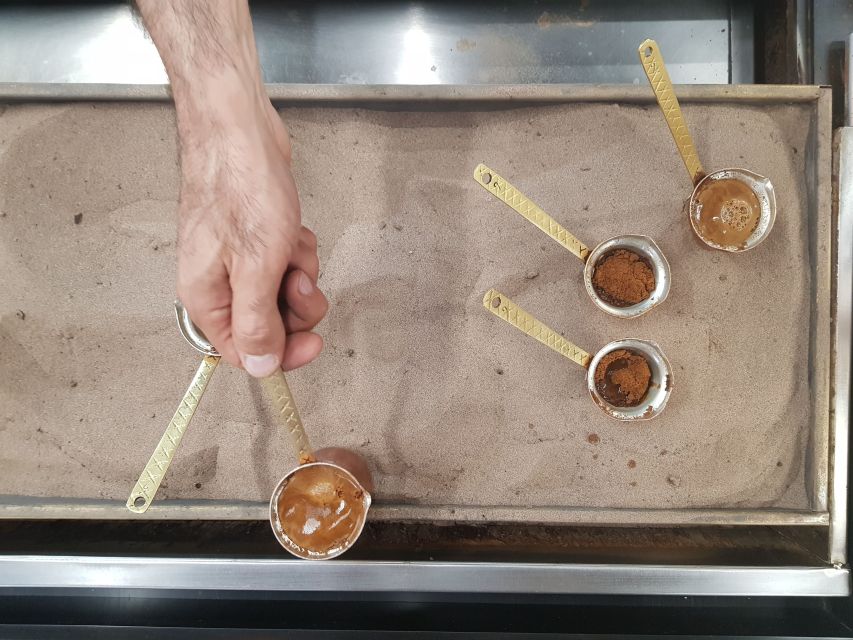
Two things I really like: you get a proper Greek coffee stop (including a sand-heated method you’ll probably remember), and the group stays small, max 10. One thing to plan for: you’ll be walking and you’ll eat a lot, so don’t schedule a big dinner right after.
If you want Athens that’s edible, start here.
In This Review
- Key things I’d circle on the map
- Meeting Monastiraki Square, then walking into the real Athens
- Omonia warm-up: Greek yogurt, pies, and coffee that’s worth waiting for
- Varvakios food market: the stop that makes everything feel authentic
- Old-bakery mpougatsa: the classic stop you’ll talk about later
- Goat milk ice cream and the joy of trying something new
- Cretan cheese round with olives, rusks, olive oil, and raki
- Koulouri and the tsipouro/mezze finale
- Price and value: what $80 buys you (and why it’s not just snacks)
- Guides in action: why the group size matters
- What to do (and not do) before you show up
- Who should book this Athens classic food tasting tour
- Should you book Athens: The Classic Food Tasting Tour?
- FAQ
- How long is the Athens Classic Food Tasting Tour?
- What does the tour cost?
- Where do I meet the guide?
- How do I get to the meeting point by metro?
- What’s included in the price?
- Are there any site or museum entries included?
- What languages are the tours offered in?
- Is the tour wheelchair accessible?
Key things I’d circle on the map
18+ tastings in a tight 3–3.5 hour walk so you sample more than one meal’s worth
Old-bakery mpougatsa with fyllo pastry and cheese or creme
Goat milk ice cream made from a traditional recipe using an inventive approach
Varvakios market stop plus delis for cheese, olives, rusks, and olive oil
Cretan round with raki and a mezze-style finish with tsipouro
Meeting Monastiraki Square, then walking into the real Athens
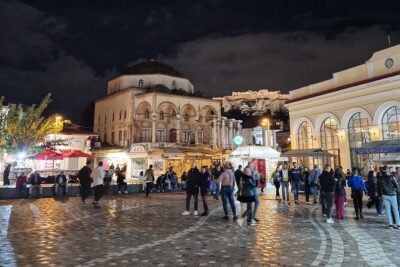
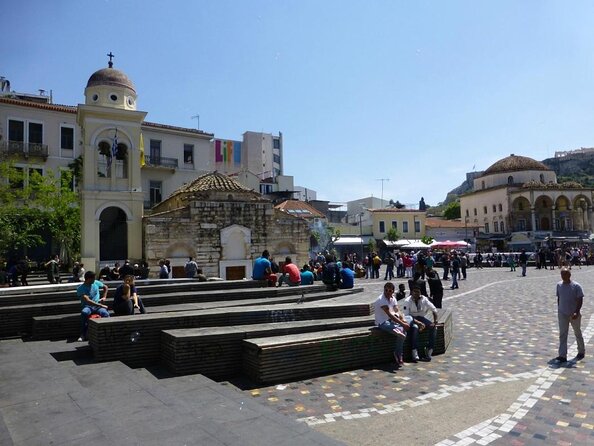
The tour meets at Monastiraki Square, right in front of a small church. It’s easy to reach by metro—green or blue line—so you’re not wrestling with transfers or guessing where “downtown” is.
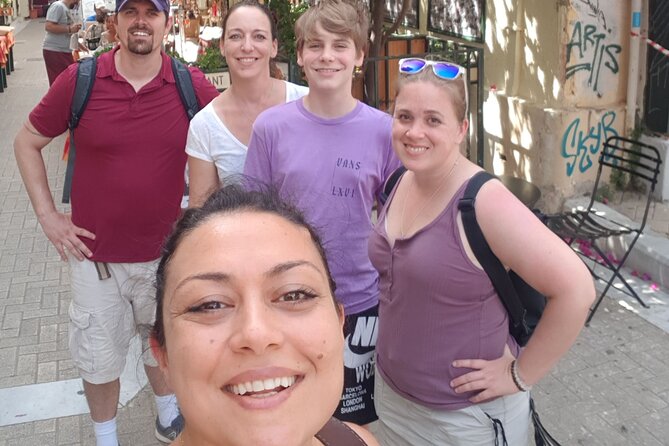
From there, the pacing makes sense. Athens is spread out, and it’s easy to feel lost. This tour gives you a simple path through central neighborhoods while you’re busy, so you’re not just sightseeing. And because it’s a small group (up to 10), it feels like you’re walking with a guide and a few friends, not herded with a crowd.
If you’re using the tour to kick off your trip, plan to do it earlier rather than later. Getting the names of foods, neighborhoods, and basic ordering ideas early makes the rest of your eating feel smarter.
You can also read our reviews of more food & drink experiences in Athens


Omonia warm-up: Greek yogurt, pies, and coffee that’s worth waiting for
The route starts in Omonia, where you begin with refreshing Greek yogurt and traditional pies and pastries. This is a good opener for two reasons: first, it gives you a quick baseline for what “classic” tastes like in Athens. Second, it helps you build appetite before the heavier stops.
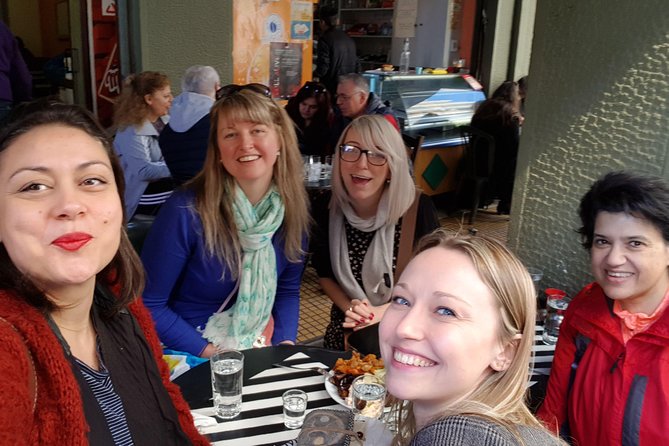
Then comes Greek coffee at a local favorite. One highlight from guide/guest reports: you may see coffee made in a sand-heating bed. It’s not just theatre. It helps explain why Greek coffee has that dense, slow-simmer character you don’t get from a quick drip machine.
You’ll also likely hear how these foods fit daily life—breakfast patterns, what people snack on, and how coffee connects to social time. That context makes later bites easier to understand (and easier to order again when you’re back on your own).
Practical note: wear comfy shoes. This is not a sit-and-sip tour.
Varvakios food market: the stop that makes everything feel authentic
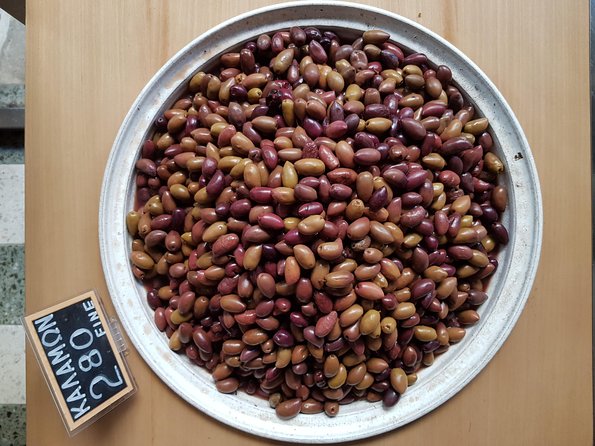
After the first bites, you stroll through the famous Varvakios food market. This is where the tour earns its credibility. Markets in Athens aren’t just for tourists—they’re for sourcing ingredients: vegetables, fruit, meat, fish, and the shelves of packaged and local goods in between.
You don’t need to be a foodie to enjoy this part. The payoff is orientation. You get a sense of what’s common, what’s fresh, and what to look for when you’re shopping or eating on your own.
Also, market time usually sets up the next phase of the tour: delis and specialty shops. Once you’ve seen the ingredients in the market environment, the cheese, olives, rusks, and olive oil stops feel like a continuation—not random detours.
Old-bakery mpougatsa: the classic stop you’ll talk about later
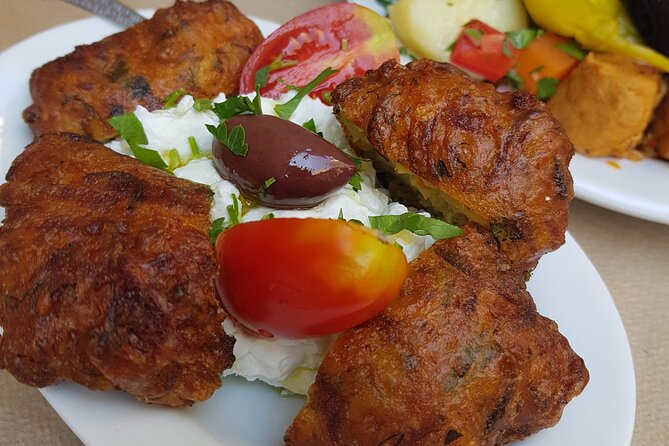
One of the tour’s headline moments is visiting an old mpougatsa bakery. You’ll taste traditional mpougatsa made with fyllo pastry plus cheese or creme.
This is one of those Greek foods that’s simple on paper and complicated in reality. The layers matter. The crispness matters. And the filling matters. On a tasting tour, it’s a smart choice because you get a concentrated taste of a dish that locals treat as comfort and tradition, not “street food.”
If you’ve only had mpougatsa once elsewhere, this stop is the comparison you didn’t know you needed.
Goat milk ice cream and the joy of trying something new
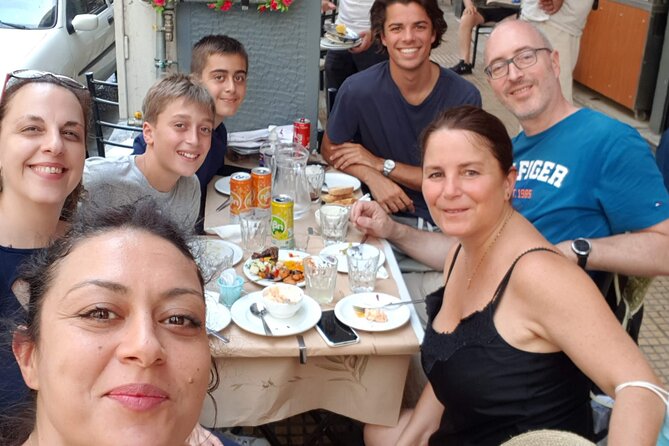
Next you’ll get goat milk ice cream made using a traditional Greek recipe, but presented in an innovative way. This is a great example of the tour’s balance: it honors tradition while still giving you at least one “how is this made?” moment.
Goat milk flavors can be polarizing. Here, the format is tasting-size and guided, so you can sample without committing to a full cone you might not finish. And even if goat milk isn’t your thing, the method and story usually make it interesting.
Think of this stop as the tour’s palate “reset” before the stronger savory and regional bites later on.
A few more Athens tours and experiences worth a look




Cretan cheese round with olives, rusks, olive oil, and raki
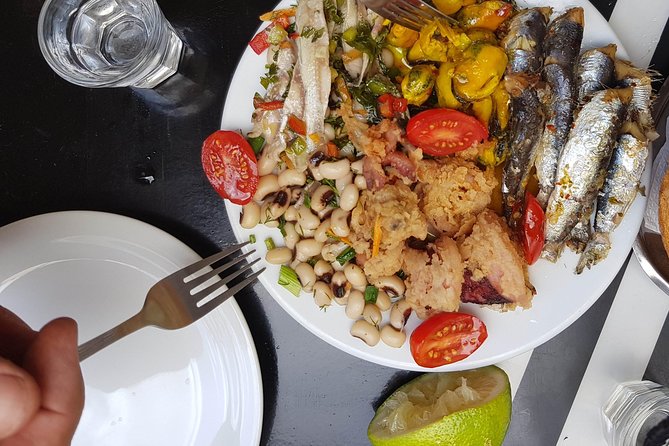
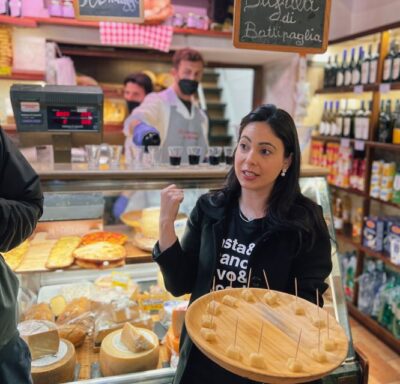
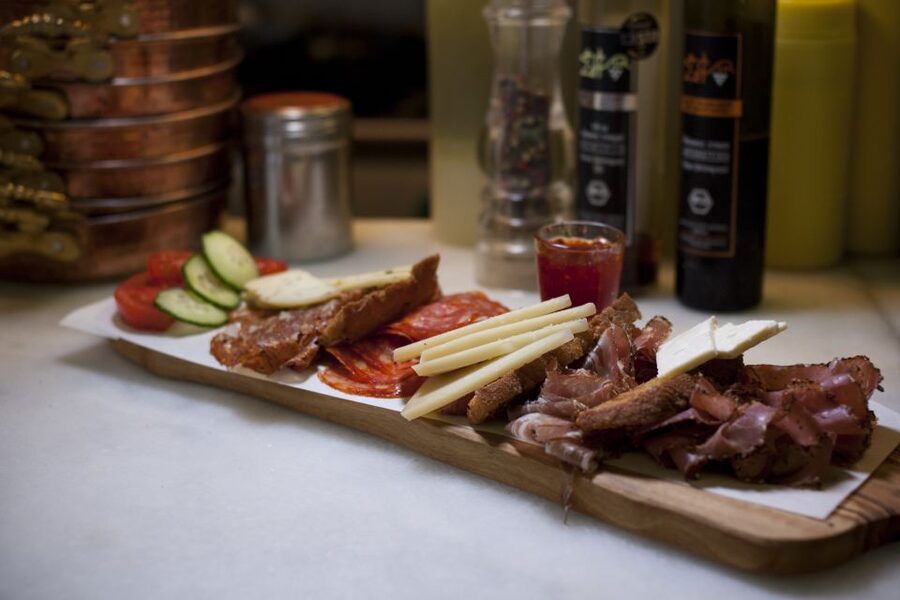
The tour makes room for Cretan culture with a dedicated tasting round. You’ll sample cretan cheese, olives, rusks, olive oil, and of course raki. This is where you start to feel the difference between Athens “daily staples” and Greek regional identity.
Cretan foods tend to lean into bold simplicity: good ingredients, clear flavors, and strong tradition. The combo matters. Cheese isn’t just cheese here. It’s cheese next to olives and olive oil—so you taste fat, salt, and texture in the same sequence.
Raki adds heat and warmth. It’s also a signal that this isn’t only about sweet pastries and soft drinks. You’re tasting the foods and drinks that show up when Greeks slow down for conversation.
If you’re sensitive to alcohol, pace yourself. The tour includes plenty of food, and your best move is to treat raki as part of the tasting rhythm, not a separate drink obligation.
Koulouri and the tsipouro/mezze finale
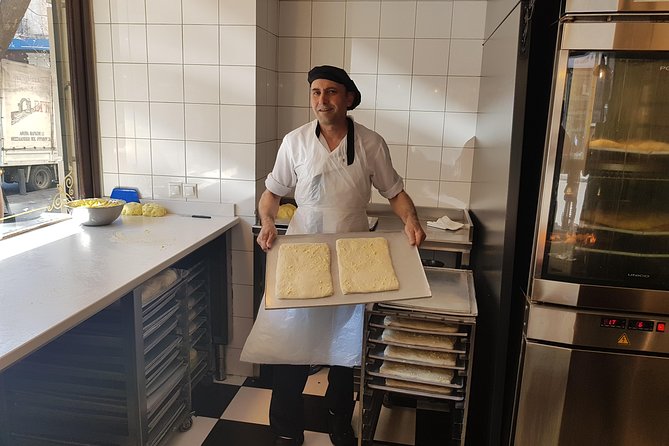
As the tour nears the end, you’ll try koulouri, the sesame pastry that’s practically synonymous with Athens street life.
Then it finishes with mezze with tsipouro, described as a very “Greek” habit. This is a good closing style for a food tour because you end with the social side of eating—small plates, shared bites, and the idea that food is for slowing down, not just fueling up.
It’s also a satisfying finish after all the market walking. By this point, you’ll have a sense of what you liked most, and you’ll know what to look for on menus and shop signs later.
Price and value: what $80 buys you (and why it’s not just snacks)
At $80 per person for about 3 to 3.5 hours, this isn’t a budget “just eat a few bites” tour. But it also isn’t priced like a fine-dining experience. The value comes from three things:
- Quantity: 18+ delicacies over the route. You’re not leaving hungry, and it’s a real advantage if you hate guessing which item to order.
- Guide effort: you get an expert licensed guide plus bottle of water, and the pacing connects food to place.
- Concentration: instead of hunting down these foods across multiple neighborhoods, you’re sampling a concentrated Athens path.
From the reviews, a repeated theme is that the food is generous and people leave very full. That’s not a small detail. If you’d otherwise spend money on several meals and a bunch of small purchases, this tour can replace that scattershot spending with one structured plan.
My practical take: do it early. You’ll learn what’s worth buying again, and you won’t waste your appetite later on the wrong “tourist version” of Greek food.
Guides in action: why the group size matters
This tour runs with live guides in English and German, and the standout factor is how they keep the experience personal. Names show up again and again in positive reports: Lef, Elias, Joanna, Maria, Ioanna, Phillip, Menelos, Kostas, and others.
What these guides have in common in the feedback: they’re patient, they’re friendly, and they’re good at explaining not only what you’re tasting, but how it fits into local life. Some guides also add extra city context as you walk through the route, which makes the tour feel like more than a food list.
The small group limit (10 participants) is a quiet hero here. With fewer people, it’s easier to ask questions, adapt to pace, and get everyone fed without rushing.
What to do (and not do) before you show up
Bring comfortable shoes. That’s the big one.
Then think about food and weather. You’ll be tasting multiple pastries, cheeses, olives, oils, rusks, drinks, and a final mezze-style stop. In other words: plan to arrive with enough appetite to enjoy it all. If you eat a big meal beforehand, the tour turns into triage.
Weather matters too. Athens can rain unexpectedly. One practical improvement suggestion that came up in feedback was carrying ponchos if rain hits. If it’s warm, bring sunscreen and a hat, as the tour recommends.
Finally, if you have allergies or digestive disorders, inform the organizers ahead of time. You’ll want accurate guidance on what’s safe for you.
Who should book this Athens classic food tasting tour
I’d point you toward this tour if you want:
- A high-impact way to learn Greek food fast without studying a menu like a chemistry exam
- A walk through central Athens where the food stops are the main event
- A small-group experience with guided explanations (in English or German)
It might be less ideal if you hate walking, get overwhelmed by alcohol-heavy dining (even if it’s optional at your pace), or you strongly dislike trying new foods. But even then, the structure is helpful because you’re sampling sizes that let you decide in the moment.
Should you book Athens: The Classic Food Tasting Tour?
If your goal is to eat like an insider and understand what you’re actually ordering, book it. The price is reasonable for 18+ tastings, a licensed guide, and a walk that actually teaches you the “why” behind Greek favorites like mpougatsa, koulouri, and Cretan cheese.
If you’re the type who wants everything simple, still book it—but show up hungry, wear good shoes, and pace yourself with raki at the right rhythm. Do that, and you’ll finish the tour with full confidence for the rest of your Athens meals.
FAQ
How long is the Athens Classic Food Tasting Tour?
It lasts about 3 to 3.5 hours.
What does the tour cost?
The price is $80 per person.
Where do I meet the guide?
Meet at Monastiraki Square in front of the little church.
How do I get to the meeting point by metro?
You can reach Monastiraki Square via the green or blue metro line.
What’s included in the price?
You get an expert licensed guide, a bottle of water, and all the food you taste during the tour.
Are there any site or museum entries included?
No. Entry in sites and museums is not included.
What languages are the tours offered in?
The live tour guide is available in English and German.
Is the tour wheelchair accessible?
Yes, the tour is wheelchair accessible.