REVIEW · TUCSON
Tucson Food Tours- Locally Owned Downtown Walking Food Tour
Book on Viator →Operated by Tucson Food Tours · Bookable on Viator
Tucson’s downtown hits you fast, and this tour gives you a smart reason to slow down. You’ll pair food stops with guided looks at iconic places, starting at the Congress Hotel with its vintage legend and ending at the pink-face Pima County Courthouse dome. I like that the route is built around recognizable landmarks, plus the guides (like Chris and Karen) bring extra local details, from murals to downtown culture. One possible drawback: it’s a walk, and it requires good weather to run.
This is a locally owned experience with a small cap of 12 travelers, so the pacing feels manageable instead of rushed. The tour runs about 4 hours, starts at 11:00 am, and you finish back at the same meeting point at 311 E Congress St. You’ll also use a mobile ticket, and the tour is offered in English.
In This Review
- Key Things to Know Before You Go
- Why This Downtown Walking Route Makes Sense
- Starting at 311 E Congress St: Timing and Pacing
- Congress Hotel: A Stop That Sets the Mood Quickly
- Tucson Historic Train Depot (1907): Where Old Tracks Meet Modern Life
- A 1920s Downtown Entertainment Venue: Culture Between Bites
- Pima County Courthouse: Spanish Colonial Revival and a Photo Magnet
- Guides Can Make or Break a Food Tour: Chris and Karen’s Impact
- Food Stops: What You’ll Actually Get Out of the Tastings
- Price and Value: Is $92 for 4 Hours Worth It?
- Weather and Outdoor Walking: The Real-Day Considerations
- Who This Tour Fits Best
- Should You Book Tucson Food Tours Downtown Walking Food Tour?
- FAQ
- How long is the Tucson Food Tours downtown walking food tour?
- How much does it cost?
- What time does the tour start and where is the meeting point?
- Is the tour offered in English?
- How many people are in the group?
- Do I need a printed ticket?
- Are admission tickets included for the landmark stops?
- What is the refund policy if I cancel?
- What happens if the tour is canceled due to weather?
Key Things to Know Before You Go
- A 4-hour downtown walking loop with a start at 311 E Congress St and return to the same spot
- Small-group size (max 12) helps you actually ask questions and get answers
- Landmark stops with free admission at the Congress Hotel and Pima County Courthouse
- Two strong history anchors: Dillinger-era Congress Hotel and the 1907 Tucson Historic Train Depot
- Guides like Chris and Karen are praised for detail-heavy explanations and upbeat pacing
Why This Downtown Walking Route Makes Sense

I like food tours that do more than hand you samples. This one works because the walking route is tied to places you can look at right in front of you, so the stories feel grounded.
You’ll get a series of quick stops at landmarks, then you’ll eat while you’re still in the same neighborhood. That’s a practical way to understand a city: see the street scene, learn why it matters, then refuel without doing a big detour. It also keeps the day moving, which matters when you’re on a schedule and not trying to turn a half-day into a whole vacation.
The stops also cover a nice range of Tucson vibes. You go from a famous old hotel to railroad-era architecture, then to a downtown entertainment setting that’s been around since 1920, and finally to one of the city’s most photogenic civic buildings. That mix makes it easier to keep interest even if you’re not the type to read plaques for fun.
You can also read our reviews of more walking tours in Tucson

Starting at 311 E Congress St: Timing and Pacing
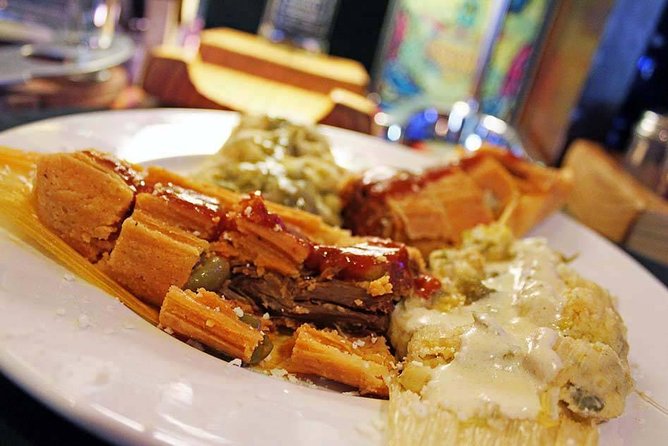
The tour begins at 311 E Congress St at 11:00 am, and it ends back at the meeting point. That matters because you don’t have to plan a separate pickup or wonder where you’ll end up once you’re done eating and walking.
Expect an about-4-hour experience. The itinerary includes timed landmark moments (for example, the Congress Hotel and the Pima County Courthouse are listed as 15 minutes each), and between those stops you’ll be moving through downtown and getting your food. The schedule is built to keep you outdoors and connected to the streets, not tucked into one long indoor museum block.
The biggest pacing tip I can give: wear comfortable walking shoes and plan to stay present. This isn’t a sit-and-snack event. You’re walking between sites, learning short, useful facts, then tasting along the way. If you like structure with room for questions, this format tends to fit.
Congress Hotel: A Stop That Sets the Mood Quickly
Your first stop is Hotel Congress, a historic hotel known for its vintage charm and for being the site where John Dillinger was captured in 1934. You’ll have about 15 minutes here, and the admission ticket is listed as free.
Why this stop works: it gives you a concrete Tucson hook before the food portion really settles in. You’re not just hearing general “Tucson is interesting” talk. You’re starting with a place that has a very specific story and a very recognizable downtown presence.
What to expect in that short window is a quick orientation: enough time to take in the historic character, notice details in the building, and get the guide’s context—especially if you’re the type who asks follow-ups. One review highlight pointed to a guide like Chris sharing extra detail, including information about murals around the city, which pairs well with a location like this where downtown art and old architecture often share the same sidewalks.
Possible drawback to consider: because it’s only 15 minutes, this is not the time for a long sit-down exploration. If you want to linger deeply inside, you’ll likely want to come back later on your own.
Tucson Historic Train Depot (1907): Where Old Tracks Meet Modern Life
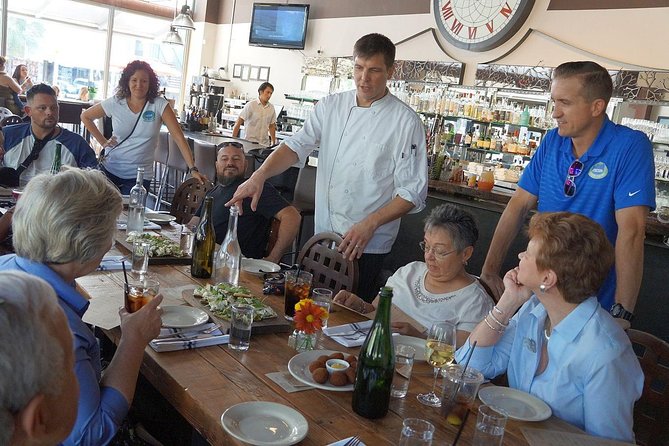
Next up is the Tucson Historic Train Depot, built in 1907. It was once a vital hub for the Southern Pacific Railroad and is now a restored landmark that houses a museum and a café.
Even though the tour is a food walking experience, this stop is valuable because it explains Tucson’s growth through transportation. Rail lines shaped where people went, where goods moved, and where businesses formed. When you understand the train depot role, the downtown layout starts to make more sense.
Practically, you’ll use this moment as a reset point in the middle of the loop: step aside, look at the architecture, then keep moving. The depot’s café setting also hints at the kind of everyday stopovers that made this area important long before today’s restaurant scene.
One thing to note: the depot is described as housing a museum and café, but the tour data you provided doesn’t list a specific guided museum time. So think of it as a landmark stop—helpful for context—rather than a full museum visit.
A 1920s Downtown Entertainment Venue: Culture Between Bites
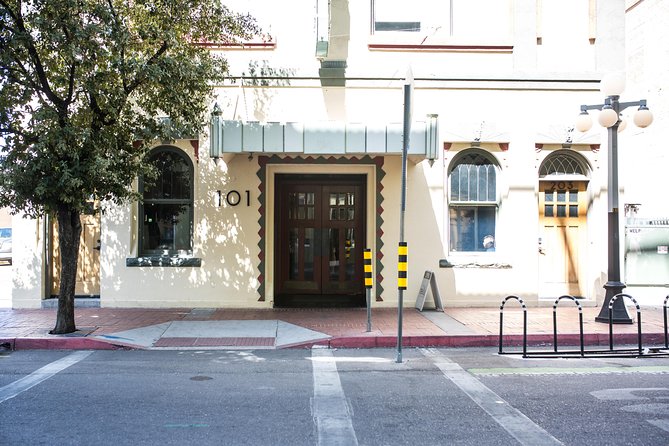
Another stop is described as a historic venue with eclectic live performances and as a cornerstone of Tucson’s downtown entertainment scene since 1920. The tour data doesn’t name the venue, but the takeaway is clear: you’re getting a quick look at the kind of place where people have gathered for decades.
Why I like this type of stop on a food tour: it keeps the story from getting stuck only on buildings. Tucson isn’t just architecture—it’s also the habits of going out. This kind of venue stop helps explain why downtown still feels like a destination area for events, nights out, and casual hangs.
What to expect here is a short orientation and then movement onward. Since the itinerary keeps the landmark moments brief, don’t plan on treating this as a ticketed show experience. It’s about connecting the food breaks to the culture that surrounds them.
You can also read our reviews of more food & drink experiences in Tucson

Pima County Courthouse: Spanish Colonial Revival and a Photo Magnet
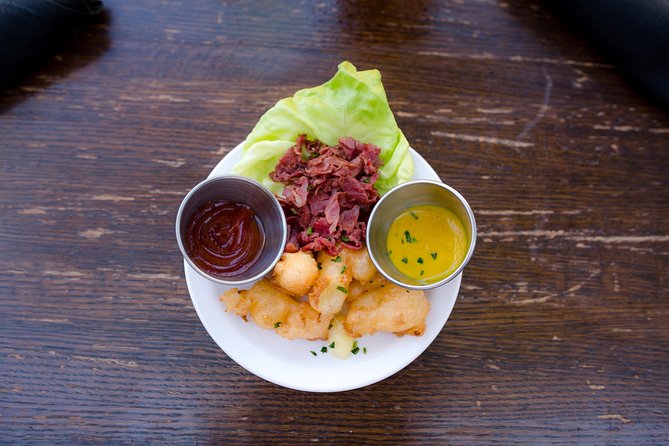
The tour later stops at the Pima County Courthouse, known for its Spanish Colonial Revival architecture. The description calls out a bright pink facade and an iconic mosaic dome, and the stop is listed as 15 minutes with free admission ticket.
This is a high-impact stop because it’s both distinctive and functional. You get the visual punch right away, and you also get a sense of how Tucson’s civic buildings project identity—especially through design language that echoes the region’s Spanish Colonial Revival style.
In a food tour context, this works as a natural late-route anchor. By this point you’ve already done the earlier landmark introductions, so the courthouse stop often feels like the payoff: your route ends up at a building that’s visually memorable even if you don’t consider yourself a architecture nerd.
If you’re taking photos, plan to be ready. 15 minutes goes quickly in daylight and on crowded sidewalks. Bring water, keep your camera accessible, and don’t get so absorbed that you lose the guide’s timing for the next part of the walk.
Guides Can Make or Break a Food Tour: Chris and Karen’s Impact
A food tour is only as good as the person turning the day into a story. This one gets consistently strong feedback for guides who keep information moving and answers grounded in local detail.
Two guide names show up in the best comments: Chris and Karen. Chris is praised for being able to answer questions and for sharing details like different murals around the city. Karen is repeatedly described as an especially strong guide, with tips and history woven smoothly with enthusiasm. One review also notes time planning for adult beverages, with the reminder to allow enough time to enjoy them.
Here’s how that translates into what you should do as a participant: ask questions while you’re walking. If you’re curious about the murals, ask about the themes or where to look next. If you care about why a building looks the way it does, ask for what to notice from street level. In a small group, your questions don’t get swallowed by the noise.
Also, since the maximum group size is 12, you’re more likely to get a back-and-forth conversation rather than a one-way speech. That’s part of the value you’re paying for, not just the food.
Food Stops: What You’ll Actually Get Out of the Tastings
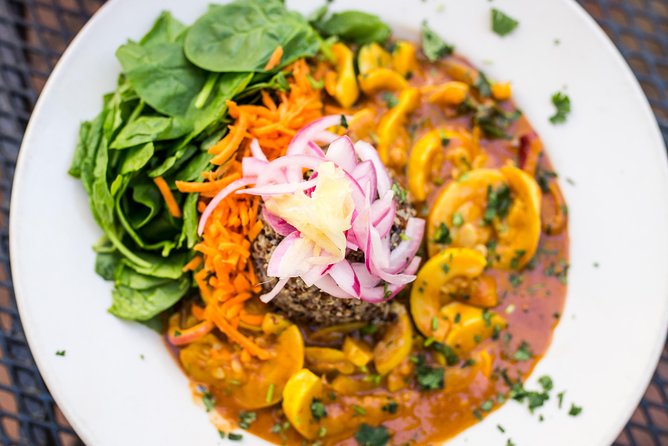
The tour is explicitly a downtown walking food tour, and the feedback emphasizes delicious, unique choices. While the provided itinerary details the landmark stops rather than listing every restaurant by name, you can still count on the core experience: you’ll eat at multiple local spots as you move through the neighborhood.
Why that matters for your day: you get a mix of tastes without needing to choose restaurants in advance. For many visitors, Tucson’s downtown is full of options, but it can be hard to pick the right mix of cuisines and styles. A guided plan takes some decision fatigue off your plate.
What I’d focus on, practically, is timing. This is a 4-hour block, so you’ll want to show up hungry and pace yourself so you can enjoy everything. If you plan to drink alcohol, the reviews include a clear hint to plan ahead and take advantage of the time built into the stops.
If you have dietary needs, the tour data you provided doesn’t specify what substitutions are available. If that’s an issue for you, it’s worth contacting the provider before booking and asking what they can accommodate.
Price and Value: Is $92 for 4 Hours Worth It?
At $92 per person for about 4 hours, this isn’t the cheapest way to eat in Tucson. But it can be good value if you look at what’s included and how the time is used.
Here’s the value math that makes sense:
- You’re paying for guided coordination of multiple food stops plus guided context at major landmarks.
- Two key stops list free admission (Hotel Congress and the Pima County Courthouse), which reduces add-on costs during the walk.
- The group size is capped at 12, which is often where the experience turns from a generic checklist into a real, ask-questions tour.
So if you like walking tours where you don’t have to think too hard about logistics, you’ll likely feel good about the price. If you prefer a self-guided “pick my own restaurants” day, you might spend less on food and do the landmark photos on your own. The difference is that this tour gives you structure, local explanations, and a built-in route.
Weather and Outdoor Walking: The Real-Day Considerations
This experience requires good weather. If conditions are poor and the tour is canceled due to weather, you’ll be offered a different date or a full refund.
Plan for the practical side: Tucson can be hot and bright, so check the day-of forecast and dress for sun and walking. Bring water if you can. Even if the itinerary doesn’t spell out a specific break schedule, most people are moving between stops and enjoying food on a set timeline, so you’ll feel the effects of heat if you show up unprepared.
Also remember: the tour is described as near public transportation and most travelers can participate. If you have mobility concerns, the downtown walking aspect is the main factor to consider, since the route is built around moving between landmarks.
Who This Tour Fits Best
This tour is a strong match if you want:
- A small-group downtown experience with a guide who answers questions
- A way to eat without doing all the planning yourself
- A blend of food plus place stories, especially around Congress Hotel, the train depot era, and the courthouse architecture
It may be less ideal if you hate walking or prefer long, unstructured time at a single site. The landmark moments are timed, so it’s designed to keep things moving rather than let you linger.
And it’s especially good for couples, solo travelers, and anyone visiting downtown for a short window and wanting a concentrated cultural-and-food snapshot.
Should You Book Tucson Food Tours Downtown Walking Food Tour?
I’d book it if you like tours with a plan, real downtown landmarks, and guides who add details that help you notice more on the streets. The combination of free-admission courthouse and Congress Hotel stops, a small group cap, and consistently strong guide feedback (including names like Chris and Karen) makes it a solid bet for value.
I’d skip or rethink if you’re traveling on a tight weather-dependent schedule or if you don’t want to spend a half-day walking. It’s also worth double-checking food needs in advance, since the provided info doesn’t spell out dietary flexibility.
If your goal is a practical, guided downtown day that pairs eating with Tucson’s most recognizable architecture and stories, this is the kind of tour that tends to leave you feeling like the city clicked.
FAQ
How long is the Tucson Food Tours downtown walking food tour?
The tour lasts about 4 hours.
How much does it cost?
It costs $92.00 per person.
What time does the tour start and where is the meeting point?
It starts at 11:00 am. The meeting point is 311 E Congress St, Tucson, AZ 85701, USA.
Is the tour offered in English?
Yes. The tour is offered in English.
How many people are in the group?
The maximum group size is 12 travelers.
Do I need a printed ticket?
No. The tour uses a mobile ticket.
Are admission tickets included for the landmark stops?
Admission ticket for Hotel Congress and the Pima County Courthouse is listed as free.
What is the refund policy if I cancel?
This experience is non-refundable and cannot be changed for any reason.
What happens if the tour is canceled due to weather?
If it’s canceled due to poor weather, you’ll be offered a different date or a full refund.