REVIEW · FLORENCE
The Other Side of Florence Food Tour with Eating Europe
Book on Viator →Operated by Florence Food Tours by Eating Europe · Bookable on Viator
Florence has two faces: the postcard core and the everyday neighborhoods. This food tour takes you past the obvious sights and into Oltrarno, where you eat like locals and learn how the city’s food culture really works. You get a tight 3-hour walk with multiple stops, not one long “big meal” that leaves you stuffed and clueless.
I especially like the mix of classic Tuscan ingredients and street-food favorites. You start with pecorino and fennel salami, then move into pastries and the famous cantucci cookie story, and later hit lunchy comfort foods like lampredotto and cucina povera dishes. One possible drawback: this is a walking tour, and the tastings add up fast—so come ready and don’t plan a heavy meal right before.
One more thing I’d flag: it’s not for severe, life-threatening allergies. The tour can try to accommodate some needs (vegetarian and gluten-free are mentioned), but if your allergy is serious, you’ll need to be careful and double-check first.
In This Review
- Key highlights at a glance
- Why the Other Side of Florence tour works (and who it’s for)
- Starting at Piazza Nazario Sauro, then walking into Oltrarno
- Formaggi e Salumi Sandro & Ivana: start with Tuscan cheese and salumi
- Pasticceria Buonamici: coffee, floods-proof pastry history, and cantucci basics
- Porta San Frediano and the medieval walls you don’t normally notice
- Da Simone’s lampredotto panino: Florence street food with real personality
- Wine windows: the tiny openings that tell a big story
- Fiaschetteria Fantappié: Chianti Classico and cucina povera-style dishes
- Church of Santo Spirito and Michelangelo’s secret crucifix
- Gelateria Artigianale La Sorbettiera: the Florence Best Gelato finish
- What you’re paying for: value at $113.72 per person
- Dietary needs and allergy limits: what to expect before you book
- Who should book, and who should skip
- Should you book the Other Side of Florence Food Tour?
- FAQ
- How long is the Other Side of Florence Food Tour?
- Where does the tour start and end?
- What languages is the tour offered in?
- How many people are in a group?
- What tastings are included?
- Can the tour accommodate dietary requirements?
- Are tips for the guide included in the price?
- Is hotel pickup included?
- How does cancellation work?
Key highlights at a glance
- Small group size (max 12) means the guide can actually answer questions while you’re eating
- Oltrarno wine windows show how locals did business through tiny openings in historic buildings
- Lampredotto panino turns a misunderstood street food into something you’ll want a second bite of
- Cantucci focus includes the cookie and the story behind how it’s made
- Fiaschetteria Fantappié brings Chianti Classico plus Tuscan cucina povera-style dishes
- Santo Spirito + Michelangelo’s crucifix adds a real art moment to your food day
Why the Other Side of Florence tour works (and who it’s for)
If you’ve only toured Florence from the main boulevards, you’ll feel the difference right away. This experience is built around the “other side” of the city: a neighborhood walk through Oltrarno, with old shops, local hangouts, and places that still feel like they belong to the people who live there.
I like that the tour keeps food in the center, but never treats it like a theme park. Instead, the guide connects what you taste to what Florence is like: cured meats and cheeses for the morning, pastry culture for coffee breaks, and the simple, historic logic behind dishes like lampredotto and the poorer-food traditions that shaped cucina povera.
The ideal match is you if:
- You enjoy eating your way through a neighborhood on foot
- You want history that shows up in what people actually order, not just plaques and photos
- You prefer guided structure over wandering blindly
It may not fit as well if you hate walking, or if you want huge portions at every stop. The tastings are meaningful, but they’re designed to keep you moving and still enjoy everything by the end.
You can also read our reviews of more food & drink experiences in Florence
Starting at Piazza Nazario Sauro, then walking into Oltrarno
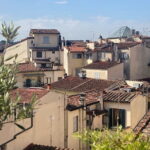
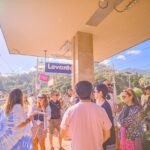
The tour meets at Piazza Nazario Sauro and finishes at Piazza Santo Spirito, and that route matters. You’re not doing a straight line through the tourist core. Instead, you’ll gradually shift from one Florence “world” to another—following the food trail into the quieter, more local-feeling streets of Oltrarno.
Expect a pace that feels like a guided neighborhood stroll with planned eating stops. The total time is about 3 hours, and the group is capped at 12 people, which makes a big difference in how quickly you can get moving and how easily you can ask questions.
One more practical detail: the tour uses a mobile ticket, and it’s offered in English. It’s also near public transportation, which is handy if you’re juggling your schedule. And if you’re visiting with kids, note that children under 4 can join without a ticket, but food isn’t included for them.
Formaggi e Salumi Sandro & Ivana: start with Tuscan cheese and salumi
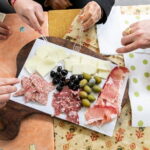
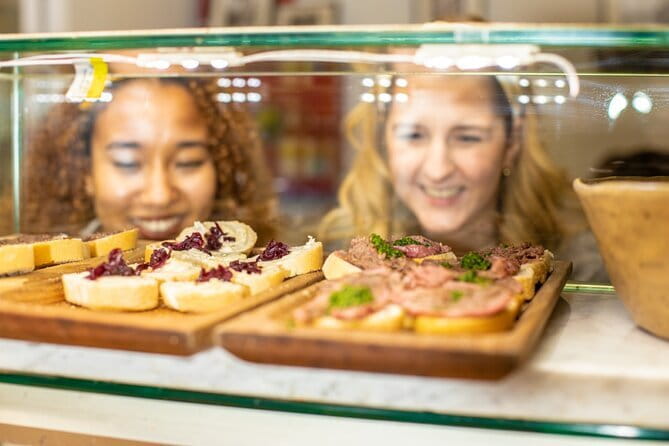
Your first serious “eat Florence” moment lands at Formaggi e Salumi Sandro & Ivana, a traditional Alimentari. This is where the tour earns its credibility. Instead of tossing you into generic samples, you taste two types of Pecorino cheese plus Finocchiona, the fennel-infused salami that’s a Tuscan staple.
What makes this stop valuable is the sequencing. If you begin with cheese and salumi, you learn to taste before you get distracted by sweets later. Pecorino has that firm, salty personality, and tasting varieties back-to-back helps you notice how texture and flavor shift across selections. The Finocchiona brings the fennel aroma—more fragrant than people expect—and it sets you up for the rest of the day’s contrasts.
The downside? If you’re not into cured meats or strong cheeses, you might find this portion of the tour more intense than later stops. Still, it’s a smart way to understand Tuscany’s pantry culture early.
Pasticceria Buonamici: coffee, floods-proof pastry history, and cantucci basics
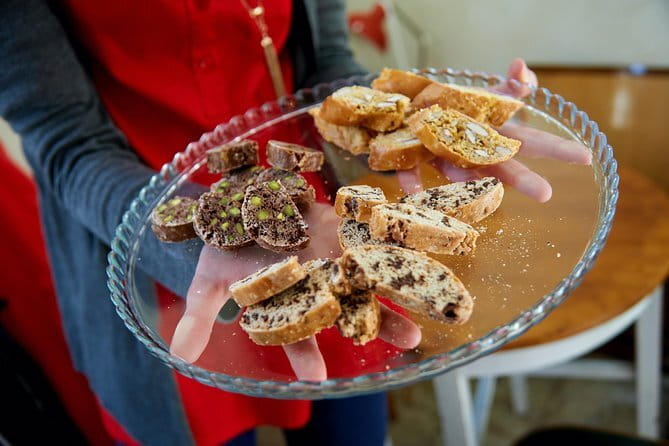
Next you head to Pasticceria Buonamici, a historic pasticceria now run by the third generation. The shop’s staying power is part of the story: it endured floods, wars, and pandemics, which helps explain why its offerings feel so rooted and normal to locals rather than like modern “Instagram food.”
You’ll taste a few highlights here, including:
- cantucci biscotti (the famous Tuscan cookie)
- a delicate millefoglie cake
- a freshly brewed coffee or cappuccino
Cantucci is a tour centerpiece, and the guide spends time on what makes Italian cookies special. You get more than a bite—you get the why behind them, including the secret behind making cantucci. That detail matters because cantucci isn’t just a cookie you eat; it’s a cultural habit. Once you understand the texture and method, you’ll spot why it works with coffee the way it does.
If you’re worried about choosing one “best stop,” this is the place people tend to remember later because it’s both delicious and easy to carry home as a new flavor benchmark.
Porta San Frediano and the medieval walls you don’t normally notice
Between tastings, the tour quietly pulls in Florence’s shape. You’ll see Porta San Frediano, a historic gate that’s part of the medieval walls, dating back to 1333.
This isn’t a long museum stop, and it’s not meant to replace real sightseeing. It’s more of a grounding moment—proof that Florence food culture didn’t develop in a vacuum. Walls, gates, neighborhoods, and daily routines shaped where people traded, ate, and socialized.
Why I like including it: it helps you picture the city as a lived-in system, not just a set of monuments. You can connect the dots later when you notice how streets and buildings still influence daily life.
A few more Florence tours and experiences worth a look

Da Simone’s lampredotto panino: Florence street food with real personality
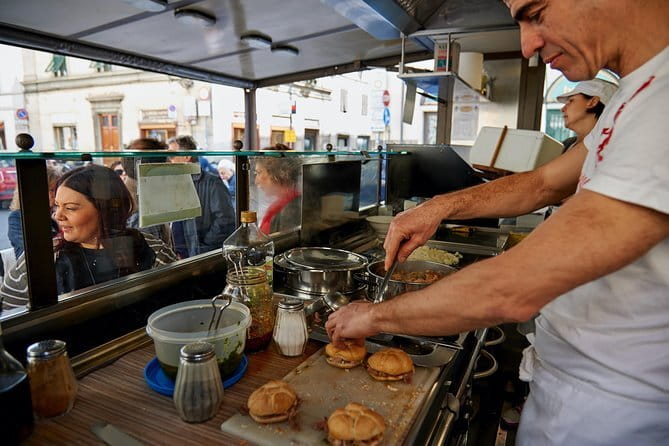
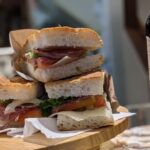
Then comes one of the most “you either love it or you learn to love it” moments: Da Simone, a local street food stand, where you try the iconic lampredotto panino—a cow stomach sandwich.
Yes, the name sounds questionable. That’s the point. This is one of those Florence dishes that feels local in the literal sense: it’s traditional food built from what people used to waste less of. The guide’s role matters here, because the bite lands differently once you know what you’re tasting and why it’s treated like a standard order.
A practical note: lampredotto can be a strong flavor for some people, especially if you’re sensitive to organ-meat tastes. But if you enjoy bold street foods, you’ll likely consider this your favorite “I tried something real” moment.
Wine windows: the tiny openings that tell a big story
After street food, the tour shifts to a fascinating idea: wine windows. You’ll see these small openings in historic buildings, scattered through the neighborhood, where wine was once served directly to locals.
This is a clever stop because it explains social life through architecture. A wine window isn’t just a quirky photo spot—it’s a functional piece of daily culture. It shows how neighborhoods operated when people needed fast access to drinks, or when street life and commerce mattered more than formal dining.
If you’ve ever wondered why Florence’s food world feels both old and practical, this is one of the answers. The guide ties the windows to the culinary and social traditions that kept things moving.
Also, it gives you a mental map. After this, you’ll start noticing other tiny historical details around Santo Spirito and Oltrarno. You’ll stop walking past the past and start reading the city.
Fiaschetteria Fantappié: Chianti Classico and cucina povera-style dishes
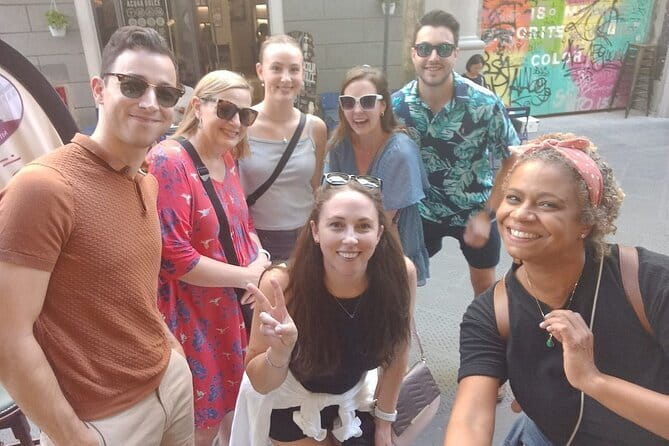
For the next big tasting, you’ll visit Fiaschetteria Fantappié, a historic type of wine stop in Oltrarno that’s been serving locals since the 1950s. If you want “real neighborhood food,” this is the kind of place that still feels built for local routines.
Here’s what you can expect:
- a look at Tuscan cucina povera (food shaped by what people had)
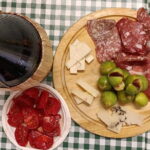
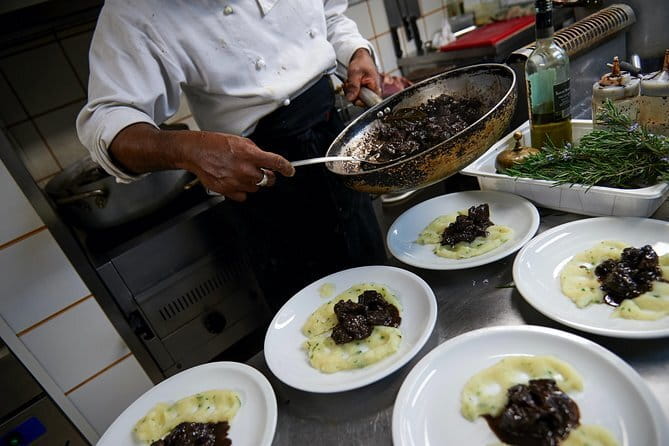
- tastings that include Tuscan soup and wild boar stew
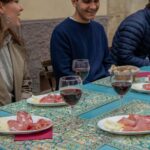
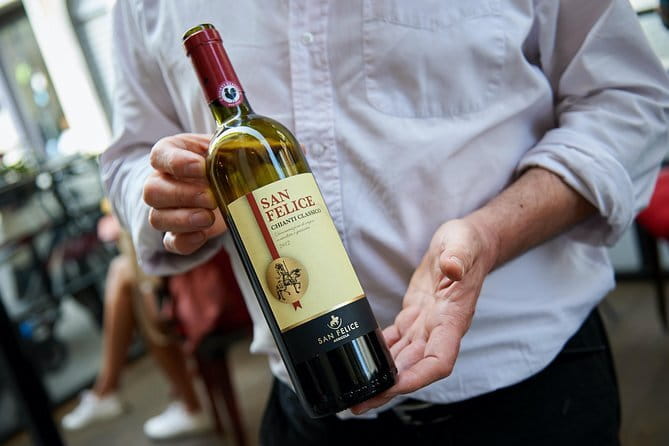
- a glass of Chianti Classico served through an iconic wine window
This stop is where the tour’s concept becomes tangible. Cucinа povera dishes aren’t fancy by design. They’re comforting, practical, and built around the idea that good food doesn’t require a long list of luxury ingredients. Pair that with a glass of Chianti Classico, and you get the full rhythm of the place: warmth, slow chewing, and easy conversation.
The drawback to keep in mind: the wild boar can be a strong flavor for people who don’t eat game. If you’re flexible, this is exactly why the tour is worth it. If you aren’t, tell the guide about your preferences ahead of time when dietary notes are collected.
Church of Santo Spirito and Michelangelo’s secret crucifix
After you eat, you move back toward art—but in a way that doesn’t steal the day from food. You’ll explore a lively area and then see the Church of Santo Spirito.
Inside, you get a standout moment: the church contains a rare, hidden crucifix by Michelangelo. It’s described as a secret crucifix, and it’s the kind of detail that makes your visit feel like you found the city’s quiet side rather than the obvious highlights.
Even if you’re not a hardcore art person, this works well. The food day keeps you in a sensory mood, and then the church gives you a different kind of story—one that feels personal and surprising.
Gelateria Artigianale La Sorbettiera: the Florence Best Gelato finish
To wrap up, you stop at Gelateria Artigianale La Sorbettiera | Santo Spirito, described as an award-winning gelateria voted Florence’s Best Gelato.
This is not a random dessert stop. The guide gives you a quick 10-minute crash course on how to spot true artisanal gelato, then you taste a two-flavor cup or cone.
I like that this ending turns dessert into a skill you can use later. Once you know what to look for, you’ll walk into other gelaterie with more confidence instead of ordering blindly and hoping for the best.
At this point, you’ve already had savory tastes, sweets, wine, and street food. Getting gelato at the end makes the whole meal feel complete without replacing lunch with more heaviness.
What you’re paying for: value at $113.72 per person
The price is $113.72 per person, and the question is always: is it worth it?
Here’s what helps justify it for the right traveler:
- You’re sampling across multiple categories: cheese and salumi, pastry, street food, wine, and gelato
- Several tastings are explicitly included, including cantucci with an espresso or cappuccino
- You get a local English-speaking guide plus Food & the City insider tips
- You’re in a small group (max 12), which improves the experience quality
What you don’t get is also clearly defined. Gratuities/tips aren’t included, and there’s no hotel pickup. Extra drinks may cost extra; there’s mention of a Premium Drink Package where you can email to purchase 3 additional drinks for €16.
So the real value equation is this: you’re paying for convenience plus context plus guided tastings in a neighborhood route that’s hard to assemble on your own. If you like planning and you already know where you want to eat, you could DIY. But if you want to learn as you go and keep your day efficient, this price starts to look reasonable.
One more point: the tour is offered year-round with selections that can vary by day or season. That means you’re not guaranteed the exact same menu every time, but you are promised a similar flavor mix and local focus.
Dietary needs and allergy limits: what to expect before you book
The tour says it can try to accommodate vegetarians, gluten-free guests, or other dietary needs if you email in advance or add a note at booking. That’s the right approach, because food tours only work when the guide can plan substitutions.
But there’s an important warning: this experience isn’t suitable for guests with severe or life-threatening food allergies to ingredients found on the tour, and the company can’t take responsibility for allergies or intolerances.
If that applies to you, don’t assume a quick swap will make it safe. Contact the provider before booking so you’re not walking into a risk.
Who should book, and who should skip
Book this tour if you:
- Want an Oltrarno-focused Florence day that feels local
- Like to pair stories with snacks, not just listen to facts
- Enjoy trying dishes you might not order on your own, like lampredotto
Skip it or choose something else if you:
- Need a tour with zero walking time
- Have severe allergies that can’t be safely managed based on the tour’s limits
- Want only vegetarian or only mild flavors and aren’t able to handle game-based dishes like wild boar
If you’re somewhere in between, I’d still say it’s a strong choice because the structure helps you sample widely. The guide’s pacing keeps you from feeling overwhelmed, and the small group size makes the day feel more human.
Should you book the Other Side of Florence Food Tour?
I’d recommend it if you want a Florence food experience that feels like a real day with a helpful local, not a checklist. The best reason to book is the combination of multiple tastings plus neighborhood storytelling, including wine windows and a real-world art stop at Santo Spirito.
If your priority is standing in front of the biggest monuments for long stretches, this won’t be that kind of tour. But if your goal is to understand how Florence tastes—cheese, pastries, street food, wine, and gelato—this is one of the most efficient ways to do it in a 3-hour window.
FAQ
How long is the Other Side of Florence Food Tour?
It lasts about 3 hours.
Where does the tour start and end?
The tour starts at Piazza Nazario Sauro and ends at Piazza Santo Spirito.
What languages is the tour offered in?
The tour is offered in English.
How many people are in a group?
The tour has a maximum of 12 travelers.
What tastings are included?
The tour includes cantucci with espresso or cappuccino, Tuscan dishes and street food tastings, wine windows wine tastings, and gelato.
Can the tour accommodate dietary requirements?
The tour says you can email or add a note at booking for vegetarians, gluten-free guests, or other dietary needs. It’s not suitable for severe or life-threatening food allergies.
Are tips for the guide included in the price?
No. Gratuities are not included.
Is hotel pickup included?
No. Hotel pickup and drop-off are not included.
How does cancellation work?
You can cancel for a full refund if you cancel at least 24 hours before the experience start time. If you cancel less than 24 hours before, the amount paid isn’t refunded.