REVIEW · MEXICO CITY
Street Food Bike Tour / Mexico is not only Tacos / All Inclusive
Book on Viator →Operated by Foodhoodmx · Bookable on Viator
Food, bikes, and history in one clean loop. This Mexico City street-food bike tour by Foodhoodmx strings together Roma Norte, Roma Sur, Condesa, and Chapultepec Park, with stops for coffee, tamales, tacos, and more you’d miss on your own.
Two things I really like: safety-first guides (people like Raul, Mario, Simon, Axel, and Beto are often named) and big, varied snacks served across proper neighborhood settings instead of just one or two tourist traps.
One drawback to plan around: it needs good weather, and the ride still means you’re on real city streets, so you should feel comfortable on a bike and following the guide’s lead.
In This Review
- Key highlights you’ll feel right away
- Why biking Roma and Condesa beats walking
- Getting started at Av Sonora 164 and staying smooth on the bike
- Stop 1: Mexican pastry and cafe to wake up your appetite
- Roma Norte: where the streets feel modern but still local
- Roma Sur: tamales are the fuel and the lesson
- Mercado de Medellín: traditional market culture, not just photos
- Condesa and La Condesa: tacos plus CDMX-style micheladas
- Audiorama: a quick hit of Chapultepec Park magic
- Bosque de Chapultepec: Central Park-size comparison and real air
- The “main avenue of CDMX” stretch: getting city context fast
- Price ($92.60) and what you get for it
- What to eat, how to pace it, and what to ask your guide
- Safety, traffic, and comfort: what to consider before you book
- Who should take this bike and street-food tour
- Should you book this Foodhoodmx tour?
- FAQ
- FAQ
- How long is the Street Food Bike Tour in Mexico City?
- What is the price per person?
- Where does the tour start?
- Is the tour offered in English?
- What size is the group?
- Does the tour include food and drinks?
- Is the tour dependent on weather?
- Is the bike tour strenuous?
- What is the cancellation policy?
Key highlights you’ll feel right away
- Small group size (max 10): easier pacing, more attention on the ride.
- Neat start with Mexican pastry & cafe: a warm drink plus something freshly made.
- Tamales and market time: more than tacos only, with a traditional Mercado stop.
- Condesa and La Condesa flavors: tacos plus a CDMX-style michelada you’ll remember.
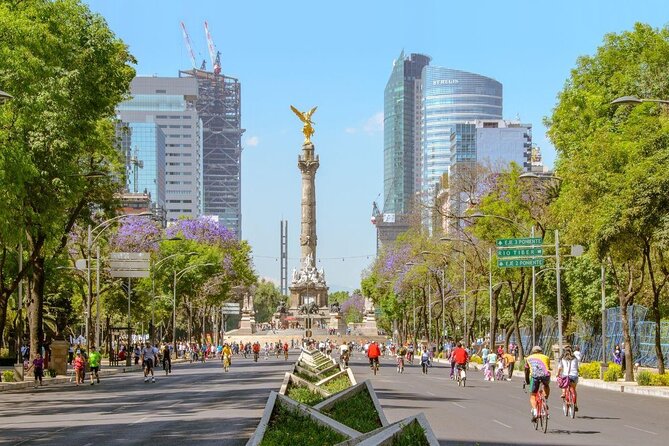
- Chapultepec Park scale: you’ll get perspective inside one of Mexico City’s biggest urban green spaces.
- Easy length for first-timers: about 4.5 hours, not framed as a hardcore workout.
Why biking Roma and Condesa beats walking
Mexico City is full of great food, but it’s also big, busy, and spread out. A bike tour gives you a rare combo: fresh air plus speed, without losing the street-level feeling that makes street food so good. You cover neighborhoods in a way that a stroll can’t. And because you’re moving, you also get those sensory details you can’t “read” from a guidebook—smells from kitchens, the rhythm of plazas, and the everyday energy of markets.
What makes this one work is the balance. You’re not just hopping between plates. You also get short, pointed explanations as you ride—neighborhood context and why certain foods show up where they do. The areas you pass through and the places you stop at are the kind that locals actually use day to day, not just photo backdrops.
You can also read our reviews of more food & drink experiences in Mexico City


Getting started at Av Sonora 164 and staying smooth on the bike
The tour starts and ends back at Av Sonora 164, Hipódromo, Cuauhtémoc, 06100. It’s also described as near public transportation, which matters in a city where you don’t want to fight logistics before you even eat.
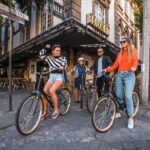
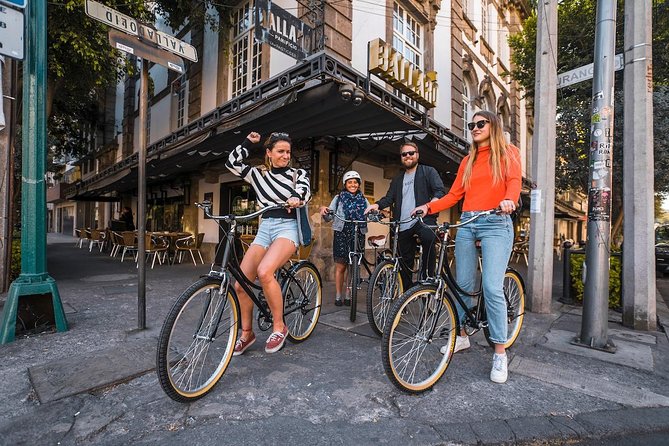
Group size stays small (up to 10). That usually translates into better bike handling: easier instructions, fewer bottlenecks at food stops, and a pacing that won’t leave half the group behind. Many guides are noted for safety and for checking in during the ride—especially helpful if you’re new to biking in a city.
Comfort-wise, the ride is presented as not strenuous. Still, be realistic: you’re cycling through an urban environment, and some stretches can feel like city driving, even if routes are planned with calmer streets and bike-friendly movement in mind. If you’re nervous, you’ll want to take the guide’s instructions seriously and keep your focus during transitions.
One extra tip: some groups are offered optional helmets, and you can ask for one if you want the extra peace of mind.
Stop 1: Mexican pastry and cafe to wake up your appetite
The day begins with a warm drink and a fresh shell-type pastry. It’s a simple start, but it’s smart: it gets your blood moving and your stomach ready without going straight to heavy food.
I like this kind of opener because it sets the tone. You’re tasting something local before you hop into the more famous stuff. It also helps you avoid the classic mistake of arriving too hungry and then eating everything too fast later. By the time you’re at your first real neighborhood ride, you’re fueled but not stuffed.
If you’re the type who hates wasting time, you’ll also appreciate the calm start. There’s a rhythm here: small bite, coffee, then you move.
Roma Norte: where the streets feel modern but still local
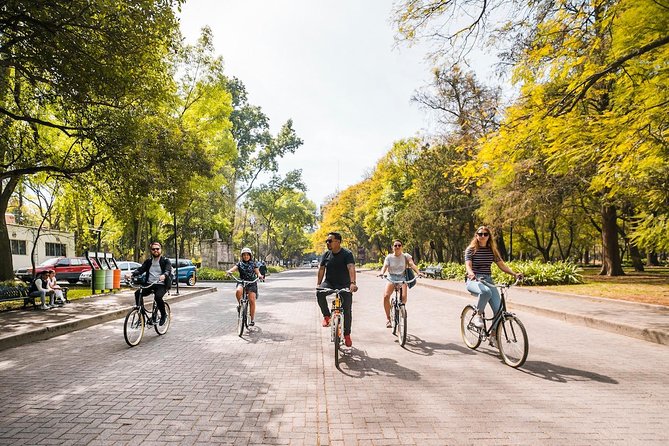
From the start you pedal into Roma Norte, a neighborhood known for its mix of cafes, boutiques, and everyday public life. The stop here is mostly about orientation—learning the feel of the area, then spotting what makes it different from other parts of the city.
Roma Norte is a good place to ease into your biking comfort. The point isn’t to cram every sight into your memory. It’s to get a sense of how neighborhoods connect, how streets are used, and what “nice” looks like in Mexico City beyond the typical postcard.
You’ll likely feel the advantage of biking right away: you can cover more ground without tiring your legs, and you still get street-level views rather than just passing at car speed.
Roma Sur: tamales are the fuel and the lesson
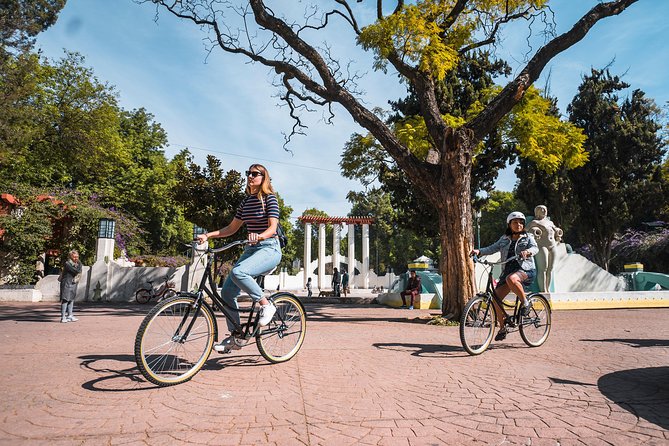
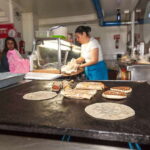
Next comes Roma Sur, and the main event is tamales. Expect warm, homemade-style tamales with real flavor—paired with the coffee you already started with.
Tamales are more than a snack here. They’re a way to understand food traditions and how families and communities build their daily rhythms around what’s filling and transportable. This stop makes the tour more than just a food highlight reel; it turns the taste into context.
If you’re worried about overdoing it later, pace yourself. Tamales set the tempo, and you’ll still have plenty of bites ahead.
A few more Mexico City tours and experiences worth a look


Mercado de Medellín: traditional market culture, not just photos
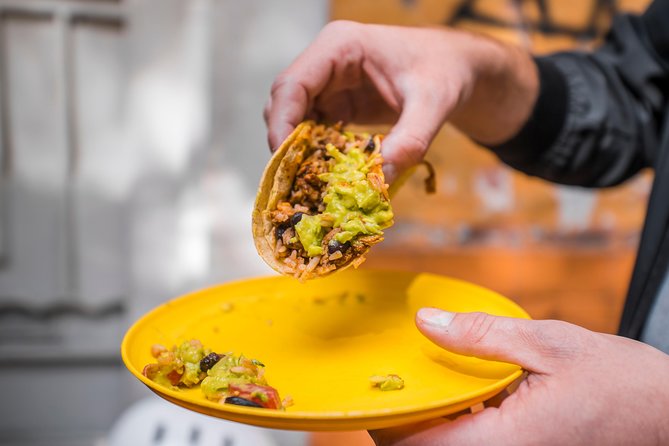
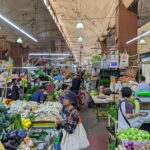
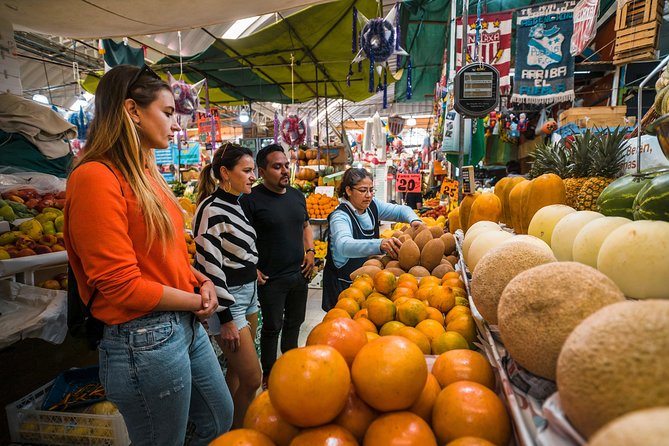
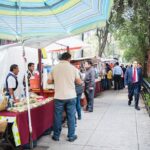
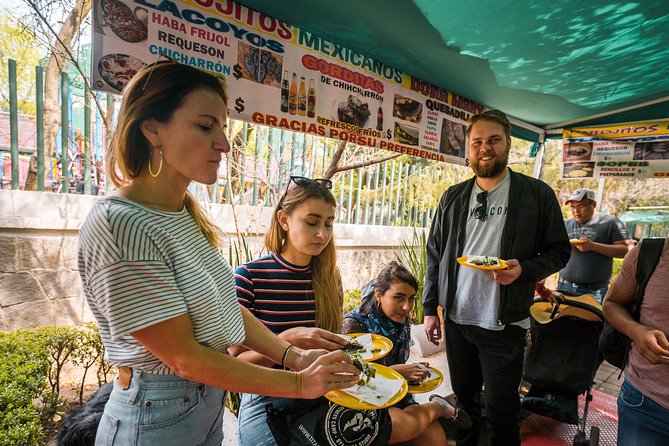
At Mercado de Medellín, you get a stop that’s about more than eating. You’re meant to experience the market as a market: flavors, stalls, and the way people shop and move through a space like this.
This is where the tour earns its “not only tacos” label. Markets are often the heart of how local food systems work—what’s made fresh, what’s bought quickly, and what shows up because locals keep asking for it. Even if you only eat a portion of what’s there, you’ll leave with a clearer idea of where ingredients and cravings meet.
A practical note: markets can be loud and crowded depending on the time. You’re on a bike tour, so your moment is short and guided. Stay close to the group, keep moving when the guide signals, and don’t expect to wander for long.
Condesa and La Condesa: tacos plus CDMX-style micheladas

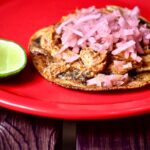
You spend time exploring Condesa, and the plan includes enjoying tacos here. Condesa is a favorite for a reason: it’s one of those neighborhoods where the street design, parks, and people all work together. You’ll also likely spend time taking in the area around the park, so you’re not stuck in “eat and ride” mode.
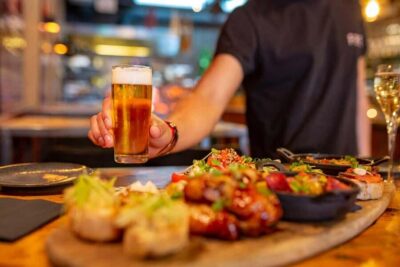
Then you reach La Condesa, and this stop includes Micheladas, CDMX style. This is one of those details worth leaning into. Micheladas aren’t just a drink; they’re a flavor system—savory, tangy, and built to pair with spicy or rich foods.
If you don’t usually drink beer-based drinks, you can still treat this like a tasting lesson. The point is to experience how locals do it, not to copy-paste the US version into your memory.
Audiorama: a quick hit of Chapultepec Park magic
Inside Chapultepec Park, there’s a stop at Audiorama, described as a kind of jewel right in the middle of things. The visit is short (around 10 minutes), but it gives you a break from food talk and a chance to reset your eyes and body.
This part of the day is valuable because it prevents the tour from feeling like a nonstop line of snacks. You get some open space, a change of scenery, and a moment to take in the scale of the park area.
Bosque de Chapultepec: Central Park-size comparison and real air
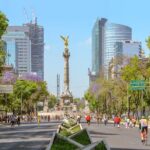
Then you head into Bosque de Chapultepec, described as Mexico City’s best urban park during 2019 and noted as twice the size of Central Park in New York. Even if you don’t measure parks in square miles, that comparison helps you understand why Chapultepec feels like a whole destination, not just a green patch.
This is the emotional payoff for biking through the city. You’ve been in neighborhoods and markets. Now you’re cycling through green space that changes the way the air feels. It’s a nice end-of-day contrast and helps you avoid the classic tourist problem of feeling like you only walked from one crowded block to the next.
The “main avenue of CDMX” stretch: getting city context fast
There’s also time that’s described as covering the main avenue of CDMX. This kind of road segment matters because it shows you how neighborhoods connect at a bigger scale. On a bike tour, you also see the movement patterns—the way people ride, walk, and queue around traffic corridors.
If you’re sensitive to stress, this is where you’ll want to stay locked in on the guide’s instructions. It’s often the part of a city tour that feels most like traffic, even if the route still avoids the worst areas.
Price ($92.60) and what you get for it
At $92.60 per person for about 4 hours 30 minutes, you’re paying for a lot of value that’s hard to copy on your own:
- You’re paying for logistics and routing through multiple neighborhoods.
- You’re getting a structured food plan so you don’t waste time hunting.
- You’re getting explanations while you move, which adds context to what you taste.
Also, this tour keeps the group small (max 10), which usually means the guide can manage pacing and safety more effectively than larger group tours. Many people book it about a month in advance, which tells you it’s a popular way to orient yourself on a first trip.
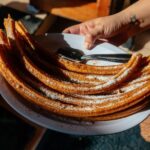
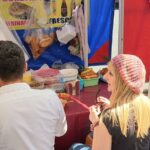
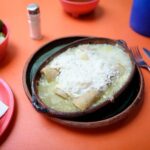
Food value is a big part of this. The stop mix includes pastry and cafe, tamales, market bites, tacos, and at least one included drink (micheladas). Some reviews also mention other items like churros and quesadillas along the way, which suggests the overall lineup tends to be substantial.
One practical way to think about it: if you were to bike or cab around these areas and then buy food at random, you’d likely spend similar money, but you wouldn’t get the same order, pacing, and neighborhood context.
What to eat, how to pace it, and what to ask your guide
This is not a light “one snack per stop” tour. The food lineup is built to keep you satisfied from start to finish. So do yourself a favor: don’t eat a huge breakfast right before you go. You’ll likely regret it when your stomach wants space for the mid-tour tamales and later tacos.
When you’re at each stop, I recommend three simple strategies:
- Eat slow. Cycling turns hunger into a fast chase.
- Ask what’s worth trying if you have preferences (spicy? dairy? vegetarian-friendly options if available).
- Pay attention to how the guide pairs foods with the neighborhood context. It makes the whole day feel more connected.
If you’re curious about the city, this is also a good time to ask questions about daily life, neighborhood differences, and why certain foods show up where they do.
Safety, traffic, and comfort: what to consider before you book
You’re cycling in Mexico City, so you should go in with a respectful mindset. The guides are often praised for keeping riders safe and for managing the group through the streets. That said, traffic can be heavier at some times, and you may feel it even if the ride is planned with bike-friendly movement in mind.
Your best move: if you’re a first-time city biker, bring your calm. Listen closely at every instruction point. Keep a steady pace and don’t try to freestyle between stops. If you want extra reassurance, ask about helmets during the meeting.
Also, consider your comfort with stopping and starting. One reason this works for many people is pacing. The guide tends to include time to rest and eat before rolling onward, so it doesn’t feel like a nonstop grind.
Who should take this bike and street-food tour
This tour is ideal if:
- You’re in Mexico City for the first time and want a fast orientation across major neighborhoods.
- You like biking but don’t want an athletic challenge.
- You want street food with some neighborhood education, not just a food sprint.
- You value a small group and a guide who actively manages safety.
It may be less ideal if:
- You don’t feel comfortable on a bike in an urban setting.
- You want a strictly food-only experience with no park or neighborhood context.
- You’re visiting during weather that’s iffy, since the tour requires good weather.
Should you book this Foodhoodmx tour?
If you want a smart first-day plan, I’d book it. The combination of neighborhoods (Roma Norte, Roma Sur, Condesa, Chapultepec), the market stop, and the food lineup is exactly how you start understanding Mexico City without getting stuck in decision fatigue.
Choose it if you like your travel days active, social, and taste-driven, with guides who keep the ride safe and the pacing sensible. Skip it only if biking feels like stress for you, because the day is designed around moving between spots.
FAQ
FAQ
How long is the Street Food Bike Tour in Mexico City?
It lasts about 4 hours 30 minutes.
What is the price per person?
The price is $92.60 per person.
Where does the tour start?
The meeting point is Av Sonora 164, Hipódromo, Cuauhtémoc, 06100 Ciudad de México, CDMX, Mexico.
Is the tour offered in English?
Yes, it’s offered in English.
What size is the group?
The maximum group size is 10 travelers.
Does the tour include food and drinks?
You’ll stop for multiple tastings, including Mexican pastry & cafe, tamales, tacos, and micheladas. Micheladas are listed as included.
Is the tour dependent on weather?
Yes. It requires good weather. If it’s canceled due to poor weather, you’ll be offered a different date or a full refund.
Is the bike tour strenuous?
It’s described as something most travelers can participate in, and it’s generally paced so it doesn’t come off as strenuous.
What is the cancellation policy?
You can cancel for a full refund up to 24 hours before the experience’s start time. If you cancel less than 24 hours before, the amount paid is not refunded.