REVIEW · SPLIT
Split: Food Tasting Walking Tour
Book on GetYourGuide →Operated by www.splitwalkingtour.com · Bookable on GetYourGuide
Split starts to make sense when you eat your way through it. This 2-hour food tasting walking tour threads Split’s Roman and medieval past into real bites you can smell and taste right on the street. It’s a smart way to see Diocletian’s Palace while learning why certain foods became local favorites.
I especially love the market-to-street pacing: Green Market snacks in the morning, then Peškarija fish-market tastings later, with clear stories behind each stop. And I like that the tour has genuine local guide energy, like Marta (and also Slavko, Antonia, Jakov, or Ina) who keep the walk moving while still taking your questions seriously.
One thing to plan for: it’s not an easy crawl. The experience isn’t wheelchair accessible, and it’s built for people who can comfortably stand and walk through old stone streets in 2 hours.
In This Review
- Key highlights worth showing up for
- Eating inside Diocletian’s Palace: the real Split intro
- Golden Gate start and the first tasting stop
- Green Market Pazar: arancini, nuts in sugar, and quick local context
- Soparnik in the middle of medieval Split
- Prosciutto and the art of “made here” flavors
- Chocolate with a Guinness record, then rafiol cake at an old bakery
- Peškarija fish market: salted anchovies and marenda
- Bar and restaurant tastings: turning bites into recipe memory
- Price and value: is $64 worth it?
- Who this Split tour is best for (and who should skip it)
- Should you book this Split food tasting walking tour?
- FAQ
- How long is the Split Food Tasting Walking Tour?
- Where do I meet the guide?
- What is included in the tour price?
- What types of food stops and tastings should I expect?
- Is the tour inside Diocletian’s Palace?
- Is it a private or small-group tour?
- What language is the guide?
- Does the tour include wine?
Key highlights worth showing up for
- Diocletian’s Palace setting: you’re tasting while walking through a site with nearly 1,700 years of history
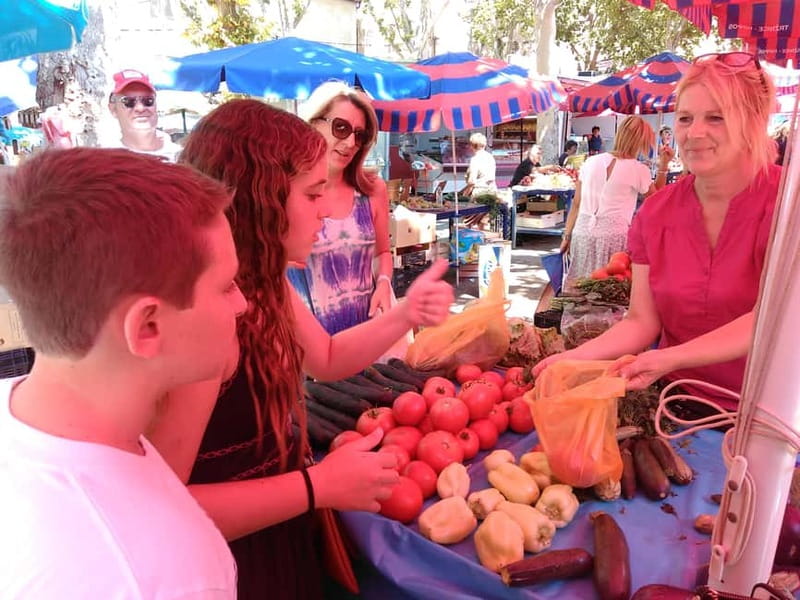
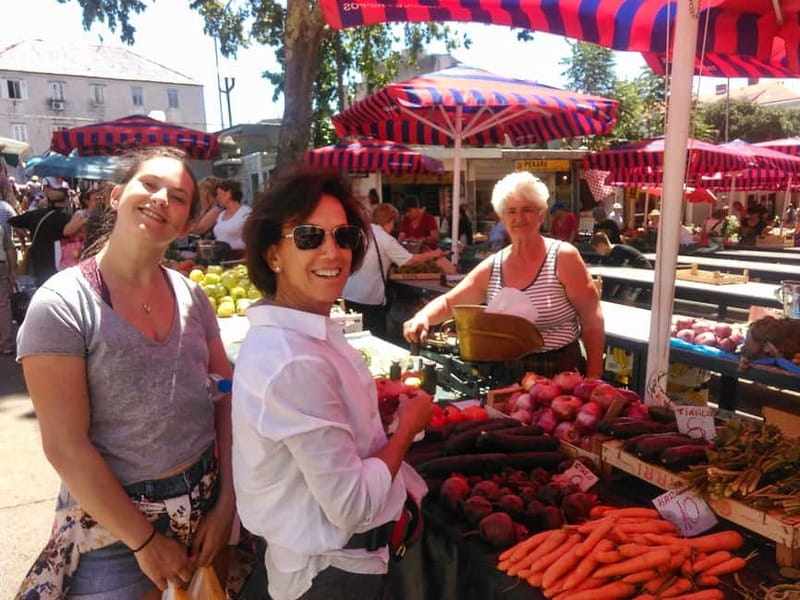
- Green Market (Pazar) tastings: arancini, sugared almonds, and sweet, citrusy nibbles
- Soparnik, UNESCO-protected: learn the meaning and method of a classic Dalmatian dish
- Guinness-record chocolate stop: a visit built around one unforgettable chocolate-bar moment
- Peškarija fish market: salted anchovies and the Dalmatian brunch idea called marenda
- Small-group feel: guides keep it friendly, funny, and never rushed
Eating inside Diocletian’s Palace: the real Split intro
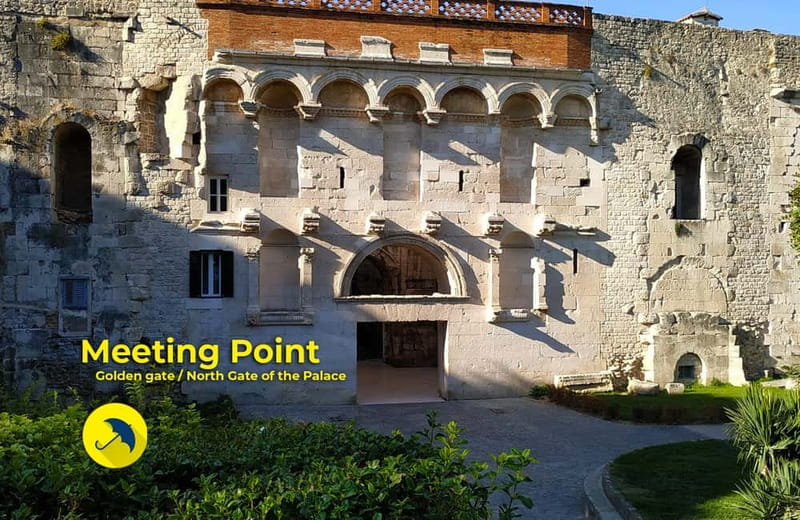
The tour starts where the city most people picture it—right at the Golden/North Gate area near the statue of Gregory of Nin, with a blue umbrella to find your guide fast. You’re about to walk into the Diocletian’s Palace zone, where the stone streets don’t just look old. They explain old. The buildings here tell you why Split’s food culture has always been practical: it was shaped by ports, markets, and people who needed energy that also tasted good.
The value of doing this early is simple. In two hours, you get the map in your head: where the markets are, which stalls feel like locals’ routines, and what dishes are worth seeking again later on your own. If you’re only spending a short time in Split, this is a fast way to avoid eating “randomly” and instead eat like you understand the place.
You can also read our reviews of more tours and experiences in Split.
Golden Gate start and the first tasting stop
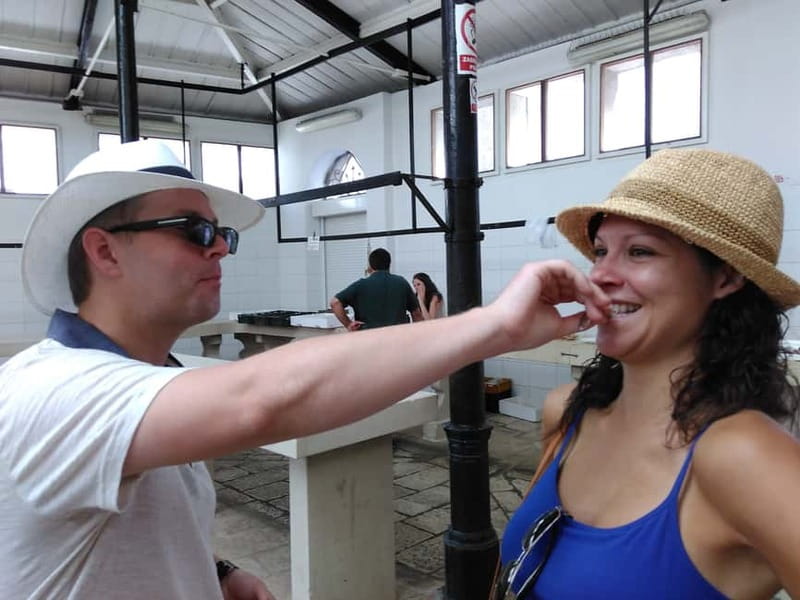
Right after you meet, you’ll hit a local café stop for a short tasting session (about 15 minutes). This is the warm-up. You’ll start with local, snack-style bites designed to get your palate ready for everything that comes next.
From the kinds of foods the tour includes, you can expect sweet-and-salty energy from the start—things like arancini and sugared almonds that sweeten the morning without being heavy. It’s also where your guide sets the tone: not just what you’re eating, but how Dalmatian ingredients show up again and again in different forms across the day.
Why this matters: if you arrive hungry and confused, you’ll miss half the fun. This early stop nudges you into the local rhythm so the rest of the walk feels like a guided sequence, not a set of random samples.
Green Market Pazar: arancini, nuts in sugar, and quick local context
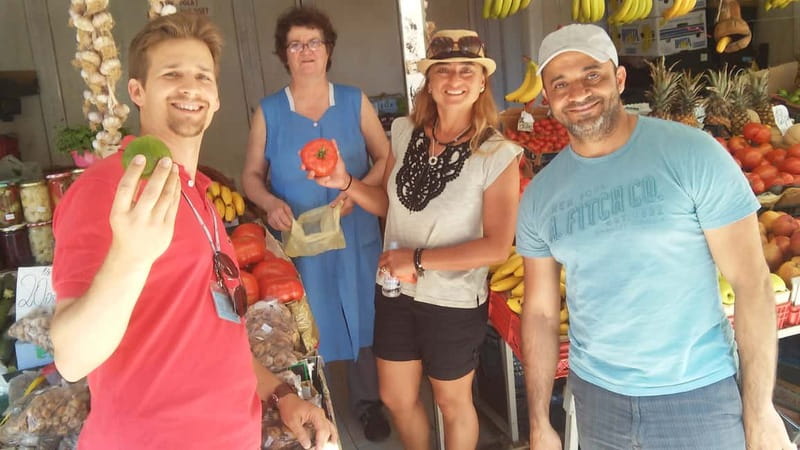
Your next big block of time is the Green Market area (the tour calls it the Pazar). This is where the walking tour earns its name. You’ll browse and taste, and your guide connects food to the city’s daily life.
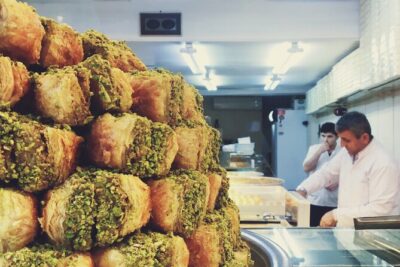
The included tastings here are the kind you’ll recognize as “market food.” You’ll sample things like arancini and sweet-nut bites such as almonds coated in sugar. Some of the stops also lean into candied fruit-style flavors (think candied orange/lemon peel notes that guests have highlighted as memorable).
What you learn at a market stop is different from learning at a restaurant. You see the ingredients in their natural habitat. And you start picking up the logic behind local choices: which flavors are bright, which are comforting, and which pair well with the salty foods that come later.
Quick heads-up: markets get lively, and you’ll be walking through real public space. Wear shoes you trust. Also bring sunglasses if the sun is out—it’s an outdoor city walk through open courtyards and lanes.
Soparnik in the middle of medieval Split
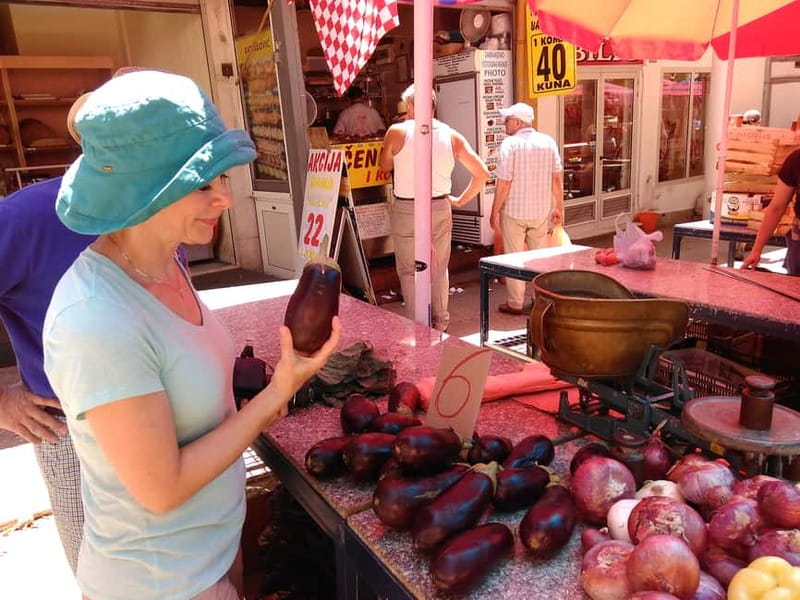
After the market morning, the tour shifts into something more story-heavy. You’ll move toward a dish at the heart of this region: soparnik, described as a unique dish protected by UNESCO. This isn’t just a “taste and move on” moment. Your guide explains what makes the dish special and how it fits the local food identity.
Soparnik itself is the key. It’s a thin, herb-forward flatbread-style dish that signals how coastal Dalmatian cooking can be simple but not boring. It’s the kind of food that makes you understand why “Mediterranean” isn’t just a vibe—it’s an ingredient system.
The tour description also mentions a glass of local wine alongside the soparnik stop, but there’s a real-world wrinkle. At least some recent participants noted that a glass of wine wasn’t always included. So if wine matters to your personal plan, treat it as a maybe and confirm with the operator before you set your expectations.
Why I think this stop is worth it: UNESCO protection can sound like paperwork. Here, it becomes a reason to pay attention. You’re tasting something that has a cultural identity strong enough to be formally recognized.
Prosciutto and the art of “made here” flavors
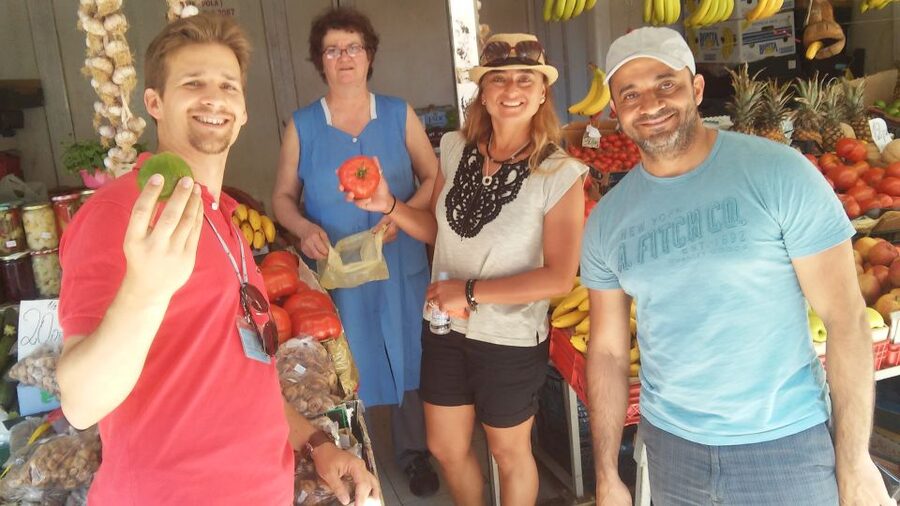
Then comes the practical, crowd-pleasing part: prosciutto tastings and other traditionally made items along the way. You don’t just sample. You get the local story behind why this type of cured meat shows up so often in Split’s food culture.
This is also one of the moments where the guide’s personality matters. Strong guides don’t throw facts at you. They translate them. They show you what to notice: texture, salt level, and how that saltiness prepares your mouth for the next stop—especially fish and anchovies later at Peškarija.
There’s another quiet value here. By tasting prosciutto in this setting—on a walking route through old streets—you start to build an internal list of what Split does best. Later, when you choose your own dinner, you’ll order with more confidence.
Chocolate with a Guinness record, then rafiol cake at an old bakery
At some point on every good food walk, you need the sweet reset. Split delivers it in a very specific way: a stop at a chocolate shop that’s tied to a Guinness record for the largest chocolate bar in the world. It’s memorable on purpose. Even if you’re not a “chocolate person,” this stop gives you a sensory landmark so you don’t forget the tour later.
Then you move from big-chocolate spectacle to classic local pastry. The tour includes a visit to an older bakery to try rafiol cake, a sweet that shows up as a favorite in this region’s pastry culture.
Why this pairing works: you’re not just “having dessert.” You’re tasting how Split’s sweet tooth sits next to its savory instincts. After savory herbs, cured meat, and market saltiness, the rafiol moment gives you a full-circle sense of balance.
If you’re worried about leaving stuffed, don’t. The tastings are spaced so you can keep walking and still enjoy each stop. It’s designed like a food route, not a food marathon.
Peškarija fish market: salted anchovies and marenda
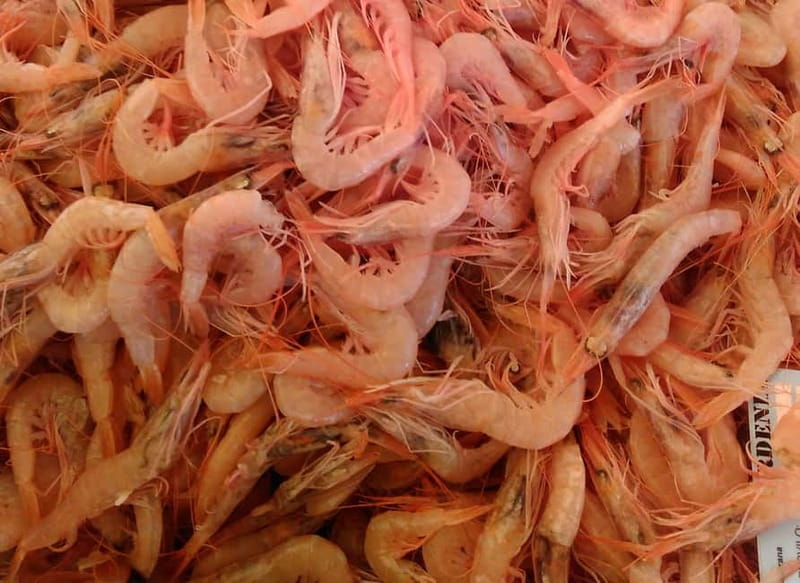
The biggest “wow” sensory shift is the fish market: Peškarija. The tour frames it as the second oldest in Europe and highlights that the original benches are over 120 years old. That detail matters because it makes the market feel less like a modern attraction and more like an actual working tradition.
Here’s where you’ll learn how locals eat one of the region’s classic salty tastes: salted anchovies. The guide also connects it to marenda, a Dalmatian brunch tradition. Think of it as more than a snack. It’s an eating culture built for the rhythm of the day.
This stop is valuable because anchovy isn’t automatically everyone’s first choice. A guided tasting helps you get it right. You’ll likely learn how to approach the saltiness and what flavors it pairs with, so it stops being “intense fish” and becomes “oh, this is how people actually eat.”
Also, the market time is long enough to feel real (about 30 minutes). You’ll have space to notice what’s happening, not just rush through like a checklist.
Bar and restaurant tastings: turning bites into recipe memory
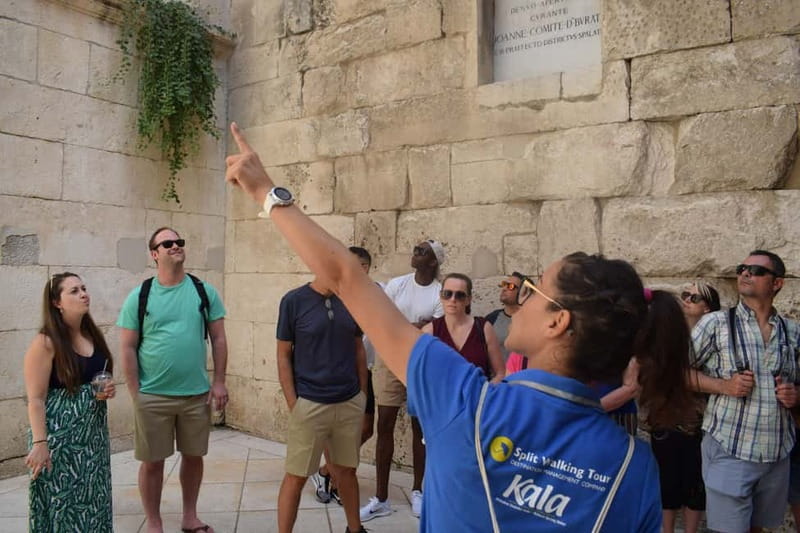
After Peškarija, the route keeps moving through a local bar and then ends with a local restaurant tasting. Each stop is shorter (around 15 minutes), but the total effect is more like a guided tasting menu than a quick sample spree.
One of the most praised aspects of this tour is the variety. Based on what participants have called out, you’ll likely taste over 10 different items, including nuts and candied citrus peel flavors, prosciutto, two traditional flatbreads (with soparnik being one of the signature ones), and more local snacks that fit the market-and-street vibe.
And the tour includes traditional recipes along with the tastings. Even if you don’t cook at home, recipe notes give you a way to remember what you liked in a practical format. You’re not just collecting flavors. You’re collecting an idea of how those flavors become food.
For me, that’s the difference between a “fun walk” and a useful one. You finish with something you can actually act on: where to return, what to order, and what dishes to ask for by name.
Price and value: is $64 worth it?
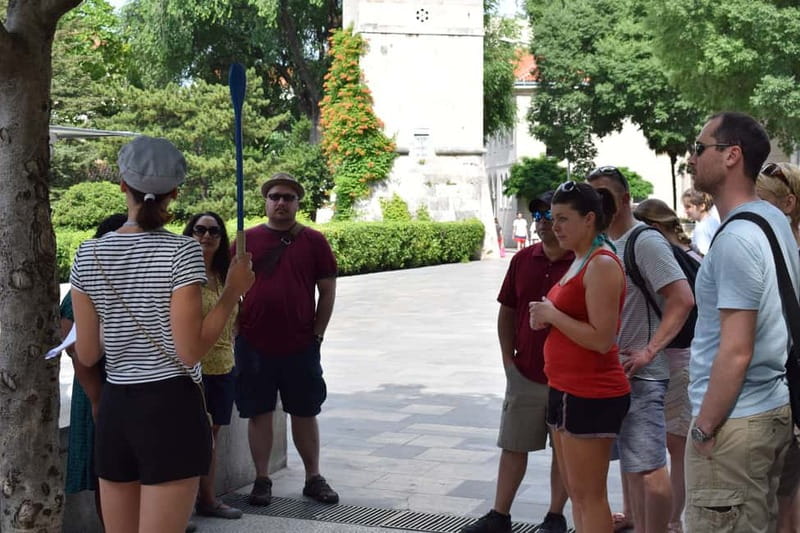
At $64 per person for a roughly 2-hour walk, this is priced like a proper guided experience rather than a casual snack tour. The value comes from three things working together:
- You get a live English-speaking guide who ties food to the city’s Roman and medieval layers.
- You’re tasting across multiple local settings: café, green market, fish market, and then additional bars/restaurant stops.
- You receive food tastings plus traditional recipes, which helps the tour pay off after you leave.
If you’re the kind of person who tends to eat the same way every day while traveling, this tour is a good “reset.” You’ll likely get more value than the cost just by making better meal choices for the rest of your stay.
If you’re a strict “I only want one big meal” eater, the format might feel too snacky. But for most people, especially first-timers in Split, it’s a very efficient way to learn what the city actually eats.
Who this Split tour is best for (and who should skip it)
This is a strong choice if you:
- Want a guided way to understand Split’s food culture fast
- Enjoy markets and learning how food works in real daily life
- Like tours that include history stories without turning into a museum lecture
- Prefer a small-group feel where you can ask questions and keep moving
It’s also a good pick if you’re food curious but not a “chef in training.” The tastings are varied, and the guide’s job is to explain what you’re tasting in plain terms.
Skip it or think twice if:
- You use a wheelchair, because the tour isn’t wheelchair accessible
- You don’t do well with walking for a short but steady time
- You’re traveling with an unaccompanied minor, since unaccompanied minors aren’t allowed
Should you book this Split food tasting walking tour?
If you’re in Split for even a few days, I’d book this. The combination is hard to beat: Diocletian’s Palace context plus market tastings that actually teach you how to eat here. It’s not just about collecting samples. It helps you build a short list of what to return for later—especially if markets and local specialties are your thing.
My one practical decision rule: book it early in your trip. You’ll use what you learn to guide your later meals, so the $64 turns into more than a one-off afternoon.
FAQ
How long is the Split Food Tasting Walking Tour?
The tour lasts 2 hours.
Where do I meet the guide?
You meet at Golden/North Gate near the statue of Gregory of Nin. Look for the blue umbrella.
What is included in the tour price?
The tour includes the guide, food tastings, and traditional recipes.
What types of food stops and tastings should I expect?
You can expect tastings at a local café, the Green Market and Old Market area, a local bakery, the Split fish market (Peškarija), plus a local bar and local restaurant. Foods mentioned include arancini, sugared almonds, soparnik, prosciutto, chocolate tastings, rafiol cake, and salted anchovies.
Is the tour inside Diocletian’s Palace?
Yes. The tour walks in the Diocletian’s Palace area and includes sightseeing through Split’s ancient streets.
Is it a private or small-group tour?
Private or small groups are available.
What language is the guide?
The tour is offered with an English live tour guide.
Does the tour include wine?
The tour description mentions a glass of local wine with the soparnik stop, but some recent participants noted they did not receive wine. It’s smart to check with the operator before booking.