REVIEW · SARAJEVO
Private Walking Tour, Food Tasting and Bosnian Coffee in Sarajevo
Book on Viator →Operated by Bella Bosnia Tours · Bookable on Viator
Sarajevo tastes better than it looks. This private walking tour strings together famous sights with real food and Bosnian coffee rituals, so you get history you can actually chew. I love that it’s private, meaning your guide can slow down for questions and your group keeps its own pace.
Two things I really like: the route mixes big-picture Sarajevo history with small, memorable stops (like the coffee streets and caravanserai). And the food tasting part isn’t a rushed add-on; it’s built into the walk. The only real drawback to consider is time: some sights are quick hits (a couple are just a few minutes), so if you want long museum-style viewing, you may feel slightly “on the move.”
If you’re lucky enough to get a guide like Emina or Lamija, the experience tends to feel friendly, conversational, and very on-point. The talk can run from local crafts to world-shaping events—yes, including the story behind the Latin Bridge—without turning into a lecture.
In This Review
- Key highlights you’ll feel on this tour
- Starting at Sarajevo City Hall: the walk begins in Austro-Hungarian style
- Sebilj Brunnen at Bascarsija Square: the Ottoman-era fountain you can’t ignore
- City Hall to the Clock Tower: why small landmarks get big stories
- Sacred Heart Cathedral and the Sarajevo roses: a quick look with real context
- Kazandziluk, coppercraft, and the Bosnian coffee ritual
- Bravadžiluk Street: where you taste traditional dishes and sweets
- Morica Han: Ottoman caravanserai vibes and a coffee tasting moment
- Gazi Husrev-beg Mosque and Bezistan: religious architecture plus market culture
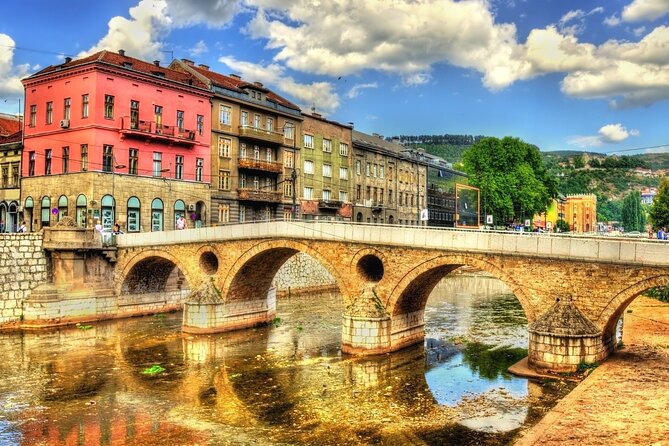
- Latin Bridge: the assassination site that changed world history
- Price and what you’re really paying for
- Guides: why Emina and Lamija-style energy makes the tour
- How to get the most out of the walk (without rushing)
- Should you book this Sarajevo food and Bosnian coffee tour?
- FAQ
- How long is the Private Walking Tour, Food Tasting and Bosnian Coffee in Sarajevo?
- Is the tour private, and who can join?
- What language is the tour offered in?
- Where do we meet, and where does it end?
- Are there admission tickets included for stops?
- What if I need to cancel?
- Can service animals join the tour?
Key highlights you’ll feel on this tour
- Bosnian coffee, made the traditional way with a clear explanation of how it’s brewed and enjoyed
- Coppercraft and the coffee street vibe around Kazandziluk, plus artisan details you can actually see
- Medieval Ottoman setting at Morica Han, where the atmosphere makes the coffee taste more special
- A stop-by-stop mix of religions and empires: mosques, a cathedral, and an Orthodox church close together
- A private group experience that helps you ask questions without rushing your guide
- Generous tastings that can easily cover your cravings for the rest of the day
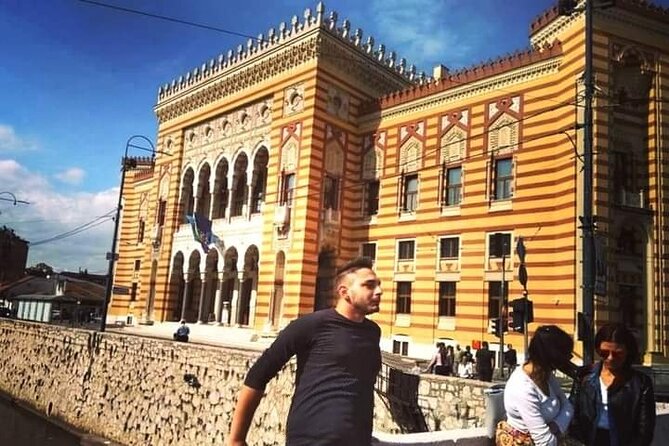
Starting at Sarajevo City Hall: the walk begins in Austro-Hungarian style
Most tours start you somewhere scenic. This one starts you at Sarajevo City Hall (Brodac 1), an Austro-Hungarian-era landmark and a very recognizable symbol of the city. Even before the tastings kick in, you’re standing where Sarajevo’s layered past becomes obvious.
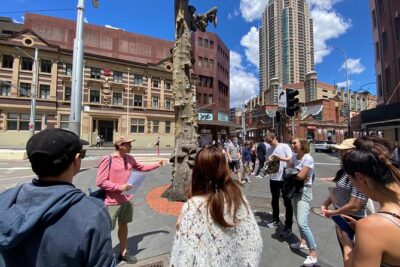
From there, you move into the old-city lanes, and the guide’s job is to connect what you’re seeing to why it matters. That’s the sweet spot here: you’re not just taking photos. You’re building a mental map of Sarajevo as a place shaped by empires, trade, and changing borders.
Practical note: it’s a walking tour of multiple short stops over about 2.5 hours, so comfortable shoes matter more than clever outfits. You’ll be moving through active pedestrian areas.
Sebilj Brunnen at Bascarsija Square: the Ottoman-era fountain you can’t ignore
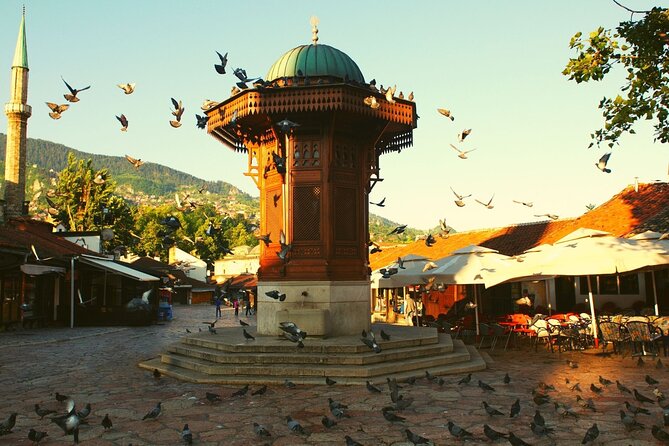
Your first major photo moment is Sebilj Brunnen, the 18th-century wooden fountain at Bascarsija Square, also nicknamed Pigeon Square. It’s not just pretty. It’s a focal point of daily life in the old bazaar area.
What I like is how the guide uses this stop to set the tone for the whole tour—linking local identity to the city’s longer history. When your guide explains what makes Sebilj distinctive and how Bascarsija functions as a cultural center, it makes the rest of the walk feel like one story instead of a checklist.
This is a good place to look up and around. The fountain sits in a dense urban scene, and you’ll see why Sarajevo’s old core feels so human-scale.
City Hall to the Clock Tower: why small landmarks get big stories
Next up is the Sarajevo City Hall area again, followed by the Old Sarajevo Clock Tower. The clock tower’s claim to fame is its unusual time display—and the guide will tell the story behind it.
Even if you don’t love quirky local trivia, a clock tower like this works because it teaches you how Sarajevo people think about symbols. Time here isn’t just time. It’s memory.
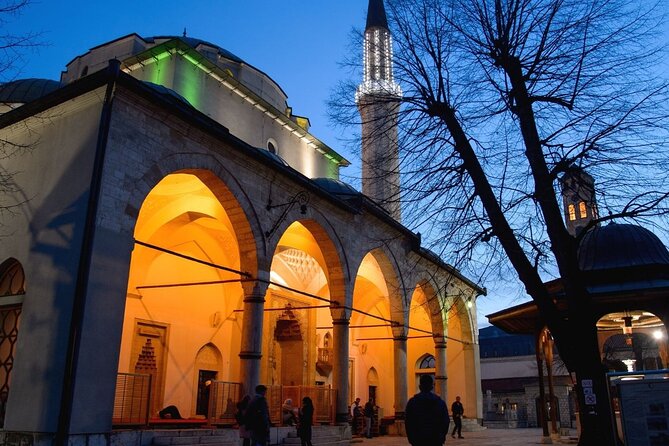
This stop also puts you near a major mosque. The tour frames the mosque as one of the most beautiful in Europe, and the point isn’t to argue rankings—it’s to show you how architecture and place-making sit at the center of the city.
Sacred Heart Cathedral and the Sarajevo roses: a quick look with real context
Then you’ll reach Katedrala Srca Isusova (Sacred Heart Cathedral). This one is the Austro-Hungarian Neo-Renaissance style at full volume: imposing, visible, and unmistakably different from the Ottoman-influenced parts of town. The tour also connects it to the statue of Pope John Paul II, who visited Bosnia twice.
Right next to the cathedral, you’ll talk about Sarajevo roses. That sounds like a small detail, but in Sarajevo it’s the kind of thing that turns a landmark visit into a feeling for daily culture—what people remember, what people celebrate, and how stories get attached to streets.
If you only have a couple of hours in Sarajevo, this combo matters. It helps you understand the city isn’t split into separate “neighborhoods of history.” The layers are close enough to walk between.
Kazandziluk, coppercraft, and the Bosnian coffee ritual
Now we hit the heart of the tour’s theme: coffee. Kazandziluk is the oldest street in Sarajevo, known for coppercraft pieces. The guide will point out the craft tradition and connect it to the broader culture of hospitality and daily rituals.
Right here, you learn how traditional Bosnian coffee is made and how it’s served and enjoyed. The tour doesn’t treat coffee like a sweet drink you order. It treats coffee like a social habit with technique and meaning.
A bonus from the experience on this route: you may also get a look at local metalworking in action. One description of the day includes a stop by a copper-and-brass craftsman, with a fascinating, forward-looking twist—turning old wartime shell casings into new objects like vases. It’s the kind of detail that explains Sarajevo’s resilience without getting heavy.
If you’re a coffee person, this is one of the best parts of the walk because you’re not just tasting. You’re learning the why.
Bravadžiluk Street: where you taste traditional dishes and sweets
Bravadžiluk Street is known for restaurants serving traditional Bosnian food. This is where the tour turns the corner into the stomach-first part of Sarajevo.
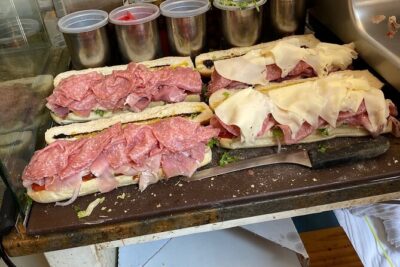
You’ll get recommendations for popular dishes and sweets, and you’ll sample as part of the experience. Some versions of the day include food served in a small cafe setting, and the portions can be big enough that you feel full, not snacky. That’s a real value point. Cheap tours sometimes give you a bite and a thumbs-up. This one tends to give you enough food to actually judge what you like.
If you have dietary restrictions, the safest move is to ask your guide what’s coming before you start tasting. The tour’s structure makes it easy to adjust if your guide understands your needs early.
Morica Han: Ottoman caravanserai vibes and a coffee tasting moment
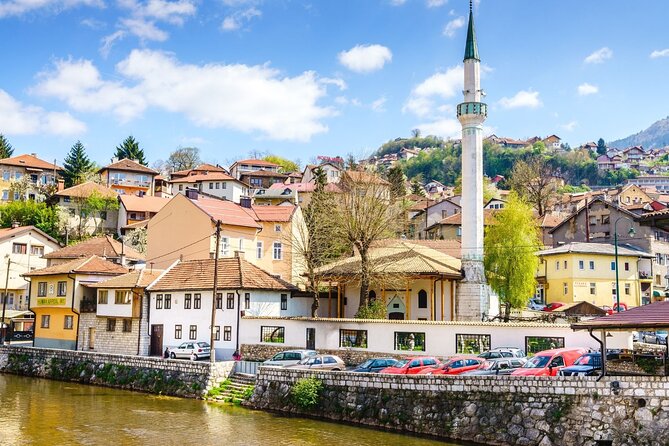
One of the most atmospheric stops is Morica Han, a medieval caravanseray. This is Ottoman-influenced architecture that still tells you why Sarajevo mattered on trade routes.
Sitting in that setting makes the coffee feel more than a drink stop. You’re tasting in a historical commercial space—an echo of how people once gathered while goods changed hands. Then comes the Bosnian coffee tasting, part of the tour’s core rhythm.
This is also where the experience becomes very “Sarajevo.” The city has a way of blending old structures and everyday life. Morica Han helps you see that blend clearly.
Gazi Husrev-beg Mosque and Bezistan: religious architecture plus market culture
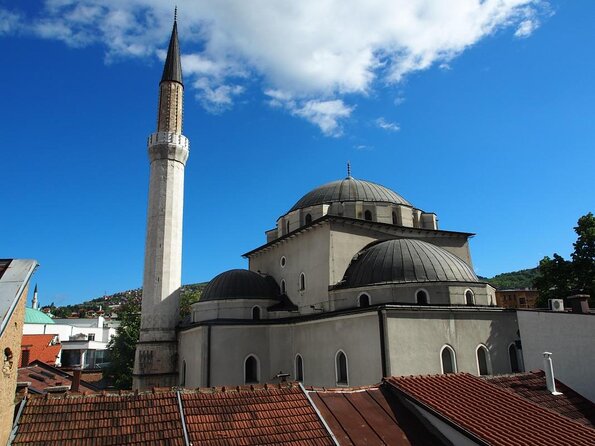
Next you’ll visit Gazi Husrev-beg Mosque, described as one of the biggest and most beautiful in Sarajevo. The guide gives you context beyond the wow-factor, helping you understand the mosque as both a spiritual center and part of the city’s architectural identity.
Right along with that, the tour includes Gazi Husrev Bey’s Bezistan, an old Ottoman bazaar. If you like when architecture tells a story, Bezistan is the kind of stop that delivers. You’re seeing a market space that still carries those oriental design elements that define Sarajevo’s old-town feel.
Timing tip: because this is a walking tour with a set schedule, you won’t get hours in each site. If you want to linger for photos, do it during the moment when the guide pauses for group regrouping.
Latin Bridge: the assassination site that changed world history
The tour ends near Latin Bridge, famous for the assassination of Franz Ferdinand—an event described as a turning point that led to World War I. This stop is quick, but it’s big on meaning.
In a short span, you’re moving from Ottoman and Austro-Hungarian textures into a moment that reaches far beyond Bosnia. That’s why this tour works for first-timers: it doesn’t just show you buildings. It shows you how Sarajevo connects to larger history.
If you’re curious, ask your guide how Sarajevo’s different communities fit into the city’s political story. The guide is set up for exactly that kind of question.
Price and what you’re really paying for
At $66.54 per person for about 2 hours 30 minutes, the price is in the mid-range for a private walking food tour. The value comes from two things:
1) You’re paying for a guide who connects multiple sites to one theme—food and coffee tied to Sarajevo’s layered identity.
2) You’re not just seeing sights; you’re sampling. Coffee gets special attention, and the food stops are designed to satisfy, not tease.
Because it’s private, you’re also paying for pace and flexibility. If it’s raining, you’ll at least appreciate that guides plan for weather. One account of the day mentions an extra umbrella provided by the guide, which feels like small effort that matters.
Guides: why Emina and Lamija-style energy makes the tour
The experience is highly rated for a reason: the guides are described as friendly, conversational, and deeply informed. Names that come up clearly include Emina and Lamija, both praised for explaining history in an easy-to-follow way and for engaging in real conversation, not just reciting facts.
That matters, because Sarajevo history can get complicated fast. When your guide can simplify without flattening, you walk away feeling like you understand what you saw—and not just that you collected stamps.
How to get the most out of the walk (without rushing)
This tour is best if you’re the kind of traveler who likes structured wandering. You’ll be glad you did it on an early day in town, when you want bearings and food tips for what comes next.
A few practical moves:
- Wear shoes you can walk in for 2.5 hours, including cobblestones and uneven old streets.
- If you’re a coffee person, plan to pace yourself. Tasting is part of the fun, and you don’t want to feel too full too early.
- Ask your guide at Kazandziluk how the coffee process works, then pay attention when you see the traditional settings again later.
And if it’s your first time in Sarajevo, this route helps you understand why the city is built around close-together landmarks. You’ll feel the geography. Then you’ll be able to navigate on your own.
Should you book this Sarajevo food and Bosnian coffee tour?
Book it if you want an easy win: a private first look at Sarajevo that mixes landmarks, Ottoman and Austro-Hungarian architecture, and real food and coffee. It’s especially worth it if you like learning through tasting rather than sitting through lectures.
Skip it (or pair it with something longer) if you hate quick stop schedules or you want in-depth time inside religious buildings, museums, or major attractions. This one is about momentum and connection, not long stays.
If you’re on the fence, here’s the simple test: if Bosnian coffee sounds like a must-do, and if you like your history told through streets and daily culture, this tour makes a lot of sense.
FAQ
How long is the Private Walking Tour, Food Tasting and Bosnian Coffee in Sarajevo?
It’s approximately 2 hours 30 minutes.
Is the tour private, and who can join?
Yes, it’s private, so only your group participates. Most travelers can participate.
What language is the tour offered in?
The tour is offered in English.
Where do we meet, and where does it end?
You meet at Sarajevo City Hall, Brodac 1, Sarajevo. The activity ends in a different location near the Latin Bridge area.
Are there admission tickets included for stops?
The stops listed show admission ticket free, so you shouldn’t need to pay separate admission fees for those sights.
What if I need to cancel?
You can cancel for a full refund if you cancel up to 24 hours in advance of the start time.
Can service animals join the tour?
Yes, service animals are allowed.